Most companies approach succession planning like they’re filling out an insurance policy—something to file away and hope they never need. Meanwhile, 70% of senior leaders will retire in the next five years, and only 35% of organizations have identified successors for critical roles. The real tragedy? The talent they’re overlooking could transform their future.
The Succession Planning Crisis Nobody’s Talking About 📊
Here’s what traditional succession planning looks like: HR identifies high-potentials (usually people who look and act like current leaders), puts them through generic leadership training, then wonders why 50% fail within 18 months of promotion.
The deeper problem? Traditional succession planning systematically excludes traditionally overlooked talent. Research from McKinsey shows that while Black women are the most ambitious demographic group—with 42% aspiring to senior leadership—they represent only 1.4% of C-suite positions. This isn’t a pipeline problem. It’s a succession planning problem.
There was a Fortune 500 company that proudly announced their “robust succession plan” with 100 identified future leaders. Not one was a Black woman. When pressed, they claimed no Black women were “ready.” Meanwhile, three Black women directors had been passed over for promotion five times each, despite consistently exceeding performance metrics. Within two years, all three left for competitor companies where they became VPs.
Why Traditional Succession Planning Fails 🚫
Traditional succession planning fails because it:
Relies on Subjective “Potential” Assessments: What looks like “leadership potential” often reflects cultural similarity rather than actual capability.
Ignores Different Leadership Styles: Expecting all leaders to fit one mold eliminates diverse perspectives that drive innovation.
Lacks Systematic Development: Throwing high-potentials into stretch assignments without support sets them up for failure.
Perpetuates Existing Biases: When current leaders choose successors who remind them of themselves, nothing changes.
Focuses on Individual Stars: Building succession around a few “chosen ones” creates single points of failure.
As documented in “High-Value Leadership,” sustainable organizations don’t clone leaders—they cultivate diverse leadership ecosystems.
The Hidden Cost of Overlooking Black Women in Succession Planning 💰
When organizations exclude Black women from succession planning, they lose more than diversity metrics:
Innovation Deficit: Companies with diverse leadership teams are 33% more likely to outperform on profitability (McKinsey).
Market Blindness: Black women control $1.5 trillion in purchasing power. Leaders who don’t reflect your market can’t fully understand it.
Talent Drain: When Black women don’t see advancement paths, they leave—taking institutional knowledge and trained talent with them.
Reputation Risk: In an era of transparency, homogeneous leadership becomes a liability for talent attraction and brand reputation.
Competitive Disadvantage: Companies that successfully develop diverse leaders gain access to overlooked talent pools while others fight over the same shrinking demographic.
The DEVELOP Framework for Inclusive Succession Planning 🎯
Building succession plans that actually work requires systematic inclusion:
D – Democratize Opportunity Access
Instead of hand-picking favorites, create transparent pathways:
- Publish clear competency requirements for each level
- Rotate high-visibility assignments systematically
- Open development programs to self-nomination
- Track who gets stretch opportunities
E – Evaluate Through Multiple Lenses
Replace subjective potential assessments with objective measures:
- Use structured competency evaluations
- Gather 360-degree feedback from diverse evaluators
- Measure actual results, not just “executive presence”
- Value different leadership styles equally
V – Validate Different Paths to Leadership
Recognize that not all leaders follow the same trajectory:
- Credit lateral moves that build breadth
- Value external experience and perspectives
- Recognize non-traditional credentials
- Honor different cultural approaches to leadership
E – Establish Sponsorship Equity
Ensure traditionally overlooked talent has powerful advocates:
- Assign sponsors, don’t hope they emerge naturally
- Hold sponsors accountable for protégé advancement
- Rotate sponsorship to prevent favoritism
- Measure sponsorship effectiveness
L – Link Development to Business Strategy
Connect succession planning to organizational needs:
- Identify future capability requirements
- Develop leaders for tomorrow’s challenges
- Build diverse teams for innovation
- Measure succession plan effectiveness
O – Operationalize Inclusive Practices
Make inclusion systematic, not optional:
- Require diverse succession slates
- Track demographic progression through pipeline
- Address bottlenecks explicitly
- Celebrate diverse leadership advancement
P – Provide Comprehensive Support
Set all successors up for success:
- Offer executive coaching for transitions
- Create peer learning circles
- Provide failure recovery support
- Build psychological safety for growth
Real-World Transformation: A Case Study 🌟
There was a healthcare system struggling with leadership continuity. Their traditional succession plan identified 30 high-potentials—all white, 80% male. They implemented the DEVELOP framework:
Year 1: Opened leadership development programs to application rather than nomination. Suddenly, 60% of participants were women, 40% people of color.
Year 2: Required diverse interview panels for all leadership positions. Promotion diversity increased by 300%.
Year 3: Implemented sponsorship programs pairing senior leaders with high-potential traditionally overlooked talent. Three Black women were promoted to senior director roles.
Results: Employee engagement increased 35%. Patient satisfaction scores improved 28%. Innovation metrics doubled. The organization went from struggling to recruit talent to having waiting lists for positions.
Current Trends Reshaping Succession Planning 🔄
Skills-Based Succession: Moving from role-based to capability-based planning, focusing on what leaders can do rather than titles they’ve held.
AI-Powered Talent Identification: Using algorithms to identify high-potential employees while removing human bias from initial selections.
Continuous Succession Planning: Treating succession as an always-on process rather than annual exercise.
Cross-Functional Development: Rotating future leaders across departments to build enterprise perspective.
External Partnership Programs: Bringing in diverse talent through strategic partnerships with HBCUs and professional organizations.
The Special Considerations for Black Women Leaders 👑
As outlined in “Rise & Thrive,” Black women face unique challenges in succession planning:
The Proof Tax: Having to demonstrate significantly more achievements than peers to be considered “ready.”
The Likeability Penalty: Being penalized for displaying the same leadership behaviors rewarded in others.
The Support Gap: Receiving less sponsorship and developmental support despite strong performance.
The Culture Code: Navigating expectations to represent diversity without being pigeonholed.
To address these challenges, organizations must:
- Create Objective Readiness Criteria: Define specific, measurable indicators of succession readiness
- Provide Cultural Navigation Support: Offer coaching that acknowledges unique challenges
- Build Cohort Programs: Create peer support networks for Black women leaders
- Address Bias Directly: Train evaluators on interrupting bias in succession decisions
Practical Implementation Guide 📝
Phase 1: Assessment (Months 1-3)
- Audit current succession plan demographics
- Identify pipeline bottlenecks
- Survey traditionally overlooked talent about barriers
- Benchmark against industry leaders
Phase 2: Design (Months 4-6)
- Develop inclusive succession criteria
- Create transparent advancement pathways
- Design support programs for diverse leaders
- Establish measurement systems
Phase 3: Pilot (Months 7-12)
- Launch with one department or level
- Provide intensive support and coaching
- Gather continuous feedback
- Adjust based on learning
Phase 4: Scale (Year 2)
- Expand successful elements organization-wide
- Build internal capability
- Celebrate early wins
- Address resistance directly
Phase 5: Sustain (Ongoing)
- Embed in performance management
- Regular succession reviews
- Continuous improvement
- Success story sharing
The Multiplier Effect of Inclusive Succession Planning 🚀
When organizations build truly inclusive succession plans:
Performance Improves: Diverse leadership teams deliver 35% better financial performance
Innovation Accelerates: Multiple perspectives drive creative problem-solving
Engagement Increases: All employees see advancement possibilities
Reputation Enhances: Organizations become magnets for top talent
Resilience Builds: Diverse leadership teams navigate crises more effectively
Measuring What Matters 📈
Track these metrics to ensure succession planning effectiveness:
Representation Metrics:
- Demographics at each leadership level
- Progression rates by demographic group
- Time to promotion comparisons
- Succession slate diversity
Development Metrics:
- Program participation rates
- Skill development progress
- Readiness ratings over time
- Internal vs. external hire ratios
Business Impact Metrics:
- Leadership transition success rates
- Post-promotion performance
- Innovation indicators
- Employee engagement scores
Equity Metrics:
- Sponsorship distribution
- Stretch assignment allocation
- Development investment per person
- Advancement rate disparities
Discussion Questions 💭
- Who’s missing from your current succession plan, and what capabilities are you losing as a result?
- How would your organization change if your leadership demographics matched your customer base?
- What barriers prevent traditionally overlooked talent from being seen as “high potential” in your organization?
- Which succession planning practices inadvertently perpetuate homogeneity?
- How might inclusive succession planning become your competitive advantage?
Your Next Steps 🎯
Start with an honest audit. Map your current leadership demographics against your succession pipeline. The gaps will tell you everything about whether you’re building tomorrow’s leaders or yesterday’s.
Then pick one level—perhaps emerging leaders—and redesign succession planning using the DEVELOP framework. Document what changes. Most organizations find that inclusive succession planning doesn’t just increase diversity; it improves overall leadership quality.
Remember: Succession planning isn’t about replacing people. It’s about building organizational capability for an uncertain future. The more diverse your leadership bench, the more prepared you are for whatever comes next.
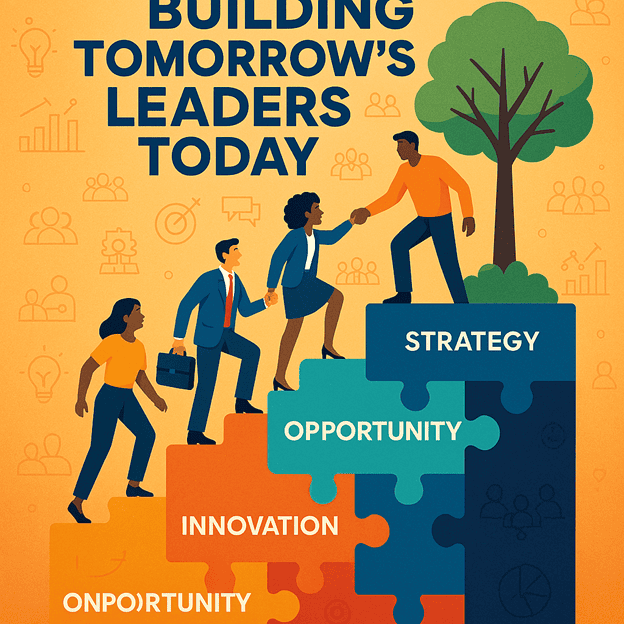
Ready to Build Tomorrow’s Leaders Today? 🌟
Che’ Blackmon Consulting specializes in creating succession planning systems that develop all talent, especially those traditionally overlooked. We help organizations build robust leadership pipelines that drive innovation and performance.
Our Succession Planning Services Include:
- Current state succession audit and gap analysis
- Inclusive succession framework design
- Leadership development program creation
- Sponsorship and mentoring program implementation
- Bias interruption training for talent decisions
- Success metrics and accountability systems
Transform your succession planning from exclusive to inclusive, from risk to opportunity.
📧 Email: admin@cheblackmon.com
📞 Phone: 888.369.7243
🌐 Website: cheblackmon.com
Because tomorrow’s success depends on developing all of today’s talent, not just the usual suspects.
#SuccessionPlanning #LeadershipDevelopment #DiversityAndInclusion #ExecutiveLeadership #TalentManagement #WomenInLeadership #BlackWomenLead #FutureOfWork #InclusiveLeadership #LeadershipPipeline #DEI #TalentStrategy #OrganizationalDevelopment #HighValueLeadership #ExecutiveDevelopment

Leave a Reply