By Che’ Blackmon, DBA Candidate | Founder & CEO, Che’ Blackmon Consulting
Every year, organizations invest billions of dollars in new technology. And every year, a staggering number of those investments fail to deliver their promised value. The problem is rarely the technology itself. The problem is culture.
We have all seen it happen. A company announces an exciting new platform, system, or tool. Training sessions are scheduled. Rollout dates are set. And then reality hits. Adoption lags. Workarounds multiply. The old ways persist alongside the new, creating confusion rather than efficiency. Within months, the shiny new technology becomes expensive shelfware, and employees grow even more cynical about the next change initiative.
The truth is that technology implementation is fundamentally a human challenge. In High-Value Leadership: Transforming Organizations Through Purposeful Culture, I explore how the most successful leaders understand that tools are only as effective as the cultures that embrace them. Getting technology integration right requires attending to people first and platforms second.
This challenge carries particular implications for those who have been traditionally overlooked in technology decisions. When new systems are designed and implemented without diverse input, they often perpetuate existing inequities or create new barriers. Making technology work for your culture means making it work for everyone in your culture.
Why Technology Implementations Fail 🚫
The statistics are sobering. Research from McKinsey indicates that 70% of digital transformation initiatives fail to reach their stated goals. Gartner reports that through 2025, 80% of organizations attempting to scale digital business will fail because they do not take a modern approach to data and analytics governance. These are not failures of technology. They are failures of integration, adoption, and cultural alignment.
Several common patterns emerge in failed technology implementations. First, organizations often focus exclusively on technical requirements while ignoring human requirements. They ask “What can this system do?” without asking “What do our people need?” or “How does this fit with how we actually work?”
Second, change management is frequently an afterthought rather than a core component of the implementation strategy. Leaders assume that if the technology is good enough, people will naturally adopt it. This assumption ignores everything we know about human behavior, habit formation, and resistance to change.
Third, implementation teams often lack diversity, leading to blind spots about how different users will experience the new system. When the people designing and rolling out technology do not reflect the full range of people who will use it, critical needs get overlooked. This is not just about demographic diversity but also about including perspectives from different roles, levels, and functions within the organization.
Fourth, organizations underestimate the time and resources required for true adoption. They budget for licenses and training but not for the ongoing support, reinforcement, and iteration that successful integration demands.
The Equity Dimension of Technology Change ⚖️
Technology is never neutral. Every system encodes assumptions about who will use it, how they will use it, and what they need. When those assumptions are shaped by homogeneous perspectives, the resulting technology can create or reinforce barriers for those already marginalized in the workplace.
Consider artificial intelligence and algorithmic decision making tools, which are increasingly common in hiring, performance evaluation, and workforce management. Research has repeatedly demonstrated that these systems can perpetuate and even amplify existing biases. Amazon famously scrapped an AI recruiting tool after discovering it systematically downgraded resumes from women. Other studies have shown racial bias in facial recognition systems, credit scoring algorithms, and predictive analytics tools used in HR.
In Rise & Thrive: A Black Woman’s Blueprint for Leadership Excellence, I discuss how Black women in corporate spaces must navigate technology systems that were often not designed with them in mind. From collaboration platforms that favor certain communication styles to performance management systems that encode biased assumptions about what “leadership” looks like, technology can become another obstacle to overcome rather than a tool for advancement.
This reality demands that leaders approach technology integration with an equity lens. Who was consulted in selecting this system? Whose needs were centered in the design? Who might be disadvantaged by how this technology works? These questions must be part of every technology decision, not afterthoughts when problems emerge.
Culture First, Technology Second 🎯
The most successful technology implementations begin not with selecting a platform but with understanding the culture into which that platform will be introduced. In Mastering a High-Value Company Culture, I outline how organizational culture shapes every aspect of how work gets done, including how new tools and systems are received.
Before any technology decision, leaders should conduct an honest cultural assessment. How does your organization typically respond to change? What past technology implementations have succeeded or failed, and why? Where are the pockets of resistance likely to emerge? Who are the informal influencers whose adoption will signal to others that the change is worth embracing?
Understanding your culture also means understanding its fault lines. Are there trust issues between leadership and frontline employees? Are certain teams or demographics already feeling unheard or undervalued? Technology implementation can either exacerbate these tensions or, if handled thoughtfully, begin to heal them.
There was a manufacturing company that learned this lesson through experience. Leadership decided to implement a new enterprise resource planning system without adequately consulting the production floor workers who would use it daily. The system was technically superior to what it replaced, but it did not account for the practical realities of how work actually flowed in the plant. Workers felt disrespected that their expertise had been ignored. Adoption was resistant and resentful. It took nearly two years of remediation, including finally listening to frontline input, before the system delivered its promised value.
📊 Case Study: Technology That Brought People Together
A regional healthcare network with approximately 180 employees needed to implement a new patient records system to comply with updated regulations. Previous technology rollouts had been rocky, marked by low adoption and persistent workarounds that created data integrity issues.
This time, leadership took a different approach. Before selecting a vendor, they formed an implementation team that deliberately included voices from every level and function: physicians, nurses, administrative staff, IT professionals, and billing specialists. The team included significant representation from employees of color, who had previously reported feeling excluded from technology decisions that affected their daily work.
This diverse team did not just evaluate technical specifications. They mapped actual workflows, identified pain points with the current system, and articulated what success would look like from their various perspectives. When vendors presented their solutions, every member of the implementation team had a voice in the evaluation.
The selected system was not the cheapest option or the one with the most features. It was the one that best fit how the organization actually worked and that addressed the specific needs identified by the diverse implementation team. Rollout included peer champions from each department who had been part of the selection process and could speak authentically about why this system was chosen.
Adoption exceeded expectations. More importantly, employees reported feeling respected and included in a way they had not experienced with previous technology changes. The implementation became a model for how the organization approached subsequent changes, building a culture of inclusive decision making that extended far beyond technology.
Current Trends Reshaping Technology Integration 🌐
The technology landscape continues to evolve rapidly, and several trends are reshaping how organizations approach integration challenges.
Artificial intelligence is transforming virtually every business function, from customer service to human resources to operations. Organizations are grappling with how to integrate AI tools in ways that augment human capability rather than replace human judgment. This requires careful attention to where AI excels and where human insight remains essential, as well as ongoing monitoring for algorithmic bias.
Remote and hybrid work have accelerated the adoption of collaboration technologies, but many organizations are still struggling to use these tools effectively. The challenge is not just technical but cultural: how do you maintain connection, build trust, and preserve organizational culture when people are working from different locations? Technology can enable remote collaboration, but it cannot substitute for the intentional culture building that makes distributed teams successful.
Employee experience platforms are emerging as a way to integrate multiple technology touchpoints into a more coherent whole. Rather than forcing employees to navigate dozens of disconnected systems, these platforms create unified interfaces that simplify the technology landscape. The most effective implementations center the employee experience rather than administrative convenience.
Data analytics and predictive tools are becoming increasingly sophisticated, offering organizations unprecedented insight into workforce trends, engagement patterns, and potential challenges. Used ethically and transparently, these tools can help leaders make better decisions. Used poorly, they can erode trust and create surveillance cultures that undermine the very engagement they are meant to improve.
The Human Side of Digital Transformation 👥
Successful technology integration requires attending to the emotional and psychological dimensions of change, not just the technical ones. People resist new technology for many reasons, and understanding those reasons is essential for overcoming resistance.
Fear of obsolescence is a powerful driver of technology resistance. When people worry that new systems might eliminate their jobs or devalue their expertise, they have strong incentives to resist adoption. Leaders must address these fears directly, being honest about how roles may change while providing pathways for people to develop new skills and remain valuable contributors.
Loss of competence is another common concern. People who are experts in the old way of doing things may feel like beginners when a new system is introduced. This can be particularly challenging for experienced professionals whose identities are tied to their expertise. Creating safe spaces to learn, make mistakes, and develop new competencies is essential.
Past negative experiences shape how people approach new technology initiatives. If previous implementations were poorly handled, broken promises and frustration leave lasting scars. Leaders must acknowledge this history rather than pretending it does not exist, and demonstrate through action that this time will be different.
For employees from traditionally marginalized groups, technology change can carry additional weight. Will this new system make it easier or harder to do my job? Will it expose me to new forms of surveillance or bias? Will my concerns be taken seriously if I encounter problems? Leaders must proactively address these concerns rather than waiting for them to surface as resistance.
💭 Expert Perspective
John Kotter, the renowned change management expert from Harvard Business School, emphasizes that successful transformation requires both management and leadership. Management ensures that new systems are implemented correctly, that training is delivered, and that processes are documented. Leadership creates the vision, builds the coalition, and addresses the human dimensions of change. Technology implementations that focus exclusively on management while neglecting leadership are destined to underperform, no matter how good the underlying technology may be.
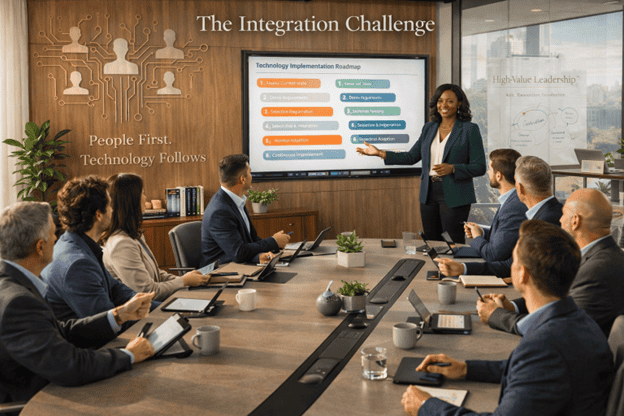
Building an Inclusive Implementation Strategy 🛠️
Creating technology implementations that work for everyone requires intentional effort at every stage of the process. Here are key strategies for building inclusion into your approach.
Diversify your implementation team. Include people from different levels, functions, demographics, and tenure in the organization. Seek out those who have been critical of past technology initiatives, as their concerns often point to real issues that others may overlook. Ensure that traditionally marginalized voices have genuine influence, not just token representation.
Conduct equity impact assessments. Before implementing any new technology, systematically consider how it might affect different groups within your organization. Who benefits most from this change? Who might be disadvantaged? Are there accessibility concerns? Does the technology encode assumptions that could perpetuate bias?
Create multiple channels for feedback. Not everyone is comfortable raising concerns in the same ways. Provide anonymous feedback mechanisms alongside open forums. Actively seek input from those who tend to be quieter in group settings. Make it clear that concerns will be taken seriously and addressed.
Invest in equitable training. Training should be accessible to everyone, accounting for different learning styles, schedules, and starting points. Avoid assumptions about baseline technical knowledge. Provide ongoing support rather than one time training events.
Monitor adoption patterns. Track who is successfully adopting the new technology and who is struggling. Look for patterns that might indicate systemic barriers. If certain groups are consistently lagging in adoption, investigate why rather than assuming the problem is with those individuals.
Iterate based on real user experience. Implementation is not complete when the technology goes live. Continuously gather feedback and make adjustments based on how the system is actually being used. Be willing to change course if the technology is not serving its intended purpose.
Leading Through Technology Change 🌟
The role of leadership in technology implementation cannot be overstated. How leaders show up during technology change sends powerful signals about priorities, values, and what kind of culture the organization is building.
Model the behavior you expect. If leaders do not use the new technology, no one else will take it seriously. This means genuinely adopting new systems, not having assistants manage them on your behalf. It also means being transparent about your own learning curve and challenges.
Communicate constantly. People need to understand not just what is changing but why. Connect technology changes to organizational values and strategic goals. Acknowledge the challenges while maintaining confidence in the path forward. Be honest about what you do not yet know.
Celebrate progress. Recognize and reward adoption, especially from those who are helping others succeed. Share stories of how the new technology is making work better. Build momentum through visible wins.
Stay the course. Technology implementation takes longer than most leaders expect. Resist the temptation to move on to the next initiative before the current one has truly taken root. Sustained attention signals that this change matters.
The ROI of Getting It Right 📈
Organizations that successfully integrate technology with culture see returns that extend far beyond the specific tools they implement. They build change capability that makes future transformations easier. They strengthen trust between leadership and employees. They create cultures where innovation can flourish because people feel safe learning new things.
Research from Deloitte indicates that organizations with inclusive cultures are six times more likely to be innovative and twice as likely to meet or exceed financial targets. Technology that is implemented inclusively contributes to building these cultures, while technology that is implemented poorly erodes them.
The cost of failed technology implementation is not just the wasted investment in the technology itself. It is the damage to employee engagement, the reinforcement of cynicism about change, and the lost opportunity to build a more adaptive organization. Getting technology integration right is an investment in culture as much as in capability.
Technology in Service of People ✨
The integration challenge is ultimately not about technology at all. It is about people. It is about creating organizations where change is possible, where diverse perspectives shape decisions, and where tools serve human purposes rather than the other way around.
For leaders committed to building high value cultures, technology implementation is an opportunity to demonstrate values in action. How you approach change reveals what you truly believe about your people. Are they obstacles to be managed or partners to be engaged? Are their concerns valid or inconvenient? Does everyone deserve a voice or only those who already have power?
For those who have been traditionally overlooked, technology change can be either a new barrier or a new opportunity. The difference lies in leadership. Leaders who center equity in their technology decisions, who actively seek out marginalized voices, and who hold themselves accountable for inclusive outcomes can use technology as a force for positive cultural transformation.
The organizations that will thrive in our technology rich future are not those with the most sophisticated systems. They are those that have built cultures capable of embracing change while remaining grounded in human values. Technology should serve culture, not the other way around. When leaders understand this truth and act on it, the integration challenge becomes an integration opportunity.
Discussion Questions for Your Team 🗣️
1. Think about a technology implementation you experienced that went well. What made it successful? Now think about one that struggled. What was different?
2. Who is typically included in technology decisions in your organization? Whose perspectives might be missing?
3. How does your organization respond when employees raise concerns about new technology? Do people feel safe expressing resistance or skepticism?
4. Have you ever experienced a technology system that seemed to work against you or make your job harder? What would have made it better?
5. What technology changes are on the horizon for your organization? How can you apply the principles discussed here to increase the likelihood of successful integration?
Your Next Steps 👣
This week, identify one technology tool or system that your team uses but has not fully adopted. Have a candid conversation about why adoption has been incomplete. Listen for concerns about usability, equity, or fit with how work actually gets done. Use what you learn to inform how you approach the next technology change.
If you are currently planning or in the midst of a technology implementation, conduct an informal equity assessment. Ask yourself who has been involved in decisions, whose perspectives have been centered, and who might be affected in ways that have not yet been considered. Make adjustments based on what you discover.
Finally, reflect on your own relationship with technology change. How do you typically respond to new systems and tools? What would help you embrace technology more readily? Your answers may offer insight into what others in your organization need as well.
Ready to Make Technology Work for Your Culture? 🌟
At Che’ Blackmon Consulting, we help organizations navigate the human side of technology change. Through our fractional HR services and culture transformation expertise, we partner with companies of 20 to 200 employees to build cultures where technology serves people and change initiatives succeed.
Whether you need support developing inclusive implementation strategies, building change capability in your leadership team, or creating cultures where innovation and technology adoption flourish, we bring both strategic insight and practical experience to help your organization thrive.
Let’s Build Something Together
📧 admin@cheblackmon.com
📞 888.369.7243
🌐 cheblackmon.com
Che’ Blackmon, DBA Candidate
Founder & CEO, Che’ Blackmon Consulting
Author of Mastering a High-Value Company Culture, High-Value Leadership, and Rise & Thrive
Host of “Unlock, Empower, Transform with Che’ Blackmon” Podcast
Unlock. Empower. Transform.
#DigitalTransformation #TechnologyIntegration #HighValueLeadership #ChangeManagement #WorkplaceCulture #HRStrategy #DiversityEquityInclusion #BlackWomenInTech #OrganizationalCulture #EmployeeExperience #FractionalHR #CultureTransformation #LeadershipDevelopment #FutureOfWork #InclusiveLeadership

Leave a Reply