The Future of Performance Reviews: AI Meets Human Insight 🤖🤝

Technology Can’t Replace Wisdom—But It Can Amplify It

Picture this: It’s performance review season. Managers scramble to remember what their direct reports accomplished six months ago. They write generic feedback based on recent memory, unconscious bias, and whoever was most visible. High performers who don’t self-promote get overlooked. Quiet excellence goes unrecognized. And Black women—who navigate the tightrope of being “confident but not aggressive,” “visible but not threatening”—wonder if their actual contributions even register.

Sound familiar?

Now imagine a different scenario. Your performance management system tracks contributions in real-time, flags potential bias in language, provides data-driven insights on patterns, and surfaces achievements that might otherwise be forgotten. But—and this is critical—it doesn’t replace the human conversation. It enhances it.

This isn’t science fiction. It’s happening now. 🚀

Artificial intelligence is transforming performance management. But here’s the question that matters: Will AI make performance reviews more equitable and insightful—or will it simply automate existing biases at scale?

The answer depends entirely on how leaders use it.

Let’s explore how AI and human insight can work together to create performance management systems that actually develop people, recognize excellence fairly, and build the high-value cultures where everyone can thrive.

The Problem With Traditional Performance Reviews 📝

Before we talk about solutions, let’s be honest about what’s broken.

Traditional performance reviews are almost universally despised. Gallup research shows that only 14% of employees strongly agree their performance reviews inspire them to improve. Most people experience reviews as anxiety-inducing, demotivating, and disconnected from their actual work.

Why?

They’re Backward-Looking and Infrequent
Annual or semi-annual reviews focus on the past, often the recent past, leaving months of contributions forgotten. By the time feedback arrives, it’s too late to adjust.

They’re Subjective and Biased
Managers rate employees based on memory, personal affinity, and unconscious bias. Research from Harvard Business Review shows that women receive vague feedback while men receive actionable advice. Black women receive harsher criticism and less developmental feedback than any other group.

They’re Time-Consuming and Hated
Managers spend hours writing reviews they don’t want to write. Employees spend days anxious about reviews they don’t trust. HR spends weeks managing a process nobody values.

They Don’t Actually Improve Performance
The stated goal is development. The actual outcome is often defensive employees, overwhelmed managers, and zero behavior change.

They Perpetuate Inequality
Performance ratings are subjective. Promotion decisions are often based on those ratings. When Black women are rated more harshly for the same performance, when our leadership is questioned while mediocre confidence is rewarded, when our “cultural fit” is constantly interrogated—the performance review becomes a gatekeeper that maintains existing hierarchies.

A financial services company analyzed five years of performance data and discovered a disturbing pattern: Black women consistently received lower ratings than white women and all men—even when objective productivity metrics were identical. The difference? Subjective assessments of “leadership potential,” “communication style,” and “cultural alignment.” These coded phrases masked bias that cost talented women promotions, raises, and opportunities.

The current system isn’t just inefficient. It’s inequitable. And that’s where AI enters the conversation.

What AI Can Actually Do (And What It Can’t) 🔍

Let’s clarify what we mean by AI in performance management. We’re not talking about robots conducting your one-on-ones. We’re talking about technology that:

Tracks Contributions Continuously
AI-powered systems can log achievements, projects completed, goals met, and feedback received in real-time. No more “what did they do in March?” panic during review season.

Analyzes Language for Bias
Natural language processing can flag biased language in reviews before they’re delivered. “She’s too aggressive” versus “He’s assertive.” “She needs to be more strategic” (vague) versus “He should focus on long-term planning” (actionable). AI can catch these patterns.

Surfaces Data-Driven Insights
Who’s consistently hitting goals but not getting recognized? Who’s mentioned positively in peer feedback but rated lower by their manager? Where do rating patterns suggest bias?

Provides Comparative Context
How does this employee’s performance compare to others at the same level? Are they being held to different standards? AI can provide objective benchmarks.

Offers Feedback Suggestions
Based on performance data and best practices, AI can suggest specific, actionable feedback—turning “needs improvement” into concrete developmental guidance.

But Here’s What AI Cannot Do:

AI cannot understand context. It can flag that someone missed a deadline, but it can’t know their parent was hospitalized that week.

AI cannot assess soft skills authentically. Empathy, cultural competence, relationship-building—these require human evaluation.

AI cannot make promotion decisions. It can inform them with data, but judgment requires wisdom.

AI cannot build trust. That’s still on leaders.

AI cannot replace the developmental conversation that changes careers. Technology enhances. Humanity transforms.

As High-Value Leadership: Transforming Organizations Through Purposeful Culture emphasizes: Tools serve culture, they don’t create it. AI is powerful. But without intentional, equity-focused leadership, it will simply automate existing biases faster.

The Bias Problem: When AI Learns Our Worst Habits ⚠️

Here’s the uncomfortable truth about AI: it learns from data. If your historical data reflects bias, your AI will perpetuate that bias—potentially at scale.

There was a major tech company that built an AI recruiting tool trained on ten years of hiring data. The AI learned to favor male candidates because historically, men had been hired more often. It downgraded resumes that included the word “women’s” (as in “women’s chess club captain”) and favored language more common in male applications. The company eventually scrapped the tool.

The same risk exists in performance management. If AI learns from historical reviews where Black women were rated more harshly, where subjective assessments favored people who “looked like leaders” (meaning white and male), where communication styles were judged through cultural bias—it will recommend similar patterns going forward.

This is why AI in performance management requires:

Clean, Audited Data
Before implementing AI, audit your historical performance data for bias. If patterns suggest inequity, address those patterns before training your AI on them.

Bias-Aware Algorithms
Work with vendors who explicitly design for equity, not just efficiency. Ask: How does your AI identify and flag potential bias? What safeguards exist?

Human Oversight
AI should inform decisions, never make them autonomously. Leaders must review AI recommendations with a critical, equity-focused lens.

Continuous Monitoring
Track outcomes by demographic. If AI-enhanced systems still result in biased ratings or promotions, the system needs adjustment.

Transparency
Employees should know how AI is used in their evaluations. Mystery algorithms erode trust.

The Rise & Thrive Framework: Ensuring AI Serves Everyone 💪🏾

Rise & Thrive: A Black Woman’s Blueprint for Leadership Excellence addresses a question particularly relevant here: How do we ensure new systems don’t just replicate old inequities with better technology?

Black women have learned to be strategic about performance visibility. We document our contributions meticulously because we know memory is selective and credit often goes elsewhere. We’re careful about tone in emails because we’re judged differently. We navigate performance conversations knowing that standards shift depending on who’s being evaluated.

AI, implemented thoughtfully, can actually help:

Objective Documentation
If your AI system tracks all contributions—not just the ones managers remember or the ones that happen in visible meetings—it creates an objective record. The quiet excellence that often goes unrecognized becomes visible.

Pattern Recognition
AI can identify when certain employees consistently contribute to team wins but don’t get credit. When peer feedback is positive but manager ratings are inexplicably lower. When someone’s impact is systematically undervalued.

Bias Flagging
If your manager writes “she’s too direct” in your review, AI trained on equity can flag that language and suggest alternatives: “Consider how this feedback would sound if written about a male colleague. Could you make this more specific and actionable?”

Consistency Enforcement
AI can ensure everyone at the same level is evaluated on the same criteria—not shifting standards that disadvantage some while benefiting others.

But—and this matters—AI only helps if leadership is committed to equity.

If leaders dismiss AI flags about biased language, if they override data showing disparate treatment, if they use AI for efficiency but ignore its equity features, nothing changes. The technology becomes window dressing on the same broken system.

Best Practices: Integrating AI With Human Insight 🎯

The organizations getting this right aren’t replacing humans with AI. They’re using AI to make humans better at evaluation, development, and recognition.

Here’s how:

1. Continuous Feedback Over Annual Events

AI enables ongoing feedback capture. Instead of one annual conversation, performance becomes a continuous dialogue.

A consulting firm implemented an AI-powered feedback system that prompted managers for brief monthly check-ins: “What did [employee] accomplish this month? What support do they need?” The system compiled this throughout the year. When formal review time came, managers had comprehensive records instead of three-month recency bias.

Result? More accurate reviews, more developmental conversations, and significantly higher employee trust in the process.

Implementation Tip: Use AI to prompt regular micro-feedback, not replace substantial conversations. Think of it as the note-taking that supports deeper dialogue.

2. Data-Informed, Not Data-Determined

AI provides insights. Humans make decisions informed by those insights plus context, relationship, and wisdom.

There was a retail company whose AI flagged that a high-performing store manager’s productivity metrics had dropped over two quarters. Instead of using this to justify a poor review, the district manager had a conversation. Turns out, the manager was dealing with a family health crisis but hadn’t felt safe disclosing it. The district manager provided support, the metrics recovered, and the relationship deepened.

The AI caught the pattern. The human provided the response that mattered.

Implementation Tip: Train managers to view AI insights as conversation starters, not verdicts. “The data shows X—help me understand the full picture.”

3. Bias Auditing as Standard Practice

Make equity audits a regular feature of your performance management system, not a one-time initiative.

A technology company analyzes performance ratings quarterly by race, gender, and intersectionality. When patterns emerge—for example, Black women receiving more “needs improvement” ratings for “communication” than other groups—they investigate. Are there specific managers? Specific language patterns? Cultural mismatches in communication style expectations?

They address these patterns immediately with manager training, feedback recalibration, and sometimes, manager accountability.

Implementation Tip: Don’t just collect demographic data on outcomes. Analyze the language, the patterns, the who-rates-whom dynamics. Make equity analysis as routine as financial reporting.

4. Development Over Judgment

The goal of performance management should be growth, not gatekeeping. AI can support this by identifying skill gaps, suggesting learning resources, and tracking developmental progress.

An engineering firm used AI to analyze project assignments and skill development. The system flagged that senior engineers were receiving stretch assignments that built toward principal engineer roles—but mid-level engineers, particularly women and minorities, weren’t. This wasn’t malicious; it was invisible. Leadership adjusted, created intentional stretch assignment rotations, and tracked equity in development opportunities.

Result? More diverse talent pipeline and higher retention of high-potential employees who previously would have left for development opportunities elsewhere.

Implementation Tip: Use AI to ensure development is equitable, not just available. Track who gets high-visibility projects, mentorship, training investment, and stretch opportunities.

5. Transparency and Trust-Building

People need to understand how AI is used in evaluating their performance. Mystery breeds mistrust.

A healthcare organization introduced AI-powered performance tools with full transparency: “Here’s what the system tracks, here’s how it informs reviews, here’s what it cannot do, here’s how we ensure fairness, and here’s how you can access your own data.”

They created documentation, held town halls, and made the AI vendor available for questions. Adoption was smooth because trust was built proactively.

Implementation Tip: Communicate early, often, and honestly about AI in performance management. Allow employees to see their own performance data. Make the system explainable, not mysterious.

The High-Value Culture Approach to AI-Enhanced Reviews ✨

Mastering a High-Value Company Culture centers on a principle directly applicable here: systems should serve your culture, not define it.

AI in performance management is a tool. It can make good cultures better by:

  • Reducing administrative burden so managers spend more time on developmental conversations
  • Surfacing hidden contributions and ensuring recognition is equitable
  • Providing data that helps leaders make more informed, less biased decisions
  • Creating consistency and fairness in evaluation criteria
  • Tracking growth over time and celebrating progress

But AI can also make bad cultures worse by:

  • Automating bias at scale if not properly designed and monitored
  • Creating surveillance systems that feel punitive rather than developmental
  • Replacing human connection with data dashboards
  • Providing cover for leaders to avoid difficult conversations (“the algorithm said…”)
  • Reinforcing existing power dynamics if implemented without equity focus

The difference? Leadership intentionality.

High-value cultures use AI to:

Amplify Equity
They design AI systems specifically to catch bias, ensure fairness, and create visibility for traditionally overlooked contributions.

Enhance Human Connection
They use the time AI saves on administration to invest in deeper, more meaningful developmental conversations.

Build Trust Through Transparency
They explain how AI works, what it does and doesn’t do, and give employees agency and visibility into their own data.

Measure What Matters
They use AI to track not just productivity, but growth, well-being, engagement, and inclusion—the drivers of sustainable high performance.

Maintain Human Accountability
They never let AI be the excuse for avoiding hard conversations or abdicating leadership responsibility.

Current Trends: What Leading Organizations Are Doing 📊

The performance management landscape is shifting rapidly. Here’s what the most innovative organizations are implementing:

Real-Time Performance Intelligence
Platforms like Betterworks, Lattice, and 15Five use AI to track goals, gather feedback continuously, and provide performance insights in real-time rather than annually.

Skills-Based Performance Assessment
Organizations are moving from role-based to skills-based evaluation. AI helps map skills, identify gaps, and recommend development—creating more objective and growth-focused reviews.

Peer Recognition Systems
AI-powered platforms enable peer-to-peer recognition that gets compiled into performance records. This reduces the “manager memory” problem and surfaces contributions that might otherwise go unnoticed.

Predictive Analytics for Retention
AI can identify patterns that predict flight risk—not to punish employees, but to prompt developmental conversations before top talent walks out the door.

Natural Language Processing for Equity
Tools like Textio and others analyze performance review language for bias, suggesting more equitable and actionable alternatives.

Integration With Learning Systems
Performance management AI increasingly connects to learning management systems—identifying skill gaps and automatically recommending relevant training, creating seamless development pathways.

The Cautions: What Could Go Wrong 🚨

Let’s be clear-eyed about risks:

Over-Quantification
Not everything meaningful can be measured. Over-reliance on metrics can miss the nuanced, relationship-driven, culturally-intelligent work that often matters most.

Surveillance Culture
AI that tracks every keystroke, email, and minute creates anxiety, not performance. There’s a line between performance insight and invasive monitoring.

False Objectivity
Numbers feel objective but can mask subjective design choices in what’s measured and how. “Data-driven” doesn’t automatically mean “unbiased.”

Dehumanization
If AI becomes the primary performance conversation—reducing people to dashboards and ratings—you’ve lost the humanity that makes development possible.

Equity Theater
Some organizations will implement AI, call it “bias-free,” and use that claim to dismiss ongoing equity concerns. AI doesn’t absolve leadership of equity work.

Privacy Concerns
Performance data is sensitive. How is it stored, who has access, what protections exist? These aren’t optional questions.

The organizations that succeed with AI in performance management don’t ignore these risks—they design explicitly to mitigate them.

Practical Implementation Guide 🛠️

Ready to explore AI-enhanced performance management? Here’s your roadmap:

Phase 1: Assessment and Preparation

Audit Your Current System

  • What’s working? What’s broken?
  • What biases exist in current performance data?
  • What do employees actually think of current reviews?
  • What outcomes do you want from performance management?

Define Your Goals

  • Are you trying to improve equity, efficiency, development, or all three?
  • What would success look like?
  • What are your non-negotiables? (For example: “Human conversation remains central”)

Engage Stakeholders

  • What do managers need from performance systems?
  • What do employees want?
  • What does HR need to support and sustain?
  • What do underrepresented employees specifically need for equity?

Phase 2: Selection and Design

Evaluate Vendors Critically

  • How does the tool address bias?
  • What’s actually AI versus marketing hype?
  • Can employees access their own data?
  • What does implementation require?
  • What do current clients say, especially about equity outcomes?

Design for Equity from the Start

  • Include diverse voices in system design
  • Build in bias auditing features
  • Create transparency in how AI is used
  • Establish human oversight protocols
  • Define how you’ll measure equitable outcomes

Pilot Thoughtfully

  • Start small with willing participants
  • Include diverse pilot group
  • Build in feedback loops
  • Be prepared to adjust based on what you learn
  • Measure both efficiency and equity outcomes

Phase 3: Implementation and Iteration

Communicate Transparently

  • Explain what’s changing and why
  • Address concerns proactively
  • Provide training for managers and employees
  • Make the AI explainable, not mysterious
  • Create channels for questions and concerns

Train Leaders Thoroughly

  • How to use AI insights effectively
  • How to maintain human-centered conversations
  • How to recognize and address bias that AI might miss
  • How to balance data with context
  • How to develop people, not just evaluate them

Monitor and Adjust

  • Track outcomes by demographic
  • Gather ongoing feedback
  • Watch for unintended consequences
  • Adjust based on what’s working and what isn’t
  • Stay committed to continuous improvement

Phase 4: Sustaining Excellence

Regular Equity Audits

  • Quarterly analysis of rating patterns
  • Investigation of disparities
  • Adjustment when inequity appears
  • Public accountability for equity metrics

Continuous Learning

  • What’s new in AI ethics?
  • What are other organizations learning?
  • How is technology evolving?
  • What feedback are employees providing?

Cultural Integration

  • Make AI-enhanced reviews part of your culture, not separate from it
  • Celebrate how the system supports development
  • Hold leaders accountable for using tools equitably
  • Keep human connection central

For Black Women Leaders: Navigating AI-Enhanced Systems 💼

If you’re a Black woman navigating performance management systems enhanced by AI, here are some strategic considerations:

Document Everything
AI systems often compile multiple data sources. Ensure your contributions are visible in all relevant systems—project management tools, collaboration platforms, feedback channels. Don’t assume managers will remember or credit your work.

Understand the System
Ask questions about how AI is used in your performance evaluation. What data does it track? How are ratings determined? What’s the role of human judgment versus algorithmic input? Knowledge is power.

Advocate for Transparency
If AI’s role in performance management is mysterious, push for clarity—not just for yourself, but for everyone. Systems that can’t be explained shouldn’t be trusted.

Use Data to Your Advantage
If the AI tracks contributions objectively, ensure your work is captured. If it provides peer feedback mechanisms, engage with them. If it surfaces bias, document and escalate patterns.

Demand Equity Audits
Ask whether the organization monitors performance ratings by demographic. If they don’t, advocate for it. If they do but don’t address disparities, escalate.

Build Your Case
Use AI-generated performance data as evidence in promotion conversations, raise negotiations, and advocacy for opportunities. Objective data can counter subjective bias.

Know Your Worth
If an AI-enhanced system still results in biased outcomes, that’s a leadership problem, not a you problem. High-value cultures use AI to enhance equity. If yours doesn’t, consider whether it’s where you want to invest your excellence.

Discussion Questions for Leadership Teams 💬

Use these to facilitate meaningful conversations:

  1. If we implemented AI in performance management tomorrow, what would we want it to solve? What would we never want it to replace?
  2. How confident are we that our current performance data is free from bias? What evidence do we have?
  3. What would our employees—especially those from underrepresented groups—say about our current performance review process? How do we know?
  4. If AI flagged that certain managers consistently rate certain demographics lower, how would we respond? Do we have the systems and courage to address that?
  5. What’s the balance we want between efficiency and humanity in performance management? Where is that line?
  6. How do we ensure that AI enhances development and equity rather than just automating evaluation?
  7. What transparency are we willing to provide employees about how AI is used in their evaluations?

Next Steps: Moving Toward the Future Thoughtfully 🚀

This Month:

  • Research current AI performance management platforms—understand what’s possible
  • Audit your existing performance data for bias patterns
  • Survey employees about current performance review effectiveness
  • Identify your top 3 goals for performance management transformation

This Quarter:

  • Form a cross-functional team (HR, leadership, diverse employee voices) to explore AI options
  • Conduct a bias audit of historical performance ratings
  • Develop criteria for evaluating AI vendors with equity as a core requirement
  • Create a communication strategy for potential changes

This Year:

  • Pilot an AI-enhanced performance system with a diverse, willing group
  • Train leaders on using AI insights while maintaining human-centered conversations
  • Establish regular equity audits as part of performance management
  • Build feedback loops to continuously improve the system
  • Measure outcomes: Are reviews more equitable, developmental, and trusted?

Long-Term:

  • Integrate AI-enhanced performance management into your broader culture strategy
  • Share learnings transparently—what’s working, what needs adjustment
  • Hold leadership accountable for equitable use of performance systems
  • Continue evolving as technology and best practices advance

Partner With Che’ Blackmon Consulting 🤝

The future of performance management isn’t about choosing between AI and human insight—it’s about integrating them thoughtfully, equitably, and strategically. But that integration requires expertise in culture, equity, leadership development, and change management.

Che’ Blackmon Consulting helps organizations navigate the intersection of technology and humanity in performance management. We bring deep expertise in building high-value cultures where systems serve people, where equity is designed into processes, and where performance management actually develops talent instead of just evaluating it.

We can help you:

  • Assess readiness for AI-enhanced performance management
  • Conduct bias audits of existing performance data and processes
  • Design equitable performance systems that integrate AI thoughtfully
  • Train leaders to use AI insights while maintaining human-centered development
  • Establish accountability systems for equitable outcomes
  • Navigate implementation with change management expertise
  • Measure success through both efficiency and equity lenses

The strongest organizations don’t just adopt new technology—they adopt it strategically, equitably, and in service of their culture and people.

Ready to transform performance management into a tool for development, equity, and excellence?

📧 admin@cheblackmon.com
📞 888.369.7243
🌐 cheblackmon.com


The future of performance reviews isn’t human versus AI. It’s human wisdom enhanced by technological insight, designed intentionally for equity, and implemented in service of cultures where everyone can rise and thrive. ✨

#PerformanceManagement #AIinHR #HighValueLeadership #FutureOfWork #PerformanceReviews #HRTechnology #LeadershipDevelopment #EquityInTech #DiversityAndInclusion #EmployeeDevelopment #AIandEthics #TalentManagement #OrganizationalCulture #HRInnovation #InclusiveLeadership
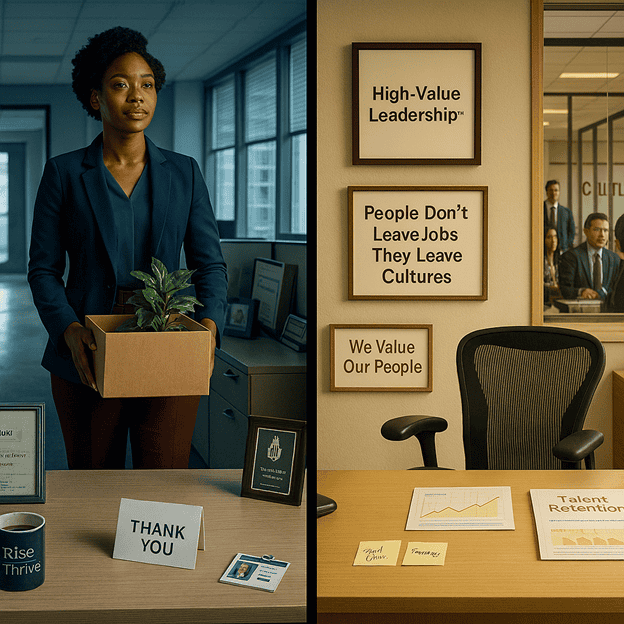

When Good Employees Leave: The Real Reasons Behind Turnover 💔

What Exit Interviews Don’t Tell You (But Should)

She was your star performer. The one who always delivered. The one who mentored newer team members, stayed late when projects demanded it, and brought energy to every meeting. Then she handed in her resignation.

You were shocked.

You conducted the exit interview. She smiled, thanked you for the opportunity, said something vague about “career growth” or “new challenges,” and walked out the door. Two weeks later, you learned through the grapevine that she’s thriving at a competitor—doing essentially the same role, for similar pay.

So what really happened? 🤔

Here’s the uncomfortable truth: good employees rarely leave because of what they tell you in exit interviews. They leave because of what they stopped telling you months—sometimes years—before they started job hunting.

And if you’re losing your best people, especially your high-performing Black women and other traditionally overlooked talent, the problem isn’t the job market. It’s not “quiet quitting.” It’s not generational differences.

The problem is leadership. And culture. And the gap between what you think is happening and what’s actually happening.

Let’s talk about what really drives good employees away—and what you can do about it before your next star performer updates their LinkedIn profile.

The Exit Interview Lie 🎭

Exit interviews are corporate theater. Everyone knows their lines.

The employee leaving says: “It’s a great opportunity for growth” or “The timing was right” or “It’s not you, it’s me.”

The employer hears: “We did everything we could. Some people just want more.”

But research from the Work Institute’s Retention Report reveals something different: 77% of turnover is preventable. That’s not a typo. Three out of four employees who leave could have been retained if the real issues had been identified and addressed.

So why don’t people tell the truth on their way out?

Because they’re exhausted from not being heard on their way up.

Because burning bridges in your industry is bad strategy, even when the bridge deserves burning.

Because they’ve already emotionally detached, and spending their final days explaining what leadership should have noticed feels pointless.

Because for Black women in particular, there’s a calculation: “If I tell them the real reason—the microaggressions, the being overlooked for promotions, the double standards—will they believe me? Or will I become ‘that angry Black woman’ in their story?”

The exit interview isn’t where you learn why people leave. It’s where you learn how little trust existed before they left.

What the Research Really Shows 📊

Gallup’s extensive workplace studies consistently show that people don’t leave jobs—they leave managers and cultures. But let’s get more specific about what drives that decision.

The Top Five Real Reasons Good Employees Leave:

1. Lack of Career Development and Growth

Not just “no promotion opportunities”—that’s too simple. It’s watching less qualified people get promoted while your contributions are praised but never rewarded. It’s being told you’re “not ready yet” without clear criteria for what “ready” looks like. It’s investing in your own development because your organization won’t invest in you.

For Black women, this reality cuts deeper. McKinsey’s “Women in the Workplace” research shows that Black women face more barriers to advancement than any other demographic. We’re promoted at significantly lower rates than white women and all men. We’re less likely to have sponsors. We’re more likely to have our leadership potential questioned.

When a high-performing Black woman leaves for “career growth,” what she’s often leaving is a ceiling she could see but you refused to acknowledge.

2. Feeling Undervalued and Unrecognized

Your top performers aren’t asking for daily gold stars. They’re asking for proportional recognition—compensation, opportunities, influence—that matches their contribution.

There was a company who lost three senior Black women within six months. All were top performers. All cited “better opportunities.” The real story? Each had been doing director-level work at manager-level pay. Each had been promised “we’ll get you there” for over a year. Each watched white male peers with less experience get promoted first.

When they left, leadership was genuinely surprised. “We valued them,” executives said. But value is demonstrated, not declared. If your best people are leaving for 20-30% raises elsewhere, they weren’t properly valued here.

3. Poor Leadership and Management

The saying “people don’t leave companies, they leave managers” exists because it’s statistically true. But what does “poor management” actually mean?

It means managers who:

  • Micromanage instead of trust
  • Take credit for team wins but distance themselves from team struggles
  • Play favorites without even realizing it
  • Avoid difficult conversations until exit interviews
  • Confuse “busy” with “productive” and measure face time over impact
  • Ask for input but have already made decisions
  • Say they value work-life balance while rewarding overwork

For traditionally overlooked employees, add these layers:

  • Managers who claim to “not see color” while never noticing patterns of inequity
  • Leaders who are “mentors” but never sponsors
  • Supervisors who praise in private but promote others in public
  • Managers who interpret confidence as aggression when it comes from Black women

4. Toxic or Misaligned Culture

High-Value Leadership: Transforming Organizations Through Purposeful Culture makes this point repeatedly: culture isn’t what you say in your values statement—it’s what you tolerate in your hallways.

Good employees leave when:

  • The stated values contradict daily reality
  • Politics matter more than performance
  • Speaking up leads to being sidelined
  • “Diversity” is a recruiting slogan but not a retention commitment
  • Work-life balance is preached but presenteeism is rewarded
  • Innovation is celebrated in theory but punished in practice
  • Mistakes are career-ending rather than learning opportunities

A financial services firm couldn’t understand why they kept losing talented Black women after 18-24 months. Exit interviews mentioned “cultural fit.” The real issue? Their “collaborative culture” meant Black women’s ideas were consistently credited to others. Their “high-performance culture” meant Black women were held to different standards—their wins were minimized, their mistakes magnified. Their “family culture” meant white employees got grace and flexibility while Black women got scrutinized.

The culture wasn’t toxic for everyone. It was toxic for them. And that’s the point.

5. Lack of Flexibility and Autonomy

The pandemic permanently shifted expectations around work. Employees who proved they could deliver results remotely are now being told they must return to offices full-time—often without clear business justification.

But it’s deeper than location. It’s about trust. It’s about being treated like responsible adults who can manage their work. It’s about having input into how work gets done, not just being told to execute someone else’s vision of productivity.

High performers especially resist micromanagement. They’ve proven their competence. Being treated like they need constant supervision feels insulting—and it is.

The Compounding Cost of Turnover 💸

Let’s talk money, because sometimes that’s what makes leaders pay attention.

Losing an employee costs between 50-200% of their annual salary when you factor in:

  • Recruitment costs
  • Onboarding and training
  • Lost productivity during the vacancy
  • Institutional knowledge walking out the door
  • Decreased morale among remaining team members
  • Increased burden on teams covering the work
  • Potential client/project disruptions

But there’s a hidden cost that doesn’t show up in spreadsheets: the message it sends.

When your best Black woman leader leaves, what do the other Black women on your team learn? That excellence isn’t enough. That this isn’t where they’ll reach their potential. That they should update their resumes too.

When high performers leave and you replace them with less expensive, less experienced people, what does that tell your remaining top talent? That you don’t actually value excellence—you value cost savings.

Turnover begets turnover. One departure cracks the foundation. Multiple departures, especially among your best people, creates an avalanche.

What Leaders Get Wrong About Retention 🚫

Before we talk about solutions, let’s address the myths:

Myth #1: “It’s About Money”

Sometimes, yes. But research consistently shows compensation ranks 3rd-5th among reasons people leave. If someone leaves for a 10-15% raise, money wasn’t the real reason—it was the validation that somewhere else values them more.

Myth #2: “People Today Just Job Hop”

This conveniently absolves leadership of responsibility. The truth? People stay where they’re valued, developed, and respected. They leave where they’re not. Generational differences don’t explain why your company specifically can’t retain talent.

Myth #3: “We Can’t Compete With Big Tech/Startups/Etc.”

You’re competing on the wrong dimensions. Google can outpay most companies. But can they provide the meaningful work, growth opportunities, inclusive culture, and leadership that retains great people? Sometimes yes, sometimes no. Focus on what you can control.

Myth #4: “Exit Interviews Tell Us What We Need to Know”

If you’re learning about problems in exit interviews, you’ve already failed. Exit interviews are autopsies. You need diagnostics while the patient is alive.

Myth #5: “We Treat Everyone the Same”

This sounds fair. It’s not. “Treating everyone the same” in an unequal system perpetuates inequality. Black women don’t need identical treatment—they need equitable treatment that accounts for different barriers and experiences.

The Rise & Thrive Perspective: What Black Women Know About Leaving 💪🏾

Rise & Thrive: A Black Woman’s Blueprint for Leadership Excellence addresses a reality many leadership books ignore: Black women in corporate America are constantly calculating whether to stay or go.

We’re assessing:

  • Is the mental and emotional labor worth the opportunity?
  • Am I being developed or just used?
  • Is this environment safe enough to bring my full self?
  • Are the barriers to advancement surmountable or systemic?
  • What’s the cost to my health, my confidence, my career trajectory of staying?

These aren’t dramatic questions. They’re survival questions in spaces that weren’t designed for us.

When Black women leave—especially those who’ve been successful—we’re not giving up. We’re giving ourselves permission to stop fighting for scraps and go where we’re properly valued.

The companies that retain us understand this. They:

  • Create clear paths to leadership and actually promote us along them
  • Provide sponsors, not just mentors
  • Address microaggressions and bias proactively, not reactively
  • Measure inclusion as rigorously as they measure productivity
  • Value our perspective as strategic insight, not diversity box-checking
  • Protect our well-being, not just extract our labor

Building a Culture That Retains Excellence ✨

Mastering a High-Value Company Culture centers on a fundamental truth: retention is a byproduct of culture, not a standalone initiative.

You don’t retain great people by offering ping pong tables and free snacks. You retain them by building a culture where excellence is recognized, development is intentional, equity is practiced, and people feel genuinely valued.

Here’s how:

Create Transparent Career Pathways

Vague promises about “future opportunities” don’t retain top talent. Clear criteria, visible advancement paths, and consistent application of promotion standards do.

Action Steps:

  • Document what each level requires (skills, experience, impact)
  • Make promotion criteria public and consistent
  • Provide regular feedback on progress toward next level
  • Set timelines and hold yourself accountable
  • Track promotion rates by demographic—if patterns emerge, investigate why

Invest in Meaningful Development

“Professional development” can’t just be a budget line that gets cut when money tightens. It must be strategic, personalized, and tied to career goals.

Action Steps:

  • Create individual development plans with each team member
  • Provide stretch assignments that build toward their goals
  • Fund conferences, courses, and certifications
  • Offer mentorship AND sponsorship
  • Create leadership development programs with clear outcomes

Practice Recognition That Matters

Recognition isn’t just “Employee of the Month” plaques. It’s compensation equity, promotion fairness, project assignments, speaking opportunities, and public credit for work.

Action Steps:

  • Conduct regular compensation audits for equity
  • Ensure credit goes to the right people, especially in group work
  • Provide recognition in the currency people value (some want visibility, others want flexibility)
  • Make gratitude specific, not generic
  • Tie recognition to advancement, not just appreciation

Build Psychologically Safe Environments

People stay where they can be honest, make mistakes, disagree respectfully, and voice concerns without fear of retaliation.

Action Steps:

  • Model vulnerability as a leader—admit mistakes, ask for help
  • Create multiple channels for feedback (anonymous surveys, skip-levels, town halls)
  • Respond to feedback with action, not defensiveness
  • Address toxic behavior swiftly, regardless of who’s involved
  • Measure psychological safety regularly and improve based on data

Address Inequity Proactively

Waiting for complaints about bias or discrimination is too late. High-value cultures identify and address inequity before it drives people away.

Action Steps:

  • Analyze metrics by demographic (pay, promotions, performance ratings, retention)
  • Conduct listening sessions with underrepresented groups
  • Train leaders on bias, not as one-time compliance but as ongoing skill development
  • Create accountability for diversity and inclusion at leadership level
  • Make equity a performance metric for managers

Provide Flexibility and Autonomy

Trust your people to manage their work. Focus on outcomes, not attendance. Give them input into how goals are achieved.

Action Steps:

  • Default to flexibility unless there’s specific need for structure
  • Measure results, not hours
  • Allow input into work arrangements
  • Trust until there’s reason not to, not the reverse
  • Support true work-life integration

The Stay Interview: Your Early Warning System 🎯

Don’t wait for exit interviews. Conduct stay interviews.

Ask your best people:

  • What makes you excited to come to work?
  • What would make you consider leaving?
  • What do you want to learn or achieve here?
  • Do you feel valued? How do we demonstrate that (or fail to)?
  • What would you change about this team or organization?
  • Is there something I should know that I’m not asking about?

Then—and this is critical—act on what you learn.

Having conversations without taking action is worse than not having conversations at all. It signals that you’re performing care without actually caring.

Warning Signs Your Culture Is Driving People Away ⚠️

Pay attention to these signals:

  • Silence in meetings where there should be discussion (people have disengaged)
  • Increased sick days and PTO among high performers (they’re burnt out or interviewing)
  • Decreased participation in voluntary activities (they’re doing minimum required)
  • Projects take longer with less enthusiasm (motivation has dropped)
  • More complaints to HR (informal resolution has failed)
  • Your top performers stop advocating for others (they’re focused on their own exit)
  • Departures cluster among certain demographics (systemic issues exist)
  • People decline opportunities they would have jumped at before (they’re emotionally checking out)

When Someone Resigns: The Last Opportunity 🚪

Even if someone has decided to leave, how you handle their departure matters.

Do This:

  • Have an honest conversation about what could have been different
  • Express genuine appreciation for their contributions
  • Make their transition smooth (don’t punish them for leaving)
  • Stay in touch—alumni networks are valuable
  • Learn from their departure to prevent the next one

Don’t Do This:

  • Take it personally or act betrayed
  • Make their final weeks miserable
  • Badmouth them after they leave
  • Dismiss their feedback as sour grapes
  • Assume “nothing could have prevented this”

The way you treat departing employees tells remaining employees everything about your character as a leader.

Creating an Alumni Advantage 🌐

Smart organizations maintain relationships with former employees. Why?

  • They might return with new skills and perspective
  • They become ambassadors (or critics) of your brand
  • They’re potential clients, partners, or referral sources
  • They provide honest feedback about what’s changed (or hasn’t)

A technology company created a formal alumni network. They invited former employees to quarterly events, shared company updates, and maintained the relationship. Over three years, 12 high performers returned to the organization—bringing new expertise and costing far less than external recruitment. More importantly, their alumni network generated multiple client relationships and referrals.

Treat departures as relationship transitions, not endings.

Your Retention Action Plan 📋

Here’s what you can implement immediately:

This Week:

  • Schedule stay interviews with your top 3 performers
  • Review recent exits—what patterns exist?
  • Identify one high performer who seems disengaged—have a real conversation

This Month:

  • Audit promotion and compensation data by demographic
  • Survey your team on culture and engagement (anonymous option available)
  • Document career pathways and share them
  • Review your management team’s retention rates—who’s losing people and why?

This Quarter:

  • Implement regular feedback loops (not just annual reviews)
  • Create or refresh your recognition systems
  • Address at least one systemic inequity uncovered in your audit
  • Invest in leadership development focused on retention
  • Build psychological safety metrics into team health assessments

This Year:

  • Overhaul your performance management if it’s demotivating top talent
  • Create sponsorship programs for high-potential employees, especially those traditionally overlooked
  • Build flexibility into your work model based on employee input
  • Track retention as rigorously as you track revenue
  • Make culture and retention a board-level conversation

The Leadership Mirror 🪞

Here’s the hardest question: Are you the kind of leader you would stay for?

Do you:

  • Develop your people or just use them?
  • Give credit or take it?
  • Create psychological safety or fear?
  • Address problems or avoid them?
  • Value equity or just equality?
  • Listen to understand or to respond?
  • See employees as whole humans or just resources?

The leaders who retain great people answer honestly. Then they do the work to become better.

Because here’s what’s true: you can have all the retention strategies in the world. You can offer competitive pay, great benefits, flexible work, and development opportunities. But if your leadership is toxic, your culture is broken, or your equity is performative, good people will still leave.

They’ll just be more polite about it in the exit interview.

Discussion Questions for Leadership Teams 💬

Use these to facilitate honest conversations:

  1. When was the last time someone on our team gave us critical feedback about culture or leadership? What did we do with it?
  2. Look at our last 5-10 departures. What patterns exist in who leaves, when they leave, and where they go? What’s the story those patterns tell?
  3. If we surveyed our team anonymously about whether they feel valued, developed, and respected—what percentage would say yes? What makes us confident in that answer?
  4. Which employees are likely flight risks right now? What specific actions are we taking to address whatever’s driving that risk?
  5. How do we know if underrepresented employees have equitable experiences here? What data are we tracking? What stories are we hearing?
  6. If our best performer resigned tomorrow, would we be surprised? If yes, why don’t we know what’s really happening with our top talent?
  7. What would our former employees say about us if they felt completely safe being honest? How do we create space to actually hear that?

Next Steps: Stop the Bleeding, Build the Culture 🏗️

Immediate Actions:

  • Identify your retention rate by demographic and role—knowledge precedes action
  • Have honest stay conversations with your top performers this week
  • Review your last three exits with brutal honesty about what you could have done differently

Strategic Actions:

  • Build retention into leadership performance metrics
  • Create early warning systems (engagement surveys, skip-levels, stay interviews)
  • Address compensation and promotion equity gaps with urgency
  • Invest in middle management—they’re your retention frontline

Cultural Actions:

  • Make psychological safety measurable and improve it systematically
  • Create clear career pathways with transparent criteria
  • Build sponsorship, not just mentorship, especially for traditionally overlooked talent
  • Shift from exit interviews to stay interviews as your primary feedback mechanism

Partner With Che’ Blackmon Consulting 🤝

If good employees are leaving—especially your high-performing Black women and other traditionally overlooked talent—something fundamental is broken. It’s not a retention problem. It’s a culture problem. It’s a leadership problem. And it requires more than surface-level solutions.

Che’ Blackmon Consulting works with leaders and organizations ready to do the real work of building cultures where excellence stays, grows, and thrives. We bring deep expertise in organizational culture, inclusive leadership, and retention strategy grounded in research and real-world results.

We can help you:

  • Conduct honest culture assessments that identify what’s really driving turnover
  • Develop retention strategies that address root causes, not symptoms
  • Build leadership capacity for creating psychologically safe, equitable environments
  • Design career pathways and development systems that retain top talent
  • Transform from reactive exit management to proactive culture building
  • Create accountability systems for retention and equity

The strongest organizations don’t lose their best people. They create cultures where the best people choose to stay, grow, and build their careers.

Ready to stop losing your top talent and start building the culture that retains them?

📧 admin@cheblackmon.com
📞 888.369.7243
🌐 cheblackmon.com


Your best employees aren’t leaving for better jobs. They’re leaving for better leadership and culture. The good news? That’s something you can change—starting today. ✨

#EmployeeRetention #TalentRetention #HighValueLeadership #OrganizationalCulture #EmployeeTurnover #LeadershipDevelopment #CompanyCulture #BlackWomenInLeadership #DiversityAndInclusion #EmployeeEngagement #PeopleFirst #CultureMatters #RetentionStrategy #InclusiveLeadership #WorkplaceCulture

The Agile Leader: Flexibility Without Chaos 🌟

Navigating Change with Clarity, Not Confusion

Leadership today demands something previous generations never faced at this pace: constant adaptation. Markets shift overnight. Teams go remote, then hybrid, then back again. Priorities change mid-quarter. Yet amid all this movement, your people need stability. They need direction. They need to know you’ve got this.

This is the agile leader’s paradox. How do you stay flexible without creating chaos? How do you pivot without whiplash? How do you embrace change while maintaining the cultural foundation that makes your organization strong?

The answer isn’t in doing more. It’s in leading differently.

Why Traditional Leadership Falls Short in Modern Times

The old playbook taught us to plan, execute, and control. Set your five-year strategy. Lock in your processes. Manage by the numbers. Don’t deviate from the plan.

That worked when the world moved slower.

Today, that rigid approach doesn’t just fail—it damages. Companies that can’t adapt lose talent to competitors who can. Leaders who resist change create cultures of fear and stagnation. Teams that follow outdated playbooks watch opportunities pass them by.

But here’s what most leadership advice gets wrong: flexibility without structure isn’t freedom—it’s chaos.

Random pivots confuse your team. Constant changes without explanation erode trust. “Being agile” becomes code for “we don’t know what we’re doing.” And the people who suffer most? Those who were already fighting for stability in unstable environments.

The Hidden Cost of Chaos for the Traditionally Overlooked

Let’s be direct about something leadership literature often dances around: chaos doesn’t affect everyone equally.

When a leader keeps changing direction without clear communication, team members with established relationships and access can stop by their office for clarification. They grab coffee with the boss and get the real story. They’re in the informal networks where actual decisions get explained.

Black women in corporate spaces? We often don’t have that access. 📊

Research from Catalyst shows that Black women are significantly less likely to have sponsors in leadership and less likely to receive mentorship that translates into career advancement. When leadership becomes unpredictable, this gap widens. We’re expected to perform without the informal knowledge networks that make ambiguity manageable.

There was a company who prided themselves on “moving fast and breaking things.” Their leadership team pivoted strategies quarterly, sometimes monthly. They saw it as innovation. But their Black women employees—particularly those in mid-level roles—reported something different: exhaustion, confusion, and the constant feeling of being behind. Why? Because the real strategy was being discussed in spaces they weren’t invited to. The “agility” was actually favoritism dressed up as flexibility.

This is why agile leadership must be intentional. It’s not enough to be flexible. You must be strategically flexible with transparent structure.

The Framework: Flexibility With Foundation 🏗️

True agile leadership rests on three pillars:

1. Clarity of Core

Your values, mission, and cultural non-negotiables should be rock solid. These don’t flex. They’re your foundation.

In High-Value Leadership: Transforming Organizations Through Purposeful Culture, I emphasize that culture isn’t what you say in a town hall—it’s what you protect when pressure mounts. Your core values are your decision-making filter when everything else is uncertain.

Ask yourself: When we pivot, what stays the same? What principles guide us regardless of market conditions? What promise to our people remains unbreakable?

A technology company navigating massive industry disruption did something powerful: they created a one-page document titled “What Never Changes.” It included commitments like “We develop our people,” “We communicate transparently,” and “We measure success by impact, not just revenue.” When they had to shift their product strategy three times in eighteen months, employees didn’t panic. The core remained steady.

Practical Application: Document your organizational non-negotiables. Not corporate speak—real commitments. Share them. Reference them in every major decision. Make them visible.

2. Transparent Communication

Agility requires trust. Trust requires transparency. It’s that simple.

When you need to change direction, your team needs three things:

  • What is changing
  • Why it’s changing
  • How it affects them specifically

Notice what’s missing? Spin. Sugar-coating. Corporate jargon about “exciting new directions.”

Your people are smart. They can handle the truth. What they can’t handle is guessing, filling in blanks with worst-case scenarios, or discovering later they were kept in the dark.

For Black women navigating corporate spaces—who often face the double bind of being judged more harshly for mistakes while having less access to information—transparent communication isn’t nice to have. It’s survival. When you clearly explain the rationale for changes, you level the playing field. Everyone operates from the same information.

Practical Application: Before announcing any significant change, answer these questions in writing:

  1. What specific problem are we solving?
  2. What alternatives did we consider?
  3. What will success look like?
  4. What support will people receive during this transition?
  5. What questions do I anticipate, and what are the honest answers?

3. Structured Flexibility

Here’s the secret: the best agile leaders don’t wing it. They create structures that allow for adaptation.

Think of jazz music. 🎵 There’s a structure—key, rhythm, chord progressions. Within that structure, musicians improvise brilliantly. Remove the structure? It’s just noise.

Your organization needs the same approach. Clear decision-making frameworks. Defined authorities. Established communication rhythms. Known escalation paths. Within those structures, teams can move quickly and adapt without constantly checking if they’re going rogue.

A manufacturing company shifting to meet supply chain disruptions implemented “flex zones”—areas where teams had pre-authorized authority to make changes without approval, and “core zones” where consistency was critical. Teams knew exactly where they could adapt and where they needed alignment. The result? Faster adaptation without the chaos of everyone improvising everything.

Practical Application: Identify where flexibility serves you and where consistency is critical. Create clear boundaries. Empower teams within those boundaries.

The Rise & Thrive Principle: Leadership Through Disruption 💪🏾

In Rise & Thrive: A Black Woman’s Blueprint for Leadership Excellence, I discuss the unique strengths Black women bring to leadership—forged through navigating systems not designed for us. We understand how to:

  • Read rooms and adapt quickly
  • Build trust in uncertain environments
  • Lead with authenticity when conformity is rewarded
  • Create pathways where none existed

These aren’t just survival skills. They’re organizational superpowers in times of disruption.

Agile leadership, done right, harnesses these strengths—not just from Black women leaders, but from everyone who has learned to thrive in ambiguity. It creates cultures where adaptation is collaborative, not top-down. Where flexibility serves the mission, not executive convenience.

The question isn’t whether your Black women employees can handle change. They’ve been handling it. The question is whether your leadership style allows their adaptive expertise to shape your organization’s response—or whether you’re leaving that insight untapped.

Best Practices from High-Performing Agile Organizations 📈

Current research from McKinsey, BCG, and Deloitte reveals patterns among organizations that successfully balance flexibility with stability:

They over-communicate during transitions. Leaders think they’ve explained the change enough. Then they explain it again. And again. Through multiple channels. With space for questions. Repetition isn’t annoying—it’s necessary.

They involve diverse voices in decision-making. The organizations that pivot most successfully are those that source input from multiple levels and perspectives before deciding. Diverse teams spot problems and opportunities that homogeneous leadership misses.

They measure culture, not just outcomes. Agile organizations track trust scores, psychological safety metrics, and inclusion indicators alongside financial results. Why? Because culture is what allows fast adaptation. Damage your culture, and you’ve destroyed your agility.

They invest in middle management. The managers between executive decisions and frontline execution are your agility engine. When they’re equipped to lead through change, your organization flows. When they’re bypassed or under-resourced, you get chaos.

They create learning systems, not blame cultures. When a pivot doesn’t work, the question is “What did we learn?” not “Who screwed up?” This dramatically increases the speed at which organizations can try, adjust, and improve.

Mastering High-Value Culture in Agile Times 🎯

Mastering a High-Value Company Culture centers on a fundamental truth: your culture is your competitive advantage. Not your product. Not your funding. Not even your people—because great people leave bad cultures.

High-value cultures in agile organizations share specific characteristics:

Psychological Safety is Protected, Not Presumed. People need to know they can voice concerns about changes, admit when they don’t understand new directions, and flag potential problems without career risk. This is especially critical for traditionally overlooked employees who have learned that speaking up can backfire.

Equity is Embedded in Change Management. Every significant change should include an impact assessment: How does this affect different employee groups? Who might face barriers in this new approach? Where might we accidentally create disadvantages? This isn’t bureaucracy—it’s smart leadership.

Development is Continuous, Not Episodic. Agile organizations don’t wait for annual training. They build learning into the workflow. They create peer learning systems. They expect leaders at all levels to develop their teams constantly.

Recognition Celebrates Adaptation. What you celebrate is what you multiply. If you only recognize results, you discourage the experimentation that drives agility. Celebrate sma