Culture Ghosts: Exorcising Toxic Behaviors from Your Organization 👻

When the Past Haunts Your Present Success

Every organization has them. Those lingering behaviors, unspoken rules, and toxic patterns that float through hallways like spectral remnants of a dysfunctional past. These culture ghosts—invisible yet powerfully present—sabotage innovation, drain talent, and create environments where excellence suffocates under the weight of “how things have always been done.”

The cost? Staggering. 💸

Recent Gallup research reveals that actively disengaged employees (often victims of toxic culture) cost U.S. companies up to $605 billion annually in lost productivity. For Black women professionals, who navigate additional layers of bias and microaggressions, these ghostly behaviors create particularly treacherous terrain. MIT Sloan research shows that toxic culture is 10.4 times more likely than compensation to predict employee turnover—and for traditionally overlooked talent, this multiplier effect intensifies.

Identifying Your Organization’s Phantoms 🔍

Culture ghosts manifest in various forms, each leaving distinct traces of dysfunction in their wake. Understanding their signatures helps leaders recognize what needs exorcising.

The Ghost of Selective Transparency haunts organizations where information flows freely to some while others remain perpetually in the dark. There was a Fortune 500 tech company where critical project updates routinely bypassed women of color on the team. Despite holding senior positions, these professionals discovered major strategic shifts through hallway conversations rather than formal channels. The result? Diminished influence, reduced project success rates, and eventual talent exodus.

The Phantom of Performative Inclusion appears when diversity initiatives exist on paper but lack substance. Organizations celebrate Black History Month with enthusiasm yet maintain leadership pipelines that mysteriously exclude Black talent from advancement opportunities. As highlighted in “Rise & Thrive: A Black Woman’s Blueprint for Leadership Excellence,” authentic inclusion requires systemic change, not seasonal gestures.

The Specter of Unexamined Privilege manifests when certain groups enjoy unearned advantages while others face invisible barriers. Consider how “executive presence” often codes for conformity to white, masculine leadership styles, effectively excluding those who lead differently but equally effectively.

The Haunting Impact on Traditionally Overlooked Talent 🎯

Black women in corporate spaces often serve as organizational canaries in the coal mine—experiencing toxic culture’s effects first and most intensely. According to Lean In’s 2023 Women in the Workplace study, Black women leaders face the steepest drop-off at every level of advancement, with only 4% reaching C-suite positions despite comprising 7.4% of the U.S. population.

These culture ghosts create what researchers call “emotional tax”—the heightened state of awareness and additional effort required to navigate biased environments. The Center for Talent Innovation found that 58% of Black professionals experience this tax regularly, leading to decreased engagement, innovation, and retention. The ripple effects extend beyond individual impact. Organizations hemorrhage talent, lose market insights from diverse perspectives, and ultimately compromise their competitive advantage. As “Mastering a High-Value Company Culture” emphasizes, cultural excellence requires creating environments where all talent thrives, not just the traditionally privileged few.
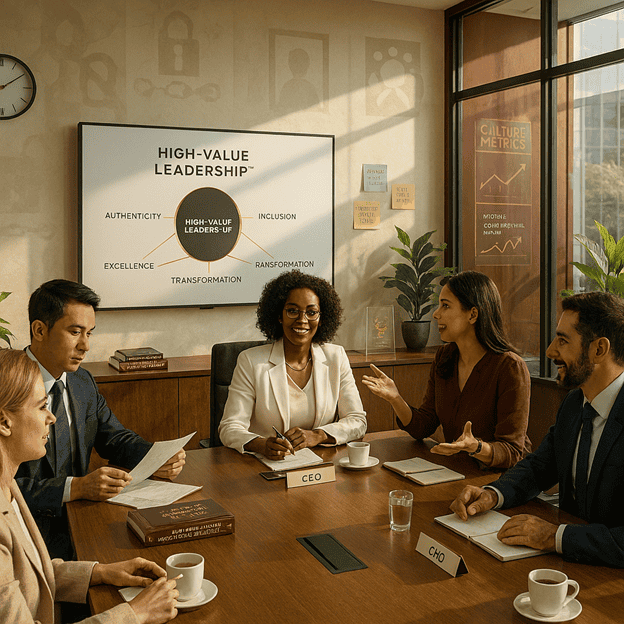
The Exorcism Toolkit: Banishing Toxic Behaviors 🛠️

Removing culture ghosts requires deliberate, sustained action. Here’s your practical roadmap for organizational transformation:

1. Conduct a Cultural Séance (Assessment) Start with brutal honesty. Deploy anonymous culture assessments that specifically probe for toxic behaviors. Ask pointed questions about psychological safety, advancement barriers, and microaggression frequency. Disaggregate data by demographics to identify disparate impacts. Numbers don’t lie—even when leaders might.

2. Name Your Ghosts Publicly Acknowledgment precedes change. There was a global consulting firm that transformed its culture by publicly identifying five specific toxic behaviors plaguing their organization, including “brilliant jerks get promoted” and “work-life balance is for the weak.” Naming these ghosts stripped them of their power and created accountability for change.

3. Install Ghost Detectors (Systems) Create mechanisms that surface toxic behaviors in real-time:

  • Anonymous reporting systems with guaranteed investigation protocols
  • Regular pulse surveys tracking cultural health metrics
  • Exit interview analyses examining patterns by demographic groups
  • Mentorship programs pairing traditionally overlooked talent with senior sponsors who actively advocate for their advancement

4. Perform Regular Cleansing Rituals Culture change requires repetition and reinforcement. Institute monthly “culture checks” where teams explicitly discuss behavioral norms. Celebrate ghost-busting victories when toxic patterns get disrupted. Make cultural health as measurable and valued as financial performance.

Building Ghost-Resistant Cultures 🏗️

Prevention beats intervention every time. “High-Value Leadership: Transforming Organizations Through Purposeful Culture” outlines the framework for creating environments inherently resistant to toxic behaviors.

Psychological Safety as Foundation Amy Edmondson’s research at Harvard Business School demonstrates that psychological safety—the belief that one can speak up without risk of punishment or humiliation—serves as toxic culture’s greatest antidote. Organizations with high psychological safety see 47% higher performance outcomes and significantly improved retention of diverse talent.

Radical Accountability Architecture There was a healthcare organization that eliminated their ghost of favoritism by implementing “accountability pods”—cross-functional groups responsible for calling out toxic behaviors regardless of hierarchy. Senior leaders faced the same consequences as entry-level employees for cultural violations. The result? 73% improvement in employee trust scores within eighteen months.

Inclusive Decision-Making Structures Ghosts thrive in shadows. Illuminate decision-making processes by requiring diverse representation in all strategic discussions. One manufacturing company mandated that no decision affecting more than 50 employees could proceed without input from at least three traditionally overlooked perspectives. Innovation metrics soared 34% within one year.

The ROI of Exorcism 💰

Banishing culture ghosts delivers measurable returns:

  • Increased Innovation: BCG research shows companies with above-average diversity scores report 45% higher innovation revenue
  • Enhanced Retention: Eliminating toxic culture reduces turnover costs—often 50-200% of annual salary per departed employee
  • Improved Performance: Gallup finds that highly engaged teams (those in healthy cultures) show 21% greater profitability
  • Market Advantage: McKinsey’s Diversity Wins report demonstrates that companies in the top quartile for ethnic diversity outperform peers by 36% in profitability

For Black women professionals specifically, ghost-free environments unlock extraordinary potential. Research from the National Women’s Law Center shows that closing opportunity gaps for Black women could add $300 billion to the U.S. economy annually.

Current Trends in Cultural Transformation 📈

Today’s leading organizations employ cutting-edge approaches to maintain ghost-free cultures:

AI-Powered Bias Detection: Companies like Textio use artificial intelligence to identify biased language in job postings, performance reviews, and internal communications—catching ghosts before they materialize.

Cultural Heat Mapping: Organizations create visual representations of cultural health across departments, identifying toxic hotspots requiring immediate intervention.

Reverse Mentoring Programs: Senior leaders learn from junior employees, particularly those from traditionally overlooked backgrounds, disrupting power dynamics that enable ghostly behaviors.

Transparency Dashboards: Public scorecards tracking diversity metrics, promotion rates by demographic, and pay equity data leave nowhere for ghosts to hide.

Your Ghost-Hunting Action Plan 🎬

Week 1-2: Assessment Phase

  • Deploy anonymous culture survey
  • Analyze exit interview data from past twelve months
  • Interview five traditionally overlooked employees about their experiences

Week 3-4: Identification Phase

  • Compile list of top five culture ghosts
  • Map impact on different demographic groups
  • Calculate financial cost of each toxic behavior

Week 5-8: Intervention Design

  • Create targeted interventions for each identified ghost
  • Establish success metrics and accountability structures
  • Secure leadership commitment and resources

Week 9-12: Implementation Launch

  • Roll out pilot interventions in highest-impact areas
  • Communicate transparently about the journey
  • Celebrate early wins while maintaining long-term focus

Ongoing: Vigilance and Maintenance

  • Monthly culture pulse checks
  • Quarterly ghost-hunting audits
  • Annual comprehensive culture assessment

Discussion Questions for Your Leadership Team 💭

  1. Which culture ghosts have we been reluctant to acknowledge in our organization? What makes them comfortable to ignore?
  2. How might our traditionally overlooked employees experience our culture differently than our majority groups? Have we ever asked?
  3. What systems currently reward or enable toxic behaviors, even unintentionally?
  4. If we eliminated our biggest culture ghost, what specific business outcomes would improve? Can we quantify this impact?
  5. Who in our organization has the most to lose from culture change? How do we address their resistance?
  6. What would our Black women employees say about our culture if guaranteed complete anonymity and no retaliation?
  7. How do we measure cultural health with the same rigor we measure financial performance?

Next Steps: From Haunted to High-Value 🚀

Culture transformation isn’t a spectator sport. Every leader, at every level, must actively participate in the exorcism process. Start small but start today. Identify one ghost—just one—and commit to its elimination within ninety days.

Remember, culture ghosts don’t disappear through wishful thinking or corporate prayers. They require deliberate action, sustained commitment, and often, external expertise to fully banish. As outlined in “Mastering a High-Value Company Culture,” lasting transformation happens when organizations move beyond performative gestures to systemic change.

The most successful ghost-hunting expeditions often benefit from experienced guides who’ve navigated these terrains before. Leaders who recognize patterns invisible to those immersed in the daily haunting. Professionals who bring both the flashlight to illuminate shadows and the tools to banish what lurks within them.


Ready to exorcise the toxic behaviors haunting your organization?

Che’ Blackmon Consulting specializes in transforming haunted cultures into high-value environments where all talent thrives—especially those traditionally overlooked. We bring proven frameworks, measurable approaches, and the courage to name what others won’t.

Don’t let culture ghosts cost you another day of innovation, another quarter of profits, or another exceptional employee who deserved better.

Begin your transformation journey:

📧 admin@cheblackmon.com
📞 888.369.7243
🌐 cheblackmon.com

Because every organization deserves to be ghost-free, and every professional deserves to thrive in the light.

#HighValueLeadership, #CorporateCulture, #ToxicWorkplace, #LeadershipDevelopment, #DiversityAndInclusion, #BlackWomenLead, #CultureTransformation, #InclusiveLeadership, #WorkplaceCulture, #OrganizationalChange, #PsychologicalSafety, #ExecutiveLeadership, #CulturalExcellence, #DEI, #BlackExcellence, #WomenInLeadership, #CultureChange, #LeadershipCoaching, #BusinessTransformation, #WorkplaceWellbeing

The Scary Truth About Workplace Ageism (And How to Fight It) 🚨

By Che’ Blackmon


Let me tell you something that keeps me up at night: Ageism is one of the most socially acceptable forms of discrimination in corporate America.

We’ll call out racism. We’ll challenge sexism. We’ll demand better when we see discrimination based on disability or sexual orientation. But ageism? It slides right under the radar, wrapped in euphemisms like “cultural fit,” “overqualified,” and “looking for fresh perspectives.”

The truth is scarier than most leaders want to admit.

The Numbers Don’t Lie 📊

According to AARP research, 78% of older workers have seen or experienced age discrimination at work. Think about that. Nearly 8 out of 10 people. Yet only 3% of age discrimination charges result in reasonable cause findings.

Here’s what makes this particularly insidious: unlike other protected characteristics, everyone will eventually face age discrimination if they work long enough. It’s not a matter of if, but when.

For Black women in corporate spaces—those of us navigating what I call the “intersection of invisibility”—age discrimination compounds existing barriers. We’re already fighting against racial and gender bias. Add age to that equation, and you’ve got a perfect storm of marginalization that can derail even the most accomplished career.

What Ageism Actually Looks Like in the Workplace 👀

Forget the obvious scenarios of someone being pushed out at 65. Modern ageism is far more sophisticated and far more damaging.

It looks like this:

A 52-year-old marketing director with 20 years of experience gets passed over for a promotion. The feedback? “We’re looking for someone who can grow with the role.” Translation: someone younger.

A 47-year-old Black woman in tech gets excluded from innovation meetings despite her track record of successful product launches. Her ideas are deemed “traditional” while a 28-year-old colleague’s nearly identical suggestions are called “fresh thinking.”

A 55-year-old senior manager suddenly finds herself removed from high-visibility projects. HR says the company is “investing in emerging talent.” What they mean is they’re investing in younger talent.

The Intersection Nobody Talks About Enough 🔍

In my e-book “Rise & Thrive: A Black Woman’s Blueprint for Leadership Excellence,” I discuss how Black women face unique challenges in climbing—and staying at—leadership levels. When you add age to the mix, those challenges multiply exponentially.

Research from Catalyst shows that Black women already earn just 64 cents for every dollar earned by white men. As we age, that gap often widens. We’re seen as either “too aggressive” when we advocate for ourselves or “past our prime” when we demonstrate the seasoned judgment that comes with experience.

There was a Fortune 500 company who conducted an internal audit and discovered something alarming: while their overall workforce included a healthy percentage of employees over 50, their leadership pipeline for this demographic had completely dried up. Even more telling? Black women over 45 were virtually absent from succession planning discussions—despite many having stellar performance records.

The message was clear: experience wasn’t valued. It was feared.

Why Companies Sabotage Themselves 💼

Here’s the business case that should terrify every C-suite leader: ageism is actively destroying your competitive advantage.

In “Mastering a High-Value Company Culture” and “High-Value Leadership: Transforming Organizations Through Purposeful Culture,” I emphasize that high-value cultures leverage the full spectrum of talent. That includes leveraging the institutional knowledge, strategic thinking, and crisis management skills that come with decades of experience.

Yet companies continue to shoot themselves in the foot.

They push out experienced employees and then spend millions on consultants to tell them things their departed staff already knew. They complain about losing institutional knowledge while simultaneously creating cultures where “tenure” becomes a liability rather than an asset. They preach innovation while ignoring that some of the most groundbreaking innovations come from people who’ve seen enough business cycles to recognize genuine opportunities.

A healthcare organization once restructured their entire operations team, pushing out several directors in their 50s under the guise of “organizational agility.” Within 18 months, they faced a crisis that their remaining younger team had never encountered. The solution? They had to hire consultants—some of whom were the same age as the people they’d pushed out—at triple the cost.

The irony would be funny if it weren’t so expensive.

The Hidden Cost to Those “Traditionally Overlooked” 💔

Let’s be real about who pays the highest price for workplace ageism: those who were already fighting uphill battles.

Black women. Latinx professionals. LGBTQ+ employees. People with disabilities. Indigenous workers.

When you’ve spent your entire career overcoming barriers that others never even see, finally reaching a point of seniority and influence should feel like victory. Instead, ageism threatens to erase everything you’ve built.

I’ve watched brilliant Black women leaders—women who survived and thrived through decades of microaggressions, pay inequity, and being the “only one in the room”—get systematically edged out just as they reach their peak earning and influence years. The same companies that post about diversity and inclusion on LinkedIn have no problem suggesting these women “consider retirement” at 53. That’s not culture. That’s cultural erasure.

Fighting Back: Your Battle Plan ⚔️

So what do we do? Because make no mistake—this is a fight worth having.

For Individual Professionals:

1. Document Everything Keep records of your contributions, positive feedback, and accomplishments. If age discrimination rears its head, you’ll need evidence. Screenshot those emails praising your work. Save performance reviews. Track your project successes.

2. Build Your External Brand Your value isn’t determined by one employer’s ageist culture. Strengthen your LinkedIn presence. Speak at industry events. Write articles. Mentor others. Build a personal brand that makes you indispensable.

3. Create Alliances Find allies across age groups. The junior colleague who values your mentorship today may be in a position to advocate for you tomorrow. Cross-generational collaboration isn’t just good for business—it’s good strategy.

4. Stay Current (But on Your Terms) Yes, you should understand emerging technologies and trends. No, you don’t need to pretend to be 25. Bring your experience to new tools and approaches. Your ability to contextualize innovation within broader strategic frameworks is precisely what makes you valuable.

5. Know Your Rights The Age Discrimination in Employment Act (ADEA) protects workers 40 and older. If you suspect age discrimination, consult with an employment attorney. Sometimes the mere knowledge that you know your rights can shift organizational behavior.

For Leaders and Organizations:

1. Audit Your Practices Look at your hiring, promotion, and retention data by age cohort. If everyone in leadership is between 35-45, you have a problem. If your layoffs disproportionately affect workers over 50, you have a legal liability.

2. Reframe Experience as an Asset Stop using “overqualified” as a rejection reason. Start using language that values experience: “seasoned judgment,” “proven track record,” “strategic perspective.” Words matter. They shape culture.

3. Create Intergenerational Teams The best teams leverage diverse perspectives—including age diversity. A 28-year-old digital native and a 58-year-old industry veteran should be collaborating, not competing.

4. Fix Your Benefits Ensure your benefits package appeals across age ranges. That means robust healthcare, yes, but also professional development opportunities that don’t assume everyone wants to “level up” into management. Some people want to deepen expertise. Honor that.

5. Make Age Part of Your DEI Strategy Diversity isn’t just about race, gender, and sexual orientation. Age diversity matters. Include it in your training. Track it in your metrics. Hold leaders accountable for it.

Real Talk: The Generational Divide Myth 🤝

Let’s bust a pervasive myth: that generational differences are unbridgeable.

You’ve heard the stereotypes. Boomers are stuck in their ways. Gen X is cynical. Millennials are entitled. Gen Z is fragile.

It’s all nonsense—and it’s convenient nonsense that allows ageism to flourish.

Research from the Center for Generational Kinetics shows that generational differences in the workplace are vastly overstated. What we call “generational gaps” are often just differences in life stage or access to resources. The 25-year-old who wants flexibility and the 55-year-old who wants flexibility aren’t from different planets—they’re human beings with similar needs expressed differently.

A tech startup once convinced themselves they needed an “all millennial” workforce to stay innovative. They structured everything around this assumption: unlimited PTO (but an unspoken culture of never taking it), open offices (that destroyed focus time), and “mandatory fun” (that felt like anything but). When they finally hired a 50-year-old product manager out of desperation during a crisis, she transformed their development process—not despite her age, but because her experience helped her cut through the performative elements to focus on actual outcomes.

Within six months, they’d revised their entire hiring strategy.

The Future We’re Building 🌟

Here’s what I know after decades of building high-value cultures: the future of work doesn’t belong to any single generation. It belongs to organizations brave enough to leverage every generation.

The companies that will thrive in the next decade understand that a 62-year-old Black woman who’s navigated corporate America for 35 years brings something to the table that no MBA program can teach. She’s survived market crashes, led through technological revolutions, and built resilience in the face of systemic barriers.

That’s not obsolescence. That’s mastery.

High-value leadership—the kind I write about and teach—recognizes that experience isn’t a liability to be “aged out.” It’s an asset to be amplified. When organizations create cultures where people can contribute meaningfully across their entire career arc, everyone wins.

Your Action Plan: 30-60-90 Days 📅

Days 1-30: Awareness

  • Assess your current situation honestly. Are you experiencing ageism? Are you perpetuating it?
  • If you’re in leadership, review your organization’s age demographics across levels.
  • Start conversations about ageism with trusted colleagues.

Days 31-60: Action

  • Implement at least one strategy from this article.
  • If you’re experiencing discrimination, consult with HR or legal counsel.
  • If you’re a leader, initiate one policy change that actively counters ageism.

Days 61-90: Advocacy

  • Become a vocal advocate for age diversity.
  • Mentor someone from a different generation.
  • Share your story or insights to help others.

Discussion Questions for Your Team 💬

  1. How does our organization currently value—or devalue—experience and tenure?
  2. What specific language or practices in our workplace might be perpetuating ageism, even unintentionally?
  3. How are we ensuring that Black women and other traditionally overlooked professionals aren’t disproportionately affected by age bias?
  4. What would change if we truly saw age diversity as a competitive advantage rather than a challenge to manage?
  5. Where are the gaps in our leadership pipeline when we look at age demographics? What’s causing those gaps?

Let’s Do This Work Together 🤝

Fighting workplace ageism isn’t a solo endeavor. It requires systemic change, courageous leadership, and a commitment to building truly high-value cultures where everyone—regardless of age, race, or gender—can rise and thrive.

At Che’ Blackmon Consulting, we specialize in transforming organizational cultures to become more equitable, inclusive, and effective. Whether you’re an individual professional navigating age discrimination or a leader committed to building better systems, we’re here to partner with you.

Ready to create lasting change?

📧 admin@cheblackmon.com
📞 888.369.7243
🌐 cheblackmon.com

Let’s build workplaces where experience is honored, diverse voices are amplified, and every professional—at every age—has the opportunity to contribute their best work.

Because the scary truth about ageism? It doesn’t have to be our future.

We can fight it. We can change it. We can build something better.

The question is: will you?


About Che’ Blackmon Consulting
We partner with organizations and leaders to build high-value cultures where everyone can rise and thrive. Through strategic consulting, leadership development, and transformative culture work, we help companies turn their values into action and their potential into performance.

#WorkplaceAgeism #HighValueLeadership #DiversityAndInclusion #BlackWomenInLeadership #LeadershipDevelopment #CorporateCulture #AgeDiscrimination #InclusiveLeadership #OrganizationalCulture #DEI #WomenInBusiness #EquityInTheWorkplace #LeadershipExcellence #CheBlackmonConsulting