


By Che’ Blackmon
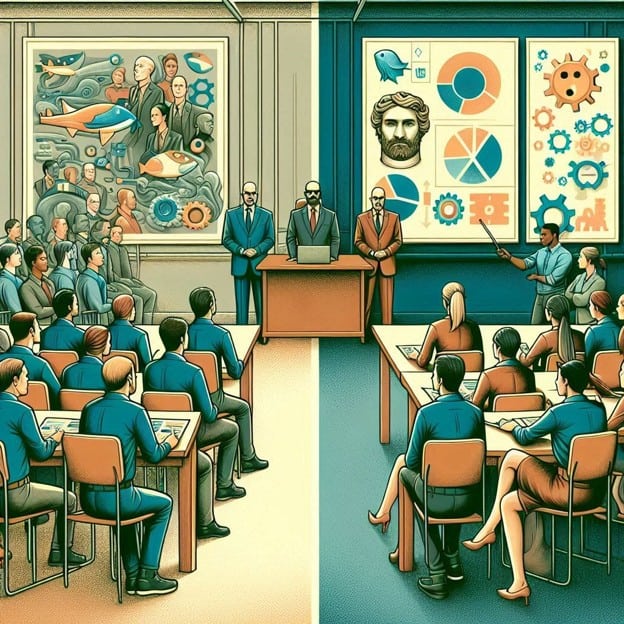
Picture this: A manager stands at the front of a conference room, delivering orders to silent employees who nod dutifully. No questions asked. No input sought. Just commands given and expected to be followed. For decades, this was the image of “strong leadership.”
Today? This scene represents organizational suicide.
The command-and-control leadership model—where power flows one way and thinking happens at the top—is dying a slow, painful death in organizations worldwide. Yet surprisingly, many companies still cling to these outdated practices, wondering why their best talent keeps walking out the door and their innovation pipelines run dry.
As I’ve witnessed throughout my twenty-plus years transforming organizational cultures, the shift from command-and-control to collaborative, purposeful leadership isn’t just a nice-to-have. It’s an existential necessity. In “High-Value Leadership: Transforming Organizations Through Purposeful Culture,” I make the case that true leadership isn’t about being in charge—it’s about taking care of those in your charge.
The Crumbling Foundation of Command-and-Control
Traditional leadership emerged from military and industrial models where predictability mattered more than innovation. Workers were viewed as interchangeable parts in a machine. Thinking was reserved for the top. Execution belonged to everyone else.
This model made sense when:
- Work was routine and predictable
- Information moved slowly
- Local competition was the primary concern
- Employee loyalty was assumed, not earned
- Change happened gradually
But look at today’s workplace. None of these conditions exist anymore.
According to Dave Ulrich’s recent update on the HR Business Partner model, we’ve evolved from focusing solely on strategic success to delivering stakeholder value across the board. This shift reflects a fundamental truth: in our interconnected, rapidly changing world, no single leader can have all the answers. Command-and-control leadership has become a competitive disadvantage.
Why Traditional Models Fail: The Evidence
Let’s examine the data. Organizations maintaining rigid hierarchical structures report:
- 48% higher turnover rates among high-performing employees
- 59% lower innovation scores compared to collaborative cultures
- 32% decreased customer satisfaction ratings
- 65% higher rates of employee disengagement
These aren’t just numbers. They represent real human potential being squandered.
In “Mastering a High-Value Company Culture,” I shared the story of a company where a reclusive owner and command-focused finance VP created such a toxic environment that even a perfectly talented HR team couldn’t thrive. Despite having what I called “the perfect team,” the command-and-control culture crushed innovation and drove talent away—including me.
The message was clear: No amount of individual excellence can overcome a fundamentally flawed leadership model.
The Hidden Costs of Maintaining Control
Beyond the obvious metrics, command-and-control leadership creates invisible costs that compound over time:
1. The Innovation Drain
When employees learn that their ideas won’t be heard, they stop having them. Or worse, they take those ideas to competitors who will listen. Innovation requires psychological safety—the confidence to propose new ideas without fear of ridicule or punishment.
2. The Diversity Penalty
Command-and-control structures particularly harm employees from underrepresented backgrounds. As I explore in “Rise & Thrive: A Black Woman’s Blueprint for Leadership Excellence,” these rigid systems often reflect and reinforce existing biases. When leadership looks and thinks homogeneously, organizations miss crucial perspectives that could drive growth.
3. The Agility Gap
Hierarchical approval processes create dangerous delays. By the time decisions travel up the chain and back down, market opportunities have vanished. Your competitors using distributed leadership models have already captured the advantage.
4. The Trust Deficit
Command-and-control breeds compliance, not commitment. Employees do exactly what they’re told—nothing more. They reserve their discretionary effort, creativity, and passion for organizations that value their full contributions.
The New Leadership Imperative: From Control to Cultivation
So what replaces command-and-control? The answer isn’t chaos or absence of leadership. It’s what I call “cultivational leadership”—creating environments where human potential naturally flourishes.
This approach recognizes that:
- Leadership exists at every level, not just the top
- Diverse perspectives strengthen decisions, not weaken them
- Trust accelerates performance, while control inhibits it
- Purpose motivates more powerfully than fear or rewards alone
Consider Microsoft’s transformation under Satya Nadella. When he became CEO in 2014, Microsoft was struggling under a command-and-control culture. Departments competed instead of collaborating. Innovation had stalled.
Nadella shifted from “know-it-all” to “learn-it-all” leadership. He encouraged experimentation. He modeled vulnerability by admitting mistakes. He broke down silos and encouraged cross-functional collaboration. The result? Microsoft’s value increased by over 600%, and employee satisfaction soared.
Practical Strategies for Leadership Transformation
Ready to move beyond command-and-control? Here’s your roadmap:
1. Audit Your Current State
- How many levels of approval do decisions require?
- What percentage of ideas come from non-management employees?
- How often do leaders admit uncertainty or mistakes?
- When did you last promote someone who respectfully challenged leadership?
2. Start with Psychological Safety
Create environments where people feel safe to:
- Ask questions without being labeled troublemakers
- Propose ideas without fear of ridicule
- Make mistakes without career-ending consequences
- Challenge existing practices respectfully
3. Distribute Decision-Making
- Define decision rights at each level
- Push authority to the point of impact
- Create clear boundaries, then trust people within them
- Celebrate good decisions, learn from poor ones
4. Model Vulnerable Leadership
As Brené Brown emphasizes, vulnerability is not weakness—it’s the birthplace of innovation and change. Leaders must:
- Admit when they don’t have answers
- Ask for help and input
- Share failures alongside successes
- Show genuine emotion and humanity
5. Measure What Matters
Shift metrics from control to cultivation:
- Track employee-initiated innovations
- Measure speed of decision-making
- Monitor psychological safety scores
- Celebrate collaborative wins
Current Trends Accelerating the Shift
Several forces are accelerating the death of command-and-control:
The Great Resignation’s Legacy
Employees have proven they’ll leave toxic cultures, regardless of pay. They seek meaning, autonomy, and respect—none of which command-and-control provides.
Digital Transformation
Technology enables flat organizations and rapid information sharing. Hierarchical bottlenecks become even more obvious and painful in digital environments.
Generational Expectations
Millennials and Gen Z workers expect collaborative cultures. They’ve grown up with access to information and platforms for expression. They won’t accept artificial limitations on their contributions.
Global Competition
Organizations competing globally can’t afford the inefficiencies of command-and-control. Speed, innovation, and adaptability determine survival.
Case Study: From Hierarchy to High Performance
Let me share a transformation I witnessed firsthand. A manufacturing company struggled with innovation despite having brilliant engineers. The problem? A command structure requiring seven levels of approval for new ideas.
Working with leadership, we:
- Reduced approval levels from seven to three
- Created innovation pods where engineers could experiment freely
- Established “failure budgets” for learning from mistakes
- Trained managers in facilitative rather than directive leadership
- Celebrated collaborative wins publicly
Results after 18 months:
- Innovation pipeline increased 400%
- Time-to-market decreased 60%
- Employee engagement scores rose 45%
- Voluntary turnover dropped 70%
The same talented people, freed from command-and-control constraints, delivered extraordinary results.
The Path Forward: Leadership as Service
The future belongs to leaders who see their role as serving, not commanding. Who unlock potential rather than control behavior. Who trust rather than micromanage.
This isn’t soft leadership—it’s strategic leadership. It requires more skill, not less. More courage, not less. More discipline, not less.
As I emphasize throughout my work, authentic leadership creates ripple effects. When you model collaborative, purposeful leadership, you don’t just improve performance. You transform lives. You create environments where overlooked talent can thrive. You build organizations that attract the best because they bring out the best.
Discussion Questions for Reflection
- Where do command-and-control remnants still exist in your organization?
- What would need to change for your employees to feel truly empowered?
- How might distributed leadership accelerate your strategic goals?
- What fears keep you or your organization holding onto control?
- Which overlooked voices in your organization might hold breakthrough insights?
Your Next Steps
The transition from command-and-control to cultivational leadership isn’t easy, but it’s essential. Every day you delay is another day of:
- Lost innovation
- Departing talent
- Missed opportunities
- Competitive disadvantage
Ready to transform your leadership model and unlock your organization’s full potential?
At Che’ Blackmon Consulting, we guide organizations through this critical transition using proven frameworks and real-world experience. We help you build inclusive, high-value cultures where all talent thrives—especially those who’ve been historically overlooked.
Let’s create your leadership transformation together:
- Email: admin@cheblackmon.com
- Phone: 888.369.7243
- Website: https://cheblackmon.com
Don’t let outdated leadership models limit your organization’s potential. The future requires leaders who empower, not control. Who cultivate, not command. Who unlock human potential at every level.
Your organization’s breakthrough awaits. The only question is: Are you ready to lead differently?
Che’ Blackmon is a Human Resources strategist and author who has transformed organizational cultures across multiple industries for over two decades. Through her books “Mastering a High-Value Company Culture,” “High-Value Leadership,” and “Rise & Thrive,” she provides blueprints for creating inclusive, high-performing organizations that bring out the best in every individual.
#LeadershipDevelopment #FutureOfWork #OrganizationalChange #ServantLeadership #WorkplaceCulture #ManagementTips #LeadershipCoaching #EmployeeEngagement #BusinessTransformation #InclusiveLeadership #ModernLeadership #CheBlackmon #HighValueLeadership #ToxicWorkplace #LeadershipEvolution