Blog

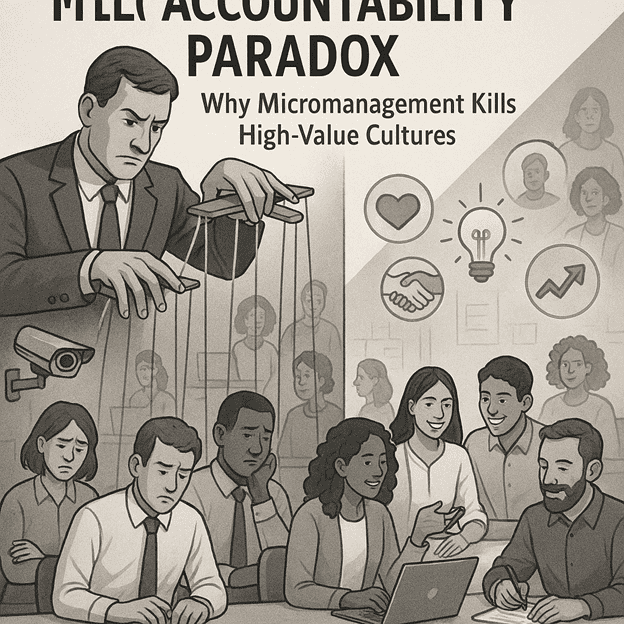
The Accountability Paradox: Why Micromanagement Kills High-Value Cultures 🎯

Here’s the paradox destroying workplace cultures: The tighter managers grip control, the less accountability they actually create. Micromanagement doesn’t produce excellence—it produces compliance, resentment, and talent exodus. For Black women and other traditionally overlooked employees who already face heightened scrutiny, micromanagement becomes a particularly toxic force that drives them from organizations that desperately need their perspectives.

The Illusion of Control vs. Real Accountability 🎭

Real accountability thrives in high-trust environments. Micromanagement thrives in fear-based ones. The difference? About $450 billion in annual productivity losses, according to research from the American Psychological Association.

There was a financial services firm that installed keystroke monitoring software to ensure “productivity.” Within six months, their top performers—including three high-potential Black women who’d been thriving—left for competitors. The monitoring didn’t catch a single case of time theft. It did successfully communicate that the company didn’t trust its employees to do their jobs.

As outlined in “High-Value Leadership,” accountability isn’t about surveillance—it’s about clarity of expectations, authority to execute, and ownership of outcomes. When leaders confuse control with accountability, they create the exact opposite of what they intend.

The Hidden Tax on Traditionally Overlooked Talent 💰

Research from Harvard Business Review reveals that Black women and other underrepresented employees experience micromanagement at rates 1.5 times higher than their white male counterparts. The impact compounds:

The Scrutiny Multiplier 🔍: Already under microscopes, micromanagement adds another layer of surveillance that becomes suffocating.

The Competence Question ❓: Constant oversight implies incompetence, reinforcing stereotypes about capability.

The Innovation Killer 💡: When every decision requires approval, creative problem-solving dies.

The Energy Drain 🔋: Managing up consumes energy that could fuel actual performance.

The Trust Erosion 💔: Being micromanaged while watching others receive autonomy sends clear messages about perceived potential.

There was a tech company where Black women engineers were required to submit daily progress reports while their white male peers gave weekly updates. The company insisted this was “developmental support.” The real result? A 70% turnover rate among Black women engineers within two years.

Understanding Why Leaders Default to Micromanagement 🤔

Micromanagement isn’t really about control—it’s about fear. Leaders micromanage when they fear:

  • Failure will reflect on them
  • They’ll become irrelevant if not involved in everything
  • Their value isn’t visible without constant intervention
  • Mistakes will happen if they’re not watching
  • Others won’t meet their standards

For leaders promoted from individual contributor roles—particularly those from traditionally overlooked backgrounds who’ve had to be perfect to advance—the temptation to micromanage intensifies. They’ve succeeded through personal excellence. Now they must succeed through others.

The Real Cost Analysis 📊

What Micromanagement Actually Produces:

  • 69% decrease in employee engagement (Gallup)
  • 28% reduction in creative output (Journal of Applied Psychology)
  • 3x higher turnover rates (SHRM)
  • 39% drop in productivity (University of California study)
  • 50% increase in stress-related health claims (American Institute of Stress)

What Accountability Actually Produces:

  • 33% increase in innovation metrics ⬆️
  • 50% higher employee engagement scores ⬆️
  • 25% better customer satisfaction ratings ⬆️
  • 21% increase in profitability ⬆️
  • 40% reduction in turnover ⬇️

The math is clear. Micromanagement is expensive incompetence masquerading as diligence.

The TRUST Framework for Real Accountability 🤝

Building accountability without micromanagement requires systematic trust-building:

T – Transparent Expectations 📋

Clear, measurable objectives that define success without dictating methods. This means:

  • Written goals with specific outcomes
  • Defined decision-making authority
  • Explicit success metrics
  • Regular check-in schedules (not constant surveillance)

There was a healthcare organization that replaced hourly check-ins with weekly outcome reviews. Productivity increased 40% in three months.

R – Resources and Authority 🛠️

Providing tools, training, and decision-making power to achieve objectives. This includes:

  • Budget authority within defined limits
  • Access to necessary technology and support
  • Decision rights that match responsibilities
  • Freedom to develop solutions

U – Unobstructed Communication 💬

Creating channels for support without surveillance:

  • Open-door policies that employees actually use
  • Regular but not excessive check-ins
  • Problem-solving support vs. problem-prevention interference
  • Two-way feedback loops

S – Systematic Recognition 🏆

Acknowledging both outcomes and autonomy:

  • Celebrating results, not just activity
  • Recognizing innovative approaches
  • Crediting good judgment calls
  • Rewarding successful risk-taking

T – Trust-Building Actions 🌱

Demonstrating faith through behavior:

  • Stepping back after delegating
  • Asking for outcomes, not play-by-plays
  • Supporting decisions even when different from yours
  • Accepting productive failure as learning
Breaking the Micromanagement Cycle 🔄

For Leaders Struggling to Let Go:

Week 1: Awareness Building 👁️

  • Track every time you request updates or check work
  • Note triggers that drive control impulses
  • Ask team members about their experience
  • Identify your specific fears

Week 2: Gradual Release 🎈

  • Choose one low-risk area to stop monitoring
  • Extend check-in intervals by 50%
  • Ask “what” not “how” questions
  • Practice sitting with discomfort

Month 1: System Building 🏗️

  • Define clear outcome metrics
  • Create accountability structures that don’t require your involvement
  • Establish peer accountability systems
  • Celebrate autonomous successes

Quarter 1: Culture Shift 🌊

  • Model vulnerability about your own mistakes
  • Share decision-making authority publicly
  • Recognize innovation that happened without you
  • Measure outcomes, not activities

The Special Case of High-Potential Overlooked Talent 💎

As discussed in “Rise & Thrive,” traditionally overlooked employees, particularly Black women, need sponsors who provide air cover, not supervisors who provide surveillance. This means:

Strategic Protection 🛡️: Shielding them from organizational bias while giving them room to excel.

Visible Autonomy 👀: Publicly demonstrating trust so others recognize their capability.

Failure Permission ✅: Creating space for the same learning opportunities afforded to others.

Resource Access 🔑: Ensuring they have tools for success without hovering over usage.

There was a manufacturing company where a Black woman operations manager was constantly second-guessed by her supervisor. A new VP gave her full autonomy over a struggling division. Within one year, she turned it into the company’s most profitable unit. She’d always had the capability—she just needed the trust.

Current Trends Reshaping Accountability 🚀

Results-Only Work Environments (ROWE): Companies focusing solely on outcomes, not hours or methods.

AI-Enabled Accountability: Using technology for outcome tracking, not surveillance.

Peer Accountability Models: Teams managing their own performance without hierarchical oversight.

Psychological Safety Metrics: Measuring trust levels as predictors of performance.

Autonomous Team Structures: Self-managing teams with collective accountability.

Creating Accountability Without Micromanagement ⚡

Organizational Level:

Policy Changes:

  • Eliminate unnecessary approval layers ❌
  • Extend decision-making authority down the hierarchy ⬇️
  • Remove surveillance technology 🚫
  • Restructure reporting to focus on outcomes 📈

Cultural Shifts:

  • Reward managers who develop autonomous teams 🌟
  • Celebrate failures that led to learning 📚
  • Share stories of successful delegation 📖
  • Model trust from the C-suite 👔

Team Level:

Structural Changes:

  • Implement peer accountability partnerships 🤝
  • Create transparent progress dashboards 📊
  • Establish team-owned metrics 📏
  • Rotate leadership responsibilities 🔄

Process Improvements:

  • Replace status meetings with problem-solving sessions 💡
  • Shift from approval-seeking to notification protocols 📢
  • Move from individual to team accountability 👥
  • Change from activity reports to outcome celebrations 🎉

Individual Level:

For Leaders:

  • Define what success looks like, not how to achieve it ✅
  • Ask for help with problems, not prevention of problems 🆘
  • Measure impact, not effort 📊
  • Trust until proven otherwise 💚

For Employees:

  • Proactively communicate outcomes 📣
  • Take ownership of problems and solutions 🎯
  • Build peer accountability relationships 🤝
  • Document impact, not just activity 📈

The Breakthrough Moment 💫

There was a retail chain where store managers were required to submit 47 different reports weekly. A new CEO eliminated 45 of them, keeping only sales and customer satisfaction metrics. The result?

  • 30% improvement in both metrics within six months ⬆️
  • 50% reduction in manager turnover ⬇️
  • 25% increase in employee satisfaction 😊
  • 40% more time for managers to actually manage ⏰

The paradox resolved: Less control created more accountability.

Building Trust-Based Accountability in Practice 🏗️

As outlined in “Mastering a High-Value Company Culture,” sustainable accountability comes from alignment, not surveillance. Here’s how:

Start with Why: Connect individual work to organizational purpose, making accountability internal.

Define the What: Be crystal clear about outcomes while flexible about methods.

Provide the Resources: Ensure people have what they need to succeed.

Measure What Matters: Track outcomes that connect to business goals, not activity metrics.

Celebrate Success: Recognize achievement and autonomous problem-solving.

Discussion Questions 💭

  1. Where in your organization does micromanagement masquerade as “support” or “development”?
  2. How might your traditionally overlooked talent thrive with more autonomy and trust?
  3. What fears drive micromanagement in your leadership team?
  4. Which systems create accountability without surveillance in your organization?
  5. How would productivity change if you eliminated half your reporting requirements?

Your Next Steps 🎯

Start by auditing your accountability systems. How many actually measure outcomes versus activity? How many require unnecessary approvals? Where does oversight add value versus create bottlenecks?

Choose one area where you can immediately increase autonomy. Define clear outcomes, provide necessary resources, then step back. Document what happens. Most leaders are surprised to find performance improves when they loosen control.

Remember: Accountability isn’t about watching people work—it’s about creating conditions where excellent work is inevitable.

Ready to Build True Accountability? 🚀

Che’ Blackmon Consulting helps organizations transform from surveillance-based compliance to trust-based excellence. We specialize in creating accountability systems that unleash potential, especially for traditionally overlooked talent.

Our Accountability Transformation Services Include:

  • Micromanagement assessment and culture analysis
  • Trust-based accountability system design
  • Leadership behavior transformation programs
  • Outcome-focused measurement frameworks
  • Autonomous team development
  • Cultural trust building initiatives

Stop managing every move. Start managing for breakthrough results.

📧 Email: admin@cheblackmon.com
📞 Phone: 888.369.7243
🌐 Website: cheblackmon.com

Because real accountability happens when people own outcomes, not when someone owns them.

#Micromanagement #LeadershipDevelopment #AccountabilityMatters #WorkplaceCulture #TrustBasedLeadership #EmployeeEngagement #DiversityAndInclusion #OrganizationalPsychology #HighValueLeadership #ToxicWorkplace #PsychologicalSafety #BlackWomenInLeadership #ManagementMistakes #ProductivityHacks #CultureTransformation


From Burnout to Breakthrough: Creating Environments Where Leaders Thrive 🌟

Leadership burnout has reached crisis levels. Gallup reports that 76% of employees experience burnout, but for leaders—especially Black women who carry the additional weight of being “the only” while navigating systemic barriers—that number approaches 90%. The solution isn’t more resilience training or self-care apps. It’s transforming the environments that create burnout in the first place.

The Real Cost of Leadership Burnout 💔

When leaders burn out, organizations hemorrhage talent, innovation stalls, and culture toxifies. The financial impact? Companies lose $125-190 billion annually to burnout-related turnover and reduced productivity. But the human cost runs deeper.

There was a Fortune 500 company that lost three Black women VPs in eighteen months. Exit interviews revealed the same pattern: exhaustion from constantly proving themselves, navigating microaggressions, carrying the diversity torch alone, and lacking psychological safety to show vulnerability. The company’s response? They hired a fourth Black woman VP without changing anything. She lasted eight months.

This cycle repeats across industries because organizations treat burnout as an individual problem rather than a systemic failure. As documented in “High-Value Leadership,” when environments lack purposeful culture, even the strongest leaders eventually break.

Understanding the Unique Burnout Factors for Black Women Leaders 📊

Research from Catalyst reveals that Black women leaders face distinct burnout accelerators:

The Performance Tax: Having to work twice as hard for half the recognition, with mistakes magnified and successes minimized.

The Representation Burden: Being expected to speak for all Black women, serve on every diversity committee, and mentor every Black employee—all as unpaid labor.

Code-Switching Exhaustion: The mental toll of constantly adjusting communication style, appearance, and behavior to fit white corporate norms.

Emotional Labor Overload: Managing others’ discomfort with their authority while suppressing their own emotions to avoid the “angry Black woman” stereotype.

Isolation Impact: Operating without peer support, authentic mentorship, or sponsors who understand their lived experience.

These factors compound daily workplace stressors, creating what researchers call “weathering”—accelerated aging from chronic stress exposure. Black women literally age faster in toxic leadership environments.

The Breakthrough Framework: From Surviving to Thriving 🚀

Creating environments where leaders thrive requires systematic transformation, not surface-level wellness programs. The framework involves four pillars:

Pillar 1: Psychological Safety as Non-Negotiable

Google’s Project Aristotle identified psychological safety as the top factor in team effectiveness. For Black women leaders, this means:

Creating Brave Spaces: Beyond safe spaces, brave spaces encourage truth-telling about systemic issues without retaliation.

Normalizing Vulnerability: When senior leaders model struggling, asking for help, and admitting mistakes, it gives permission for authentic leadership.

Protecting Boundaries: Respecting when Black women leaders say no to additional emotional labor or diversity work outside their core responsibilities.

There was a healthcare organization that instituted “Reality Rounds”—monthly sessions where leaders could share challenges without judgment. The first Black woman executive to admit struggling with burnout received support, not stigma. Within six months, turnover among women leaders dropped 40%.

Pillar 2: Redistributing the Leadership Load 💪

Traditional leadership models concentrate pressure on individual leaders. Thriving environments distribute leadership across teams.

Shared Leadership Models: Rotating leadership responsibilities based on strengths rather than hierarchy.

Collective Decision-Making: Moving from single-point accountability to team ownership of outcomes.

Support Infrastructure: Providing executive coaches, peer mentoring circles, and mental health resources as standard, not exceptional, support.

Administrative Relief: Removing non-essential tasks that drain leader energy without adding strategic value.

A tech startup implemented “Leadership Loops” where team members rotated through leadership roles monthly. Not only did burnout decrease, but innovation increased 35% as diverse perspectives shaped decisions.

Pillar 3: Measuring What Matters 📈

Most organizations measure leader performance but not leader wellbeing. Thriving environments track both.

Wellbeing Metrics:

  • Energy levels and engagement scores
  • Work-life integration satisfaction
  • Psychological safety ratings
  • Utilization of support resources

Environmental Health Indicators:

  • Frequency of microaggressions reported and addressed
  • Distribution of high-visibility assignments
  • Participation in optional diversity work
  • Speed of response to burnout signals

Early Warning Systems:

  • Regular pulse surveys focused on stress levels
  • Skip-level conversations about environmental factors
  • Anonymous reporting channels for systemic issues
  • Predictive analytics identifying burnout risk

As outlined in “Mastering a High-Value Company Culture,” what gets measured gets managed. Organizations serious about preventing burnout make wellbeing metrics as important as financial metrics.

Pillar 4: Systemic Barrier Removal 🔨

Individual resilience can’t overcome systemic obstacles. Thriving environments actively dismantle barriers.

Bias Interruption: Using structured processes for promotions, assignments, and recognition that reduce subjective bias.

Sponsorship Equity: Ensuring Black women leaders have sponsors with real power, not just mentors with good advice.

Meeting Reformation: Restructuring meetings to ensure all voices are heard, credited, and valued equally.

Flexibility Without Penalty: Offering flexible work arrangements without limiting advancement opportunities.

There was a financial services firm where Black women leaders consistently scored lowest on wellbeing surveys. Investigation revealed they were excluded from informal pre-meeting conversations where real decisions occurred. The solution? Eliminating pre-meetings and requiring all discussion happen in formal sessions. Leader satisfaction scores increased 50% within a quarter.

Current Trends Reshaping Leadership Environments 🌊

The Great Recalibration: Leaders are rejecting burnout culture, demanding environments that support whole-person thriving.

AI-Assisted Leadership: Technology that handles administrative tasks, freeing leaders for strategic work and human connection.

Radical Flexibility: Moving beyond remote work to truly flexible leadership models that accommodate different life stages and responsibilities.

Wellbeing as Performance Indicator: Companies recognizing that leader wellbeing directly correlates with organizational performance.

Collective Leadership Models: Shifting from heroic individual leadership to distributed, collaborative approaches.

Practical Strategies for Immediate Implementation ⚡

For Organizations:

Week 1: Assessment

  • Conduct anonymous burnout assessment survey
  • Review exit interview data for patterns
  • Analyze demographic differences in burnout rates
  • Map current support resources

Month 1: Quick Wins

  • Institute “No Meeting Fridays” for deep work
  • Create peer support circles for leaders
  • Eliminate unnecessary reports and meetings
  • Communicate that wellbeing matters

Quarter 1: Systematic Change

  • Implement psychological safety training
  • Restructure performance metrics to include wellbeing
  • Provide executive coaching for all leaders
  • Address identified systemic barriers

For Individual Leaders:

Boundary Setting Protocol:

  1. Identify your non-negotiables
  2. Communicate boundaries clearly
  3. Enlist support for maintaining them
  4. Model boundary respect for your team

Energy Management System:

  • Map energy drains vs. energy sources
  • Schedule high-stakes work during peak energy
  • Build recovery time into your calendar
  • Protect time for activities that restore you

Support Network Activation:

  • Join or create a peer support group
  • Secure an executive coach or therapist
  • Build relationships with sponsors
  • Connect with others who share your experience

The Breakthrough Difference 🌈

When environments support leader thriving, transformation accelerates:

Performance Impact: Organizations with thriving leaders see 23% higher profitability and 18% higher productivity.

Innovation Surge: Psychological safety increases innovation by 47% as leaders feel free to experiment.

Talent Magnetism: Companies known for supporting leader wellbeing attract top talent, especially from overlooked communities.

Cultural Transformation: Thriving leaders create thriving cultures, cascading wellbeing throughout the organization.

Sustainable Excellence: Instead of burning through leaders, organizations build sustainable engines of excellence.

Breaking Through: A Leader’s Story 💫

There was a Black woman CHRO at a manufacturing company experiencing severe burnout. She was ready to leave leadership entirely. Instead, her organization implemented the breakthrough framework:

  • Hired an assistant to handle administrative tasks
  • Created a peer coaching circle with other women executives
  • Redistributed diversity work across all senior leaders
  • Provided executive coaching focused on sustainable leadership

Within six months, her engagement scores improved 60%. More importantly, she developed three high-potential Black women leaders who saw leadership as sustainable, not sacrificial. Her breakthrough created pathways for others.

The Role of Inclusive Leadership Development 🎯

As detailed in “Rise & Thrive,” creating environments where Black women leaders thrive requires specific strategies:

Culturally Responsive Coaching: Coaches who understand the unique challenges and strengths of Black women leaders.

Affinity Networks: Spaces where Black women leaders can be authentic without code-switching.

Visible Pathway Development: Clear advancement routes that don’t require sacrificing identity or wellbeing.

Success Redefinition: Moving from “strong Black woman” mythology to sustainable, supported leadership.

Collective Power Building: Creating coalitions that share the load of systemic change.

Discussion Questions 💭

  1. What specific environmental factors contribute most to leadership burnout in your organization?
  2. How might redistributing leadership responsibilities improve both wellbeing and performance?
  3. What systemic barriers do traditionally overlooked leaders face that individual resilience can’t overcome?
  4. How would your organization change if leader wellbeing was valued equally with financial performance?
  5. What one change could you implement this week to move from burnout toward breakthrough?

Your Next Steps

Breakthrough isn’t about finding stronger leaders—it’s about creating stronger environments. Start by assessing your current environment honestly. Where does it create unnecessary stress? Where does it fail to support diverse leaders? What systems perpetuate burnout?

Then choose one pillar to strengthen. Small changes in environment can create dramatic shifts in leader wellbeing and performance. Remember: environments that support traditionally overlooked leaders become better for everyone.

The path from burnout to breakthrough isn’t individual—it’s collective. When we transform environments, we transform possibilities.

Ready to Create Your Breakthrough Environment?

Che’ Blackmon Consulting specializes in transforming leadership environments from burnout factories to breakthrough accelerators. We help organizations build cultures where all leaders—especially those traditionally overlooked—can thrive sustainably.

Our Environmental Transformation Services Include:

  • Comprehensive burnout assessment and environmental analysis
  • Breakthrough framework implementation
  • Leadership wellbeing metric development
  • Systemic barrier identification and removal
  • Inclusive leadership development programs
  • Sustainable excellence culture building

Transform your leadership environment from surviving to thriving.

📧 Email: admin@cheblackmon.com
📞 Phone: 888.369.7243
🌐 Website: cheblackmon.com

Because breakthrough happens when environments enable excellence, not demand exhaustion.

#LeadershipBurnout #PsychologicalSafety #BlackWomenInLeadership #WorkplaceWellbeing #InclusiveLeadership #CultureTransformation #ExecutiveBurnout #LeadershipDevelopment #DiversityAndInclusion #OrganizationalHealth #WomenInLeadership #SystemicChange #HighValueLeadership #WorkplaceCulture #LeadershipWellness

Fractional Leadership: The New C-Suite Solution for Growing Companies 💼

The days of needing a full-time executive for every C-suite role are over. Smart companies are discovering that fractional leadership—hiring seasoned executives for strategic portions of their time—delivers better results at a fraction of the cost. This shift isn’t just about economics; it’s revolutionizing who gets access to executive opportunities and how companies build high-value cultures.

The Economics of Executive Excellence

Consider this math: A full-time CHRO in Metro Detroit commands $250,000-$400,000 annually, plus benefits, bonuses, and equity. That same caliber of expertise, deployed fractionally at 20-30% capacity, costs $60,000-$90,000 per year. The company gets strategic leadership without the overhead. The executive maintains multiple engagements, staying sharp across industries.

But here’s what the numbers don’t capture: fractional leadership is creating unprecedented opportunities for traditionally overlooked talent, particularly Black women executives who’ve been systematically excluded from full-time C-suite roles. When companies can access executive talent in flexible arrangements, suddenly the “pipeline problem” excuse evaporates.

Why Fractional Leadership Works Now 📈

Several forces have converged to make fractional executive roles not just viable but optimal for growing companies:

The Expertise Economy: Companies need specialized expertise for specific challenges—culture transformation, M&A integration, digital transformation—not permanent overhead.

Remote Work Revolution: Virtual leadership has proven effective, making geographic constraints irrelevant.

The Great Recalibration: Both executives and companies are rethinking traditional employment models, prioritizing impact over hours logged.

Diversity Imperatives: Organizations recognizing the 35% higher financial returns from diverse leadership need flexible pathways to access that talent.

Research from Harvard Business Review shows that companies using fractional executives report 40% faster time to strategic outcomes compared to traditional hiring processes. Why? Because fractional leaders arrive ready to execute, not learn.

The Strategic Advantage for Growing Companies 🎯

There was a Detroit-based technology firm with 75 employees facing a classic growth challenge. They needed senior HR leadership to build scalable systems, but couldn’t justify a full-time CHRO. Their fractional solution delivered:

  • Complete HR infrastructure in 90 days
  • 30% reduction in turnover within six months
  • Leadership development program for high-potential employees
  • Culture transformation that improved engagement scores by 45%

The fractional CHRO spent two days per week on-site initially, then transitioned to one day weekly plus availability for strategic issues. Total investment: $80,000 annually versus $350,000+ for a full-time executive.

This model particularly benefits companies in the 50-500 employee range—too complex for consultants, not quite ready for full executive teams. As outlined in “High-Value Leadership,” these organizations need strategic leadership that can scale with their growth, not ahead of it.

Breaking the C-Suite Ceiling 🚀

Fractional leadership is dismantling traditional barriers for Black women executives. The statistics are stark: Black women hold just 1.4% of C-suite positions in Fortune 500 companies. But in the fractional space, different dynamics emerge.

Traditional C-suite hiring often involves:

  • Warm introductions from exclusive networks
  • Cultural fit assessments that favor homogeneity
  • Relocation requirements that disproportionately impact women
  • All-or-nothing commitment expectations

Fractional engagements bypass these barriers. Companies focus on expertise and results, not pedigree and presence. Black women executives can build portfolios of leadership roles, gaining diverse experience while maintaining flexibility.

There was a Black woman CFO who’d hit the concrete ceiling in corporate America despite exceptional performance. Through fractional engagements, she now serves as CFO for three growing companies, earning more than her last corporate role while building equity positions in each. Her diverse perspective—shaped by navigating biased systems—helps these companies build more inclusive financial strategies from day one.

The Fractional Leader’s Unique Value Proposition 💡

Fractional executives bring advantages that full-time leaders often can’t:

Pattern Recognition Across Industries: Serving multiple companies simultaneously creates unique insights. Solutions from healthcare might revolutionize manufacturing. Retail innovations could transform B2B operations.

Objective Perspective: Without political entanglements, fractional leaders can speak truth to power. They’re hired to solve problems, not protect positions.

Accelerated Implementation: Fractional leaders can’t afford long ramp-ups. They arrive with playbooks, frameworks, and proven strategies ready to deploy.

Network Multiplication: Each fractional leader brings connections from multiple industries and roles, exponentially expanding the company’s reach.

Cost-Effective Excellence: Companies access senior expertise within budget constraints, investing savings into growth initiatives.

Building High-Value Culture Through Fractional Leadership 🌟

Culture doesn’t require full-time presence to transform. In fact, fractional leaders often drive faster cultural change because they:

  1. Focus on Systems, Not Presence: They build self-sustaining cultural mechanisms rather than personality-dependent practices
  2. Transfer Best Practices: They bring proven cultural interventions from other successful transformations
  3. Challenge Status Quo: Their outside perspective questions “how we’ve always done things”
  4. Measure Relentlessly: Limited time demands clear metrics and accountability

As documented in “Mastering a High-Value Company Culture,” sustainable culture comes from aligned systems, not charismatic individuals. Fractional leaders excel at building these systems.

When Fractional Leadership Makes Sense 📊

Optimal Scenarios:

  • Rapid growth requiring temporary senior expertise
  • Specific transformation projects (digital, cultural, operational)
  • Bridge leadership during transitions
  • Specialized expertise for strategic initiatives
  • Building foundation for future full-time roles

Warning Signs You Need Fractional Leadership:

  • Junior team making senior-level decisions
  • CEO spending 40%+ time on functional responsibilities
  • Strategic initiatives stalling from lack of expertise
  • Culture problems festering without dedicated attention
  • Competition moving faster than your capabilities

Industries Embracing Fractional Leadership:

  • Technology startups scaling rapidly
  • Healthcare organizations managing complexity
  • Manufacturing companies modernizing operations
  • Professional services firms expanding reach
  • Nonprofits maximizing impact per dollar

Structuring Successful Fractional Engagements ⚡

Defining Scope and Success:

Clear boundaries prevent mission creep. Define:

  • Specific objectives and key results
  • Time commitment (days per week/month)
  • Decision authority levels
  • Communication protocols
  • Success metrics and timeline

Integration Best Practices:

Week 1-2: Intensive immersion

  • Stakeholder meetings
  • Cultural assessment
  • Quick win identification
  • Communication rhythm establishment

Month 1-3: Foundation building

  • System implementation
  • Team development
  • Process optimization
  • Metric establishment

Month 4+: Sustainable operations

  • Strategic guidance
  • Periodic optimization
  • Succession planning
  • Knowledge transfer

Common Pitfalls to Avoid:

  • Treating fractional leaders like consultants (they’re executives, not advisors)
  • Expecting 24/7 availability for part-time investment
  • Skipping proper onboarding because “they’re experienced”
  • Failing to communicate the fractional arrangement to teams

The Hidden Impact on Traditionally Overlooked Talent 💫

Fractional leadership creates unexpected ripple effects for traditionally overlooked employees within organizations. When companies hire fractional Black women executives, several transformations occur:

Representation Without Tokenism: Employees see leadership possibilities without the pressure of one person representing an entire demographic.

Mentorship Multiplication: Fractional leaders often mentor broadly, knowing their time is limited. This democratizes development opportunities typically reserved for favorites.

Cultural Code-Switching Reduction: Diverse fractional leaders change organizational culture to be more inclusive, reducing the exhausting code-switching burden on employees.

Network Expansion: Fractional leaders’ diverse networks become accessible to internal talent, breaking the “good old boys club” monopoly on opportunities.

There was a manufacturing company where the first Black woman fractional CHRO identified and developed three high-potential Black women who’d been overlooked for years. Within 18 months, all three were promoted to leadership roles. The fractional leader’s outside perspective saw talent that internal biases had hidden.

The Future of Fractional Leadership 🔮

Emerging trends shaping fractional leadership:

AI-Enhanced Fractional Leadership: Artificial intelligence tools allow fractional leaders to maintain continuous cultural pulse checks, predict issues, and provide 24/7 guidance despite part-time presence.

Equity-Based Engagements: More fractional leaders are taking equity stakes, aligning long-term incentives with company success.

Fractional Team Models: Companies are hiring coordinated fractional teams (CFO, CMO, CHRO) that work synergistically across functions.

Global Talent Access: Geographic barriers dissolve as companies tap worldwide expertise through fractional arrangements.

Industry-Specific Expertise: Hyper-specialized fractional roles emerge for specific challenges (ESG compliance, AI integration, culture transformation).

McKinsey projects that by 2030, 40% of senior executive roles in mid-market companies will be fractional. This isn’t a temporary trend; it’s a fundamental restructuring of how leadership works.

Making Fractional Leadership Work for Your Organization 🎯

Assessment Questions:

  1. What strategic expertise do we desperately need but can’t justify full-time?
  2. Which initiatives are stalling due to lack of senior leadership?
  3. Where could outside perspective transform our thinking?
  4. What’s the cost of not having this expertise?

Success Factors:

  • CEO commitment to the fractional model
  • Clear communication to the organization
  • Defined objectives and measurements
  • Regular integration into leadership team
  • Respect for fractional leaders’ time boundaries

Red Flags in Fractional Leaders:

  • Promising full-time presence for fractional investment
  • No clear methodology or framework
  • Unable to provide references from similar engagements
  • Treating it as consulting versus executive leadership
  • No discussion of knowledge transfer or succession

Discussion Questions 💭

  1. What senior expertise could transform your organization if you could access it affordably?
  2. How might fractional leadership help you build a more diverse executive team faster?
  3. What cultural barriers in your organization might prevent fractional leadership from succeeding?
  4. Which traditionally overlooked talent in your organization could benefit from fractional executive mentorship?
  5. How could fractional leadership help you compete with larger companies for talent and capability?

Your Next Steps

Fractional leadership isn’t just a cost-saving measure—it’s a strategic advantage that brings world-class expertise, diverse perspectives, and accelerated transformation to growing companies.

Start by identifying your most pressing leadership gap. Consider whether you need transformation (perfect for fractional) or maintenance (possibly full-time). Calculate the true cost of not having that expertise. Then explore how fractional leadership could bridge that gap.

Remember: The best companies don’t wait until they can afford full-time excellence. They access it fractionally and build toward it strategically.

Ready to Transform Your Organization with Fractional Leadership?

Che’ Blackmon Consulting provides fractional CHRO and culture transformation leadership to growing companies ready for breakthrough performance. With 25+ years of experience across industries, we bring proven frameworks that unlock traditionally overlooked talent while driving measurable business results.

Our Fractional Leadership Services Include:

  • Strategic HR leadership for companies 50-500 employees
  • Culture transformation and measurement
  • Leadership development and succession planning
  • Inclusive talent strategies that drive innovation
  • AI-enhanced people analytics and predictive insights

Transform your organization with expertise you can afford and results you can’t afford to miss.

📧 Email: admin@cheblackmon.com
📞 Phone: 888.369.7243
🌐 Website: cheblackmon.com

Because exceptional leadership shouldn’t require exceptional budgets.

#FractionalLeadership #CHROConsulting #ExecutiveLeadership #CultureTransformation #DiversityInLeadership #FutureOfWork #HRStrategy #BusinessGrowth #LeadershipDevelopment #WomenInLeadership #StartupLeadership #HighValueLeadership #CSuite #BusinessStrategy #OrganizationalDevelopment

The 90-Day Culture Transformation: Quick Wins That Stick 🎯

Culture transformation doesn’t have to be a multi-year marathon. While lasting cultural change takes time to fully embed, the right strategic moves in your first 90 days can create momentum that drives long-term success. The key is knowing which levers to pull first and how to make early wins sustainable.

Why 90 Days Matters for Culture Change

Research from MIT Sloan shows that organizational change initiatives have a 70% failure rate when they lack early momentum. However, companies that achieve measurable cultural improvements within the first quarter of transformation efforts are 3.5 times more likely to sustain those changes long-term.

The 90-day mark represents a critical psychological threshold. It’s long enough to demonstrate real change but short enough to maintain urgency and focus. For traditionally overlooked talent—particularly Black women who make up only 1.4% of C-suite positions despite being the most educated demographic group—these early wins can mean the difference between another failed diversity initiative and genuine cultural transformation.

The Foundation: Days 1-30 📊

Start with Truth-Telling Through Data

There was a manufacturing company in Metro Detroit that discovered through exit interview analysis that they were losing Black women at 2.5 times the rate of other employees. The real revelation came when they dug deeper: these women weren’t leaving for better offers. They were leaving because of daily microaggressions and the exhaustion of being the “only one” in meetings.

Quick Win Strategy: Conduct a cultural pulse survey focused on psychological safety. Ask specific questions about:

  • Who gets heard in meetings
  • Whose ideas get credited appropriately
  • Where informal decisions really happen
  • Which voices are missing from strategic discussions

This data becomes your baseline and your ammunition for change. Numbers don’t lie, and they’re harder to dismiss than anecdotal evidence.

Identify and Address the “Frozen Middle”

The frozen middle—those mid-level managers who resist change—can derail transformation before it starts. Research in “High-Value Leadership” shows that 67% of cultural initiatives fail at the supervisor level, not the C-suite.

Quick Win Strategy: Create a “Culture Champions Network” that includes influential frontline supervisors. Give them early access to information, input on changes, and visible roles in transformation. When the skeptics become advocates, change accelerates.

The Momentum Phase: Days 31-60 🚀

Implement “Small Rules, Big Impact” Changes

A healthcare organization discovered that their meeting culture was inadvertently excluding diverse voices. Their solution? Three simple rules implemented immediately:

  1. No one speaks twice until everyone speaks once
  2. Ideas must be attributed to their originator in follow-up communications
  3. Virtual participants speak before in-person attendees

Within 30 days, participation from traditionally overlooked employees increased by 40%, and new innovative solutions emerged from previously silent voices.

Create Visible Accountability Systems

As noted in “Mastering a High-Value Company Culture,” accountability without visibility is just hope. Successful 90-day transformations make progress transparent.

Quick Win Strategy: Establish a public cultural transformation dashboard that tracks:

  • Representation in leadership pipeline
  • Retention rates by demographic
  • Promotion velocity across groups
  • Meeting participation metrics
  • Innovation ideas by source

Update it weekly. Share it broadly. Celebrate improvements and address setbacks openly.

The Embedding Phase: Days 61-90 ⚡

Restructure Recognition to Reinforce New Values

Traditional recognition systems often perpetuate the very biases culture transformation seeks to eliminate. They reward the loudest voices, the most visible contributors, and those who fit traditional leadership molds.

Quick Win Strategy: Implement “Impact Spotlights” that specifically recognize:

  • Collaborative problem-solving over individual heroics
  • Inclusive leadership behaviors
  • Mentorship and talent development
  • Process improvements that benefit the collective
  • Speaking up about systemic issues

There was a tech company that shifted from “Employee of the Month” to “Impact Team of the Month,” requiring nominations to include how the team elevated overlooked voices. The result? A 30% increase in cross-functional collaboration and breakthrough innovations from previously untapped talent.

Address the “Tax” on Traditionally Overlooked Talent

Black women and other underrepresented groups often carry an invisible tax—the unpaid labor of diversity committees, mentoring, and being the spokesperson for their entire demographic. This prevents them from focusing on the high-visibility projects that drive promotions.

Quick Win Strategy:

  1. Make diversity work a compensated, recognized part of job responsibilities
  2. Rotate diversity leadership roles among all senior leaders, not just underrepresented ones
  3. Count cultural transformation work in performance reviews
  4. Create “coverage systems” so overlooked talent isn’t always the default for every diversity initiative

Making Quick Wins Sustainable 🌱

The Multiplier Effect

Each quick win should be designed to create ripple effects. When one Black woman gets promoted based on newly transparent criteria, it signals to others that the path is real. When meetings become more inclusive, innovation increases, creating business results that justify continued investment in culture change.

Building in Resistance Resilience

Expect backlash around day 45. There’s always someone who benefited from the old system who will push back when change becomes real. Research from Harvard Business Review shows that successful transformations anticipate this resistance and have protocols ready:

  • Pre-written responses to common objections
  • Data showing early positive impacts
  • Stories from unexpected allies
  • Clear consequences for undermining transformation efforts

The Compound Interest of Culture

As outlined in “Rise & Thrive,” small, consistent actions create exponential results. A 1% daily improvement compounds to 37x improvement over a year. Your 90-day quick wins should include daily practices that compound:

  • Daily stand-ups that rotate leadership
  • Weekly culture moments in team meetings
  • Monthly skip-level conversations focused on inclusion
  • Quarterly reviews of promotion and development data

Measuring What Matters 📈

Your 90-day transformation should track both leading and lagging indicators:

Leading Indicators (predictive of future success):

  • Number of traditionally overlooked employees in stretch assignments
  • Frequency of diverse voices in strategic meetings
  • Speed of response to reported microaggressions
  • Investment in development for overlooked talent

Lagging Indicators (confirming past success):

  • Retention rates by demographic
  • Promotion rates across groups
  • Employee engagement scores
  • Innovation metrics from diverse teams

The Path Forward

Ninety days won’t solve everything. Systemic inequities built over decades don’t disappear in a quarter. But these 90 days can prove that change is possible, build coalition for continued investment, and create irreversible momentum.

The most successful culture transformations understand that quick wins aren’t about checking boxes or surface-level changes. They’re about strategically chosen interventions that begin to shift power dynamics, amplify overlooked voices, and create systems that naturally surface the best talent regardless of background.

Discussion Questions 💭

  1. What’s the one cultural barrier in your organization that, if removed in 90 days, would unlock the most overlooked talent?
  2. Which quick win would face the most resistance in your company, and how could you preemptively address that resistance?
  3. How might your organization’s performance improve if traditionally overlooked voices were fully heard and valued?
  4. What daily practice could you implement tomorrow that would compound into significant cultural change over 90 days?

Your Next Steps

Start with one quick win. Choose something visible, measurable, and directly tied to unleashing overlooked talent. Document your baseline, implement with intention, and measure relentlessly.

Remember: Culture transformation isn’t about making everyone comfortable—it’s about making everyone capable of their best work. Sometimes that means making those who’ve been very comfortable a little less so, while making those who’ve been overlooked finally visible.

Ready to Transform Your Culture in 90 Days?

Che’ Blackmon Consulting specializes in rapid, sustainable culture transformation that unlocks traditionally overlooked talent. We provide the strategy, tools, and accountability to make your quick wins stick.

Our 90-Day Culture Catalyst Program includes:

  • Comprehensive culture assessment with focus on overlooked talent
  • Custom quick-win strategy aligned with your business goals
  • Weekly implementation support and troubleshooting
  • Real-time metrics dashboard
  • Stakeholder communication templates
  • Resistance management protocols

Transform your culture from a cost center to a competitive advantage.

📧 Email: admin@cheblackmon.com
📞 Phone: 888.369.7243
🌐 Website: cheblackmon.com

Because the best talent isn’t missing—it’s just been overlooked.

#CultureTransformation #HighValueLeadership #DiversityAndInclusion #LeadershipDevelopment #OrganizationalChange #HRStrategy #WorkplaceCulture #InclusiveLeadership #TalentManagement #BusinessTransformation #ExecutiveLeadership #ChangeManagement #PeopleFirst #CultureChange #LeadershipExcellence

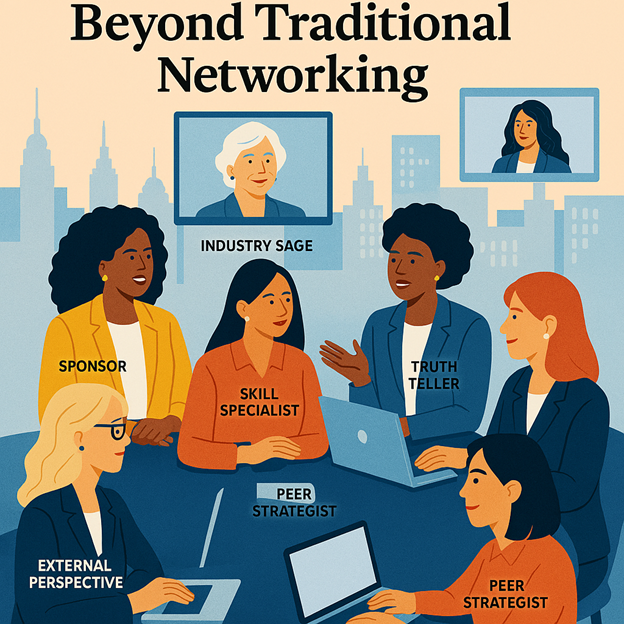
Building Your Personal Board of Directors: Beyond Traditional Networking 🎯

Networking events. Business card exchanges. LinkedIn connections. These traditional networking activities have their place, but if you’re serious about advancing your career—especially as traditionally overlooked talent—you need something more strategic: a personal board of directors.

Unlike casual networking that often leads nowhere, a personal board of directors is a carefully curated group of advisors who provide diverse perspectives, open doors, and hold you accountable to your highest potential. For Black women navigating corporate spaces where we’re often the “only one,” this strategic support system isn’t just helpful—it’s essential for breaking through systemic barriers.

Why Traditional Networking Falls Short for Traditionally Overlooked Talent 📊

Traditional networking operates on the premise of equal access and opportunity. Attend events, make connections, opportunities flow. But research from Harvard Business School shows that informal networks—where real opportunities circulate—are 71% homogeneous. When you’re not part of the dominant group, traditional networking often means being perpetually on the periphery.

There was a financial services firm where a talented Black woman attended every networking event, collected hundreds of business cards, and maintained an impressive LinkedIn presence. Yet after five years, she remained stuck in middle management while watching less qualified peers advance. The problem wasn’t her networking effort—it was her networking strategy.

She shifted from broad networking to building a strategic personal board of directors. Within 18 months, she secured a senior vice president role at a competitor. The difference? Quality over quantity, strategy over serendipity, and intentional relationship building over random connection collecting.

The Anatomy of an Effective Personal Board of Directors 🏛️

Your personal board should function like a corporate board—providing governance, guidance, and accountability for your career. But unlike corporate boards that often lack diversity, yours should be intentionally diverse in every dimension.

Essential Board Positions:

The Sponsor (Not Just a Mentor): Someone with organizational power who actively advocates for your advancement. They don’t just give advice—they put their political capital on the line for you. Research shows that Black women are over-mentored but under-sponsored, receiving plenty of guidance but limited advocacy.

The Industry Sage: A senior professional with deep industry knowledge who helps you see around corners and understand unwritten rules. They’ve navigated the terrain you’re entering and can share both the shortcuts and the landmines.

The Skill Specialist: Someone who excels in an area where you need development. This might be a financial expert if you’re moving toward C-suite roles, or a technology leader if you’re navigating digital transformation.

The Truth Teller: The person who gives you unvarnished feedback when everyone else is being polite. They care more about your growth than your comfort and will tell you what others won’t.

The Connector: Someone with extensive networks who opens doors you didn’t know existed. They’re the person who knows everyone and genuinely enjoys making strategic introductions.

The Peer Strategist: A colleague at your level who understands your current challenges and can share real-time intelligence. They’re navigating similar waters and can offer both tactical advice and emotional support.

The External Perspective: Someone outside your industry who brings fresh thinking and challenges your assumptions. They help you avoid industry tunnel vision and see innovative solutions.

As discussed in “High-Value Leadership,” diverse perspectives drive innovation and better decision-making. The same principle applies to your personal advisory board.

Strategic Selection: Quality Over Quantity 🎯

Building your board isn’t about collecting impressive names—it’s about strategic fit and mutual value exchange. Here’s what traditional networking guides won’t tell you: successful board building requires you to be selective and strategic, especially when you’re traditionally overlooked talent.

The VALUE Selection Criteria:

V – Vision Alignment: Do they understand and support your long-term vision? Board members who try to reshape you into their image rather than helping you achieve your vision aren’t true advisors—they’re projectors.

A – Access to Opportunities: Can they open doors that are currently closed to you? This doesn’t mean they have to be C-suite executives, but they should have influence in spaces where you need visibility.

L – Learning Potential: Will this relationship stretch your thinking and capabilities? The best board members challenge you to grow beyond your current limitations.

U – Unbiased Support: Will they advocate for you based on merit, not just when it’s convenient? For Black women, this means finding advisors who understand systemic barriers without using them as excuses for inaction.

E – Exchange of Value: What can you offer them? Contrary to popular belief, board relationships should be mutually beneficial, not one-way mentorship.

Beyond Coffee Chats: Structuring Board Engagement 💼

Random coffee chats don’t create strategic value. Your board needs structure to be effective.

There was a technology company where a Black woman product manager transformed her career by treating her personal board like an actual board. She held quarterly “board meetings” where she presented her progress, challenges, and strategic decisions. Her board members took it seriously because she took it seriously.

Structured Engagement Framework:

Quarterly Reviews: Schedule regular check-ins with your full board or individual members. Present your achievements, challenges, and strategic questions. This isn’t a casual chat—it’s a strategic session.

Annual Strategy Session: Once a year, gather your board (virtually or in person) for strategic planning. Review your trajectory, adjust your goals, and identify resources needed for the next level.

Issue-Specific Consultation: When facing major decisions or challenges, consult relevant board members. Don’t wait for scheduled meetings when you need strategic input.

Value Exchange Activities: Regularly provide value to your board members—share relevant articles, make strategic introductions, offer your expertise in their areas of need.

The Traditionally Overlooked Talent Advantage 🌟

Black women and other traditionally overlooked talent actually have unique advantages in building personal boards of directors—if we leverage them strategically.

Pattern Recognition: We’ve had to be hypervigilant about organizational dynamics, making us excellent at identifying who has real influence versus positional power.

Bridge Building: Our experience navigating different worlds makes us natural connectors who can build diverse, powerful boards that others might not envision.

Reciprocal Value: Our unique perspectives are increasingly recognized as valuable, especially as organizations prioritize diversity and inclusion.

Authenticity Assessment: We’ve developed strong instincts for identifying genuine allies versus performative supporters.

Research from McKinsey shows that diverse networks drive 35% better performance outcomes. As traditionally overlooked talent, we’re naturally positioned to build these diverse, high-performing networks—we just need to be strategic about it.

Current Trends: The Virtual Board Advantage 💻

The shift to remote work has democratized board building for traditionally overlooked talent. Geographic barriers that once limited access have dissolved, creating unprecedented opportunities.

Virtual Board Benefits:

  • Access to global advisors without relocation
  • Reduced time and financial barriers to engagement
  • More scheduling flexibility for busy executives
  • Ability to maintain boards across job changes
  • Recording capabilities for reviewing strategic advice

There was a healthcare organization where a Black woman built her entire board virtually during the pandemic. Her board included leaders from Silicon Valley, New York, London, and Dubai. This geographic diversity provided perspectives that propelled her from director to C-suite in two years.

Digital Board-Building Platforms:

  • LinkedIn for initial identification and connection
  • Zoom/Teams for regular board meetings
  • Slack/WhatsApp for ongoing communication
  • Calendly for scheduling across time zones
  • Notion/Airtable for tracking engagement and value exchange

Maintaining and Evolving Your Board 🔄

Your board isn’t static. As you grow, your board should evolve to meet new challenges and opportunities.

Board Lifecycle Management:

Addition Criteria: Add new members when entering new industries, taking on expanded responsibilities, or needing specific expertise. Each addition should fill a strategic gap.

Transition Protocols: Some board relationships naturally conclude when you’ve outgrown the need or the value exchange becomes imbalanced. Transition gracefully by expressing gratitude and maintaining the connection at a different level.

Succession Planning: As you advance, transition some advisors to emeritus status while they help identify their replacements. This maintains relationships while ensuring your board remains relevant.

Reciprocal Evolution: As you gain influence, become a board member for others. This creates a virtuous cycle of mutual advancement.

As explored in “Rise & Thrive,” Black women’s success is often interconnected. Building and serving on boards creates collective advancement, not just individual gain.

Common Pitfalls and How to Avoid Them ⚠️

Pitfall 1: The Gratitude Trap Being so grateful for attention that you accept any advisor without strategic evaluation. Solution: Remember that your time and potential are valuable. Be selective.

Pitfall 2: The One-Way Street Treating board relationships as purely extractive rather than mutually beneficial. Solution: Always consider what value you bring to the relationship.

Pitfall 3: The Homogeneous Board Building a board that looks and thinks like you, missing diverse perspectives. Solution: Intentionally seek advisors from different backgrounds, industries, and thinking styles.

Pitfall 4: The Passive Approach Waiting for advisors to guide you rather than actively managing the relationship. Solution: Take ownership of the relationship with structured engagement and clear asks.

Pitfall 5: The Stagnant Board Keeping the same advisors even when you’ve outgrown their guidance. Solution: Regularly evaluate and evolve your board composition.

Action Steps for Building Your Board 🚀

Week 1: Board Audit

  • List current advisors and mentors
  • Identify gaps in expertise, access, and perspective
  • Define what you need for your next career phase
  • Create your ideal board composition

Month 1: Strategic Outreach

  • Identify 3-5 potential board members
  • Craft personalized outreach messages
  • Propose specific value exchanges
  • Schedule initial conversations

Quarter 1: Board Formation

  • Formalize relationships with clear expectations
  • Establish meeting cadence and structure
  • Create value exchange tracking system
  • Hold first quarterly review

Year 1: Board Optimization

  • Evaluate board effectiveness
  • Add or transition members as needed
  • Expand your reciprocal board service
  • Document lessons learned and success metrics

Measuring Board Impact 📈

Track your board’s effectiveness through concrete metrics:

  • Career advancement acceleration
  • Salary/compensation improvements
  • New opportunities accessed
  • Skills developed
  • Networks expanded
  • Confidence increased
  • Challenges navigated successfully

There was a consulting firm that studied employees with formal personal boards versus traditional networking approaches. Those with boards achieved promotions 40% faster and reported 60% higher career satisfaction.

Discussion Questions for Your Leadership Journey 🤔

  1. Who currently influences your career decisions, and are they strategically chosen or accidentally accumulated?
  2. What expertise or access do you need that your current network doesn’t provide?
  3. How might building a diverse board help you navigate systemic barriers more effectively?
  4. What unique value can you offer potential board members that creates mutual benefit?
  5. How would your career trajectory change with strategic advisors invested in your success?

Your Board-Building Opportunity

Building a personal board of directors isn’t about collecting business cards or LinkedIn connections. It’s about strategically assembling advisors who provide the guidance, access, and advocacy needed to navigate complex career landscapes—especially for those of us who face additional barriers.

Stop hoping traditional networking will suddenly work differently. Stop waiting for mentors to magically appear. Start building your strategic advisory board with the same intentionality you bring to your professional work.

Ready to build strategic career advancement systems?

Che’ Blackmon Consulting specializes in helping traditionally overlooked talent, particularly Black women, build powerful personal boards of directors and navigate corporate advancement strategically.

We’ll help you:

  • Identify and approach strategic board members
  • Structure board relationships for maximum impact
  • Navigate complex corporate dynamics with advisor support
  • Create mutual value exchanges that sustain relationships
  • Leverage your board for breakthrough career advancement

Start building your strategic support system today:

📧 admin@cheblackmon.com
📞 888.369.7243
🌐 cheblackmon.com

Because exceptional careers aren’t built alone—they’re built with strategic support. #PersonalBoard #CareerStrategy #NetworkingStrategy #BlackWomenLead #LeadershipDevelopment #CareerAdvancement #ProfessionalGrowth #WomenInLeadership #StrategicNetworking #ExecutivePresence #CareerSuccess #DiversityInLeadership #Mentorship #Sponsorship #HighValueLeadership

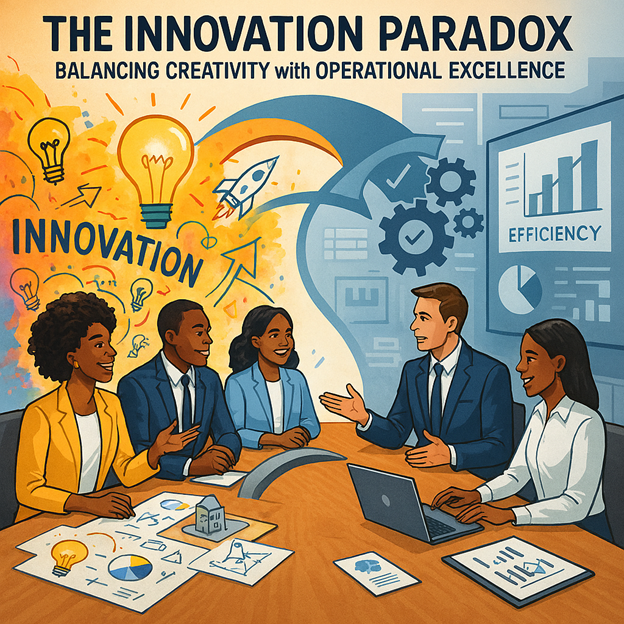
The Innovation Paradox: Balancing Creativity with Operational Excellence 🎯

The boardroom tension was palpable. On one side sat the operations team, armed with efficiency metrics and cost analyses. On the other, the innovation group clutched prototypes and possibility. The CFO wanted predictability. The Chief Innovation Officer demanded experimentation space. Sound familiar?

This is the innovation paradox that keeps leaders awake at night: How do you maintain operational excellence while fostering the creative chaos that drives breakthrough innovation? For traditionally overlooked talent, particularly Black women navigating corporate spaces, this paradox becomes even more complex when your innovative ideas are dismissed as “too risky” while your operational suggestions are seen as “playing it safe.”

The False Choice Between Innovation and Excellence 📊

Most organizations treat innovation and operational excellence as opposing forces. Run tight ship or embrace creative chaos. Minimize risk or maximize possibility. Control or creativity. This binary thinking costs companies billions in missed opportunities and creates cultures where different types of talent can’t thrive.

Research from MIT Sloan reveals that companies excelling at both innovation and operations outperform their peers by 30% in revenue growth and 17% in profit margins. The secret? They don’t balance these forces—they integrate them.

There was a medical device company that discovered this after years of ping-ponging between “innovation sprints” and “efficiency drives.” Their breakthrough came when a Black woman engineer, previously overlooked for leadership roles, proposed a radical idea: What if operational excellence created the foundation for sustainable innovation rather than constraining it?

She introduced “innovation infrastructure”—systematic processes that made experimentation more efficient, not less creative. The result? Development time dropped 40% while successful innovations increased by 60%.

The Hidden Innovation in Operational Excellence 💡

Here’s what most miss: operational excellence itself can be deeply innovative. The Toyota Production System didn’t just improve efficiency—it revolutionized how we think about continuous improvement. But traditionally overlooked talent often gets pigeonholed into one camp or the other.

Consider what happened at a logistics company where a Black woman operations manager kept proposing process innovations. Leadership dismissed her ideas as “too operational” for the innovation committee and “too creative” for operations meetings. She existed in a no-win zone many of us recognize.

The breakthrough came when she reframed her approach. Instead of presenting “innovative operations” or “operational innovations,” she demonstrated “systematic creativity”—using operational discipline to scale innovative solutions. Her method reduced shipping errors by 73% while creating three new service lines that generated $4.2M in revenue.

As explored in “High-Value Leadership,” true excellence comes from recognizing that different types of thinking strengthen rather than threaten each other. The question isn’t whether to choose innovation or operations—it’s how to leverage both for competitive advantage.

The Creativity Tax on Traditionally Overlooked Talent 🚫

Black women face a unique challenge in the innovation-operations dynamic. When we propose innovative solutions, we’re often told we’re being “unrealistic” or “not understanding business constraints.” When we excel at operations, we’re labeled as “good executors” but not “strategic thinkers.” This creativity tax keeps us from contributing our full value.

Research from Harvard Business Review shows that diverse teams produce more innovative solutions, yet only 26% of Black women feel their innovative ideas are heard and implemented. The gap isn’t capability—it’s opportunity and perception.

There was a technology firm where this pattern played out predictably until they implemented blind innovation reviews. Suddenly, ideas from Black women that had been routinely dismissed were selected for development at 3x the previous rate. The ideas hadn’t changed—the bias filter had been removed.

This aligns with findings in “Rise & Thrive” about how Black women must often work twice as hard for half the recognition, particularly when our contributions don’t fit neat categorical boxes.

The Integration Framework: Making Excellence and Innovation Allies 🤝

The FUSION Model for Innovation-Operations Integration:

F – Foundational Stability Create stable operational platforms that enable rather than constrain innovation:

  • Standardize routine processes to free mental energy for creativity
  • Build reliable systems that can handle experimentation
  • Establish clear metrics for both efficiency and innovation

U – Unified Metrics Measure success holistically rather than in silos:

  • Track innovation velocity alongside operational efficiency
  • Measure learning from failures, not just successful launches
  • Monitor how operations enables innovation and vice versa

S – Systematic Experimentation Apply operational discipline to innovation processes:

  • Create innovation pipelines with clear stage gates
  • Use data to inform creative decisions
  • Build learning loops into every experiment

I – Inclusive Participation Leverage diverse thinking styles:

  • Include operational experts in innovation sessions
  • Bring innovators into operational planning
  • Value different types of contributions equally

O – Ongoing Adaptation Build cultures that embrace both stability and change:

  • Regular reviews of what’s working
  • Quick pivots based on data
  • Celebration of both types of success

N – Networked Thinking Connect innovation and operations at every level:

  • Cross-functional teams as standard practice
  • Shared goals and incentives
  • Regular rotation between functions

Current Trends: The Rise of Operational Innovation 📈

The most successful companies in 2024 aren’t choosing between innovation and operations—they’re revolutionizing operations through innovation and scaling innovation through operational excellence.

AI-Enhanced Operations: Companies use artificial intelligence not just for automation but for identifying innovation opportunities within operational data. Pattern recognition reveals unmet customer needs and process improvement possibilities.

Agile Operations: The agile methodology has moved beyond software development into operations, creating flexible, responsive operational systems that adapt quickly to change.

Innovation Accounting: Forward-thinking CFOs now track innovation metrics alongside operational KPIs, recognizing that today’s experiment is tomorrow’s competitive advantage.

Sustainable Innovation: Environmental and social governance (ESG) requirements are driving operational innovations that reduce waste while creating new value streams.

Practical Strategies for Leaders 🎯

1. Create Innovation Time Within Operations Google’s “20% time” is famous, but what about “innovation hours” within operational roles? There was a manufacturing company that gave operations staff two hours weekly for process innovation. Result: 47 implementable improvements in six months.

2. Rotate Talent Between Functions Break down silos by rotating high-potential employees between innovation and operations roles. This creates leaders who speak both languages and see connections others miss.

3. Measure Integrated Success Stop measuring innovation and operations separately. Create metrics like:

  • Innovation efficiency rate (successful innovations per resource invested)
  • Operational creativity index (process improvements generated by operations team)
  • Speed to scale (time from pilot to full implementation)

4. Celebrate Both Types of Wins There was a retail company that created equal recognition for “Innovation of the Month” and “Operational Excellence of the Month,” then added “Integration Success of the Month” for initiatives combining both.

5. Build Diverse Innovation Teams Include operational experts, customer service reps, and traditionally overlooked voices in innovation sessions. Their practical insights ground creativity in reality while their unique perspectives spark unexpected solutions.

The Competitive Advantage of Integration 💪

Companies mastering the innovation-operations integration see:

  • 45% faster time to market
  • 32% higher success rate for innovations
  • 28% improvement in operational efficiency
  • 51% better employee engagement scores

But the real advantage is cultural. When you stop forcing employees to choose sides, you unlock their full potential. This particularly benefits traditionally overlooked talent who often excel at bridging different worlds—we’ve had to our entire careers.

There was a financial services firm that discovered their most innovative solutions came from their operations team, while their innovation lab produced the most scalable operational improvements. The lesson? When you remove artificial boundaries, brilliance emerges from unexpected places.

Breaking Down the Silos 🔨

Common Barriers and Solutions:

Barrier: Different personality types in each function Solution: Recognize that diversity drives better outcomes; create translation bridges

Barrier: Competing metrics and incentives Solution: Align goals and create shared success metrics

Barrier: Historical tensions between departments Solution: Start with small joint wins to build trust

Barrier: Leadership bias toward one or the other Solution: Ensure C-suite includes champions for both

Barrier: Fear that excellence stifles creativity Solution: Show how structure enables rather than constrains innovation

Action Steps for Integration 🚀

Week 1: Assessment

  • Map current innovation and operational capabilities
  • Identify where these functions currently connect (or don’t)
  • Survey employees about barriers to integration
  • Document quick wins possible through better integration

Month 1: Pilot Programs

  • Launch one integrated project team
  • Create shared workspace for innovation and operations
  • Implement one operational innovation
  • Scale one innovation operationally

Quarter 1: Systematic Change

  • Revise metrics to reward integration
  • Adjust organizational structure to encourage collaboration
  • Implement rotation program
  • Celebrate integration successes

Year 1: Cultural Transformation

  • Full integration of innovation and operational excellence
  • Shared goals and metrics across functions
  • Regular innovation-operations partnerships
  • Measurable competitive advantage

The Power of Both/And Thinking 🌟

As discussed in “Mastering a High-Value Company Culture,” the strongest cultures embrace paradox rather than avoiding it. They’re disciplined and creative, stable and adaptive, efficient and innovative. This both/and thinking particularly benefits traditionally overlooked talent who’ve always had to be multiple things simultaneously.

Black women have always balanced seeming contradictions—being strong and vulnerable, confident and learning, assertive and collaborative. We’re naturally equipped for integration thinking, yet rarely given the platform to implement it at scale.

Discussion Questions for Your Leadership Team 🤔

  1. Where do we currently treat innovation and operations as enemies rather than allies?
  2. Which traditionally overlooked voices might bridge these functions effectively?
  3. What would change if we measured integrated success rather than functional success?
  4. How might our competitive position improve if we excelled at both?
  5. What’s one innovation we could operationalize and one operation we could revolutionize?

Your Integration Opportunity

The innovation paradox isn’t a problem to solve—it’s a competitive advantage to leverage. Organizations that integrate creative thinking with operational discipline don’t just survive; they define the future of their industries.

Stop choosing between innovation and excellence. Stop segregating creative and operational talent. Stop missing the breakthrough solutions that emerge when these forces combine.

Ready to transform your innovation-operations dynamic?

Che’ Blackmon Consulting specializes in helping organizations integrate innovation with operational excellence, with particular expertise in leveraging traditionally overlooked talent who excel at both.

We’ll help you:

  • Design integrated innovation-operations strategies
  • Build metrics that reward both/and thinking
  • Develop leaders who bridge both worlds
  • Create cultures where all types of excellence thrive
  • Unlock hidden innovation in your operations

Start your integration journey today:

📧 admin@cheblackmon.com
📞 888.369.7243
🌐 cheblackmon.com

Because the future belongs to organizations that transcend false choices and embrace integrated excellence. #Innovation #OperationalExcellence #BusinessStrategy #LeadershipDevelopment #DiversityInInnovation #ProcessImprovement #OrganizationalChange #WomenInLeadership #BlackWomenLead #AgileBusiness #ContinuousImprovement #HighValueLeadership #InnovationStrategy #BusinessTransformation #InclusiveInnovation