

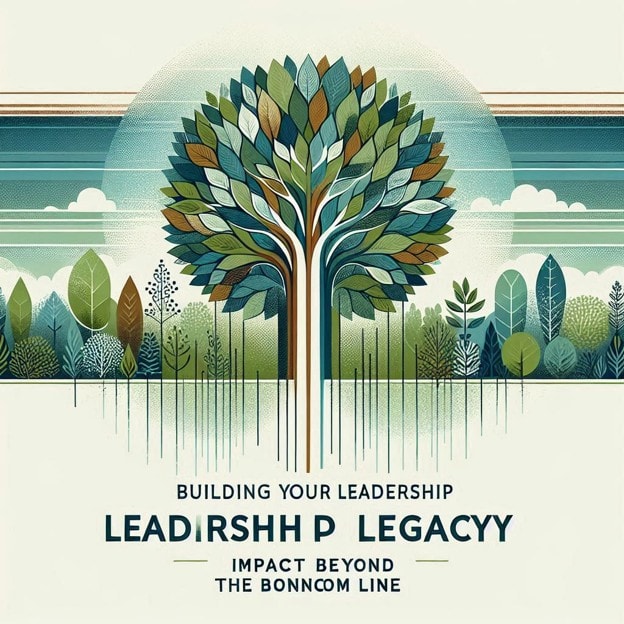
“The true meaning of life is to plant trees, under whose shade you do not expect to sit.” – Nelson Henderson
What will they say about you when you’re gone?
Not from this earth—but from your current role, your organization, your industry. When the farewell parties end and the LinkedIn congratulations fade, what remains? If your legacy is measured only in quarterly earnings and efficiency metrics, you’ve missed the profound opportunity of leadership.
True leadership legacy transcends spreadsheets and stock prices. It lives in the careers you’ve launched, the cultures you’ve transformed, and the human potential you’ve unlocked. It echoes in the confident voice of someone who found their strength under your guidance. It multiplies through the leaders you’ve developed who now develop others.
The Poverty of Profit-Only Leadership
Marcus Reynolds had it all. As CEO of a major retail chain, he’d delivered seven consecutive years of profit growth. Wall Street loved him. The board showered him with bonuses. His MBA case study was taught at prestigious universities.
Five years after his retirement, I was called in to help his successor. The company was in crisis. Yes, profits had soared under Marcus, but at what cost? Employee turnover was astronomical. Innovation had flatlined. The culture was so toxic that talented people fled to competitors offering lower salaries but healthier environments.
“Marcus squeezed every penny from this orange,” one long-time executive told me, “but he never planted new trees.”
This is the tragedy of bottom-line-only leadership. It’s not that profits don’t matter—they do. But when financial metrics become your only legacy, you leave behind a hollow shell that crumbles the moment you depart.
In “Mastering a High-Value Company Culture,” I explored how sustainable success requires nurturing the human ecosystem that generates results. Leaders who focus solely on immediate returns often destroy the very foundations of long-term prosperity.
Understanding Legacy Leadership
Legacy leadership operates on multiple horizons simultaneously. While delivering today’s results, legacy leaders plant seeds for tomorrow’s forest. They understand that their ultimate measure isn’t what they achieve, but what continues achieving long after they’re gone.
The Four Pillars of Lasting Legacy
1. Human Development Legacy This is measured not in headcount but in human growth. How many people became better versions of themselves under your leadership? How many discovered capabilities they didn’t know they possessed?
2. Cultural Transformation Legacy Beyond policies and procedures, this legacy lives in how people treat each other, how decisions get made, and how work gets done. It’s the invisible architecture that shapes behavior long after you’ve moved on.
3. Innovation Legacy This isn’t just about products or patents. It’s about creating environments where new ideas flourish, where calculated risks are encouraged, and where learning from failure is celebrated.
4. Ripple Effect Legacy The most powerful legacies create waves that extend far beyond your direct sphere of influence. The leaders you develop go on to develop others. The cultures you create become models for other organizations. The standards you set raise the bar for entire industries.
The Compound Interest of Human Investment
Sarah Chen understood something most leaders miss: developing people isn’t an expense, it’s an investment that pays compound interest. As VP of Operations at a struggling manufacturing firm, she inherited a demoralized team with outdated skills and minimal engagement.
Instead of the typical cost-cutting playbook, Sarah invested heavily in her people:
Year 1: Foundation Building
- Implemented comprehensive skills training programs
- Created mentorship pairings across all levels
- Established innovation time (10% of work hours for creative projects)
- Launched leadership development for high-potential employees
The board was skeptical. “These programs are expensive,” they warned. “Where’s the immediate ROI?”
Year 2: Early Returns
- Employee engagement increased 40%
- Voluntary turnover dropped 50%
- First patent filed in a decade
- Productivity increased 15%
Year 3: Compound Growth
- Three employees promoted to senior leadership
- Innovation program generated $2M in cost savings
- Company became talent magnet in the region
- Customer satisfaction highest in company history
Year 5: Legacy Established When Sarah moved to a CEO role elsewhere, the programs she created didn’t just continue—they expanded. The leaders she developed became the next generation of culture champions. The innovation mindset she fostered became part of the company’s DNA.
Year 10: Multiplier Effect I recently visited the company. Sarah’s picture hangs in the leadership development center named after her. More importantly, her legacy lives in the thriving culture, the continuous innovation, and the pipeline of leaders who trace their development back to her investment in human potential.
“Sarah taught us that people aren’t costs to be minimized,” the current CEO told me. “They’re assets to be developed. That philosophy transformed everything.”
Creating Cultural Echoes
In “High-Value Leadership: Transforming Organizations Through Purposeful Culture,” I discussed how authentic leaders create “cultural echoes”—values and behaviors that reverberate through an organization long after the leader’s direct influence ends.
Consider the legacy of Herb Kelleher at Southwest Airlines. Decades after his death, the culture of fun, customer service, and employee empowerment he created continues to differentiate Southwest in a brutally competitive industry. New employees who never met Herb still embody the spirit he instilled.
How do you create such enduring cultural echoes?
The ECHO Framework
E – Embed Values Deeply Don’t just post values on walls. Weave them into every system, process, and decision. When values drive promotions, budget allocations, and daily operations, they become self-sustaining.
C – Create Rituals and Traditions Rituals outlast individuals. The weekly team huddle you start, the celebration traditions you establish, the storytelling culture you nurture—these become the heartbeat of organizational life.
H – Honor the Past While Building the Future Legacy leaders don’t erase history; they build upon it. They honor what came before while courageously changing what must evolve. This creates continuity that transcends individual tenure.
O – Open Pathways for Others The most enduring legacies create opportunities for others to build their own legacies. When you open doors, remove barriers, and create platforms for others to shine, your impact multiplies exponentially.
The Courage of Long-Term Thinking
Building legacy requires courage because the most important impacts often can’t be measured quarterly. As Dave Ulrich notes in his evolved HR Business Partner model, we must shift from measuring just human capital (what people cost) to human capability (what people can become).
This long-term orientation faces constant pressure:
- Boards demanding immediate returns
- Analysts focused on quarterly earnings
- Competitors taking shortcuts
- Internal voices questioning the investment
Yet legacy leaders persist because they understand a fundamental truth: organizations that develop human capability don’t just outperform in the long run—they’re the only ones that survive generational transitions.
Legacy in Action: The Story of Robert Thompson
Robert Thompson’s legacy illuminates what’s possible when leaders think beyond their tenure. As the first Black CEO of a Fortune 500 technology company, Robert faced unique pressures to deliver immediate results while navigating skepticism about his appointment.
He could have played it safe, focused on quick wins, and secured his position. Instead, Robert chose legacy.
His Three-Pronged Legacy Strategy:
1. The Pipeline Revolution Robert discovered that while 30% of entry-level employees were people of color, only 5% of senior leadership was diverse. Rather than mandate quotas, he created comprehensive development programs:
- Sponsorship (not just mentorship) programs for high-potential diverse talent
- Cross-functional exposure assignments
- Leadership development cohorts
- Executive coaching for emerging leaders
2. The Innovation Ecosystem Believing that diverse teams drive innovation, Robert restructured how ideas flowed through the organization:
- Created innovation labs in communities of color
- Partnered with HBCUs for research projects
- Established reverse mentoring programs
- Funded employee-led innovation initiatives
3. The Culture Transformation Robert knew lasting change required cultural evolution:
- Redefined performance metrics to include cultural contribution
- Created safe spaces for difficult conversations about bias
- Celebrated multiple forms of excellence
- Built inclusion into every business process
The Results:
- Five years later: Most diverse leadership team in the industry
- Seven years later: #1 in innovation rankings for three consecutive years
- Ten years later: Case study in business schools worldwide
- Today (15 years later): The company leads the industry in both profitability and workplace culture
But Robert’s true legacy? Seven of his former direct reports are now CEOs themselves, each carrying forward the legacy principles he embodied. The programs he created have been adapted by dozens of other companies. The leaders he developed are transforming organizations across industries.
“Robert showed us that you can deliver exceptional business results while developing exceptional humans,” one of his former protégés, now a CEO herself, told me. “He proved that it’s not ‘either/or’ but ‘both/and.’ That’s the legacy I’m trying to build now.”
The Inclusion Imperative
As explored in “Rise & Thrive: A Black Woman’s Blueprint for Leadership Excellence,” true legacy leadership must be inclusive leadership. A legacy that elevates only those who look like you or share your background is a limited legacy.
The most powerful legacies:
- Create opportunities for overlooked talent
- Challenge systemic barriers
- Build bridges across differences
- Establish new models of excellence
- Transform what’s possible for future generations
This isn’t about charity or checking boxes. Research consistently shows that inclusive leaders create more innovative, resilient, and profitable organizations. When you expand who can succeed, you expand what your organization can achieve.
Measuring What Matters
Traditional leadership metrics focus on the immediate and quantifiable:
- Revenue growth
- Cost reduction
- Market share
- Profit margins
Legacy metrics require a broader lens:
Human Development Metrics
- Number of leaders developed
- Career trajectories of former team members
- Internal promotion rates
- Employee growth testimonials
- Capability building across the organization
Cultural Health Metrics
- Employee engagement scores over time
- Culture survey trends
- Retention of high performers
- Attraction of top talent
- Stories and rituals that persist
Innovation Metrics
- Ideas generated and implemented
- Cross-functional collaboration
- Risk-taking behaviors
- Learning from failure
- Breakthrough innovations
Ripple Effect Metrics
- External recognition of culture
- Former employees becoming leaders elsewhere
- Industry adoption of your practices
- Requests to share best practices
- Long-term organizational resilience
Building Your Legacy Action Plan
Legacy doesn’t happen by accident. It requires intentional action starting today. Here’s your roadmap:
Phase 1: Define Your North Star (Month 1)
Week 1-2: Legacy Visioning
- Write your ideal retirement speech (what do you want people to say?)
- Identify the 3-5 core elements of your desired legacy
- Connect legacy goals to personal values
- Create visual representations of your legacy vision
Week 3-4: Current State Assessment
- Evaluate current impact across the Four Pillars
- Gather feedback on your leadership influence
- Identify gaps between current state and legacy vision
- Prioritize areas for development
Phase 2: Build Foundation (Months 2-3)
Human Development Focus:
- Identify 3-5 high-potential individuals to develop
- Create individual development plans
- Establish regular coaching rhythms
- Share your leadership lessons openly
Cultural Architecture:
- Define or refine team values
- Create rituals that embody these values
- Establish storytelling practices
- Model behaviors consistently
Phase 3: Expand Impact (Months 4-6)
Innovation Catalyst:
- Dedicate time/resources for experimentation
- Celebrate intelligent failures
- Create forums for idea sharing
- Support unconventional approaches
Ripple Creation:
- Share best practices externally
- Mentor leaders outside your organization
- Write or speak about your learnings
- Build cross-industry connections
Phase 4: Embed and Sustain (Ongoing)
Systematize Success:
- Document successful practices
- Create playbooks for successors
- Build leadership development into role expectations
- Establish metrics that matter
Tell the Story:
- Capture transformation stories
- Create legacy artifacts
- Share the journey broadly
- Inspire others to build their legacies
The Compound Effect of Daily Decisions
Legacy isn’t built in grand gestures but in daily decisions. Every interaction is an opportunity to plant seeds:
- The extra time you spend developing someone
- The tough conversation you have with courage
- The barrier you remove for another’s success
- The standard you uphold when it’s inconvenient
- The credit you share when you could claim it
These moments compound. A 15-minute weekly coaching conversation becomes 13 hours of development annually. Multiply that across five team members over five years, and you’ve invested 325 hours in human development. Those 325 hours create ripples that extend for decades.
Legacy Lessons from Unexpected Places
Sometimes the most powerful legacy lessons come from unlikely sources:
The Janitor Who Built Leaders
William, a janitor at a major university, created a legacy that rivals any CEO’s. For 40 years, he made it his mission to encourage every student he met. He learned names, remembered dreams, offered wisdom during late-night cleaning rounds.
At his retirement, the auditorium overflowed. CEOs, doctors, teachers, and entrepreneurs came to honor him. His legacy? Thousands of successful professionals who credit a janitor’s encouragement as pivotal to their success.
“William taught me that leadership isn’t about position,” one CEO shared. “It’s about impact on human lives.”
The Middle Manager Who Transformed an Industry
Janet, a mid-level manager at a logistics company, couldn’t change corporate strategy. But she could change how her team operated. She created such an innovative, empowering micro-culture that it became the model for the entire industry.
Today, “The Janet Method” is taught in supply chain programs worldwide. Companies pay consultants to implement what Janet created organically through caring about her people.
The Time Is Now
Some leaders wait until they reach senior positions to think about legacy. This is a mistake. Legacy building starts now, wherever you are:
- Individual contributors can mentor peers
- Team leads can create empowering micro-cultures
- Middle managers can develop future leaders
- Senior leaders can transform organizations
- Retired leaders can share wisdom broadly
The only requirement? Shifting your definition of success from “What can I achieve?” to “What can I enable?”
Discussion Questions for Your Leadership Journey
- If you left your current role tomorrow, what would continue thriving? What would struggle?
- Who are the 3-5 people you’re intentionally developing? What’s your plan for their growth?
- What cultural elements do you want to outlast your tenure? How are you embedding them?
- How does your current focus on results balance with investment in human development?
- What barriers prevent leaders in your organization from building legacy? How might you address them?
- What would change if every leader measured success by what happens after they leave?
Build Your Leadership Legacy with Che’ Blackmon Consulting
Legacy building isn’t a solo journey. At Che’ Blackmon Consulting, we help leaders create lasting impact that transcends traditional metrics. Our Legacy Leadership Development Program helps you:
- Define your authentic leadership legacy vision
- Assess current impact across all legacy dimensions
- Create actionable plans for human development
- Build sustainable cultural transformation
- Measure what truly matters
- Connect with other legacy-focused leaders
Our unique approach combines strategic planning with human development, ensuring your legacy creates both business results and transformed lives.
Program outcomes include:
- Clear legacy roadmap aligned with values
- Increased leadership influence and impact
- Stronger succession planning and talent development
- Enhanced organizational culture and engagement
- Measurable ripple effects across stakeholders
- Personal fulfillment from meaningful contribution
Ready to build a leadership legacy that matters?
Contact us today for a complimentary Legacy Leadership consultation:
- Email: admin@cheblackmon.com
- Phone: 888.369.7243
- Website: https://cheblackmon.com
Don’t let another day pass without intentionally building your legacy. The trees you plant today will provide shade for generations to come.
Che’ Blackmon is the founder of Che’ Blackmon Consulting and author of three books on leadership and culture transformation. With over 20 years of experience helping leaders build lasting legacies, she specializes in developing human capability that transcends traditional business metrics.
#LeadershipLegacy #LeadershipDevelopment #CulturalTransformation #HumanCapital #LegacyLeadership #PurposefulLeadership #LeadershipImpact #HighValueLeadership #TransformationalLeadership #LeadershipCoaching #OrganizationalCulture #LeadershipMatters #ExecutiveLeadership #LeadershipExcellence #FutureOfLeadership