Creating a Comprehensive Anti-Harassment Policy for Your Organization

Beyond Compliance to Cultural Transformation

A truly effective anti-harassment policy does far more than shield your organization from legal liability. When thoughtfully developed and authentically implemented, it becomes a cornerstone of organizational culture—one that fosters dignity, psychological safety, and full participation from all team members. At Che’ Blackmon Consulting, we believe that addressing harassment effectively is essential to creating the inclusive, high-value company cultures where overlooked talent can thrive and contribute fully.

As I explore in “Mastering a High-Value Company Culture,” organizations that excel don’t view harassment prevention as merely a compliance exercise but as a strategic imperative directly connected to performance, innovation, and talent retention. They recognize that environments free from harassment enable the authentic engagement and diverse perspectives that drive breakthrough results.

The Business Case for Comprehensive Anti-Harassment Approaches

The stakes for developing robust anti-harassment systems have never been higher. Consider these compelling realities:

  • Organizations with effective harassment prevention experience 21% higher employee engagement
  • Companies with harassment issues face recruiting challenges, with 38% of job seekers reporting they research a company’s harassment record before applying
  • Harassment claims cost U.S. organizations approximately $165 million annually in legal settlements alone, not counting productivity losses, reputational damage, and turnover costs
  • Teams with strong psychological safety (including freedom from harassment) are 76% more innovative and 50% more productive
  • Organizations with harassment problems experience turnover rates 24% higher than those with effective prevention systems

A healthcare organization we partnered with calculated that harassment-related turnover was costing them approximately $3.8 million annually through replacement costs, lost productivity, and diminished team cohesion. This finding transformed their approach from a compliance-focused exercise to a strategic priority with measurable ROI. These figures underscore why effective harassment prevention isn’t just an ethical imperative—it’s a business essential with profound financial implications.

Core Components of an Effective Anti-Harassment Policy

Creating a policy that truly impacts organizational culture requires attention to several key elements. Based on our experience with organizations across industries and supported by research on effective prevention, we’ve identified these essential components:

1. Clear Scope and Definitions

Effective policies begin with clarity about what constitutes harassment and who is protected. While legal definitions provide a foundation, truly effective policies often go beyond minimum requirements to address behaviors that may not meet the legal threshold for harassment but still undermine a respectful culture.

A technology company we worked with implemented a comprehensive policy that clearly defined:

  • Different forms of harassment (sexual, racial, religious, age-based, disability-related, etc.)
  • Specific examples of prohibited behaviors in each category
  • Clear distinctions between illegal harassment and other forms of disrespectful behavior
  • Expanded protections beyond legally protected categories
  • Application to all work contexts, including remote work, business travel, and social events
  • Coverage extending to contractors, vendors, customers, and other third parties

Their approach provided much-needed clarity while demonstrating their commitment to standards that exceeded mere legal compliance. When writing definitions, remember that specific examples make abstract concepts concrete. For instance, rather than simply prohibiting “unwelcome sexual advances,” provide examples such as “unwanted touching, persistent requests for dates after being told no, or sharing sexually explicit material.”

2. Accessible Reporting Mechanisms

For a policy to be effective, affected individuals must have clear, safe pathways to report concerns. The most effective reporting systems offer multiple channels that account for different comfort levels and reporting barriers.

A manufacturing client transformed their approach by implementing:

  • Multiple reporting channels (HR, management chain, ethics hotline)
  • Clear procedures for anonymous reporting
  • Structured documentation protocols that balanced thoroughness with sensitivity
  • Explicit protections for good-faith reporters
  • Accommodations for language differences and literacy levels
  • Regular communication about how and when to report

They found that diversifying reporting channels increased early reporting by 47%, allowing them to address concerns before they escalated to serious harassment situations. This approach embodied our principle of customizing solutions to each organization’s unique culture and challenges—recognizing that reporting barriers differ across contexts.

When designing reporting mechanisms, consider the practical and psychological barriers that might prevent reporting. For example, if an employee’s only reporting option is their direct supervisor, what happens if that supervisor is the problem? Multiple channels create essential safety nets.

3. Thorough Investigation Procedures

How organizations respond to harassment concerns directly shapes reporting culture. When employees believe investigations will be fair, thorough, and effective, they’re more likely to come forward with concerns.

A professional services organization developed a robust investigation framework that included:

  • Clear timelines for investigation stages
  • Protocols for selecting appropriate investigators
  • Guidelines for evidence gathering and preservation
  • Standards for interview processes
  • Documentation requirements and templates
  • Confidentiality parameters with realistic limitations
  • Communication expectations for involved parties

Their approach balanced thoroughness with timeliness, completing most investigations within 14 days while maintaining quality standards. This responsiveness significantly increased trust in their harassment prevention system, embodying our commitment to measuring success through tangible transformation rather than merely checking compliance boxes.

When developing investigation procedures, particular attention should be paid to consistency while allowing for necessary flexibility. For instance, allegations involving senior leaders may require external investigators to ensure impartiality.

4. Appropriate Corrective Actions

Effective policies include clear consequences for policy violations, with flexibility to match the response to the severity of the behavior. Organizations that excel in this area establish general guidelines while preserving discretion for unique circumstances.

A retail organization developed a structured approach to corrective actions that included:

  • A range of possible consequences based on severity and history
  • Factors to consider when determining appropriate responses
  • Requirements for leadership review of significant actions
  • Restoration and rehabilitation components where appropriate
  • Follow-up procedures to ensure resolution and prevent retaliation
  • Documentation standards that balanced thoroughness with privacy

Their approach enabled consistent decision-making while acknowledging that harassment situations rarely fit neatly into predetermined categories. The clear framework gave decision-makers confidence while preserving necessary flexibility—exemplifying our principle of evidence-based strategies while embracing creative solutions.

When designing corrective action guidelines, avoid overly rigid systems that don’t account for context. For example, a first-time inappropriate comment might warrant education and coaching, while serious or repeated misconduct requires more significant consequences.

5. Comprehensive Anti-Retaliation Protections

Fear of retaliation remains the single greatest barrier to harassment reporting. Effective policies address this fear directly through robust anti-retaliation provisions.

A financial services firm implemented enhanced retaliation protections including:

  • Expanded definition of retaliation covering subtle forms often missed in standard policies
  • Proactive monitoring for potential retaliation after reports
  • Clear accountability for managers in preventing retaliation
  • Regular check-ins with reporters to assess potential concerns
  • Serious consequences for retaliatory actions
  • Success stories (appropriately anonymized) showing the organization’s commitment to protection

Their approach reduced fears of retaliation significantly, with employee survey data showing a 34% increase in confidence that they could report concerns without negative consequences. This improvement directly supported their inclusive culture by ensuring all voices could be heard when concerns arose.

When addressing retaliation, recognize that it often takes subtle forms that may not be immediately recognizable as retaliation. Exclusion from projects, small changes in assignments, or subtle social isolation can constitute retaliation but may be difficult to identify without proactive monitoring.

6. Ongoing Prevention Strategies

The most effective policies connect to comprehensive prevention strategies that go beyond periodic training to create sustainable cultural change.

A healthcare organization implemented a multi-faceted prevention approach that included:

  • Differentiated training for employees, managers, and executives
  • Regular climate surveys to assess harassment risk factors
  • Leadership accountability metrics tied to harassment prevention
  • Bystander intervention programs that empowered all employees
  • Regular communication from senior leaders about expectations
  • Recognition of managers who excellently modeled respectful behaviors

Their comprehensive approach reduced harassment complaints by 68% over three years while simultaneously increasing reporting of lower-level concerns—indicating a culture where issues were addressed early before escalating to serious harassment. This outcome exemplifies our commitment to creating sustainable pathways for authentic growth and breakthrough performance.

When designing prevention strategies, recognize that standalone training rarely creates lasting change. Effective prevention integrates multiple approaches, with particular emphasis on leadership behavior modeling and accountability systems.
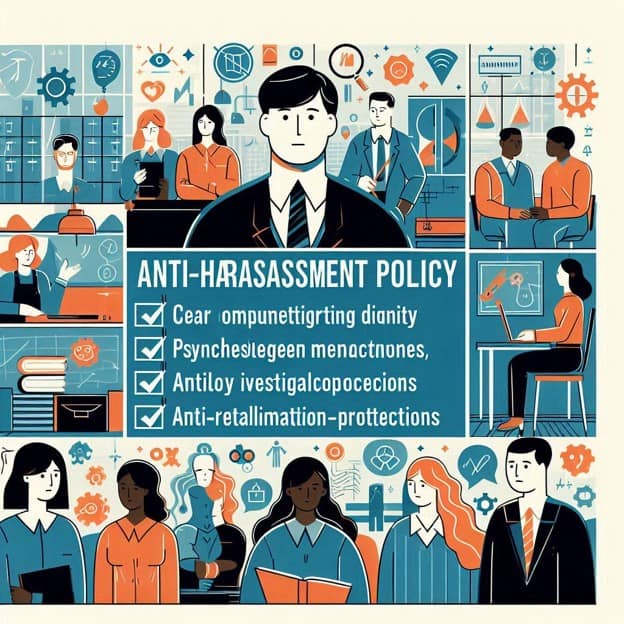
Case Study: Transformation Through Comprehensive Approach

A technology company approached us with concerning data from their employee engagement survey, which revealed that 27% of employees had witnessed or experienced harassment behaviors, yet their formal reporting numbers were minimal. This disconnect indicated serious issues with their harassment prevention system and culture.

We partnered with them to create a comprehensive transformation strategy that exemplified our values of authenticity, inclusion, and evidence-based excellence. Key components included:

  • Development of a completely revised policy incorporating the elements described above
  • Implementation of a multi-channel reporting system including an independent hotline
  • Training for all employees focused on specific behaviors rather than legal definitions
  • Enhanced manager capabilities for addressing early concerns before escalation
  • Leader accountability metrics tied to harassment prevention effectiveness
  • Bystander intervention program that empowered all employees to address problematic behaviors
  • Regular communication campaign emphasizing organizational values and expectations

The results after 24 months were remarkable:

  • Early reporting of concerns increased by 189%
  • Formal harassment complaints decreased by 64%
  • Employee trust in the organization’s commitment to a respectful workplace increased by 37 percentage points
  • Turnover in previously problematic departments decreased by 41%
  • The organization’s employment brand strengthened, improving recruitment outcomes

Most importantly, they established a sustainable approach that continued to strengthen their culture over time—embodying our commitment to creating lasting organizational transformation rather than short-term fixes.

Common Policy Development Pitfalls

Even well-intentioned organizations can stumble when developing anti-harassment policies. Here are critical mistakes to avoid:

  1. Overly legalistic language: Policies written in dense legal terminology often fail to connect with employees and may actually discourage reporting by creating intimidation. A healthcare client transformed their policy by translating legal requirements into clear, accessible language without sacrificing accuracy or comprehensiveness.
  • Focusing exclusively on sexual harassment: While sexual harassment receives significant attention, comprehensive policies must address all forms of harassment with equal clarity. A manufacturing organization discovered through climate surveys that racial and national origin harassment were their primary issues, allowing them to adjust their policy and training accordingly.
  • Inadequate attention to reporting barriers: Organizations sometimes create policies with reporting mechanisms that don’t account for real-world power dynamics and reporting hesitations. A retail client significantly improved reporting by implementing an anonymous digital system accessible via mobile devices, removing several practical barriers.
  • Insufficient investigator training: Even excellent policies fail when investigators lack the skills to implement them effectively. A professional services firm addressed this gap by developing a comprehensive investigator certification program that built the necessary capabilities for consistent, high-quality investigations.
  • Lack of leadership accountability: Policies without meaningful leadership accountability rarely create cultural change. A technology company transformed their approach by incorporating harassment prevention effectiveness into executive compensation metrics, dramatically improving leadership engagement and modeling.

Current Trends in Anti-Harassment Approaches

As we look toward the future, several important trends are reshaping how organizations approach harassment prevention:

  • Trauma-informed approaches: Progressive organizations are incorporating trauma-informed practices into their reporting and investigation procedures, recognizing how trauma affects memory, communication, and engagement with formal processes.
  • Restorative practices: Some organizations are implementing restorative approaches that focus on healing harm and rebuilding workplace relationships when appropriate, while still maintaining serious consequences for significant misconduct.
  • Intersectional perspectives: Leading policies now recognize how various aspects of identity may create unique harassment experiences requiring specific attention in policy development and implementation.
  • Technology-enhanced reporting: Digital reporting platforms are enabling more accessible, secure reporting options while providing enhanced data analytics to identify potential patterns and risk areas.
  • Prevention-focused metrics: Organizations are moving beyond tracking complaint numbers to measuring prevention effectiveness through climate surveys, bystander intervention rates, and early concern resolution data.

At Che’ Blackmon Consulting, we continuously refine our approaches to incorporate these emerging practices while maintaining unwavering focus on our mission: creating pathways for authentic growth that empower overlooked talent and transform organizations.

Taking Action: Next Steps for Your Organization

Regardless of your current anti-harassment policy maturity, these practical steps can help you advance:

  1. Assess your current state: Honestly evaluate what’s working and what’s not in your existing approach. Consider using our Harassment Prevention Effectiveness Assessment (available on our website) to identify specific improvement areas.
  • Gather multi-level input: Engage employees at all levels to understand their perspectives on current challenges and potential solutions. This approach not only provides valuable insights but builds buy-in for changes.
  • Review investigation quality: Evaluate recent investigations for consistency, thoroughness, and timeliness to identify potential process improvements.
  • Enhance manager capabilities: Develop targeted training for managers focused on early intervention skills that prevent escalation to serious harassment situations.
  • Connect prevention to culture: Integrate harassment prevention with broader culture initiatives rather than treating it as a standalone compliance topic.

Discussion Questions

  • How effectively does your current anti-harassment approach balance legal compliance with cultural aspirations? Where do you see tensions, and how might those be addressed?
  • What specific barriers might prevent reporting in your organizational context, and how could your policy and procedures address these barriers?
  • How do your leadership development practices incorporate harassment prevention capabilities, particularly for early intervention in problematic behaviors?
  • What metrics would most meaningfully measure the effectiveness of your harassment prevention system beyond simply tracking formal complaints?
  • How might you better engage majority group members as active partners in creating a harassment-free workplace rather than positioning them solely as potential policy violators?

Partner with Che’ Blackmon Consulting

Ready to transform your approach to harassment prevention? Che’ Blackmon Consulting offers customized solutions that align with your unique organizational needs and culture.

Our services include:

  • Comprehensive policy development and review
    • Reporting system design and implementation
    • Investigator capability development
    • Prevention-focused training programs
    • Culture transformation strategies

Contact us today to schedule a complimentary strategy session:

  • Email: admin@cheblackmon.com
    • Phone: 888.369.7243
    • Website: https://cheblackmon.com

Join our monthly newsletter “The Blackmon Brief” launching March 2025 for ongoing insights that support your organizational transformation journey.

#AntiHarassmentPolicy #WorkplaceCulture #EmployeeWellbeing #HRBestPractices #PsychologicalSafety #OrganizationalCulture #WorkplaceRespect #InclusiveLeadership #HRCompliance #TalentRetention

Che’ Blackmon is a Human Resources strategist and author who has transformed organizational cultures across multiple industries for over two decades. Her commitment to creating pathways of opportunity for overlooked talent has made her a sought-after advisor for organizations committed to building inclusive, high-value cultures where authentic leadership transforms workplaces.


2025 Employment Law Updates: What HR Professionals Need to Know

Navigating Change While Building High-Value Cultures

The legal landscape shaping employment practices continues to evolve at a rapid pace. For HR professionals and organizational leaders, staying current with these changes isn’t just about compliance—it’s about creating the foundation for a culture where all talent can thrive. At Che’ Blackmon Consulting, we believe that understanding and implementing employment law effectively is essential to building the inclusive, high-value company cultures that drive sustainable success.

As I explore in “Mastering a High-Value Company Culture,” organizations that excel don’t view compliance as a box-checking exercise but as an opportunity to strengthen their cultural foundation. They recognize that legal requirements often reflect evolving societal values around fairness, equity, and dignity at work—values that directly support organizational excellence when embedded authentically.

Key 2025 Federal Employment Law Updates

Several significant federal changes are reshaping the employment landscape this year. Understanding these updates is crucial for organizations committed to both compliance and cultural excellence:

1. Expanded Protections Under the NLRB

The National Labor Relations Board has continued its enforcement emphasis on protecting concerted activity in both union and non-union workplaces. Recent guidance expands protections for employees discussing working conditions on social media and limits employer policies that could chill protected speech.

Key changes include:

  • Broadened definition of “protected concerted activity” to include more forms of workplace advocacy
  • Stricter scrutiny of confidentiality provisions in employment agreements
  • New limitations on workplace monitoring that could interfere with organizing activities
  • Enhanced remedies for violations, including consequential damages

A manufacturing client recently discovered their social media policy contained problematic restrictions that could be interpreted as limiting employees’ rights to discuss working conditions. By proactively revising these policies before they triggered complaints, they avoided potential liability while simultaneously strengthening trust with their workforce.

2. Pay Transparency Requirements

Building on the momentum of recent years, federal agencies have strengthened pay transparency requirements through enhanced enforcement guidance. These changes reflect growing recognition that pay transparency is key to addressing persistent wage disparities.

Notable developments include:

  • Expanded employer reporting requirements for pay data
  • Strengthened prohibitions against pay secrecy policies
  • New guidance on permissible factors for pay differentiation
  • Enhanced penalties for violations of equal pay provisions

The financial services organization we worked with transformed their approach to compensation by implementing a transparent salary banding system with clear progression criteria. This change not only ensured compliance with evolving requirements but also increased employee trust and reduced turnover by 27%. Their experience demonstrates how compliance initiatives, when implemented thoughtfully, can strengthen cultural foundations rather than simply satisfy regulatory requirements.

3. Artificial Intelligence and Employment Decision-Making

Federal agencies have issued groundbreaking guidance on the use of AI in employment decisions, creating new compliance requirements for organizations using algorithmic tools for hiring, promotion, or evaluation.

Key provisions include:

  • Requirement to evaluate AI tools for disparate impact before implementation
  • Mandate to provide reasonable accommodations in AI-driven processes
  • New disclosure requirements for candidates evaluated using algorithmic tools
  • Expanded liability for discriminatory outcomes even with “neutral” algorithms

A technology company we partnered with conducted a comprehensive audit of their AI-driven resume screening tool and discovered it was disproportionately screening out qualified candidates from certain demographic groups. By adjusting their algorithms and implementing human oversight before the new regulations took effect, they not only avoided compliance issues but significantly expanded their talent pipeline, particularly for historically underrepresented groups.

This example highlights our operating principle of prioritizing evidence-based strategies while embracing creative solutions. The organization maintained their innovative approach to talent acquisition while ensuring it aligned with both legal requirements and their commitment to inclusion.

4. Remote Work Accommodation Standards

The Department of Labor and EEOC have issued updated guidance clarifying when remote work must be considered as a reasonable accommodation under the ADA, incorporating lessons from widespread remote work during the pandemic.

Significant changes include:

  • Recognition that successful remote work during the pandemic may undermine arguments against future accommodation requests
  • New frameworks for evaluating essential functions in remote contexts
  • Clarification of undue hardship standards in hybrid environments
  • Updated guidelines for interactive accommodation processes

A professional services firm developed a structured remote work accommodation framework that balanced business needs with individual circumstances. Their approach centered on the essential functions of each role rather than blanket policies, allowing them to make consistent, defensible decisions that supported both organizational objectives and employee needs. This approach exemplifies our value of customizing solutions to each organization’s unique culture and challenges.

State and Local Developments

Beyond federal changes, state and local jurisdictions continue to enact employment laws that often exceed federal requirements. Organizations operating across multiple jurisdictions face particular challenges in navigating this complex landscape.

1. Expanded Family and Medical Leave Laws

Several states have enhanced their family and medical leave programs in 2025, creating a patchwork of requirements that can be challenging to navigate:

  • Extended covered reasons for leave in several states now include bereavement, domestic violence response, and family military exigencies
  • Lower employee eligibility thresholds in some jurisdictions
  • Expanded definitions of “family member” to include chosen family
  • Increased paid leave requirements in several states and municipalities

A healthcare organization with operations in multiple states implemented a “highest common denominator” approach that applied the most employee-favorable leave provisions across their entire workforce. While exceeding minimum requirements in some locations, this approach simplified administration and reinforced their commitment to employee wellbeing—ultimately strengthening their employer brand and reducing turnover in a competitive labor market.

2. Restrictive Covenant Limitations

The landscape for non-compete and non-solicitation agreements continues to shift dramatically at the state level:

  • Near-complete bans on non-compete agreements for most employees in several additional states
  • Salary thresholds for enforceable agreements increasing significantly
  • New notice requirements and limitations on geographic scope
  • Enhanced penalties for non-compliance, including in some cases personal liability for executives

A technology company conducted a comprehensive review of their restrictive covenant practices and transitioned from broad non-compete agreements to more focused, narrowly tailored protections of legitimate business interests. This change not only ensured compliance with evolving requirements but actually improved their ability to attract top talent concerned with career mobility.

3. Privacy Protections in the Workplace

State-level privacy laws continue to proliferate, with significant implications for workplace monitoring and employee data management:

  • Comprehensive data privacy laws in additional states create new consent requirements
  • Enhanced notice obligations for workplace monitoring
  • Limitations on the use of biometric data for time tracking and access
  • Employee rights to access, correct, and delete certain personal information

A retail organization implemented a transparent approach to workplace monitoring that clearly communicated the purposes, methods, and limitations of their data collection practices. By exceeding minimum notice requirements and giving employees meaningful choices where possible, they transformed what could have been a compliance burden into an opportunity to demonstrate their commitment to treating employees with dignity and respect.

4. Wage and Hour Developments

State and local wage regulations continue to evolve rapidly:

  • Minimum wage increases in numerous jurisdictions
  • New requirements for predictable scheduling in several municipalities
  • Expanded overtime protections exceeding federal standards
  • Enhanced penalties for wage and hour violations

A hospitality company implemented a proactive scheduling system that not only complied with the most stringent predictable scheduling requirements but gave employees unprecedented control over their work schedules. This approach turned a compliance challenge into a competitive advantage for recruitment and retention in a tight labor market.

Strategic Implementation: Beyond Compliance to Culture

At Che’ Blackmon Consulting, we believe that the organizations that thrive don’t just comply with employment laws, they integrate legal requirements into a coherent people strategy that strengthens their culture. Based on our experience across industries, we’ve identified the five best practices for managing employment law changes effectively:

1. Anticipatory Compliance

Rather than reacting to changes after they take effect, leading organizations monitor developing legal trends and adapt proactively. This approach not only reduces compliance risk but allows for more thoughtful implementation that aligns with cultural values.

Implementation strategies include:

  • Establishing a cross-functional legal monitoring team
  • Creating tiered response plans for pending legislation
  • Developing relationships with employment counsel who understand your business context
  • Participating in industry groups that share compliance strategies

A manufacturing client established quarterly legal landscape reviews that brought together HR, legal, and operations leaders to assess developing trends and plan strategic responses. This anticipatory approach allowed them to implement changes in ways that reinforced their values rather than creating disruption through last-minute reactions.

2. Values-Based Implementation

Organizations that excel integrate legal requirements with their core values, finding ways to implement compliance measures that reinforce their cultural aspirations rather than contradicting them.

Effective approaches include:

  • Explicitly connecting compliance requirements to organizational values
  • Involving employees in designing implementation approaches
  • Using compliance as an opportunity to reinforce cultural commitments
  • Measuring both technical compliance and cultural alignment

A technology company transformed their approach to AI regulation compliance by explicitly connecting it to their core value of innovation with integrity. Rather than presenting new requirements as externally imposed restrictions, they framed them as enabling guardrails that would help technology serve humanity better—a message that resonated deeply with their technical teams.

3. Manager Capability Development

Frontline managers play a crucial role in employment law compliance, yet many organizations fail to equip them with the knowledge and skills to navigate legal requirements effectively.

Best practices include:

  • Providing scenario-based legal training rather than abstract principles
  • Developing clear escalation frameworks for legal questions
  • Creating accessible reference materials for common situations
  • Building legal considerations into broader manager development programs

A healthcare organization developed a “legal literacy” program for managers that used realistic scenarios to build practical judgment rather than attempting to turn managers into legal experts. This approach reduced legal risk while empowering managers to handle situations with confidence—embodying our principle of building confidence and capability in overlooked talent.

4. Integrated Compliance Systems

Organizations that manage legal compliance effectively integrate it into their broader people systems rather than treating it as a separate function.

Effective approaches include:

  • Building compliance considerations into HRIS system designs
  • Incorporating legal requirements into standard operating procedures
  • Creating unified reporting systems for compliance and cultural metrics
  • Developing holistic audit processes that assess both technical compliance and implementation quality

A financial services firm redesigned their performance management system to seamlessly integrate documentation requirements for legal defense while maintaining a development-focused approach for employees. This integration ensured they could defend employment decisions if necessary while still creating a positive employee experience aligned with their cultural values.

5. Continuous Improvement Frameworks

Leading organizations establish structured processes to learn from compliance challenges and continuously improve their approaches.

Key elements include:

  • Regular review of employment claims and near-misses
  • Post-implementation evaluation of compliance initiatives
  • Benchmarking against industry best practices
  • Soliciting employee feedback on compliance processes

A retail organization implemented quarterly reviews of employee relations issues, identifying patterns that revealed gaps in their accommodation processes. By addressing these systematically, they reduced legal risk while simultaneously improving manager capabilities and employee experience.

Case Study: Transformation Through Strategic Compliance

A mid-sized professional services firm approached us with concerning trends in employment claims despite significant investments in compliance training. Their approach to employment law was creating a defensive, documentation-focused culture that contradicted their stated values of trust and collaboration.

We partnered with them to create a comprehensive transformation strategy that exemplified our values of authenticity, inclusion, and evidence-based excellence. Key components included:

  • Reframing compliance as an enabler of their people-first culture rather than a contradictory requirement
  • Developing a values-aligned decision framework for employment decisions
  • Creating scenario-based training that builds manager judgment rather than fear
  • Implementing a structured early intervention system for workplace concerns
  • Redesigning documentation approaches to support both legal defense and positive employee experience

The results after 18 months were remarkable:

  • Employment claims decreased by 64%
  • Employee trust scores increased by 27 points
  • Manager confidence in handling complex situations improved significantly
  • The organization reduced external legal spend by 42%
  • Their employer brand strengthened, improving recruitment outcomes

Most importantly, they established an integrated approach that aligned legal compliance with cultural aspirations—embodying our commitment to creating sustainable organizational transformation rather than short-term fixes.

2025 Strategic Priorities for HR Leaders

Based on the legal landscape in 2025, we recommend these strategic priorities for HR leaders:

  1. Conduct a cross-jurisdiction compliance audit to identify specific areas where your organization may face new requirements, with particular attention to remote work arrangements that may trigger multi-state obligations.
  • Review and update your AI governance framework to ensure algorithmic decision-making tools meet new regulatory requirements while supporting your talent strategy objectives.
  • Assess your wage transparency practices against evolving requirements and best practices, using this as an opportunity to strengthen your overall compensation philosophy and communication.
  • Evaluate manager capabilities related to accommodation processes, particularly for remote work, mental health, and caregiver support—areas seeing significant legal development.
  • Update your privacy notices and data management practices to reflect the most current requirements across all operating jurisdictions, with particular attention to employee monitoring in remote and hybrid environments.

Discussion Questions

  • How effectively does your organization integrate legal compliance with cultural values? Where do you see tensions, and how might those be addressed?
  • What processes do you have for keeping managers updated on evolving legal requirements in ways that build capability rather than creating fear?
  • How might upcoming changes in employment law create opportunities to strengthen aspects of your culture that need development?
  • What legal trends do you see emerging that might significantly impact your organization in the coming years, and how are you preparing proactively?
  • How do you measure the effectiveness of your compliance approaches beyond simply tracking claims and violations?

Partner with Che’ Blackmon Consulting

Ready to transform your approach to employment law compliance? Che’ Blackmon Consulting offers customized solutions that align legal requirements with your unique organizational culture and values.

Our services include:

  • Employment law compliance audits with cultural alignment assessment
    • Manager capability development for legally sound people management
    • Values-aligned policy development and implementation
    • Compliance system integration with cultural initiatives
    • Strategic planning for upcoming legal changes

Contact us today to schedule a complimentary strategy session:

  • Email: admin@cheblackmon.com
    • Phone: 888.369.7243
    • Website: https://cheblackmon.com

Join our monthly newsletter “The Blackmon Brief” launching March 2025 for ongoing insights that support your organizational transformation journey.

#EmploymentLaw #HR2025 #ComplianceStrategy #WorkplaceLaw #HRCompliance #PayTransparency #AIRegulation #RemoteWorkPolicies #HRLeadership #LegalUpdates

Che’ Blackmon is a Human Resources strategist and author who has transformed organizational cultures across multiple industries for over two decades. Her commitment to creating pathways of opportunity for overlooked talent has made her a sought-after advisor for organizations committed to building inclusive, high-value cultures where authentic leadership transforms workplaces.

Reclaiming Purpose: Understanding Feminism’s Evolution in the Workplace

Beyond Labels to Leadership Impact

The term “feminism” often evokes strong reactions in professional settings—reactions that range from enthusiastic support to cautious distancing or outright rejection. At Che’ Blackmon Consulting, we believe that understanding this complex response provides valuable insights into workplace dynamics and opportunities for meaningful organizational transformation. The principles that underlie feminism—equity, voice, and opportunity for all—align deeply with creating high-value company cultures where overlooked talent can thrive.

As I explore in “Mastering a High-Value Company Culture,” truly transformative organizations don’t just accommodate diversity—they leverage it as a strategic advantage. They create environments where all voices contribute to innovation and where leadership pathways are accessible based on capability rather than conformity to traditional models.

Historical Context: The Evolution of Feminism and Its Perception

To understand current perceptions of feminism, we must first appreciate its historical evolution and how that journey has shaped today’s opinions. Feminism has developed through several distinct waves, each responding to the social and economic realities of its time:

First Wave Feminism (Late 19th-Early 20th Century)

The initial feminist movement focused primarily on legal obstacles, particularly women’s suffrage. While revolutionary at the time, this movement was largely led by middle and upper-class white women and often excluded women of color and working-class women. This early limitation created lasting tensions around inclusivity that would later affect perceptions of the movement.

During this period, women who worked outside the home were primarily in domestic service, teaching, nursing, or factory labor under difficult conditions. The focus was on basic rights rather than workplace transformation.

Second Wave Feminism (1960s-1980s)

The second wave significantly expanded feminist concerns into the workplace, addressing issues like reproductive rights, domestic violence, family dynamics, and workplace inequality. This era produced landmark legislation including the Equal Pay Act of 1963 and Title VII of the Civil Rights Act of 1964, which prohibited sex-based employment discrimination.

However, this period also saw the emergence of more radical feminist perspectives that sometimes positioned men as adversaries rather than allies. Media often amplified the most confrontational voices, creating lasting stereotypes of feminists as anti-male. This era saw the beginning of “feminist” becoming a polarizing label in many contexts, despite the movement’s substantial gains for workplace equality.

During this period, women entered the workforce in unprecedented numbers but faced significant barriers to advancement. The concept of the “glass ceiling” emerged, describing invisible barriers preventing women from reaching senior leadership positions.

Third Wave and Fourth Wave Feminism (1990s-Present)

Later waves of feminism have emphasized intersectionality—recognizing that gender interacts with race, class, sexuality, and other dimensions of identity to create unique experiences of discrimination and opportunity. This evolution has made feminism more inclusive but also more complex, sometimes making it difficult for people to understand what exactly “being a feminist” means in today’s context.

In the workplace, these later waves have addressed subtle forms of bias, the complexity of work-life integration, and systems that inadvertently perpetuate inequality despite stated commitments to diversity and inclusion.

Why the Term “Feminism” Can Evoke Negative Reactions

Several factors contribute to the sometimes negative perception of feminism, particularly in workplace contexts:

1. Misrepresentation and Stereotyping

Media portrayals have often focused on the most extreme or confrontational elements of feminist activism, creating caricatures that don’t represent the movement’s broader goals of equality and opportunity. These stereotypes—of feminists as angry, anti-male, or dismissive of traditional choices—persist despite being unrepresentative of most feminist thought.

A technology executive we worked with initially distanced herself from the feminist label despite actively advocating for women’s advancement because she worried the term would create barriers with male colleagues who held these stereotyped views. Through facilitated dialogue, her organization was able to move beyond labels to focus on specific practices that created more equitable opportunities.

2. Resistance to Changing Power Dynamics

Equality necessitates change in established power structures, which naturally creates resistance. Some negative reactions to feminism stem from discomfort with changing norms and practices that have traditionally benefited certain groups. This resistance often manifests as dismissing feminist concerns as overreactions or unnecessary disruptions to functioning systems.

A manufacturing client discovered significant resistance to their women’s leadership initiative until they reframed the conversation around business performance. By demonstrating that teams with gender-balanced leadership outperformed homogeneous teams by 23% on key metrics, they shifted the narrative from perceived “special treatment” to strategic advantage.

3. Complexity and Evolution of the Movement

Feminism has evolved significantly over time and encompasses diverse perspectives. This complexity can make it difficult for people to know what identifying with feminism means in today’s context. Some hesitate to adopt the label because they aren’t sure which version of feminism they would be aligning with.

A professional services firm we worked with addressed this challenge by focusing their gender equity initiatives on specific, measurable outcomes rather than ideological positions. This approach allowed people with diverse perspectives to collaborate effectively toward shared goals despite differing views on the feminist label.

4. Fear of Backlash or Marginalization

In some workplace contexts, identifying openly as a feminist can trigger backlash or marginalization. Research by Dr. Shelley Correll at Stanford University has demonstrated that women who are perceived as advocates for gender equity sometimes face a “diversity penalty” in performance evaluations and promotion decisions. This reality creates understandable caution around embracing labels that might trigger such penalties.

Women’s Changing Role in the Workplace: Progress and Persistent Challenges

The story of women in the workplace reflects both remarkable progress and persistent challenges:

From Exclusion to Participation

In 1950, only about 34% of American women participated in the labor force. By 2019, that figure had risen to approximately 57.4%. Women now earn more bachelor’s, master’s, and doctoral degrees than men. These changes represent a dramatic shift in economic participation and educational achievement.

However, participation hasn’t always translated to proportional advancement. Despite representing nearly half the workforce, women remain significantly underrepresented in senior leadership. In 2023, women held only 28% of executive positions in Fortune 500 companies, with the numbers even lower for women of color, who held just 5% of these roles.

From Overt to Subtle Barriers

While overtly discriminatory policies have largely been eliminated, more subtle barriers persist:

  • Unconscious bias in evaluation and promotion continues to affect advancement opportunities. Research by McKinsey and LeanIn.org found that women are promoted at lower rates than men from the very first step into management, creating a “broken rung” that limits the pipeline for senior leadership.
  • Uneven caregiving responsibilities continue to impact women’s career trajectories. Even in dual-career households, women typically shoulder more family responsibilities, which can affect their advancement opportunities in organizations that equate commitment with uninterrupted availability.
  • Differences in networking and sponsorship create disparities in access to career-advancing opportunities. Research by Herminia Ibarra at London Business School has demonstrated that successful career advancement depends significantly on informal networks and sponsor relationships, which women sometimes have less access to, particularly in male-dominated fields.
  • Microaggressions and everyday sexism create cumulative disadvantages over time. Small instances of exclusion or dismissal may seem minor in isolation but compound to create significant career headwinds.

The Business Case for Women’s Leadership

Beyond equity concerns, substantial research demonstrates the business advantages of women’s leadership:

  • Companies in the top quartile for gender diversity in executive teams are 25% more likely to experience above-average profitability (McKinsey)
  • Organizations with at least 30% women in leadership positions are 12% more profitable than those with few or no women leaders (Peterson Institute for International Economics)
  • Teams with gender-balanced leadership make better decisions 73% of the time compared to male-dominated teams (Cloverpop Decision Intelligence)
  • Gender-diverse teams demonstrate higher levels of psychological safety, leading to greater innovation (Google’s Project Aristotle)

A global consumer products company we worked with discovered that divisions led by mixed-gender teams delivered 17% higher revenue growth than those with homogeneous leadership. This finding transformed their approach to leadership development and succession planning, shifting it from a compliance exercise to a strategic imperative.

Moving Forward: Beyond Labels to Transformative Action

At Che’ Blackmon Consulting, we believe the most productive approach focuses less on labels and more on specific, measurable actions that create equitable opportunities and leverage diverse talent for organizational excellence. Based on our work with organizations across industries, we’ve identified five high-impact strategies:

1. Evidence-Based Talent Systems

Organizations that excel at gender equity implement talent systems designed to minimize bias and maximize capability-based decisions:

  • Structured interview processes with consistent evaluation criteria
  • Clear, behavior-based performance standards
  • Regular equity audits of promotion and compensation decisions
  • Transparent criteria for high-visibility assignments
  • Accountability metrics for leadership development

A technology client transformed their approach by implementing these practices and saw women’s representation in leadership rise from 22% to 41% over three years, with corresponding improvements in employee engagement and innovation metrics.

Implementation guidance:

  • Start with data to understand your organization’s specific patterns
  • Focus initial efforts on the areas showing the greatest disparities
  • Involve both men and women in designing solutions
  • Establish clear metrics to track progress
  • Communicate regularly about both challenges and successes

2. Sponsorship and Advocacy Programs

Research consistently shows that formal sponsorship programs accelerate women’s advancement, particularly into senior leadership. Effective programs include:

  • Pairing high-potential women with influential leaders who commit to their advancement
  • Training sponsors on effective advocacy behaviors
  • Creating forums for sponsors to promote their protégés’ capabilities
  • Regularly reviewing sponsorship impact and adjusting as needed
  • Recognizing successful sponsors who develop diverse talent

A financial services organization implemented a structured sponsorship program for mid-career women and saw their promotion rates increase by 38% within two years, with 83% of participants reporting greater confidence in their career prospects.

3. Inclusive Leadership Development

Traditional leadership models often reflect historically male-dominated contexts and inadvertently create barriers for women’s advancement. Organizations making the greatest progress implement inclusive leadership development that:

  • Expands the vision of effective leadership to encompass diverse styles
  • Addresses the unique challenges women face in leadership roles
  • Provides targeted feedback and development opportunities
  • Creates peer support networks for emerging leaders
  • Addresses systemic barriers while building individual capabilities

A healthcare system we worked with redesigned their leadership competency model to recognize diverse leadership approaches and saw a 47% increase in women’s readiness for executive roles, along with improved patient satisfaction scores across the organization.

4. Work Model Innovation

Organizations that truly leverage women’s leadership talent rethink traditional work models that inadvertently create advancement barriers:

  • Implementing flexible work arrangements without career penalties
  • Designing pathways that accommodate career interruptions
  • Creating alternatives to the traditional linear career progression
  • Challenging assumptions about what commitment and contribution look like
  • Measuring outcomes rather than presence or availability

A professional services firm implemented these principles and not only increased women’s retention by 34% but also improved overall productivity and client satisfaction, demonstrating that more flexible models can benefit everyone.

5. Male Allyship Development

Sustainable progress requires engaging men as active partners in creating equity. Effective male allyship programs:

  • Help men understand the specific challenges women face without creating defensiveness
  • Provide concrete behaviors that demonstrate allyship
  • Create accountability for inclusive leadership
  • Recognize and celebrate effective ally behaviors
  • Address systemic issues rather than just individual interactions

A manufacturing company implemented a structured male allyship program alongside their women’s leadership initiative and saw significantly greater progress than similar companies implementing women-focused programs alone. Their approach embodied our core value of inclusion by creating a collaborative environment for change rather than an adversarial one.

Case Study: Transformation Through Integrated Action

A global technology firm approached us with concerning data: despite hiring women and men in equal numbers at entry levels, their leadership pipeline showed significant disparities beginning at the first promotion level. Despite years of diversity initiatives, they weren’t seeing meaningful change in representation or inclusion measures.

We partnered with them to create a comprehensive approach that exemplified our values of authenticity, inclusion, and evidence-based excellence. Key components included:

  • A thorough analysis of their talent systems to identify specific points where disparities emerged
  • Implementation of structured decision processes for promotion and high-visibility assignments
  • Creation of a formal sponsorship program pairing high-potential women with influential leaders
  • Development of inclusive leadership capabilities across the organization
  • Redesign of performance evaluation to focus on impact rather than presence
  • Implementation of work flexibility options with explicit protection against career penalties

The results after 30 months were remarkable:

  • Women’s representation in middle management increased from 28% to 43%
  • Senior leadership representation rose from 19% to 34%
  • Retention of high-potential women improved by 47%
  • Employee engagement scores increased across all demographic groups
  • The organization experienced a 29% increase in innovation metrics

Most importantly, they established sustainable practices that continue to drive progress—embodying our commitment to creating lasting organizational transformation rather than short-term fixes.

Moving Beyond Polarization: Practical Next Steps

Regardless of whether the term “feminism” resonates in your organizational context, these practical steps can help advance equity and organizational effectiveness:

  1. Start with data: Understand your organization’s specific patterns and challenges rather than implementing generic solutions. Examine hiring, promotion, retention, and compensation data by gender to identify specific opportunity areas.
  • Focus on systems, not just individuals: Address the systemic factors that create barriers to advancement rather than focusing exclusively on individual development.
  • Engage broad participation: Include diverse perspectives, including men’s voices, in designing and implementing solutions to ensure they address the full range of experiences and concerns.
  • Measure impact, not just activity: Track specific outcome metrics rather than simply counting program participants or training hours.
  • Connect to strategy: Frame equity initiatives in terms of organizational performance and strategic advantage rather than compliance or social responsibility alone.

Discussion Questions

  • How do perceptions of gender equity initiatives in your organization affect participation and support? How might reframing these initiatives impact their effectiveness?
  • What specific systems in your organization might inadvertently create barriers to women’s advancement, despite good intentions?
  • How effectively does your leadership development approach accommodate diverse leadership styles and career paths?
  • What would it take to make flexibility a strategic advantage in your organization rather than an accommodation?
  • How might you engage male leaders as active partners in creating more equitable opportunities?

Partner with Che’ Blackmon Consulting

Ready to transform your approach to leveraging diverse talent? Che’ Blackmon Consulting offers customized solutions that align with your unique organizational needs and culture.

Our services include:

  • Equity audits and analytics
    • Talent system redesign
    • Inclusive leadership development
    • Sponsorship program implementation
    • Work model innovation

Contact us today to schedule a complimentary strategy session:

  • Email: admin@cheblackmon.com
    • Phone: 888.369.7243
    • Website: https://cheblackmon.com

Join our monthly newsletter “The Blackmon Brief” launching March 2025 for ongoing insights that support your organizational transformation journey.

#GenderEquity #WomenInLeadership #WorkplaceInclusion #DiversityAndInclusion #OrganizationalTransformation #BusinessPerformance #LeadershipDevelopment #TalentManagement

Che’ Blackmon is a Human Resources strategist and author who has transformed organizational cultures across multiple industries for over two decades. Her commitment to creating pathways of opportunity for overlooked talent has made her a sought-after advisor for organizations committed to building inclusive, high-value cultures where authentic leadership transforms workplaces.

Measuring Leadership Impact: Key Performance Indicators

Beyond Intuition to Evidence-Based Leadership

“What gets measured gets managed” remains one of the most powerful principles in business. Yet when it comes to leadership effectiveness, many organizations rely on gut feelings and anecdotal evidence rather than robust measurement. At Che’ Blackmon Consulting, we believe that truly transformative leadership isn’t just felt—it’s measured, analyzed, and continuously improved through strategic performance indicators.

As I discuss in “Mastering a High-Value Company Culture,” organizations that excel at measuring leadership impact don’t just evaluate what leaders do—they measure the tangible differences leaders make. They create accountability systems that connect leadership behaviors to business outcomes, employee experiences, and cultural transformation.

The Business Case for Measuring Leadership Impact

The importance of measuring leadership effectiveness extends far beyond satisfying curiosity. Consider these compelling realities:

  • Organizations with robust leadership metrics outperform their peers by 1.5 times in revenue growth and profitability
  • 78% of HR leaders report that leadership measurement is inadequate in their organizations
  • Only 14% of organizations effectively connect leadership behaviors to business outcomes
  • Companies that measure leadership impact see 23% higher employee engagement and 31% lower turnover
  • Organizations with evidence-based leadership practices are 36% more likely to respond effectively to market disruptions

A financial services organization we worked with discovered that their leadership effectiveness varied dramatically across divisions, directly affecting customer retention and employee engagement—to the tune of $8.2 million in annual impact. This finding transformed leadership development from a “nice-to-have” program to a strategic imperative with tangible ROI. These realities underscore why measuring leadership isn’t an administrative exercise, it’s a business essential with profound financial implications.

The Leadership Measurement Framework

Effective leadership measurement requires looking beyond simple metrics to develop a comprehensive framework. Based on our experience with organizations across industries and supported by leadership research, we’ve developed a five-dimensional approach that provides a complete picture of leadership impact:

1. Business Performance Metrics

The most straightforward dimension connects leadership to tangible business outcomes. A manufacturing client implemented a structured approach that linked leadership behaviors to specific operational metrics:

  • Productivity increases or decreases within leader’s span of control
  • Quality metrics and error rates compared to organizational benchmarks
  • Customer satisfaction scores for the leader’s area of responsibility
  • Revenue or profit contribution trends over time
  • Project completion rates and milestone achievement

They discovered that leaders who scored highest on inclusive leadership behaviors achieved 22% higher productivity improvements and 18% better quality metrics than their peers. This finding directly connected their leadership development investments to bottom-line results, embodying our principle of measuring success through tangible transformation.

When implementing business performance measures, consider these best practices:

  • Identify metrics that leaders can meaningfully influence
  • Establish appropriate comparison points (historical trends, peer comparisons, etc.)
  • Account for contextual factors that might affect performance
  • Look for patterns across multiple metrics rather than focusing on single indicators
  • Connect measurement to development rather than just evaluation

2. Talent Development Indicators

Great leaders build other leaders. This dimension measures a leader’s effectiveness in developing talent and building organizational capability. A healthcare organization we partnered with implemented these metrics:

  • Internal promotion rates from the leader’s team
  • Skill development progress among team members
  • Performance improvement of previously struggling employees
  • Diversity of the talent pipeline being developed
  • Knowledge transfer effectiveness
  • Bench strength improvement over time

They found that leaders who excelled in talent development contributed 3.4 times more future leaders to the organization than their peers. Moreover, these leaders retained key talent at significantly higher rates during a competitive labor market, saving substantial recruitment and onboarding costs.

This approach aligns perfectly with our core value of empowerment, building confidence and capability in overlooked talent. It recognizes that a leader’s true legacy isn’t just what they accomplish directly but the capacity they build in others.

3. Employee Experience Metrics

Leaders profoundly shape the day-to-day experience of their team members, which directly impacts engagement, performance, and retention. A technology company implemented these employee experience metrics:

  • Engagement scores compared to organizational benchmarks
  • Psychological safety assessments
  • Retention rates, particularly for high performers
  • Absenteeism and discretionary effort indicators
  • Employee Net Promoter Scores
  • Wellbeing and burnout measures

Through careful analysis, they identified that leaders who consistently demonstrated authentic leadership behaviors achieved engagement scores 26 points higher than those who didn’t. This difference translated directly to customer satisfaction and innovation output, creating a clear through-line from leadership behaviors to business results.

When measuring employee experience, consider these implementation guidelines:

  • Use both quantitative and qualitative measures
  • Ensure anonymity to encourage honest feedback
  • Measure frequently enough to track trends but not so often that it creates survey fatigue
  • Include forward-looking indicators (like intention to stay) along with backward-looking metrics
  • Connect findings directly to leadership development plans

4. Cultural Impact Assessment

Leaders are culture carriers who significantly influence organizational values, norms, and behaviors. This dimension measures how effectively leaders shape culture in alignment with strategic priorities. A retail organization developed these cultural impact metrics:

  • Values alignment scores from multi-rater feedback
  • Cultural assessment results compared to organizational targets
  • Innovation metrics (idea generation, implementation rates)
  • Collaboration indicators across team boundaries
  • Decision-making effectiveness and alignment with stated values
  • Change adoption rates for strategic initiatives

They discovered that leaders who scored highest on cultural leadership achieved 41% faster implementation of strategic changes and significantly higher cross-functional collaboration. These findings helped them identify and develop leadership behaviors that would accelerate their digital transformation initiative.

This approach embodies our commitment to creating inclusive cultures that celebrate diverse perspectives and deliver high-impact solutions. It recognizes that leaders must be measured not just on what they achieve but on how they achieve it.

5. Leadership Behavior Indicators

While outcomes are critical, measuring speci