Beyond Labels to Leadership Impact
The term “feminism” often evokes strong reactions in professional settings—reactions that range from enthusiastic support to cautious distancing or outright rejection. At Che’ Blackmon Consulting, we believe that understanding this complex response provides valuable insights into workplace dynamics and opportunities for meaningful organizational transformation. The principles that underlie feminism—equity, voice, and opportunity for all—align deeply with creating high-value company cultures where overlooked talent can thrive.
As I explore in “Mastering a High-Value Company Culture,” truly transformative organizations don’t just accommodate diversity—they leverage it as a strategic advantage. They create environments where all voices contribute to innovation and where leadership pathways are accessible based on capability rather than conformity to traditional models.
Historical Context: The Evolution of Feminism and Its Perception
To understand current perceptions of feminism, we must first appreciate its historical evolution and how that journey has shaped today’s opinions. Feminism has developed through several distinct waves, each responding to the social and economic realities of its time:
First Wave Feminism (Late 19th-Early 20th Century)
The initial feminist movement focused primarily on legal obstacles, particularly women’s suffrage. While revolutionary at the time, this movement was largely led by middle and upper-class white women and often excluded women of color and working-class women. This early limitation created lasting tensions around inclusivity that would later affect perceptions of the movement.
During this period, women who worked outside the home were primarily in domestic service, teaching, nursing, or factory labor under difficult conditions. The focus was on basic rights rather than workplace transformation.
Second Wave Feminism (1960s-1980s)
The second wave significantly expanded feminist concerns into the workplace, addressing issues like reproductive rights, domestic violence, family dynamics, and workplace inequality. This era produced landmark legislation including the Equal Pay Act of 1963 and Title VII of the Civil Rights Act of 1964, which prohibited sex-based employment discrimination.
However, this period also saw the emergence of more radical feminist perspectives that sometimes positioned men as adversaries rather than allies. Media often amplified the most confrontational voices, creating lasting stereotypes of feminists as anti-male. This era saw the beginning of “feminist” becoming a polarizing label in many contexts, despite the movement’s substantial gains for workplace equality.
During this period, women entered the workforce in unprecedented numbers but faced significant barriers to advancement. The concept of the “glass ceiling” emerged, describing invisible barriers preventing women from reaching senior leadership positions.
Third Wave and Fourth Wave Feminism (1990s-Present)
Later waves of feminism have emphasized intersectionality—recognizing that gender interacts with race, class, sexuality, and other dimensions of identity to create unique experiences of discrimination and opportunity. This evolution has made feminism more inclusive but also more complex, sometimes making it difficult for people to understand what exactly “being a feminist” means in today’s context.
In the workplace, these later waves have addressed subtle forms of bias, the complexity of work-life integration, and systems that inadvertently perpetuate inequality despite stated commitments to diversity and inclusion.
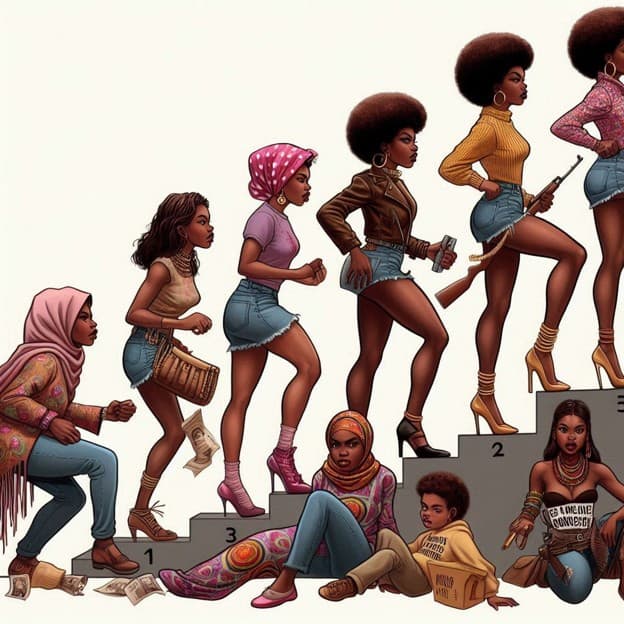
Why the Term “Feminism” Can Evoke Negative Reactions
Several factors contribute to the sometimes negative perception of feminism, particularly in workplace contexts:
1. Misrepresentation and Stereotyping
Media portrayals have often focused on the most extreme or confrontational elements of feminist activism, creating caricatures that don’t represent the movement’s broader goals of equality and opportunity. These stereotypes—of feminists as angry, anti-male, or dismissive of traditional choices—persist despite being unrepresentative of most feminist thought.
A technology executive we worked with initially distanced herself from the feminist label despite actively advocating for women’s advancement because she worried the term would create barriers with male colleagues who held these stereotyped views. Through facilitated dialogue, her organization was able to move beyond labels to focus on specific practices that created more equitable opportunities.
2. Resistance to Changing Power Dynamics
Equality necessitates change in established power structures, which naturally creates resistance. Some negative reactions to feminism stem from discomfort with changing norms and practices that have traditionally benefited certain groups. This resistance often manifests as dismissing feminist concerns as overreactions or unnecessary disruptions to functioning systems.
A manufacturing client discovered significant resistance to their women’s leadership initiative until they reframed the conversation around business performance. By demonstrating that teams with gender-balanced leadership outperformed homogeneous teams by 23% on key metrics, they shifted the narrative from perceived “special treatment” to strategic advantage.
3. Complexity and Evolution of the Movement
Feminism has evolved significantly over time and encompasses diverse perspectives. This complexity can make it difficult for people to know what identifying with feminism means in today’s context. Some hesitate to adopt the label because they aren’t sure which version of feminism they would be aligning with.
A professional services firm we worked with addressed this challenge by focusing their gender equity initiatives on specific, measurable outcomes rather than ideological positions. This approach allowed people with diverse perspectives to collaborate effectively toward shared goals despite differing views on the feminist label.
4. Fear of Backlash or Marginalization
In some workplace contexts, identifying openly as a feminist can trigger backlash or marginalization. Research by Dr. Shelley Correll at Stanford University has demonstrated that women who are perceived as advocates for gender equity sometimes face a “diversity penalty” in performance evaluations and promotion decisions. This reality creates understandable caution around embracing labels that might trigger such penalties.
Women’s Changing Role in the Workplace: Progress and Persistent Challenges
The story of women in the workplace reflects both remarkable progress and persistent challenges:
From Exclusion to Participation
In 1950, only about 34% of American women participated in the labor force. By 2019, that figure had risen to approximately 57.4%. Women now earn more bachelor’s, master’s, and doctoral degrees than men. These changes represent a dramatic shift in economic participation and educational achievement.
However, participation hasn’t always translated to proportional advancement. Despite representing nearly half the workforce, women remain significantly underrepresented in senior leadership. In 2023, women held only 28% of executive positions in Fortune 500 companies, with the numbers even lower for women of color, who held just 5% of these roles.
From Overt to Subtle Barriers
While overtly discriminatory policies have largely been eliminated, more subtle barriers persist:
- Unconscious bias in evaluation and promotion continues to affect advancement opportunities. Research by McKinsey and LeanIn.org found that women are promoted at lower rates than men from the very first step into management, creating a “broken rung” that limits the pipeline for senior leadership.
- Uneven caregiving responsibilities continue to impact women’s career trajectories. Even in dual-career households, women typically shoulder more family responsibilities, which can affect their advancement opportunities in organizations that equate commitment with uninterrupted availability.
- Differences in networking and sponsorship create disparities in access to career-advancing opportunities. Research by Herminia Ibarra at London Business School has demonstrated that successful career advancement depends significantly on informal networks and sponsor relationships, which women sometimes have less access to, particularly in male-dominated fields.
- Microaggressions and everyday sexism create cumulative disadvantages over time. Small instances of exclusion or dismissal may seem minor in isolation but compound to create significant career headwinds.
The Business Case for Women’s Leadership
Beyond equity concerns, substantial research demonstrates the business advantages of women’s leadership:
- Companies in the top quartile for gender diversity in executive teams are 25% more likely to experience above-average profitability (McKinsey)
- Organizations with at least 30% women in leadership positions are 12% more profitable than those with few or no women leaders (Peterson Institute for International Economics)
- Teams with gender-balanced leadership make better decisions 73% of the time compared to male-dominated teams (Cloverpop Decision Intelligence)
- Gender-diverse teams demonstrate higher levels of psychological safety, leading to greater innovation (Google’s Project Aristotle)
A global consumer products company we worked with discovered that divisions led by mixed-gender teams delivered 17% higher revenue growth than those with homogeneous leadership. This finding transformed their approach to leadership development and succession planning, shifting it from a compliance exercise to a strategic imperative.
Moving Forward: Beyond Labels to Transformative Action
At Che’ Blackmon Consulting, we believe the most productive approach focuses less on labels and more on specific, measurable actions that create equitable opportunities and leverage diverse talent for organizational excellence. Based on our work with organizations across industries, we’ve identified five high-impact strategies:
1. Evidence-Based Talent Systems
Organizations that excel at gender equity implement talent systems designed to minimize bias and maximize capability-based decisions:
- Structured interview processes with consistent evaluation criteria
- Clear, behavior-based performance standards
- Regular equity audits of promotion and compensation decisions
- Transparent criteria for high-visibility assignments
- Accountability metrics for leadership development
A technology client transformed their approach by implementing these practices and saw women’s representation in leadership rise from 22% to 41% over three years, with corresponding improvements in employee engagement and innovation metrics.
Implementation guidance:
- Start with data to understand your organization’s specific patterns
- Focus initial efforts on the areas showing the greatest disparities
- Involve both men and women in designing solutions
- Establish clear metrics to track progress
- Communicate regularly about both challenges and successes
2. Sponsorship and Advocacy Programs
Research consistently shows that formal sponsorship programs accelerate women’s advancement, particularly into senior leadership. Effective programs include:
- Pairing high-potential women with influential leaders who commit to their advancement
- Training sponsors on effective advocacy behaviors
- Creating forums for sponsors to promote their protégés’ capabilities
- Regularly reviewing sponsorship impact and adjusting as needed
- Recognizing successful sponsors who develop diverse talent
A financial services organization implemented a structured sponsorship program for mid-career women and saw their promotion rates increase by 38% within two years, with 83% of participants reporting greater confidence in their career prospects.
3. Inclusive Leadership Development
Traditional leadership models often reflect historically male-dominated contexts and inadvertently create barriers for women’s advancement. Organizations making the greatest progress implement inclusive leadership development that:
- Expands the vision of effective leadership to encompass diverse styles
- Addresses the unique challenges women face in leadership roles
- Provides targeted feedback and development opportunities
- Creates peer support networks for emerging leaders
- Addresses systemic barriers while building individual capabilities
A healthcare system we worked with redesigned their leadership competency model to recognize diverse leadership approaches and saw a 47% increase in women’s readiness for executive roles, along with improved patient satisfaction scores across the organization.
4. Work Model Innovation
Organizations that truly leverage women’s leadership talent rethink traditional work models that inadvertently create advancement barriers:
- Implementing flexible work arrangements without career penalties
- Designing pathways that accommodate career interruptions
- Creating alternatives to the traditional linear career progression
- Challenging assumptions about what commitment and contribution look like
- Measuring outcomes rather than presence or availability
A professional services firm implemented these principles and not only increased women’s retention by 34% but also improved overall productivity and client satisfaction, demonstrating that more flexible models can benefit everyone.
5. Male Allyship Development
Sustainable progress requires engaging men as active partners in creating equity. Effective male allyship programs:
- Help men understand the specific challenges women face without creating defensiveness
- Provide concrete behaviors that demonstrate allyship
- Create accountability for inclusive leadership
- Recognize and celebrate effective ally behaviors
- Address systemic issues rather than just individual interactions
A manufacturing company implemented a structured male allyship program alongside their women’s leadership initiative and saw significantly greater progress than similar companies implementing women-focused programs alone. Their approach embodied our core value of inclusion by creating a collaborative environment for change rather than an adversarial one.
Case Study: Transformation Through Integrated Action
A global technology firm approached us with concerning data: despite hiring women and men in equal numbers at entry levels, their leadership pipeline showed significant disparities beginning at the first promotion level. Despite years of diversity initiatives, they weren’t seeing meaningful change in representation or inclusion measures.
We partnered with them to create a comprehensive approach that exemplified our values of authenticity, inclusion, and evidence-based excellence. Key components included:
- A thorough analysis of their talent systems to identify specific points where disparities emerged
- Implementation of structured decision processes for promotion and high-visibility assignments
- Creation of a formal sponsorship program pairing high-potential women with influential leaders
- Development of inclusive leadership capabilities across the organization
- Redesign of performance evaluation to focus on impact rather than presence
- Implementation of work flexibility options with explicit protection against career penalties
The results after 30 months were remarkable:
- Women’s representation in middle management increased from 28% to 43%
- Senior leadership representation rose from 19% to 34%
- Retention of high-potential women improved by 47%
- Employee engagement scores increased across all demographic groups
- The organization experienced a 29% increase in innovation metrics
Most importantly, they established sustainable practices that continue to drive progress—embodying our commitment to creating lasting organizational transformation rather than short-term fixes.
Moving Beyond Polarization: Practical Next Steps
Regardless of whether the term “feminism” resonates in your organizational context, these practical steps can help advance equity and organizational effectiveness:
- Start with data: Understand your organization’s specific patterns and challenges rather than implementing generic solutions. Examine hiring, promotion, retention, and compensation data by gender to identify specific opportunity areas.
- Focus on systems, not just individuals: Address the systemic factors that create barriers to advancement rather than focusing exclusively on individual development.
- Engage broad participation: Include diverse perspectives, including men’s voices, in designing and implementing solutions to ensure they address the full range of experiences and concerns.
- Measure impact, not just activity: Track specific outcome metrics rather than simply counting program participants or training hours.
- Connect to strategy: Frame equity initiatives in terms of organizational performance and strategic advantage rather than compliance or social responsibility alone.
Discussion Questions
- How do perceptions of gender equity initiatives in your organization affect participation and support? How might reframing these initiatives impact their effectiveness?
- What specific systems in your organization might inadvertently create barriers to women’s advancement, despite good intentions?
- How effectively does your leadership development approach accommodate diverse leadership styles and career paths?
- What would it take to make flexibility a strategic advantage in your organization rather than an accommodation?
- How might you engage male leaders as active partners in creating more equitable opportunities?
Partner with Che’ Blackmon Consulting
Ready to transform your approach to leveraging diverse talent? Che’ Blackmon Consulting offers customized solutions that align with your unique organizational needs and culture.
Our services include:
- Equity audits and analytics
- Talent system redesign
- Inclusive leadership development
- Sponsorship program implementation
- Work model innovation
Contact us today to schedule a complimentary strategy session:
- Email: admin@cheblackmon.com
- Phone: 888.369.7243
- Website: https://cheblackmon.com
Join our monthly newsletter “The Blackmon Brief” launching March 2025 for ongoing insights that support your organizational transformation journey.
#GenderEquity #WomenInLeadership #WorkplaceInclusion #DiversityAndInclusion #OrganizationalTransformation #BusinessPerformance #LeadershipDevelopment #TalentManagement
Che’ Blackmon is a Human Resources strategist and author who has transformed organizational cultures across multiple industries for over two decades. Her commitment to creating pathways of opportunity for overlooked talent has made her a sought-after advisor for organizations committed to building inclusive, high-value cultures where authentic leadership transforms workplaces.

Leave a Reply