Executive Presence After 45: Commanding Respect Without Playing Games 💎

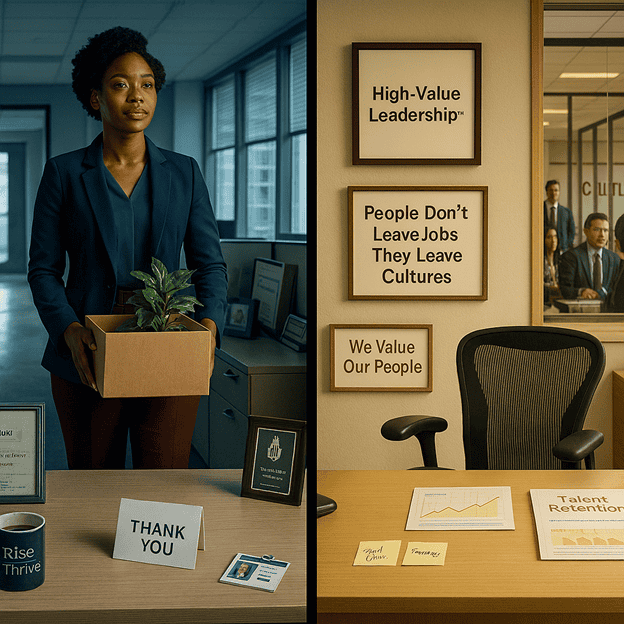
The boardroom fell silent when she walked in. Not because of her title or her perfectly tailored suit, but because of something deeper—an authentic command of space that couldn’t be taught in any MBA program. At 52, this senior executive had learned what many never discover: true executive presence after 45 isn’t about performing power; it’s about embodying it.

The Evolution of Executive Presence in Midlife

Executive presence transforms dramatically as we mature. The performative confidence of our thirties gives way to something more substantial—a grounded authority built on decades of experience, wisdom, and self-knowledge. This evolution is particularly powerful for professionals who’ve spent years navigating corporate environments where their contributions were minimized or overlooked.

Research from the Center for Talent Innovation reveals that executive presence accounts for 26% of what it takes to get promoted. Yet traditional definitions often exclude the unique strengths that emerge with age and experience, especially for Black women and other traditionally marginalized professionals who’ve developed exceptional resilience and strategic thinking through necessity.

Breaking Free from Outdated Playbooks 🎯

The old rules of executive presence—aggressive posturing, emotional suppression, and conformity to narrow standards—were never designed for our success. They were designed to maintain existing power structures. After 45, we have the wisdom to recognize these games for what they are: exhausting performances that diminish our authentic power.

Consider the technology company that lost three senior Black female executives in one year. Exit interviews revealed a common thread: they were exhausted from code-switching, moderating their voices, and navigating the unwritten rules of “fitting in.” The company’s definition of executive presence was so narrow it excluded the very perspectives that could have driven innovation.

The high-value leadership approach recognizes that authentic presence comes from alignment between personal values and professional expression. When we stop playing games designed for someone else’s success, we create space for genuine influence.

The Authenticity Advantage

Authenticity after 45 isn’t just liberating—it’s strategic. Years of experience have taught us that sustainable success comes from consistency between who we are and how we lead. This authenticity advantage manifests in several ways:

Deep Credibility: You’ve earned your expertise through real experience. Your insights carry weight because they’re battle-tested. You don’t need to inflate your accomplishments or adopt aggressive tactics to be heard.

Emotional Intelligence: Decades of navigating complex relationships have honed your ability to read rooms, build coalitions, and influence without manipulation. You understand that respect is commanded through consistency, not demanded through authority.

Strategic Patience: You’ve learned that not every battle needs to be fought today. This strategic patience allows you to choose your moments, conserve energy, and focus on transformational rather than transactional wins.

Cultural Intelligence as Executive Currency 💡

For Black women and other traditionally overlooked professionals, executive presence after 45 includes a sophisticated form of cultural intelligence that organizations desperately need but rarely recognize. This includes:

  • Code-switching mastery: The ability to navigate multiple cultural contexts while maintaining authenticity
  • Pattern recognition: Identifying systemic issues others miss because you’ve experienced their impact firsthand
  • Bridge-building expertise: Connecting diverse stakeholders through shared values rather than surface similarities
  • Resilience modeling: Demonstrating how to thrive despite barriers, inspiring others facing similar challenges

A Fortune 500 company recently discovered that their most successful transformation initiative was led by a 48-year-old Black woman who’d been passed over for promotion three times. Her success came from understanding cultural dynamics others couldn’t see and building trust across traditionally siloed departments. Her executive presence wasn’t loud or performative—it was precise, inclusive, and devastatingly effective.

Navigating the Double Standards 🎭

Let’s address the elephant in the room. Executive presence standards remain riddled with bias. Research from Harvard Business Review shows that Black women executives face unique challenges:

  • Being perceived as “too aggressive” when displaying the same assertiveness praised in others
  • Having expertise questioned more frequently despite equal or superior qualifications
  • Needing to prove competence repeatedly while peers enjoy assumed credibility
  • Balancing warmth and authority in ways not required of other demographics

The solution isn’t to work harder at meeting impossible standards. It’s to redefine the game entirely. High-value leadership means establishing your own metrics for success while delivering undeniable results.

Practical Strategies for Commanding Respect

1. Own Your Narrative 📖

Stop letting others define your story. Create a clear, consistent narrative about your value and expertise. Use specific examples of impact, not just activities. Frame your experience as strategic assets, not just years served.

2. Build Strategic Visibility

Executive presence requires being seen in the right contexts. This means:

  • Contributing to high-visibility projects that align with organizational priorities
  • Speaking up in meetings with prepared, strategic insights
  • Publishing thought leadership that positions you as an industry expert
  • Building relationships with decision-makers across the organization

3. Master the Art of Presence ✨

Physical presence matters, but not in the way traditional advice suggests. Instead of power poses and aggressive body language:

  • Take up appropriate space without apology
  • Speak at a measured pace that commands attention
  • Make deliberate eye contact that conveys confidence
  • Use strategic silence to create impact

4. Leverage Your Experience Network

After 45, your network should be a strategic asset. Cultivate relationships that provide:

  • Access to opportunities and information
  • Advocacy and sponsorship for advancement
  • Diverse perspectives that enhance decision-making
  • Support systems for navigating challenges

5. Practice Strategic Non-Compliance 🚀

Sometimes commanding respect means refusing to participate in dynamics that diminish you. This might look like:

  • Declining to take notes in meetings where you’re the senior person present
  • Redirecting conversations that focus on appearance rather than performance
  • Refusing to moderate your expertise to make others comfortable
  • Setting boundaries around access to your time and energy

The Neuroscience of Mature Confidence

Recent neuroscience research reveals that our brains actually improve in crucial leadership areas as we age. The anterior cingulate cortex, responsible for conflict resolution and empathy, becomes more developed. The prefrontal cortex, governing strategic thinking and emotional regulation, reaches peak integration.

This biological evolution supports what many of us feel intuitively: we’re better leaders after 45 than we were before. We process complex information more effectively, make more nuanced decisions, and maintain emotional equilibrium under pressure.

Case Study: The Transformation Effect 🌟

A healthcare organization struggled with employee engagement scores hovering around 42%. They brought in a 51-year-old Black woman as Chief Culture Officer—a role created specifically for her after she’d been passed over for COO.

Within 18 months, she:

  • Increased engagement to 71% by implementing inclusive leadership practices
  • Reduced turnover by 34% through mentorship programs targeting overlooked talent
  • Improved patient satisfaction scores by 28% by aligning culture with care delivery
  • Saved $2.3 million through retention and productivity improvements

Her executive presence wasn’t traditional. She led through stories, built consensus through listening circles, and commanded respect through consistent delivery of results. She didn’t play the games—she changed them.

Integration with High-Value Leadership Principles

The principles outlined in “High-Value Leadership: Transforming Organizations Through Purposeful Culture” directly support authentic executive presence after 45:

Purpose-Driven Authority: Your presence is grounded in clear purpose, not positional power. This creates sustainable influence that transcends titles.

Cultural Architecture: You understand that presence isn’t individual—it’s systemic. By modeling high-value behaviors, you create cultural permission for others to do the same.

Inclusive Excellence: Your executive presence includes rather than excludes, creating psychological safety while maintaining high standards.

The Rise & Thrive Framework in Action 💫

For Black women specifically, the “Rise & Thrive” blueprint offers additional strategies:

  1. Recognize Your Worth: Document your contributions and impact regularly. Create a “value portfolio” that makes your executive presence undeniable.
  2. Invest in Your Growth: Continue developing skills that differentiate you. After 45, this might include board readiness, succession planning, or industry thought leadership.
  3. Seek Strategic Sponsors: Move beyond mentors to sponsors who will actively advocate for your advancement and create opportunities for your presence to be recognized.
  4. Establish Your Legacy: Define what you want to be known for and align your executive presence with that legacy vision.

Current Trends Shaping Executive Presence

The Authenticity Revolution 🌈

Organizations are finally recognizing that authentic leadership drives better results. McKinsey research shows companies with authentic leadership cultures outperform peers by 25% in profitability.

The Inclusion Imperative

Diverse leadership teams make better decisions 87% of the time, according to recent studies. Executive presence that includes rather than excludes is becoming a competitive advantage.

The Wisdom Premium

As organizations face unprecedented complexity, the pattern recognition and strategic thinking that come with experience are increasingly valued. The “wisdom premium” is real and measurable.

Actionable Takeaways

This Week:

  • Conduct an executive presence audit. Where are you playing games versus showing up authentically?
  • Identify three specific ways your unique perspective adds value
  • Practice one strategic non-compliance behavior that preserves your energy

This Month:

  • Document five significant impacts you’ve made using your value portfolio format
  • Schedule coffee with two strategic connections who can advocate for your advancement
  • Deliver one high-visibility presentation that showcases your expertise

This Quarter:

  • Develop thought leadership content that positions you as an industry expert
  • Seek feedback on your executive presence from trusted advisors
  • Align your presence with your legacy vision

Discussion Questions for Reflection 🤔

  1. What “games” have you been playing that no longer serve your authentic leadership?
  2. How has your understanding of executive presence evolved throughout your career?
  3. What unique strengths do you bring to leadership after 45 that younger colleagues might not possess?
  4. Where do you see opportunities to redefine executive presence standards in your organization?
  5. What would change if you stopped moderating your expertise to make others comfortable?

Your Next Steps

Executive presence after 45 isn’t about fitting into outdated molds—it’s about breaking them and creating new paradigms for leadership success. You’ve earned the right to show up authentically, command respect without compromise, and lead from your unique strengths.

If you’re ready to develop executive presence that honors your experience, amplifies your influence, and creates lasting impact without playing exhausting games, it’s time to explore how high-value leadership principles can transform your professional trajectory.

Ready to command respect on your own terms?

Che’ Blackmon Consulting specializes in helping experienced professionals, particularly Black women and traditionally overlooked talent, develop authentic executive presence that drives results. Through our culture transformation framework and leadership development programs, we help you:

  • Define and articulate your unique value proposition
  • Navigate organizational dynamics with strategic intelligence
  • Build influence without compromising authenticity
  • Create sustainable success aligned with your values

Connect with us to explore your leadership transformation:

📧 Email: admin@cheblackmon.com
📞 Phone: 888.369.7243
🌐 Website: cheblackmon.com

Because after 45, you’re not here to play games—you’re here to change them. 💎


Che’ Blackmon is the founder of Che’ Blackmon Consulting, author of “High-Value Leadership: Transforming Organizations Through Purposeful Culture,” “Mastering a High-Value Company Culture,” and “Rise & Thrive: A Black Woman’s Blueprint for Leadership Excellence.” With 24+ years of progressive HR leadership experience and doctoral studies in Organizational Leadership, she helps organizations unlock the potential of traditionally overlooked talent through AI-enhanced culture transformation.

#ExecutivePresence, #WomenInLeadership, #BlackWomenLead, #Leadership45Plus, #AuthenticLeadership, #CorporateCulture, #HighValueLeadership, #LeadershipDevelopment, #DiversityAndInclusion, #WomenOver45, #ExecutiveCoaching, #CareerGrowth, #ThoughtLeadership, #CultureTransformation, #InclusiveLeadership, #BlackExcellence, #LeadershipMatters, #WisdomAtWork, #ProfessionalDevelopment, #TransformationalLeadership

The Great Reconnection: Rebuilding Team Cohesion Post-Pandemic 🔗

When Zoom Fatigue Meets the Hunger for Real Connection

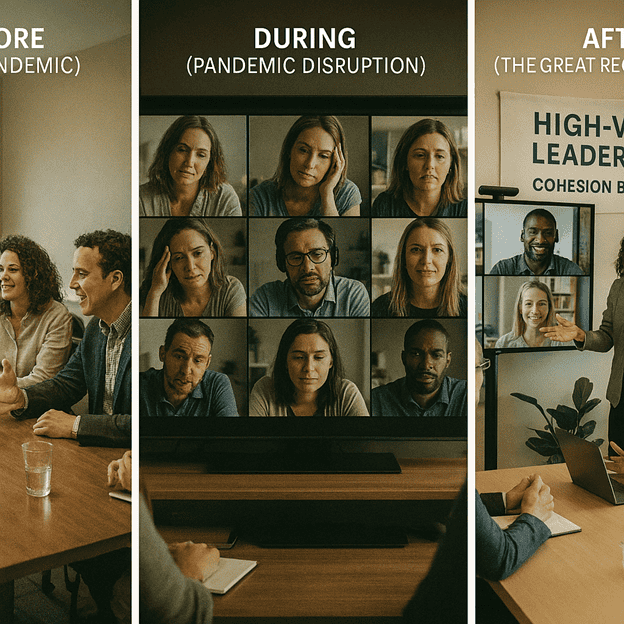
Remember March 2020? One week you were grabbing coffee with colleagues, collaborating at whiteboards, and having impromptu hallway conversations that solved problems in five minutes. The next week, everyone was home, staring at gallery view, trying to figure out how to unmute.

We thought it was temporary.

Now, years later, we’re in a different reality. Some teams are fully remote. Others are hybrid. Some have returned to offices. But here’s what’s universal: the connections that held teams together before the pandemic—those aren’t coming back automatically.

The casual trust-building that happened over lunch? Gone. The cultural osmosis that new employees absorbed by being physically present? Missing. The relationships that made difficult conversations easier and innovation faster? Frayed or broken.

And for Black women and other traditionally overlooked employees who were already navigating workplace isolation, exclusion from informal networks, and the emotional labor of being “the only”—the pandemic’s disconnection compounded challenges that existed long before COVID-19. 💔

Leaders are asking: How do we rebuild what was lost? How do we create cohesion when people aren’t in the same place? How do we build culture when the old culture-building methods no longer apply?

The answer isn’t “return to office” mandates or forced fun Zoom happy hours. It’s something deeper, more intentional, and frankly, more necessary: The Great Reconnection.

This is about rebuilding team cohesion deliberately, equitably, and sustainably for the world we’re actually working in—not the one we left behind.

Let’s explore how to reconnect teams in ways that honor what we’ve learned, address what we’ve lost, and build something better than what existed before.

What We Actually Lost (And What We Didn’t) 📉

Before we rebuild, let’s be honest about what broke.

What the Pandemic Disrupted:

Informal Relationship Building
The coffee chats, lunch conversations, and post-meeting hallway debriefs where relationships deepened and trust built—these evaporated overnight. For new employees who started remotely, they never experienced these connections at all.

Cultural Transmission
New hires used to learn organizational culture by observation—how people interact, what’s really valued, how decisions get made. In remote environments, this cultural knowledge transfer became invisible or nonexistent.

Spontaneous Collaboration
The “hey, can I ask you something?” moments that led to quick problem-solving, knowledge sharing, and serendipitous innovation—these required more effort remotely and often just didn’t happen.

Social Capital for Those Without Access
Even before the pandemic, Black women and other marginalized employees often lacked access to informal networks where real decisions happened. Remote work made these invisible networks even more invisible—and even more powerful.

Boundaries Between Work and Life
For many, particularly women and caretakers, the pandemic erased boundaries. Work invaded homes. “Always on” became the expectation. The mental health impact continues.

But Here’s What the Pandemic Revealed:

Flexibility is Possible
Organizations that claimed remote work was impossible proved it wasn’t. This opened possibilities for people with disabilities, caretakers, and those who thrive outside traditional office environments.

Productivity Doesn’t Require Presenteeism
Results matter more than where or when work happens. This was always true; the pandemic just made it undeniable.

Commutes and Office Politics Were Costly
Particularly for Black women who spend emotional energy code-switching, navigating microaggressions, and managing office dynamics—remote work reduced some of that exhausting labor.

Meetings Could Have Been Emails
We learned to be more intentional about what requires synchronous time and what doesn’t. That’s valuable.

What We Learned Can’t Be Unlearned
Employees experienced autonomy, flexibility, and work-life integration. Many won’t—and shouldn’t have to—give that up to rebuild connection.

The question isn’t whether to rebuild cohesion. It’s how to rebuild it in ways that honor what we’ve learned while addressing what we’ve lost.

Why Traditional Team-Building Won’t Work Anymore 🚫

Let’s address the elephant in the Zoom room: most traditional team-building approaches are failing in post-pandemic environments.

The Mandatory Return-to-Office Approach
“We need people back in the office to rebuild culture.” This ignores that:

  • Flexibility is now a retention issue, not a perk
  • Forced proximity doesn’t create genuine connection
  • The people most harmed by inflexible mandates are often caretakers, people with disabilities, and those who face discrimination in office environments
  • Culture is what you build, not where you build it

Research from Gartner shows that proximity bias—favoring employees who are physically present—increases in hybrid environments. Black women and other remote workers get disadvantaged in visibility, opportunities, and advancement.

The Forced Fun Approach
Virtual happy hours, mandatory team games, synchronized coffee breaks. These rarely build genuine connection and often create resentment, especially among employees juggling caregiving or managing Zoom fatigue.

The “Just Like Before” Approach
Trying to recreate 2019’s team dynamics in 2025 ignores that people, priorities, and possibilities have changed. Nostalgia isn’t a strategy.

The One-Size-Fits-All Approach
What builds connection for extroverts might exhaust introverts. What works for local employees might exclude distributed team members. What feels inclusive to some might feel performative to others.

The Technology-Will-Save-Us Approach
Collaboration tools, virtual reality meetings, team apps—technology enables connection but doesn’t create it. Connection is human; technology is infrastructure.

So if these approaches don’t work, what does?

The High-Value Framework for Post-Pandemic Cohesion 🎯

High-Value Leadership: Transforming Organizations Through Purposeful Culture teaches that cohesion isn’t about proximity—it’s about psychological safety, shared purpose, and genuine belonging.

Post-pandemic team cohesion requires four foundational elements:

1. Intentional Connection Architecture

Pre-pandemic, connection happened organically through physical proximity. Post-pandemic, connection must be architecturally designed into how teams work.

This means:

  • Structured Relationship-Building: Regular one-on-ones, team rituals, and dedicated connection time that’s protected, not optional
  • Purposeful Meeting Design: Clear intentions for when synchronous time is needed and what should be asynchronous
  • Connection Metrics: Tracking relationship health, trust levels, and belonging as rigorously as tracking productivity
  • Distributed-First Design: Designing for remote participants first, then adapting for in-person, rather than the reverse

A technology company redesigned their team structure post-pandemic around “connection pods”—small, stable groups of 4-6 people who met weekly for 30 minutes with no agenda other than connection. Not to discuss work. Not to problem-solve. Just to see each other as humans. These pods cut across departments and levels, deliberately mixing people who wouldn’t normally interact.

Result? Employee engagement scores rose 40%, retention improved significantly, and cross-functional collaboration increased because people had relationships beyond their immediate teams.

Implementation Tip: Design connection into your calendar as deliberately as you design project time. Make it non-negotiable, not optional when there’s “extra time.”

2. Equity in Access and Visibility

Pre-pandemic informal networks already excluded many. Post-pandemic remote and hybrid work either amplifies that exclusion or creates opportunity to democratize access—depending on how it’s designed.

Black women in corporate spaces face a specific challenge post-pandemic: we’re often remote (by choice or necessity), which can reduce some microaggression exposure but also reduces visibility to leadership, access to mentors and sponsors, and inclusion in informal networks where decisions happen.

There was a financial services firm that noticed their promotion rates shifted dramatically post-pandemic. Remote employees—disproportionately women and people of color—were promoted at lower rates than in-office employees, despite equal or better performance metrics. The issue? Proximity bias. Leaders were unconsciously favoring people they saw in person.

They addressed it by:

  • Making all-hands and leadership meetings hybrid with equal engagement for remote and in-person participants
  • Implementing “remote-first” communication norms where everything was documented digitally, not just discussed in hallways
  • Requiring leaders to track their one-on-one time with remote vs. in-office employees and address imbalances
  • Creating explicit criteria for promotions that didn’t include “office presence”

Implementation Tip: Audit who has access to informal conversations, mentorship, visibility opportunities, and face time with leadership. If patterns emerge showing certain groups are excluded, redesign access intentionally.

3. Psychological Safety Across Distance

Psychological safety—the belief that you can speak up, take risks, disagree, and be yourself without fear of punishment—is harder to build and easier to lose when teams aren’t physically together.

Why? Because trust is built through micro-interactions over time. A smile. A supportive comment after a mistake. Body language that says “I’ve got your back.” These are harder to read through screens or in asynchronous communication.

For Black women, psychological safety requires even more intentionality. Research from Catalyst shows Black women are the least likely demographic to feel they belong at work, the least likely to have sponsors, and the most likely to experience isolation. Remote work can either amplify that isolation or—if designed well—reduce it by minimizing some in-person bias.

A consulting firm rebuilt psychological safety post-pandemic through:

  • Vulnerability Modeling: Leaders shared personal challenges, admitted mistakes, and discussed their own pandemic struggles in team meetings
  • Structured Check-Ins: Every meeting started with a genuine “how are you?” round with permission to be honest, not performative
  • Brave Spaces: Monthly forums where team members could discuss difficult topics—bias, burnout, caregiving challenges—with facilitator support
  • Rapid Response to Harm: When someone experienced bias or exclusion, leadership addressed it immediately and transparently

Implementation Tip: Don’t assume psychological safety exists. Measure it through anonymous surveys, listen to what marginalized employees say about their experience, and intervene when safety is compromised.

4. Purpose-Driven Cohesion

The strongest teams aren’t bonded by forced fun—they’re bonded by shared purpose, mutual respect, and collective impact.

Mastering a High-Value Company Culture emphasizes that culture is what you’re building together, not just how you interact while building it. Post-pandemic cohesion must be anchored in meaningful work, not manufactured closeness.

This means:

  • Clarifying team mission and how each person contributes
  • Celebrating wins collectively and publicly
  • Making impact visible so people see how their work matters
  • Creating opportunities for collaboration on meaningful projects
  • Building communities of practice around shared interests and expertise

A healthcare organization rebuilt cohesion by creating “impact circles”—voluntary groups focused on solving real organizational challenges. A circle focused on patient experience. Another on operational efficiency. Another on health equity. Employees joined based on interest, worked on real problems, and presented solutions to leadership.

Result? People built relationships through meaningful collaboration. The work mattered beyond the relationships, and the relationships deepened because the work mattered.

Implementation Tip: Don’t just build connection for connection’s sake. Build it through purposeful work that creates collective meaning.

The Rise & Thrive Strategy: Reconnection as Empowerment 💪🏾

Rise & Thrive: A Black Woman’s Blueprint for Leadership Excellence addresses something particularly relevant here: for Black women, “team cohesion” has always been complex.

We’ve experienced team cohesion that includes us performatively but excludes us meaningfully. We’ve been on teams where we’re expected to bring “diversity” but our expertise is questioned. We’ve built relationships with colleagues who are friendly in private but silent when we face bias publicly.

So when we talk about “The Great Reconnection,” Black women are asking: Reconnection to what? To cultures that never fully included us? To dynamics that exhausted us?

The answer must be: No. We’re not rebuilding what was. We’re building what should have been.

Post-pandemic reconnection is an opportunity to:

Design Inclusion Intentionally
Remote and hybrid work removes some physical barriers. Use this opportunity to ensure Black women have equal access to leadership, equal visibility for contributions, equal opportunity for advancement.

Redistribute Emotional Labor
Black women have historically carried disproportionate emotional labor—supporting others, managing office dynamics, code-switching. Reconnection should redistribute that labor equitably, not assume we’ll resume carrying it.

Center Well-Being
Reconnection shouldn’t mean returning to unsustainable hustle culture. It should mean building sustainable ways of working that honor our full humanity—our caregiving responsibilities, our mental health needs, our boundaries.

Create Authentic Belonging
Not “cultural fit” (which often means “similarity to those already here”) but genuine belonging where we can bring our full selves, our unique perspectives, and our authentic leadership.

Build Sponsorship, Not Just Mentorship
Cohesion that benefits Black women includes leaders who actively sponsor us for opportunities, advocate for our advancement, and open doors that have historically been closed.

The Great Reconnection, done right, isn’t about returning to pre-pandemic norms. It’s about creating post-pandemic cultures where everyone—especially those previously excluded—can genuinely belong and thrive.

Best Practices From Organizations Getting It Right 📊

Current research from Gallup, Microsoft’s Work Trend Index, and McKinsey reveals patterns among organizations successfully rebuilding cohesion:

They Embrace Flexible Work as Permanent

The highest-performing post-pandemic organizations don’t treat flexibility as temporary. They’ve redesigned work around outcomes, autonomy, and trust—not location and hours.

Practice: Offer flexibility by default. Require justification for inflexibility, not the reverse. Design roles for remote success first, then adapt for hybrid/in-person as needed.

They Over-Communicate and Over-Clarify

In distributed environments, communication that feels like “too much” is actually sufficient. Assumptions and unspoken expectations destroy cohesion.

Practice: Repeat important information through multiple channels. Document decisions transparently. Create space for questions. Assume nothing is obvious.

They Invest in Technology That Enables Connection

Not just Zoom. But asynchronous collaboration tools, virtual whiteboarding, team recognition platforms, and digital spaces for informal connection.

Practice: Evaluate tools based on whether they create equity between remote and in-person team members. If remote employees have degraded experiences, the tool isn’t working.

They Design Hybrid for Equity

When some team members are in-person and others are remote, the risk of two-tiered systems is high. Equitable hybrid design ensures remote participants aren’t second-class.

Practice: “Remote-first” meeting norms even in hybrid settings—everyone on their own screen during video calls (even if in the same office), digital collaboration boards everyone can access, documentation of hallway conversations.

They Measure Connection, Not Just Output

High-performing organizations track relationship health, belonging scores, psychological safety metrics, and connection quality—not just productivity and deliverables.

Practice: Regular pulse surveys asking: “Do you feel connected to your team?” “Do you feel your contributions are valued?” “Do you have relationships at work where you can be authentic?” Use data to improve.

They Create Intentional In-Person Moments

When teams do gather physically, it’s purposeful—focused on activities that benefit from being together (relationship building, strategic planning, creative collaboration) rather than routine work that can happen remotely.

Practice: Design in-person time for maximum relational value. Don’t waste precious face-to-face time on information sharing that could be asynchronous. Use it for connection, collaboration, and culture-building.

They Prioritize Manager Development

Middle managers are the frontline of reconnection. They need training, support, and resources to build cohesion in hybrid/remote environments.

Practice: Invest heavily in manager development focused on: leading distributed teams, building psychological safety remotely, inclusive facilitation, recognizing and addressing bias, supporting well-being.

They Address Proximity Bias Explicitly

Organizations that acknowledge proximity bias exists are better positioned to mitigate it. Those that pretend it doesn’t struggle.

Practice: Name proximity bias openly. Track promotion and opportunity distribution by work location. Train leaders to recognize and interrupt bias. Hold leaders accountable for equitable treatment of remote and in-person employees.

Practical Strategies for Rebuilding Cohesion 🛠️

Ready to reconnect your team? Here are actionable approaches:

Strategy 1: Rituals That Create Rhythm

Consistent, meaningful rituals create predictability and connection even when people aren’t physically together.

Examples:

  • Weekly team check-ins starting with personal shares (not just work updates)
  • Monthly “learning lunches” where someone teaches the team something they’re passionate about
  • Quarterly in-person gatherings (if geographically feasible) focused on relationship building
  • Daily asynchronous “wins” channel where team members share successes
  • “First Friday” virtual coffees in small randomized groups

Implementation: Start small. One ritual, done consistently, builds more cohesion than multiple sporadic efforts. Get team input on what feels meaningful, not mandated.

Strategy 2: Connection Roles and Responsibilities

Designate specific team members (on rotation) to facilitate connection—not just the leader’s job.

Examples:

  • “Connection Captain” who plans monthly team activities
  • “Recognition Champion” who highlights team member contributions weekly
  • “Onboarding Buddy” for each new hire, responsible for cultural integration
  • “Wellness Advocate” who checks in on team well-being and flags concerns

Implementation: Rotate these roles so everyone contributes to culture-building. Provide resources and support. Recognize this work as valuable, not “extra.”

Strategy 3: Structured Vulnerability

Psychological safety grows when leaders model vulnerability and create structured opportunities for authenticity.

Examples:

  • “Failure Fridays” where team members share something that didn’t work and what they learned
  • Leadership sharing their own challenges, mistakes, and growth areas publicly
  • “Whole Person” check-ins where people share what’s happening in their lives, not just work
  • Team retrospectives that include “what’s working for me” and “what’s hard for me” reflections

Implementation: Start with leadership modeling. Make vulnerability voluntary but encouraged. Create clear agreements about confidentiality and respect.

Strategy 4: Cross-Functional Connection

Cohesion within teams matters, but cross-organizational relationships prevent silos and build broader connection.

Examples:

  • “Coffee Roulette” programs matching random employees across departments for virtual coffee
  • Cross-functional project teams working on real organizational challenges
  • Internal mentorship programs connecting people from different areas
  • “Shadowing days” where employees experience other departments’ work
  • Communities of practice around shared interests (ERGs, hobbies, professional development)

Implementation: Make these programs opt-in but highly encouraged. Provide work time for participation. Celebrate connections that form and collaborate that emerges.

Strategy 5: Recognition and Celebration

Shared celebration builds collective identity and reinforces what matters.

Examples:

  • Public recognition in team meetings for specific contributions (not generic praise)
  • Peer-to-peer recognition platforms where employees appreciate each other
  • Milestone celebrations (work anniversaries, project completions, personal achievements)
  • “Impact stories” where employees share how their work made a difference
  • Team wins celebrated collectively, not just individual achievements

Implementation: Make recognition specific, frequent, and equitable. Ensure recognition reaches all team members, not just the most visible. Celebrate learning and effort, not just results.

Strategy 6: Equity Audits and Adjustments

Regularly assess whether reconnection efforts are working for everyone, especially those historically excluded.

Examples:

  • Quarterly surveys asking marginalized employees specifically about belonging and connection
  • Analysis of who participates in connection activities and who doesn’t—investigate barriers
  • Tracking who gets face time with leadership, mentorship, and visibility opportunities
  • Exit interviews asking specifically about connection and belonging
  • Inclusion council reviewing cohesion strategies through equity lens

Implementation: Don’t just collect data—act on it. When disparities emerge, address them immediately and transparently. Make equity in connection a measurable goal.

When Physical Return Makes Sense (And When It Doesn’t) 🏢

Let’s address the contentious question: Should teams return to physical offices?

The answer: It depends—and it should be determined by purpose, not nostalgia.

Physical presence may support cohesion when:

  • The work genuinely requires in-person collaboration (physical prototyping, hands-on training, etc.)
  • Teams are co-located and commutes are reasonable
  • Office environments are inclusive, accessible, and psychologically safe for all employees
  • In-person time is designed for maximum relational value, not routine tasks
  • Flexibility is maintained for those with caregiving, disabilities, or other needs
  • The organization invests in making offices worth commuting to

Physical presence may harm cohesion when:

  • It’s mandated without clear purpose, breeding resentment
  • Remote employees are excluded or disadvantaged
  • Offices aren’t inclusive spaces (accessibility barriers, code-switching pressure, microaggressions)
  • Commute costs disproportionately burden lower-paid employees
  • Presenteeism gets rewarded over actual performance
  • Flexibility disappears, driving away talent who thrived remotely

For Black women specifically, the return-to-office question is layered:

  • Does in-person presence reduce some isolation, or does it increase emotional labor?
  • Will I have more or less access to leadership and opportunities in-office?
  • Is the office environment psychologically safe, or is remote work a buffer from daily microaggressions?
  • Will my flexibility needs be accommodated, or will I be penalized for them?

There’s no universal answer. The right approach is flexibility by default, intentionality always, and equity non-negotiable.

Common Pitfalls to Avoid ⚠️

As you rebuild cohesion, watch for these mistakes:

Pitfall #1: Assuming Connection Happens Automatically
Pre-pandemic, proximity created some organic connection. Post-pandemic, connection must be designed, facilitated, and protected.

Solution: Make connection-building explicit work with dedicated time, resources, and accountability.

Pitfall #2: Prioritizing Extroverts’ Needs
Loud, visible, social connection feels like “team cohesion” but exhausts introverts and neurodiverse team members.

Solution: Offer multiple ways to connect—some social, some work-focused, some large group, some one-on-one, some synchronous, some asynchronous.

Pitfall #3: Ignoring Proximity Bias
Hybrid teams without intentional equity design advantage in-office employees and disadvantage remote employees.

Solution: Explicitly name and address proximity bias. Design for remote-first. Track and correct disparities in opportunities and advancement.

Pitfall #4: Underestimating Pandemic Trauma
People experienced loss, isolation, stress, and change. Reconnection must honor that, not dismiss it.

Solution: Create space for people to process what they’ve been through. Don’t rush to “normal.” Build in healing alongside connection.

Pitfall #5: One-Size-Fits-All Approaches
What builds connection for one person or team may not work for another.

Solution: Offer options. Get team input. Iterate based on what actually works, not what leadership thinks should work.

Pitfall #6: Forgetting About New Employees
People who joined during/after the pandemic never experienced pre-pandemic culture. They need intentional integration.

Solution: Create robust onboarding focused on relationships, not just logistics. Assign mentors/buddies. Over-communicate culture explicitly rather than assuming they’ll “pick it up.”

Pitfall #7: Neglecting Manager Support
Managers are expected to rebuild cohesion without training, resources, or their own support systems.

Solution: Invest heavily in manager development, peer support for managers, and reducing manager burnout. They can’t build team cohesion if they’re drowning.

Discussion Questions for Leadership Teams 💬

Use these to facilitate meaningful conversations:

  1. On a scale of 1-10, how connected do we think our teams feel right now? What evidence do we have for that assessment?
  2. What worked about our pre-pandemic culture, and what do we absolutely not want to rebuild? Be specific.
  3. Who on our teams might be experiencing isolation or exclusion that we’re not seeing? How do we find out and address it?
  4. What assumptions are we making about what people need to feel connected? Have we actually asked them?
  5. How are we measuring team cohesion and belonging? Are we tracking it as rigorously as productivity?
  6. If our Black women employees, remote workers, or other marginalized team members were asked whether they feel genuinely included in our reconnection efforts—what would they say?
  7. What would have to change for cohesion to exist regardless of where or when people work?

Next Steps: Your Reconnection Roadmap 🗺️

This Week:

  • Survey your team on how connected they currently feel and what would increase connection
  • Identify 1-2 current practices that might be excluding some team members
  • Have individual conversations with team members about their connection needs

This Month:

  • Implement one consistent team ritual focused on connection
  • Audit proximity bias—who’s getting opportunities, visibility, and access to leadership?
  • Train managers on building cohesion in distributed/hybrid environments
  • Create or refresh onboarding to explicitly build relationships for new hires

This Quarter:

  • Design intentional in-person time (if applicable) focused on high-value connection activities
  • Launch cross-functional connection initiatives (mentorship, coffee roulette, communities of practice)
  • Measure psychological safety and belonging, especially for marginalized employees
  • Adjust work design to support both flexibility and connection

This Year:

  • Build connection metrics into performance management and organizational health assessments
  • Create sustainable rituals and structures that maintain cohesion long-term
  • Develop manager capability in leading connected, distributed teams
  • Make equity in connection a measurable organizational priority
  • Celebrate reconnection wins while continuing to improve

Partner With Che’ Blackmon Consulting 🤝

Rebuilding team cohesion in post-pandemic environments isn’t something you improvise. It requires expertise in culture transformation, inclusive design, distributed team dynamics, and leadership development—especially ensuring that reconnection efforts truly include everyone, particularly those traditionally overlooked.

Che’ Blackmon Consulting partners with organizations committed to building cohesive, high-performing teams where everyone genuinely belongs—regardless of where, when, or how they work. We bring deep expertise in designing connection architecturally, centering equity in hybrid work, and transforming cultures to thrive in our new reality.

We can help you:

  • Assess current team cohesion and identify disconnection drivers
  • Design connection strategies that work for distributed, hybrid, and in-person teams
  • Train leaders to build psychological safety and belonging remotely
  • Address proximity bias and ensure equitable experiences for all employees
  • Create rituals, structures, and systems that sustain cohesion long-term
  • Center marginalized voices in reconnection design
  • Measure and improve belonging as organizational health metric

The strongest teams post-pandemic aren’t trying to recreate 2019. They’re building something better—more flexible, more equitable, more intentional, and more human.

Ready to lead The Great Reconnection and build cohesion that includes everyone?

📧 admin@cheblackmon.com
📞 888.369.7243
🌐 cheblackmon.com


We’re not going back to how things were. We’re moving forward to how things should be—where teams are connected not by proximity, but by purpose, psychological safety, and genuine belonging. That’s the reconnection worth building.

#TeamCohesion #HybridWork #HighValueLeadership #RemoteWork #PostPandemic #PsychologicalSafety #InclusiveLeadership #FutureOfWork #OrganizationalCulture #WorkplaceConnection #DiversityAndInclusion #LeadershipDevelopment #EmployeeEngagement #HybridTeams #WorkplaceBelonging

Building Innovation Labs: Safe Spaces for Calculated Risk 🚀

Where Breakthrough Ideas Meet Psychological Safety

Innovation doesn’t happen by accident. And it certainly doesn’t happen in cultures where failure means career damage, where speaking up feels risky, and where only certain people’s ideas are taken seriously.

You’ve seen it happen. Someone suggests a bold idea in a meeting. The room goes silent. Eyes dart toward the most senior person, waiting to see how they’ll react. If they’re skeptical, the idea dies. If they like it, suddenly everyone loved it all along. And the person who took the risk of suggesting it? They’re left wondering if speaking up was worth it.

Now imagine this: Your organization has a designated space—physical, digital, or both—where experimentation is expected, failure is a learning tool rather than a career liability, and diverse perspectives are not just welcomed but actively sought. A place where the junior team member’s insight carries the same weight as the VP’s opinion. Where Black women don’t have to code-switch or minimize their ideas to be heard. Where innovation is democratized, not gatekept.

This is what innovation labs do when built right. 🎯

But here’s the challenge: most organizations talk about innovation while maintaining cultures that punish risk. They want breakthrough thinking while rewarding safe conformity. They claim to value diverse perspectives while centering the same voices in every important conversation.

Real innovation requires real safety. Calculated risk requires cultures that calculate differently—measuring learning alongside results, valuing diverse thought alongside execution, and understanding that the best ideas often come from people who experience problems differently.

Let’s explore how to build innovation labs that don’t just generate ideas, but transform cultures into spaces where everyone—especially the traditionally overlooked—can safely contribute their genius.

Why Traditional Innovation Approaches Fall Short 💡

Before we build something better, let’s understand what’s broken.

Most organizations approach innovation through one of these flawed models:

The “Suggestion Box” Model
“We value your ideas! Submit them here!” Then those ideas disappear into a black hole. No feedback. No implementation. No acknowledgment. Employees learn that sharing ideas is performative, not purposeful.

The “Innovation Theater” Model
Hackathons! Brainstorming sessions! Innovation workshops! Lots of energy, sticky notes, and enthusiasm. Then everyone returns to their regular work, nothing changes, and the ideas collected gather dust. Innovation becomes an event, not a practice.

The “Genius Leadership” Model
Innovation is the domain of executives and designated “thought leaders.” Everyone else executes. This concentrates power, limits perspectives, and ensures you miss innovations that could only come from people closest to the work or the customer.

The “Failure Is Not an Option” Model
The stated goal is innovation. The unstated rule is don’t mess up. So people play it safe, propose incremental improvements, and avoid anything bold enough to fail. You get optimization, not transformation.

The “Diversity of Thought” Model (Without Actual Diversity)
Leadership claims they want diverse thinking while maintaining homogeneous leadership teams. They want “fresh perspectives” but only from people who look, sound, and think like them. The innovation that comes from genuinely different experiences never enters the room.

Harvard Business School research shows that diverse teams are more innovative—but only when psychological safety exists. Without safety, diverse team members self-censor, conforming to dominant perspectives rather than offering unique insights.

This is particularly true for Black women in corporate spaces. We navigate workplaces where we’re often the only—or one of few—and where our ideas are frequently met with skepticism, appropriated without credit, or dismissed until someone else repeats them. In that environment, why would we share our most innovative thinking?

The cost isn’t just to us. It’s to organizations missing breakthrough innovations because they haven’t created the conditions for all voices to contribute safely.

What Innovation Labs Actually Are (And Aren’t) 🔬

Let’s define terms. An innovation lab isn’t necessarily a physical room with whiteboards and bean bags (though it can be). It’s a structured approach to creating psychological safety for calculated risk-taking.

Innovation labs are:

Dedicated Spaces (physical, digital, or temporal) where normal rules of work are suspended in favor of experimentation, learning, and creative problem-solving.

Cross-Functional and Multi-Level environments where hierarchy is flattened, diverse perspectives are actively sourced, and contributions are valued based on insight rather than title.

Protected Environments where failure is expected, documented as learning, and separated from performance evaluation—allowing genuine experimentation without career risk.

Structured Processes with clear objectives, decision-making frameworks, resource allocation, and pathways from experimentation to implementation—so ideas don’t die in the lab.

Cultural Catalysts that model the behaviors organizations want everywhere: psychological safety, inclusive collaboration, learning from failure, and democratized innovation.

Innovation labs aren’t:

❌ Places where only “creative types” or tech people work
❌ Escapes from accountability or results
❌ Permission to waste resources without strategy
❌ Separate from the “real business”
❌ Substitutes for fixing toxic cultures

As High-Value Leadership: Transforming Organizations Through Purposeful Culture emphasizes: Innovation is a cultural outcome, not a departmental function. Labs are tools for building that culture.

The Psychological Safety Foundation 🛡️

You cannot have sustainable innovation without psychological safety. Full stop.

Google’s Project Aristotle studied hundreds of teams to identify what makes some successful and others fail. The number one factor? Psychological safety—the belief that you can take risks, voice concerns, ask questions, and admit mistakes without fear of punishment or humiliation.

Dr. Amy Edmondson’s decades of research on psychological safety confirms: teams that feel safe to fail learn faster, innovate more, and outperform teams that don’t.

But here’s what’s often missed: psychological safety isn’t equally distributed.

A healthcare company launched an innovation lab and wondered why their Black and Latinx employees weren’t participating. When they dug deeper, they discovered that these employees didn’t feel safe experimenting. Why? Because in their regular work, they were held to higher standards, scrutinized more intensely, and had less room for error than their white counterparts. The idea that they could “fail safely” in an innovation lab while being unable to fail safely in their actual roles felt like a trap, not an opportunity.

Psychological safety in innovation labs requires:

Trust That Failure Won’t Be Weaponized
Employees need to believe—based on evidence, not just words—that experimentation won’t damage their careers, reputations, or relationships.

Equity in Who Gets to Experiment
If only certain people are invited to the lab, or if participation is seen as a privilege rather than a responsibility, you’ve already created hierarchy that undermines safety.

Consistency Between Lab Culture and Organizational Culture
If the lab operates with psychological safety but the rest of the organization doesn’t, people will see it as performative. Real safety requires cultural alignment.

Protection for Historically Marginalized Voices
Black women, LGBTQ+ employees, people with disabilities—those who face additional scrutiny in corporate spaces—need explicit assurance and demonstrated evidence that their participation is safe and valued.

Designing Innovation Labs for Equity and Excellence 🎨

The best innovation labs aren’t built for the mythical “average employee.” They’re designed intentionally to include people who’ve historically been excluded from innovation conversations.

Here’s how:

1. Democratize Access and Participation

Innovation opportunities shouldn’t require an invitation from leadership. They should be open, transparent, and accessible to anyone interested.

A manufacturing company created an innovation lab with one rule: any employee at any level could propose a project and form a team to explore it. They provided time (4 hours per month), resources (small budget and materials), and support (facilitation and mentorship).

Within six months, a warehouse associate proposed a logistics optimization that saved the company $200,000 annually. A customer service rep designed a communication tool that reduced complaints by 30%. These weren’t “creative” roles. But when given space, time, and permission, frontline employees innovated in ways leadership never imagined.

Implementation Tip: Make innovation lab participation opt-in but encourage everyone. Provide work time for it (if people have to do it on top of their regular job, only those with bandwidth—or privilege—can participate). Remove barriers to entry.

2. Flatten Hierarchy Intentionally

In the lab, titles don’t matter. Ideas do.

There was a financial services firm whose innovation lab had a practice: in lab sessions, everyone wore the same color shirts (provided) with their first name only—no titles, no departments visible. This simple ritual signaled: “In here, we’re equals.”

They also implemented “role rotation”—each session, a different person facilitated, someone else took notes, another managed time. Junior employees led sessions where VPs participated as contributors. It disrupted the normal power dynamics that usually silence certain voices.

Implementation Tip: Create rituals and structures that explicitly flatten hierarchy. Use facilitation techniques that ensure everyone speaks. Call on quieter voices. Interrupt interruptions. Make equity visible and intentional.

3. Center Diverse Perspectives as Strategic Assets

Innovation labs should actively seek perspectives from people with different experiences, backgrounds, and relationships to the problem being solved.

A consumer goods company was struggling with declining market share among Gen Z consumers of color. Their marketing team—predominantly white and millennial—kept proposing campaigns that fell flat. So they created an innovation lab specifically inviting young Black and Brown employees from across the organization (not just marketing) to reimagine the brand’s approach.

The result? A campaign concept that tripled engagement in their target demographic and spawned three new product lines. The innovation didn’t come from the “experts.” It came from people who actually understood the customer because they were the customer.

Implementation Tip: Don’t just invite diverse people as token participants. Center their expertise. Compensate fairly (if lab work is beyond their regular role). Credit their contributions publicly. Create pathways for their ideas to reach decision-makers.

4. Separate Experimentation From Performance Evaluation

This is critical: what happens in the lab doesn’t affect performance reviews.

If experiments that “fail” damage your reputation or career trajectory, you’ll never take real risks. You’ll only propose safe ideas you’re confident will succeed—which defeats the purpose of experimentation.

A technology company made this explicit in their innovation lab charter: “Ideas explored here—whether successful or not—are separate from performance evaluation. We assess learning, not just outcomes. We celebrate productive failures as much as successes.”

They tracked “experiments run,” “learnings documented,” and “pivots made based on data” as success metrics, not just “projects that worked.” This freed people to actually experiment.

Implementation Tip: Document this separation clearly. Train managers on it. When someone’s lab experiment fails but generates valuable learning, celebrate it in company communications. Make it real, not just policy.

5. Create Clear Pathways From Lab to Implementation

The fastest way to kill innovation enthusiasm? Let great ideas die in the lab because there’s no process for implementing them.

An insurance company built a “graduation pathway”: when a lab project showed promise, it could be presented to a cross-functional review team (which included both executives and employees). If approved, it received budget, dedicated team members, and executive sponsorship for implementation.

This pathway was transparent, with clear criteria for what made an idea ready to graduate. Teams knew exactly what they needed to demonstrate. And importantly, the people who developed the idea in the lab often moved with it into implementation—they weren’t just idea generators for others to execute.

Implementation Tip: Design the pathway from lab to implementation before launching the lab. Make it visible and navigable. Ensure diverse voices aren’t just generating ideas for others to get credit and advancement from implementing.

The Rise & Thrive Principle: Innovation Through Inclusion 💪🏾

Rise & Thrive: A Black Woman’s Blueprint for Leadership Excellence addresses a reality that’s directly relevant to innovation labs: Black women are master innovators—we’ve had to be.

We’ve innovated solutions to exclusion, bias, and systems not designed for us. We’ve created pathways where none existed. We’ve built communities, movements, and models for success in hostile environments. That’s innovation under the most challenging conditions.

Yet in corporate innovation spaces, our insights are often:

  • Dismissed as “too specific” when we bring unique perspectives
  • Appropriated without credit when we share solutions
  • Questioned more rigorously than others’ ideas
  • Evaluated through bias that sees confidence as aggression
  • Undervalued because we’re not in roles traditionally associated with “innovation”

Innovation labs designed with equity create different dynamics:

Our Experience Becomes Expertise
Instead of being asked to leave our identity at the door, we’re invited to bring the full context of our experiences to problem-solving. That lens often reveals opportunities others miss.

Our Ideas Get Fair Evaluation
When labs intentionally design for equity—facilitating discussions to prevent idea appropriation, ensuring credit goes to originators, implementing bias checks—our innovations receive the consideration they deserve.

Our Risk-Taking Is Protected
When psychological safety is real and not just rhetoric, we can experiment without the added burden of representing our entire demographic or being held to different standards when things don’t work.

Our Success Benefits Everyone
When Black women succeed in innovation labs, the ideas that emerge often benefit broader populations—because we understand navigating systems designed for exclusion, and solutions that work for the most marginalized often work better for everyone.

The question for leaders building innovation labs: Are you creating space where Black women’s innovative genius can flourish, or are you replicating the same gatekeeping with better furniture?

Best Practices From High-Performing Innovation Labs 📊

Research from MIT Sloan, Stanford d.school, and innovation leaders like IDEO reveals patterns among the most successful innovation environments:

They Start With Real Problems, Not Blue-Sky Brainstorming

The best labs focus on specific challenges that matter to the business and to customers. Abstract “think outside the box” exercises generate energy but rarely produce implementable innovations.

Practice: Frame lab projects around concrete questions: “How might we reduce customer churn in the 18-25 demographic?” “What would make our supply chain 20% more efficient?” “How could we make our workplace more accessible?”

They Prototype Fast and Learn Faster

Innovation isn’t about having perfect ideas. It’s about testing imperfect ideas quickly, learning from what doesn’t work, and iterating.

A retail company’s innovation lab had a “72-hour prototype rule”—teams couldn’t spend more than three days building a first version. This forced rapid creation over perfectionism and generated learning cycles fast enough to matter.

Practice: Build bias toward action. Create structures that reward quick experimentation over prolonged analysis. Use prototyping methods appropriate to the problem (paper prototypes, digital mockups, pilot programs, etc.).

They Integrate Customer/User Feedback Early and Often

Innovations developed in isolation from the people they’re meant to serve rarely succeed. The best labs bring users into the process—not just to validate final products, but to inform development throughout.

Practice: Identify who benefits from the innovation and engage them directly. For employee-facing innovations, that means employees using the lab themselves or providing feedback on prototypes. For customer-facing innovations, it means real customer input, not assumptions about what customers want.

They Measure Learning, Not Just Success

Traditional ROI metrics kill innovation because most experiments don’t produce immediate returns. Innovation labs need different metrics.

Practice: Track experiments run, hypotheses tested, pivots based on data, skills developed, cross-functional collaborations formed, and speed from idea to prototype. Celebrate teams that learned valuable “this doesn’t work because X” insights as much as teams whose projects succeed.

They Make Failure Visible and Valuable

Hiding failures ensures others repeat them. Sharing failures accelerates organizational learning.

A pharmaceutical company held quarterly “failure parties” where innovation lab teams presented what didn’t work, what they learned, and what they’d do differently. These presentations were attended by leadership and celebrated as much as success stories.

Practice: Create forums for sharing what didn’t work. Document learnings publicly. When leaders share their own productive failures, it normalizes risk-taking for everyone else.

They Build Diverse Teams Intentionally

Diversity isn’t just about demographic representation (though that matters). It’s also about cognitive diversity—different disciplines, experiences, thinking styles, and relationships to the problem.

Practice: Require lab teams to be cross-functional. Encourage teams to include people from different levels, departments, and backgrounds. Facilitate in ways that surface diverse perspectives rather than allowing dominant voices to drive all decisions.

Common Pitfalls to Avoid ⚠️

Even well-intentioned innovation labs can fail. Here’s what to watch for:

Pitfall #1: The Lab Becomes an Elite Club
When only high performers, leadership favorites, or certain departments participate, you’ve created exclusivity that undermines psychological safety and limits perspectives.

Solution: Make participation transparent, accessible, and rotating. Track who participates and who doesn’t—if patterns emerge, investigate barriers.

Pitfall #2: Innovations Never Leave the Lab
Great ideas pile up with no implementation pathway. Teams become cynical that their work matters.

Solution: Design the implementation pathway first. Establish clear criteria, decision-makers, and resources for moving ideas from lab to execution.

Pitfall #3: Failure Is Celebrated in Theory, Punished in Practice
You say failure is okay, but people who experiment and fail get quietly sidelined or excluded from future opportunities.

Solution: Leaders must visibly participate in the lab, share their own failures, and demonstrate through promotions and opportunities that lab participation—regardless of outcomes—is valued.

Pitfall #4: The Lab Reinforces Existing Bias
Without intentional design for equity, labs replicate the same dynamics that silence marginalized voices everywhere else.

Solution: Train facilitators on equity and inclusion. Use structured methods that ensure all voices are heard. Monitor who speaks, whose ideas gain traction, and who gets credit. Intervene when patterns of inequity emerge.

Pitfall #5: Lab Work Is Expected on Top of Regular Work
If only people with excess capacity can participate, you’ve created class and privilege barriers. Single parents, caretakers, people without flexibility can’t participate.

Solution: Provide dedicated time for lab work. Make it part of work, not extra. Ensure participation is feasible for people with constraints.

Pitfall #6: The Lab Is Disconnected From Strategy
Innovation for innovation’s sake generates ideas that don’t align with organizational goals or available resources.

Solution: Connect lab projects to strategic priorities. Provide strategic context. Ensure leadership engagement so teams understand how their work fits the bigger picture.

The High-Value Culture Integration 🌟

Mastering a High-Value Company Culture teaches that sustainable innovation isn’t a program—it’s a cultural capacity. Innovation labs are most powerful when they model and build the culture you want throughout the organization.

High-value cultures use innovation labs to:

Model Psychological Safety at Scale
What people experience in the lab—safety to risk, permission to fail, voice without fear—should gradually extend throughout the organization. The lab becomes proof of concept for a different way of working.

Develop Leadership Capacity
Lab facilitation, project leadership, and team participation develop skills that translate to better leadership everywhere: inclusive facilitation, bias awareness, design thinking, rapid learning, and collaborative decision-making.

Build Cross-Functional Relationships
Labs break down silos by bringing together people who don’t normally collaborate. These relationships strengthen the organization beyond any specific innovation.

Create Equity Muscle
When organizations practice equity intentionally in labs—centering marginalized voices, designing for inclusion, interrupting bias—they build capacity to do it everywhere else.

Generate Cultural Stories
The stories that emerge from labs—”Remember when the intern’s idea became a $2M revenue stream?” or “Remember when we failed fast, learned, and pivoted to something better?”—become cultural narratives that shape what’s possible.

The goal isn’t just innovations. It’s a culture where innovation is how you work, not something separate from work.

Practical Implementation Guide 🛠️

Ready to build an innovation lab? Here’s your roadmap:

Phase 1: Foundation and Design (Weeks 1-4)

Define Purpose and Scope

  • What problems will the lab address?
  • Who can participate?
  • What resources are available?
  • How will success be measured?
  • What’s the pathway from lab to implementation?

Build the Equity Framework

  • How will you ensure diverse participation?
  • What facilitates psychological safety for all?
  • How will you prevent bias in idea evaluation?
  • What accommodations ensure accessibility?

Secure Leadership Commitment

  • Leadership must visibly support the lab
  • Provide resources (time, budget, space)
  • Protect lab participants from career risk
  • Commit to evaluating ideas fairly

Design the Structure

  • Physical or virtual space
  • Time allocation for participants
  • Facilitation approach and training
  • Documentation and knowledge sharing systems
  • Decision-making processes

Phase 2: Launch and Learn (Months 1-3)

Start Small

  • Pilot with 2-3 projects and willing participants
  • Focus on proving the model works
  • Build trust through demonstrated safety
  • Document learnings intensely

Facilitate Intentionally

  • Train facilitators in inclusive practices
  • Use structured methods that surface all voices
  • Monitor for bias and intervene when needed
  • Create rituals that build psychological safety

Prototype Rapidly

  • Bias toward action over analysis
  • Test assumptions quickly
  • Iterate based on learning
  • Celebrate productive failures

Communicate Transparently

  • Share what’s happening in the lab
  • Invite feedback and questions
  • Make processes and decisions visible
  • Build credibility through honesty about what’s working and what isn’t

Phase 3: Scale and Integrate (Months 4-12)

Expand Participation

  • Open to broader employee base
  • Rotate facilitation and leadership
  • Ensure ongoing demographic diversity
  • Track and address barriers to participation

Implement Promising Innovations

  • Use the graduation pathway you designed
  • Provide resources for implementation
  • Keep originators involved when possible
  • Credit appropriately and publicly

Measure and Adjust

  • Track participation demographics
  • Survey participants on psychological safety
  • Analyze which ideas move to implementation
  • Monitor for equity in whose ideas succeed
  • Adjust based on data and feedback

Integrate Lab Practices Into Culture

  • Train leaders on facilitation methods used in labs
  • Apply psychological safety practices to regular meetings
  • Use prototyping and rapid learning approaches beyond the lab
  • Celebrate failures and learning organization-wide

Phase 4: Sustaining Excellence (Ongoing)

Maintain Momentum

  • Regular project cycles
  • Continuous recruitment of participants
  • Fresh problems to solve
  • Evolving methods and approaches

Deepen Equity

  • Ongoing bias training
  • Regular equity audits of participation and outcomes
  • Adjustment when disparities emerge
  • Centering voices that haven’t been heard

Share Learning

  • Document case studies
  • Present at company events
  • Create playbooks for scaling practices
  • Build community among lab alumni

Connect to Strategy

  • Ensure lab projects align with organizational priorities
  • Bring lab learnings to strategic planning
  • Use lab as talent development pathway
  • Integrate innovation capacity building into leadership development

For Leaders: Creating the Conditions for Innovation 🎯

If you’re leading the charge to build an innovation lab, here are critical success factors:

Model Vulnerability
Share your own experiments that failed. Talk about what you learned. Show that leaders take risks too and survive failure. This permission structure is essential.

Protect Risk-Takers
When someone experiments in the lab and it doesn’t work, ensure there are no negative career consequences. If necessary, intervene explicitly: “That was a valuable experiment with important learnings. I’m glad they took that risk.”

Redistribute Power
Innovation labs only work when hierarchy is genuinely flattened inside them. This means you, as a leader, must be willing to be wrong, to learn from junior employees, to implement ideas that didn’t come from leadership.

Resource Adequately
Innovation labs without time, budget, space, or tools are performative. If you’re asking for innovation, provide what innovation requires.

Connect to Rewards
Lab participation and learning should be valued in performance evaluations, promotion decisions, and recognition. Not just the successful innovations—the participation itself.

Address Inequity Immediately
If you notice patterns—certain demographics not participating, certain voices dominating, credit going to the wrong people—intervene immediately and transparently.

Discussion Questions for Leadership Teams 💬

Use these to facilitate meaningful conversations:

  1. If we asked our frontline employees if they feel safe proposing bold ideas here, what percentage would say yes? What makes us think that?
  2. Whose voices are currently missing from our innovation conversations? What specific barriers prevent their participation?
  3. What happened the last time someone experimented and failed here? What did we do? What message did that send?
  4. How do we currently evaluate ideas—based on merit, or based on who proposes them? What evidence supports our answer?
  5. If we built an innovation lab, would our Black women employees trust that it’s genuinely safe? Why or why not?
  6. What would have to change in our culture for innovation to happen everywhere, not just in a designated lab?
  7. Are we prepared to implement ideas that come from unexpected sources, even if they challenge how we’ve always done things?

Next Steps: From Concept to Reality 🚀

This Week:

  • Identify 2-3 specific problems an innovation lab could address
  • List barriers that currently prevent people from taking calculated risks here
  • Talk to employees about what would make them feel safe to experiment

This Month:

  • Form a diverse planning team (not just leadership) to design the lab
  • Audit current innovation processes for bias and inequity
  • Identify resources (time, budget, space) available for the lab
  • Research models from other organizations (but adapt, don’t copy)

This Quarter:

  • Design the lab structure, participation model, and implementation pathway
  • Pilot with 2-3 projects and willing, diverse participants
  • Train facilitators in equity-centered facilitation
  • Document learnings and iterate quickly

This Year:

  • Scale to broader participation based on pilot learnings
  • Implement at least 2-3 innovations from lab to operations
  • Measure psychological safety, participation demographics, and impact
  • Begin integrating lab practices into organizational culture beyond the lab
  • Celebrate both successes and productive failures publicly

Partner With Che’ Blackmon Consulting 🤝

Building an innovation lab that actually generates breakthrough ideas while centering equity isn’t something you figure out by trial and error. It requires expertise in culture transformation, inclusive design, change management, and leadership development.

Che’ Blackmon Consulting partners with organizations ready to build cultures where innovation thrives because everyone—especially the traditionally overlooked—can contribute their best thinking safely. We bring deep expertise in designing for equity, building psychological safety, and creating systems where calculated risk drives growth.

We can help you:

  • Design innovation labs built explicitly for equity and psychological safety
  • Assess current innovation barriers, particularly for marginalized employees
  • Train leaders and facilitators in inclusive innovation practices
  • Create pathways from experimentation to implementation
  • Build organizational capacity for innovation as cultural practice, not just program
  • Measure and improve participation, psychological safety, and equitable outcomes
  • Integrate innovation lab learnings into broader culture transformation

The strongest organizations don’t just have innovation labs—they become innovation cultures where breakthrough thinking is how work happens, where diverse perspectives drive competitive advantage, and where everyone can safely contribute their genius.

Ready to build innovation labs where calculated risk drives breakthrough results?

📧 admin@cheblackmon.com
📞 888.369.7243
🌐 cheblackmon.com


Innovation doesn’t require genius. It requires safety. When you build cultures where everyone can take calculated risks without career consequences, where diverse voices are centered, and where learning matters as much as winning—breakthrough innovation becomes inevitable.

#InnovationLabs #PsychologicalSafety #HighValueLeadership #CorporateInnovation #InclusiveInnovation #DiversityAndInclusion #LeadershipDevelopment #OrganizationalCulture #DesignThinking #BlackWomenInLeadership #CalculatedRisk #InnovationStrategy #CultureOfInnovation #EquityInBusiness #FutureOfWork

The Future of Performance Reviews: AI Meets Human Insight 🤖🤝

Technology Can’t Replace Wisdom—But It Can Amplify It

Picture this: It’s performance review season. Managers scramble to remember what their direct reports accomplished six months ago. They write generic feedback based on recent memory, unconscious bias, and whoever was most visible. High performers who don’t self-promote get overlooked. Quiet excellence goes unrecognized. And Black women—who navigate the tightrope of being “confident but not aggressive,” “visible but not threatening”—wonder if their actual contributions even register.

Sound familiar?

Now imagine a different scenario. Your performance management system tracks contributions in real-time, flags potential bias in language, provides data-driven insights on patterns, and surfaces achievements that might otherwise be forgotten. But—and this is critical—it doesn’t replace the human conversation. It enhances it.

This isn’t science fiction. It’s happening now. 🚀

Artificial intelligence is transforming performance management. But here’s the question that matters: Will AI make performance reviews more equitable and insightful—or will it simply automate existing biases at scale?

The answer depends entirely on how leaders use it.

Let’s explore how AI and human insight can work together to create performance management systems that actually develop people, recognize excellence fairly, and build the high-value cultures where everyone can thrive.

The Problem With Traditional Performance Reviews 📝

Before we talk about solutions, let’s be honest about what’s broken.

Traditional performance reviews are almost universally despised. Gallup research shows that only 14% of employees strongly agree their performance reviews inspire them to improve. Most people experience reviews as anxiety-inducing, demotivating, and disconnected from their actual work.

Why?

They’re Backward-Looking and Infrequent
Annual or semi-annual reviews focus on the past, often the recent past, leaving months of contributions forgotten. By the time feedback arrives, it’s too late to adjust.

They’re Subjective and Biased
Managers rate employees based on memory, personal affinity, and unconscious bias. Research from Harvard Business Review shows that women receive vague feedback while men receive actionable advice. Black women receive harsher criticism and less developmental feedback than any other group.

They’re Time-Consuming and Hated
Managers spend hours writing reviews they don’t want to write. Employees spend days anxious about reviews they don’t trust. HR spends weeks managing a process nobody values.

They Don’t Actually Improve Performance
The stated goal is development. The actual outcome is often defensive employees, overwhelmed managers, and zero behavior change.

They Perpetuate Inequality
Performance ratings are subjective. Promotion decisions are often based on those ratings. When Black women are rated more harshly for the same performance, when our leadership is questioned while mediocre confidence is rewarded, when our “cultural fit” is constantly interrogated—the performance review becomes a gatekeeper that maintains existing hierarchies.

A financial services company analyzed five years of performance data and discovered a disturbing pattern: Black women consistently received lower ratings than white women and all men—even when objective productivity metrics were identical. The difference? Subjective assessments of “leadership potential,” “communication style,” and “cultural alignment.” These coded phrases masked bias that cost talented women promotions, raises, and opportunities.

The current system isn’t just inefficient. It’s inequitable. And that’s where AI enters the conversation.

What AI Can Actually Do (And What It Can’t) 🔍

Let’s clarify what we mean by AI in performance management. We’re not talking about robots conducting your one-on-ones. We’re talking about technology that:

Tracks Contributions Continuously
AI-powered systems can log achievements, projects completed, goals met, and feedback received in real-time. No more “what did they do in March?” panic during review season.

Analyzes Language for Bias
Natural language processing can flag biased language in reviews before they’re delivered. “She’s too aggressive” versus “He’s assertive.” “She needs to be more strategic” (vague) versus “He should focus on long-term planning” (actionable). AI can catch these patterns.

Surfaces Data-Driven Insights
Who’s consistently hitting goals but not getting recognized? Who’s mentioned positively in peer feedback but rated lower by their manager? Where do rating patterns suggest bias?

Provides Comparative Context
How does this employee’s performance compare to others at the same level? Are they being held to different standards? AI can provide objective benchmarks.

Offers Feedback Suggestions
Based on performance data and best practices, AI can suggest specific, actionable feedback—turning “needs improvement” into concrete developmental guidance.

But Here’s What AI Cannot Do:

AI cannot understand context. It can flag that someone missed a deadline, but it can’t know their parent was hospitalized that week.

AI cannot assess soft skills authentically. Empathy, cultural competence, relationship-building—these require human evaluation.

AI cannot make promotion decisions. It can inform them with data, but judgment requires wisdom.

AI cannot build trust. That’s still on leaders.

AI cannot replace the developmental conversation that changes careers. Technology enhances. Humanity transforms.

As High-Value Leadership: Transforming Organizations Through Purposeful Culture emphasizes: Tools serve culture, they don’t create it. AI is powerful. But without intentional, equity-focused leadership, it will simply automate existing biases faster.

The Bias Problem: When AI Learns Our Worst Habits ⚠️

Here’s the uncomfortable truth about AI: it learns from data. If your historical data reflects bias, your AI will perpetuate that bias—potentially at scale.

There was a major tech company that built an AI recruiting tool trained on ten years of hiring data. The AI learned to favor male candidates because historically, men had been hired more often. It downgraded resumes that included the word “women’s” (as in “women’s chess club captain”) and favored language more common in male applications. The company eventually scrapped the tool.

The same risk exists in performance management. If AI learns from historical reviews where Black women were rated more harshly, where subjective assessments favored people who “looked like leaders” (meaning white and male), where communication styles were judged through cultural bias—it will recommend similar patterns going forward.

This is why AI in performance management requires:

Clean, Audited Data
Before implementing AI, audit your historical performance data for bias. If patterns suggest inequity, address those patterns before training your AI on them.

Bias-Aware Algorithms
Work with vendors who explicitly design for equity, not just efficiency. Ask: How does your AI identify and flag potential bias? What safeguards exist?

Human Oversight
AI should inform decisions, never make them autonomously. Leaders must review AI recommendations with a critical, equity-focused lens.

Continuous Monitoring
Track outcomes by demographic. If AI-enhanced systems still result in biased ratings or promotions, the system needs adjustment.

Transparency
Employees should know how AI is used in their evaluations. Mystery algorithms erode trust.

The Rise & Thrive Framework: Ensuring AI Serves Everyone 💪🏾

Rise & Thrive: A Black Woman’s Blueprint for Leadership Excellence addresses a question particularly relevant here: How do we ensure new systems don’t just replicate old inequities with better technology?

Black women have learned to be strategic about performance visibility. We document our contributions meticulously because we know memory is selective and credit often goes elsewhere. We’re careful about tone in emails because we’re judged differently. We navigate performance conversations knowing that standards shift depending on who’s being evaluated.

AI, implemented thoughtfully, can actually help:

Objective Documentation
If your AI system tracks all contributions—not just the ones managers remember or the ones that happen in visible meetings—it creates an objective record. The quiet excellence that often goes unrecognized becomes visible.

Pattern Recognition
AI can identify when certain employees consistently contribute to team wins but don’t get credit. When peer feedback is positive but manager ratings are inexplicably lower. When someone’s impact is systematically undervalued.

Bias Flagging
If your manager writes “she’s too direct” in your review, AI trained on equity can flag that language and suggest alternatives: “Consider how this feedback would sound if written about a male colleague. Could you make this more specific and actionable?”

Consistency Enforcement
AI can ensure everyone at the same level is evaluated on the same criteria—not shifting standards that disadvantage some while benefiting others.

But—and this matters—AI only helps if leadership is committed to equity.

If leaders dismiss AI flags about biased language, if they override data showing disparate treatment, if they use AI for efficiency but ignore its equity features, nothing changes. The technology becomes window dressing on the same broken system.

Best Practices: Integrating AI With Human Insight 🎯

The organizations getting this right aren’t replacing humans with AI. They’re using AI to make humans better at evaluation, development, and recognition.

Here’s how:

1. Continuous Feedback Over Annual Events

AI enables ongoing feedback capture. Instead of one annual conversation, performance becomes a continuous dialogue.

A consulting firm implemented an AI-powered feedback system that prompted managers for brief monthly check-ins: “What did [employee] accomplish this month? What support do they need?” The system compiled this throughout the year. When formal review time came, managers had comprehensive records instead of three-month recency bias.

Result? More accurate reviews, more developmental conversations, and significantly higher employee trust in the process.

Implementation Tip: Use AI to prompt regular micro-feedback, not replace substantial conversations. Think of it as the note-taking that supports deeper dialogue.

2. Data-Informed, Not Data-Determined

AI provides insights. Humans make decisions informed by those insights plus context, relationship, and wisdom.

There was a retail company whose AI flagged that a high-performing store manager’s productivity metrics had dropped over two quarters. Instead of using this to justify a poor review, the district manager had a conversation. Turns out, the manager was dealing with a family health crisis but hadn’t felt safe disclosing it. The district manager provided support, the metrics recovered, and the relationship deepened.

The AI caught the pattern. The human provided the response that mattered.

Implementation Tip: Train managers to view AI insights as conversation starters, not verdicts. “The data shows X—help me understand the full picture.”

3. Bias Auditing as Standard Practice

Make equity audits a regular feature of your performance management system, not a one-time initiative.

A technology company analyzes performance ratings quarterly by race, gender, and intersectionality. When patterns emerge—for example, Black women receiving more “needs improvement” ratings for “communication” than other groups—they investigate. Are there specific managers? Specific language patterns? Cultural mismatches in communication style expectations?

They address these patterns immediately with manager training, feedback recalibration, and sometimes, manager accountability.

Implementation Tip: Don’t just collect demographic data on outcomes. Analyze the language, the patterns, the who-rates-whom dynamics. Make equity analysis as routine as financial reporting.

4. Development Over Judgment

The goal of performance management should be growth, not gatekeeping. AI can support this by identifying skill gaps, suggesting learning resources, and tracking developmental progress.

An engineering firm used AI to analyze project assignments and skill development. The system flagged that senior engineers were receiving stretch assignments that built toward principal engineer roles—but mid-level engineers, particularly women and minorities, weren’t. This wasn’t malicious; it was invisible. Leadership adjusted, created intentional stretch assignment rotations, and tracked equity in development opportunities.

Result? More diverse talent pipeline and higher retention of high-potential employees who previously would have left for development opportunities elsewhere.

Implementation Tip: Use AI to ensure development is equitable, not just available. Track who gets high-visibility projects, mentorship, training investment, and stretch opportunities.

5. Transparency and Trust-Building

People need to understand how AI is used in evaluating their performance. Mystery breeds mistrust.

A healthcare organization introduced AI-powered performance tools with full transparency: “Here’s what the system tracks, here’s how it informs reviews, here’s what it cannot do, here’s how we ensure fairness, and here’s how you can access your own data.”

They created documentation, held town halls, and made the AI vendor available for questions. Adoption was smooth because trust was built proactively.

Implementation Tip: Communicate early, often, and honestly about AI in performance management. Allow employees to see their own performance data. Make the system explainable, not mysterious.

The High-Value Culture Approach to AI-Enhanced Reviews ✨

Mastering a High-Value Company Culture centers on a principle directly applicable here: systems should serve your culture, not define it.

AI in performance management is a tool. It can make good cultures better by:

  • Reducing administrative burden so managers spend more time on developmental conversations
  • Surfacing hidden contributions and ensuring recognition is equitable
  • Providing data that helps leaders make more informed, less biased decisions
  • Creating consistency and fairness in evaluation criteria
  • Tracking growth over time and celebrating progress

But AI can also make bad cultures worse by:

  • Automating bias at scale if not properly designed and monitored
  • Creating surveillance systems that feel punitive rather than developmental
  • Replacing human connection with data dashboards
  • Providing cover for leaders to avoid difficult conversations (“the algorithm said…”)
  • Reinforcing existing power dynamics if implemented without equity focus

The difference? Leadership intentionality.

High-value cultures use AI to:

Amplify Equity
They design AI systems specifically to catch bias, ensure fairness, and create visibility for traditionally overlooked contributions.

Enhance Human Connection
They use the time AI saves on administration to invest in deeper, more meaningful developmental conversations.

Build Trust Through Transparency
They explain how AI works, what it does and doesn’t do, and give employees agency and visibility into their own data.

Measure What Matters
They use AI to track not just productivity, but growth, well-being, engagement, and inclusion—the drivers of sustainable high performance.

Maintain Human Accountability
They never let AI be the excuse for avoiding hard conversations or abdicating leadership responsibility.

Current Trends: What Leading Organizations Are Doing 📊

The performance management landscape is shifting rapidly. Here’s what the most innovative organizations are implementing:

Real-Time Performance Intelligence
Platforms like Betterworks, Lattice, and 15Five use AI to track goals, gather feedback continuously, and provide performance insights in real-time rather than annually.

Skills-Based Performance Assessment
Organizations are moving from role-based to skills-based evaluation. AI helps map skills, identify gaps, and recommend development—creating more objective and growth-focused reviews.

Peer Recognition Systems
AI-powered platforms enable peer-to-peer recognition that gets compiled into performance records. This reduces the “manager memory” problem and surfaces contributions that might otherwise go unnoticed.

Predictive Analytics for Retention
AI can identify patterns that predict flight risk—not to punish employees, but to prompt developmental conversations before top talent walks out the door.

Natural Language Processing for Equity
Tools like Textio and others analyze performance review language for bias, suggesting more equitable and actionable alternatives.

Integration With Learning Systems
Performance management AI increasingly connects to learning management systems—identifying skill gaps and automatically recommending relevant training, creating seamless development pathways.

The Cautions: What Could Go Wrong 🚨

Let’s be clear-eyed about risks:

Over-Quantification
Not everything meaningful can be measured. Over-reliance on metrics can miss the nuanced, relationship-driven, culturally-intelligent work that often matters most.

Surveillance Culture
AI that tracks every keystroke, email, and minute creates anxiety, not performance. There’s a line between performance insight and invasive monitoring.

False Objectivity
Numbers feel objective but can mask subjective design choices in what’s measured and how. “Data-driven” doesn’t automatically mean “unbiased.”

Dehumanization
If AI becomes the primary performance conversation—reducing people to dashboards and ratings—you’ve lost the humanity that makes development possible.

Equity Theater
Some organizations will implement AI, call it “bias-free,” and use that claim to dismiss ongoing equity concerns. AI doesn’t absolve leadership of equity work.

Privacy Concerns
Performance data is sensitive. How is it stored, who has access, what protections exist? These aren’t optional questions.

The organizations that succeed with AI in performance management don’t ignore these risks—they design explicitly to mitigate them.

Practical Implementation Guide 🛠️

Ready to explore AI-enhanced performance management? Here’s your roadmap:

Phase 1: Assessment and Preparation

Audit Your Current System

  • What’s working? What’s broken?
  • What biases exist in current performance data?
  • What do employees actually think of current reviews?
  • What outcomes do you want from performance management?

Define Your Goals

  • Are you trying to improve equity, efficiency, development, or all three?
  • What would success look like?
  • What are your non-negotiables? (For example: “Human conversation remains central”)

Engage Stakeholders

  • What do managers need from performance systems?
  • What do employees want?
  • What does HR need to support and sustain?
  • What do underrepresented employees specifically need for equity?

Phase 2: Selection and Design

Evaluate Vendors Critically

  • How does the tool address bias?
  • What’s actually AI versus marketing hype?
  • Can employees access their own data?
  • What does implementation require?
  • What do current clients say, especially about equity outcomes?

Design for Equity from the Start

  • Include diverse voices in system design
  • Build in bias auditing features
  • Create transparency in how AI is used
  • Establish human oversight protocols
  • Define how you’ll measure equitable outcomes

Pilot Thoughtfully

  • Start small with willing participants
  • Include diverse pilot group
  • Build in feedback loops
  • Be prepared to adjust based on what you learn
  • Measure both efficiency and equity outcomes

Phase 3: Implementation and Iteration

Communicate Transparently

  • Explain what’s changing and why
  • Address concerns proactively
  • Provide training for managers and employees
  • Make the AI explainable, not mysterious
  • Create channels for questions and concerns

Train Leaders Thoroughly

  • How to use AI insights effectively
  • How to maintain human-centered conversations
  • How to recognize and address bias that AI might miss
  • How to balance data with context
  • How to develop people, not just evaluate them

Monitor and Adjust

  • Track outcomes by demographic
  • Gather ongoing feedback
  • Watch for unintended consequences
  • Adjust based on what’s working and what isn’t
  • Stay committed to continuous improvement

Phase 4: Sustaining Excellence

Regular Equity Audits

  • Quarterly analysis of rating patterns
  • Investigation of disparities
  • Adjustment when inequity appears
  • Public accountability for equity metrics

Continuous Learning

  • What’s new in AI ethics?
  • What are other organizations learning?
  • How is technology evolving?
  • What feedback are employees providing?

Cultural Integration

  • Make AI-enhanced reviews part of your culture, not separate from it
  • Celebrate how the system supports development
  • Hold leaders accountable for using tools equitably
  • Keep human connection central

For Black Women Leaders: Navigating AI-Enhanced Systems 💼

If you’re a Black woman navigating performance management systems enhanced by AI, here are some strategic considerations:

Document Everything
AI systems often compile multiple data sources. Ensure your contributions are visible in all relevant systems—project management tools, collaboration platforms, feedback channels. Don’t assume managers will remember or credit your work.

Understand the System
Ask questions about how AI is used in your performance evaluation. What data does it track? How are ratings determined? What’s the role of human judgment versus algorithmic input? Knowledge is power.

Advocate for Transparency
If AI’s role in performance management is mysterious, push for clarity—not just for yourself, but for everyone. Systems that can’t be explained shouldn’t be trusted.

Use Data to Your Advantage
If the AI tracks contributions objectively, ensure your work is captured. If it provides peer feedback mechanisms, engage with them. If it surfaces bias, document and escalate patterns.

Demand Equity Audits
Ask whether the organization monitors performance ratings by demographic. If they don’t, advocate for it. If they do but don’t address disparities, escalate.

Build Your Case
Use AI-generated performance data as evidence in promotion conversations, raise negotiations, and advocacy for opportunities. Objective data can counter subjective bias.

Know Your Worth
If an AI-enhanced system still results in biased outcomes, that’s a leadership problem, not a you problem. High-value cultures use AI to enhance equity. If yours doesn’t, consider whether it’s where you want to invest your excellence.

Discussion Questions for Leadership Teams 💬

Use these to facilitate meaningful conversations:

  1. If we implemented AI in performance management tomorrow, what would we want it to solve? What would we never want it to replace?
  2. How confident are we that our current performance data is free from bias? What evidence do we have?
  3. What would our employees—especially those from underrepresented groups—say about our current performance review process? How do we know?
  4. If AI flagged that certain managers consistently rate certain demographics lower, how would we respond? Do we have the systems and courage to address that?
  5. What’s the balance we want between efficiency and humanity in performance management? Where is that line?
  6. How do we ensure that AI enhances development and equity rather than just automating evaluation?
  7. What transparency are we willing to provide employees about how AI is used in their evaluations?

Next Steps: Moving Toward the Future Thoughtfully 🚀

This Month:

  • Research current AI performance management platforms—understand what’s possible
  • Audit your existing performance data for bias patterns
  • Survey employees about current performance review effectiveness
  • Identify your top 3 goals for performance management transformation

This Quarter:

  • Form a cross-functional team (HR, leadership, diverse employee voices) to explore AI options
  • Conduct a bias audit of historical performance ratings
  • Develop criteria for evaluating AI vendors with equity as a core requirement
  • Create a communication strategy for potential changes

This Year:

  • Pilot an AI-enhanced performance system with a diverse, willing group
  • Train leaders on using AI insights while maintaining human-centered conversations
  • Establish regular equity audits as part of performance management
  • Build feedback loops to continuously improve the system
  • Measure outcomes: Are reviews more equitable, developmental, and trusted?

Long-Term:

  • Integrate AI-enhanced performance management into your broader culture strategy
  • Share learnings transparently—what’s working, what needs adjustment
  • Hold leadership accountable for equitable use of performance systems
  • Continue evolving as technology and best practices advance

Partner With Che’ Blackmon Consulting 🤝

The future of performance management isn’t about choosing between AI and human insight—it’s about integrating them thoughtfully, equitably, and strategically. But that integration requires expertise in culture, equity, leadership development, and change management.

Che’ Blackmon Consulting helps organizations navigate the intersection of technology and humanity in performance management. We bring deep expertise in building high-value cultures where systems serve people, where equity is designed into processes, and where performance management actually develops talent instead of just evaluating it.

We can help you:

  • Assess readiness for AI-enhanced performance management
  • Conduct bias audits of existing performance data and processes
  • Design equitable performance systems that integrate AI thoughtfully
  • Train leaders to use AI insights while maintaining human-centered development
  • Establish accountability systems for equitable outcomes
  • Navigate implementation with change management expertise
  • Measure success through both efficiency and equity lenses

The strongest organizations don’t just adopt new technology—they adopt it strategically, equitably, and in service of their culture and people.

Ready to transform performance management into a tool for development, equity, and excellence?

📧 admin@cheblackmon.com
📞 888.369.7243
🌐 cheblackmon.com


The future of performance reviews isn’t human versus AI. It’s human wisdom enhanced by technological insight, designed intentionally for equity, and implemented in service of cultures where everyone can rise and thrive.

#PerformanceManagement #AIinHR #HighValueLeadership #FutureOfWork #PerformanceReviews #HRTechnology #LeadershipDevelopment #EquityInTech #DiversityAndInclusion #EmployeeDevelopment #AIandEthics #TalentManagement #OrganizationalCulture #HRInnovation #InclusiveLeadership

When Good Employees Leave: The Real Reasons Behind Turnover 💔

What Exit Interviews Don’t Tell You (But Should)

She was your star performer. The one who always delivered. The one who mentored newer team members, stayed late when projects demanded it, and brought energy to every meeting. Then she handed in her resignation.

You were shocked.

You conducted the exit interview. She smiled, thanked you for the opportunity, said something vague about “career growth” or “new challenges,” and walked out the door. Two weeks later, you learned through the grapevine that she’s thriving at a competitor—doing essentially the same role, for similar pay.

So what really happened? 🤔

Here’s the uncomfortable truth: good employees rarely leave because of what they tell you in exit interviews. They leave because of what they stopped telling you months—sometimes years—before they started job hunting.

And if you’re losing your best people, especially your high-performing Black women and other traditionally overlooked talent, the problem isn’t the job market. It’s not “quiet quitting.” It’s not generational differences.

The problem is leadership. And culture. And the gap between what you think is happening and what’s actually happening.

Let’s talk about what really drives good employees away—and what you can do about it before your next star performer updates their LinkedIn profile.

The Exit Interview Lie 🎭

Exit interviews are corporate theater. Everyone knows their lines.

The employee leaving says: “It’s a great opportunity for growth” or “The timing was right” or “It’s not you, it’s me.”

The employer hears: “We did everything we could. Some people just want more.”

But research from the Work Institute’s Retention Report reveals something different: 77% of turnover is preventable. That’s not a typo. Three out of four employees who leave could have been retained if the real issues had been identified and addressed.

So why don’t people tell the truth on their way out?

Because they’re exhausted from not being heard on their way up.

Because burning bridges in your industry is bad strategy, even when the bridge deserves burning.

Because they’ve already emotionally detached, and spending their final days explaining what leadership should have noticed feels pointless.

Because for Black women in particular, there’s a calculation: “If I tell them the real reason—the microaggressions, the being overlooked for promotions, the double standards—will they believe me? Or will I become ‘that angry Black woman’ in their story?”

The exit interview isn’t where you learn why people leave. It’s where you learn how little trust existed before they left.

What the Research Really Shows 📊

Gallup’s extensive workplace studies consistently show that people don’t leave jobs—they leave managers and cultures. But let’s get more specific about what drives that decision.

The Top Five Real Reasons Good Employees Leave:

1. Lack of Career Development and Growth

Not just “no promotion opportunities”—that’s too simple. It’s watching less qualified people get promoted while your contributions are praised but never rewarded. It’s being told you’re “not ready yet” without clear criteria for what “ready” looks like. It’s investing in your own development because your organization won’t invest in you.

For Black women, this reality cuts deeper. McKinsey’s “Women in the Workplace” research shows that Black women face more barriers to advancement than any other demographic. We’re promoted at significantly lower rates than white women and all men. We’re less likely to have sponsors. We’re more likely to have our leadership potential questioned.

When a high-performing Black woman leaves for “career growth,” what she’s often leaving is a ceiling she could see but you refused to acknowledge.

2. Feeling Undervalued and Unrecognized

Your top performers aren’t asking for daily gold stars. They’re asking for proportional recognition—compensation, opportunities, influence—that matches their contribution.

There was a company who lost three senior Black women within six months. All were top performers. All cited “better opportunities.” The real story? Each had been doing director-level work at manager-level pay. Each had been promised “we’ll get you there” for over a year. Each watched white male peers with less experience get promoted first.

When they left, leadership was genuinely surprised. “We valued them,” executives said. But value is demonstrated, not declared. If your best people are leaving for 20-30% raises elsewhere, they weren’t properly valued here.

3. Poor Leadership and Management

The saying “people don’t leave companies, they leave managers” exists because it’s statistically true. But what does “poor management” actually mean?

It means managers who:

  • Micromanage instead of trust
  • Take credit for team wins but distance themselves from team struggles
  • Play favorites without even realizing it
  • Avoid difficult conversations until exit interviews
  • Confuse “busy” with “productive” and measure face time over impact
  • Ask for input but have already made decisions
  • Say they value work-life balance while rewarding overwork

For traditionally overlooked employees, add these layers:

  • Managers who claim to “not see color” while never noticing patterns of inequity
  • Leaders who are “mentors” but never sponsors
  • Supervisors who praise in private but promote others in public
  • Managers who interpret confidence as aggression when it comes from Black women

4. Toxic or Misaligned Culture

High-Value Leadership: Transforming Organizations Through Purposeful Culture makes this point repeatedly: culture isn’t what you say in your values statement—it’s what you tolerate in your hallways.

Good employees leave when:

  • The stated values contradict daily reality
  • Politics matter more than performance
  • Speaking up leads to being sidelined
  • “Diversity” is a recruiting slogan but not a retention commitment
  • Work-life balance is preached but presenteeism is rewarded
  • Innovation is celebrated in theory but punished in practice
  • Mistakes are career-ending rather than learning opportunities

A financial services firm couldn’t understand why they kept losing talented Black women after 18-24 months. Exit interviews mentioned “cultural fit.” The real issue? Their “collaborative culture” meant Black women’s ideas were consistently credited to others. Their “high-performance culture” meant Black women were held to different standards—their wins were minimized, their mistakes magnified. Their “family culture” meant white employees got grace and flexibility while Black women got scrutinized.

The culture wasn’t toxic for everyone. It was toxic for them. And that’s the point.

5. Lack of Flexibility and Autonomy

The pandemic permanently shifted expectations around work. Employees who proved they could deliver results remotely are now being told they must return to offices full-time—often without clear business justification.

But it’s deeper than location. It’s about trust. It’s about being treated like responsible adults who can manage their work. It’s about having input into how work gets done, not just being told to execute someone else’s vision of productivity.

High performers especially resist micromanagement. They’ve proven their competence. Being treated like they need constant supervision feels insulting—and it is.

The Compounding Cost of Turnover 💸

Let’s talk money, because sometimes that’s what makes leaders pay attention.

Losing an employee costs between 50-200% of their annual salary when you factor in:

  • Recruitment costs
  • Onboarding and training
  • Lost productivity during the vacancy
  • Institutional knowledge walking out the door
  • Decreased morale among remaining team members
  • Increased burden on teams covering the work
  • Potential client/project disruptions

But there’s a hidden cost that doesn’t show up in spreadsheets: the message it sends.

When your best Black woman leader leaves, what do the other Black women on your team learn? That excellence isn’t enough. That this isn’t where they’ll reach their potential. That they should update their resumes too.

When high performers leave and you replace them with less expensive, less experienced people, what does that tell your remaining top talent? That you don’t actually value excellence—you value cost savings.

Turnover begets turnover. One departure cracks the foundation. Multiple departures, especially among your best people, creates an avalanche.

What Leaders Get Wrong About Retention 🚫

Before we talk about solutions, let’s address the myths:

Myth #1: “It’s About Money”

Sometimes, yes. But research consistently shows compensation ranks 3rd-5th among reasons people leave. If someone leaves for a 10-15% raise, money wasn’t the real reason—it was the validation that somewhere else values them more.

Myth #2: “People Today Just Job Hop”

This conveniently absolves leadership of responsibility. The truth? People stay where they’re valued, developed, and respected. They leave where they’re not. Generational differences don’t explain why your company specifically can’t retain talent.

Myth #3: “We Can’t Compete With Big Tech/Startups/Etc.”

You’re competing on the wrong dimensions. Google can outpay most companies. But can they provide the meaningful work, growth opportunities, inclusive culture, and leadership that retains great people? Sometimes yes, sometimes no. Focus on what you can control.

Myth #4: “Exit Interviews Tell Us What We Need to Know”

If you’re learning about problems in exit interviews, you’ve already failed. Exit interviews are autopsies. You need diagnostics while the patient is alive.

Myth #5: “We Treat Everyone the Same”

This sounds fair. It’s not. “Treating everyone the same” in an unequal system perpetuates inequality. Black women don’t need identical treatment—they need equitable treatment that accounts for different barriers and experiences.

The Rise & Thrive Perspective: What Black Women Know About Leaving 💪🏾

Rise & Thrive: A Black Woman’s Blueprint for Leadership Excellence addresses a reality many leadership books ignore: Black women in corporate America are constantly calculating whether to stay or go.

We’re assessing:

  • Is the mental and emotional labor worth the opportunity?
  • Am I being developed or just used?
  • Is this environment safe enough to bring my full self?
  • Are the barriers to advancement surmountable or systemic?
  • What’s the cost to my health, my confidence, my career trajectory of staying?

These aren’t dramatic questions. They’re survival questions in spaces that weren’t designed for us.

When Black women leave—especially those who’ve been successful—we’re not giving up. We’re giving ourselves permission to stop fighting for scraps and go where we’re properly valued.

The companies that retain us understand this. They:

  • Create clear paths to leadership and actually promote us along them
  • Provide sponsors, not just mentors
  • Address microaggressions and bias proactively, not reactively
  • Measure inclusion as rigorously as they measure productivity
  • Value our perspective as strategic insight, not diversity box-checking
  • Protect our well-being, not just extract our labor

Building a Culture That Retains Excellence ✨

Mastering a High-Value Company Culture centers on a fundamental truth: retention is a byproduct of culture, not a standalone initiative.

You don’t retain great people by offering ping pong tables and free snacks. You retain them by building a culture where excellence is recognized, development is intentional, equity is practiced, and people feel genuinely valued.

Here’s how:

Create Transparent Career Pathways

Vague promises about “future opportunities” don’t retain top talent. Clear criteria, visible advancement paths, and consistent application of promotion standards do.

Action Steps:

  • Document what each level requires (skills, experience, impact)
  • Make promotion criteria public and consistent
  • Provide regular feedback on progress toward next level
  • Set timelines and hold yourself accountable
  • Track promotion rates by demographic—if patterns emerge, investigate why

Invest in Meaningful Development

“Professional development” can’t just be a budget line that gets cut when money tightens. It must be strategic, personalized, and tied to career goals.

Action Steps:

  • Create individual development plans with each team member
  • Provide stretch assignments that build toward their goals
  • Fund conferences, courses, and certifications
  • Offer mentorship AND sponsorship
  • Create leadership development programs with clear outcomes

Practice Recognition That Matters

Recognition isn’t just “Employee of the Month” plaques. It’s compensation equity, promotion fairness, project assignments, speaking opportunities, and public credit for work.

Action Steps:

  • Conduct regular compensation audits for equity
  • Ensure credit goes to the right people, especially in group work
  • Provide recognition in the currency people value (some want visibility, others want flexibility)
  • Make gratitude specific, not generic
  • Tie recognition to advancement, not just appreciation

Build Psychologically Safe Environments

People stay where they can be honest, make mistakes, disagree respectfully, and voice concerns without fear of retaliation.

Action Steps:

  • Model vulnerability as a leader—admit mistakes, ask for help
  • Create multiple channels for feedback (anonymous surveys, skip-levels, town halls)
  • Respond to feedback with action, not defensiveness
  • Address toxic behavior swiftly, regardless of who’s involved
  • Measure psychological safety regularly and improve based on data

Address Inequity Proactively

Waiting for complaints about bias or discrimination is too late. High-value cultures identify and address inequity before it drives people away.

Action Steps:

  • Analyze metrics by demographic (pay, promotions, performance ratings, retention)
  • Conduct listening sessions with underrepresented groups
  • Train leaders on bias, not as one-time compliance but as ongoing skill development
  • Create accountability for diversity and inclusion at leadership level
  • Make equity a performance metric for managers

Provide Flexibility and Autonomy

Trust your people to manage their work. Focus on outcomes, not attendance. Give them input into how goals are achieved.

Action Steps:

  • Default to flexibility unless there’s specific need for structure
  • Measure results, not hours
  • Allow input into work arrangements
  • Trust until there’s reason not to, not the reverse
  • Support true work-life integration

The Stay Interview: Your Early Warning System 🎯

Don’t wait for exit interviews. Conduct stay interviews.

Ask your best people:

  • What makes you excited to come to work?
  • What would make you consider leaving?
  • What do you want to learn or achieve here?
  • Do you feel valued? How do we demonstrate that (or fail to)?
  • What would you change about this team or organization?
  • Is there something I should know that I’m not asking about?

Then—and this is critical—act on what you learn.

Having conversations without taking action is worse than not having conversations at all. It signals that you’re performing care without actually caring.

Warning Signs Your Culture Is Driving People Away ⚠️

Pay attention to these signals:

  • Silence in meetings where there should be discussion (people have disengaged)
  • Increased sick days and PTO among high performers (they’re burnt out or interviewing)
  • Decreased participation in voluntary activities (they’re doing minimum required)
  • Projects take longer with less enthusiasm (motivation has dropped)
  • More complaints to HR (informal resolution has failed)
  • Your top performers stop advocating for others (they’re focused on their own exit)
  • Departures cluster among certain demographics (systemic issues exist)
  • People decline opportunities they would have jumped at before (they’re emotionally checking out)

When Someone Resigns: The Last Opportunity 🚪

Even if someone has decided to leave, how you handle their departure matters.

Do This:

  • Have an honest conversation about what could have been different
  • Express genuine appreciation for their contributions
  • Make their transition smooth (don’t punish them for leaving)
  • Stay in touch—alumni networks are valuable
  • Learn from their departure to prevent the next one

Don’t Do This:

  • Take it personally or act betrayed
  • Make their final weeks miserable
  • Badmouth them after they leave
  • Dismiss their feedback as sour grapes
  • Assume “nothing could have prevented this”

The way you treat departing employees tells remaining employees everything about your character as a leader.

Creating an Alumni Advantage 🌐

Smart organizations maintain relationships with former employees. Why?

  • They might return with new skills and perspective
  • They become ambassadors (or critics) of your brand
  • They’re potential clients, partners, or referral sources
  • They provide honest feedback about what’s changed (or hasn’t)

A technology company created a formal alumni network. They invited former employees to quarterly events, shared company updates, and maintained the relationship. Over three years, 12 high performers returned to the organization—bringing new expertise and costing far less than external recruitment. More importantly, their alumni network generated multiple client relationships and referrals.

Treat departures as relationship transitions, not endings.

Your Retention Action Plan 📋

Here’s what you can implement immediately:

This Week:

  • Schedule stay interviews with your top 3 performers
  • Review recent exits—what patterns exist?
  • Identify one high performer who seems disengaged—have a real conversation

This Month:

  • Audit promotion and compensation data by demographic
  • Survey your team on culture and engagement (anonymous option available)
  • Document career pathways and share them
  • Review your management team’s retention rates—who’s losing people and why?

This Quarter:

  • Implement regular feedback loops (not just annual reviews)
  • Create or refresh your recognition systems
  • Address at least one systemic inequity uncovered in your audit
  • Invest in leadership development focused on retention
  • Build psychological safety metrics into team health assessments

This Year:

  • Overhaul your performance management if it’s demotivating top talent
  • Create sponsorship programs for high-potential employees, especially those traditionally overlooked
  • Build flexibility into your work model based on employee input
  • Track retention as rigorously as you track revenue
  • Make culture and retention a board-level conversation

The Leadership Mirror 🪞

Here’s the hardest question: Are you the kind of leader you would stay for?

Do you:

  • Develop your people or just use them?
  • Give credit or take it?
  • Create psychological safety or fear?
  • Address problems or avoid them?
  • Value equity or just equality?
  • Listen to understand or to respond?
  • See employees as whole humans or just resources?

The leaders who retain great people answer honestly. Then they do the work to become better.

Because here’s what’s true: you can have all the retention strategies in the world. You can offer competitive pay, great benefits, flexible work, and development opportunities. But if your leadership is toxic, your culture is broken, or your equity is performative, good people will still leave.

They’ll just be more polite about it in the exit interview.

Discussion Questions for Leadership Teams 💬

Use these to facilitate honest conversations:

  1. When was the last time someone on our team gave us critical feedback about culture or leadership? What did we do with it?
  2. Look at our last 5-10 departures. What patterns exist in who leaves, when they leave, and where they go? What’s the story those patterns tell?
  3. If we surveyed our team anonymously about whether they feel valued, developed, and respected—what percentage would say yes? What makes us confident in that answer?
  4. Which employees are likely flight risks right now? What specific actions are we taking to address whatever’s driving that risk?
  5. How do we know if underrepresented employees have equitable experiences here? What data are we tracking? What stories are we hearing?
  6. If our best performer resigned tomorrow, would we be surprised? If yes, why don’t we know what’s really happening with our top talent?
  7. What would our former employees say about us if they felt completely safe being honest? How do we create space to actually hear that?

Next Steps: Stop the Bleeding, Build the Culture 🏗️

Immediate Actions:

  • Identify your retention rate by demographic and role—knowledge precedes action
  • Have honest stay conversations with your top performers this week
  • Review your last three exits with brutal honesty about what you could have done differently

Strategic Actions:

  • Build retention into leadership performance metrics
  • Create early warning systems (engagement surveys, skip-levels, stay interviews)
  • Address compensation and promotion equity gaps with urgency
  • Invest in middle management—they’re your retention frontline

Cultural Actions:

  • Make psychological safety measurable and improve it systematically
  • Create clear career pathways with transparent criteria
  • Build sponsorship, not just mentorship, especially for traditionally overlooked talent
  • Shift from exit interviews to stay interviews as your primary feedback mechanism

Partner With Che’ Blackmon Consulting 🤝

If good employees are leaving—especially your high-performing Black women and other traditionally overlooked talent—something fundamental is broken. It’s not a retention problem. It’s a culture problem. It’s a leadership problem. And it requires more than surface-level solutions.

Che’ Blackmon Consulting works with leaders and organizations ready to do the real work of building cultures where excellence stays, grows, and thrives. We bring deep expertise in organizational culture, inclusive leadership, and retention strategy grounded in research and real-world results.

We can help you:

  • Conduct honest culture assessments that identify what’s really driving turnover
  • Develop retention strategies that address root causes, not symptoms
  • Build leadership capacity for creating psychologically safe, equitable environments
  • Design career pathways and development systems that retain top talent
  • Transform from reactive exit management to proactive culture building
  • Create accountability systems for retention and equity

The strongest organizations don’t lose their best people. They create cultures where the best people choose to stay, grow, and build their careers.

Ready to stop losing your top talent and start building the culture that retains them?

📧 admin@cheblackmon.com
📞 888.369.7243
🌐 cheblackmon.com


Your best employees aren’t leaving for better jobs. They’re leaving for better leadership and culture. The good news? That’s something you can change—starting today.

#EmployeeRetention #TalentRetention #HighValueLeadership #OrganizationalCulture #EmployeeTurnover #LeadershipDevelopment #CompanyCulture #BlackWomenInLeadership #DiversityAndInclusion #EmployeeEngagement #PeopleFirst #CultureMatters #RetentionStrategy #InclusiveLeadership #WorkplaceCulture

The Agile Leader: Flexibility Without Chaos 🌟

Navigating Change with Clarity, Not Confusion

Leadership today demands something previous generations never faced at this pace: constant adaptation. Markets shift overnight. Teams go remote, then hybrid, then back again. Priorities change mid-quarter. Yet amid all this movement, your people need stability. They need direction. They need to know you’ve got this.

This is the agile leader’s paradox. How do you stay flexible without creating chaos? How do you pivot without whiplash? How do you embrace change while maintaining the cultural foundation that makes your organization strong?

The answer isn’t in doing more. It’s in leading differently.

Why Traditional Leadership Falls Short in Modern Times

The old playbook taught us to plan, execute, and control. Set your five-year strategy. Lock in your processes. Manage by the numbers. Don’t deviate from the plan.

That worked when the world moved slower.

Today, that rigid approach doesn’t just fail—it damages. Companies that can’t adapt lose talent to competitors who can. Leaders who resist change create cultures of fear and stagnation. Teams that follow outdated playbooks watch opportunities pass them by.

But here’s what most leadership advice gets wrong: flexibility without structure isn’t freedom—it’s chaos.

Random pivots confuse your team. Constant changes without explanation erode trust. “Being agile” becomes code for “we don’t know what we’re doing.” And the people who suffer most? Those who were already fighting for stability in unstable environments.

The Hidden Cost of Chaos for the Traditionally Overlooked

Let’s be direct about something leadership literature often dances around: chaos doesn’t affect everyone equally.

When a leader keeps changing direction without clear communication, team members with established relationships and access can stop by their office for clarification. They grab coffee with the boss and get the real story. They’re in the informal networks where actual decisions get explained.

Black women in corporate spaces? We often don’t have that access. 📊

Research from Catalyst shows that Black women are significantly less likely to have sponsors in leadership and less likely to receive mentorship that translates into career advancement. When leadership becomes unpredictable, this gap widens. We’re expected to perform without the informal knowledge networks that make ambiguity manageable.

There was a company who prided themselves on “moving fast and breaking things.” Their leadership team pivoted strategies quarterly, sometimes monthly. They saw it as innovation. But their Black women employees—particularly those in mid-level roles—reported something different: exhaustion, confusion, and the constant feeling of being behind. Why? Because the real strategy was being discussed in spaces they weren’t invited to. The “agility” was actually favoritism dressed up as flexibility.

This is why agile leadership must be intentional. It’s not enough to be flexible. You must be strategically flexible with transparent structure.

The Framework: Flexibility With Foundation 🏗️

True agile leadership rests on three pillars:

1. Clarity of Core

Your values, mission, and cultural non-negotiables should be rock solid. These don’t flex. They’re your foundation.

In High-Value Leadership: Transforming Organizations Through Purposeful Culture, I emphasize that culture isn’t what you say in a town hall—it’s what you protect when pressure mounts. Your core values are your decision-making filter when everything else is uncertain.

Ask yourself: When we pivot, what stays the same? What principles guide us regardless of market conditions? What promise to our people remains unbreakable?

A technology company navigating massive industry disruption did something powerful: they created a one-page document titled “What Never Changes.” It included commitments like “We develop our people,” “We communicate transparently,” and “We measure success by impact, not just revenue.” When they had to shift their product strategy three times in eighteen months, employees didn’t panic. The core remained steady.

Practical Application: Document your organizational non-negotiables. Not corporate speak—real commitments. Share them. Reference them in every major decision. Make them visible.

2. Transparent Communication

Agility requires trust. Trust requires transparency. It’s that simple.

When you need to change direction, your team needs three things:

  • What is changing
  • Why it’s changing
  • How it affects them specifically

Notice what’s missing? Spin. Sugar-coating. Corporate jargon about “exciting new directions.”

Your people are smart. They can handle the truth. What they can’t handle is guessing, filling in blanks with worst-case scenarios, or discovering later they were kept in the dark.

For Black women navigating corporate spaces—who often face the double bind of being judged more harshly for mistakes while having less access to information—transparent communication isn’t nice to have. It’s survival. When you clearly explain the rationale for changes, you level the playing field. Everyone operates from the same information.

Practical Application: Before announcing any significant change, answer these questions in writing:

  1. What specific problem are we solving?
  2. What alternatives did we consider?
  3. What will success look like?
  4. What support will people receive during this transition?
  5. What questions do I anticipate, and what are the honest answers?

3. Structured Flexibility

Here’s the secret: the best agile leaders don’t wing it. They create structures that allow for adaptation.

Think of jazz music. 🎵 There’s a structure—key, rhythm, chord progressions. Within that structure, musicians improvise brilliantly. Remove the structure? It’s just noise.

Your organization needs the same approach. Clear decision-making frameworks. Defined authorities. Established communication rhythms. Known escalation paths. Within those structures, teams can move quickly and adapt without constantly checking if they’re going rogue.

A manufacturing company shifting to meet supply chain disruptions implemented “flex zones”—areas where teams had pre-authorized authority to make changes without approval, and “core zones” where consistency was critical. Teams knew exactly where they could adapt and where they needed alignment. The result? Faster adaptation without the chaos of everyone improvising everything.

Practical Application: Identify where flexibility serves you and where consistency is critical. Create clear boundaries. Empower teams within those boundaries.

The Rise & Thrive Principle: Leadership Through Disruption 💪🏾

In Rise & Thrive: A Black Woman’s Blueprint for Leadership Excellence, I discuss the unique strengths Black women bring to leadership—forged through navigating systems not designed for us. We understand how to:

  • Read rooms and adapt quickly
  • Build trust in uncertain environments
  • Lead with authenticity when conformity is rewarded
  • Create pathways where none existed

These aren’t just survival skills. They’re organizational superpowers in times of disruption.

Agile leadership, done right, harnesses these strengths—not just from Black women leaders, but from everyone who has learned to thrive in ambiguity. It creates cultures where adaptation is collaborative, not top-down. Where flexibility serves the mission, not executive convenience.

The question isn’t whether your Black women employees can handle change. They’ve been handling it. The question is whether your leadership style allows their adaptive expertise to shape your organization’s response—or whether you’re leaving that insight untapped.

Best Practices from High-Performing Agile Organizations 📈

Current research from McKinsey, BCG, and Deloitte reveals patterns among organizations that successfully balance flexibility with stability:

They over-communicate during transitions. Leaders think they’ve explained the change enough. Then they explain it again. And again. Through multiple channels. With space for questions. Repetition isn’t annoying—it’s necessary.

They involve diverse voices in decision-making. The organizations that pivot most successfully are those that source input from multiple levels and perspectives before deciding. Diverse teams spot problems and opportunities that homogeneous leadership misses.

They measure culture, not just outcomes. Agile organizations track trust scores, psychological safety metrics, and inclusion indicators alongside financial results. Why? Because culture is what allows fast adaptation. Damage your culture, and you’ve destroyed your agility.

They invest in middle management. The managers between executive decisions and frontline execution are your agility engine. When they’re equipped to lead through change, your organization flows. When they’re bypassed or under-resourced, you get chaos.

They create learning systems, not blame cultures. When a pivot doesn’t work, the question is “What did we learn?” not “Who screwed up?” This dramatically increases the speed at which organizations can try, adjust, and improve.

Mastering High-Value Culture in Agile Times 🎯

Mastering a High-Value Company Culture centers on a fundamental truth: your culture is your competitive advantage. Not your product. Not your funding. Not even your people—because great people leave bad cultures.

High-value cultures in agile organizations share specific characteristics:

Psychological Safety is Protected, Not Presumed. People need to know they can voice concerns about changes, admit when they don’t understand new directions, and flag potential problems without career risk. This is especially critical for traditionally overlooked employees who have learned that speaking up can backfire.

Equity is Embedded in Change Management. Every significant change should include an impact assessment: How does this affect different employee groups? Who might face barriers in this new approach? Where might we accidentally create disadvantages? This isn’t bureaucracy—it’s smart leadership.

Development is Continuous, Not Episodic. Agile organizations don’t wait for annual training. They build learning into the workflow. They create peer learning systems. They expect leaders at all levels to develop their teams constantly.

Recognition Celebrates Adaptation. What you celebrate is what you multiply. If you only recognize results, you discourage the experimentation that drives agility. Celebrate smart pivots, productive failures, and the people who help others navigate change.

Real Talk: When Agility Becomes an Excuse ⚠️

Let’s address something uncomfortable: sometimes leaders hide behind “agility” to avoid accountability.

“We’re being agile” becomes the explanation for:

  • Poor planning that should have been better
  • Avoiding difficult conversations about what isn’t working
  • Keeping people perpetually off-balance so they don’t question leadership
  • Changing direction because leadership lacks conviction, not because circumstances changed

True agility is responsive. False agility is reactive.

True agility serves the mission and the people. False agility serves leadership’s discomfort with commitment.

If your team describes your leadership as “all over the place” rather than “responsive,” you might have crossed the line. If you’re changing direction more than you’re building on existing direction, pause. If your people are exhausted rather than energized, something’s wrong.

Your Agile Leadership Checklist ✅

Ready to assess your own agility? Use these questions:

Clarity Questions:

  • Can every person on my team articulate our core mission and values?
  • When we change strategies, do our values remain the decision-making filter?
  • Is there a document or clear statement of “what never changes” here?

Communication Questions:

  • Do I explain the “why” behind changes, or just announce the “what”?
  • Have I created multiple channels for questions and concerns?
  • Am I accessible to people who don’t have traditional access to leadership?
  • Do I follow up after major announcements to check understanding?

Structure Questions:

  • Do teams know where they have authority to adapt and where they need alignment?
  • Have we defined decision-making frameworks, or do people guess?
  • Is our flexibility strategic, or are we just making it up as we go?

Equity Questions:

  • Who has access to informal information networks, and who doesn’t?
  • How do changes affect different groups in our organization?
  • Are the same people always disadvantaged by our “flexibility”?
  • What systems ensure everyone can succeed in our agile environment?

Moving Forward: From Chaos to Confident Adaptation 🚀

The goal isn’t perfect leadership. It’s purposeful leadership. Leadership that adapts without abandoning. Leadership that moves with intention, not just motion.

You can be the leader who:

  • Responds to market changes without destabilizing your team
  • Pivots when necessary without creating organizational whiplash
  • Maintains culture while evolving strategy
  • Creates space for all voices, especially those traditionally silenced
  • Builds trust through transparency
  • Demonstrates that flexibility and stability aren’t opposites—they’re partners

This is the leadership our moment demands. This is what separates organizations that thrive from those that merely survive.

Discussion Questions for Your Leadership Team 💬

Use these to spark meaningful conversation:

  1. On a scale of 1-10, how would our team rate our leadership’s clarity during change? What specific evidence would they point to?
  2. Think of our last major pivot or change. Who had early access to information about it, and who learned last? What does that pattern reveal?
  3. What are the 3-5 non-negotiable values or principles that should guide every decision here, regardless of market conditions or strategic pivots?
  4. How do we currently measure whether our agility is serving our people or exhausting them? What early warning signs should we watch for?
  5. Who in our organization has demonstrated exceptional adaptability in difficult circumstances? What have they learned that could improve our organizational agility?
  6. If we asked our Black women employees (or other traditionally overlooked groups) to honestly assess our change management and communication, what would they say? How do we create the safety for those honest conversations?

Next Steps: Building Your Agile Leadership Capacity 📋

This Week:

  • Document your organizational non-negotiables (the things that don’t flex)
  • Review your last major communication about change—did it include what, why, and how?
  • Identify one area where you can create structured flexibility for your team

This Month:

  • Conduct listening sessions with employees at different levels about how they experience change here
  • Assess your decision-making frameworks—are they clear and accessible to all?
  • Review recent changes through an equity lens—who was advantaged and who was disadvantaged?

This Quarter:

  • Develop or refine your change management communication templates
  • Invest in middle management development focused on leading through ambiguity
  • Establish metrics for organizational trust and cultural health alongside business outcomes

Work With Che’ Blackmon Consulting 🤝

Leading with agility while maintaining culture isn’t something you figure out alone. It requires intentional strategy, honest assessment, and often, an outside perspective that can see what you’re too close to notice.

Che’ Blackmon Consulting partners with leaders and organizations committed to building high-value cultures that can adapt without losing their soul. Whether you’re navigating major transitions, developing your leadership team, or creating more inclusive and agile systems, we bring expertise grounded in real-world application and deep understanding of how culture drives performance.

Let’s talk about:

  • Executive coaching for leaders managing complex change
  • Organizational culture assessments and transformation strategies
  • Leadership development focused on inclusive agility
  • Strategic planning that centers both performance and people
  • Customized workshops and keynotes for your team or event

The strongest leaders don’t navigate change alone. They partner with people who’ve guided others through it successfully.

Ready to move from chaos to confident adaptation?

📧 admin@cheblackmon.com
📞 888.369.7243
🌐 cheblackmon.com


Your organization’s next chapter doesn’t have to be written in chaos. With the right approach, flexibility becomes your strength—not your weakness. Let’s build that together.

#AgileLeadership #HighValueLeadership #LeadershipDevelopment #OrganizationalCulture #DiversityAndInclusion #BlackWomenInLeadership #ExecutiveCoaching #ChangeManagement #CultureTransformation #InclusiveLeadership #WomenInBusiness #BlackExcellence #LeadershipMatters #CorporateCulture #EmotionalIntelligence