The Culture Code: Why Your Organization’s DNA Determines Its Destiny

Every organization has DNA—an invisible code that determines how decisions get made, who gets heard, and ultimately, who succeeds. This cultural genetic material shapes everything from your Monday morning meetings to your most critical strategic decisions. And just like biological DNA, once established, it becomes remarkably resistant to change.

But here’s what most leaders miss: this organizational DNA wasn’t designed with everyone in mind. In fact, for Black women and other traditionally overlooked talent, navigating corporate culture often means adapting to a code that was written without their input, experience, or success in mind.

The Hidden Architecture of Organizational Success

Think of your organization’s culture as an operating system. It runs in the background, influencing every interaction, decision, and outcome. When I wrote “Mastering a High-Value Company Culture,” I emphasized that culture is the lifeblood of any organization. But it’s more than that—it’s the very blueprint that determines whether your organization will thrive or merely survive.

Research from MIT Sloan found that companies with strong, adaptive cultures saw 4x higher revenue growth and created 12x more shareholder value over a decade compared to those with weak cultures. Yet despite these compelling numbers, most organizations treat culture as a nice-to-have rather than a strategic imperative.

The Detroit Lions Transformation: A Case Study in Cultural DNA

Consider the Detroit Lions’ remarkable transformation under Dan Campbell’s leadership. For decades, the Lions were synonymous with failure—a culture of losing had become embedded in their organizational DNA. But Campbell didn’t just change tactics; he rewrote the team’s genetic code.

He introduced “GRIT” as the foundation—not just a slogan, but a complete cultural operating system. Every decision, from draft picks to daily practices, was filtered through this new cultural lens. The result? A team that went from perennial losers to playoff contenders, proving that when you change the DNA, you change the destiny.

When Culture Codes Exclude: The Reality for Black Women

For Black women in corporate spaces, the culture code often operates as a series of locked doors. Consider Sarah, a senior marketing director at a Fortune 500 company. Despite consistently exceeding targets, she found herself repeatedly passed over for VP roles. The feedback? “Not quite the right fit for our executive culture.”

This vague assessment reveals how cultural DNA can become a weapon of exclusion. When organizations say “culture fit,” they often mean “similar to what we’ve always had.” This creates what I call in “Rise & Thrive” the hypervisibility/invisibility paradox—Black women are hypervisible when they don’t conform to cultural expectations, yet invisible when they achieve excellence.

The Numbers Tell the Story

  • Black women hold just 1.6% of VP roles in Fortune 500 companies
  • 62% report having to code-switch daily to navigate corporate culture
  • Companies with inclusive cultures see 2.3x higher cash flow per employee
  • Yet only 3.2% of senior leadership positions are held by Black women

These statistics aren’t just numbers—they’re evidence of cultural codes that systematically exclude exceptional talent.

Decoding Your Organization’s Cultural DNA 🧬

Understanding your organization’s culture code requires looking beyond mission statements and values posters. Here’s what actually shapes your cultural DNA:

1. Decision-Making Patterns

Who’s in the room when real decisions get made? If your strategic discussions consistently lack diverse perspectives, your culture code is signaling who truly belongs at the top.

2. Communication Norms

Does your culture reward those who “speak up” in meetings while penalizing those who prefer written communication or need processing time? These seemingly neutral preferences can systematically disadvantage certain groups.

3. Success Metrics

What gets celebrated? If your organization only recognizes individual achievement while ignoring collaborative success, you’re encoding competition over cooperation into your DNA.

4. Informal Networks

Where do career-making conversations happen? Golf courses? Happy hours? These informal spaces often become the real venues for advancement—and they’re frequently the least inclusive.

The High-Value Culture Revolution 🚀

In “High-Value Leadership,” I discuss how transformative leaders don’t just work within existing cultures—they actively reshape them. Here’s how to begin rewriting your organization’s cultural code:

Create Inclusive Excellence Standards

Traditional Approach: “We hire for culture fit” High-Value Approach: “We hire for culture add—what perspectives and experiences will make us stronger?”

Example: Microsoft’s transformation under Satya Nadella shifted from a “know-it-all” to a “learn-it-all” culture, specifically creating space for diverse thinking styles and backgrounds.

Establish Equitable Advancement Pathways

Stop relying solely on self-promotion for advancement. Create transparent, structured pathways that recognize different styles of excellence. Research shows Black women are less likely to self-promote but more likely to exceed performance standards—your advancement system should account for this.

Redefine Leadership Presence

Challenge narrow definitions of executive presence. Does confidence have to look like dominance? Does leadership require fitting into a predetermined mold? Organizations that expand their definition of leadership see 45% better talent retention among diverse employees.

Building Bridges While Transforming Structures 🌉

For Black women navigating current corporate cultures while working to transform them, strategic navigation is essential. Here’s your blueprint:

1. Document Everything

Keep detailed records of your contributions, innovations, and impact. When culture codes work against you, evidence becomes your armor.

2. Build Strategic Alliances

Identify culture champions—those with influence who recognize the need for change. These allies can amplify your voice when you’re not in the room.

3. Create Micro-Cultures

You don’t have to wait for organization-wide change. Start with your team. Model inclusive practices, celebrate diverse contributions, and demonstrate what’s possible.

4. Leverage External Visibility

When internal culture limits your growth, external visibility creates options. Speak at conferences, publish thought leadership, build your professional brand beyond your organization’s walls.

The Culture Transformation Playbook 📚

Ready to transform your organization’s DNA? Here’s your action plan:

Phase 1: Diagnose (Months 1-3)

  • Conduct a cultural audit focusing on inclusion metrics
  • Map informal networks and decision-making patterns
  • Identify gaps between stated values and lived experience
  • Document microaggressions and systemic barriers

Phase 2: Design (Months 4-6)

  • Create inclusive leadership standards
  • Develop equitable advancement frameworks
  • Design bias interruption processes
  • Build measurement systems for cultural health

Phase 3: Implement (Months 7-12)

  • Launch pilot programs with willing teams
  • Train leaders in inclusive practices
  • Create feedback loops for continuous adjustment
  • Celebrate early wins to build momentum

Phase 4: Embed (Ongoing)

  • Integrate changes into performance systems
  • Update policies to reflect new cultural norms
  • Share success stories widely
  • Continue evolving based on results

Success Stories: Organizations Cracking the Code

Salesforce’s Equality Journey

Salesforce conducted a comprehensive pay audit and invested $16 million to address unexplained pay gaps. They’ve also tied executive compensation to diversity metrics, literally encoding inclusion into their cultural DNA.

Best Buy’s Inclusive Transformation

Under Corie Barry’s leadership, Best Buy redesigned their talent systems to reduce bias, resulting in 44% of corporate positions being held by women and 33% by people of color—far exceeding industry averages.

Your Culture, Your Choice

The culture code of your organization isn’t fixed—it’s a living system that can be rewritten. But change requires more than good intentions. It demands strategic action, sustained commitment, and the courage to challenge deeply embedded patterns.

For traditionally overlooked talent, especially Black women, the choice is clear: we can either continue adapting to cultures that weren’t designed for us, or we can become architects of transformation, creating cultures where everyone can thrive.

Discussion Questions for Your Leadership Team 💭

  1. What aspects of our current culture might be creating invisible barriers for Black women and other underrepresented talent?
  2. How do our informal networks and unwritten rules affect who advances in our organization?
  3. What would need to change for our organization to become a place where diverse talent doesn’t just survive but genuinely thrives?
  4. How might expanding our definition of leadership excellence unlock new value for our organization?
  5. What’s one cultural norm we could change this quarter that would signal meaningful transformation?

Your Next Steps

This Week:

  • Observe three meetings and note who speaks most, whose ideas gain traction, and who gets interrupted
  • Document one cultural norm that might be creating barriers
  • Identify one ally who could partner in cultural transformation

This Month:

  • Conduct a team culture audit using the framework provided
  • Share this article with your leadership team and schedule a discussion
  • Identify three specific changes to pilot with your team

This Quarter:

  • Develop a culture transformation proposal
  • Build a coalition of culture champions
  • Launch one meaningful culture change initiative

Ready to Transform Your Organization’s DNA?

Culture transformation isn’t a solo journey. At Che’ Blackmon Consulting, we partner with organizations ready to build high-value cultures where traditionally overlooked talent—especially Black women—can genuinely thrive.

Our approach combines strategic consulting with practical implementation, helping you:

  • Decode your current cultural DNA
  • Design inclusive excellence standards
  • Implement sustainable transformation
  • Measure and maintain cultural health

Book a Culture Transformation Strategy Session and discover how to create an organization where everyone’s brilliance can shine. Because when you change the culture code, you change everything.

📧 Email: admin@cheblackmon.com 📞 Call: 888.369.7243

🌐 Visit: www.cheblackmon.com

Remember: Your organization’s destiny isn’t determined by market conditions or competitive pressures—it’s determined by the culture you choose to create. Choose wisely. Choose inclusively. Choose transformation.

#OrganizationalCulture #DiversityAndInclusion #LeadershipDevelopment #CultureTransformation #InclusiveLeadership #WorkplaceCulture #DEI #BlackWomenInBusiness #CorporateCulture #HighValueLeadership #TalentManagement #OrganizationalDNA #CultureChange #ExecutiveLeadership #BusinessTransformation

Boundaries Without Burnout: Sustainable Leadership Practices for the Long Haul 🛡️

The text came at 11:47 PM on a Sunday: “Quick question about tomorrow’s presentation…”

For the third weekend in a row, Marcus, a senior director at a tech firm, found himself working until 2 AM. His family had stopped planning weekend activities. His health metrics were trending in dangerous directions. His team’s turnover had hit 40%. Yet he wore his exhaustion like a badge of honor, believing that sacrificing everything for work was what “real leaders” did.

Six months later, Marcus collapsed during a board meeting. The diagnosis: severe burnout requiring extended medical leave. His absence created chaos, proving that unsustainable leadership practices don’t just harm leaders—they destabilize entire organizations.

The Sustainability Crisis in Leadership

Leadership burnout has reached epidemic proportions. Deloitte’s 2024 Workplace Burnout Survey reveals that 77% of leaders have experienced burnout in their current role, with 91% saying it impacts the quality of their work. The consequences ripple throughout organizations:

  • Burned-out leaders make 23% more errors in judgment
  • Teams with exhausted leaders show 37% lower engagement
  • Organizations with high leader burnout see 32% higher turnover
  • Customer satisfaction drops 28% under burned-out leadership

As I explored in “High-Value Leadership: Transforming Organizations Through Purposeful Culture,” sustainable leadership isn’t about doing less—it’s about creating systems that enable consistent high performance without sacrificing wellbeing.

The Compounded Challenge for Black Women Leaders 💪

For Black women in leadership, the sustainability challenge intensifies dramatically. Research from the National Bureau of Economic Research shows:

  • Black women leaders work 11% more hours than white peers in similar roles
  • They receive 36% more “office housework” assignments
  • Experience 2.5x more pressure to be “always on”
  • Face 43% more scrutiny of their time management

In “Rise & Thrive: A Black Woman’s Blueprint for Leadership Excellence,” I discussed the “prove-them-wrong tax”—the exhausting pressure Black women face to work twice as hard to be considered half as good. This creates a vicious cycle where setting boundaries feels like career suicide.

Case Study: Dr. Robinson’s Breaking Point

Dr. Aisha Robinson, Chief Medical Officer at a major hospital system, maintained what she called “fortress mode” for five years—first to arrive, last to leave, never saying no. She mentored every Black medical student, served on every diversity committee, and still managed a full patient load.

“I felt like I was representing every Black woman who might come after me,” she explained. “One mistake, one boundary, one ‘no’ could confirm stereotypes.”

The cost? A stress-induced autoimmune condition that forced her to take medical leave. Her absence created a leadership vacuum that took months to stabilize, proving that unsustainable practices serve no one.

Understanding the Anatomy of Sustainable Leadership 🔬

The Myth of Endless Capacity

Traditional leadership models treat human capacity like an infinite resource. This industrial-era thinking fails to account for:

  • Cognitive load limits
  • Emotional labor costs
  • Physical health requirements
  • Relationship maintenance needs
  • Creative restoration demands

Research from Stanford shows that productivity sharply declines after 50 hours per week, and working 70 hours produces no more output than 55 hours. Yet leadership culture often rewards presence over productivity, activity over achievement.

The Four Pillars of Sustainable Leadership

1. Energy Management (Not Just Time Management) Your energy is finite. Sustainable leaders recognize four types:

  • Physical energy (health, sleep, nutrition)
  • Emotional energy (mood, relationships)
  • Mental energy (focus, creativity)
  • Spiritual energy (purpose, meaning)

2. Strategic No’s Enable Strategic Yes’s Every yes to one thing is a no to something else. Sustainable leaders:

  • Evaluate opportunities against core priorities
  • Delegate strategically
  • Eliminate low-value activities
  • Protect high-impact time

3. Recovery as Performance Strategy Athletes don’t train 24/7—neither should leaders. Structured recovery:

  • Prevents decision fatigue
  • Maintains innovation capacity
  • Sustains relationship quality
  • Ensures long-term effectiveness

4. Systems Over Heroics Sustainable leadership builds systems that work without constant heroic effort:

  • Clear processes reduce crisis management
  • Developed teams share leadership load
  • Documented knowledge prevents bottlenecks
  • Automated tasks free strategic thinking time

The SUSTAIN Framework for Long-Term Leadership Success 🌱

S – Set Non-Negotiable Boundaries

Professional Boundaries:

  • Work hours (with rare exceptions)
  • Response time expectations
  • Meeting availability windows
  • Project capacity limits

Personal Boundaries:

  • Protected family time
  • Health appointments
  • Rest periods
  • Personal development time

Example Implementation: “I maintain deep work hours from 9-11 AM daily. Unless there’s a true emergency, I’m unavailable during this time. This allows me to tackle strategic priorities when my energy is highest.”

U – Understand Your Peak Performance Patterns

Track your energy patterns for two weeks:

  • When do you do your best strategic thinking?
  • When are you most creative?
  • When do you communicate most effectively?
  • When do you need recovery?

Align your schedule with these patterns rather than fighting against them.

S – Structure Your Support Systems

Professional Support:

  • Executive assistant or administrative support
  • Strong second-in-command
  • Developed team leaders
  • External coaches or mentors

Personal Support:

  • Family/friend network
  • Health team (doctor, therapist, etc.)
  • Household help if possible
  • Community connections

T – Take Recovery Seriously

Micro-Recovery (Daily):

  • 5-minute breathing breaks
  • Walking meetings
  • Lunch away from desk
  • Evening shutdown ritual

Macro-Recovery (Weekly/Monthly):

  • Full weekend days off
  • Regular vacations
  • Quarterly planning retreats
  • Annual extended breaks

A – Automate and Delegate Ruthlessly

Automation Opportunities:

  • Recurring meetings scheduling
  • Standard email responses
  • Report generation
  • Routine approvals

Delegation Framework:

  • Tasks only you can do (keep)
  • Tasks others can do with training (delegate)
  • Tasks that shouldn’t be done (eliminate)
  • Tasks that can be systematized (automate)

I – Invest in Capacity Building

Personal Capacity:

  • Leadership development
  • Skill enhancement
  • Health optimization
  • Relationship nurturing

Team Capacity:

  • Succession planning
  • Cross-training
  • Leadership development
  • System documentation

N – Navigate Transitions Thoughtfully

Career transitions, role changes, and life events require boundary adjustments:

  • Acknowledge increased demands
  • Set temporary boundaries
  • Communicate clearly
  • Plan for re-stabilization

Real-World Success Stories 📈

Microsoft’s Cultural Transformation

Under Satya Nadella’s leadership, Microsoft transformed from a burnout culture to a sustainable one:

Changes Implemented:

  • Eliminated stack ranking that created internal competition
  • Introduced “Daily Active Questions” about wellbeing
  • Created meeting-free Fridays
  • Implemented minimum time between meetings
  • Encouraged “clarity over urgency” principle

Results:

  • Employee satisfaction increased 10 points
  • Innovation metrics improved 40%
  • Stock price increased 450% over 8 years
  • Turnover decreased 25%

Arianna Huffington’s Wake-Up Call

After collapsing from exhaustion and breaking her cheekbone, Huffington Post founder Arianna Huffington transformed her approach:

Personal Changes:

  • 8 hours sleep non-negotiable
  • No devices in bedroom
  • Morning meditation practice
  • Regular digital detoxes

Organizational Impact:

  • Founded Thrive Global
  • Influenced corporate wellness globally
  • Demonstrated that success doesn’t require burnout

Creating Boundaries for Traditionally Overlooked Leaders 🌟

The Additional Challenges

Black women and other traditionally overlooked leaders face unique boundary challenges:

1. Representation Tax

  • Expected to attend every diversity event
  • Pressured to mentor all diverse talent
  • Asked to educate others constantly
  • Required to be the “diverse voice”

2. Perfectionism Pressure

  • No room for visible mistakes
  • Must outperform to be equal
  • Constantly proving belonging
  • Carrying group representation burden

3. Cultural Expectations

  • “Strong Black woman” stereotype
  • Community obligations
  • Extended family responsibilities
  • Religious/cultural commitments

Strategic Boundary Setting for Black Women Leaders

1. Selective Visibility Choose when and how to be visible:

  • Quality over quantity in commitments
  • Strategic presence at key events
  • Documented contributions
  • Purposeful networking

2. Collective Support Systems Build networks that understand your unique challenges:

  • Black women leadership groups
  • Peer mentorship circles
  • Sponsor relationships
  • Professional associations

3. Unapologetic Self-Care Reframe self-care as resistance and leadership:

  • Health as non-negotiable
  • Rest as revolutionary
  • Joy as resistance
  • Boundaries as leadership modeling

4. Strategic No’s Develop scripts for common requests:

  • “I’m honored you thought of me, but my current commitments prevent me from giving this the attention it deserves.”
  • “I can recommend [colleague name] who would be excellent for this.”
  • “Let me check my capacity and get back to you by [specific date].”

Current Trends in Sustainable Leadership 🔮

2024-2025 Emerging Practices:

1. Results-Only Work Environments (ROWE) Focus on outcomes, not hours logged

2. Sabbatical Programs Extended breaks for restoration and learning

3. Energy Management Training Teaching leaders to manage energy like athletes

4. Boundary Coaching Professional support for setting and maintaining boundaries

5. Collective Leadership Models Shared leadership reducing individual burden

Your Sustainable Leadership Action Plan 🎯

Week 1: Assessment

Energy Audit:

  • Track energy levels hourly for one week
  • Note energy drains and boosters
  • Identify patterns
  • Document insights

Boundary Inventory:

  • List current boundaries (or lack thereof)
  • Note where boundaries are violated
  • Identify consequences of poor boundaries
  • Prioritize areas needing attention

Month 1: Foundation Setting

Week 2: Communication

  • Communicate one new boundary
  • Set out-of-office messages
  • Update calendar availability
  • Share response time expectations

Week 3: Systems Building

  • Identify three tasks to delegate
  • Automate one recurring task
  • Create one standard process
  • Document one key procedure

Week 4: Support Activation

  • Schedule health appointments
  • Connect with support network
  • Join professional community
  • Engage coach or mentor

Quarter 1: Implementation and Integration

Month 2: Refinement

  • Adjust boundaries based on feedback
  • Expand delegation
  • Deepen recovery practices
  • Build team capacity

Month 3: Sustainability

  • Evaluate progress
  • Celebrate successes
  • Address challenges
  • Plan next evolution

Measuring Sustainable Leadership Success 📊

Personal Metrics:

  • Energy levels (1-10 daily rating)
  • Sleep quality and quantity
  • Health indicators
  • Relationship satisfaction
  • Work satisfaction scores

Professional Metrics:

  • Team engagement scores
  • Turnover rates
  • Innovation metrics
  • Goal achievement
  • 360 feedback scores

Organizational Metrics:

  • Department performance
  • Cultural health scores
  • Succession readiness
  • Customer satisfaction
  • Financial results

Discussion Questions for Reflection 💭

  1. What story about leadership and sacrifice have you internalized that might be harming your sustainability?
  2. What would become possible if you modeled sustainable leadership for your team?
  3. Which boundaries feel most difficult to set, and what makes them challenging?
  4. How might better boundaries actually improve your leadership effectiveness?
  5. What support would you need to maintain boundaries consistently?

Your Next Steps: From Burnout to Breakthrough 🚀

Sustainable leadership isn’t about doing less—it’s about doing what matters most, consistently and excellently, for the long haul. When leaders model sustainability, entire organizations transform.

The choice isn’t between success and wellbeing. The most successful leaders understand that wellbeing IS success—sustained, impactful, and transformative.

Ready to build sustainable leadership practices that last?

Che’ Blackmon Consulting specializes in helping leaders, particularly traditionally overlooked talent, create sustainable success without sacrifice.

We offer:

Sustainable Leadership Assessment – Evaluate your current practices and identify sustainability gaps

Boundary Setting Intensive – Develop and implement professional boundaries that stick

Energy Management Optimization – Create systems that sustain rather than drain

Team Capacity Building – Develop your team to share leadership load effectively

Executive Wellbeing Coaching – Personalized support for sustainable high performance

Don’t wait for burnout to force change. Build sustainable practices now.

📞 Schedule your consultation: 888.369.7243
📧 Email: admin@cheblackmon.com
🌐 Learn more: www.cheblackmon.com

Because true leadership excellence means being able to lead powerfully today, tomorrow, and for years to come.


Che’ Blackmon, SPHR, is the founder of Che’ Blackmon Consulting and author of “Mastering a High-Value Company Culture” and “High-Value Leadership: Transforming Organizations Through Purposeful Culture.” With over 20 years of experience in organizational transformation, she specializes in helping leaders create sustainable success that honors both professional excellence and personal wellbeing.

#SustainableLeadership #LeadershipWellbeing #BurnoutPrevention #BlackWomenInLeadership #ExecutiveWellness #WorkLifeBalance #BoundariesAtWork #LeadershipDevelopment #HighValueLeadership #WomenInLeadership #CorporateWellness #LeadershipSustainability #MentalHealthAtWork #ExecutiveCoaching #OrganizationalCulture

The AI Readiness Assessment: Is Your Organization Future-Ready? 🤖

The meeting room fell silent. The CEO had just announced that their biggest competitor—a company half their size—had reduced operational costs by 30% and increased customer satisfaction by 45% using AI-powered systems. Meanwhile, their own organization was still debating whether AI was “just a fad.”

This scene plays out daily across corporate America. The AI revolution isn’t coming—it’s here. And organizations that aren’t ready risk becoming obsolete.

The Current State of AI Adoption: Beyond the Hype 📊

According to McKinsey’s 2024 Global AI Survey, 72% of organizations have adopted AI in at least one business function, up from just 20% in 2017. Yet only 8% have achieved AI at scale. This gap between adoption and true readiness represents both massive risk and unprecedented opportunity.

The reality is stark:

  • Companies using AI report average revenue increases of 20%
  • AI-ready organizations show 3x higher profit margins than peers
  • 85% of executives believe AI will transform their industry within 3 years
  • Yet 67% admit their organizations lack the capabilities to implement AI effectively

As I explored in “High-Value Leadership: Transforming Organizations Through Purposeful Culture,” true transformation requires more than technology—it demands cultural readiness, leadership alignment, and inclusive implementation strategies.

The Hidden Digital Divide: AI’s Impact on Traditionally Overlooked Talent 💡

Here’s what most AI readiness assessments miss: the technology gap disproportionately affects traditionally overlooked employees, particularly Black women and other underrepresented groups.

Consider these disparities:

  • Only 22% of AI professionals are women; less than 4% are Black women
  • Black employees are 35% less likely to receive AI training opportunities
  • 78% of AI decision-making roles are held by white men
  • Organizations with diverse AI teams show 35% better performance metrics

In “Rise & Thrive: A Black Woman’s Blueprint for Leadership Excellence,” I discussed how Black women often must work twice as hard for half the recognition. With AI, this dynamic intensifies—those without access to AI tools and training face exponential disadvantage.

Case Study: The Tale of Two Analysts

Sarah, a white analyst at a Fortune 500 firm, received early access to AI tools, training, and mentorship. Within six months, she was automating reports that previously took days, earning recognition and promotion.

Keisha, a Black analyst at the same company, wasn’t included in the pilot program despite superior performance reviews. She continued manual processes while watching peers advance using AI assistance. When she finally received training, she had to catch up while managing her full workload, without the support system Sarah enjoyed.

This isn’t just unfair—it’s bad business. Organizations that exclude diverse talent from AI initiatives miss critical perspectives that could prevent bias, improve adoption, and drive innovation.

The Five Pillars of AI Readiness Assessment 🏗️

Pillar 1: Leadership Alignment and Vision

Assessment Questions:

  • Does leadership understand AI’s strategic importance?
  • Is there a clear AI vision aligned with business objectives?
  • Are resources allocated for AI transformation?
  • Do leaders model AI adoption?

Red Flags:

  • AI viewed as “IT’s responsibility”
  • No C-suite champion for AI
  • Budget treats AI as expense vs. investment
  • Leadership skepticism about AI value

Green Lights:

  • CEO actively champions AI initiatives
  • Board discussions include AI strategy
  • Cross-functional AI steering committee exists
  • Investment in AI matches strategic priority

Pillar 2: Cultural Readiness for Change

In “Mastering a High-Value Company Culture,” I emphasized that culture eats strategy for breakfast. This is especially true with AI adoption.

Assessment Areas:

  • Innovation appetite
  • Risk tolerance
  • Learning orientation
  • Change adaptability
  • Trust in technology

Cultural Barriers to AI:

  • Fear-based resistance (“AI will take our jobs”)
  • Perfectionism paralysis (“We need 100% accuracy”)
  • Siloed thinking (“That’s not my department”)
  • Status quo bias (“We’ve always done it this way”)

Cultural Enablers:

  • Growth mindset (“AI helps us do more”)
  • Experimental approach (“Let’s pilot and learn”)
  • Collaborative spirit (“AI benefits everyone”)
  • Future focus (“We must evolve to thrive”)

Pillar 3: Technical Infrastructure and Capabilities

Core Technical Requirements:

  • Data quality and accessibility
  • Cloud computing capacity
  • Integration capabilities
  • Security frameworks
  • Scalability potential

Assessment Matrix:

ComponentBasicDevelopingAdvancedLeading
Data QualitySiloed, inconsistentPartially integratedMostly unifiedSingle source of truth
Cloud AdoptionOn-premise onlyHybrid modelCloud-firstMulti-cloud optimized
API IntegrationManual processesSome automationWidespread APIsFully integrated
SecurityBasic protocolsEnhanced securityAdvanced protectionAI-powered security

Pillar 4: Talent and Skills Development

Critical Skill Gaps:

  • Only 37% of workers feel prepared for AI
  • 62% of managers can’t evaluate AI output
  • 89% of organizations report AI talent shortage
  • Average time to fill AI role: 6 months

Inclusive Talent Strategy:

  1. Assess Current State
    • Map existing skills
    • Identify high-potential employees
    • Note representation gaps
    • Document learning preferences
  2. Design Inclusive Training
    • Multiple learning formats
    • Culturally relevant examples
    • Peer support groups
    • Flexible scheduling options
  3. Create Advancement Paths
    • Clear progression routes
    • Mentorship programs
    • Stretch assignments
    • Recognition systems

Pillar 5: Ethical AI and Governance

Key Governance Areas:

  • Bias detection and mitigation
  • Privacy protection
  • Transparency requirements
  • Accountability frameworks
  • Compliance standards

The Equity Imperative: AI systems trained on biased data perpetuate discrimination. Without diverse teams building and auditing AI, we risk automating inequality at scale.

Examples of AI bias:

  • Facial recognition failing for darker skin tones
  • Resume screening favoring male candidates
  • Loan algorithms discriminating against zip codes
  • Healthcare AI missing symptoms in women

Real-World AI Readiness: Success and Failure Stories 📈

Success Story: JPMorgan Chase’s Inclusive AI Journey

JPMorgan Chase’s AI transformation succeeded through deliberate inclusivity:

Strategy:

  • Created diverse AI Center of Excellence
  • Mandated bias testing for all algorithms
  • Provided AI training to 50,000 employees
  • Established ethics review board with diverse members

Results:

  • 2.5 million hours saved annually through automation
  • 90% reduction in loan processing time
  • 25% improvement in fraud detection
  • 40% increase in employee satisfaction
  • Industry recognition for ethical AI practices

Cautionary Tale: Amazon’s Biased Recruiting AI

Amazon’s AI recruiting tool showed preference for male candidates because it was trained on 10 years of resumes—predominantly from men.

Lessons Learned:

  • Historical data embeds historical bias
  • Diverse teams catch problems earlier
  • Ethics must be built-in, not bolted-on
  • Regular audits are essential
  • Transparency builds trust

The Traditionally Overlooked Advantage in AI 🌟

Organizations serious about AI readiness should prioritize traditionally overlooked talent, particularly Black women, for strategic reasons:

Unique Strengths:

  1. Pattern Recognition – Experience navigating bias develops keen pattern detection
  2. Risk Assessment – Understanding of unintended consequences
  3. Innovation Perspective – Different experiences drive creative solutions
  4. Trust Building – Experience with exclusion informs inclusive design
  5. Ethical Sensitivity – Lived experience with algorithmic bias

Strategic Implementation:

  • Create AI fellowship programs targeting HBCUs
  • Partner with organizations like Black Girls Code
  • Establish mentorship with Black women in tech
  • Provide protected time for AI skill development
  • Recognize and reward inclusive AI innovations

Your AI Readiness Assessment Tool 📝

Section A: Leadership and Strategy (25 points)

Rate each statement 1-5 (1=Strongly Disagree, 5=Strongly Agree):

  1. Our CEO actively champions AI initiatives □
  2. We have a clear, documented AI strategy □
  3. AI investments align with business priorities □
  4. Leaders use AI tools themselves □
  5. Board meetings include AI discussions □

Subtotal: ___/25

Section B: Culture and Change (25 points)

  1. Employees embrace new technologies □
  2. Failure is viewed as learning □
  3. Cross-functional collaboration is common □
  4. Continuous learning is valued □
  5. Innovation is rewarded and recognized □

Subtotal: ___/25

Section C: Technical Readiness (25 points)

  1. Our data is clean and accessible □
  2. We have cloud infrastructure □
  3. Systems integrate well □
  4. Security protocols are robust □
  5. We can scale technology quickly □

Subtotal: ___/25

Section D: Talent and Inclusion (25 points)

  1. AI training is available to all employees □
  2. We have diverse AI teams □
  3. Employees feel prepared for AI □
  4. Career paths include AI skills □
  5. Traditionally overlooked groups are included □

Subtotal: ___/25

Total Score: ___/100

Interpreting Your Score:

80-100: AI Leaders You’re ahead of the curve but must maintain momentum and address any gaps.

60-79: AI Ready Strong foundation with specific areas needing attention before scaling.

40-59: AI Developing Significant preparation needed; focus on foundational elements first.

Below 40: AI Emerging Urgent action required to avoid competitive disadvantage.

Current AI Trends Shaping Organizational Readiness 🔮

2024-2025 Key Trends:

1. Generative AI Democratization

  • Tools like ChatGPT making AI accessible
  • No-code AI platforms emerging
  • Natural language interfaces standard
  • AI assistants for every role

2. Ethical AI Mandate

  • Regulatory requirements increasing
  • Consumer demand for transparency
  • Investor focus on responsible AI
  • Reputation risks for AI misuse

3. Hybrid Intelligence Models

  • Human-AI collaboration vs. replacement
  • Augmented decision-making
  • AI as colleague, not tool
  • Emphasis on human judgment

4. Industry-Specific AI

  • Vertical AI solutions emerging
  • Specialized models for sectors
  • Regulatory compliance built-in
  • Domain expertise crucial

Your 90-Day AI Readiness Action Plan 🎯

Days 1-30: Assessment and Awareness

Week 1: Current State Analysis

  • Complete readiness assessment
  • Map existing AI initiatives
  • Identify skill gaps
  • Document concerns and resistance

Week 2: Stakeholder Engagement

  • Interview leadership
  • Survey employees
  • Engage overlooked voices
  • Gather customer perspectives

Week 3: Competitive Analysis

  • Research industry AI adoption
  • Identify best practices
  • Note competitor advantages
  • Find partnership opportunities

Week 4: Gap Analysis

  • Compare current to desired state
  • Prioritize gaps by impact
  • Identify quick wins
  • Estimate resource needs

Days 31-60: Strategy and Planning

Month 2 Focus Areas:

  • Develop AI vision and strategy
  • Create inclusive governance structure
  • Design pilot programs
  • Build diverse AI team
  • Establish success metrics
  • Create communication plan

Days 61-90: Implementation Launch

Month 3 Priorities:

  • Launch pilot program
  • Begin training initiatives
  • Implement governance frameworks
  • Establish feedback loops
  • Celebrate early wins
  • Adjust based on learning

Building an Inclusive AI Future 🌈

For Organizations:

Immediate Actions:

  1. Audit current AI initiatives for diversity
  2. Create inclusive AI training programs
  3. Establish diverse AI governance boards
  4. Partner with diverse educational institutions
  5. Set representation targets and track progress

Long-term Strategies:

  1. Build AI apprenticeship programs
  2. Create returnship opportunities
  3. Establish AI ethics committees
  4. Develop bias detection systems
  5. Share success stories broadly

For Traditionally Overlooked Professionals:

Skill Building:

  1. Take free AI courses (Coursera, edX)
  2. Join AI communities and networks
  3. Experiment with AI tools
  4. Document AI projects
  5. Share learning publicly

Career Advancement:

  1. Volunteer for AI initiatives
  2. Build AI into current role
  3. Network with AI professionals
  4. Seek AI mentorship
  5. Position yourself as AI bridge-builder

Discussion Questions for Organizational Reflection 💭

  1. What would happen to your organization if competitors achieved AI advantage while you didn’t?
  2. Which traditionally overlooked voices in your organization could provide unique insights for AI implementation?
  3. How might AI amplify existing inequities in your workplace, and how can you prevent this?
  4. What cultural shifts are needed for your organization to embrace AI fully?
  5. How can you ensure AI enhances rather than replaces human value in your organization?

Your Next Steps: From Assessment to AI Advantage 🚀

AI readiness isn’t just about technology—it’s about creating inclusive, adaptive cultures that leverage both human and artificial intelligence for competitive advantage.

The organizations that will thrive aren’t necessarily those with the biggest AI budgets, but those that build inclusive AI strategies leveraging all available talent and perspectives.

Ready to accelerate your AI transformation journey?

Che’ Blackmon Consulting specializes in helping organizations build inclusive AI readiness, with particular expertise in ensuring traditionally overlooked talent is central to your AI strategy.

We offer:

Comprehensive AI Readiness Assessment – Deep evaluation of your organization’s AI maturity across all dimensions

Inclusive AI Strategy Development – Create AI roadmaps that leverage diverse talent and perspectives

Cultural Transformation for AI – Build cultures that embrace innovation while maintaining human value

AI Leadership Development – Prepare leaders to guide organizations through AI transformation

Bias Prevention and Ethical AI – Implement frameworks ensuring AI serves all stakeholders fairly

Don’t let the AI revolution leave your organization—or your talent—behind.

📞 Schedule your consultation: 888.369.7243
📧 Email: admin@cheblackmon.com
🌐 Learn more: www.cheblackmon.com

Because true AI readiness means ensuring no talent is left behind in the transformation.


Che’ Blackmon, SPHR, is the founder of Che’ Blackmon Consulting and author of “Mastering a High-Value Company Culture” and “High-Value Leadership: Transforming Organizations Through Purposeful Culture.” With over 20 years of experience transforming organizational cultures, she specializes in helping organizations build inclusive excellence in the age of AI, ensuring traditionally overlooked talent is central to digital transformation strategies.

#AIReadiness #ArtificialIntelligence #DigitalTransformation #InclusiveAI #FutureOfWork #AIStrategy #DiversityInTech #BlackWomenInTech #OrganizationalChange #TechLeadership #AIEthics #WorkplaceInnovation #DigitalInclusion #LeadershipDevelopment #AITransformation

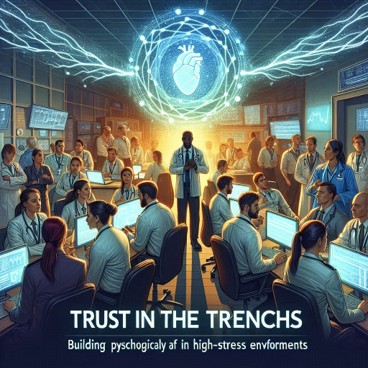
Trust in the Trenches: Building Psychological Safety in High-Stress Environments 🛡️

The emergency room was in chaos. A multi-car accident had just brought in seven critical patients. Yet in the midst of this high-stress environment, something remarkable happened. A first-year resident noticed a potential medication error about to occur with a senior attending physician’s order. She spoke up immediately. The attending stopped, checked, and corrected the error. No defensiveness. No hierarchy pulling rank. Just a quick “Good catch, thank you.”

This scene illustrates psychological safety in action—the foundation of high-performance teams, especially in high-stress environments.

Understanding Psychological Safety in the Pressure Cooker

Psychological safety, a term coined by Harvard Business School professor Amy Edmondson, refers to a shared belief that the team is safe for interpersonal risk-taking. It’s the confidence that you won’t be embarrassed, rejected, or punished for speaking up with ideas, questions, concerns, or mistakes.

In high-stress environments—whether emergency rooms, trading floors, production deadlines, or crisis management situations—psychological safety becomes even more critical. Yet paradoxically, stress often erodes the very safety needed to perform effectively under pressure.

Research from Google’s Project Aristotle identified psychological safety as the number one factor distinguishing high-performing teams from others. Teams with high psychological safety show:

  • 27% reduction in turnover
  • 40% increase in employee engagement
  • 12% increase in productivity
  • 47% higher likelihood of successful innovation

As I explored in “High-Value Leadership: Transforming Organizations Through Purposeful Culture,” creating environments where people can thrive requires intentional culture-building, and psychological safety forms the bedrock of that culture.

The Higher Stakes for Black Women and Traditionally Overlooked Talent 💪

For Black women and other traditionally overlooked professionals, the absence of psychological safety in high-stress environments creates a devastating double bind. They’re simultaneously navigating the stress of the work itself plus the additional stress of systemic bias and cultural taxation.

Consider these realities:

  • Black women are 2.5 times more likely to be perceived as “angry” when expressing the same concerns as white colleagues
  • 75% of Black professionals report code-switching at work to fit in
  • Women of color receive 34% more questioning about their judgment than white men
  • Black women are interrupted in meetings 23% more frequently than white women and 35% more than white men

In “Rise & Thrive: A Black Woman’s Blueprint for Leadership Excellence,” I discussed how Black women must often choose between psychological safety and authenticity. In high-stress environments, this choice becomes even more acute.

Case Study: Dr. Williams’s Dilemma

Dr. Keisha Williams, a Black woman surgeon, worked in a high-pressure cardiac unit. Despite her stellar credentials from Johns Hopkins, she faced constant microaggressions. Nurses questioned her orders more than those of white colleagues. Other surgeons routinely explained basic procedures to her. When she raised concerns about a new protocol’s safety issues, she was labeled “difficult” while a white male colleague who raised similar concerns was praised as “thorough.”

The lack of psychological safety didn’t just impact Dr. Williams personally—it nearly led to a patient crisis when she hesitated to voice an urgent concern, weighing whether it was worth being seen as “aggressive” again. Only her commitment to patient care overrode her learned silence.

The Anatomy of Psychological Safety in High-Stress Environments 🔬

The Four Stages of Psychological Safety (Timothy R. Clark’s Model):

1. Inclusion Safety

  • Feeling included in the team
  • Basic human need for belonging
  • Foundation for all other safety

2. Learner Safety

  • Safe to ask questions
  • Safe to make mistakes
  • Safe to ask for help

3. Contributor Safety

  • Safe to contribute ideas
  • Safe to challenge status quo
  • Safe to offer suggestions

4. Challenger Safety

  • Safe to disagree with authority
  • Safe to point out problems
  • Safe to innovate boldly

In high-stress environments, teams often skip straight to demanding Challenger Safety without establishing the foundation of Inclusion and Learner Safety. This creates a facade of safety that crumbles under pressure.

Building Trust When the Heat Is On 🔥

The TRUST Framework for High-Stress Environments:

T – Transparency in Communication

  • Share information openly, even when incomplete
  • Admit uncertainties and unknowns
  • Explain decision-making processes
  • Acknowledge stress and pressure

R – Reliability Through Consistency

  • Follow through on commitments, especially small ones
  • Establish and maintain routines even in chaos
  • Create predictable check-in points
  • Respond consistently to both success and failure

U – Understanding Different Perspectives

  • Actively seek diverse viewpoints before crisis hits
  • Create structured ways to hear all voices
  • Acknowledge how stress affects people differently
  • Validate experiences without judgment

S – Support Systems That Function Under Pressure

  • Build redundancy in support mechanisms
  • Create buddy systems for high-stress periods
  • Establish clear escalation paths
  • Provide stress recovery resources

T – Team Learning from Every Experience

  • Conduct blame-free debriefs
  • Celebrate learning from near-misses
  • Share lessons across teams
  • Reward truth-telling over face-saving

Real-World Implementation: The Navy Nuclear Program Model

The U.S. Navy’s nuclear submarine program operates in one of the world’s highest-stress environments—underwater, with nuclear reactors, for months at a time. Yet they maintain an exceptional safety record through deliberate psychological safety practices:

1. “Forceful Backup” Anyone, regardless of rank, is expected to speak up immediately if they see a safety concern.

2. “Critique Culture” Every operation is followed by a critique where the lowest-ranking person speaks first.

3. “No Stupid Questions” Questions are rewarded, even celebrated, regardless of how basic.

4. “Conservative Decision-Making” When in doubt, the safe choice is always right, without career penalty.

Result: Zero reactor accidents in over 5,700 reactor-years of operation.

Creating Safety for Traditionally Overlooked Voices 🌟

Specific Strategies for Inclusive Psychological Safety:

1. Amplification Protocols

  • Repeat and credit ideas from overlooked team members
  • Use structured techniques like “no interruption” rounds
  • Implement written idea submission before verbal discussion
  • Track and address participation patterns

2. Bias Interruption Systems

  • Create “bias timeout” signals anyone can use
  • Rotate meeting leadership and facilitation
  • Use anonymous concern reporting systems
  • Regular bias training focused on stress responses

3. Cultural Competence in Crisis

  • Acknowledge different cultural stress responses
  • Avoid tone policing, especially under pressure
  • Create multiple communication channels
  • Respect different processing styles

4. Sponsorship in the Spotlight

  • Senior leaders actively sponsor overlooked talent
  • Public recognition of contributions
  • Protected spaces for honest feedback
  • Career protection for truth-tellers

The Business Case: High-Stress Performance Metrics 📊

Organizations with high psychological safety in high-stress environments show:

Operational Excellence:

  • 74% fewer safety incidents
  • 67% faster problem resolution
  • 45% better crisis recovery times
  • 89% higher quality scores

Innovation Under Pressure:

  • 3x more process improvements
  • 64% better adaptation to change
  • 52% more successful rapid pivots
  • 41% higher creative problem-solving scores

Talent Retention:

  • 49% lower burnout rates
  • 62% higher job satisfaction in high-stress roles
  • 71% better team cohesion scores
  • 38% lower turnover in critical positions

Current Trends and Best Practices 🔮

Emerging Approaches:

1. “Psychological Safety Officers” Organizations are appointing dedicated roles to monitor and improve psychological safety, especially in high-stress departments.

2. Real-Time Safety Metrics Digital tools that measure psychological safety through communication patterns, response times, and participation rates.

3. Stress Inoculation Training Practicing psychological safety behaviors under simulated stress before real crises hit.

4. Inclusive Crisis Protocols Building diverse perspectives into crisis management plans from the start, not as an afterthought.

Leading Organizations’ Practices:

Microsoft: Implemented “Daily Active Questions” where team members rate psychological safety and discuss scores weekly.

Bridgewater Associates: Created “Baseball Cards” showing each person’s strengths and weaknesses, normalizing imperfection.

Amazon Web Services: Uses “Correction of Errors” (COE) documents that celebrate mistake-catching without blame.

Cleveland Clinic: Established “Safety Coaches” in every unit who facilitate speak-up culture during high-stress procedures.

Practical Tools and Techniques 🛠️

The Pre-Stress Safety Check:

Before entering high-stress periods (product launches, busy seasons, crisis response):

1. Team Safety Assessment

  • Anonymous survey on current safety levels
  • Identify specific stress triggers
  • Map individual support needs
  • Create stress response plans

2. Communication Protocols

  • Establish check-in frequencies
  • Create clear escalation paths
  • Define emergency communication rules
  • Set boundary agreements

3. Support Structure Activation

  • Assign stress buddies
  • Schedule recovery periods
  • Prepare stress relief resources
  • Plan celebration moments

The In-Stress Safety Maintenance:

During high-stress periods:

Morning Huddles (5 minutes):

  • Quick emotional check-in
  • Identify top stressors for the day
  • Offer/request specific support
  • Affirm team commitment

Midday Resets (2 minutes):

  • Pause for collective breathing
  • Quick wins celebration
  • Adjustment announcements
  • Encouragement exchange

End-of-Day Decompress (10 minutes):

  • Acknowledge the day’s challenges
  • Appreciate specific contributions
  • Flag concerns for tomorrow
  • Transition ritual to leave work stress

The Post-Stress Learning Lab:

After high-stress periods:

1. Immediate Debrief (Same Day)

  • What went well?
  • What was harder than expected?
  • Who needs immediate support?
  • Quick wins to celebrate?

2. Deep Dive Analysis (Within 72 Hours)

  • System breakdown examination
  • Communication effectiveness review
  • Support system evaluation
  • Innovation opportunities identified

3. Integration Planning (Within One Week)

  • Process improvements codified
  • Training needs identified
  • Recognition delivered
  • Preventive measures implemented

Building Your Psychological Safety Action Plan 🎯

Week 1: Assessment and Awareness

Day 1-2: Self-Assessment

  • How safe do you feel speaking up?
  • When do you self-censor?
  • What triggers your silence?
  • Where do you need more safety?

Day 3-4: Team Temperature Check

  • Anonymous safety survey
  • Stress point identification
  • Current state documentation
  • Gap analysis

Day 5-7: Leadership Alignment

  • Share findings with leadership
  • Identify quick wins
  • Get commitment for change
  • Plan rollout strategy

Month 1: Foundation Building

Week 2: Inclusion Safety

  • Implement daily check-ins
  • Create belonging rituals
  • Address exclusion patterns
  • Celebrate diverse contributions

Week 3: Learner Safety

  • Normalize questions
  • Celebrate mistakes as learning
  • Create practice spaces
  • Share vulnerability from the top

Week 4: Contributor Safety

  • Rotate meeting leadership
  • Implement idea protocols
  • Create contribution tracking
  • Recognize all input

Quarter 1: Culture Embedding

Month 2: Stress Testing

  • Practice safety under pressure
  • Simulate crisis scenarios
  • Test communication systems
  • Refine support structures

Month 3: Scaling and Sustaining

  • Expand successful practices
  • Train safety champions
  • Integrate into operations
  • Measure and adjust

For Black Women Leaders: Your Unique Role and Opportunity 💫

As a Black woman leader, you have unique insights into what psychological safety truly means. You’ve likely navigated environments where it was absent. This gives you superpowers in creating it for others.

Your Strategic Advantages:

1. Authenticity Modeling When you show up authentically despite the risks, you give others permission to do the same.

2. Inclusive Excellence Your experience navigating exclusion helps you spot and address safety gaps others miss.

3. Resilience Teaching You’ve developed coping strategies that can benefit entire teams under stress.

4. Bridge Building Your code-switching abilities can help create safety across different groups.

Self-Protection Strategies:

1. Document Everything Keep records of your contributions to psychological safety initiatives.

2. Build Your Coalition Don’t carry this alone—create allies across the organization.

3. Set Your Boundaries You can’t be the sole creator of safety for everyone else.

4. Get Your Support Ensure you have your own psychological safety net outside the organization.

Discussion Questions for Reflection 💭

  1. When have you experienced true psychological safety in a high-stress situation? What made it possible?
  2. What specific behaviors or systems in your workplace currently undermine psychological safety, especially during stressful periods?
  3. How might psychological safety look different for various groups in your organization?
  4. What’s one thing you could do tomorrow to increase psychological safety for someone on your team?
  5. How do you balance being a truth-teller with protecting your own career advancement?

Your Next Steps: From Survival to Safety 🚀

Psychological safety in high-stress environments isn’t a luxury—it’s a necessity for sustained high performance, innovation, and wellbeing. The choice isn’t whether to build it, but how quickly you can establish it before the next crisis hits.

Ready to transform your high-stress environment into a high-trust culture?

Che’ Blackmon Consulting specializes in building psychological safety in challenging environments, with particular expertise in creating inclusive safety for traditionally overlooked talent.

We offer:

Psychological Safety Assessment – Comprehensive evaluation of current safety levels and specific risk areas

High-Stress Culture Transformation – Systematic approach to building trust under pressure

Inclusive Safety Protocols – Targeted strategies for protecting traditionally overlooked voices

Crisis Leadership Development – Building leaders who create safety when stakes are highest

Team Resilience Training – Practical tools for maintaining safety during challenging periods

Don’t wait for the next crisis to expose the cracks in your culture. Build psychological safety now.

📞 Schedule your consultation: 888.369.7243
📧 Email: admin@cheblackmon.com
🌐 Learn more: www.cheblackmon.com

Because when the pressure rises, psychological safety isn’t just about feelings—it’s about performance, innovation, and survival.


Che’ Blackmon, SPHR, is the founder of Che’ Blackmon Consulting and author of “Mastering a High-Value Company Culture” and “High-Value Leadership: Transforming Organizations Through Purposeful Culture.” With over 20 years of experience transforming organizational cultures, she specializes in creating psychologically safe environments where all talent—especially traditionally overlooked professionals—can thrive under pressure.

#PsychologicalSafety #HighStressLeadership #TeamPerformance #InclusiveLeadership #CrisisManagement #BlackWomenInLeadership #TrustInTeams #HighValueCulture #WorkplaceSafety #LeadershipDevelopment #OrganizationalCulture #TeamDynamics #StressManagement #DiversityAndInclusion #ExecutiveLeadership

The Sandwich Generation Squeeze: GenX Leaders Managing Up, Down, and Sideways 🥪

Generation X leaders are experiencing an unprecedented pressure point. Born between 1965 and 1980, these professionals now occupy critical middle management and senior leadership roles while simultaneously caring for aging parents and supporting adult children. Add to this the challenge of navigating workplace dynamics with Boomer bosses and Millennial/Gen Z direct reports, and you have what I call the “triple squeeze” of modern leadership.

The Unique Position of GenX in Today’s Workplace

GenX leaders represent just 35% of the workforce but hold 51% of leadership positions globally. They’re the bridge generation—digitally adaptable yet traditionally trained, collaborative yet independent, skeptical yet committed. They’re managing the most age-diverse workforce in history while carrying the heaviest personal caregiving load of any generation.

Research from Pew indicates that 47% of adults in their 40s and 50s have both a parent over 65 and are either raising or financially supporting children. For GenX leaders, this translates into managing complex responsibilities across multiple life domains, often with limited organizational support.

As I explored in “High-Value Leadership: Transforming Organizations Through Purposeful Culture,” authentic leadership requires bringing your whole self to work. Yet for GenX leaders juggling eldercare appointments, college tuition payments, and strategic presentations, “bringing your whole self” can feel overwhelming.

The Compounded Challenge for Black Women GenX Leaders 💪

For Black women in GenX leadership positions, these challenges multiply exponentially. They face what researchers call “gendered racism” in the workplace while often serving as primary caregivers in multigenerational households. Studies show Black women spend 41% more time on caregiving than white women, while earning 63 cents for every dollar earned by white men in similar positions.

In “Rise & Thrive: A Black Woman’s Blueprint for Leadership Excellence,” I discussed the additional emotional labor Black women carry in corporate spaces. For GenX Black women leaders, this includes:

  • Being expected to mentor every Black junior employee while receiving less mentorship themselves
  • Managing microaggressions from multiple generations with different awareness levels
  • Navigating the “only one” syndrome in senior leadership while supporting family members who may not understand corporate pressures
  • Facing assumptions about their promotion being “diversity-driven” rather than merit-based

Case Study: Angela’s Triple Bind

Angela, a 48-year-old Black woman VP at a Fortune 500 company, manages a team of 50 while caring for her mother with dementia and supporting two college-aged children. Her days begin at 5 AM reviewing global reports, include lunchtime calls to her mother’s care facility, and end helping her daughter navigate workplace racism in her first internship. When her Boomer CEO questions her “commitment” for leaving at 5:30 PM, and her Millennial direct reports expect 24/7 Slack availability, Angela embodies the impossible standards placed on GenX leaders, particularly Black women.

Managing Up: Navigating Boomer Bosses 📊

Boomer leaders (born 1946-1964) often value face time, hierarchical respect, and traditional communication methods. For GenX leaders reporting to them, success requires strategic adaptation without sacrificing authenticity.

Effective Strategies for Managing Boomer Leaders:

1. Speak Their Language

  • Lead with ROI and bottom-line impact
  • Document achievements in formal reports
  • Schedule face-to-face meetings for important discussions
  • Respect hierarchical communication channels

2. Bridge Technology Gaps Diplomatically

  • Introduce new tools gradually with clear business cases
  • Offer to create “executive summaries” of digital data
  • Translate digital metrics into traditional business language
  • Provide options rather than mandates

3. Honor Their Experience While Asserting Your Expertise

  • Acknowledge their institutional knowledge
  • Frame new ideas as “building on” established success
  • Use phrases like “expanding our success” rather than “changing direction”
  • Share credit generously

Managing Down: Leading Millennials and Gen Z 🚀

Younger employees expect transparency, purpose-driven work, continuous feedback, and flexibility. They’ve never known a workplace without technology and often prioritize work-life integration over traditional career paths.

Strategies for Leading Younger Generations:

1. Provide Purpose and Context

  • Connect every project to larger organizational impact
  • Share the “why” behind decisions
  • Create opportunities for meaningful contribution
  • Celebrate impact, not just output

2. Embrace Flexible Communication

  • Use multiple channels (Slack, video, text)
  • Provide real-time feedback rather than annual reviews
  • Be accessible without being available 24/7
  • Set clear boundaries while remaining approachable

3. Foster Growth and Development

  • Create clear development pathways
  • Provide frequent learning opportunities
  • Offer reverse mentoring programs
  • Support career experimentation

Managing Sideways: Peer Relationships Across Generations 🤝

GenX leaders must also navigate peer relationships with colleagues from different generations, each bringing distinct values and work styles.

Building Cross-Generational Alliances:

1. With Boomer Peers:

  • Bond over shared organizational knowledge
  • Respect their seniority while asserting your expertise
  • Collaborate on succession planning
  • Bridge generational divides together

2. With Fellow GenX Leaders:

  • Create support networks for shared challenges
  • Share caregiving resources and strategies
  • Collaborate on flexible work policies
  • Advocate collectively for middle management

3. With Millennial Peers:

  • Learn from their digital native perspectives
  • Partner on innovation initiatives
  • Share leadership development opportunities
  • Build mutual mentoring relationships

The Caregiving Crisis: Supporting Aging Parents and Adult Children 👨‍👩‍👧‍👦

The average GenX leader spends 23 hours per week on caregiving activities outside work. This invisible labor impacts performance, advancement opportunities, and mental health.

Current Statistics:

  • 73% of employees caring for older relatives have quit a job due to caregiving responsibilities
  • GenX women are 10 times more likely than men to reduce work hours for caregiving
  • The average GenX household provides $7,000 annually in financial support to adult children
  • 60% of GenX caregivers report symptoms of burnout

Real-World Example: Microsoft’s Response

Microsoft recognized the caregiving crisis among GenX employees and implemented comprehensive support:

  • Paid family caregiving leave
  • Backup elder and child care services
  • Flexible work arrangements without career penalties
  • Employee resource groups for caregivers
  • Partnership with care coordination services

Result: 30% reduction in stress-related leave and 25% improvement in retention among GenX leaders.

Creating High-Value Support Systems 🌟

In “Mastering a High-Value Company Culture,” I emphasized that culture is built through intentional systems. GenX leaders need both personal and organizational support structures.

Personal Strategies:

1. Boundary Management

  • Establish non-negotiable family time
  • Create “buffer zones” between work and caregiving
  • Use technology for efficiency (care apps, scheduling tools)
  • Practice saying “no” to non-essential commitments

2. Resource Optimization

  • Build caregiving teams (family, friends, professionals)
  • Investigate employer benefits fully
  • Join caregiver support groups
  • Share resources with other GenX leaders

3. Self-Care as Survival

  • Schedule personal health appointments
  • Protect sleep hygiene
  • Maintain at least one non-work, non-caregiving activity
  • Seek mental health support proactively

Organizational Support Systems:

1. Policy Innovation

  • Flexible work arrangements that acknowledge caregiving
  • Paid caregiving leave beyond FMLA
  • Backup care services
  • Phased retirement options

2. Cultural Shifts

  • Normalize caregiving discussions
  • Recognize caregiving in performance evaluations
  • Create caregiver employee resource groups
  • Train managers on caregiving challenges

3. Career Path Flexibility

  • Alternative advancement paths during high-caregiving years
  • Job-sharing at senior levels
  • Return-to-leadership programs
  • Project-based leadership opportunities

The Hidden Strengths of the Sandwich Generation 💡

While the challenges are real, GenX leaders bring unique strengths born from their complex positioning:

1. Unmatched Adaptability Managing multiple generations develops exceptional flexibility and problem-solving skills.

2. Bridge-Building Expertise Natural translators between traditional and digital, hierarchical and flat, formal and informal.

3. Emotional Intelligence Navigating complex family and work dynamics builds sophisticated emotional awareness.

4. Efficiency Masters Limited time forces innovation in productivity and delegation.

5. Authentic Leadership The impossibility of perfection often leads to more genuine, vulnerable leadership.

Current Trends and Future Outlook 🔮

Emerging Workplace Trends:

1. “Caregiving Benefits” as Standard Forward-thinking companies now view caregiving support as essential as healthcare.

2. Four-Generation Workforce Strategies Organizations are developing specific strategies for managing four (soon five) generations.

3. Flexible Leadership Models Recognition that leadership doesn’t require 24/7 availability is growing.

4. GenX Retention Crisis As caregiving demands peak, organizations risk losing their most experienced leaders.

Best Practices from Leading Organizations:

Johnson & Johnson: Provides up to $100/day for backup dependent care Bank of America: Offers paid caregiving leave and care consultation services Patagonia: Created on-site eldercare alongside their famous childcare IBM: Developed AI-powered care coordination tools for employees

Action Steps for GenX Leaders 🎯

Immediate Actions (This Week):

  1. Assess Your Current Load
    • List all caregiving responsibilities
    • Identify your biggest stressors
    • Map your support gaps
  2. Audit Available Resources
    • Review all employer benefits
    • Research community resources
    • Identify potential support partners
  3. Set One Boundary
    • Choose one area to protect
    • Communicate it clearly
    • Stick to it for one week

30-Day Plan:

  1. Build Your Support Network
    • Join a GenX leader group
    • Find caregiving resources
    • Identify backup support
  2. Optimize Your Work Style
    • Implement time-blocking
    • Delegate one major task
    • Streamline one process
  3. Address One Generational Challenge
    • Choose your biggest friction point
    • Develop targeted strategies
    • Test and refine approach

90-Day Transformation:

  1. Create Sustainable Systems
    • Establish caregiving routines
    • Build communication protocols
    • Develop emergency plans
  2. Advocate for Change
    • Propose one policy improvement
    • Share your story strategically
    • Build coalition support
  3. Model High-Value Leadership
    • Demonstrate sustainable success
    • Mentor others facing similar challenges
    • Create psychological safety for your team

For Black Women GenX Leaders: Additional Strategies 🌟

Managing Intersectional Challenges:

1. Build Your Board of Directors

  • Find mentors who understand your unique position
  • Connect with other Black women GenX leaders
  • Seek sponsors who advocate for your advancement

2. Document Everything

  • Keep detailed records of achievements
  • Track microaggressions and responses
  • Maintain caregiver accommodation requests

3. Strategic Visibility

  • Share successes proactively
  • Control your narrative
  • Build allies across generations

4. Protect Your Energy

  • Say no to unofficial diversity work
  • Delegate emotional labor
  • Preserve capacity for what matters most

Discussion Questions for Reflection 💭

  1. How has your experience as a GenX leader managing multiple generations shaped your leadership style?
  2. What caregiving responsibilities currently impact your work performance, and what support would make the biggest difference?
  3. Where do you experience the most friction in managing across generations, and what strategies have worked?
  4. How does your organization currently support (or fail to support) leaders with caregiving responsibilities?
  5. What would sustainable success look like for you as a sandwich generation leader?

Your Next Steps: From Squeeze to Strategic Success 🚀

The sandwich generation squeeze is real, but it doesn’t have to derail your leadership journey. With intentional strategies, organizational support, and community connection, GenX leaders can transform this challenging life phase into a period of profound impact and growth.

Ready to move from survival to strategic success?

Che’ Blackmon Consulting specializes in supporting GenX leaders navigating complex generational dynamics while maintaining high performance and personal wellbeing.

We offer:

GenX Leadership Assessment – Evaluate your current challenges and identify strategic priorities

Multigenerational Team Optimization – Build high-performing teams across generational differences

Caregiving Leadership Strategies – Develop sustainable approaches to managing work and caregiving

High-Value Culture Development – Create organizational cultures that support sandwich generation leaders

Executive Coaching for Complex Lives – Personalized support for navigating your unique challenges

Don’t navigate the squeeze alone. Let’s create strategies for sustainable success.

📞 Schedule your consultation: 888.369.7243
📧 Email: admin@cheblackmon.com
🌐 Learn more: www.cheblackmon.com

Because high-value leadership isn’t about doing it all—it’s about creating sustainable success while honoring all aspects of your life.


Che’ Blackmon, SPHR, is the founder of Che’ Blackmon Consulting and author of “Mastering a High-Value Company Culture” and “High-Value Leadership: Transforming Organizations Through Purposeful Culture.” With over 20 years of experience in HR leadership and organizational transformation, she specializes in helping traditionally overlooked leaders create sustainable success while managing complex life responsibilities.

#GenXLeaders #SandwichGeneration #MultigenerationalWorkplace #LeadershipDevelopment #WorkLifeBalance #CaregivingAndCareers #BlackWomenInLeadership #HighValueLeadership #MiddleManagement #GenerationalDiversity #ExecutiveLeadership #WorkplaceCulture #CareerDevelopment #LeadershipStrategy #InclusiveLeadership

Leading Through Uncertainty: The High-Value Leader’s Crisis Playbook 🚀

Crisis doesn’t build character—it reveals it. When uncertainty strikes, high-value leaders don’t just manage the storm; they transform turbulence into opportunity for organizational growth and cultural strengthening.

The Reality of Crisis Leadership

Every organization faces moments of profound uncertainty. Market disruptions. Global pandemics. Economic downturns. Leadership transitions. In these moments, the difference between organizations that merely survive and those that thrive comes down to one factor: high-value leadership that maintains cultural integrity while navigating change.

As I outlined in “High-Value Leadership: Transforming Organizations Through Purposeful Culture,” true leadership excellence emerges not from avoiding crises but from creating environments where both people and organizations can flourish—especially during challenging times.

Understanding Crisis Through Multiple Lenses 🔍

The Organizational Impact

When crisis hits, organizations typically experience:

  • Disrupted operations and unclear priorities
  • Heightened anxiety and decreased productivity
  • Communication breakdowns and rumor proliferation
  • Resource constraints and difficult trade-offs
  • Accelerated timeline for critical decisions

The Human Impact

Behind every organizational crisis are human beings experiencing:

  • Fear about job security and future stability
  • Stress from increased workload and changing expectations
  • Confusion from conflicting information
  • Exhaustion from sustained uncertainty
  • Grief over losses—both tangible and intangible

The Overlooked Perspective: Black Women in Crisis

For Black women in corporate spaces, organizational crises often compound existing challenges. Research shows that during economic downturns, Black women are often “first fired, last hired.” They frequently bear additional emotional labor, serving as unofficial counselors while managing their own heightened vulnerability.

As I explored in “Rise & Thrive: A Black Woman’s Blueprint for Leadership Excellence,” Black women leaders must navigate crisis while facing:

  • Increased scrutiny of their decisions
  • Pressure to represent entire demographics
  • Limited access to informal support networks
  • The burden of maintaining composure while others express frustration freely

The High-Value Crisis Leadership Framework 💡

1. Stabilize with Transparency

Immediate Actions:

  • Acknowledge the reality of the situation without sugar-coating
  • Communicate what you know, what you don’t know, and when you’ll know more
  • Establish regular communication cadences
  • Create multiple channels for questions and feedback

Case Study: Microsoft’s 2020 Transformation

When Satya Nadella faced the dual crisis of pandemic and social unrest, he didn’t minimize challenges. Instead, he acknowledged employee fears, shared his own vulnerabilities, and committed to regular, transparent updates. This approach built trust that enabled Microsoft to emerge stronger, with employee satisfaction scores actually increasing during crisis.

2. Prioritize Cultural Anchors

In “Mastering a High-Value Company Culture,” I emphasized that culture is an organization’s lifeblood. During crisis, maintaining cultural integrity becomes even more critical.

Essential Cultural Anchors:

  • Values Reinforcement: Double down on core values when everything else is uncertain
  • Ritual Preservation: Maintain team traditions, even if modified for new realities
  • Recognition Amplification: Celebrate small wins and acknowledge extra efforts
  • Community Building: Create spaces for connection despite physical or emotional distance

3. Lead with Empathy and Equity

The Empathy Imperative: Crisis affects everyone, but not equally. High-value leaders recognize and address disparate impacts.

Equity-Centered Actions:

  • Assess how crisis affects different employee groups
  • Provide flexible support options recognizing diverse needs
  • Ensure traditionally overlooked voices are heard in decision-making
  • Address systemic inequities that crisis may exacerbate

Real-World Application: During the 2008 financial crisis, Starbucks CEO Howard Schultz maintained health benefits for part-time workers despite pressure to cut costs. This decision, rooted in empathy and equity, fostered loyalty that powered Starbucks’ eventual recovery and growth.

4. Communicate with Courage and Clarity 📢

The Communication Matrix:

Frequency: Daily during acute crisis, weekly during recovery Transparency: Share challenges honestly while maintaining hope Accessibility: Use multiple channels to reach all stakeholders Bidirectionality: Create genuine feedback loops, not just broadcasts

Scripts for Difficult Messages:

When announcing layoffs: “These decisions reflect economic realities, not individual value. We’re committed to supporting affected colleagues through transition assistance, extended benefits, and active job placement support.”

When facing uncertainty: “While we don’t have all answers today, here’s what we do know… Here’s our decision-making process… Here’s when we’ll update you next…”

5. Build Resilience Through Development

Crisis can catalyze growth when leaders invest in capability building.

Strategic Development Focus:

  • Cross-training to increase organizational flexibility
  • Leadership development at all levels
  • Emotional intelligence and stress management
  • Innovation and problem-solving skills
  • Digital literacy and remote collaboration

Practical Tools for Crisis Navigation 🛠️

The Daily Crisis Leadership Checklist

Morning (First 30 minutes):

  • [ ] Review overnight developments
  • [ ] Identify top 3 priorities for the day
  • [ ] Check in with leadership team
  • [ ] Prepare key messages

Midday (15 minutes):

  • [ ] Pulse check with frontline managers
  • [ ] Address emerging issues
  • [ ] Celebrate any wins, however small

Evening (Final 30 minutes):

  • [ ] Document decisions made
  • [ ] Prepare next-day communications
  • [ ] Personal reflection and self-care

The Stakeholder Impact Assessment

Create a matrix evaluating crisis impact on:

  1. Employees (by department, level, demographic)
  2. Customers (by segment, geography, loyalty)
  3. Partners (by criticality, dependency)
  4. Community (local, industry, society)

For each group, identify:

  • Specific impacts they’re experiencing
  • Their most pressing needs
  • Resources available to support them
  • Communication strategies to reach them

Supporting Traditionally Overlooked Talent During Crisis 🌟

Creating Inclusive Crisis Response

For Black Women and Other Marginalized Groups:

  1. Provide Psychological Safety
    • Acknowledge unique stressors they face
    • Create employee resource group (ERG) safe spaces
    • Offer culturally competent mental health resources
  2. Ensure Equitable Access
    • Review who has access to flexibility options
    • Examine whether crisis benefits reach all employees
    • Address technology gaps for remote work
  3. Amplify Overlooked Voices
    • Include diverse perspectives in crisis planning
    • Rotate who presents in all-hands meetings
    • Seek input through multiple channels
  4. Protect Against Bias
    • Use objective criteria for difficult decisions
    • Review decisions for disparate impact
    • Create appeals processes for contested decisions

Case Study: Target’s COVID-19 Response

Target’s crisis response demonstrated inclusive leadership by:

  • Providing immediate wage increases for frontline workers (predominantly women and people of color)
  • Offering backup childcare benefits recognizing caregiving burdens
  • Creating dedicated shopping hours for vulnerable populations
  • Investing in mental health resources with diverse provider options

Result: Employee retention increased, customer loyalty strengthened, and Target emerged from crisis with enhanced reputation and market position.

Recovery and Renewal Strategies 🌱

From Crisis Management to Crisis Transformation

Phase 1: Stabilization (Weeks 1-4)

  • Focus on immediate safety and continuity
  • Establish crisis communication rhythms
  • Identify and protect critical operations

Phase 2: Adaptation (Months 1-3)

  • Adjust operations for new reality
  • Develop medium-term sustainability plans
  • Begin capturing lessons learned

Phase 3: Innovation (Months 3-6)

  • Identify opportunities within disruption
  • Pilot new approaches developed during crisis
  • Reimagine “return to normal” as “advance to better”

Phase 4: Integration (Months 6-12)

  • Embed crisis learnings into operations
  • Update crisis preparedness plans
  • Celebrate resilience and growth

Building Anti-Fragile Culture

Beyond resilience (bouncing back), high-value leaders build anti-fragility (growing stronger through stress).

Anti-Fragile Practices:

  • Regular crisis simulation exercises
  • Deliberate redundancy in critical systems
  • Continuous learning culture
  • Distributed decision-making authority
  • Strong internal and external networks

Measuring Crisis Leadership Effectiveness 📊

Key Performance Indicators

Immediate Metrics:

  • Employee retention during crisis
  • Communication effectiveness scores
  • Customer retention rates
  • Operational continuity percentage

Long-term Metrics:

  • Post-crisis employee engagement
  • Innovation index improvement
  • Market share changes
  • Reputation/brand strength

Equity Metrics:

  • Retention rates by demographic
  • Advancement during/after crisis by group
  • Pay equity maintenance
  • Inclusion survey results

Current Trends Shaping Crisis Leadership 🔮

1. Hybrid Crisis Management

Organizations now plan for simultaneous crises (health + economic + social + climate).

2. Stakeholder Capitalism

Crisis response increasingly considers all stakeholders, not just shareholders.

3. Mental Health Priority

Psychological safety and wellbeing support are now crisis response essentials.

4. Digital-First Communication

Virtual town halls and digital collaboration tools are baseline expectations.

5. Equity-Centered Recovery

Organizations recognize that equitable recovery strengthens overall resilience.

Your Crisis Leadership Action Plan 🎯

Immediate Steps (This Week):

  1. Assess Your Crisis Readiness
    • Review existing crisis plans
    • Identify gaps in communication systems
    • Evaluate team crisis capabilities
  2. Strengthen Cultural Anchors
    • Document core values and their crisis application
    • Identify rituals worth preserving
    • Plan recognition strategies
  3. Build Your Support Network
    • Identify crisis advisors
    • Connect with peer leaders
    • Establish mental health resources

Ongoing Development (Next 90 Days):

  1. Enhance Crisis Capabilities
    • Complete crisis leadership training
    • Practice scenario planning
    • Develop crisis communication templates
  2. Foster Team Resilience
    • Conduct resilience workshops
    • Cross-train critical functions
    • Build psychological safety
  3. Create Feedback Systems
    • Establish pulse survey processes
    • Create safe reporting channels
    • Develop rapid response protocols

Discussion Questions for Reflection 💭

  1. How has your organization’s response to recent crises aligned with or deviated from its stated values?
  2. Which traditionally overlooked groups in your organization might need additional support during crisis, and how can you provide it?
  3. What crisis-induced innovations could become permanent improvements in your organization?
  4. How do you personally maintain resilience while supporting others through crisis?
  5. What would truly inclusive crisis leadership look like in your specific context?

Next Steps: Transform Crisis into Catalyst 🚀

Crisis leadership isn’t about having all the answers—it’s about creating conditions where organizations and people can navigate uncertainty together, emerging stronger and more united.

Ready to strengthen your crisis leadership capabilities?

Che’ Blackmon Consulting offers:

Crisis Leadership Assessment – Evaluate your organization’s crisis readiness and identify critical gaps

High-Value Crisis Response Planning – Develop culturally-aligned crisis strategies that protect people and performance

Inclusive Recovery Strategies – Design equitable approaches that strengthen all stakeholders

Leadership Resilience Coaching – Build personal and team capacity for sustained crisis navigation

Culture Preservation Workshops – Maintain organizational identity through disruption

Don’t wait for the next crisis to test your leadership. Build your high-value crisis capabilities now.

📞 Schedule your consultation: 888.369.7243
📧 Email: admin@cheblackmon.com
🌐 Learn more: www.cheblackmon.com

Because in times of uncertainty, high-value leadership doesn’t just manage crisis—it transforms challenge into opportunity for lasting positive change.


Che’ Blackmon, SPHR, is the founder of Che’ Blackmon Consulting and author of “Mastering a High-Value Company Culture” and “High-Value Leadership: Transforming Organizations Through Purposeful Culture.” With over 20 years of experience transforming organizational cultures, she specializes in helping leaders create environments where traditionally overlooked talent thrives, especially during challenging times.

#CrisisLeadership #HighValueLeadership #InclusiveLeadership #OrganizationalCulture #LeadershipDevelopment #CulturalTransformation #EquityInLeadership #BlackWomenInLeadership #ExecutiveLeadership #CrisisManagement #LeadershipExcellence #WorkplaceCulture #DiversityAndInclusion #TransformationalLeadership #LeadershipStrategy