The Championship Classroom: Applying Sports Leadership to Business Success 🏆

The Detroit Lions’ transformation from perennial losers to playoff contenders under Dan Campbell offers more business lessons than any MBA case study I’ve encountered. When Campbell took over in 2021, he didn’t just change plays—he transformed culture. His approach mirrors exactly what I’ve seen work in corporate transformations: clear vision, relentless accountability, and the radical belief that everyone has championship potential.

Sports and business share more DNA than most executives realize. Both require strategy under pressure, team cohesion despite individual ambitions, and the ability to bounce back from devastating losses. For traditionally overlooked professionals, particularly Black women navigating corporate spaces, sports leadership principles offer a powerful framework for success that transcends traditional business models.

The Playbook Connection: Why Sports Leadership Works in Business 📋

In “High-Value Leadership: Transforming Organizations Through Purposeful Culture,” I discuss how transformation requires both individual excellence and collective commitment. Sports embody this dual requirement perfectly.

Consider what makes championship teams different from talented groups that never win:

  • Shared accountability for outcomes
  • Role clarity with ego management
  • Preparation that anticipates adversity
  • Recovery systems for inevitable setbacks
  • Celebration rituals that reinforce culture

These aren’t just sports concepts—they’re organizational imperatives. Yet most businesses approach them haphazardly while sports teams treat them as sacred.

The Research Behind the Connection

A Stanford Graduate School of Business study found that companies led by former athletes outperformed their peers by 15% on average. The differentiator? These leaders understood that winning requires both individual excellence and team cohesion—a balance many business leaders never master.

For Black women, who often excel in collegiate sports at higher rates than other demographics yet remain underrepresented in corporate leadership, this connection represents untapped potential. We’ve already learned these lessons on courts and fields. Now it’s time to apply them in boardrooms.

Building Your Starting Lineup: Talent Selection and Development

Championship coaches don’t just recruit talent—they build complementary teams. Pat Summitt, the legendary Tennessee Lady Vols coach, didn’t just win 1,098 games by recruiting stars. She won by creating systems where different talents could thrive together.

In “Mastering a High-Value Company Culture,” I emphasize that culture fit doesn’t mean sameness—it means shared commitment to collective success. Sports teams demonstrate this perfectly.

Case Study: The 2004 Detroit Pistons

The 2004 Pistons won the NBA championship without a single superstar. Their “Going to Work” mentality emphasized defense, teamwork, and role excellence. Each player understood their contribution:

  • Ben Wallace: Defensive anchor
  • Chauncey Billups: Strategic leadership
  • Richard Hamilton: Consistent scoring
  • Tayshaun Prince: Versatile defense
  • Rasheed Wallace: Emotional energy

Their business parallel? A midwest manufacturing company I consulted with applied this same principle. Instead of competing for “rock star” talent, they built complementary teams where:

  • Technical experts focused on innovation
  • Operational leaders drove efficiency
  • Cultural ambassadors maintained morale
  • Strategic thinkers planned ahead
  • Customer champions protected quality

Result: 40% productivity increase without adding headcount.

The Practice Field: Creating High-Performance Cultures

Elite athletes don’t just show up for games—they live in preparation mode. Serena Williams famously practiced harder than she played, understanding that championships are won in practice, not just competition.

The Business Practice Equivalent:

1. Skill Development Sessions Replace boring training with competitive skill-building:

  • Sales teams compete in pitch tournaments
  • Engineering teams hold hackathons
  • Customer service runs scenario simulations
  • Leadership practices crisis management

2. Film Review for Business Sports teams review game film religiously. Why don’t businesses?

  • Record important meetings for analysis
  • Review client interactions for improvement
  • Analyze competitor moves systematically
  • Document and study failures

3. Conditioning for Endurance Business marathons require stamina:

  • Build mental resilience through challenges
  • Create recovery protocols for intense periods
  • Develop bench strength for sustainability
  • Rotate high-pressure assignments

Reality Check for Traditionally Overlooked Talent:

Black women often face the “practice player” phenomenon—always preparing others for success while being overlooked for the starting lineup. A senior Black woman executive recently told me: “I coached five people into C-suite roles while being told I needed ‘more seasoning’ myself.”

The solution? Document your coaching impact as leadership evidence. Every person you develop is proof of your championship-level leadership.

Game Day Excellence: Performance Under Pressure

When Simone Biles performs, she’s not thinking about 10,000 hours of practice—she’s in flow state. Business leaders need the same ability to perform when stakes are highest.

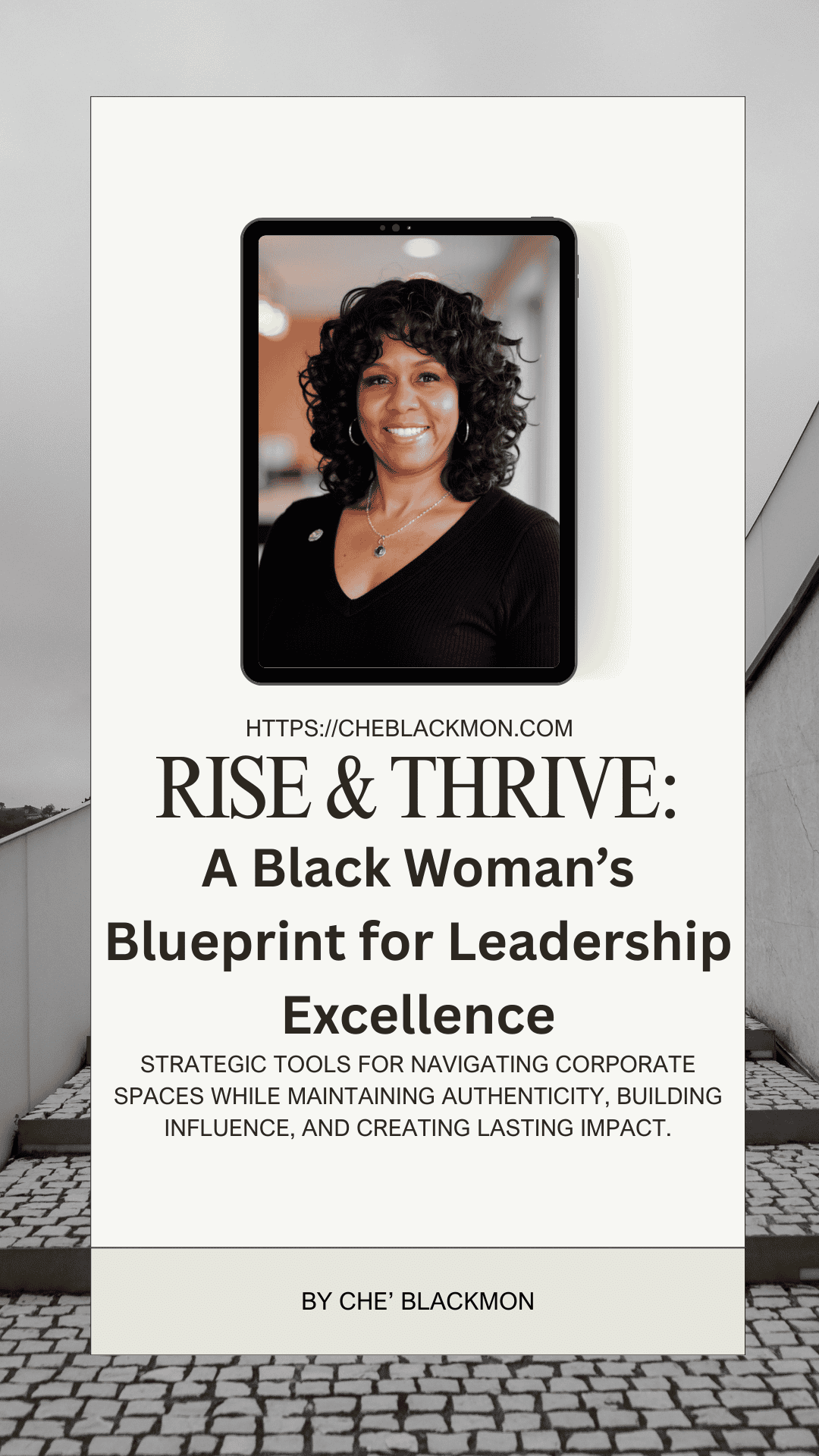
In “Rise & Thrive: A Black Woman’s Blueprint for Leadership Excellence,” I discuss how traditionally overlooked professionals often perform under higher pressure—every day is game day when you’re representing more than yourself.

The Clutch Performance Framework:

1. Pre-Game Rituals Athletes have specific routines before competition. Business leaders need them too:

  • Morning preparation routine for big meetings
  • Visualization of successful outcomes
  • Physical warm-up (yes, even for desk jobs)
  • Mental clarity practices

2. In-Game Adjustments Championship teams adapt mid-game:

  • Read the room like reading defense
  • Adjust strategy based on response
  • Call timeouts when momentum shifts
  • Substitute players/approaches as needed

3. Closing Strong Games are won in final moments:

  • Maintain energy through conclusion
  • Execute practiced closing strategies
  • Stay focused despite fatigue
  • Celebrate immediately after victory

Case Study: The Presentation Championship

Anita, a Black woman director at a Fortune 500 company, applied athletic performance principles to land a $50 million contract:

  • Practice: 20 presentation run-throughs
  • Game Film: Studied successful pitches
  • Team Building: Assembled diverse expertise
  • Pre-Game: Arrived early, walked the space
  • Adjustment: Read room energy, modified approach
  • Closing: Executed practiced power finish

She later said: “I approached it like my college basketball championships—preparation, teamwork, and clutch execution.”

The Injury Report: Managing Setbacks and Comebacks

Every athlete faces injuries. Every business leader faces failures. The difference between champions and everyone else? Recovery strategy.

Tom Brady’s career-threatening knee injury in 2008 led to his most dominant years. Why? He used recovery time to study, strategize, and strengthen other areas.

The Business Comeback Playbook:

1. Immediate Response Protocol

  • Assess damage honestly
  • Communicate transparently
  • Protect core operations
  • Begin recovery planning

2. Rehabilitation Strategy

  • Identify root causes
  • Strengthen weak areas
  • Build prevention systems
  • Document lessons learned

3. Return Stronger

  • Re-enter strategically
  • Demonstrate new capabilities
  • Share recovery story
  • Prevent repeat injuries

The Traditionally Overlooked Advantage:

Black women have been managing comebacks our entire careers. Every microaggression navigated, every bias overcome, every exclusion transcended—we’re comeback specialists. This resilience, developed through necessity, becomes a competitive advantage when formally recognized and strategically deployed.

Coaching from the Sidelines: Leadership Development

Great coaches make others great. John Wooden didn’t just win 10 NCAA championships—he developed leaders who transformed basketball globally.

The Championship Coaching Model for Business:

1. Individual Development Plans Like position-specific training:

  • Identify unique strengths
  • Design targeted improvements
  • Create progression milestones
  • Celebrate skill advancement

2. Team Dynamics Management

  • Balance competitive and collaborative
  • Rotate leadership opportunities
  • Address conflicts quickly
  • Build collective identity

3. Game Strategy Teaching

  • Share tactical knowledge
  • Explain decision rationale
  • Encourage strategic thinking
  • Develop future coaches

Success Story: The Sales Team Transformation

A technology company applied athletic coaching principles to transform their underperforming sales team:

  • Created “player cards” for each salesperson’s strengths
  • Implemented daily “huddles” for strategy alignment
  • Introduced “game film review” of sales calls
  • Established “MVP” recognition program
  • Built “practice scenarios” for skill development

Result: 67% increase in sales within six months.

Creating Your Championship Culture 🏅

Your 30-Day Athletic Leadership Challenge:

Week 1: Assess Your Roster

  • Evaluate team strengths/weaknesses
  • Identify complementary skills
  • Note development opportunities
  • Plan position assignments

Week 2: Design Practice Systems

  • Create skill development programs
  • Implement review processes
  • Build feedback mechanisms
  • Establish improvement metrics

Week 3: Implement Game Strategy

  • Define winning outcomes
  • Assign role responsibilities
  • Create play calls (standard procedures)
  • Practice execution scenarios

Week 4: Launch Championship Season

  • Kick off with team vision
  • Begin regular practice schedule
  • Implement game film reviews
  • Celebrate early wins

Discussion Questions for Your Team 🤔

  1. What “position” does each team member play, and how can you optimize their natural strengths?
  2. How might implementing “practice sessions” improve your team’s performance when it matters most?
  3. What “game film” should your organization be reviewing to improve performance?
  4. How can traditionally overlooked talent on your team move from practice squad to starting lineup?
  5. What would change if you approached business challenges with an athlete’s preparation mindset?

Your Next Steps

This Week:

  • Identify your team’s current “win-loss record”
  • Define what championship looks like for your organization
  • Assess your roster’s strengths and gaps

This Month:

  • Implement one athletic training principle
  • Create a “game film review” process
  • Establish pre-game routines for big moments

This Quarter:

  • Build complete championship culture framework
  • Measure performance improvements
  • Celebrate team victories

Ready to Build Your Championship Organization?

The principles that create championship teams—in sports or business—are universal. Clear vision, relentless preparation, strategic execution, and resilient recovery. Add the unique strengths that traditionally overlooked talent brings, and you have a formula for unprecedented success.

Che’ Blackmon Consulting specializes in helping organizations apply championship principles to build high-performing, inclusive cultures where everyone can excel.

Our Championship Culture Program includes:

  • Team assessment and position optimization
  • Practice system development
  • Performance coaching frameworks
  • Comeback strategy planning
  • Victory celebration design

Ready to move from rebuilding to championship contention?

📧 Contact us at admin@cheblackmon.com or call 888.369.7243 to discuss how championship principles can transform your organization’s performance.

Special Offer: Mention this article to receive our “Championship Culture Assessment”—a comprehensive evaluation of your organization’s readiness to compete at elite levels.

💡 Remember: Every championship team was once considered an underdog. The difference between perpetual rebuilding and consistent winning isn’t talent—it’s the application of proven leadership principles that transform potential into performance.


What sports leadership principles could transform your organization’s performance? Share your insights below. #SportsLeadership #BusinessStrategy #TeamBuilding #LeadershipDevelopment #ChampionshipMindset #HighPerformanceTeams #CorporateCulture #AthleticLeadership #TeamExcellence #BusinessTransformation #LeadershipLessons #OrganizationalSuccess #PerformanceCoaching #DiversityInLeadership #WinningCulture

From Manager to Consultant: Building Your Expertise-Based Business 💡

After twenty-three years climbing the corporate ladder, hitting the glass ceiling repeatedly, and finally breaking through only to find another ceiling waiting, I made a decision that terrified and thrilled me in equal measure. I transformed my hard-won expertise into Che’ Blackmon Consulting—and discovered that everything I’d learned about navigating corporate spaces as a Black woman had actually been preparing me for entrepreneurship.

The transition from manager to consultant isn’t just a career change. It’s a complete identity transformation that requires you to repackage decades of experience, overcome imposter syndrome on steroids, and build a business while unlearning corporate survival mechanisms. For traditionally overlooked professionals, especially Black women who’ve spent years proving our worth in hostile environments, this journey carries unique challenges—and unprecedented opportunities.

The Hidden Advantage of the Overlooked 📊

Here’s what most business-building guides won’t tell you: The very experiences that made corporate life exhausting for traditionally overlooked professionals become competitive advantages in consulting.

Consider the skills you’ve developed from navigating corporate spaces as a Black woman:

  • Reading unspoken dynamics in rooms where you’re the “only”
  • Building results despite limited resources and support
  • Creating innovation from positions of constraint
  • Developing solutions that work for diverse stakeholders
  • Transforming hostile cultures through strategic influence

These aren’t just survival skills—they’re consulting superpowers. In “Rise & Thrive: A Black Woman’s Blueprint for Leadership Excellence,” I discuss how our navigation skills translate directly to business success. We’ve been consultants all along, solving complex problems without the title or compensation.

Case Study: From HR Director to Seven-Figure Consultant

Denise spent 18 years as an HR Director, consistently fixing broken cultures and reducing turnover by 40% or more at every organization. Yet she watched external consultants get paid $50,000 for recommendations she’d already made internally. The breaking point? A consulting firm literally presented her own proposal (which had been rejected when she submitted it) and got approved for $125,000.

She launched her consulting practice focusing on “cultural transformation for overlooked talent retention.” Within three years, she built a seven-figure practice. Her secret? She understood problems consultants missed because she’d lived them. Her proposals addressed not just surface issues but the underlying cultural dynamics that created them.

The Expertise Inventory Most Managers Miss

Many managers undervalue their expertise because they’ve been conditioned to see their contributions as “just doing their job.” This is particularly true for Black women who’ve had to work twice as hard for half the recognition.

In “Mastering a High-Value Company Culture,” I discuss how value often goes unrecognized until it’s packaged differently. Your consulting business begins with recognizing and reframing your expertise.

Your Four Pillars of Marketable Expertise:

1. Technical Mastery The hard skills you’ve developed:

  • Systems you’ve implemented
  • Processes you’ve optimized
  • Problems you’ve solved repeatedly
  • Metrics you’ve consistently improved

2. Cultural Navigation The soft power you’ve wielded:

  • Toxic cultures you’ve transformed
  • Teams you’ve built from dysfunction
  • Conflicts you’ve resolved
  • Change you’ve managed

3. Crisis Leadership The fires you’ve extinguished:

  • Turnarounds you’ve led
  • Crises you’ve managed
  • Disasters you’ve prevented
  • Recoveries you’ve orchestrated

4. Innovation Creation The value you’ve generated:

  • Cost savings you’ve achieved
  • Revenue you’ve influenced
  • Efficiencies you’ve created
  • Innovations you’ve pioneered

Take inventory honestly. That “little” project where you saved your company $2 million? That’s a case study. The retention program you created that kept top talent? That’s a methodology. The way you built trust across hostile departments? That’s a framework worth thousands per engagement.

Building Your Business While Keeping Your Day Job 🏗️

The path from manager to consultant rarely involves dramatic resignation scenes. For most of us, especially those without generational wealth or massive savings, it requires strategic bridge-building.

The Parallel Path Strategy:

Phase 1: Foundation (Months 1-6) While maintaining your role:

  • Define your niche based on proven expertise
  • Create your basic business infrastructure (LLC, website, basic marketing)
  • Document your methodologies and frameworks
  • Build your thought leadership through writing and speaking

Phase 2: Validation (Months 6-12) Testing your market:

  • Take on 1-2 small consulting projects
  • Use vacation time for client work
  • Build case studies from current role successes
  • Grow your network strategically

Phase 3: Transition (Months 12-18) Preparing for launch:

  • Build financial runway (6-12 months expenses)
  • Secure 2-3 anchor clients
  • Negotiate exit terms that don’t restrict consulting
  • Create operational systems for your business

Warning: Check your employment agreement for non-compete clauses and conflict of interest policies. Many Black women discover these clauses are enforced more strictly for us than for others who’ve been consulting on the side for years.

The Mindset Shifts That Matter Most

The transition from employee to entrepreneur requires rewiring deeply embedded beliefs, particularly for those of us who’ve been conditioned to shrink ourselves.

In “High-Value Leadership: Transforming Organizations Through Purposeful Culture,” I explore how mindset shapes outcomes. Here are the critical shifts:

From Permission to Authority Stop waiting for someone to validate your expertise. You’ve already proven it. Your results are your credentials.

From Salary to Value Your compensation isn’t based on hours worked but problems solved. That solution you used to give away for free in meetings? It’s worth $10,000 as a consultant.

From Security to Freedom Yes, entrepreneurship is risky. But so is depending on organizations that can eliminate your position tomorrow. At least as a consultant, you control your destiny.

From Scarcity to Abundance Corporate environments often pit us against each other for limited opportunities. In consulting, there’s enough work for everyone. Collaboration replaces competition.

Pricing Your Expertise Without Apology 💰

One of the biggest challenges for traditionally overlooked professionals is pricing our expertise appropriately. We’ve been underpaid for so long that market rates feel like overcharging.

The Value-Based Pricing Formula:

  1. Calculate the Problem Cost
    • What does this problem cost the organization annually?
    • What’s the opportunity cost of not solving it?
    • What have they spent on failed solutions?
  2. Determine Your Value Percentage
    • Your solution’s value = 10-20% of the problem cost
    • Example: If turnover costs them $5 million annually and you can reduce it by 50%, your solution is worth $250,000-$500,000
  3. Package Strategically
    • Discovery/Assessment: $15,000-$25,000
    • Strategy Development: $25,000-$50,000
    • Implementation Support: $50,000-$150,000
    • Ongoing Advisory: $5,000-$15,000/month

Reality Check: A white male consultant with your exact experience would charge 40% more without hesitation. Price your expertise based on value delivered, not imposter syndrome.

Building Credibility in a Biased Market

Let’s be honest: Black women face additional hurdles in establishing consulting credibility. Prospects question our expertise more, expect lower prices, and often prefer to hire consultants who look like them.

Your strategy must account for these realities:

1. Over-Document Everything

  • Create detailed case studies with metrics
  • Gather video testimonials from clients
  • Publish thought leadership consistently
  • Speak at industry events frequently

2. Build Strategic Alliances

  • Partner with established firms for credibility transfer
  • Join consulting collectives for larger opportunities
  • Create referral relationships with non-competing consultants
  • Leverage professional associations for validation

3. Choose Your Battles

  • Focus on organizations already committed to diversity
  • Target industries where your perspective adds unique value
  • Build reputation in specific niches before expanding
  • Let difficult clients become someone else’s problem

The Business Model That Sustains You

Burnout doesn’t disappear when you become a consultant—it just changes form. Building a sustainable practice requires intentional design.

The Three-Revenue Stream Model:

1. High-Touch Consulting (40% of revenue)

  • Custom engagements with premium pricing
  • Limited to 2-3 clients quarterly
  • Deep transformation work

2. Scalable Programs (40% of revenue)

  • Group coaching programs
  • Online courses and workshops
  • Standardized assessments
  • Licensing your frameworks

3. Passive/Recurring Revenue (20% of revenue)

  • Retainer relationships
  • Subscription communities
  • Digital products
  • Speaking engagements

This model prevents feast-or-famine cycles while preserving your energy for high-impact work.

Your 90-Day Launch Plan 🚀

Days 1-30: Foundation

  • Choose your business structure and register your LLC
  • Define your niche based on proven expertise
  • Create basic brand identity (logo, colors, messaging)
  • Set up essential tools (website, email, scheduling system)
  • Open business banking and accounting systems

Days 31-60: Visibility

  • Write 5 articles showcasing your expertise
  • Update LinkedIn to reflect consulting positioning
  • Reach out to 20 potential referral partners
  • Attend 3 industry events as a consultant, not employee
  • Create your first lead magnet (guide, assessment, template)

Days 61-90: Traction

  • Conduct 10 discovery calls with potential clients
  • Deliver 2 paid or strategic free workshops
  • Secure your first paying client (even if small)
  • Join 2 professional associations in your niche
  • Build relationships with 5 successful consultants

Discussion Questions for Your Journey 🤔

  1. What expertise have you been giving away for free that organizations would pay consultants thousands to provide?
  2. How might your experience as traditionally overlooked talent become your unique selling proposition?
  3. What fears about leaving corporate security are real versus conditioned limitations?
  4. Which of your current problems could be solved by becoming your own boss?
  5. What would change if you valued your expertise the way the market values white male consultants?

Your Next Steps

This Week:

  • Complete your expertise inventory
  • Research 3 successful consultants in your space
  • Calculate what you’ve saved/earned for employers

This Month:

  • Define your consulting niche
  • Create your business infrastructure
  • Start building thought leadership

This Quarter:

  • Secure your first client
  • Build your foundational systems
  • Create your sustainability plan

Ready to Transform Your Expertise into Impact?

The journey from manager to consultant is challenging, but you’ve already conquered harder things. Every glass ceiling you’ve cracked, every hostile culture you’ve navigated, every result you’ve delivered despite the odds—it’s all been preparing you for this.

Che’ Blackmon Consulting specializes in helping traditionally overlooked professionals—particularly Black women—transform their corporate expertise into thriving consulting practices.

Our Manager-to-Consultant Accelerator includes:

  • Expertise positioning and packaging
  • Business infrastructure setup
  • Pricing strategy and negotiation skills
  • Marketing and visibility planning
  • Sustainable business model design
  • Community of fellow consultants

Ready to build a business that values your expertise appropriately?

📧 Contact us at admin@cheblackmon.com or call 888.369.7243 to explore how we can help you transition from undervalued manager to well-compensated consultant.

Special Offer: Mention this article for a complimentary Expertise Audit—a 45-minute session where we’ll identify your three most marketable consulting offerings and their potential value.

💡 Remember: You’ve been solving million-dollar problems for five-figure salaries. It’s time to capture the value you create. Your expertise isn’t just worthy of consulting fees—organizations need the perspectives and solutions only you can provide.


What’s stopping you from packaging your expertise into a consulting practice? Share your concerns and aspirations below.

#ConsultingBusiness #CareerTransition #BlackWomenEntrepreneurs #ManagementConsulting #BusinessStrategy #ExpertiseBusiness #CorporateToConsulting #WomenInBusiness #EntrepreneurshipJourney #ConsultingLife #LeadershipDevelopment #BusinessTransformation #Solopreneur #ValueBasedPricing #ProfessionalDevelopment

When “Just Buy the Technology” Hits Different: Navigating Entrepreneurial Pitches as a Black Woman

The question came sharp and unexpected during my 1 Million Cups presentation: “What would prevent me from just getting the technology on my own?”

My carefully prepared presentation about CBC’s AI-powered culture transformation platform suddenly felt secondary. In that moment, despite twenty years of expertise and three published books on workplace culture, I responded with three words that haunted me afterward: “I don’t know.”

This wasn’t just about a missed opportunity to articulate my value proposition. It was about how certain questions land differently when you’ve spent decades being the only Black woman in the room, having your expertise questioned in ways your peers never experience.

The Weight of Accumulated Doubt

Research from the Harvard Business Review shows that Black women receive questions about their competence 20% more frequently than white male counterparts during pitches. Whether intentional or not, these moments accumulate into what Dr. William Smith calls “racial battle fatigue” – the psychological and physiological toll of constantly navigating spaces where your credibility faces extra scrutiny.

The questioner at 1 Million Cups likely meant to probe a legitimate business concern. But for those of us who’ve been traditionally overlooked, such questions can trigger an internal cascade of past experiences where our expertise was diminished or dismissed. My freeze response wasn’t just about that moment – it was about every moment before it.

The Real Answer I Should Have Given

What I wish I’d said: “You’re right that AI platforms exist. But you wouldn’t hire a scalpel and expect to perform surgery. My High-Value Leadership methodology, proven to reduce turnover by 30% even without AI, is what transforms data into actionable change. I’ve lived this problem for 20 years, written three books on it, and understand the unique dynamics of Michigan businesses. The technology is just the tool – my expertise is the transformation.”

This distinction matters. According to McKinsey’s 2024 report, 70% of companies implementing AI solutions without domain expertise fail to achieve meaningful ROI. My methodology bridges that gap.

Transforming Triggers into Triumph

In my book Rise & Thrive: A Black Woman’s Blueprint for Leadership Excellence, I discuss the “hypervisibility/invisibility paradox” – where Black women’s mistakes are magnified while our expertise goes unrecognized. This dynamic doesn’t disappear in entrepreneurship; it often intensifies.

Here’s how I’m reframing this experience using strategies from my own playbook:

1. The Evidence Portfolio Response Before future presentations, I’m documenting specific case studies where my methodology succeeded. Numbers silence doubt: “In my previous implementation, we reduced turnover from 30% to 21% in six months.”

2. The Strategic Reframe Instead of defending, I’ll redirect: “That’s exactly why companies need CBC. Technology without methodology is expensive failure. Let me show you the implementation framework that makes the difference.”

3. The Authority Anchor Leading with credentials strategically: “Based on my 20 years addressing this exact problem and reducing turnover by 30% without AI, I’ve developed the methodology that makes the technology effective.”

Current Best Practices for Entrepreneurial Resilience

The landscape for Black women entrepreneurs is evolving. The 2024 State of Black Women Founders Report shows we receive less than 0.34% of venture capital, yet our businesses show 65% higher ROI when funded. This paradox means we must be exceptionally prepared for skepticism while maintaining our authentic voice.

Modern pitch strategies for traditionally overlooked founders include:

  • Pattern Interrupt Responses: Prepared comebacks that redirect doubt to data
  • Coalition Pitching: Bringing testimonials and endorsements preemptively
  • Expertise Stacking: Layering credentials naturally throughout presentations
  • Resilience Rituals: Pre-pitch grounding practices to maintain composure

Actionable Takeaways

  1. Create Your “Doubt Response Deck”: Prepare 5-7 common objections with powerful, practiced responses that highlight your unique value
  2. Practice the Pause: When caught off-guard, say “That’s an excellent question that deserves a thorough answer” to buy thinking time
  3. Document Your Differential: Write three sentences explaining why your expertise, not just your product, is the investment
  4. Build Your Board: Surround yourself with advisors who’ve navigated similar challenges and can help you practice responses
  5. Reframe the Narrative: View challenging questions as opportunities to educate about your unique value proposition

The Journey Continues

That moment at 1 Million Cups became a gift disguised as discomfort. It clarified the critical distinction between my technology and my methodology, making my value proposition stronger for every pitch that follows.

For Black women navigating entrepreneurship after corporate careers, these moments of doubt – whether from others or ourselves – are part of the journey. As I write in Rise & Thrive, “Your presence in leadership spaces challenges the status quo. That’s not a reason to shrink – it’s evidence of your importance.”

The transition from corporate leader to entrepreneur doesn’t eliminate the challenges we face as Black women; it transforms them. But armed with preparation, community, and the hard-won wisdom of our experiences, we don’t just survive these moments – we transform them into catalysts for growth.

My response may have been “I don’t know” in that moment, but my preparation for the next moment is crystal clear: I am not selling technology. I am providing transformation, backed by decades of expertise that no off-the-shelf platform can replicate.


Che’ Blackmon’s book Rise & Thrive: A Black Woman’s Blueprint for Leadership Excellence provides frameworks for navigating professional challenges with strategic intelligence and authentic leadership. Her AI-powered culture transformation platform launches in 2026.

#BlackWomenLead #EntrepreneurMindset #LeadershipDevelopment #WomenInBusiness #ImposterSyndrome #BlackExcellence #StartupLife #AuthenticLeadership #DiversityInTech #WomenInTech #ExecutivePresence #BlackWomenEntrepreneurs #CorporateToPreneurship #ResilienceInBusiness #ThoughtLeadership

The $550 Billion Leadership Gap: Preparing for the GenX Exodus 💼

The numbers are staggering. By 2030, all Baby Boomers will be 65 or older, and Generation X—currently holding 51% of leadership roles globally—will begin their mass retirement. McKinsey estimates this leadership transition will cost organizations $550 billion in lost productivity, knowledge transfer failures, and succession missteps. Yet most companies remain dangerously unprepared.

Here’s the deeper crisis: This exodus threatens to erase decades of slow, hard-won diversity progress. Just as Black women and other traditionally overlooked talent are finally approaching senior leadership thresholds, the pipeline may collapse beneath us.

The Perfect Storm Nobody’s Discussing 📊

Three forces are converging to create an unprecedented leadership crisis:

1. The Numbers Game Generation X, born 1965-1980, represents just 65 million Americans compared to 72 million Millennials and 75 million Boomers. They’re the smallest generation holding the most leadership positions. When they leave, there aren’t enough of them to mentor their replacements gradually.

2. The Experience Vacuum Unlike previous transitions, this one lacks buffer time. Boomers delayed retirement due to 2008’s financial crisis, creating a compressed timeline. GenXers, many of whom spent decades waiting for advancement, now hold critical institutional knowledge with limited time to transfer it.

3. The Diversity Setback Just 4.2% of senior leadership roles are held by Black women. Of those, 73% are GenX. Without intentional intervention, their departure could reduce Black women’s senior leadership representation to pre-2000 levels.

Consider this scenario: Patricia, a 59-year-old Black woman CFO at a Detroit healthcare system, plans to retire in 2028. She’s one of only three Black executives in her organization’s history. Below her, talented Black women have been systematically overlooked for stretch assignments that would prepare them for succession. When Patricia leaves, her role will likely go to an external hire or the VP of Finance—a white man who’s been groomed for five years while equally qualified Black women were told they “need more seasoning.”

The Hidden Knowledge Crisis

In “Mastering a High-Value Company Culture,” I discuss how organizational culture lives in people, not handbooks. GenX leaders, particularly Black women who’ve navigated hostile environments, carry invaluable unwritten knowledge:

  • How to navigate political landmines
  • Which unwritten rules actually matter
  • Where bodies are buried and why
  • How to build influence without formal authority
  • When to push and when to strategically retreat

This wisdom can’t be captured in exit interviews or transition memos. It requires intentional, sustained knowledge transfer that most organizations aren’t facilitating.

Case Study: The Insurance Giant’s Wake-Up Call

A Fortune 500 insurance company discovered that 67% of their senior leaders would be retirement-eligible within five years. More alarming: 82% of their diverse senior talent fell into this category. Their response? A revolutionary “Shadow Cabinet” program where high-potential diverse talent spent 18 months working alongside senior leaders, attending all meetings, and gradually assuming responsibilities. The result? When transitions occurred, institutional knowledge remained intact, and diverse representation actually increased by 23%.

Why Traditional Succession Planning Fails

Most succession planning assumes linear progression: identify high-potentials, develop them slowly, and promote when ready. This model breaks down when facing mass exodus, and it particularly fails traditionally overlooked talent who face additional barriers:

The Visibility Gap: Black women are 17% less likely to receive stretch assignments that provide succession readiness.

The Sponsorship Deficit: While 71% of senior white men have sponsors, only 29% of Black women do.

The Double Standard: Research shows Black women must demonstrate 2.5x more accomplishments to be considered equally qualified for leadership roles.

The Culture Fit Myth: “Fit” often becomes code for “similar to current leadership,” systematically excluding diverse candidates.

Building Bridges Before They Burn 🌉

In “High-Value Leadership: Transforming Organizations Through Purposeful Culture,” I emphasize that crisis prevention beats crisis management. Here’s how forward-thinking organizations are preparing:

1. Accelerated Development Pathways

Instead of traditional 10-year leadership development cycles, create intensive 24-month programs that fast-track high-potential diverse talent. IBM’s “New Collar” program identifies mid-career professionals, particularly from underrepresented groups, and provides compressed leadership development that typically takes a decade.

2. Knowledge Transfer Ecosystems

Move beyond mentorship to create knowledge ecosystems:

  • Storytelling Sessions: GenX leaders share critical incidents and decision-making processes
  • Shadow Boards: Emerging leaders participate in board meetings as observers
  • Reverse Mentoring: Younger leaders teach technology while learning organizational wisdom
  • Documentation Sprints: Capture tacit knowledge in accessible formats

3. The “Bridge Generation” Strategy

Create transitional roles that overlap generational leadership:

  • Co-leadership models where GenX and Millennial leaders share responsibility
  • Emeritus positions allowing retired leaders to remain advisors
  • Project-based returns for specific knowledge transfer
  • Phased retirement with teaching responsibilities

4. Radical Talent Archaeology

Stop waiting for talent to surface naturally. Actively excavate it:

  • Audit your organization for overlooked expertise
  • Map skills beyond current roles
  • Identify cultural knowledge holders
  • Create visibility for hidden contributors

The Traditionally Overlooked Opportunity

Here’s the revolutionary flip: The GenX exodus could be the catalyst for finally achieving equitable leadership representation—if we act strategically now.

Black women and other traditionally overlooked talent often possess exactly what organizations need during transitions:

  • Crisis navigation experience
  • Cultural bridging capabilities
  • Adaptive leadership skills
  • Community-building expertise
  • Change management mastery

As explored in “Rise & Thrive: A Black Woman’s Blueprint for Leadership Excellence,” these competencies, developed through navigating systemic barriers, become invaluable during organizational transitions.

Success Story: The Manufacturing Breakthrough

A Midwest manufacturing company facing 40% senior leadership turnover within three years took a radical approach. They identified high-potential Black women and other diverse talent at mid-levels and created a “Leadership Bridge Program.” Participants received:

  • Executive coaching
  • Board presentation opportunities
  • P&L responsibility
  • External leadership education
  • Sponsorship from retiring executives

Result: When transitions occurred, 60% of senior roles were filled by previously overlooked internal diverse talent. Performance metrics actually improved during the transition, and employee engagement scores rose 34%.

Action Steps for Different Stakeholders

For CEOs and Boards:

  1. Conduct a “Leadership Cliff” audit—map retirement eligibility against diversity metrics
  2. Create board-sponsored development programs for diverse high-potentials
  3. Tie executive bonuses to successful diverse succession planning
  4. Establish “knowledge transfer” metrics as KPIs

For HR Leaders:

  1. Design accelerated development pathways specifically for traditionally overlooked talent
  2. Create skills inventories that capture hidden expertise
  3. Implement “stretch assignment equity audits” to ensure fair distribution
  4. Build mentorship programs that become sponsorship pipelines

For Current GenX Leaders:

  1. Identify and sponsor at least two diverse potential successors
  2. Document your tacit knowledge systematically
  3. Create teaching opportunities within your role
  4. Challenge succession assumptions that exclude diverse talent

For Emerging Leaders (Especially Traditionally Overlooked):

  1. Proactively seek shadow opportunities with retiring leaders
  2. Document the knowledge you’re gaining
  3. Build relationships across generational lines
  4. Position yourself as a bridge between generations

For Organizations:

  1. Invest in leadership development now—the ROI window is closing
  2. Create retention strategies for both departing and emerging talent
  3. Build knowledge management systems that capture wisdom, not just data
  4. Measure and reward successful knowledge transfer

The Data That Demands Action 📈

Recent research illuminates the urgency:

  • 74% of organizations report leadership development as a top priority, yet only 18% feel prepared for coming transitions
  • Companies with diverse leadership teams are 35% more likely to outperform their peers
  • The cost of external leadership hiring is 3.5x higher than internal development
  • Organizations losing senior leaders without succession planning see 23% average productivity decline

Building Your Leadership Bridge

The GenX exodus isn’t a future problem—it’s a current crisis requiring immediate action. Organizations that wait until retirements begin will find themselves in expensive bidding wars for scarce talent while watching institutional knowledge walk out the door.

The opportunity hidden in this crisis? To finally build the diverse, inclusive leadership structures we’ve talked about for decades. The forced transformation could become the catalyst for long-overdue change.

Discussion Questions for Your Organization 🤔

  1. What percentage of your senior leadership is eligible for retirement within five years, and how does this overlap with your diversity metrics?
  2. Which critical knowledge in your organization exists only in people’s heads, and what’s your plan to capture it?
  3. How can traditionally overlooked talent in your organization be fast-tracked without compromising quality or creating resentment?
  4. What would it cost your organization to lose senior leadership without adequate succession planning?
  5. How might this leadership transition become an opportunity to transform rather than just maintain your culture?

Your Next Steps

This Week:

  • Analyze your organization’s retirement eligibility data
  • Identify critical knowledge holders
  • Map diverse talent with high potential

This Month:

  • Design accelerated development pathways
  • Create knowledge transfer mechanisms
  • Build sponsorship programs

This Quarter:

  • Launch pilot succession programs
  • Implement knowledge capture systems
  • Measure and adjust approaches

Ready to Transform Crisis into Opportunity?

The $550 billion leadership gap is real, but your organization doesn’t have to be a casualty. Che’ Blackmon Consulting specializes in helping organizations navigate leadership transitions while advancing diversity, equity, and inclusion goals.

Our Leadership Transition Excellence Program includes:

  • Leadership cliff assessments and succession mapping
  • Accelerated development programs for traditionally overlooked talent
  • Knowledge transfer system design
  • Cultural preservation strategies during transition
  • Metrics and accountability frameworks

Don’t wait for the exodus to begin. Build your bridge now.

📧 Contact us at admin@cheblackmon.com or call 888.369.7243 to discuss how we can help your organization turn the GenX exodus into a transformation opportunity.

Special Offering: Organizations that begin succession planning initiatives before 2025 receive our complimentary “Hidden Talent Audit” to identify overlooked internal candidates for leadership development.

💡 Remember: The best time to prepare for leadership transition was five years ago. The second-best time is now. When organizations prepare strategically, the GenX exodus becomes not an ending, but a beginning—a chance to build the diverse, innovative leadership teams that will define the next era of business success.


How is your organization preparing for the coming leadership transition? Share your strategies and concerns below.

#SuccessionPlanning #LeadershipDevelopment #GenerationalLeadership #DiversityAndInclusion #TalentManagement #KnowledgeTransfer #FutureOfWork #ExecutiveDevelopment #HRStrategy #WorkforcePlanning #LeadershipPipeline #OrganizationalDevelopment #DiversityInLeadership #TalentRetention #ChangeManagement

Creating Your Organizational Navigation Map: A Strategic Planning Guide 🗺️

Every organization operates on two levels: the visible structure shown on org charts and the invisible network of relationships, power dynamics, and unwritten rules that actually drive decisions. For traditionally overlooked talent—particularly Black women navigating corporate spaces—understanding both levels isn’t optional. It’s survival.

Beyond the Org Chart: Understanding Real Power Structures

When I joined a Fortune 500 company early in my career, I spent six months wondering why my innovative ideas never gained traction despite positive feedback from my direct manager. Then a mentor pulled me aside and drew what she called “the real org chart” on a napkin. It showed how the CFO’s former college roommate, despite being three levels down, influenced every major budget decision. That five-minute sketch taught me more about organizational navigation than any leadership seminar.

In “Rise & Thrive: A Black Woman’s Blueprint for Leadership Excellence,” I discuss how Black women often excel at reading these hidden dynamics—we’ve had to. Research from Harvard Business Review shows that underrepresented professionals spend 25% more mental energy decoding workplace politics than their majority counterparts. An organizational navigation map transforms this exhausting guesswork into strategic intelligence.

The Four Layers of Organizational Reality 📊

Layer 1: The Formal Structure

This is what everyone sees:

  • Official reporting relationships
  • Documented processes and procedures
  • Published policies and guidelines
  • Formal communication channels

Layer 2: The Influence Network

This is where decisions actually happen:

  • Who lunches with whom
  • Which meetings matter (hint: it’s rarely the ones with 20+ people)
  • Whose opinions carry weight beyond their title
  • Where informal conversations shape formal decisions

Layer 3: The Cultural Undercurrent

These unwritten rules determine success:

  • How conflict really gets resolved
  • What behaviors get rewarded versus what gets proclaimed
  • Which mistakes are fatal versus forgivable
  • How different groups are actually valued

Layer 4: The Resource Rivers

Follow the flow of real power:

  • Who controls budget allocation
  • Where high-visibility projects originate
  • How development opportunities are distributed
  • Which relationships unlock resources

Building Your Navigation Map: A Step-by-Step Process

In “High-Value Leadership: Transforming Organizations Through Purposeful Culture,” I emphasize that transformation requires understanding current reality before envisioning change. Here’s how to create your organizational navigation map:

Step 1: Map the Formal Structure (Week 1) 📝

Start with what’s documented:

  • Obtain the official org chart
  • Review job descriptions and role responsibilities
  • Document formal communication protocols
  • Note official decision-making processes

Action Item: Create a visual diagram showing your position and all connected roles within three degrees of separation.

Step 2: Identify the Hidden Influencers (Weeks 2-3)

Observe and document:

  • Who speaks first in meetings?
  • Whose ideas get adopted, even when initially presented by others?
  • Who do leaders consult before big decisions?
  • Which informal gatherings shape strategy?

Case Study: At a healthcare organization I consulted with, the CEO’s executive assistant wielded more influence than most VPs. She controlled access, shaped agendas, and served as an informal advisor. Smart employees cultivated this relationship carefully.

Step 3: Decode Cultural Signals (Weeks 3-4)

Pay attention to:

  • Which behaviors get people promoted versus terminated
  • How different demographic groups advance (or don’t)
  • What topics are openly discussed versus avoided
  • Where the real cultural values diverge from stated ones

A Black woman senior manager recently shared with me: “I mapped who got promoted over five years and noticed a pattern—technical excellence got you noticed, but golf course relationships got you promoted. So I learned golf. Not because I loved it, but because I understood the game behind the game.”

Step 4: Trace Resource Patterns (Week 5) 💰

Follow the money and opportunities:

  • Which departments consistently get funding?
  • Who receives stretch assignments?
  • Where do high-potential programs recruit?
  • Which relationships unlock resources?

Step 5: Identify Navigation Strategies (Week 6)

Based on your mapping, develop strategies for:

  • Building relationships with hidden influencers
  • Positioning yourself within resource flows
  • Navigating cultural undercurrents
  • Leveraging formal structures effectively

The Traditionally Overlooked Advantage

Here’s what most leadership books won’t tell you: traditionally overlooked professionals often develop superior navigation skills out of necessity. We learn to read rooms, decode subtle cues, and build unlikely alliances. These are superpowers, not survival mechanisms.

Research from the Center for Creative Leadership shows that leaders from underrepresented backgrounds demonstrate 34% higher cultural intelligence than their majority counterparts. We see patterns others miss. We build bridges others don’t know are needed.

In “Mastering a High-Value Company Culture,” I discuss how diverse perspectives drive innovation. Your organizational navigation map isn’t just about personal advancement—it’s about understanding the system well enough to transform it.

Turning Navigation into Strategic Action 🎯

Once you’ve mapped your organization, transform insights into action:

Building Strategic Relationships

  • Identify three hidden influencers to cultivate relationships with
  • Find common ground beyond work (shared interests, values, experiences)
  • Offer value before seeking support
  • Document relationship capital like any other asset

Positioning for Opportunity

  • Align yourself with resource rivers
  • Volunteer for projects that cross organizational boundaries
  • Build visibility with decision-makers, not just direct supervisors
  • Create value at intersection points between departments

Cultural Navigation for Impact

  • Learn when to code-switch versus when to challenge norms
  • Build alliances with others navigating similar challenges
  • Document cultural patterns to support systemic change efforts
  • Use your insights to mentor others facing similar challenges

Common Navigation Mistakes to Avoid ⚠️

  1. Assuming Merit Alone Drives Success Technical excellence is necessary but insufficient. A study by Georgetown University found that political skill accounts for 38% of career advancement beyond competence.
  2. Neglecting Lateral Relationships Your peers today may be decision-makers tomorrow. Invest in horizontal networks, not just vertical ones.
  3. Ignoring Informal Power The person with the biggest office isn’t always the most influential. Administrative professionals, technical experts, and long-tenured employees often hold surprising sway.
  4. Waiting for Invitations If you’re traditionally overlooked, invitations to influential spaces may never come. Strategic self-insertion is necessary.

Creating Organizational Change Through Navigation

Your navigation map isn’t just for personal advancement—it’s a tool for transformation. As you rise, use your understanding to:

  • Create more transparent pathways for others
  • Challenge exclusionary practices
  • Build inclusive networks
  • Document and share navigation insights with other underrepresented professionals

A Black woman VP recently told me: “Once I understood the hidden curriculum, I didn’t just use it—I started teaching it. Now I run ‘Navigation 101’ sessions for our employee resource group. What was once secret knowledge is becoming shared power.”

The Technology Factor: Digital Navigation Tools 💻

Modern organizations add digital complexity to navigation:

  • Slack channels where real decisions happen
  • Virtual meetings where influence plays out differently
  • Digital breadcrumbs that reveal relationship patterns
  • Analytics that show who really drives outcomes

Use technology to enhance your mapping:

  • Analyze email patterns to identify key connectors
  • Track meeting invitations to understand influence networks
  • Monitor digital communications for cultural insights
  • Use LinkedIn to understand external relationships

Maintaining and Updating Your Map

Organizations evolve. Your map must too:

Quarterly Reviews:

  • Which relationships have shifted?
  • What new power centers have emerged?
  • How have resource flows changed?
  • What cultural shifts are occurring?

Annual Overhauls:

  • Completely reassess influence networks
  • Document promotional patterns
  • Analyze strategic shifts
  • Update navigation strategies

Discussion Questions for Your Journey 🤔

  1. What invisible barriers have you encountered that an organizational navigation map might help you understand and overcome?
  2. How might mapping your organization’s hidden power structures change your approach to career advancement?
  3. What patterns do you notice in who advances in your organization, and what does this reveal about the real (versus stated) values?
  4. How can traditionally overlooked professionals use organizational navigation skills to create systemic change, not just individual advancement?
  5. What ethical considerations arise when navigating organizational politics, and how do you maintain authenticity while being strategic?

Your Next Steps

Creating an organizational navigation map is just the beginning. The real power comes from using these insights strategically while maintaining your authenticity and values.

This Week:

  1. Start your formal structure mapping
  2. Identify three hidden influencers to observe
  3. Document one unwritten rule you’ve noticed

This Month:

  1. Complete your four-layer organizational map
  2. Build one strategic relationship outside your department
  3. Share navigation insights with a colleague who could benefit

This Quarter:

  1. Use your map to position yourself for a stretch opportunity
  2. Create a navigation resource for your employee resource group
  3. Document success patterns to support systemic change efforts

Ready to Transform Navigation into Leadership Success?

At Che’ Blackmon Consulting, we specialize in helping traditionally overlooked talent—particularly Black women—develop sophisticated organizational navigation strategies that drive both personal advancement and systemic change.

Our Organizational Navigation Mastery Program includes:

  • 🗺️ Customized mapping of your organization’s hidden dynamics
  • 🤝 Strategic relationship building plans
  • 📈 Political skill development for authentic influence
  • 🎯 Positioning strategies for advancement
  • 🔄 System transformation techniques

Ready to move from surviving to thriving in your organization?

📧 Contact us at admin@cheblackmon.com or call 888.369.7243 to discuss how we can help you master organizational navigation while maintaining your authenticity and values.

Special Offer: Mention this article and receive a complimentary 30-minute Navigation Strategy Session where we’ll help you identify your three most critical relationship gaps and create an action plan to address them.

💡 Remember: Understanding how your organization really works isn’t playing politics—it’s strategic leadership. When traditionally overlooked professionals master navigation, we don’t just advance individually; we transform the entire landscape for those who follow.


What’s the most important insight you’ve gained about navigating your organization? Share your experiences and lessons learned in the comments below.

#OrganizationalDevelopment #CareerNavigation #LeadershipStrategy #WorkplacePolitics #DiversityAndInclusion #CareerAdvancement #CorporateCulture #StrategicPlanning #ProfessionalDevelopment #BlackWomenInLeadership #ExecutivePresence #CareerMapping #OrganizationalChange #LeadershipDevelopment #WorkplaceStrategy

The Great Resignation Reality: Why GenX Can’t Afford to Retire 💼

The narrative is clear in corporate boardrooms across America: Baby Boomers are retiring in droves, Millennials are demanding work-life balance, and Gen Z is rewriting workplace rules. But there’s a critical story being overlooked—the Generation X professionals who planned to retire but can’t, and the cascading impact this has on every level of the organization, particularly for Black women and other traditionally overlooked talent waiting for their chance to advance.

The Numbers Tell a Harsh Story 📊

Generation X, born between 1965 and 1980, faces a perfect storm of financial challenges. Recent Federal Reserve data reveals that the median GenX household has only $66,000 in retirement savings—roughly one-third of what financial advisors recommend by age 55. When you factor in that Black GenX professionals have median retirement savings of just $20,000, the crisis becomes even more stark.

Consider Maria, a 58-year-old VP of Operations at a Michigan manufacturing firm. She’d planned to retire at 60, creating an opportunity for Keisha, a high-performing Black woman director who’s been ready for promotion for three years. But after her 401(k) lost 30% in recent market volatility and her adult children moved back home during the pandemic, Maria now plans to work until 67. Keisha, meanwhile, is considering leaving for a company where advancement isn’t blocked by financial circumstances beyond anyone’s control.

The Hidden Pipeline Crisis

In “High-Value Leadership: Transforming Organizations Through Purposeful Culture,” I discuss how blocked advancement pipelines create toxic cultural dynamics. When senior positions don’t turn over as expected, the ripple effects are profound:

For Organizations:

  • Loss of high-potential talent to competitors
  • Decreased innovation as fresh perspectives are excluded from leadership
  • Increased salary compression as budgets strain to retain both senior and mid-level talent
  • Cultural stagnation as leadership demographics remain unchanged

For Traditionally Overlooked Talent: The impact is particularly severe for Black women and other underrepresented professionals. Research from LeanIn.org shows that for every 100 men promoted to manager, only 58 Black women receive the same advancement. When senior roles remain occupied longer than anticipated, these already narrow pathways become even more constricted.

The Student Loan Factor Nobody Discusses 💰

Here’s what most succession planning models miss: GenX holds more student loan debt than any previous generation at their age. Many refinanced homes to pay for their children’s education or took Parent PLUS loans that now total six figures. A senior executive I recently coached, a Black woman in her late 50s, confided that she owes $127,000 in Parent PLUS loans for her three children’s education. “I can’t retire until these are paid off,” she said. “But I also see talented younger women in my organization who deserve the opportunity I’m blocking.”

Creating Win-Win Solutions

In “Mastering a High-Value Company Culture,” I emphasize that high-value cultures find creative solutions to systemic challenges. Here’s how forward-thinking organizations are addressing the GenX retirement crisis while maintaining advancement opportunities:

1. Phased Retirement Programs

Companies like Michelin and Herman Miller have implemented programs where senior employees gradually reduce hours over 2-3 years while mentoring successors. This provides financial stability for GenX workers while creating advancement opportunities.

2. The “Encore Career” Model

Organizations are creating consultant and advisory roles that allow GenX professionals to step aside from full-time positions while maintaining income. IBM’s “Alumni Network” connects retired employees with project-based work, providing flexibility and continued income.

3. Accelerated Succession Development

Smart companies are creating “shadow” positions where high-potential employees, particularly from underrepresented groups, work alongside senior leaders to prepare for transition. This ensures continuity while signaling commitment to advancement.

4. Financial Wellness as Retention Strategy

Organizations that invest in comprehensive financial planning for employees aged 45+ see better voluntary retirement rates. Providing resources like student loan counseling, retirement planning, and healthcare cost projections helps GenX employees make informed decisions.

The Uncomfortable Truth About Ageism

While we rightfully focus on creating opportunities for younger, diverse talent, we must acknowledge that pushing GenX workers out before they’re financially ready creates its own ethical and legal challenges. Age discrimination claims have increased 47% since 2020, often filed by workers who felt pressured to retire despite financial unreadiness.

As I explore in “Rise & Thrive: A Black Woman’s Blueprint for Leadership Excellence,” Black women leaders must navigate these dynamics carefully. You may be ready for that senior role, but pushing for it requires sensitivity to the financial realities facing the person currently in that position.

Building Bridges, Not Barriers 🌉

The most successful organizations I’ve consulted with approach this challenge through collaborative rather than competitive lenses:

Cross-Generational Mentorship: Pairing GenX leaders with emerging diverse talent creates knowledge transfer while building relationships that ease transitions.

Skills-Based Reorganization: Instead of waiting for vertical promotions, companies are creating lateral leadership opportunities that leverage diverse talents while senior positions remain occupied.

Transparent Succession Planning: When everyone understands the timeline and factors affecting advancement, it reduces frustration and enables better career planning.

The Data That Demands Action 📈

Recent McKinsey research reveals:

  • 64% of GenX workers plan to delay retirement by at least 5 years
  • Companies with blocked advancement pipelines lose 34% more high-potential talent
  • Organizations with flexible retirement options see 23% better retention across all age groups
  • Black women are 2.5x more likely to leave organizations with stagnant advancement opportunities

Actionable Strategies for Leaders

For Senior HR Leaders:

  1. Conduct a “retirement readiness” assessment of your workforce aged 50+
  2. Develop financial wellness programs specifically addressing GenX challenges
  3. Create transparent succession planning that acknowledges financial realities
  4. Implement bridge programs that ease transitions while maintaining institutional knowledge

For Mid-Career Professionals:

  1. Build relationships across generational lines—your next opportunity might come from unexpected restructuring
  2. Develop skills that complement rather than compete with senior colleagues
  3. Document your readiness for advancement while showing patience with timing
  4. Seek sponsors who can advocate for creative position solutions

For Organizations:

  1. Review your retirement benefits to ensure they actually enable retirement
  2. Consider phased retirement options that create gradual transitions
  3. Invest in financial planning resources for employees 10-15 years from retirement
  4. Create new leadership positions that don’t require someone to leave

A Personal Reflection

Having spent over two decades in HR leadership, I’ve witnessed the evolution of workplace demographics firsthand. The GenX retirement crisis isn’t just about money—it’s about dignity, purpose, and the complex interplay between individual needs and organizational health. When we force false choices between supporting senior employees and advancing diverse talent, everyone loses.

The path forward requires what I call “Both/And Leadership”—the ability to hold multiple truths simultaneously. Yes, GenX workers deserve financial security in retirement. And yes, Black women and other traditionally overlooked talent deserve advancement opportunities. High-value cultures find ways to honor both truths.

Discussion Questions for Your Organization 🤔

  1. How might extended GenX tenure impact your organization’s diversity, equity, and inclusion goals?
  2. What creative solutions could your organization implement to address both financial security for senior employees and advancement opportunities for emerging talent?
  3. How can we reframe the conversation from “waiting for someone to retire” to “creating new pathways for leadership”?
  4. What role should organizations play in addressing the retirement savings crisis affecting their senior employees?
  5. How might cross-generational collaboration create unexpected opportunities for innovation and growth?

Next Steps

The GenX retirement crisis isn’t going away—if anything, it will intensify over the next decade. Organizations that proactively address this challenge while maintaining commitment to diversity and advancement will build the high-value cultures that attract and retain top talent across all generations.

Ready to develop strategies that honor both your senior talent and emerging leaders?

Che’ Blackmon Consulting specializes in creating innovative solutions to complex generational and cultural challenges. We help organizations build bridges between financial realities and advancement aspirations, creating pathways that work for everyone.

📧 Contact us at admin@cheblackmon.com or call 888.369.7243 to explore how we can help your organization navigate these critical transitions while building a high-value culture that serves all generations.

Our specialized services include:

  • Succession Planning 2.0: Creating advancement pathways in blocked pipelines
  • Financial Wellness Programs that enable confident retirement decisions
  • Cross-generational mentorship program design
  • Culture transformation that honors both experience and innovation

Don’t let the Great Resignation reality become your organization’s great stagnation. Transform this challenge into an opportunity for creative leadership solutions that benefit everyone.

💡 Remember: In high-value cultures, we don’t wait for problems to solve themselves—we create innovative solutions that transform challenges into opportunities for growth.


What’s your organization doing to address the GenX retirement challenge? Share your thoughts and experiences in the comments below, or reach out directly to continue the conversation.

#GenXRetirement #LeadershipDevelopment #DiversityAndInclusion #TalentManagement #SuccessionPlanning #HRStrategy #WorkplaceCulture #FinancialWellness #CareerAdvancement #GenerationalDiversity #FutureOfWork #TalentPipeline #OrganizationalCulture #HighValueLeadership #HRLeadership