


Leadership burnout has reached crisis levels. Gallup reports that 76% of employees experience burnout, but for leaders—especially Black women who carry the additional weight of being “the only” while navigating systemic barriers—that number approaches 90%. The solution isn’t more resilience training or self-care apps. It’s transforming the environments that create burnout in the first place.
The Real Cost of Leadership Burnout 💔
When leaders burn out, organizations hemorrhage talent, innovation stalls, and culture toxifies. The financial impact? Companies lose $125-190 billion annually to burnout-related turnover and reduced productivity. But the human cost runs deeper.
There was a Fortune 500 company that lost three Black women VPs in eighteen months. Exit interviews revealed the same pattern: exhaustion from constantly proving themselves, navigating microaggressions, carrying the diversity torch alone, and lacking psychological safety to show vulnerability. The company’s response? They hired a fourth Black woman VP without changing anything. She lasted eight months.
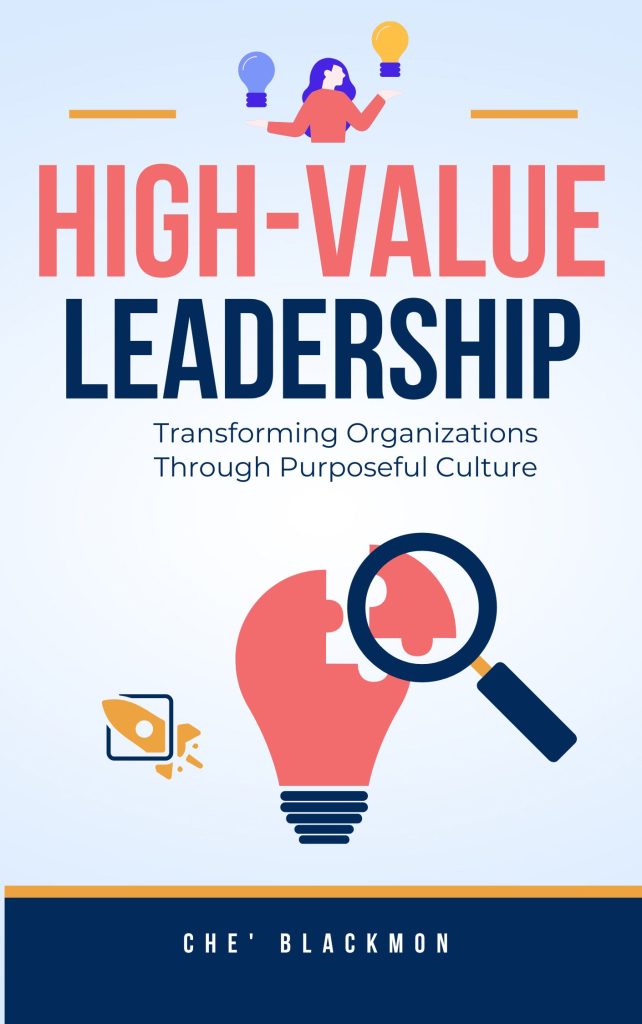
This cycle repeats across industries because organizations treat burnout as an individual problem rather than a systemic failure. As documented in “High-Value Leadership,” when environments lack purposeful culture, even the strongest leaders eventually break.
Understanding the Unique Burnout Factors for Black Women Leaders 📊
Research from Catalyst reveals that Black women leaders face distinct burnout accelerators:
The Performance Tax: Having to work twice as hard for half the recognition, with mistakes magnified and successes minimized.
The Representation Burden: Being expected to speak for all Black women, serve on every diversity committee, and mentor every Black employee—all as unpaid labor.
Code-Switching Exhaustion: The mental toll of constantly adjusting communication style, appearance, and behavior to fit white corporate norms.
Emotional Labor Overload: Managing others’ discomfort with their authority while suppressing their own emotions to avoid the “angry Black woman” stereotype.
Isolation Impact: Operating without peer support, authentic mentorship, or sponsors who understand their lived experience.
These factors compound daily workplace stressors, creating what researchers call “weathering”—accelerated aging from chronic stress exposure. Black women literally age faster in toxic leadership environments.
The Breakthrough Framework: From Surviving to Thriving 🚀
Creating environments where leaders thrive requires systematic transformation, not surface-level wellness programs. The framework involves four pillars:
Pillar 1: Psychological Safety as Non-Negotiable
Google’s Project Aristotle identified psychological safety as the top factor in team effectiveness. For Black women leaders, this means:
Creating Brave Spaces: Beyond safe spaces, brave spaces encourage truth-telling about systemic issues without retaliation.
Normalizing Vulnerability: When senior leaders model struggling, asking for help, and admitting mistakes, it gives permission for authentic leadership.
Protecting Boundaries: Respecting when Black women leaders say no to additional emotional labor or diversity work outside their core responsibilities.
There was a healthcare organization that instituted “Reality Rounds”—monthly sessions where leaders could share challenges without judgment. The first Black woman executive to admit struggling with burnout received support, not stigma. Within six months, turnover among women leaders dropped 40%.
Pillar 2: Redistributing the Leadership Load 💪
Traditional leadership models concentrate pressure on individual leaders. Thriving environments distribute leadership across teams.
Shared Leadership Models: Rotating leadership responsibilities based on strengths rather than hierarchy.
Collective Decision-Making: Moving from single-point accountability to team ownership of outcomes.
Support Infrastructure: Providing executive coaches, peer mentoring circles, and mental health resources as standard, not exceptional, support.
Administrative Relief: Removing non-essential tasks that drain leader energy without adding strategic value.
A tech startup implemented “Leadership Loops” where team members rotated through leadership roles monthly. Not only did burnout decrease, but innovation increased 35% as diverse perspectives shaped decisions.
Pillar 3: Measuring What Matters 📈
Most organizations measure leader performance but not leader wellbeing. Thriving environments track both.
Wellbeing Metrics:
- Energy levels and engagement scores
- Work-life integration satisfaction
- Psychological safety ratings
- Utilization of support resources
Environmental Health Indicators:
- Frequency of microaggressions reported and addressed
- Distribution of high-visibility assignments
- Participation in optional diversity work
- Speed of response to burnout signals
Early Warning Systems:
- Regular pulse surveys focused on stress levels
- Skip-level conversations about environmental factors
- Anonymous reporting channels for systemic issues
- Predictive analytics identifying burnout risk
As outlined in “Mastering a High-Value Company Culture,” what gets measured gets managed. Organizations serious about preventing burnout make wellbeing metrics as important as financial metrics.
Pillar 4: Systemic Barrier Removal 🔨
Individual resilience can’t overcome systemic obstacles. Thriving environments actively dismantle barriers.
Bias Interruption: Using structured processes for promotions, assignments, and recognition that reduce subjective bias.
Sponsorship Equity: Ensuring Black women leaders have sponsors with real power, not just mentors with good advice.
Meeting Reformation: Restructuring meetings to ensure all voices are heard, credited, and valued equally.
Flexibility Without Penalty: Offering flexible work arrangements without limiting advancement opportunities.
There was a financial services firm where Black women leaders consistently scored lowest on wellbeing surveys. Investigation revealed they were excluded from informal pre-meeting conversations where real decisions occurred. The solution? Eliminating pre-meetings and requiring all discussion happen in formal sessions. Leader satisfaction scores increased 50% within a quarter.

Current Trends Reshaping Leadership Environments 🌊
The Great Recalibration: Leaders are rejecting burnout culture, demanding environments that support whole-person thriving.
AI-Assisted Leadership: Technology that handles administrative tasks, freeing leaders for strategic work and human connection.
Radical Flexibility: Moving beyond remote work to truly flexible leadership models that accommodate different life stages and responsibilities.
Wellbeing as Performance Indicator: Companies recognizing that leader wellbeing directly correlates with organizational performance.
Collective Leadership Models: Shifting from heroic individual leadership to distributed, collaborative approaches.
Practical Strategies for Immediate Implementation ⚡
For Organizations:
Week 1: Assessment
- Conduct anonymous burnout assessment survey
- Review exit interview data for patterns
- Analyze demographic differences in burnout rates
- Map current support resources
Month 1: Quick Wins
- Institute “No Meeting Fridays” for deep work
- Create peer support circles for leaders
- Eliminate unnecessary reports and meetings
- Communicate that wellbeing matters
Quarter 1: Systematic Change
- Implement psychological safety training
- Restructure performance metrics to include wellbeing
- Provide executive coaching for all leaders
- Address identified systemic barriers
For Individual Leaders:
Boundary Setting Protocol:
- Identify your non-negotiables
- Communicate boundaries clearly
- Enlist support for maintaining them
- Model boundary respect for your team
Energy Management System:
- Map energy drains vs. energy sources
- Schedule high-stakes work during peak energy
- Build recovery time into your calendar
- Protect time for activities that restore you
Support Network Activation:
- Join or create a peer support group
- Secure an executive coach or therapist
- Build relationships with sponsors
- Connect with others who share your experience
The Breakthrough Difference 🌈
When environments support leader thriving, transformation accelerates:
Performance Impact: Organizations with thriving leaders see 23% higher profitability and 18% higher productivity.
Innovation Surge: Psychological safety increases innovation by 47% as leaders feel free to experiment.
Talent Magnetism: Companies known for supporting leader wellbeing attract top talent, especially from overlooked communities.
Cultural Transformation: Thriving leaders create thriving cultures, cascading wellbeing throughout the organization.
Sustainable Excellence: Instead of burning through leaders, organizations build sustainable engines of excellence.
Breaking Through: A Leader’s Story 💫
There was a Black woman CHRO at a manufacturing company experiencing severe burnout. She was ready to leave leadership entirely. Instead, her organization implemented the breakthrough framework:
- Hired an assistant to handle administrative tasks
- Created a peer coaching circle with other women executives
- Redistributed diversity work across all senior leaders
- Provided executive coaching focused on sustainable leadership
Within six months, her engagement scores improved 60%. More importantly, she developed three high-potential Black women leaders who saw leadership as sustainable, not sacrificial. Her breakthrough created pathways for others.
The Role of Inclusive Leadership Development 🎯
As detailed in “Rise & Thrive,” creating environments where Black women leaders thrive requires specific strategies:
Culturally Responsive Coaching: Coaches who understand the unique challenges and strengths of Black women leaders.
Affinity Networks: Spaces where Black women leaders can be authentic without code-switching.
Visible Pathway Development: Clear advancement routes that don’t require sacrificing identity or wellbeing.
Success Redefinition: Moving from “strong Black woman” mythology to sustainable, supported leadership.
Collective Power Building: Creating coalitions that share the load of systemic change.
Discussion Questions 💭
- What specific environmental factors contribute most to leadership burnout in your organization?
- How might redistributing leadership responsibilities improve both wellbeing and performance?
- What systemic barriers do traditionally overlooked leaders face that individual resilience can’t overcome?
- How would your organization change if leader wellbeing was valued equally with financial performance?
- What one change could you implement this week to move from burnout toward breakthrough?
Your Next Steps
Breakthrough isn’t about finding stronger leaders—it’s about creating stronger environments. Start by assessing your current environment honestly. Where does it create unnecessary stress? Where does it fail to support diverse leaders? What systems perpetuate burnout?
Then choose one pillar to strengthen. Small changes in environment can create dramatic shifts in leader wellbeing and performance. Remember: environments that support traditionally overlooked leaders become better for everyone.
The path from burnout to breakthrough isn’t individual—it’s collective. When we transform environments, we transform possibilities.
Ready to Create Your Breakthrough Environment?
Che’ Blackmon Consulting specializes in transforming leadership environments from burnout factories to breakthrough accelerators. We help organizations build cultures where all leaders—especially those traditionally overlooked—can thrive sustainably.
Our Environmental Transformation Services Include:
- Comprehensive burnout assessment and environmental analysis
- Breakthrough framework implementation
- Leadership wellbeing metric development
- Systemic barrier identification and removal
- Inclusive leadership development programs
- Sustainable excellence culture building
Transform your leadership environment from surviving to thriving.
📧 Email: admin@cheblackmon.com
📞 Phone: 888.369.7243
🌐 Website: cheblackmon.com
Because breakthrough happens when environments enable excellence, not demand exhaustion.
#LeadershipBurnout #PsychologicalSafety #BlackWomenInLeadership #WorkplaceWellbeing #InclusiveLeadership #CultureTransformation #ExecutiveBurnout #LeadershipDevelopment #DiversityAndInclusion #OrganizationalHealth #WomenInLeadership #SystemicChange #HighValueLeadership #WorkplaceCulture #LeadershipWellness