


By Che’ Blackmon, Founder & CEO, Che’ Blackmon Consulting | DBA Candidate in Organizational Leadership
Every January, the corporate world buzzes with the same predictable energy. Leadership teams gather in conference rooms, armed with fresh spreadsheets and ambitious goals. “This year will be different,” they declare. They vow to improve engagement scores by 5%. They promise better communication. They commit to diversity initiatives, again.
But here’s the uncomfortable truth: resolutions are tweaks. And tweaks don’t transform broken systems.
The question isn’t whether your organization needs to change. The question is whether you’re ready for a revolution. 🔥
The Resolution Trap: Why Small Fixes Fail
Resolutions feel safe. They’re manageable, measurable, and don’t threaten the status quo. A company might resolve to offer more training programs or update their mission statement. These actions create the illusion of progress without demanding real sacrifice or systemic examination.
Consider what happened at a mid-sized manufacturing company in Michigan. Leadership noticed their turnover rate had climbed to 32% over two years. Their resolution? Implement quarterly pizza parties and casual Fridays. Six months later, their turnover rate was 35%. The symptom was addressed; the disease was ignored.
The problem with resolutions is that they operate on the surface. They assume the foundation is solid and just needs a fresh coat of paint. But what happens when the foundation itself is cracked? What happens when the very culture that leadership is trying to improve is built on outdated hierarchies, unexamined biases, and systems that were never designed to support everyone equally?
This is where the resolution trap becomes particularly dangerous for traditionally overlooked populations. When a company resolves to “do better” on diversity without examining why Black women hold only 1.4% of C-suite positions across Fortune 500 companies, they’re not solving anything. They’re performing concern while maintaining the machinery of exclusion.
Revolution: When Systems Demand Dismantling
A revolution isn’t loud for the sake of noise. It’s loud because silence has been expensive. Revolutionary transformation in organizations means looking at the systems, policies, and cultural norms that have been operating unchallenged for decades and asking the hardest question: who does this serve?
True transformation requires three things that resolutions avoid: discomfort, investment, and time.
Discomfort means leadership must confront how their own actions, or inactions, have contributed to the current state. It means listening when a Black woman on your team explains why she doesn’t speak up in meetings, and then examining the culture that taught her silence was safer than advocacy.
Investment goes beyond budget line items. It’s the willingness to dismantle promotion processes that favor proximity to power over performance. It’s redesigning workflows to eliminate bias. It’s compensating people equitably, not based on negotiation skills that correlate with privilege.
Time acknowledges that decades of dysfunction won’t heal in a fiscal quarter. Revolutionary transformation operates on a timeline that makes CFOs uncomfortable. But sustainable change has never been efficient in the short term.
The Hidden Cost of Incremental Change
Organizations love incremental change because it feels productive without being disruptive. But incremental change operates on a dangerous assumption: that you have time.
You don’t.
Every day you delay transformation, you’re losing talent. Research from McKinsey shows that companies in the top quartile for racial and ethnic diversity are 35% more likely to have financial returns above their industry medians. Yet most organizations continue treating diversity as a compliance checkbox rather than a competitive advantage.
For Black women specifically, the cost of working in environments that offer resolutions instead of revolutions is measurable. Studies indicate that Black women experience more workplace microaggressions than any other demographic group. They’re simultaneously over-mentored and under-sponsored. They’re asked to lead diversity initiatives without compensation or career advancement. And when they leave, exhausted by the emotional labor of explaining why they deserve basic respect, companies respond with an exit interview and another resolution to “do better next year.”
The tragedy isn’t just individual. It’s organizational. Every talented Black woman who leaves takes with her institutional knowledge, unique perspectives, and leadership capacity that your company desperately needs. The incremental approach assumes you can afford to lose her. You can’t.
What Revolutionary Transformation Actually Looks Like
Revolutionary transformation doesn’t start with a strategic plan. It starts with truth telling.
A healthcare organization discovered this when their annual engagement survey revealed that their diversity initiatives were failing spectacularly. Instead of forming another committee, leadership did something radical: they listened. They brought in external facilitators and created brave spaces where employees could speak without fear of retaliation. What emerged was painful. Black and brown employees described feeling invisible despite being hypervisible. They explained how “culture fit” was code for “people who look and think like us.” They detailed how their ideas were dismissed until a white colleague repeated them.
The revolution began when leadership stopped defending themselves and started dismantling the systems that created these experiences.
They eliminated “culture fit” from hiring rubrics, replacing it with values alignment assessments that were standardized and blind to demographic data. They implemented transparent promotion criteria and conducted equity audits on compensation. They created sponsorship programs specifically designed to connect high-potential employees from underrepresented groups with decision makers. And they tied leadership bonuses to retention metrics for diverse talent, making culture transformation financially material.
This wasn’t a resolution. It was a revolution. And within 18 months, their voluntary turnover among Black and brown employees dropped by 43%.
The AI Revolution: Predictive vs. Reactive Culture Management
Here’s where the conversation gets uncomfortable for leaders who prefer resolutions: technology is making the cost of your inaction impossible to hide.
Traditional HR operates reactively. Someone quits, you conduct an exit interview, you discover there were warning signs you missed. By then, you’ve lost top talent and you’re scrambling to backfill critical roles. This reactive approach is expensive, disruptive, and entirely preventable.
AI-powered culture transformation platforms now exist that can predict employee turnover 3-6 months before it happens. These systems analyze patterns in engagement data, communication frequency, peer relationships, and work distribution to identify flight risks before they’ve even updated their LinkedIn profiles. This isn’t science fiction. This is the present reality for organizations willing to invest in revolution over resolution.
But here’s what makes this truly revolutionary: predictive analytics don’t just tell you who might leave. They tell you why. And when you layer demographic data onto these insights, you can finally see the patterns that have been invisible to leadership for decades.
You might discover that Black women in your organization disengage precisely 4-6 months after being passed over for promotion, even when their performance metrics exceed those of promoted peers. You might learn that your “open door policy” is only accessed by 12% of your workforce, and none of them are from underrepresented groups. You might realize that the managers you’ve been celebrating for high retention are actually hoarding talent and blocking career mobility.
This level of insight demands revolution. You can’t see these patterns and respond with a resolution to “communicate better.” You have to transform the systems that created the inequities in the first place.

The Black Woman’s Blueprint: From Overlooked to Indispensable
In “Rise & Thrive: A Black Woman’s Blueprint for Leadership Excellence,” I write about the unique positioning of Black women in corporate spaces. We are often the canaries in the coal mine. When organizational culture is toxic, we feel it first, most intensely, and with the least support. But this positioning also makes us uniquely qualified to lead revolutionary transformation.
Black women understand survival and excellence aren’t opposites; they’re requirements. We’ve learned to navigate systems that weren’t designed for us while still delivering exceptional results. We’ve mastered the exhausting dance of code switching, emotional regulation, and strategic visibility. And we’ve done it while being told our leadership style is “too aggressive” and our feedback is “too sensitive.”
This experience is not a deficit. It’s a competitive advantage.
Organizations that position Black women as strategic advisors on culture transformation, not just diversity spokespeople, unlock insights that homogeneous leadership teams will never access. They gain early warning systems for cultural dysfunction. They benefit from leadership styles that prioritize relationship building, collaborative problem solving, and stakeholder management across difference.
But this only happens when organizations choose revolution over resolution. It happens when Black women are compensated equitably for the additional labor of translating cultural dynamics to leadership. It happens when their career trajectories are protected and accelerated, not stalled because they’re “so valuable” in their current roles. It happens when their leadership isn’t questioned more intensely than their white counterparts simply because their approach differs from legacy norms.
The High-Value Leadership Framework: Three Pillars of Revolution
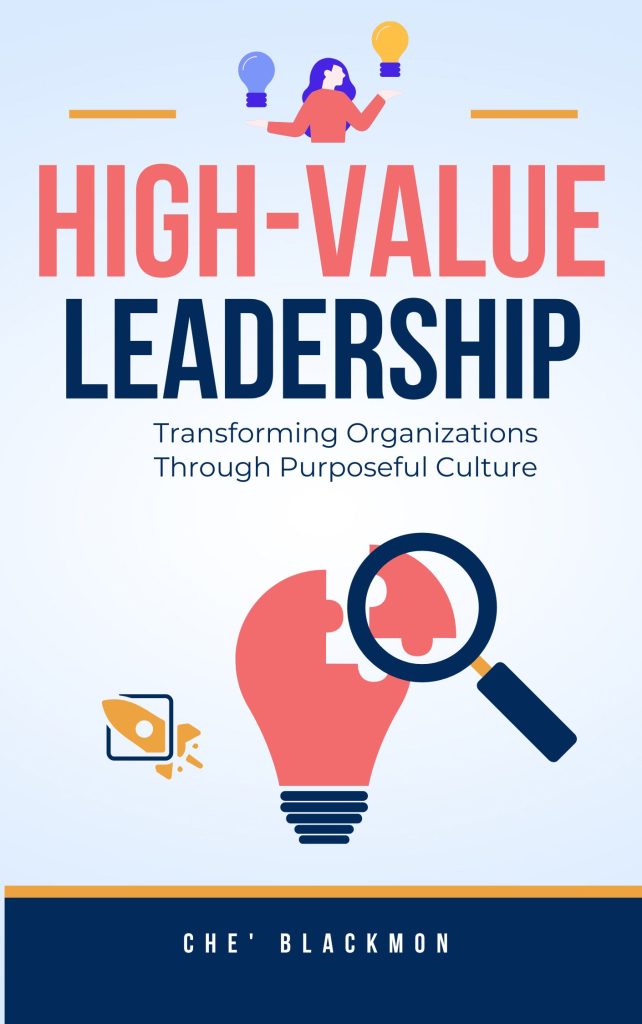
In “High-Value Leadership: Transforming Organizations Through Purposeful Culture,” I outline the framework that separates transformational organizations from those trapped in cycles of incremental improvement. The three pillars are purpose, people, and performance. But revolutionary leadership interprets these pillars differently than traditional management.
Purpose isn’t a mission statement printed on conference room walls. It’s the north star that guides every decision, policy, and promotion. Revolutionary organizations define purpose in terms of impact, not just profit. They ask: who benefits from our success? Who is harmed by our practices? Whose voices are missing from our strategy discussions?
When purpose is clearly defined and courageously pursued, it becomes the filter for culture transformation. You can evaluate every system, norm, and tradition by asking: does this serve our purpose? If your purpose includes creating opportunity and your promotion process favors people who “look like leaders,” you have a contradiction that demands revolution, not resolution.
People are not resources to be managed. They are humans with complex identities, competing demands, and unlimited potential when properly supported. Revolutionary organizations reject the idea that people should check their identities at the door. Instead, they create cultures where authenticity is an asset, not a liability.
This means Black women don’t have to choose between being respected and being themselves. It means working mothers don’t apologize for boundaries. It means employees with disabilities aren’t praised for “overcoming” but are supported systemically. When you revolutionize your approach to people, you stop asking individuals to adapt to broken systems and start adapting systems to honor human dignity.
Performance in revolutionary organizations is measured differently. Yes, productivity matters. Profitability matters. But performance is also evaluated by who thrives, who advances, and who feels psychologically safe enough to innovate without fear of failure.
There was a tech company that measured performance solely by lines of code written and projects completed. Their top performer by those metrics was a senior developer who consistently hit deadlines but whose team had the highest turnover in the organization. In exit interviews, team members described a culture of fear, hoarded knowledge, and career sabotage. When leadership expanded their definition of performance to include team health and knowledge transfer, that “top performer” was revealed as a cultural liability. The revolution came when they restructured incentives to reward collaborative excellence over individual heroics.
From Theory to Practice: Actionable Revolution
Revolutionary transformation requires a roadmap. Here’s where organizations should begin:
Conduct a Culture Audit with Teeth 💪
Anonymous surveys aren’t enough. Bring in external experts who will tell you uncomfortable truths. Interview employees at every level, with particular attention to those who are most vulnerable to cultural dysfunction. Analyze demographic data across hiring, promotion, compensation, and attrition. Identify gaps between your stated values and lived reality. Then publish the findings internally, without defensiveness or excuses.
Redesign Systems, Not Symptoms
If your compensation analysis reveals pay inequities, don’t just adjust the salaries. Investigate how those inequities developed in the first place. Was it negotiation-based starting salaries that disadvantaged women? Was it subjective performance reviews that allowed bias to flourish? Was it lack of transparency around promotion criteria? Fix the system that created the symptom.
Invest in Sponsorship, Not Just Mentorship
Mentorship is advice. Sponsorship is advocacy. Black women are over-mentored and under-sponsored because mentorship is comfortable and sponsorship is political. Revolutionary organizations formalize sponsorship programs that connect high-potential diverse talent with leaders who have actual power to open doors, advocate for promotions, and provide high-visibility opportunities.
Make Culture Transformation Financially Material
What gets measured gets managed. What gets compensated gets prioritized. Tie leadership bonuses and evaluations to culture metrics like retention of diverse talent, equity in promotion rates, and employee engagement scores disaggregated by demographic groups. When leaders’ compensation depends on culture transformation, revolutions happen quickly.
Create Accountability Structures
Revolutionary transformation dies without accountability. Establish a Culture Transformation Council with real authority, diverse representation, and direct reporting lines to the CEO. Give them budget, decision-making power, and protection from retaliation. Publish quarterly updates on culture metrics. Celebrate wins publicly and address failures transparently.
The ROI of Revolution: Why This Matters Beyond Morality
Some leaders will read this and think: “This sounds expensive and disruptive.” They’re right. Revolution is both. But the cost of maintaining the status quo is higher.
Organizations lose an estimated 1.5 to 2 times an employee’s annual salary every time someone quits. For a company with 100 employees earning an average of $60,000 annually, with a 20% turnover rate, that’s $1.8 to $2.4 million annually in turnover costs alone. Now consider that turnover rates for underrepresented groups are typically higher than for their majority counterparts. The financial case for revolution writes itself.
But the ROI extends beyond retention. Companies with more diverse leadership teams report 19% higher innovation revenues according to BCG research. Organizations with inclusive cultures are twice as likely to meet or exceed financial targets. Teams with psychological safety produce better business outcomes, faster problem solving, and higher quality decision making.
The question isn’t whether you can afford to choose revolution. It’s whether you can afford not to.
A Call to Courageous Leadership 🚀
Revolutionary transformation requires courage. It requires leaders willing to admit that their “best practices” might be someone else’s barriers. It requires vulnerability to hear feedback that challenges your self-perception. It requires investment without guaranteed return timelines. And it requires persistence when the discomfort tempts you to retreat to familiar resolutions.
But here’s what revolution offers: organizations where talent isn’t trapped or lost but unleashed. Cultures where Black women don’t have to choose between authenticity and advancement. Workplaces where everyone’s full humanity is welcomed, not just tolerated. And businesses that thrive not despite their commitment to equity, but because of it.
As I write in “Mastering a High-Value Company Culture,” culture isn’t what you say in town halls or print in handbooks. Culture is what you do when decisions are hard, stakes are high, and no one is watching. Revolutionary organizations don’t just talk about transformation. They fund it, staff it, protect it, and embed it into every system and process until equity isn’t an initiative but an outcome.
The choice between resolution and revolution isn’t just a strategic decision. It’s a moral one. And the leaders who choose revolution won’t just transform their organizations. They’ll transform industries, communities, and the entire landscape of what’s possible when corporate America finally lives up to its stated values.
Discussion Questions & Next Steps 💭
Reflect on these questions individually or discuss with your leadership team:
- What patterns of turnover exist in your organization when disaggregated by race and gender? What do those patterns reveal about your culture?
- How many of your current “improvement initiatives” are resolutions (surface fixes) versus revolutionary changes (system redesigns)?
- Who in your organization is doing the emotional labor of explaining why equity matters? How are they being compensated and protected?
- What would it cost your organization financially if every Black woman currently employed decided to leave in the next six months? What would it cost culturally?
- What is one system, policy, or practice you could eliminate tomorrow because it no longer serves your stated purpose and actively harms psychological safety?
Ready to Choose Revolution? ✨
Che’ Blackmon Consulting specializes in AI-powered culture transformation for organizations ready to move beyond incremental change. We help Michigan companies with 20-200 employees build high-value cultures where everyone thrives, not just survives.
Our services include:
- Comprehensive culture audits with actionable roadmaps
- AI-powered predictive analytics to identify flight risks before turnover happens
- Leadership development rooted in the High-Value Leadership framework
- System redesign for equitable hiring, promotion, and compensation practices
- Fractional HR leadership for organizations in transition
Let’s start your revolution.
📧 admin@cheblackmon.com
📞 888.369.7243
🌐 cheblackmon.com
Because your people deserve more than another resolution. They deserve transformation.
#CultureTransformation #HighValueLeadership #OrganizationalChange #DiversityAndInclusion #BlackWomenInBusiness #LeadershipDevelopment #HRTransformation #EmployeeRetention #AIinHR #WorkplaceCulture #DEI #CorporateCulture #TransformationalLeadership #BlackWomenLeaders #TalentRetention #OrganizationalLeadership #ChangeManagement #InclusiveLeadership #CompanyCulture #HRStrategy #BusinessTransformation #EquityInTheWorkplace #PredictiveAnalytics #FutureOfWork #LeadershipExcellence