The Skills Gap Reality: What Leaders Need for 2026 🚀

Why the leadership capabilities that got you here won’t get you there—and what to develop instead


The manufacturing plant manager had twenty-three years of experience. He knew production systems intimately, could diagnose equipment issues by sound alone, and had relationships with every supplier in the region. By traditional measures, he was an exceptional leader.

Yet his team was hemorrhaging talent. Younger workers stayed an average of fourteen months before leaving. When HR finally conducted exit interviews systematically, the feedback was consistent: “He manages machines better than he manages people.”

This leader possessed deep technical expertise—the skills that earned him promotion in 2010. But the leadership capabilities required in 2026 are fundamentally different. Technical mastery alone no longer defines effective leadership. The skills gap isn’t just about workers lacking capabilities. It’s about leaders lacking the skills their organizations desperately need for what’s coming next.

The Skills Gap Nobody’s Talking About 🔍

Most discussions about skills gaps focus on frontline workers: not enough data analysts, insufficient cybersecurity professionals, inadequate AI literacy. These gaps are real and consequential.

But there’s a parallel skills gap in leadership that’s equally urgent and far less acknowledged. Leaders promoted for their technical expertise, operational knowledge, or functional mastery now face challenges their previous success didn’t prepare them for: leading through ambiguity, managing distributed teams, navigating rapid technological change, building inclusive cultures, developing talent in areas they’ve never worked, and making decisions with incomplete information in compressed timeframes.

The leadership playbook from 2015—or even 2020—is already obsolete. The playbook for 2026 requires capabilities many current leaders haven’t developed because they’ve never needed them before.

A technology company discovered this gap the expensive way. They promoted their best software engineers into management roles, assuming technical excellence would translate to leadership effectiveness. Within eighteen months, they had a retention crisis. Their most talented engineers were leaving, citing “terrible managers who treat us like code to be debugged rather than people to be developed.”

The promoted engineers weren’t failing because they were bad people. They were failing because they possessed 2015 skills in roles requiring 2026 capabilities.

Understanding the 2026 Leadership Landscape 🌐

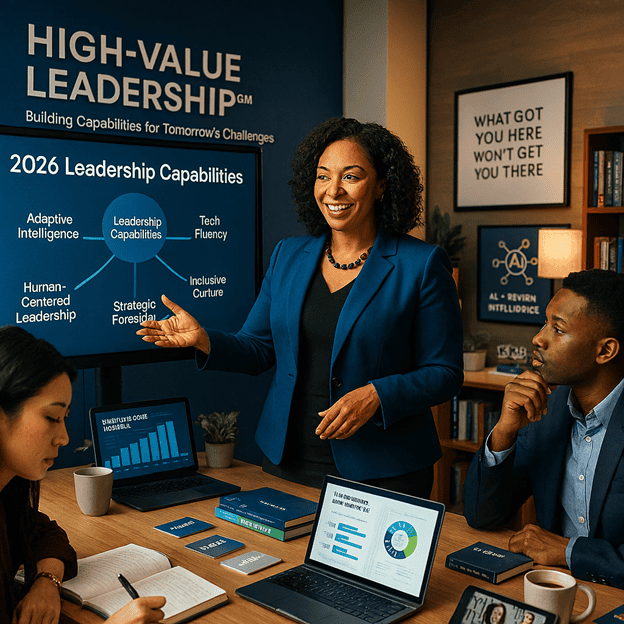
As I discuss in High-Value Leadership: Transforming Organizations Through Purposeful Culture, the context in which leadership happens has transformed fundamentally. Leaders who succeed in 2026 will master capabilities that fall into five essential categories: adaptive intelligence, human-centered leadership, technological fluency, inclusive culture-building, and strategic foresight.

These aren’t soft skills or nice-to-haves. They’re competitive necessities. Organizations led by people who’ve developed these capabilities will outperform, out-innovate, and out-recruit those that haven’t.

What makes 2026 different?

Pace of change: The time between “new technology emerges” and “it fundamentally changes how we work” has collapsed from years to months. Leaders must learn, adapt, and guide their teams through continuous transformation rather than managing stable operations punctuated by occasional change.

Distributed everything: Remote and hybrid work aren’t temporary responses to a pandemic—they’re permanent features of the employment landscape. Leadership that depends on physical presence and direct observation no longer functions.

Talent power shift: In many sectors, talented people have more options than available positions. Leaders can’t rely on authority or scarcity to retain people. They must create environments people actively choose rather than grudgingly tolerate.

Transparency and accountability: Social media, employer review sites, and internal communication platforms mean leadership behavior becomes visible immediately. Toxic leaders who once operated with impunity now get exposed and held accountable.

Demographic transformation: The workforce is increasingly diverse across every dimension—race, gender, age, nationality, neurodiversity, work style preferences. Leadership approaches designed for homogeneous teams fail spectacularly with diverse ones.

The Five Critical Leadership Capability Clusters for 2026 🎯

1. Adaptive Intelligence: Learning at the Speed of Change 🧠

Adaptive intelligence is the capacity to learn quickly, unlearn outdated approaches, and apply new knowledge in unfamiliar contexts. It’s not about having all the answers—it’s about asking better questions and updating your thinking as new information emerges.

Traditional leadership rewarded confidence and decisive action. Adaptive intelligence requires something different: intellectual humility, curiosity, and comfort with uncertainty.

There was a healthcare organization whose senior leadership team averaged twenty-six years of industry experience. Their deep expertise had always been their competitive advantage. Then telehealth, AI diagnostics, and patient data analytics transformed their industry in thirty-six months.

Their expertise became a liability. They kept trying to apply solutions that worked in 2018 to problems that didn’t exist until 2024. Meanwhile, competitors with less experience but greater adaptability captured market share by experimenting, learning, and iterating rapidly.

Adaptive intelligence in practice:

Questioning assumptions: Regularly examining whether your mental models still match reality. The manufacturing leader who assumes “people want stability and clear hierarchy” might miss that younger workers actually value autonomy and purpose over predictability.

Learning from failure: Treating mistakes as data rather than disasters. Creating psychological safety where failed experiments generate insights rather than punishment.

Seeking diverse perspectives: Actively gathering input from people with different backgrounds, experiences, and viewpoints—especially those who see things you don’t.

Updating beliefs: Being willing to say “I was wrong” or “my thinking has changed” without viewing it as weakness. Adaptive leaders change their minds when evidence warrants it.

Experimenting intelligently: Testing new approaches on small scales, learning from results, and adjusting before full implementation.

As I outline in Mastering a High-Value Company Culture, high-value cultures are built by leaders who model continuous learning rather than pretending to know everything.

2. Human-Centered Leadership: Beyond Managing Productivity 💚

Human-centered leadership recognizes that people aren’t resources to be optimized—they’re complex humans with needs, aspirations, challenges, and lives outside work. This capability involves understanding motivation, building psychological safety, developing talent, and creating conditions where people can contribute their best work.

The shift here is profound. Industrial-era leadership focused on extracting maximum output. Knowledge-era leadership requires cultivating discretionary effort, creativity, and engagement—things that can’t be commanded or extracted.

A financial services company had always measured manager effectiveness through productivity metrics: transactions processed, sales closed, projects completed. These metrics showed their managers were highly effective.

Then they started measuring differently: employee engagement, retention, promotion rates of team members, innovation from teams, psychological safety scores. Under these measures, many “effective” managers looked terrible. They hit numbers by burning people out, micromanaging relentlessly, and creating fear-based cultures that drove away top talent.

Human-centered leadership capabilities:

Psychological safety creation: Building environments where people can speak up, take risks, admit mistakes, and challenge ideas without fear of humiliation or retaliation. Research by Dr. Amy Edmondson shows this is the foundation of high-performing teams.

Coaching orientation: Shifting from “telling people what to do” to “asking questions that help people think through problems themselves.” Developing people rather than just directing them.

Emotional intelligence: Understanding your own emotions and their impact, reading others’ emotional states accurately, and managing interpersonal dynamics skillfully. This isn’t touchy-feely softness—it’s strategic leadership capability.

Inclusive decision-making: Involving people in decisions that affect them, considering diverse perspectives before concluding, and explaining reasoning transparently. People support what they help create.

Work-life integration support: Recognizing that people’s capacity to contribute at work is affected by what’s happening in their lives, and creating flexibility that allows people to manage both effectively.

3. Technological Fluency: Leading in an AI-Augmented World 🤖

Leaders in 2026 don’t need to code (though it doesn’t hurt). They need sufficient technological fluency to understand how technology can enhance their operations, make informed decisions about technology investments, and lead teams through technological transformation.

This gap is particularly acute among leaders who built their careers before digital transformation accelerated. Many lack basic understanding of AI, automation, data analytics, or digital workflows—yet they’re making strategic decisions about these technologies.

There was a manufacturing company whose executive team averaged fifty-four years old with an average of twenty-eight years in the industry. When their technology director proposed implementing predictive maintenance AI, leadership dismissed it as “not how we do things here.”

A competitor implemented similar technology, reduced unplanned downtime by 67%, and captured contracts the first company had held for decades. By the time leadership recognized their mistake, they’d lost both market position and their best young engineers, who left for companies “actually living in the 21st century.”

Technological fluency for leaders:

Understanding AI capabilities and limitations: Knowing what AI can do well (pattern recognition, prediction, automation of routine tasks) and what it can’t (true creativity, ethical reasoning, complex human judgment). Leaders need enough knowledge to ask intelligent questions about AI proposals.

Data literacy: Understanding how to interpret data, recognize patterns, question methodology, and make data-informed (not data-driven) decisions. Leaders who can’t read analytics dashboards effectively are flying blind.

Automation strategy: Identifying which work should be automated to free humans for higher-value activities versus which work requires human judgment, creativity, or relationship-building.

Cybersecurity awareness: Understanding basic security principles, recognizing social engineering attempts, and creating security-conscious cultures. Leaders often represent the weakest link in cybersecurity.

Digital communication effectiveness: Leading effectively through video, chat, asynchronous communication, and collaboration platforms. Physical presence leadership skills don’t automatically translate.

4. Inclusive Culture-Building: Creating Belonging for Everyone 🌈

Inclusive culture-building is the capability to create environments where diverse people feel genuinely valued, can contribute authentically, and have equitable opportunities to succeed and advance. This goes far beyond diversity metrics or compliance training.

As I detail in Rise & Thrive: A Black Woman’s Blueprint for Leadership Excellence, Black women and other marginalized groups navigate corporate environments that weren’t designed with them in mind. Leaders who can’t recognize and address this reality will lose diverse talent to competitors who can.

The business case is unambiguous: McKinsey research consistently shows that companies with diverse leadership teams outperform homogeneous ones on profitability, innovation, and decision quality. Yet many organizations struggle to translate diversity into actual inclusion—and the gap shows up in their results.

There was a technology company that proudly announced they’d achieved 40% women in technical roles—well above industry average. Leadership celebrated their diversity success.

Then women started leaving at twice the rate of men. Exit interviews revealed that while the company recruited women effectively, it failed to create inclusive culture. Women reported being talked over in meetings, having ideas attributed to male colleagues, facing stricter performance standards, and being excluded from informal networks where real decisions happened.

The company had achieved representation without inclusion—and it cost them dearly in turnover, reputation, and lost innovation.

Inclusive culture-building capabilities:

Recognizing bias patterns: Understanding how unconscious bias shows up in decisions about hiring, promotion, recognition, project assignment, and performance evaluation. Leaders who can’t see bias can’t address it.

Creating equitable systems: Designing processes that produce fair outcomes rather than relying on “treating everyone the same” in systems built around dominant group norms.

Amplifying marginalized voices: Actively ensuring that people who are often overlooked or talked over get heard. This means intervening when interruptions happen, attributing ideas correctly, and creating multiple pathways for input.

Addressing microaggressions: Recognizing and interrupting subtle behaviors that communicate “you don’t belong here”—whether race-based, gender-based, or targeting other identities.

Sponsoring diverse talent: Using your organizational power to advocate for people who lack access to informal networks and opportunities. Mentorship is nice; sponsorship advances careers.

Cultural intelligence: Understanding how different cultural backgrounds shape communication styles, work approaches, and definitions of professionalism. What reads as “confidence” in one cultural context might be considered arrogant in another.

5. Strategic Foresight: Seeing Around Corners 🔮

Strategic foresight is the capability to anticipate emerging trends, understand their potential implications, and position your organization to capitalize on opportunities while mitigating risks. It’s pattern recognition applied to the future.

This doesn’t mean predicting the future accurately—that’s impossible. It means developing multiple scenarios, staying attuned to weak signals that suggest directional change, and maintaining strategic flexibility to pivot as circumstances evolve.

Leaders promoted for operational excellence often struggle here. They’re brilliant at optimizing current operations but less skilled at questioning whether current operations will remain relevant.

Strategic foresight capabilities:

Trend scanning: Systematically monitoring developments in technology, demographics, regulation, customer preferences, and competitive landscape. Not just reading industry publications but connecting dots across domains.

Scenario planning: Developing multiple plausible future scenarios and stress-testing strategies against each. This builds organizational agility and reduces vulnerability to unexpected disruption.

Systems thinking: Understanding how different parts of complex systems interact, recognizing unintended consequences, and identifying leverage points for intervention.

Risk intelligence: Distinguishing between risks worth taking and risks that could destroy the organization. Understanding that avoiding all risk is itself risky in changing environments.

Strategic resource allocation: Balancing investment between optimizing current operations and building capabilities for future needs. Leaders often over-invest in present while under-investing in future.
The Traditionally Overlooked: Barriers Facing Black Women Leaders 🚧

Black women face compounded barriers in developing and demonstrating leadership capabilities. Research by Catalyst and others consistently shows they receive less developmental feedback, fewer stretch assignments, less executive sponsorship, and more scrutiny for mistakes than white colleagues.

This creates a vicious cycle: Black women get fewer opportunities to develop and demonstrate emerging leadership capabilities, then face criticism for lacking capabilities they’ve been systematically denied opportunities to build.

Specific barriers affecting Black women’s leadership development:

The “Prove It Again” Penalty: Black women must repeatedly demonstrate competence that’s assumed in white colleagues. A white male leader who proposes an innovative approach is “visionary.” A Black woman proposing the same thing must provide extensive justification and still faces skepticism.

Exclusion from Development Opportunities: High-potential programs, executive coaching, stretch assignments, and other development opportunities disproportionately go to people who “look like leaders”—which often means white men. Black women get excluded from the very experiences that build leadership capabilities.

Style Policing: Black women face impossible standards around leadership presence and communication. Be too direct and you’re “aggressive.” Too collaborative and you “lack executive presence.” The feedback focuses on style rather than capability development.

Lack of Sponsorship: Black women are often over-mentored but under-sponsored. They receive advice but not advocacy. Development requires someone with organizational power actively creating opportunities—and Black women disproportionately lack sponsors.

Invisible Labor Tax: Black women often shoulder enormous amounts of DEI work, cultural translation, and emotional labor supporting other people of color—without recognition, compensation, or time to develop other leadership capabilities.

There was a financial services company where a talented Black woman consistently received performance reviews praising her “potential” while white male peers with equivalent performance received stretch assignments, executive coaching, and promotions. After five years, she’d been “high potential” without ever receiving opportunities to develop that potential. She left for a competitor who actually invested in her development.

Her departure cost the company a future executive—and they never understood why.

Closing Your Leadership Skills Gap: A Development Framework 📚

Step 1: Honest Self-Assessment (Month 1)

Most leaders overestimate their capabilities in areas where they’re actually weak. Effective development starts with honest assessment.

Assessment methods:

  • 360-degree feedback from direct reports, peers, and supervisors
  • Leadership competency assessments focused on 2026 capabilities
  • Anonymous team surveys about psychological safety, inclusion, and development
  • Review of your team’s outcomes: retention, engagement, promotion rates, innovation metrics
  • Comparison of your self-perception against how others experience your leadership

Critical questions:

  • How comfortable am I with ambiguity and rapid change?
  • Do my direct reports feel psychologically safe challenging my ideas?
  • Can I articulate how AI might transform our industry in the next three years?
  • What percentage of my team represents diverse backgrounds, and what’s their experience?
  • When did I last significantly change my mind about something important?

Step 2: Prioritized Development Planning (Months 2-3)

You can’t develop everything simultaneously. Prioritize based on:

  • Urgency: Which gaps create immediate risks or missed opportunities?
  • Leverage: Which capabilities, once developed, enable multiple other improvements?
  • Organizational need: Which capabilities does your organization most urgently need from leadership?

Create a development plan that includes:

  • Specific capabilities to develop
  • Measurable indicators of progress
  • Learning methods (formal training, coaching, experiential learning, peer learning)
  • Timeline and milestones
  • Resources required
  • Accountability mechanisms

Step 3: Multi-Modal Learning (Ongoing)

Different capabilities require different development approaches:

Formal learning: Courses, certifications, workshops, conferences. Best for: technical knowledge, frameworks, research-based insights. Limitation: doesn’t automatically translate to practical application.

Experiential learning: Stretch assignments, rotations, projects outside your expertise. Best for: building confidence, applying concepts in real situations, discovering what you don’t know. Limitation: requires organizational support and tolerance for learning mistakes.

Coaching: One-on-one work with executive coaches who provide accountability, perspective, and targeted development. Best for: behavioral change, overcoming specific challenges, developing self-awareness. Limitation: expensive and requires leader’s genuine commitment.

Peer learning: Action learning sets, leadership cohorts, peer consultation groups. Best for: learning from others facing similar challenges, building support networks, gaining diverse perspectives. Limitation: quality depends on peer group composition and facilitation.

Feedback integration: Regular solicitation and integration of feedback from team, peers, and supervisors. Best for: understanding impact, tracking progress, course-correcting quickly. Limitation: requires psychological safety and honest feedback culture.

Step 4: Practice with Feedback Loops (Months 4-12)

Developing capabilities requires deliberate practice—not just doing things, but doing things with attention to improvement and incorporating feedback.

For adaptive intelligence: Take on a project outside your expertise area. Document your assumptions, test them, update your thinking as you learn. Ask someone to observe and provide feedback on how you approach unfamiliar challenges.

For human-centered leadership: Implement weekly one-on-ones focused on development rather than status updates. Ask team members what they need to succeed. Solicit feedback on your effectiveness as a coach and developer.

For technological fluency: Commit to understanding one emerging technology deeply each quarter. Read beyond surface-level articles. Talk to technical experts. Experiment with tools yourself.

For inclusive culture-building: Track your meeting dynamics. Who speaks? Who gets interrupted? Whose ideas get implemented? Intervene when you notice patterns. Seek feedback from marginalized team members about their experience.

For strategic foresight: Develop quarterly “what if” scenarios with your team. Monitor trends systematically. Review your predictions quarterly to calibrate your pattern recognition.

Step 5: Measure Progress and Adjust (Quarterly Reviews)

Development without measurement is hope, not strategy.

Leading indicators (behaviors):

  • Frequency of seeking feedback and diverse perspectives
  • Time spent in development activities versus operational firefighting
  • Quality of questions asked in leadership meetings
  • Interventions when bias or exclusion surfaces
  • Experiments attempted and learning documented

Lagging indicators (outcomes):

  • Team engagement and retention trends
  • Diversity in promotions and high-profile assignments from your teams
  • Innovation and problem-solving quality
  • Feedback from 360 assessments over time
  • Your team’s capability development and advancement

Case Study: Manufacturing Leader’s Transformation Journey 🏭

A plant manager at a Michigan automotive supplier had built his career on technical expertise and operational excellence. He knew every machine, every process, every efficiency metric. His plant ran like clockwork.

But his turnover was 31%—nearly double the company average. His engagement scores were consistently the lowest in the organization. His team delivered results through compliance, not commitment.

When confronted with this data, his initial response was defensive: “People are too sensitive now. When I came up, you just did your job.”

The wake-up moment: His best engineer—a Black woman with remarkable talent—resigned to join a competitor. In her exit interview, she said something that stopped him: “You’re brilliant with machines. But you’ve never once asked me what I want to learn, where I want to grow, or what challenges I’m facing. I’m not a machine to be optimized.”

He could have dismissed this feedback. Instead, it cracked something open. He realized his leadership skills were fifteen years obsolete.

His development journey:

Months 1-3: Assessment and Planning

  • 360-degree feedback (painful but illuminating)
  • Engagement with executive coach
  • Reading: leadership books focused on human-centered approaches
  • Honest conversations with HR about his gaps
  • Development plan focusing on human-centered leadership and inclusive culture-building

Months 4-9: Active Development

  • Weekly one-on-ones with direct reports focused on their development, not just status
  • Deliberate practice asking questions instead of giving answers
  • Attendance at workshop on unconscious bias and inclusive leadership
  • Monthly meetings with diverse employees to understand their experience
  • Feedback solicitation: “How am I doing as your leader? What should I do differently?”

Months 10-18: Integration and Refinement

  • Implementation of team psychological safety practices
  • Sponsorship of two high-potential women of color for leadership development
  • Redesign of meeting practices to ensure equitable participation
  • Regular “learning out loud” with team about his development journey
  • Peer coaching arrangement with another leader working on similar development

Results after 18 months:

  • Turnover dropped from 31% to 14%
  • Engagement scores increased by 34 percentage points
  • His plant became preferred assignment for early-career engineers
  • Three team members promoted to leadership roles (including two women of color)
  • Plant productivity increased 11% as engagement drove discretionary effort

Most significantly: He changed from someone who managed machines that happened to involve people to someone who developed people who happened to work with machines.

His technical expertise remained valuable. But he’d added the human-centered and inclusive leadership capabilities required for 2026.

The Organizational Responsibility: Creating Development Infrastructure 🏢

Individual leader development is necessary but insufficient. Organizations must create infrastructure that supports widespread leadership capability building.

Essential organizational elements:

Leadership competency models aligned with 2026 needs: Update what you evaluate and promote. If your leadership competencies were written in 2010, they’re obsolete. Explicitly include adaptive intelligence, human-centered leadership, technological fluency, inclusive culture-building, and strategic foresight.

Equitable access to development: High-potential programs, executive coaching, stretch assignments, and other development opportunities must be distributed equitably across demographics. Audit your development investments by race and gender. Address disparities.

Psychological safety for learning: Leaders can’t develop new capabilities if admitting gaps or making learning mistakes threatens their careers. Create cultures where development is expected and supported rather than viewed as weakness.

Time and resources for development: If you claim leadership development is important but don’t allocate time and budget, you’re lying. Leaders need protected time for learning and resources for development activities.

Accountability for capability building: Include leadership development in performance evaluations and promotion decisions. Leaders should be evaluated on their own development and their effectiveness developing others.

Diverse leadership representation: People need to see leadership that looks like them to envision themselves in leadership. Homogeneous leadership teams signal who belongs and who doesn’t.

Research-Backed Best Practices 📊

Organizations successfully closing leadership skills gaps share common practices:

Continuous learning culture: Deloitte research shows that organizations with strong learning cultures are 92% more likely to innovate and 52% more productive. Leadership development isn’t episodic training—it’s embedded in organizational DNA.

Coaching and mentorship systems: Research by the International Coach Federation demonstrates that organizations with robust coaching cultures report stronger financial performance and leadership bench strength.

Action learning approaches: Studies by the Center for Creative Leadership show that experiential learning—applying concepts in real situations with coaching and feedback—produces more lasting behavioral change than classroom training alone.

Diverse development cohorts: Harvard Business Review research indicates that diverse peer learning groups produce better outcomes than homogeneous ones. Different perspectives enhance everyone’s learning.

Measurement and iteration: Organizations that systematically measure development outcomes and adjust approaches based on data achieve better results than those relying on anecdotal evidence.

Common Development Pitfalls to Avoid ⚠️

Assuming technical expertise translates to leadership capability: Your best engineer, salesperson, or analyst may not be your best leader. Promote based on leadership capability, not just functional excellence.

One-and-done training mentality: Sending leaders to a workshop doesn’t develop capabilities. Development requires sustained effort, practice, feedback, and refinement over time.

Ignoring systemic barriers: Individual development can’t overcome organizational systems that prevent capability application. If you develop inclusive leadership capabilities but your promotion system remains biased, nothing changes.

Treating development as remediation: Development should be positioned as investment in high-potential leaders, not punishment for deficiency. The best athletes have coaches; so should the best leaders.

Neglecting the middle: Organizations often focus development resources on senior executives or high-potentials while neglecting mid-level managers who have enormous impact on culture and operations.

Failing to address toxic high performers: Leaders who deliver results through toxic methods teach everyone that outcomes matter more than how you achieve them. No amount of development for others overcomes this cultural message.

Moving Forward: Your Leadership Development Action Plan 🎯

Within 30 Days:

  1. Complete honest self-assessment using 360 feedback and team surveys
  2. Identify your top three capability gaps for 2026 leadership
  3. Research development resources (coaches, programs, learning cohorts)
  4. Allocate time and budget for sustained development
  5. Share development commitment with your team to create accountability

Within 90 Days:

  1. Engage coach or development partner for sustained support
  2. Begin one significant experiential learning opportunity
  3. Establish feedback mechanisms to track progress
  4. Join peer learning group focused on 2026 leadership capabilities
  5. Implement one new practice in each of your development areas

Within One Year:

  1. Complete formal assessment of progress against development goals
  2. Document learning and share with others to reinforce integration
  3. Sponsor or mentor others in their development journey
  4. Advocate for organizational investment in leadership capability building
  5. Set next-level development goals for continued growth

Discussion Questions for Leadership Teams 💭

  1. If we’re honest, which 2026 leadership capabilities are most lacking in our organization? What’s the cost of this gap?
  2. How equitably are development opportunities distributed across our leadership population? What patterns emerge when we disaggregate by demographics?
  3. What leadership capabilities did we value in 2015 that may actually be liabilities in 2026? What sacred cows do we need to slaughter?
  4. How does our promotion process account for 2026 leadership capabilities versus legacy technical or operational skills?
  5. What barriers prevent our diverse talent—particularly Black women and other marginalized groups—from accessing development opportunities and demonstrating leadership capability?
  6. What percentage of our leadership development resources go toward capability building versus remediation? Should this balance shift?
  7. If we developed every leader’s adaptive intelligence, human-centered leadership, technological fluency, inclusive culture-building, and strategic foresight—what would become possible for our organization?

Next Steps: Partner with Che’ Blackmon Consulting for Leadership Capability Building ✨

The skills gap in leadership is real, urgent, and solvable. But it requires honest assessment, sustained development, and organizational commitment to building capabilities that most leaders haven’t needed until now.

Che’ Blackmon Consulting offers:

Leadership Capability Assessments: Comprehensive evaluation of individual and organizational leadership capabilities aligned with 2026 requirements, including 360-degree feedback and team effectiveness measures.

Executive Coaching: One-on-one coaching focused on developing adaptive intelligence, human-centered leadership, inclusive culture-building, and strategic foresight capabilities.

Leadership Development Programs: Cohort-based learning experiences that combine conceptual frameworks, experiential application, peer learning, and sustained practice with feedback.

Organizational Culture Transformation: Systematic work to create infrastructure that supports continuous leadership development, equitable opportunities, and high-value culture.

Fractional CHRO Services: Strategic HR leadership to build talent development systems, leadership pipelines, and organizational capabilities for sustainable competitive advantage.

As a doctoral candidate in Organizational Leadership and founder of Che’ Blackmon Consulting, I bring both cutting-edge research and practical implementation experience to help you build leadership capabilities for the challenges ahead.

The question isn’t whether leadership requirements have changed—they demonstrably have. The question is whether you’ll develop the capabilities to meet them.

Your competitors are investing in leadership capability building. Are you?

📧 admin@cheblackmon.com
📞 888.369.7243
🌐 cheblackmon.com

Let’s build the leadership capabilities your organization needs for 2026 and beyond.


Che’ Blackmon is a doctoral candidate in Organizational Leadership, founder and CEO of Che’ Blackmon Consulting, and author of “High-Value Leadership: Transforming Organizations Through Purposeful Culture,” “Mastering a High-Value Company Culture,” and “Rise & Thrive: A Black Woman’s Blueprint for Leadership Excellence.” She brings 24+ years of progressive HR leadership experience helping organizations develop leadership capabilities that drive sustainable competitive advantage.

#LeadershipDevelopment #SkillsGap #FutureOfLeadership #HighValueLeadership #LeadershipSkills #ExecutiveLeadership #OrganizationalDevelopment #TalentDevelopment #InclusiveLeadership #AdaptiveLeadership #LeadershipTransformation #BlackWomenInLeadership #EmotionalIntelligence #StrategicLeadership #CultureTransformation #HRLeadership #PeopleFirst #LeadershipCapabilities #WorkforceDevelopment #Leadership2026

Beyond the Holiday Party: Meaningful Year-End Recognition 🎁

Why the most impactful recognition happens long after the confetti settles


December arrives with its predictable rhythm: hastily planned holiday parties, generic gift cards distributed in breakrooms, and year-end bonuses announced with varying degrees of fanfare. Leadership checks the “employee appreciation” box, employees smile politely, and by January 3rd, everyone has forgotten the whole thing happened.

This isn’t recognition. It’s ritual.

Real recognition—the kind that actually motivates people, strengthens retention, and builds high-value culture—requires something far more intentional than catered appetizers and a Secret Santa exchange. It requires leaders who understand that meaningful recognition isn’t about the event. It’s about being truly seen.

The Recognition Gap Nobody Talks About 👀

A professional services firm discovered something troubling during their year-end review process. While preparing annual awards and bonuses, leadership realized they’d been recognizing the same people repeatedly—the visible performers whose work happened in high-profile meetings and client-facing roles.

Meanwhile, the people who kept operations running smoothly, who mentored junior staff without being asked, who solved problems before they became crises—these contributors remained invisible. When they disaggregated the recognition data by demographics, the pattern became stark: women and people of color were significantly underrepresented in both formal awards and informal acknowledgment.

This wasn’t malicious. It was worse—it was unconscious. Leadership genuinely believed they were recognizing contributions fairly. The data told a different story.

This recognition gap reflects a broader truth about organizational culture: we tend to see and celebrate work that looks like what we’ve traditionally valued, performed by people who look like those we’ve traditionally promoted. Everything else becomes background noise, no matter how essential.

Understanding Meaningful Recognition 💎

Recognition isn’t a single act. It’s a system of seeing, acknowledging, and valuing contributions in ways that matter to the recipient—not just the giver.

As I discuss in High-Value Leadership: Transforming Organizations Through Purposeful Culture, high-value leaders understand that recognition serves multiple purposes simultaneously: it reinforces desired behaviors, communicates organizational values, strengthens psychological safety, and demonstrates that contributions are noticed and matter.

But here’s what most leaders miss: recognition must be specific, timely, authentic, and equitable to achieve any of these purposes. Generic praise distributed indiscriminately accomplishes nothing except checking a box.

Meaningful recognition has four essential characteristics:

Specificity: “Great job this year” means nothing. “Your redesign of the supply chain tracking system reduced errors by 23% and saved the company $340,000” means everything. Specific recognition demonstrates that you actually understand what the person did and why it mattered.

Timeliness: Waiting until December to acknowledge contributions from March means you weren’t really paying attention. The most powerful recognition happens close to the achievement, when the effort and impact are still fresh and meaningful.

Authenticity: People can smell performative recognition from across the building. If you’re reading from a script written by HR about someone you barely know, everyone recognizes the theater. Authentic recognition comes from genuine observation and appreciation.

Equity: Recognition systems that consistently overlook certain people while repeatedly celebrating others create resentment, disengagement, and turnover. Equitable recognition requires intentional examination of who gets seen and who remains invisible.

The Traditionally Overlooked: Recognition Disparities That Drain Talent 📉

Black women navigate a particularly complex recognition landscape in corporate spaces. Research consistently shows they receive less recognition for equivalent or superior performance compared to their white counterparts—and when they do receive recognition, it’s often qualified, comparative, or backhanded.

As I detail in Rise & Thrive: A Black Woman’s Blueprint for Leadership Excellence, Black women in corporate environments frequently experience what I call “contribution invisibility”—their work gets absorbed into team achievements without individual acknowledgment, or worse, attributed to others entirely.

There was a technology company where a Black woman product manager led a complete platform overhaul that increased user engagement by 47%. During the year-end recognition event, leadership praised “the team” for the successful launch but specifically named three white male engineers for their “innovative thinking.” The product manager who conceived the strategy, secured stakeholder buy-in, and managed the entire initiative? Never mentioned.

She left three months later. In her exit interview, she said something that leadership should have found devastating: “I can accept not being celebrated. What I can’t accept is being erased.”

Common recognition gaps affecting Black women and other marginalized groups:

The “Team Player” Trap: While white men get recognized for “leadership” and “strategic thinking,” Black women disproportionately receive praise for being “team players” or “supportive”—language that codes their contributions as secondary rather than primary. This pattern appears consistently in performance reviews and recognition narratives.

Credit Redistribution: Ideas proposed by Black women that are initially dismissed but later praised when repeated by white colleagues. This isn’t just frustrating—it’s a form of intellectual theft that year-end recognition ceremonies often reinforce by celebrating the repeater rather than the originator.

The Emotional Labor Invisibility: Black women frequently shoulder enormous emotional labor—mentoring other people of color, serving on diversity committees, managing racial dynamics in team settings—without recognition or compensation. This work is treated as optional volunteer activity rather than valuable organizational contribution.

The Perfection Penalty: Research shows that Black women must perform at higher levels than white colleagues to receive equivalent recognition. They’re held to stricter standards while receiving less grace for mistakes, creating an exhausting dynamic where exceptional performance yields ordinary acknowledgment.

The Public-Private Recognition Gap: Some leaders privately acknowledge Black women’s contributions but fail to do so publicly, where it would actually advance their careers. This private praise without public advocacy maintains the status quo while making leadership feel better about their equity efforts.

Rethinking Year-End Recognition: A Strategic Approach 🎯

Move Beyond the Annual Event

The biggest mistake organizations make is treating recognition as a once-a-year event rather than an ongoing practice. By the time December arrives, most of the year’s contributions have been forgotten or misattributed.

A manufacturing company shifted their approach by implementing quarterly recognition reviews where leadership teams specifically examined: Who contributed significantly this quarter? Whose work might we have overlooked? When we look at who we’re recognizing, what patterns do we see by department, role, and demographics?

This systematic examination surfaced contributions that would have otherwise remained invisible. The facilities manager who redesigned the shift handoff process, reducing errors and improving safety. The HR coordinator who quietly resolved dozens of interpersonal conflicts before they escalated. The junior accountant whose process improvements saved twelve hours weekly across the finance team.

These contributions rarely made it into annual recognition ceremonies because they weren’t flashy. But they were essential.

Create Multiple Recognition Channels

Different people value different forms of recognition. Some appreciate public celebration. Others prefer private acknowledgment. Some value tangible rewards. Others want developmental opportunities or increased responsibility.

As I outline in Mastering a High-Value Company Culture, high-value cultures offer multiple pathways for recognition that respect individual preferences while maintaining equity and transparency.

Recognition options to consider:

Public celebration: Team meetings, company-wide communications, recognition events, awards ceremonies. Best for: people who value visibility and public affirmation. Caution: can feel performative if not authentic; some find public attention uncomfortable.

Private acknowledgment: One-on-one conversations, handwritten notes, personal emails from leadership. Best for: people who value sincere, personal connection over public display. Caution: without public recognition, contributions may remain invisible to others who make promotion decisions.

Tangible rewards: Bonuses, gifts, extra time off, professional development budgets, equipment upgrades. Best for: people who value concrete demonstrations of appreciation. Caution: can feel transactional if unaccompanied by genuine acknowledgment; must be equitably distributed.

Developmental opportunities: High-visibility projects, stretch assignments, conference attendance, mentorship from senior leaders, inclusion in strategic planning. Best for: ambitious professionals seeking career advancement. Caution: can be exploitative if presented as “recognition” when it’s actually additional unpaid work.

Increased autonomy: Flexible work arrangements, decision-making authority, reduced micromanagement, trust to set own priorities. Best for: experienced professionals who value independence and self-direction. Caution: must be offered equitably—not just to people who “look like” leaders.

The key is offering recognition in forms that matter to the recipient, not just what’s convenient for leadership.

Implement Recognition Audits

Just as culture requires regular auditing, so does recognition. Before planning any year-end recognition activities, conduct a systematic examination of who’s been recognized throughout the year.

Audit questions:

  • Who received recognition (formal and informal) this year? What patterns emerge by race, gender, department, and role?
  • Whose contributions might we have overlooked? Who does essential work that rarely gets visibility?
  • What types of contributions do we celebrate? What valuable work remains unrecognized because it doesn’t fit our traditional definition of achievement?
  • How does recognition correlate with advancement? Do the people we recognize most frequently also get promoted, or is recognition a substitute for actual career progression?
  • What feedback have employees provided about recognition? Do marginalized groups report feeling adequately recognized?

There was a healthcare organization that discovered through their recognition audit that 73% of their annual awards went to people in client-facing roles despite these positions representing only 34% of their workforce. Operations, IT, and support functions—where women and people of color were disproportionately concentrated—received minimal recognition despite being essential to organizational success.

The audit forced an uncomfortable conversation about what the organization truly valued. Did they value only work that happened in front of clients? Or did they value all the work required to deliver excellent client experiences? Their recognition patterns suggested the former even while their stated values claimed the latter.

The Psychology of Meaningful Recognition 🧠

Recognition isn’t just nice—it’s neurologically powerful. When done well, recognition activates reward centers in the brain, releases dopamine, and creates positive associations that motivate continued high performance.

But here’s what makes recognition complicated: its impact depends entirely on whether the recipient experiences it as authentic and fair.

Research from organizational psychology reveals several key insights:

Specificity matters more than magnitude: A specific acknowledgment of particular contributions creates more lasting impact than large but generic praise. The brain responds more strongly to evidence that someone actually noticed and understood your work than to grand but vague statements.

Equity affects everyone: When recognition is distributed inequitably, it doesn’t just harm those who are overlooked—it undermines motivation across the organization. People notice who gets celebrated and who doesn’t. When patterns emerge, even those who benefit from inequity begin to question the value of recognition.

Authenticity cannot be faked: The human brain is remarkably sophisticated at detecting genuine versus performative emotion. When leaders deliver recognition they don’t actually feel, recipients sense the disconnect. This performative recognition often does more harm than no recognition at all.

Timeliness creates causality: Recognition delivered close to the achievement helps the brain establish clear connections between behavior and reward. When months pass between contribution and acknowledgment, the psychological impact diminishes significantly.

Public recognition has amplifying effects: Being recognized in front of peers creates social capital, increases perceived status, and signals to others that certain contributions are valued. This is why the public-private recognition gap disproportionately harms marginalized groups—private praise doesn’t advance careers the way public acknowledgment does.

Designing Year-End Recognition That Actually Matters 🏆

Step 1: Conduct a Mid-Year Recognition Review (November)

Don’t wait until the last minute. In November, gather leadership to systematically review the year’s contributions:

  • Create a comprehensive list of significant achievements, innovations, and contributions across all departments
  • Identify whose work might have been overlooked or undervalued
  • Analyze patterns in who’s been recognized throughout the year
  • Gather input from managers about contributions they’ve observed
  • Review feedback from employees about who helped them succeed

Step 2: Disaggregate and Examine Patterns

Break down your recognition data by demographics, department, and role type. Look for:

  • Overrepresentation or underrepresentation of particular groups
  • Departments or functions that receive disproportionate recognition
  • Types of contributions that consistently get overlooked
  • Patterns in language used to describe different people’s achievements

If you find disparities—and you almost certainly will—don’t ignore them or explain them away. Investigate why these patterns exist and commit to correcting them.

Step 3: Develop Specific Recognition Plans

For each person you plan to recognize:

Write specific acknowledgments: Detail what they did, the impact it had, and why it mattered. Avoid generic praise.

Choose appropriate recognition form: Consider the individual’s preferences and what would be meaningful to them specifically.

Prepare genuine delivery: If you’re delivering recognition publicly, practice until you can speak authentically rather than reading a script. Your genuine appreciation matters more than polished performance.

Connect to values: Explicitly link their contribution to organizational values, showing how their work exemplifies what the company claims to prioritize.

Step 4: Create Surprise Recognition Moments

The most memorable recognition often happens outside formal ceremonies. Consider:

Leadership visits: Senior leaders personally visiting teams to acknowledge specific contributions. Not scripted tours—genuine conversations about their work.

Peer recognition programs: Structured opportunities for colleagues to recognize each other, with leadership visibility and support.

“Caught doing good” acknowledgments: Spontaneous recognition when leaders observe excellent work, delivered immediately rather than saved for later.

Handwritten notes: Personal messages from executives to employees whose work they genuinely appreciate—specific, authentic, and unexpected.

Step 5: Make Recognition Development-Focused

The most powerful year-end recognition includes forward-looking elements:

“Your work redesigning our customer intake process reduced response time by 40% and demonstrated strategic thinking that we want to see in our next generation of leaders. In the coming year, we’re offering you [specific developmental opportunity] to further develop these capabilities.”

This approach recognizes past contributions while investing in future potential—a combination that’s especially powerful for talented people who’ve felt stuck.

Case Study: Retail Company’s Recognition Transformation 🛍️

A regional retail company with twelve locations had always celebrated year-end with a dinner event where the CEO presented awards to “top performers.” The same people won repeatedly: store managers with the highest sales numbers.

An employee survey revealed low morale and a troubling trend: high turnover among assistant managers and team leads—roles where women and people of color were concentrated. Exit interviews consistently mentioned feeling “undervalued” and “invisible.”

Leadership brought in external consultation to examine their recognition practices. The findings were revealing:

What they discovered:

  • Sales-focused recognition ignored essential non-sales contributions
  • Store managers got credit for team performance without acknowledging who actually drove results
  • Women in assistant manager roles consistently exceeded performance metrics but rarely received recognition
  • Black employees reported that their contributions were frequently attributed to others
  • The holiday dinner felt performative—leadership barely knew the award recipients

What they changed:

Quarterly recognition reviews: Leadership teams specifically examined contributions across all functions, not just sales. They asked: Whose problem-solving prevented crises? Who mentored struggling team members? Who improved processes? Who maintained morale during difficult periods?

Peer nomination process: Employees could nominate colleagues for recognition, with specific examples required. This surfaced contributions leadership hadn’t observed.

Multiple recognition tiers: Not just “top performer” but categories like Innovation, Mentorship, Customer Experience, Team Leadership, and Problem-Solving—ensuring diverse contributions were celebrated.

Manager accountability: Managers were evaluated on whether they effectively recognized their teams. Recognition became a leadership competency, not an optional nicety.

Ongoing acknowledgment: Shifted from annual event to monthly recognition spotlights, quarterly awards, and spontaneous acknowledgment when warranted.

Results after 18 months:

  • Assistant manager turnover decreased by 52%
  • Employee engagement scores increased by 31 percentage points
  • First Black woman promoted to regional manager
  • Recognition became distributed across diverse contributors rather than concentrated among the same few people
  • Employees reported feeling “seen” and “valued” at significantly higher rates

The holiday event still happened, but it was no longer the only recognition. It became one element in a comprehensive system of seeing and valuing contributions year-round.

Special Considerations for Remote and Hybrid Teams 💻

Remote work has complicated recognition in ways many leaders haven’t addressed. The informal hallway conversations, spontaneous acknowledgments, and casual observations that drove recognition in office environments don’t translate automatically to virtual settings.

Remote recognition requires more intentionality:

Visibility challenges: Remote workers, particularly women and people of color, often experience heightened invisibility. Their contributions happen off-screen while visible performers dominate video meetings. Leaders must actively seek out remote workers’ contributions rather than relying on passive observation.

Timezone inequities: Recognition that happens during meetings excludes people working different hours. Consider recorded acknowledgments, written recognition, and structured programs that don’t depend on synchronous participation.

Digital exhaustion: Adding another video meeting for recognition may feel like burden rather than reward. Explore asynchronous recognition methods: personalized video messages, company-wide communications, digital badges with meaningful descriptions.

Loss of casual positive feedback: The micro-moments of acknowledgment that happened naturally in offices—”great point in that meeting,” “thanks for jumping in on this”—disappear remotely unless leaders deliberately create them through chat, email, and intentional check-ins.

The Hidden Costs of Poor Recognition 💸

Leaders often treat recognition as a “nice to have” rather than a strategic imperative. This is financially shortsighted.

Poor recognition drives turnover: Gallup research shows that lack of recognition is among the top reasons people leave organizations. The cost of replacing a skilled employee ranges from 50% to 200% of their annual salary when you factor in recruiting, onboarding, lost productivity, and institutional knowledge loss.

Poor recognition kills discretionary effort: People who feel unrecognized do exactly what’s required—nothing more. You lose the innovation, problem-solving, and extra effort that distinguishes high-performing organizations from mediocre ones.

Poor recognition creates inequitable cultures: When recognition systems consistently overlook marginalized groups, you signal that certain people’s contributions matter less. This drives away diverse talent and limits your organization’s potential.

Poor recognition undermines other investments: You can spend millions on development programs, competitive compensation, and workplace amenities—but if people don’t feel genuinely seen and valued, none of it matters. Recognition is the foundation that makes other investments worthwhile.

There was a technology company that couldn’t understand why they had such high turnover among women engineers despite paying market rates and offering generous benefits. An organizational culture assessment revealed the answer: women’s contributions were systematically overlooked in recognition programs while men received frequent acknowledgment for equivalent or lesser achievements. Pay and benefits couldn’t compensate for feeling professionally invisible.

Making Recognition Equitable: Practical Strategies ⚖️

Implement structured nomination processes: Rather than leaving recognition to leadership memory, create systems where anyone can nominate colleagues with specific examples of contributions. Review nominations for patterns and blind spots.

Use specific criteria: Define what you’re recognizing clearly. “Innovation” is vague. “Implemented new process that improved efficiency or created new solution to existing problem” is specific. Specific criteria reduce bias.

Include diverse decision-makers: Recognition decisions made by homogeneous leadership groups tend to favor people who look like them. Diverse panels make more equitable recognition decisions.

Track and audit: Just like culture audits, recognition requires systematic examination. Track who gets recognized quarterly, disaggregate by demographics, and investigate disparities.

Train managers on bias: Managers often unconsciously overlook contributions from people who don’t match their mental image of “high performer.” Training on recognition bias helps managers see more clearly.

Separate performance reviews from recognition: Performance reviews focus on improvement areas. Recognition celebrates achievements. When combined, recognition feels diluted and conditional.

Create clear pathways from recognition to advancement: If recognition doesn’t connect to career progression, it’s just nice words. Ensure that recognized contributors receive developmental opportunities, increased responsibility, and advancement consideration.

Beyond December: Building Year-Round Recognition Culture 🌟

The most effective recognition happens throughout the year, not just at year-end. High-value cultures build recognition into their regular operating rhythm.

Weekly team meetings: Reserve five minutes for acknowledgment—team members recognize each other’s contributions from the past week with specific examples.

Monthly spotlights: Feature one person’s contributions each month in company communications, with detailed description of their work and impact.

Quarterly reviews: Leadership specifically examines who’s been recognized and who might be overlooked, ensuring equitable distribution.

Anniversary acknowledgments: Recognize work anniversaries with specific reflection on that person’s contributions over their tenure—not generic “congratulations on five years” messages.

Project completion celebrations: When major projects conclude successfully, acknowledge everyone who contributed—not just the visible leaders but the support staff, technical experts, and behind-the-scenes problem-solvers.

Spontaneous recognition: The most powerful acknowledgment often happens in the moment—immediately after observing excellent work, problem-solving, or contribution.

As I emphasize in High-Value Leadership, transformational leaders understand that recognition is not an event—it’s a practice woven into organizational culture through consistent, intentional, equitable acknowledgment of contributions that matter.

Discussion Questions for Your Leadership Team 💭

  1. When we review our year-end recognition plans, whose contributions might we be overlooking? What work is essential to our success but rarely gets celebrated?
  2. If we disaggregated our recognition data by race and gender, what patterns would we find? Are we comfortable with those patterns?
  3. How do Black women and other marginalized groups experience recognition in our organization? Have we asked them directly?
  4. What’s the gap between private acknowledgment and public recognition in our organization? Who receives private praise but lacks the public advocacy that advances careers?
  5. Do we recognize diverse types of contributions, or only work that fits traditional definitions of achievement?
  6. How does our recognition system connect to actual career advancement? Or is recognition a substitute for opportunity?
  7. What would it take to shift from annual recognition events to year-round recognition culture?

Your Year-End Recognition Action Plan 📋

Immediate Actions (Next 2 Weeks):

  1. Conduct recognition audit: Review who’s been recognized this year and examine patterns
  2. Identify overlooked contributors: Who did essential work that hasn’t been acknowledged?
  3. Gather specific examples: Collect detailed information about contributions you plan to recognize
  4. Survey employees: Ask how they prefer to be recognized
  5. Review recognition budget: Ensure resources align with stated commitment to appreciation

Short-Term Actions (Next 30 Days):

  1. Develop specific recognition plans for year-end
  2. Train managers on equitable recognition practices
  3. Create multiple recognition channels to accommodate different preferences
  4. Prepare authentic, specific acknowledgments for recognized contributors
  5. Plan both public and private recognition moments

Long-Term Culture Shift (Next 6 Months):

  1. Implement quarterly recognition reviews
  2. Establish peer nomination process
  3. Create manager accountability for team recognition
  4. Build recognition into regular meeting rhythms
  5. Track recognition data and audit for equity
  6. Connect recognition to developmental opportunities and career advancement

Partner with Che’ Blackmon Consulting: Building Recognition into High-Value Culture ✨

Recognition isn’t separate from culture—it’s one of the most powerful ways culture gets communicated and reinforced. When you recognize certain contributions and overlook others, you’re teaching everyone what you actually value versus what you claim to value.

Che’ Blackmon Consulting helps organizations build recognition systems that:

  • Surface contributions from traditionally overlooked groups
  • Connect recognition to career advancement and development
  • Create equitable processes that reduce bias
  • Integrate recognition into ongoing culture rather than treating it as annual event
  • Train leaders to recognize authentically and specifically
  • Audit recognition patterns and address disparities

As a doctoral candidate in Organizational Leadership and founder of Che’ Blackmon Consulting, I bring both research-backed frameworks and practical implementation experience to help you build high-value cultures where everyone’s contributions are genuinely seen and valued.

This isn’t about making people feel good—though that’s a welcome benefit. It’s about building cultures that retain top talent, inspire discretionary effort, and create environments where diverse perspectives drive innovation and results.

Your people are watching. They notice who gets celebrated and who gets forgotten. They observe whose ideas get credited and whose get stolen. They track who receives public acknowledgment and who only gets private praise.

What is your recognition system teaching them about who matters in your organization?

Ready to build recognition systems that strengthen culture and drive results?

📧 admin@cheblackmon.com
📞 888.369.7243
🌐 cheblackmon.com

Let’s create recognition that actually recognizes.


Che’ Blackmon is a doctoral candidate in Organizational Leadership, founder and CEO of Che’ Blackmon Consulting, and author of “High-Value Leadership: Transforming Organizations Through Purposeful Culture,” “Mastering a High-Value Company Culture,” and “Rise & Thrive: A Black Woman’s Blueprint for Leadership Excellence.” She brings 24+ years of progressive HR leadership experience helping organizations build cultures where recognition translates to retention, advancement, and results.

#EmployeeRecognition #HighValueLeadership #YearEndRecognition #OrganizationalCulture #InclusiveLeadership #BlackWomenInLeadership #EmployeeEngagement #TalentRetention #LeadershipDevelopment #WorkplaceCulture #DEI #DiversityAndInclusion #CorporateCulture #HRLeadership #EquityAtWork #PeopleFirst #EmployeeAppreciation #CultureTransformation #RecognitionMatters #LeadershipStrategy

The Thank You Economy: Recognition Systems That Actually Work 💎

Let’s start with an uncomfortable truth. Most recognition programs fail.

That employee-of-the-month parking spot? The generic anniversary plaques? The annual awards dinner where the same five people get honored? They’re not just ineffective—they’re actively damaging your culture. Because nothing breeds cynicism faster than recognition that feels forced, formulaic, or unfair.

But here’s what keeps me up at night: while organizations pump millions into recognition programs that don’t work, 65% of employees haven’t received any recognition in the past year. Not a thank you. Not an acknowledgment. Nothing.

We’re living in what I call the Thank You Economy—where genuine recognition has become so rare, it’s now a competitive differentiator. Organizations that crack the code on authentic appreciation don’t just retain talent. They unleash it.

The Recognition Revolution: Why Traditional Systems Fail 📉

Traditional recognition systems fail for three fundamental reasons. First, they’re episodic rather than embedded. Second, they recognize outcomes instead of efforts. Third—and this is critical—they reflect and reinforce existing power structures, systematically overlooking contributions from those outside the inner circle.

McKinsey’s latest research confirms what many of us have experienced: traditional recognition programs have a negative ROI. Companies spend an average of $100 per employee annually on recognition programs, yet engagement continues to plummet. Why? Because we’ve confused recognition with rewards, appreciation with administration.

There was a Fortune 500 company that spent $2.3 million on their annual recognition program. Fancy awards. Big ceremony. Professional video production. Post-event surveys revealed 72% of employees felt less valued after the event. The reason? Watching the same leadership favorites receive awards while everyday excellence went unnoticed actually highlighted how little most contributions mattered.

The Thank You Economy demands something different. Not bigger budgets or fancier programs, but fundamental restructuring of how we see, value, and acknowledge contribution.

The Neuroscience of Recognition: What Actually Happens in Our Brains 🧠

Dr. Paul White’s research on appreciation languages revolutionized my understanding of why recognition fails. Just as we have different love languages, we have different appreciation languages. Some thrive on public praise. Others prefer private acknowledgment. Some value quality time with leadership. Others want increased autonomy.

But here’s where it gets interesting. Neuroscientist Dr. Matthew Lieberman’s UCLA studies show that social recognition activates the same reward centers as financial compensation—sometimes more powerfully. When someone receives authentic appreciation, their brain releases oxytocin (the connection hormone) and dopamine (the motivation chemical). It’s literally addictive.

Yet most recognition programs trigger the opposite response. Generic, inauthentic recognition activates the anterior cingulate cortex—the brain’s BS detector. Our brains can distinguish between genuine gratitude and checkbox appreciation in milliseconds. That’s why that templated “Great job!” email lands flat. Your brain knows it’s fake.

The solution? Recognition systems built on specificity, authenticity, and frequency. Not annual. Not monthly. Daily.

The Equity Imperative: Recognizing the Traditionally Overlooked 🌟

Let’s address the elephant in every boardroom. Recognition isn’t distributed equally.

Research from Harvard Business Review reveals that women receive 25% less recognition than men for identical contributions. For Black women, the gap widens to 38%. This isn’t just unfair—it’s economically irrational. Organizations are literally ignoring excellence because it doesn’t fit their mental model of what achievement looks like.

In “Rise & Thrive: A Black Woman’s Blueprint for Leadership Excellence,” I explore how Black women navigate what I call “excellence invisibility”—working twice as hard for half the recognition. The psychological toll is devastating. The organizational cost? Incalculable.

Consider this reality: Black women are the most educated demographic in America, yet hold only 1.5% of executive positions. Part of this stems from chronic under-recognition throughout their careers. Their innovations get attributed to others. Their leadership gets labeled as “help.” Their strategic thinking gets dismissed as “operational support.”

There was a healthcare organization in Chicago that discovered something shocking during their recognition audit. Black women in their organization had submitted 43% of process improvement suggestions that got implemented, yet received only 8% of innovation awards. Why? Their contributions were consistently reframed as “team efforts” while individual men received sole credit for similar innovations.

Once exposed, they didn’t just adjust their awards. They rebuilt their entire recognition infrastructure to capture and celebrate all forms of excellence. Within 18 months, promotion rates for Black women increased 40%. Not through quotas—through finally recognizing what was already there.

The Architecture of Effective Recognition Systems 🏗️

Building recognition systems that actually work requires abandoning everything you think you know about appreciation. In “High-Value Leadership: Transforming Organizations Through Purposeful Culture,” I outline the framework that transforms recognition from performance theater to performance catalyst:

The SEEN Method™:

  • Specific: Acknowledge exact contributions, not general performance
  • Equitable: Actively seek overlooked excellence
  • Embedded: Build recognition into daily operations
  • Networked: Enable peer-to-peer appreciation

Let me show you how this works in practice.

Daily Stand-up Appreciations: Start every team meeting with 60 seconds of specific peer recognition. Not “Good job everyone” but “Sarah, your analysis yesterday helped us avoid a $30K mistake. Thank you.” Simple. Powerful. Transformative.

Recognition Mapping: Track who gives and receives recognition. Plot it visually. You’ll immediately see the gaps. One manufacturing company discovered 80% of their recognition flowed between just 12% of employees—all in senior positions. Making the invisible visible changed everything.

Contribution Journals: Require managers to document one specific contribution from each team member weekly. Not for HR files—for recognition planning. When you actively look for excellence, you find it everywhere.

Cross-functional Spotlights: Monthly sessions where departments recognize other teams’ contributions. IT thanks accounting for fast invoice processing. Sales acknowledges operations for rush fulfillment. Silos dissolve when appreciation flows horizontally.

Current Trends: The Future of Recognition 🚀

The Thank You Economy is evolving rapidly. Here’s what’s reshaping recognition:

AI-Powered Recognition Platforms: Companies like Workhuman and Achievers use artificial intelligence to prompt managers when recognition gaps emerge. If someone hasn’t been recognized in two weeks, managers get nudged. Participation rates increased 340% in early adopters.

Micro-Recognition Systems: Forget annual awards. The future is continuous micro-appreciations. Slack kudos. Teams celebrations. LinkedIn shoutouts. Death by a thousand thank-yous beats one grand gesture every time.

Values-Aligned Recognition: Don’t just recognize what people achieve. Recognize how they achieve it. When someone demonstrates core values—integrity, innovation, inclusion—make it visible. There was a tech startup that saw 50% culture score improvement after shifting from results-only to values-based recognition.

Peer-to-Peer Predominance: Manager recognition matters, but peer recognition transforms. Organizations with strong peer recognition report 35% better customer satisfaction scores. Why? Appreciated employees appreciate customers.

Cultural Competence in Recognition: One size doesn’t fit all. Some cultures value public recognition; others prefer private acknowledgment. Some prize individual achievement; others emphasize collective success. Effective systems adapt to cultural diversity rather than forcing conformity.

The ROI of Real Recognition 💰

Let’s talk numbers, because transformation without measurement is just hope:

Organizations with effective recognition systems report:

  • 31% lower voluntary turnover
  • 14% better productivity metrics
  • 12% stronger customer metrics
  • 22% better profitability
  • 28% higher engagement scores

But my favorite statistic? Companies with strong recognition cultures have 2.5x better stock market performance over 10 years. The Thank You Economy isn’t just nice. It’s profitable.

There was a regional bank struggling with 34% annual turnover in their call center. Traditional retention strategies—salary increases, better benefits, flexible schedules—barely moved the needle. Then they implemented daily peer recognition through a simple app. Employees could send “praise points” with specific appreciations. No budget. No prizes. Just visibility and gratitude.

Result? Turnover dropped to 11% in nine months. Customer satisfaction scores increased 23%. The only cost? The commitment to make appreciation systematic rather than sporadic.

Building Your Recognition Infrastructure: A 90-Day Blueprint 📋

Ready to build recognition systems that actually work? Here’s your roadmap:

Days 1-30: Assessment and Awareness

  • Conduct a recognition audit. Who gets recognized? For what? By whom?
  • Survey employees about their appreciation preferences
  • Map current recognition patterns to identify gaps
  • Document overlooked contributions, especially from traditionally marginalized groups

Days 31-60: Design and Development

  • Create your recognition philosophy statement
  • Build daily appreciation practices into existing meetings
  • Develop peer-to-peer recognition mechanisms
  • Train managers on specific, authentic appreciation
  • Establish recognition metrics and tracking systems

Days 61-90: Implementation and Integration

  • Launch with leader modeling—recognition starts at the top
  • Celebrate early wins and participation
  • Adjust based on feedback and participation data
  • Embed recognition into performance discussions
  • Create sustainability plans to prevent program decay

The Hidden Cost of Recognition Gaps 😔

We need to talk about what happens when recognition systems fail traditionally overlooked employees. It’s not just disengagement. It’s talent hemorrhaging.

Black women are leaving corporate America at unprecedented rates. They’re not leaving for better pay—studies show they often take pay cuts. They’re leaving because they’re exhausted from excellence invisibility. From having their ideas credited to others. From being told they’re “not ready” for promotions while training their less-qualified supervisors.

The Thank You Economy offers a solution. Not perfect, but powerful. When recognition becomes systematic, democratic, and transparent, bias has fewer places to hide. When peer recognition supplements manager recognition, diverse excellence gets surfaced. When contribution tracking becomes standard, patterns of oversight become obvious.

There was a financial services firm that thought they had a pipeline problem with Black female talent. After implementing transparent recognition systems, they discovered the truth: they had a visibility problem. Black women were consistently delivering exceptional results that went unrecognized. Once their contributions became visible through systematic appreciation, promotion rates equalized within two years. No special programs. Just equal recognition for equal excellence.

Technology and Tools: Scaling Recognition 🛠️

The Thank You Economy thrives on technology that makes recognition frictionless:

Recognition Platforms Worth Considering:

  • Bonusly: Peer-to-peer recognition with redeemable points
  • Kudos: Analytics-driven appreciation platform
  • Achievers: AI-powered recognition with science-based insights
  • TINYpulse: Combines recognition with engagement surveying
  • Assembly: Free tier available for smaller organizations

But here’s the critical insight: technology enables recognition; it doesn’t create it. The fanciest platform fails without leadership commitment. Conversely, a simple spreadsheet can transform culture when leadership genuinely values appreciation.

Low-Tech High-Impact Options:

  • Gratitude walls where anyone can post appreciations
  • Weekly newsletter featuring peer-nominated recognitions
  • Team WhatsApp groups dedicated to celebrations
  • Old-fashioned handwritten notes (still the gold standard)
  • Walking meetings focused entirely on appreciation

The Leadership Imperative: Modeling the Way 👥

Recognition systems fail when leaders don’t participate authentically. You can’t delegate appreciation. You can’t outsource gratitude. You must model what you expect.

In “Mastering a High-Value Company Culture,” I share the 5-3-1 Rule:

  • 5 minutes daily for appreciation planning
  • 3 specific recognitions delivered daily
  • 1 weekly reflection on recognition patterns

Leaders who follow this simple framework report profound shifts. Not just in their teams’ performance, but in their own leadership satisfaction. There’s something powerful about actively looking for excellence. You start seeing it everywhere.

But here’s the challenge: most leaders are recognition-starved themselves. They’re pouring from empty cups. That’s why effective recognition systems must flow omnidirectionally—up, down, and sideways. Everyone needs appreciation. Even—especially—those at the top.

Sustaining the System: Beyond the Honeymoon Phase 🌱

Every recognition program starts strong. The challenge is sustainability. Here’s how to prevent recognition decay:

Rotation and Refresh: Change recognition methods quarterly to prevent staleness. If you’ve been doing shoutouts, switch to peer nominations. If public recognition has become routine, try private appreciation.

Measurement and Accountability: Track recognition metrics like any other KPI. Participation rates. Coverage gaps. Frequency patterns. What gets measured gets sustained.

Story Collection: Document how recognition changed outcomes. That project saved because someone felt valued enough to speak up. That customer retained because an appreciated employee went extra. Stories sustain systems.

Cultural Integration: Don’t treat recognition as a program. Embed it into your cultural DNA. Make appreciation as natural as breathing, as expected as showing up on time.

Your Call to Action 📢

The Thank You Economy isn’t coming. It’s here. Organizations that master authentic recognition will win the war for talent. Those that don’t will wonder why their best people keep leaving for “opportunities” that pay less but appreciate more.

Here’s your immediate action plan:

  1. Today: Deliver three specific appreciations. Not “good job” but “Your analysis in yesterday’s meeting revealed insights we all missed. Thank you.”
  2. This Week: Audit your recognition patterns. Who are you overlooking? Whose contributions go unnoticed? Commit to recognizing someone outside your usual circle.
  3. This Month: Implement one systematic recognition practice. Start meetings with appreciation. End emails with gratitude. Create a peer recognition channel. Choose one and stick with it.
  4. This Quarter: Build your recognition infrastructure. Design systems that surface all excellence, not just the loudest or most visible.

Discussion Questions for Leadership Teams 💭

  • What percentage of our employees received meaningful recognition last month? Last week? Yesterday?
  • How does recognition flow in our organization—who gives it, who receives it, and who’s excluded?
  • What contributions in our organization consistently go unrecognized?
  • How might systematic recognition specifically impact our traditionally overlooked talent?
  • What would change if every employee received specific appreciation daily?
  • How can we build recognition systems that survive leadership transitions?
  • What’s preventing us from starting today?

Transform Your Recognition Reality

Ready to build recognition systems that actually work? Systems that surface excellence wherever it exists, retain your best talent, and create cultures where everyone—especially your traditionally overlooked contributors—can thrive?

Che’ Blackmon Consulting specializes in designing and implementing recognition infrastructures that deliver measurable results. Through our High-Value Leadership™ framework, we’ll help you build appreciation systems that transform culture and drive performance.

Don’t let another day pass with excellence going unrecognized in your organization.

Start your recognition revolution today:

📧 Email us: admin@cheblackmon.com
📞 Call us: 888.369.7243
🌐 Visit us: cheblackmon.com

Because in the Thank You Economy, the organizations that win won’t be those with the biggest recognition budgets. They’ll be the ones that see and celebrate all forms of excellence. The ones where appreciation flows freely in all directions. The ones where no contribution goes unnoticed and no excellence remains invisible.

Your people are already delivering excellence. The question is: will you recognize it before your competitors do?


Remember: Recognition isn’t expensive. Turnover is. In the Thank You Economy, appreciation isn’t just nice to have—it’s a business imperative. Master it, and watch your organization transform from a place people work to a place people thrive.

#ThankYouEconomy, #EmployeeRecognition, #HighValueLeadership, #CompanyCulture, #TalentRetention, #LeadershipDevelopment, #DiversityEquityInclusion, #BlackWomenInBusiness, #WorkplaceAppreciation, #EmployeeEngagement, #OrganizationalCulture, #PeerRecognition, #CultureTransformation, #HRStrategy, #LeadershipExcellence, #RecognitionMatters, #WorkplaceCulture, #InclusiveLeadership, #TalentManagement, #BusinessTransformation

Measuring What Matters: Culture Metrics That Drive Real Change 📊

The dashboard looked perfect. Employee satisfaction: 78%. Turnover: industry standard. Engagement scores: trending upward. Yet the CHRO knew something was terribly wrong. The company was hemorrhaging top talent—specifically, their high-performing Black women were leaving at three times the rate of other demographics. The metrics showed health. Reality showed crisis.

This is the measurement paradox that plagues organizational culture: we’ve gotten sophisticated at measuring everything except what actually matters. We track what’s easy to count, not what counts. We measure averages that hide disparities. We celebrate vanity metrics while missing vital signs.

It’s time to revolutionize how we measure culture—not just to know where we are, but to drive where we’re going.

The Measurement Crisis: Why Traditional Metrics Fail 📉

Traditional culture metrics are like taking someone’s temperature to diagnose a broken heart. They might indicate something’s wrong, but they don’t reveal what or why. More critically, they often mask the very problems they should expose.

Consider the typical engagement survey. When an organization reports 75% engagement, it sounds healthy. But what if that number breaks down to 85% engagement for white males, 70% for white females, and 45% for Black women? The average hides the crisis. High-value leadership demands metrics that reveal truth, not comfort.

Research from McKinsey shows that companies tracking disaggregated culture metrics are 2.3 times more likely to identify and address systemic issues before they become crises. Yet only 11% of organizations analyze culture data through demographic lenses, and even fewer track the intersectional experiences that reveal deepest truths.

The Hidden Cost of Measurement Blindness 💰

When we fail to measure what matters, the costs compound:

Talent Hemorrhage: A tech company celebrated their 12% overall turnover rate—below industry average. Hidden statistic: 67% of Black women who joined left within two years. Cost of replacement and lost institutional knowledge: $4.7 million annually.

Innovation Drought: Organizations with poor inclusion metrics show 45% less innovation output. When traditionally overlooked voices don’t feel valued, they stop sharing transformative ideas.

Reputation Risk: In our transparent world, cultural failures go viral. The average culture crisis costs large companies $1.2 billion in market value.

Legal Exposure: Companies with poor culture metrics face 3.5 times more discrimination lawsuits, averaging $125,000 per claim before legal fees.

But the greatest cost can’t be calculated: the human potential wasted when cultures fail to create environments where everyone can thrive.

The New Metrics Framework: Beyond Averages 🎯

Tier 1: Disaggregated Foundation Metrics

Never report an average without understanding its composition. Every metric should be analyzable by:

  • Race/ethnicity
  • Gender
  • Age
  • Tenure
  • Level
  • Department
  • Location
  • Intersectional identities

A healthcare system discovered their “excellent” 82% employee satisfaction score masked a stark reality: satisfaction among Black nurses was 51%. This revelation sparked targeted interventions that not only improved Black nurses’ experiences but elevated patient care quality scores by 23%.

Tier 2: Experience Differential Indicators

These metrics reveal gaps between different populations’ experiences:

Advancement Velocity Differential: Time to promotion by demographic. One financial firm found Black women took 5.3 years average for first promotion versus 2.8 years for white men with identical performance ratings.

Voice Amplification Index: Whose ideas get heard, credited, and implemented. Track idea origination versus attribution.

Development Access Gap: Who receives stretch assignments, sponsorship, and development opportunities.

Psychological Safety Variance: How safety perceptions differ across demographics. Often reveals 30-40 point gaps.

Tier 3: System Health Indicators

These metrics reveal whether your culture systems work for everyone:

Cultural Code-Switching Index: Energy spent conforming to dominant culture norms. Higher scores correlate with faster burnout.

Inclusion Reality Ratio: Gap between inclusion statements and lived experience. Most organizations show 50+ point gaps.

Belonging Trajectory: How belonging changes over time by demographic. Declining trajectories predict turnover 6 months out.

Allyship Action Score: Moves beyond intention to measure actual advocacy behaviors.

The REAL Framework: Measuring for Transformation 📐

Reveal hidden dynamics
Expose systemic barriers
Accelerate targeted intervention
Lead to sustained change

Reveal: Making the Invisible Visible

Meeting Equity Audit: A consulting firm started tracking speaking time in meetings by demographic. Discovery: Men spoke 75% of time despite being 50% of participants. Black women spoke 8% despite being 20% of attendees. Simple awareness of these metrics shifted dynamics within weeks.

Effort Multiplier Measurement: Track extra effort required for equal recognition. One organization found traditionally overlooked employees spent 40% more time documenting achievements to receive similar performance ratings.

Cultural Labor Tracking: Who does the unpaid culture work? Organizing events, onboarding, mentoring. Often falls disproportionately on Black women without recognition.

Expose: Surfacing Systemic Patterns

Promotion Pipeline Analysis: Map where different demographics get stuck. A manufacturing company found Black women consistently excelled at mid-level but faced invisible barriers to senior positions.

Network Opportunity Mapping: Analyze who gets invited to high-visibility projects, leadership exposure, informal power gatherings. Reveals the “old boys’ club” in data.

Feedback Quality Assessment: Beyond quantity, measure feedback quality by demographic. Research shows Black women receive less actionable, more personality-based feedback.

Accelerate: Driving Targeted Action

Culture Sprint Metrics: Fast-cycle measurements that enable rapid iteration. Weekly pulse checks on specific interventions allow real-time adjustment.

Champion Impact Tracking: Measure influence radius of culture champions. One company found each champion positively impacted 27 colleagues’ engagement on average.

Micro-Intervention Effectiveness: Test small changes with big impact. Adding “no meeting Fridays” improved Black women’s wellbeing scores by 34%—they finally had time for deep work without cultural navigation demands.

Lead: Sustaining Transformation

Culture Momentum Indicators: Measure whether change is accelerating or stalling. Track voluntary participation in culture initiatives, organic spread of new practices, unsolicited success stories.

Regression Alerts: Early warning systems for backsliding. When psychological safety scores dip 10% for any group, triggers immediate investigation.

Legacy Metrics: Long-term culture health indicators that outlast individual leaders. Succession diversity, next generation engagement, cultural narrative evolution.

Case Study: The Transformation Dashboard 🌟

A Fortune 500 company revolutionized their culture measurement approach after losing 40% of their Black female talent in 18 months. Their old dashboard showed green lights. Their new one revealed the truth.

Old Metrics:

  • Overall engagement: 71%
  • Diversity hiring: 35%
  • Inclusion training completion: 95%
  • Average promotion time: 3.2 years

New Metrics:

  • Black women’s engagement: 42% (vs. 71% overall)
  • Black women in hiring: 12% but in promotions: 3%
  • Inclusion training impact on behavior: 8% change
  • Black women’s promotion time: 6.7 years (vs. 3.2 average)

Additional Revealing Metrics:

  • Code-switching exhaustion index: 8.2/10 for Black women
  • Sponsorship access: Black women 5x less likely to have sponsors
  • Innovation contribution vs. recognition: 30% of ideas, 5% of credit
  • Meeting equity: Black women interrupted 3x more often

The Response: Armed with truth, they could act:

  • Created sponsorship equity program ensuring all high performers had sponsors
  • Implemented “amplification protocol” where allies repeated and credited ideas
  • Introduced code-switching recovery time—flexible schedules acknowledging cultural labor
  • Tied manager bonuses to team inclusion metrics, not just averages

Results After 18 Months:

  • Black women’s engagement rose to 68%
  • Promotion timeline gap reduced to 6 months
  • Retention improved by 60%
  • Innovation metrics increased 34% as more voices were heard
  • Company won industry culture transformation award

The Technology Revolution in Culture Measurement 🖥️

AI-Powered Sentiment Analysis

Natural language processing now analyzes communication patterns to reveal culture dynamics. One company’s AI discovered that emails to Black women contained 40% more “prove it” language—requests for additional validation—than those to white peers.

Network Analysis Tools

Software maps actual influence and collaboration networks, revealing whose voices carry weight. Often exposes dramatic gaps between org charts and actual power dynamics.

Continuous Listening Platforms

Move beyond annual surveys to always-on culture sensing. Real-time dashboards show culture health moment by moment, enabling rapid response to emerging issues.

Predictive Analytics

Machine learning identifies patterns predicting turnover, disengagement, or culture breakdown 6-12 months in advance. Particularly powerful for identifying flight risk among traditionally overlooked talent.

Virtual Reality Assessments

VR simulations reveal unconscious bias in action. Participants’ responses to identical scenarios with different demographic presentations expose hidden preferences affecting culture.

Building Your Culture Measurement System 📋

Phase 1: Audit Current State (Weeks 1-2)

Inventory Existing Metrics:

  • What do you currently measure?
  • What decisions do these metrics drive?
  • Whose experiences are centered?
  • What stories remain untold?

Identify Measurement Gaps:

  • Which populations are invisible in your data?
  • What culture aspects affect success but aren’t measured?
  • Where do averages hide disparities?
  • What leading indicators are you missing?

Phase 2: Design New Framework (Weeks 3-4)

Select Core Metrics:

  • 5-7 vital signs for culture health
  • 3-5 equity indicators revealing gaps
  • 2-3 predictive metrics for early warning
  • 1-2 transformation momentum trackers

Build Measurement Infrastructure:

  • Data collection methods
  • Analysis protocols
  • Reporting rhythms
  • Action triggers

Phase 3: Pilot and Refine (Weeks 5-8)

Test with Sample Groups:

  • Start with willing departments
  • Include diverse voices in design
  • Iterate based on feedback
  • Validate metrics drive action

Refine Based on Learning:

  • Which metrics spark productive dialogue?
  • What resistance emerges?
  • How can presentation improve reception?
  • What support do leaders need?

Phase 4: Scale and Embed (Weeks 9-12)

Organization-Wide Rollout:

  • Leadership alignment sessions
  • Manager capability building
  • Communication campaign
  • Integration with existing systems

Sustainability Practices:

  • Regular review cycles
  • Metric refresh protocols
  • Accountability structures
  • Celebration rituals

The Metrics That Actually Matter 💡

After analyzing culture transformations across industries, certain metrics consistently predict and drive real change:

The Vital Five

  1. Psychological Safety Variance: The gap between safest and least safe demographic groups. When this exceeds 20 points, innovation and engagement plummet.
  2. Talent Flow Velocity: Speed and direction of movement for different demographics. Reveals whether you’re building diverse leadership or just diverse entry levels.
  3. Voice Utilization Rate: Percentage of employees whose ideas influence decisions. High-performing cultures exceed 60%; most hover around 20%.
  4. Cultural Energy Expenditure: Effort required to navigate culture by demographic. When traditionally overlooked employees spend 40%+ energy on cultural navigation, performance suffers.
  5. Belonging Trajectory: Direction and speed of belonging change over time. Declining trajectories predict turnover, disengagement, and reduced innovation.

The Equity Essentials

Opportunity Distribution Index: Who gets stretch assignments, high-visibility projects, leadership exposure? Should approach parity but rarely does.

Development Investment Ratio: Training dollars, coaching hours, sponsorship access by demographic. Often shows 3-5x disparities.

Recognition Equity Score: Whose contributions get celebrated? Analysis often reveals identical achievements receive different recognition based on who delivers them.

Failure Recovery Rate: How quickly different demographics bounce back from mistakes. Some get second chances; others get sidelined.

The Resistance You’ll Face (And How to Overcome It) 🛡️

“These Metrics Are Divisive”

Response: Ignoring disparities doesn’t make them disappear. It makes them metastasize. Measurement creates accountability for the inclusion everyone claims to want.

“We Don’t Have the Data”

Response: Start where you are. Even basic disaggregation reveals patterns. Perfect data paralysis prevents progress.

“This Feels Like Quotas”

Response: Quotas mandate outcomes. Metrics reveal reality. You can’t manage what you don’t measure, and you can’t improve what you don’t acknowledge.

“Our Culture Is Colorblind”

Response: Colorblind cultures often create the greatest disparities because they can’t see problems to solve them. Equal treatment doesn’t create equal outcomes when starting points differ.

The Black Women’s Experience: A Canary in the Coal Mine 🕊️

Organizations serious about culture transformation should pay special attention to Black women’s metrics. Research consistently shows that when Black women thrive, everyone thrives. When they struggle, it signals systemic issues affecting many.

Why Black Women’s Metrics Matter for Everyone:

Early Warning System: Black women often experience culture problems first and most intensely. Their metrics provide 6-12 month advance warning of broader issues.

Innovation Indicators: When Black women feel psychologically safe, innovation metrics improve across entire organizations. Their inclusion literally drives creativity.

Culture Integrity Test: The gap between stated values and Black women’s lived experience reveals true culture health. Small gaps indicate authentic inclusive excellence.

Transformation Catalyst: Improvements in Black women’s experience create positive ripple effects throughout organizations, elevating everyone’s engagement and performance.

A pharmaceutical company started tracking all culture metrics through the lens of Black women’s experience. This focus revealed systemic issues affecting many demographics, leading to transformations that improved culture for everyone while specifically addressing deepest disparities.

Current Trends Reshaping Culture Measurement 🔄

The Shift from Lag to Lead Indicators

Organizations are moving from measuring what happened (turnover, engagement) to predicting what will happen (flight risk, culture breakdown indicators).

Intersectional Analytics

Single-dimension diversity metrics are giving way to intersectional analysis revealing compound effects of multiple identities.

Employee-Owned Metrics

Rather than HR-imposed measurements, employees increasingly co-create metrics that matter to them.

Real-Time Culture Dashboards

Annual surveys are becoming obsolete. Leaders now access live culture health monitors enabling immediate response.

Outcome-Linked Measurement

Metrics increasingly connect to business outcomes, proving culture’s ROI and securing investment in transformation.

Your Measurement Action Plan 📝

Immediate Actions (This Week):

  • Disaggregate one existing metric by demographics
  • Identify three metrics you’re not tracking but should
  • Survey traditionally overlooked employees about what metrics matter to them
  • Calculate the cost of not measuring what matters

Short-Term Initiatives (Next 30 Days):

  • Design pilot dashboard with equity-revealing metrics
  • Train leaders to interpret and act on disaggregated data
  • Establish baseline measurements for transformation tracking
  • Create safe channels for qualitative culture feedback

Medium-Term Transformation (Next Quarter):

  • Implement comprehensive culture measurement system
  • Link manager evaluations to inclusive culture metrics
  • Build predictive models for culture health
  • Establish culture measurement governance

Long-Term Excellence (Next Year):

  • Achieve measurement maturity with predictive capabilities
  • Create culture measurement transparency
  • Tie executive compensation to equity metrics
  • Become measurement model for industry

Discussion Questions for Reflection 🤔

  1. What culture reality might your current metrics be hiding, and who pays the price for that blindness?
  2. If you measured Black women’s experience as your primary culture indicator, what would you discover?
  3. Which metrics would your traditionally overlooked employees create if they designed the dashboard?
  4. What’s the real cost—human and financial—of not measuring culture disparities in your organization?
  5. How would your leadership decisions change if you saw disaggregated data daily instead of averages annually?
  6. What resistance to measurement reveals about your organization’s actual commitment to inclusion?
  7. Which single metric, if improved, would most transform your culture for traditionally overlooked talent?

Your Next Steps

Culture measurement isn’t neutral. It either perpetuates disparities by hiding them or drives transformation by revealing them. Every day you measure averages instead of experiences, vanity instead of value, comfort instead of truth, you choose the status quo over change.

The metrics that matter aren’t always comfortable to see. They reveal gaps between intention and impact, rhetoric and reality, privilege and struggle. But uncomfortable truth beats comfortable fiction when transformation is the goal.

Ready to measure what matters?

Che’ Blackmon Consulting specializes in designing culture measurement systems that reveal truth and drive transformation. We help organizations move beyond vanity metrics to measurements that matter, with particular expertise in surfacing traditionally overlooked experiences that predict and propel culture change.

Through our High-Value Leadership methodology, we help you:

  • Design equity-revealing measurement frameworks
  • Build predictive culture analytics
  • Create accountability through transparency
  • Link culture metrics to business outcomes
  • Center traditionally overlooked voices in measurement
  • Transform data into action

We understand that measurement without action is judgment, but measurement with commitment is transformation.

Start measuring what matters:

📧 Email: admin@cheblackmon.com
📞 Phone: 888.369.7243
🌐 Website: cheblackmon.com

Because what gets measured gets attention, and what gets attention gets transformed. 📊


Che’ Blackmon is the founder of Che’ Blackmon Consulting, author of “High-Value Leadership: Transforming Organizations Through Purposeful Culture,” “Mastering a High-Value Company Culture,” and “Rise & Thrive: A Black Woman’s Blueprint for Leadership Excellence.” With 24+ years of progressive HR leadership experience and doctoral studies in Organizational Leadership, she helps organizations build measurement systems that reveal culture truth and drive inclusive transformation.

#CultureMetrics, #PeopleAnalytics, #OrganizationalCulture, #DataDrivenHR, #InclusionMetrics, #BlackWomenAtWork, #HighValueLeadership, #CultureTransformation, #HRAnalytics, #DiversityMetrics, #WorkplaceEquity, #EmployeeEngagement, #CultureMeasurement, #InclusiveLeadership, #HRMetrics, #DEIMetrics, #OrganizationalDevelopment, #CultureStrategy, #WorkplaceAnalytics, #LeadershipMetrics

Culture Ghosts: Exorcising Toxic Behaviors from Your Organization 👻

When the Past Haunts Your Present Success

Every organization has them. Those lingering behaviors, unspoken rules, and toxic patterns that float through hallways like spectral remnants of a dysfunctional past. These culture ghosts—invisible yet powerfully present—sabotage innovation, drain talent, and create environments where excellence suffocates under the weight of “how things have always been done.”

The cost? Staggering. 💸

Recent Gallup research reveals that actively disengaged employees (often victims of toxic culture) cost U.S. companies up to $605 billion annually in lost productivity. For Black women professionals, who navigate additional layers of bias and microaggressions, these ghostly behaviors create particularly treacherous terrain. MIT Sloan research shows that toxic culture is 10.4 times more likely than compensation to predict employee turnover—and for traditionally overlooked talent, this multiplier effect intensifies.

Identifying Your Organization’s Phantoms 🔍

Culture ghosts manifest in various forms, each leaving distinct traces of dysfunction in their wake. Understanding their signatures helps leaders recognize what needs exorcising.

The Ghost of Selective Transparency haunts organizations where information flows freely to some while others remain perpetually in the dark. There was a Fortune 500 tech company where critical project updates routinely bypassed women of color on the team. Despite holding senior positions, these professionals discovered major strategic shifts through hallway conversations rather than formal channels. The result? Diminished influence, reduced project success rates, and eventual talent exodus.

The Phantom of Performative Inclusion appears when diversity initiatives exist on paper but lack substance. Organizations celebrate Black History Month with enthusiasm yet maintain leadership pipelines that mysteriously exclude Black talent from advancement opportunities. As highlighted in “Rise & Thrive: A Black Woman’s Blueprint for Leadership Excellence,” authentic inclusion requires systemic change, not seasonal gestures.

The Specter of Unexamined Privilege manifests when certain groups enjoy unearned advantages while others face invisible barriers. Consider how “executive presence” often codes for conformity to white, masculine leadership styles, effectively excluding those who lead differently but equally effectively.

The Haunting Impact on Traditionally Overlooked Talent 🎯

Black women in corporate spaces often serve as organizational canaries in the coal mine—experiencing toxic culture’s effects first and most intensely. According to Lean In’s 2023 Women in the Workplace study, Black women leaders face the steepest drop-off at every level of advancement, with only 4% reaching C-suite positions despite comprising 7.4% of the U.S. population.

These culture ghosts create what researchers call “emotional tax”—the heightened state of awareness and additional effort required to navigate biased environments. The Center for Talent Innovation found that 58% of Black professionals experience this tax regularly, leading to decreased engagement, innovation, and retention. The ripple effects extend beyond individual impact. Organizations hemorrhage talent, lose market insights from diverse perspectives, and ultimately compromise their competitive advantage. As “Mastering a High-Value Company Culture” emphasizes, cultural excellence requires creating environments where all talent thrives, not just the traditionally privileged few.

The Exorcism Toolkit: Banishing Toxic Behaviors 🛠️

Removing culture ghosts requires deliberate, sustained action. Here’s your practical roadmap for organizational transformation:

1. Conduct a Cultural Séance (Assessment) Start with brutal honesty. Deploy anonymous culture assessments that specifically probe for toxic behaviors. Ask pointed questions about psychological safety, advancement barriers, and microaggression frequency. Disaggregate data by demographics to identify disparate impacts. Numbers don’t lie—even when leaders might.

2. Name Your Ghosts Publicly Acknowledgment precedes change. There was a global consulting firm that transformed its culture by publicly identifying five specific toxic behaviors plaguing their organization, including “brilliant jerks get promoted” and “work-life balance is for the weak.” Naming these ghosts stripped them of their power and created accountability for change.

3. Install Ghost Detectors (Systems) Create mechanisms that surface toxic behaviors in real-time:

  • Anonymous reporting systems with guaranteed investigation protocols
  • Regular pulse surveys tracking cultural health metrics
  • Exit interview analyses examining patterns by demographic groups
  • Mentorship programs pairing traditionally overlooked talent with senior sponsors who actively advocate for their advancement

4. Perform Regular Cleansing Rituals Culture change requires repetition and reinforcement. Institute monthly “culture checks” where teams explicitly discuss behavioral norms. Celebrate ghost-busting victories when toxic patterns get disrupted. Make cultural health as measurable and valued as financial performance.

Building Ghost-Resistant Cultures 🏗️

Prevention beats intervention every time. “High-Value Leadership: Transforming Organizations Through Purposeful Culture” outlines the framework for creating environments inherently resistant to toxic behaviors.

Psychological Safety as Foundation Amy Edmondson’s research at Harvard Business School demonstrates that psychological safety—the belief that one can speak up without risk of punishment or humiliation—serves as toxic culture’s greatest antidote. Organizations with high psychological safety see 47% higher performance outcomes and significantly improved retention of diverse talent.

Radical Accountability Architecture There was a healthcare organization that eliminated their ghost of favoritism by implementing “accountability pods”—cross-functional groups responsible for calling out toxic behaviors regardless of hierarchy. Senior leaders faced the same consequences as entry-level employees for cultural violations. The result? 73% improvement in employee trust scores within eighteen months.

Inclusive Decision-Making Structures Ghosts thrive in shadows. Illuminate decision-making processes by requiring diverse representation in all strategic discussions. One manufacturing company mandated that no decision affecting more than 50 employees could proceed without input from at least three traditionally overlooked perspectives. Innovation metrics soared 34% within one year.

The ROI of Exorcism 💰

Banishing culture ghosts delivers measurable returns:

  • Increased Innovation: BCG research shows companies with above-average diversity scores report 45% higher innovation revenue
  • Enhanced Retention: Eliminating toxic culture reduces turnover costs—often 50-200% of annual salary per departed employee
  • Improved Performance: Gallup finds that highly engaged teams (those in healthy cultures) show 21% greater profitability
  • Market Advantage: McKinsey’s Diversity Wins report demonstrates that companies in the top quartile for ethnic diversity outperform peers by 36% in profitability

For Black women professionals specifically, ghost-free environments unlock extraordinary potential. Research from the National Women’s Law Center shows that closing opportunity gaps for Black women could add $300 billion to the U.S. economy annually.

Current Trends in Cultural Transformation 📈

Today’s leading organizations employ cutting-edge approaches to maintain ghost-free cultures:

AI-Powered Bias Detection: Companies like Textio use artificial intelligence to identify biased language in job postings, performance reviews, and internal communications—catching ghosts before they materialize.

Cultural Heat Mapping: Organizations create visual representations of cultural health across departments, identifying toxic hotspots requiring immediate intervention.

Reverse Mentoring Programs: Senior leaders learn from junior employees, particularly those from traditionally overlooked backgrounds, disrupting power dynamics that enable ghostly behaviors.

Transparency Dashboards: Public scorecards tracking diversity metrics, promotion rates by demographic, and pay equity data leave nowhere for ghosts to hide.

Your Ghost-Hunting Action Plan 🎬

Week 1-2: Assessment Phase

  • Deploy anonymous culture survey
  • Analyze exit interview data from past twelve months
  • Interview five traditionally overlooked employees about their experiences

Week 3-4: Identification Phase

  • Compile list of top five culture ghosts
  • Map impact on different demographic groups
  • Calculate financial cost of each toxic behavior

Week 5-8: Intervention Design

  • Create targeted interventions for each identified ghost
  • Establish success metrics and accountability structures
  • Secure leadership commitment and resources

Week 9-12: Implementation Launch

  • Roll out pilot interventions in highest-impact areas
  • Communicate transparently about the journey
  • Celebrate early wins while maintaining long-term focus

Ongoing: Vigilance and Maintenance

  • Monthly culture pulse checks
  • Quarterly ghost-hunting audits
  • Annual comprehensive culture assessment

Discussion Questions for Your Leadership Team 💭

  1. Which culture ghosts have we been reluctant to acknowledge in our organization? What makes them comfortable to ignore?
  2. How might our traditionally overlooked employees experience our culture differently than our majority groups? Have we ever asked?
  3. What systems currently reward or enable toxic behaviors, even unintentionally?
  4. If we eliminated our biggest culture ghost, what specific business outcomes would improve? Can we quantify this impact?
  5. Who in our organization has the most to lose from culture change? How do we address their resistance?
  6. What would our Black women employees say about our culture if guaranteed complete anonymity and no retaliation?
  7. How do we measure cultural health with the same rigor we measure financial performance?

Next Steps: From Haunted to High-Value 🚀

Culture transformation isn’t a spectator sport. Every leader, at every level, must actively participate in the exorcism process. Start small but start today. Identify one ghost—just one—and commit to its elimination within ninety days.

Remember, culture ghosts don’t disappear through wishful thinking or corporate prayers. They require deliberate action, sustained commitment, and often, external expertise to fully banish. As outlined in “Mastering a High-Value Company Culture,” lasting transformation happens when organizations move beyond performative gestures to systemic change.

The most successful ghost-hunting expeditions often benefit from experienced guides who’ve navigated these terrains before. Leaders who recognize patterns invisible to those immersed in the daily haunting. Professionals who bring both the flashlight to illuminate shadows and the tools to banish what lurks within them.


Ready to exorcise the toxic behaviors haunting your organization?

Che’ Blackmon Consulting specializes in transforming haunted cultures into high-value environments where all talent thrives—especially those traditionally overlooked. We bring proven frameworks, measurable approaches, and the courage to name what others won’t.

Don’t let culture ghosts cost you another day of innovation, another quarter of profits, or another exceptional employee who deserved better.

Begin your transformation journey:

📧 admin@cheblackmon.com
📞 888.369.7243
🌐 cheblackmon.com

Because every organization deserves to be ghost-free, and every professional deserves to thrive in the light.

#HighValueLeadership, #CorporateCulture, #ToxicWorkplace, #LeadershipDevelopment, #DiversityAndInclusion, #BlackWomenLead, #CultureTransformation, #InclusiveLeadership, #WorkplaceCulture, #OrganizationalChange, #PsychologicalSafety, #ExecutiveLeadership, #CulturalExcellence, #DEI, #BlackExcellence, #WomenInLeadership, #CultureChange, #LeadershipCoaching, #BusinessTransformation, #WorkplaceWellbeing