

The leadership landscape is shifting faster than most organizations can adapt. As we move deeper into 2026, the executives and teams who stay competitive won’t just be keeping up with change—they’ll be architecting it. This isn’t about following trends for the sake of it. It’s about understanding the deeper cultural undercurrents that will define organizational success for the next several years.
In my work as a fractional HR consultant and DBA candidate in Organizational Leadership, I’ve spent nearly two and a half decades watching how organizations either thrive or struggle during periods of transformation. What I’ve discovered is this: the companies winning in 2026 aren’t the ones with the flashiest strategies. They’re the ones who’ve built purposeful cultures that attract, retain, and elevate their people—especially those who’ve been historically overlooked in corporate spaces.
The seven trends I’m about to walk you through aren’t predictions plucked from thin air. They’re grounded in organizational research, labor market realities, and the lived experiences of thousands of professionals trying to navigate a workplace that’s finally being asked to evolve.
1. The Rise of Predictive Culture Analytics 📊
Organizations are no longer waiting until people quit to realize they had a retention problem. Predictive analytics in HR—the ability to forecast employee engagement, burnout, and turnover 3 to 6 months in advance—is moving from “nice to have” to competitive necessity.
What does this mean? Companies are investing in tools and methodologies that analyze patterns in organizational data: engagement scores, promotion timelines, pay equity metrics, and communication patterns. When a company notices that employees in certain departments are 40% more likely to leave within six months, they can actually do something about it.
The overlooked angle: Black women and other historically marginalized professionals often experience different patterns of burnout and disengagement than their majority-culture counterparts. They’re more likely to experience microaggressions, exclusion from informal networks, and unequal access to development opportunities. Yet many organizations’ analytics still treat all employee populations as monolithic. In 2026, the leaders who matter will be disaggregating their data. They’ll be asking not just, “Who’s leaving?” but “Who’s leaving in what groups, and why?” This level of insight allows organizations to proactively address systemic issues rather than just managing the symptoms.
Actionable takeaway: Audit your current people analytics. Are you looking at retention rates by demographic group? Are you measuring engagement differently across your organization? Start there.
2. Purpose-Driven Culture as a Competitive Edge 💡
We’ve talked about purpose in organizations for years. But in 2026, purpose isn’t just a marketing tagline or an HR initiative. It’s the connective tissue between strategy, daily work, and employee identity. Organizations that can clearly articulate their “why” and connect it to the actual work their teams do will attract and retain talent at rates that outpace their competitors by significant margins.
This matters because people want to work for something. They want their effort to matter beyond the paycheck. But—and this is crucial—purpose has to be authentic. It can’t be performative.
There was a mid-sized manufacturing company that realized their stated values (innovation, integrity, community) didn’t match how they actually operated. Their decision-making processes were opaque. Their community involvement was minimal. Their “innovation” talk clashed with a culture that punished failure. They didn’t just revise their values on a poster. They reworked their entire decision-making framework, tied executive compensation to community impact, and created psychological safety around experimentation. The result? A 27% increase in internal promotion rates within two years and measurably higher engagement across all demographic groups—including a 34% improvement in Black women’s sense of belonging.
This kind of transformation is what “purpose-driven culture” actually looks like.
The overlooked angle: Black women have historically been expected to prove their commitment to organizations that haven’t committed to them. A purposeful culture that’s genuinely inclusive signals something powerful: “You belong here, and your contributions matter.” When that message is authentic, it changes everything about how people show up to work.
Actionable takeaway: Take your stated values and audit them. Do your hiring practices reflect them? Your promotion processes? Your daily decision-making? If there’s a gap, you’ve got work to do. Start with one area and make a visible shift.
3. The Demand for Radical Transparency in Pay and Advancement 💰
Pay transparency laws are spreading. More companies are publishing salary ranges. Remote work has made it harder to hide regional pay disparities. And employees—especially younger workers and those who’ve experienced discrimination—are talking openly about compensation.
In 2026, organizations that resist this shift will find themselves struggling to attract talent. Those that lean into transparency will build trust at a foundational level.
But here’s what real transparency looks like beyond publishing a salary range: It’s clear communication about how people advance, what skills lead to higher compensation, and what the actual experience is for different groups moving through your organization. It’s addressing pay gaps not by raising the bottom (though that too) but by examining whether certain groups are concentrated in lower-paying roles and whether there are systemic barriers preventing progression.
Research from organizations studying workplace equity consistently shows that Black women are overrepresented in roles with lower pay and underrepresented in higher-paying leadership positions. This isn’t because of lack of capability. It’s systemic. Transparent advancement pathways that identify and address these patterns don’t just improve equity—they improve overall organizational talent development because everyone can see what success looks like.
Actionable takeaway: Conduct a pay equity audit disaggregated by demographic groups. If you don’t know whether you have a pay equity problem, start there. Then publish a clear advancement pathway. Make it visible. Communicate it. And hold yourself accountable to it.
4. Psychological Safety as a Prerequisite for Performance ✨
This one’s been building for a few years, but 2026 is when it becomes non-negotiable. Organizations are learning what research by Amy Edmondson and others has proven: Psychological safety—the belief that you won’t be punished or humiliated for speaking up with ideas, questions, concerns, or mistakes—directly correlates with innovation, quality, and performance.
But creating psychological safety isn’t about being nice. It’s about intentional leadership practices. It’s about a manager who explicitly acknowledges their own mistakes. It’s about teams that hold blameless post-mortems instead of witch hunts. It’s about a culture where someone can say, “I don’t understand” without it being held against them.
In Mastering a High-Value Company Culture, I emphasize that culture is not what you say your values are—it’s what you do when no one’s watching, and especially what you do when someone breaks a rule or makes a mistake. Psychological safety is the infrastructure that allows people to take intellectual risks, innovate, and bring their full selves to work.
The overlooked angle: For Black women and other historically marginalized professionals, psychological safety often doesn’t exist in the same way it does for majority-culture employees. There’s research showing that women, and particularly Black women, are less likely to speak up in meetings, less likely to take credit for their work, and more likely to self-monitor their behavior. Why? Because the consequences of being seen as “aggressive,” “difficult,” or “too much” feel real. They often are real. Creating genuine psychological safety means examining where those power dynamics show up and intentionally shifting them.
Actionable takeaway: Ask your team (anonymously, if it helps): Do you feel safe asking questions? Speaking up if you disagree? Admitting when you don’t know something? Take the results seriously. Then identify one concrete leadership behavior that would shift the needle on psychological safety—and commit to it.

5. Skills-Based Hiring and Development Over Credential Gatekeeping 🎓
The great credential recount is happening. Organizations are realizing that a four-year degree doesn’t always predict job performance, and that requiring one eliminates talented people from consideration. In 2026, forward-thinking companies are shifting to skills-based hiring: defining the actual skills needed for a role and evaluating candidates—and promoting from within—based on demonstrated capability rather than credentials or tenure.
This is particularly consequential for closing opportunity gaps. Historically, educational and credential requirements have been used (intentionally or not) as barriers that disproportionately exclude Black professionals, women, and other marginalized groups. A skills-based approach to hiring and advancement creates multiple on-ramps into roles and organizations.
But here’s the reality: If you shift to skills-based hiring without also creating internal development pathways, you’re just pushing the problem around. You need to combine this with robust, accessible skill-building opportunities. That means mentorship programs that aren’t just informal networks (which tend to be homogenous). It means training and development that’s actually accessible to people at all levels. It means promoting people based on what they can do, not based on who they know.
Actionable takeaway: Identify one role you’re currently hiring for. What skills do you actually need? What would you remove from the job description if you removed the credential requirement? Now pilot a skills-based hiring approach for that role. Track your outcomes. Does it expand your talent pool? Does it change the diversity of your applicants?
6. The “Great Reshuffle” Continues: Retention Through Meaningful Work 🔄
People aren’t just changing jobs anymore. They’re changing careers, industries, and expectations around what work should look like. The pandemic gave people permission to ask themselves, “Is this what I actually want to be doing?” and many decided the answer was no.
In 2026, the competition for talent remains intense. But the organizations that will win aren’t necessarily the ones offering the highest salaries. They’re the ones offering: clarity about what success looks like, autonomy in how work gets done, opportunities to grow and develop, and—critically—work that feels meaningful.
There was an organization in the healthcare sector that realized they were losing strong performers to burnout, not because of compensation but because people felt disconnected from the impact of their work. The work itself was meaningful, but the organizational systems made it hard to see. They restructured how they communicated outcomes, created more direct connections between frontline teams and the people they served, and gave teams more say in how they organized their work. Retention improved. So did quality metrics.
The overlooked angle: Research on workplace experience shows that Black women often report lower perceptions of meaningful work and advancement opportunity, even when doing comparable work to others. This isn’t because the work isn’t meaningful—it’s because they’re more likely to experience doubt about whether they’re truly valued by the organization, less likely to have advocates pushing for their advancement, and more likely to see advancement opportunities going to others. Creating truly meaningful work experiences for everyone means actively countering these patterns.
Actionable takeaway: Ask your team: Do you understand how your work matters? Can you see the impact you’re creating? If the answer is no, that’s actionable feedback. Create more visibility into outcomes. Make the connection between work and impact explicit.
7. Leadership Development as a Strategic Imperative (Not an HR Checkbox) 🚀
Organizations are finally treating leadership development with the seriousness it deserves. Not as a one-off training program or an annual workshop. As a strategic priority. Because the truth is: the quality of leadership in your organization directly determines organizational culture, retention, performance, and your ability to navigate change.
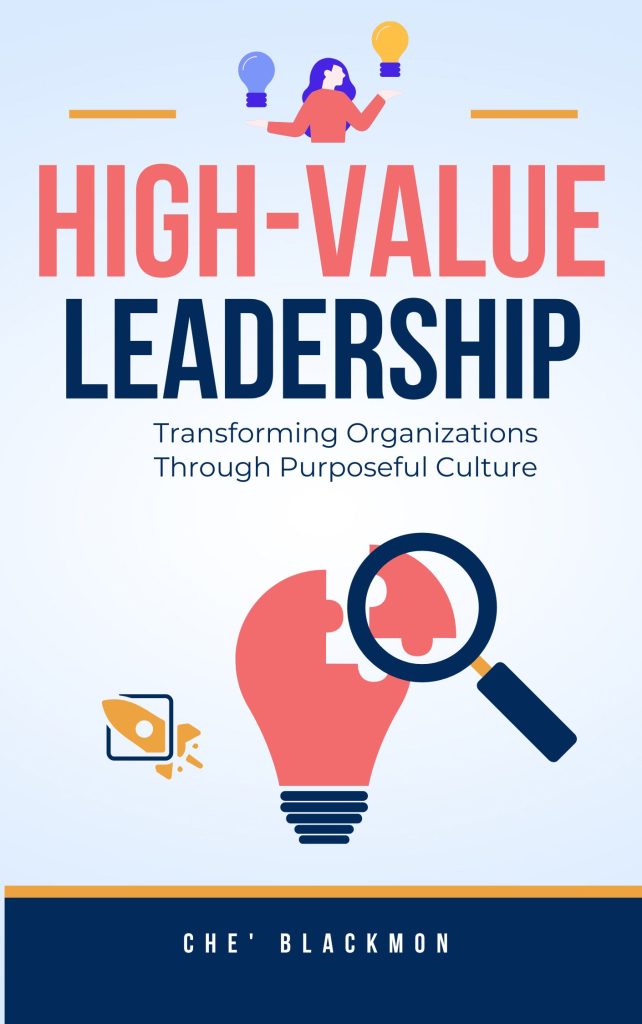
In High-Value Leadership: Transforming Organizations Through Purposeful Culture, the fundamental thesis is this: high-value leadership isn’t about charisma or the ability to inspire from a stage. It’s about the intentional, daily choices leaders make—in how they communicate, how they make decisions, how they handle conflict, how they develop others. These practices compound. Over time, they shape organizational culture.
In 2026, the leaders who matter are those who see development of their people as a core part of their job—not an add-on. They’re also leaders who are themselves developing continuously. They’re examining their own biases, expanding their perspectives, and building skills that allow them to lead effectively in increasingly diverse, complex environments.
The overlooked angle: There’s been a significant trend toward investing heavily in developing high-potential employees for advancement. The challenge? High-potential identification has often been biased, reflecting conscious and unconscious preferences for people who “look like” current leaders. In 2026, intentional organizations are disaggregating their leadership pipeline data. They’re asking: Which groups are identified as high-potential? Are there demographic disparities? If so, is it because of actual differences in performance, or is it because of how we identify potential? This kind of examination creates space for more Black women and other historically overlooked professionals to move into leadership roles.
Actionable takeaway: Examine your leadership development programs. Who has access to them? Who gets identified for advancement opportunities? Are there demographic patterns? If yes, dig into why. Then commit to intentional changes that create equitable access to development.
The Common Thread: Culture as Strategy 🧵
These seven trends aren’t disconnected observations. They’re different expressions of a single underlying reality: Culture is no longer a soft skill. It’s a business strategy. Organizations with intentional, inclusive, purposeful cultures will attract better talent, retain them longer, innovate more effectively, and adapt to change more quickly. It’s not an assumption. It’s measurable.
This shift matters especially for Black women in corporate spaces. For decades, the message—implicit or explicit—has been: “Fit in. Don’t ask questions. Prove yourself. Maybe then you’ll be valued.” In 2026, the leading organizations are flipping this. They’re building cultures where diverse perspectives are sought. Where questions are encouraged. Where advancement is based on demonstrated capability, not on fitting a predetermined mold. Where belonging is proactive, not something you have to earn.
This benefits everyone. Psychological safety benefits everyone. Pay transparency benefits everyone. Skills-based advancement benefits everyone. Purpose-driven work benefits everyone. The organizations that understand this—that recognize that equitable, inclusive cultures are also high-performing cultures—will be the ones that lead in 2026 and beyond.
Discussion Questions for Your Team 💭
Take these questions to your leadership team, your managers, or your broader organization. Use them to spark conversation about where you are on these trends and where you need to focus.
On Predictive Culture Analytics: Are you currently tracking turnover patterns by demographic group? If not, what would it take to start? What might you discover?
On Purpose-Driven Culture: Can your team members clearly articulate your organization’s purpose and how their work connects to it? If not, what’s the gap?
On Pay and Advancement Transparency: Does everyone in your organization understand what it takes to advance? Are there demographic disparities in advancement rates? If so, what systemic factors might be contributing?
On Psychological Safety: Do people feel safe speaking up, asking questions, and admitting mistakes? How do you know? What’s one leadership behavior that would shift this?
On Skills-Based Development: Are you still gatekeeping opportunities based on credentials and tenure, or are you evaluating people based on demonstrated capability?
On Meaningful Work: Can your people see the impact of their work? Do they understand how it matters?
On Leadership Development: Is leadership development a strategic priority in your organization, or a checkbox? How do you know?
Your Next Steps 🎯
Understanding these trends is one thing. Implementing them in your organization is another. Here’s what I recommend:
First, assess where you are. Pick one or two of these trends that feel most relevant to your current challenges. Be honest about where your organization stands. Not where you want to be, but where you actually are right now.
Second, identify the gap. Between where you are and where you need to be, what’s the gap? What’s preventing you from moving forward? Is it lack of clarity? Resources? Leadership alignment? Resistance?
Third, create a plan. Don’t try to tackle all seven trends at once. Start with one. Build momentum. Create visible progress. Then move to the next.
Finally, measure it. How will you know if things are improving? What metrics matter? And critically—are you measuring across demographic groups? The trends that matter are the ones that create equitable improvement across your entire organization.
Let’s Transform Your Organization Together 🤝
These trends represent both a challenge and an opportunity. Organizations that move intentionally on these fronts will build cultures where diverse talent wants to work, where people bring their best selves, and where performance naturally follows.
If you’re ready to make this shift—to build a purposeful, high-value culture that attracts, develops, and retains your best people—let’s talk.
Che’ Blackmon Consulting specializes in exactly this kind of culture transformation work. As a DBA candidate in Organizational Leadership with nearly 25 years of progressive HR leadership experience, I’ve guided organizations through the kind of systemic change these trends require. My approach integrates organizational research, practical strategy, and a deep commitment to building equitable, inclusive cultures that actually perform.
Whether you’re beginning to think about culture strategy or you’re ready to implement significant change, we can help.
📧 admin@cheblackmon.com
📞 888.369.7243
🌐 cheblackmon.com
Or if you’d like to explore how these trends show up in your specific organization, let’s set up a conversation. I work with organizations to diagnose culture challenges, identify what’s possible, and create roadmaps for transformation.
The future of work is being written right now. The question is: Will your organization be writing it, or reading about what others have accomplished?
Recommended Resources 📚
For deeper exploration of these concepts, consider:
- Edmondson, A. C. (2018). The Fearless Organization: Creating Psychological Safety in the Workplace for Learning, Innovation, and Growth.
- Hewlett, S. A., Marshall, M., & Sherbin, L. (2013). “How Diversity Can Drive Innovation.” Harvard Business Review.
- Research on pay equity and advancement patterns from organizations like the Society for Human Resource Management and the Center for Talent Innovation
- Che’ Blackmon’s books: High-Value Leadership: Transforming Organizations Through Purposeful Culture, Mastering a High-Value Company Culture, and Rise & Thrive: A Black Woman’s Blueprint for Leadership Excellence
About the Author
Che’ Blackmon is the Founder & CEO of Che’ Blackmon Consulting, a fractional HR and culture transformation consultancy based in Michigan. With nearly 25 years of progressive HR leadership experience across manufacturing, automotive, healthcare, and other sectors, Che’ specializes in AI-enhanced culture transformation services and predictive analytics. She is a published author of three books on leadership and organizational culture and is currently pursuing a Doctor of Business Administration in Organizational Leadership. Her work is grounded in the belief that equitable, purposeful cultures are also the highest-performing cultures—and that organizations have both the opportunity and responsibility to make that shift.
Follow along for more insights on leadership and culture transformation:
🎙️ Podcast: Unlock, Empower, Transform with Che’ Blackmon (twice weekly)
📺 YouTube: Rise & Thrive series
🌐 Visit: cheblackmon.com
#Leadership #OrganizationalCulture #HRStrategy #2026Trends #CultureTransformation #DiversityAndInclusion #EmployeeRetention #WorkplaceCulture #LeadershipDevelopment #PsychologicalSafety #PayEquity #TalentManagement #HighValueLeadership #BlackWomenInLeadership #DEIB