

By Che’ Blackmon, DBA Candidate | Founder & CEO, Che’ Blackmon Consulting
📚 Book Tie-In: Rise & Thrive — A Black Woman’s Blueprint for Leadership Excellence | Navigating Workplace Bias
There is a particular kind of professional insult that rarely gets called out in the open. It does not announce itself in a policy memo. It does not show up in a disciplinary report. It lives in the subtle signals: the way a seasoned leader gets passed over for the high-visibility project, the way her ideas are summarized by someone twenty years younger and then credited as fresh thinking, or the way a job posting specifies five to seven years of experience for a senior role that clearly needs twenty. This is ageism. And in corporate America, it is not only alive. It is thriving.
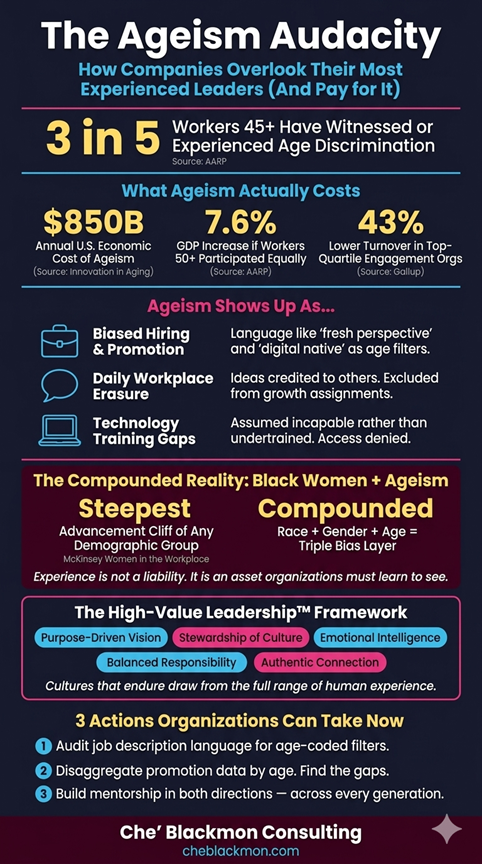
Ageism is one of the most normalized and least confronted forms of workplace bias. The Age Discrimination in Employment Act has been federal law since 1967, protecting workers aged 40 and older from discriminatory employment practices. Yet according to the AARP, more than three in five workers over age 45 have experienced or witnessed age discrimination in the workplace. The problem is not shrinking. It is growing more sophisticated, more embedded in organizational culture, and more costly than most leaders are willing to admit.
This article is about that cost. It is also about the specific experience of Black women who navigate ageism as one layer of a compounding bias that the corporate world has yet to honestly reckon with. And it is about what leaders and organizations can do, right now, to stop losing some of their most valuable people to a prejudice that serves no one.
📈 What Ageism Actually Costs Organizations
Most organizations do not track the financial cost of ageism because most organizations do not acknowledge that ageism is happening. That is the first problem. When a seasoned leader is eased out of a role, dismissed from a succession conversation, or simply never considered for advancement despite a record of results, the organization loses more than a person. It loses institutional knowledge, strategic perspective, relationship capital, and the kind of pattern recognition that only comes from decades of navigating real complexity.
The financial numbers are significant. A 2020 study published in the journal Innovation in Aging estimated that ageism in the United States costs the economy approximately 850 billion dollars annually when healthcare and employment costs are combined. Research from AARP found that if workers aged 50 and older participated in the workforce at the same rate as younger workers, the U.S. gross domestic product would increase by 7.6 percent. These are not marginal figures. They represent the measurable result of organizations systematically devaluing experience.
At the organizational level, the cost is equally concrete. When experienced leaders leave prematurely, organizations face the expense of recruiting and onboarding replacements who require significant time to reach equivalent effectiveness. According to the Society for Human Resource Management, the average time to full productivity for a new hire in a senior role can extend well beyond a year. Every month of that learning curve represents organizational capacity that a retained experienced leader would have delivered immediately.
“The institutional knowledge that leaves when an experienced leader walks out the door is almost never fully documented and is almost never fully replaced.” — Che’ Blackmon, High-Value Leadership™
Beyond the financial calculation, there is a culture cost. When employees across generations watch their most experienced colleagues be sidelined, they draw conclusions about what the organization actually values. They learn that longevity is not rewarded. They learn that wisdom is less prized than novelty. They learn that the culture is transactional rather than generative. And they make their own career decisions accordingly.
🔍 The Many Faces of Workplace Ageism
Ageism in the workplace rarely presents as overt discrimination. It has evolved into something more subtle and, in many ways, more damaging precisely because it is harder to name and challenge. Understanding what it looks like in practice is the first step toward addressing it.
📋 Ageism in Hiring and Promotion
There was a professional services firm that updated its job description language across the board to require “digital nativity” and “fresh perspectives” without defining what either term meant in operational terms. The effect was predictable. The finalist pools for senior roles skewed dramatically younger, and experienced candidates who had spent decades developing precisely the strategic skills the roles required were filtered out before their qualifications were ever reviewed. No one in the organization called it age discrimination. But the EEOC would have had a different view.
In promotion decisions, ageism shows up as a quiet assumption that experienced professionals are “too set in their ways” to learn new approaches, that they will be resistant to change initiatives, or that they represent higher flight risks because they are closer to retirement. These assumptions are rarely tested against evidence. They are applied as default filters that determine who gets considered and who does not.
🗣️ Ageism in Day-to-Day Work Life
The daily experience of ageism is relentless and cumulative. It looks like being excluded from team communications because they happen on platforms the organization assumes older professionals do not use. It looks like being assigned to wind-down projects rather than growth initiatives. It looks like having one’s ideas met with polite disinterest in meetings and then enthusiastically endorsed when a younger colleague reintroduces them a week later. It looks like performance reviews that reference “adaptability” as a concern without specifying what the expected adaptation actually is.
There was a healthcare organization where a senior HR leader with more than two decades of experience was systematically excluded from the working groups developing the organization’s new people strategy. The rationale offered was that the initiative needed “new energy.” The actual result was a strategy that duplicated programs the organization had already tried and abandoned years earlier, at significant cost, because no one with long institutional memory was in the room.
💻 Ageism in Technology and Training Access
One of the most quietly damaging forms of ageism in modern organizations is the assumption that experienced professionals are less capable of learning new technologies. This assumption is both empirically unsupported and organizationally destructive. Research from the MIT AgeLab has consistently found that older workers demonstrate high capacity for learning new skills and technology when provided adequate training and time. The gap is not ability. It is access.
Organizations that assume their experienced employees will not engage with new tools often simply do not invest in training them. The resulting performance gap then becomes evidence for the original assumption, creating a self-fulfilling cycle of exclusion that the organization never examines critically.
✨ The Compounded Reality: Black Women at the Intersection of Age and Race
For Black women in corporate environments, ageism does not operate in isolation. It operates in combination with racial bias, gender discrimination, and the particular professional penalties that accumulate across a career spent navigating systems that were never designed for their advancement. The result is a form of compounded bias that is uniquely isolating and uniquely costly.
In Rise and Thrive: A Black Woman’s Blueprint for Leadership Excellence, this reality is addressed directly. Black women who have spent two or three decades building expertise, earning credentials, and delivering results often find themselves in a paradox at senior career stages: they are simultaneously seen as too experienced to be approachable for mentorship by younger colleagues and too overlooked to be positioned for the advancement their records clearly justify. The skills and wisdom they have accumulated become invisible to organizations that are not designed to see them.
🚨 The Double Standard of “Ovequalified”
The word “overqualified” carries a particular weight when applied to Black women in senior roles. What organizations describe as overqualification is often, in practice, a discomfort with a Black woman whose experience, authority, and credibility exceed what the organizational culture is prepared to accommodate. The professional record that should open doors becomes the reason doors are presented as closed.
There was a manufacturing organization that passed over a highly experienced Black woman HR leader for a VP-level role three times over a four-year period, each time citing concerns about “cultural fit” with the new executive team. The leaders hired into that role instead had significantly less experience, required extensive onboarding, and the organization’s HR function struggled measurably during each transition. The experienced leader eventually left the industry entirely. The organization lost institutional memory, strategic capacity, and a leader who understood the workforce at a depth that no succession plan replaced.
This is not an anomaly. McKinsey and Company’s Women in the Workplace research has consistently found that Black women face a steeper advancement cliff than any other demographic group. They are promoted at lower rates than their peers, receive less sponsorship from senior leaders, and are more likely to see their career momentum stall at middle management despite performance records that exceed expectations.
📚 Rise & Thrive Connection: In Rise & Thrive, Che’ Blackmon writes directly to the Black woman who has been told, in words or in practice, that her experience is a liability rather than an asset. The SHIELD Resilience Framework in that work offers a strategic and personal blueprint for navigating exactly this kind of compounded bias with dignity, strategy, and clarity of purpose. If you are living this reality, that book was written for you.
💡 The Erasure of Legacy and Mentorship Potential
When experienced Black women are pushed out of organizations prematurely, the loss extends far beyond the individual and the organization. It disrupts the mentorship and sponsorship pipeline for younger Black women who are navigating the early stages of careers in the same environments. The absence of senior Black women who have survived, thrived, and built sustained leadership records is felt by every junior colleague who looks up and cannot find a reflection of their own possibility at the table.
This is why the cost of ageism in this specific context is not only a business cost. It is a cultural and generational one. Every experienced Black woman leader who exits corporate life earlier than she should have represents a broken link in a chain of possibility that takes years or decades to rebuild.
🏗️ What High-Value Leadership™ Says About Experience
The High-Value Leadership™ framework, built on five pillars of Purpose-Driven Vision, Stewardship of Culture, Emotional Intelligence, Balanced Responsibility, and Authentic Connection, is explicitly designed to recognize and leverage the full depth of what experienced leaders bring. Experience is not a liability in this framework. It is a strategic advantage that, when honored and deployed intentionally, elevates the entire organization.
In Mastering a High-Value Company Culture, the argument is clear: cultures that endure are cultures that draw from the full range of human experience within the organization. They do not treat institutional memory as irrelevant. They treat it as foundational. The most resilient and high-performing cultures are multigenerational by design, not by accident. They recognize that the perspective of someone who has navigated three recessions, two technological revolutions, and a global pandemic is not redundant. It is rare.
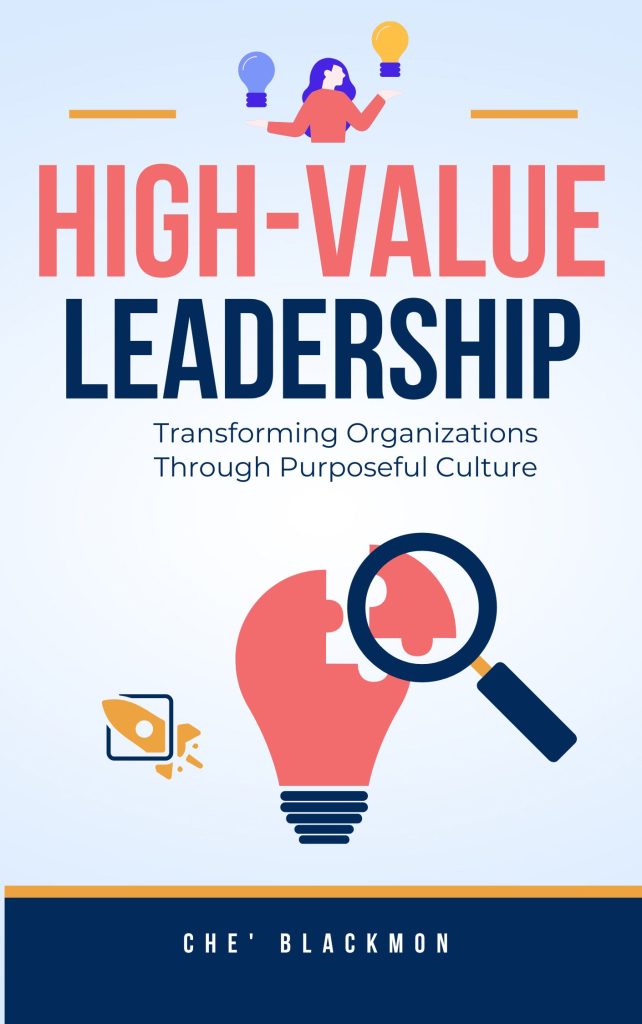
High-Value Leadership: Transforming Organizations Through Purposeful Culture goes further, arguing that stewardship of culture requires leaders who understand where the organization has been in order to responsibly guide where it is going. You cannot steward something you do not understand historically. Experienced leaders carry that historical understanding. Sidelining them in favor of perpetual novelty is not innovation. It is amnesia.
💡 Organizations that treat experience as obsolescence are not evolving. They are forgetting. And forgetting is expensive.
🔬 What the Research Tells Us
The business case for retaining and advancing experienced leaders is well documented, and the evidence is not subtle.
A landmark study published by Harvard Business School found that companies led by experienced CEOs significantly outperformed those led by executives earlier in their careers on long-term profitability and organizational stability metrics. The research attributed this advantage specifically to the pattern recognition and risk calibration skills that develop only through sustained experience over time.
McKinsey and Company research on organizational resilience found that companies with age-diverse leadership teams demonstrated higher adaptability during disruption. The combination of long-term institutional knowledge from experienced leaders with the technological fluency of younger professionals produced outcomes neither group achieved in isolation. Age diversity at the leadership level is not merely a matter of equity. It is a driver of competitive performance.
AARP Public Policy Institute research found that workers over 50 are more likely to stay in roles when they feel valued, and that their retention rates in organizations with strong cultures of inclusion across age groups are significantly higher than industry averages. In other words, the organizations that treat experience with respect keep their experienced people. The organizations that signal disregard lose them. And when they lose them, they pay.
Deloitte’s Global Human Capital Trends report has identified multigenerational workforce management as one of the defining organizational challenges of this decade. Despite widespread acknowledgment of the demographic reality, only a fraction of organizations have formal strategies for retaining and advancing experienced workers. The gap between recognition and action remains wide, and the cost of that gap accumulates every year.
🛠️ Actionable Takeaways: What Organizations and Leaders Can Do Right Now
Addressing ageism requires both structural change and cultural commitment. The following takeaways are designed for HR leaders, executives, and individual professionals navigating this bias from any direction.
✅ For Organizations and HR Leaders
1. Audit Your Job Description Language
Review every active job posting for language that functions as an age filter without stated operational necessity. Terms like “digital native,” “fresh perspective,” and “energetic” are legally risky and strategically counterproductive. Replace them with specific competency descriptions that welcome candidates from any career stage.
2. Disaggregate Promotion and Succession Data by Age
If your succession pipeline skews significantly young without a documented, competency-based rationale, your organization has an ageism problem whether or not it recognizes it. Break the data down. Ask who is being developed, who is being considered, and who is being left out. Then ask why.
3. Build Intentional Mentorship in Both Directions
Reverse mentoring programs, where younger employees share technology and cultural insights with senior leaders, are valuable. But they must be paired with traditional mentorship where experienced leaders formally invest in the development of rising talent. Neither direction should be optional. Both should be structured, recognized, and rewarded.
4. Redesign Training Access
Stop assuming that experienced employees are less interested in or less capable of learning. Ensure that all employees, regardless of age or tenure, have equal access to skill development programs, technology training, and leadership development opportunities. Measure participation by age cohort and close the gaps you find.
5. Address Ageism in Your Culture Explicitly
Ageism will not resolve itself through silence. Name it in your inclusion strategy. Address it in your manager training. Create psychological safety for employees who experience it to report it without fear of being labeled as difficult. Culture that does not name a bias cannot dismantle it.
✨ For Experienced Professionals Navigating Ageism
Document and Narrate Your Value
Do not assume your track record speaks for itself in a culture that is not listening. Build a current portfolio of your accomplishments, your strategic contributions, and your specific impact on organizational outcomes. Frame your experience as competitive advantage, not historical context. Translate what you know into the language of what the organization needs now.
Expand Your Visible Presence
Ageism thrives on invisibility. Stay present and visible in professional networks, industry conversations, and internal leadership forums. Speak up in meetings. Offer to lead initiatives. Let your current engagement be as visible as your historical record.
Build Bridges Across Generations
One of the most powerful ways to counter the narrative that experience equals irrelevance is to demonstrate your investment in the success of people at earlier career stages. Mentor actively. Sponsor intentionally. The leaders who are seen as invested in the future are rarely dismissed as artifacts of the past.
Know Your Legal Rights
The Age Discrimination in Employment Act is federal law. If you are 40 or older and experiencing employment decisions that appear to be age-based, document everything and consult with an employment attorney. Ageism that rises to illegal discrimination has legal remedies, and knowing that is part of navigating the professional landscape with full information.
💬 Discussion Questions for Leaders and Teams
Use these questions to open meaningful conversations within your organization, leadership development cohort, or professional network.
- When you look at your organization’s succession pipeline, what is the age distribution of candidates being actively developed for senior roles? What does that distribution tell you about whose experience your culture values?
- Has your organization ever lost an experienced leader to early departure or retirement and later discovered that the institutional knowledge they carried could not be replaced? What would a proactive strategy to prevent that loss have looked like?
- If you are an experienced professional, how are you narrating your value in your current organization? Are you letting your track record speak for itself, or are you actively translating your experience into the language of current organizational need?
- For leaders who are committed to multigenerational inclusion, what is one structural change, not a program, not an event, but a system change, that your organization could make in the next 90 days to better retain and advance experienced professionals?
- How does the experience of ageism differ for Black women and other professionals who also carry the weight of racial and gender bias? What does your organization’s inclusion strategy say explicitly about that intersection?
🚦 Next Steps: Moving from Recognition to Action
Understanding that ageism is costing your organization is one thing. Building the will and the systems to address it is the work. Here is where to begin.
- Conduct an age-inclusive audit of your hiring, promotion, and succession processes. Do not rely on self-assessment alone. Use data.
- Add age as an explicit category in your diversity, equity, and inclusion strategy and measurement framework.
- Implement structured mentorship programs that move in both directions across generational lines, and hold leaders accountable for participation.
- Review your organization’s performance management language for age-coded assumptions about adaptability, energy, and fit.
- If you are an experienced professional navigating ageism, pick up Rise and Thrive: A Black Woman’s Blueprint for Leadership Excellence for a framework designed to help you navigate compounded bias with strategy and self-possession.
- Invest in leadership development that builds the High-Value Leadership™ competencies required to steward an age-diverse culture with intention, equity, and results.
🚀 Ready to Build a Culture That Values Every Generation?
Che’ Blackmon Consulting partners with organizations and leaders who are ready to do the real work of culture transformation. Whether you are diagnosing a retention crisis rooted in ageism, redesigning your inclusion strategy to honor the full range of your workforce, or developing the next generation of high-value leaders across all career stages, we bring the frameworks, experience, and tools to move your organization forward.
📧 admin@cheblackmon.com 📞 888.369.7243 🌐 cheblackmon.com
About the Author
Che’ Blackmon is a doctoral candidate in Organizational Leadership (DBA), the Founder and CEO of Che’ Blackmon Consulting, and a recognized expert in culture transformation, fractional HR leadership, and high-value leadership development. With more than 24 years of progressive HR leadership experience spanning manufacturing, automotive, healthcare, nonprofit, and professional services industries, she has built a body of work dedicated to engineering cultures where every person, at every career stage, can do their best work. She is the author of Mastering a High-Value Company Culture, High-Value Leadership: Transforming Organizations Through Purposeful Culture, and the e-book Rise and Thrive: A Black Woman’s Blueprint for Leadership Excellence. Che’ is the creator of the proprietary High-Value Leadership™ framework and the host of the Unlock, Empower, Transform podcast.
© 2025 Che’ Blackmon Consulting. All rights reserved. | High-Value Leadership™ is a trademark of Che’ Blackmon Consulting.
#AgeismInTheWorkplace #WorkplaceBias #ExperiencedLeaders #HighValueLeadership #CompanyCulture #BlackWomenLead #LeadershipDevelopment #OrganizationalCulture #HRLeadership #InclusiveLeadership #AgeDiversity #CultureTransformation #WorkplaceEquity #FractionalHR #CheBlackmonConsulting