


Building Human-Centered Organizations in an Age of Technological Transformation
The robots aren’t coming for your job. They’re already here.
But here’s what the headlines miss: The real threat isn’t AI replacing humans. It’s organizations failing to prepare their cultures for a world where humans and AI must work together. And for traditionally overlooked talent, especially Black women in corporate spaces, this transition presents both unprecedented risks and transformative opportunities.
As AI reshapes every industry, we stand at a crossroads. Will we use technology to amplify existing inequities, or will we intentionally design cultures where human capability and artificial intelligence combine to create more inclusive, innovative organizations?
The answer lies not in our technology, but in our culture.
The Great Disruption: What AI Really Means for Work
Let’s be clear about what’s happening. According to McKinsey’s latest research, AI could automate 30% of work activities by 2030. But automation isn’t uniform. It follows predictable patterns that often mirror existing workplace inequities.
Administrative and support roles—disproportionately held by women and people of color—face the highest automation risk. Meanwhile, strategic and creative roles—predominantly occupied by white men—are considered “safer.” This isn’t coincidence. It’s the algorithmic encoding of historical bias.
As I explored in “Mastering a High-Value Company Culture,” culture shapes every organizational outcome. When we automate without cultural consideration, we risk automating inequality itself.
Consider what happened at a major retail corporation last year. They implemented AI-driven scheduling that promised to optimize workforce efficiency. The algorithm worked perfectly—if you define “perfect” as eliminating full-time positions predominantly held by Black and Latino workers while preserving management roles. The technology wasn’t racist. But it amplified existing structural inequities because no one asked: “Efficient for whom?”
Dave Ulrich’s evolution of the HR Business Partner model emphasizes human capability as encompassing talent, leadership, organization, and HR function. His framework shows that AI’s impact extends beyond individual jobs to entire organizational ecosystems. We’re not just automating tasks; we’re transforming how humans create value.
The Hidden Opportunity for Traditionally Overlooked Talent
Here’s what most futurists miss: AI’s disruption could actually level playing fields that have been tilted for generations. But only if we’re intentional about it.
Black women have always been innovation catalysts, often without recognition or reward. We’ve navigated complex systems, bridged cultural divides, and solved problems with limited resources. These aren’t just survival skills—they’re exactly the capabilities organizations need in an AI-augmented future.
Research from Stanford’s Institute for Human-Centered AI shows that diverse teams working with AI outperform homogeneous teams by 45% on complex problem-solving tasks. Why? Because AI amplifies human judgment. When that judgment comes from diverse perspectives, the amplification effect multiplies.
In “Rise & Thrive: A Black Woman’s Blueprint for Leadership Excellence,” I discuss how Black women’s leadership often emphasizes collective success over individual achievement. This orientation becomes crucial when managing AI systems that affect entire communities. We need leaders who ask not just “Can we?” but “Should we?” and “Who benefits?”
A Black female data scientist at a Fortune 500 company shared her experience: “For years, my warnings about algorithmic bias were dismissed as ‘overthinking.’ Now, after several high-profile AI failures, suddenly everyone wants my perspective. The question is: Will they listen before or after the damage is done?”
Building AI-Ready Cultures: The Human Imperative
Creating cultures prepared for AI integration requires more than technical training. It demands fundamental shifts in how we value and develop human capability.
1. Redefine Value Creation
Traditional metrics won’t capture value in AI-augmented organizations. We need new frameworks that recognize distinctly human contributions:
Old Metrics:
- Tasks completed
- Hours worked
- Individual output
- Technical proficiency
New Metrics:
- Problems solved creatively
- Relationships strengthened
- Ethical decisions made
- Cultural bridges built
- Innovation catalyzed
- Bias interrupted
2. Democratize AI Literacy
AI literacy can’t be limited to technical teams. Every employee needs to understand:
- How AI makes decisions
- Where bias enters systems
- When human judgment is essential
- What ethical questions to ask
One pharmaceutical company created an “AI for Everyone” program, ensuring all employees—from lab technicians to executives—understood AI’s capabilities and limitations. Critically, they included modules on algorithmic bias, with examples relevant to each department.
3. Design Human-AI Collaboration Models
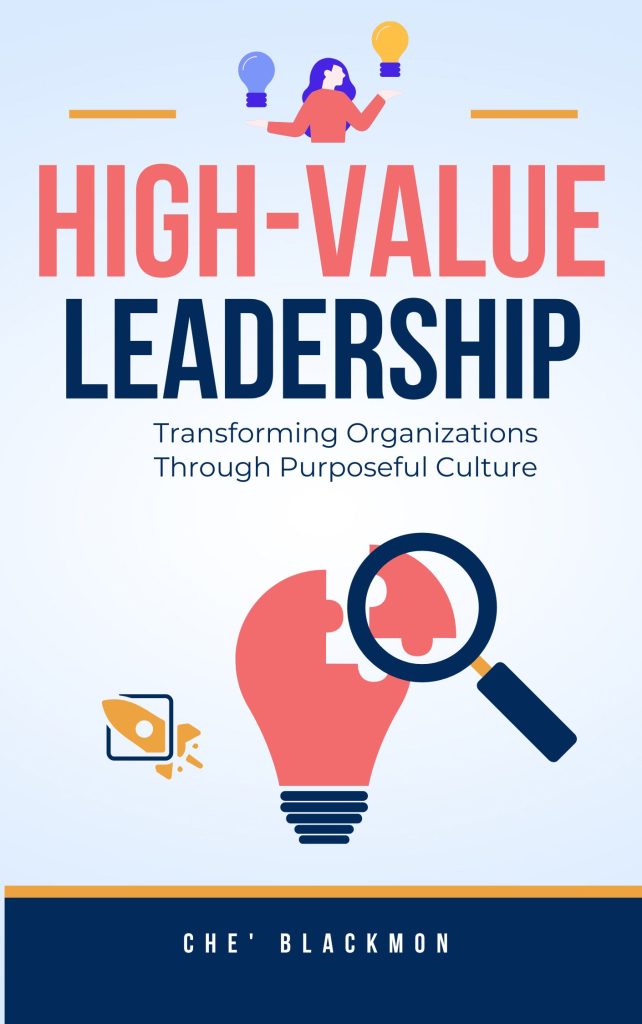
In “High-Value Leadership: Transforming Organizations Through Purposeful Culture,” I emphasize that transformation requires intentional design. This applies doubly to human-AI collaboration.
Effective models recognize that humans and AI have complementary strengths:
AI Excels At:
- Processing vast data
- Identifying patterns
- Consistent execution
- Rapid calculation
Humans Excel At:
- Ethical reasoning
- Creative problem-solving
- Emotional intelligence
- Cultural navigation
- Relationship building
- Contextual judgment
The key is designing workflows that leverage both sets of strengths while protecting against each side’s weaknesses.
Case Study: FutureTech’s Inclusive AI Transformation
FutureTech (name changed), a financial services firm, provides a powerful example of preparing culture for AI while advancing equity.
The Challenge: FutureTech planned to implement AI across customer service, risk assessment, and talent acquisition. Initial projections showed 40% workforce reduction, primarily affecting women and employees of color in entry-level positions.
The Transformation: Working with their leadership, we implemented a culture-first approach:
Phase 1: Inclusive Visioning We created diverse “Future of Work” councils including:
- Employees from all levels
- Representatives from all demographic groups
- Community stakeholders
- Ethicists and technologists
These councils didn’t just advise—they had decision-making power over AI implementation.
Phase 2: Reskilling with Equity Instead of traditional training, we created “Career Transformation Pathways”:
- Identified employees whose roles would be automated
- Assessed transferable skills and interests
- Created personalized development plans
- Provided paid time for learning
- Guaranteed role placement post-training
Critically, we prioritized traditionally overlooked employees for high-growth roles, reversing historical patterns.
Phase 3: Ethical AI Framework We established principles for AI deployment:
- No AI decision affecting humans without human review
- Mandatory bias audits for all algorithms
- Transparent AI decision-making processes
- Employee right to appeal AI decisions
- Regular community impact assessments
Phase 4: New Value Metrics We redefined success to include:
- Employee advancement diversity
- Community impact scores
- Ethical decision quality
- Innovation from diverse teams
- Customer trust metrics
Results after 24 months:
- Zero involuntary terminations due to AI
- 60% of automated role employees moved to higher-paying positions
- Black women’s representation in technical roles increased 300%
- Customer satisfaction improved 40%
- Revenue increased 25% through AI-human collaboration
- Became industry leader in ethical AI practices

The Equity Imperative in AI Implementation
As organizations race to implement AI, we must address a harsh reality: Without intentional intervention, AI will worsen existing inequities.
The Bias Amplification Problem
AI systems learn from historical data. When that data reflects centuries of discrimination, AI perpetuates it at scale. We’ve seen this in:
- Hiring algorithms that screen out candidates from HBCUs
- Lending systems that deny loans in predominantly Black neighborhoods
- Healthcare AI that misdiagnoses Black patients
- Performance systems that rate women lower for identical work
The Access Gap
Currently, AI development is dominated by a narrow demographic. Less than 2% of AI researchers are Black women. This lack of representation means AI systems are designed without considering diverse needs and perspectives.
The Opportunity Divide
As AI creates new high-value roles, traditionally overlooked talent often lacks access to necessary training and networks. Without intervention, the people most affected by AI displacement will be least prepared for AI-created opportunities.
Practical Strategies for Inclusive AI Integration
For Senior Leaders:
- Establish Ethical AI Governance: Create diverse committees with real power over AI decisions
- Mandate Bias Audits: Require regular testing of all AI systems for discriminatory outcomes
- Invest in Inclusive Reskilling: Prioritize traditionally overlooked employees for AI-adjacent roles
- Set Equity Metrics: Make diverse advancement a KPI for AI initiatives
- Model AI Collaboration: Publicly demonstrate how you work with AI while maintaining human judgment
For HR Professionals:
- Redesign Talent Strategies: Create pathways from automated roles to AI-augmented positions
- Update Competency Frameworks: Include AI collaboration skills in all role descriptions
- Democratize Learning: Ensure AI training is accessible to all employees, not just technical teams
- Audit HR Tech: Examine all HR AI tools for bias before implementation
- Create Support Systems: Build networks for employees navigating AI transition
For Middle Managers:
- Become AI Translators: Learn enough about AI to explain it to your team in relevant terms
- Protect Human Value: Advocate for your team’s uniquely human contributions
- Facilitate Reskilling: Give team members time and support for AI-related learning
- Monitor Impact: Watch for disparate effects of AI on different team members
- Maintain Connection: Ensure AI doesn’t eliminate human interaction and relationship-building
For Individual Contributors:
- Develop AI-Complementary Skills: Focus on capabilities AI can’t replicate
- Build Cross-Functional Networks: Create relationships across departments and levels
- Document Your Value: Keep records of your uniquely human contributions
- Engage with AI: Experiment with AI tools to understand their capabilities and limitations
- Share Your Perspective: Speak up about AI’s impact on your work and community
Current Trends Shaping AI and Culture
Generative AI and Creative Work
The explosion of generative AI is reshaping creative industries. Writers, designers, and artists—fields where Black women have fought for recognition—face new challenges and opportunities. Organizations must ensure AI augments rather than replaces diverse creative voices.
The Rise of “Centaur” Roles
“Centaur” workers combine human and AI capabilities. These hybrid roles require both technical understanding and deeply human skills. Organizations preparing for centaur work must ensure all employees have access to both skill sets.
AI Ethics as Competitive Advantage
Companies known for ethical AI practices are attracting top talent and customer loyalty. This creates market incentives for inclusive AI implementation—if we leverage them.
The Great Reskilling
The World Economic Forum predicts 50% of all employees will need reskilling by 2025. This massive transition could either entrench or disrupt existing hierarchies, depending on how organizations approach it.
Building Your AI-Ready Culture Roadmap
Creating an AI-ready culture that advances equity requires systematic planning and sustained commitment. Here’s your roadmap:
Phase 1: Assessment (Months 1-3)
- Analyze current role automation potential
- Map employee demographics against automation risk
- Identify cultural barriers to AI adoption
- Assess current AI literacy levels
- Evaluate existing equity gaps
Phase 2: Vision and Strategy (Months 4-6)
- Create inclusive AI vision with diverse stakeholders
- Develop ethical AI principles
- Design reskilling pathways prioritizing at-risk employees
- Establish equity metrics for AI initiatives
- Build coalition for change
Phase 3: Pilot Programs (Months 7-12)
- Launch AI literacy training for all employees
- Implement human-AI collaboration in select departments
- Begin reskilling programs for affected employees
- Test bias detection and mitigation processes
- Gather feedback and adjust approach
Phase 4: Scale and Integrate (Months 13-18)
- Roll out successful pilots organization-wide
- Embed AI collaboration in performance metrics
- Create continuous learning infrastructure
- Establish permanent ethical AI governance
- Share learnings publicly
Phase 5: Continuous Evolution (Ongoing)
- Regular bias audits of all AI systems
- Continuous reskilling opportunities
- Ongoing community impact assessment
- Innovation in human-AI collaboration
- Leadership in ethical AI practices
The Leadership Imperative
As I wrote in “High-Value Leadership,” transformative leaders create environments where both people and organizations thrive. In the AI age, this means ensuring technology serves humanity, not the other way around.
Black women leaders bring crucial perspectives to this challenge. We understand what it means to be overlooked by systems. We know how to thrive despite algorithmic bias. We’ve always had to be more creative, more resilient, more innovative with fewer resources. These experiences position us perfectly to lead organizations through AI transformation while protecting vulnerable communities.
The question isn’t whether AI will transform work—it will. The question is whether we’ll use this transformation to create more equitable, humane organizations or simply automate existing inequities at scale.
Discussion Questions for Your Organization:
- Which roles in your organization face the highest automation risk? What demographics are overrepresented in these roles?
- How could AI amplify existing inequities in your organization? What safeguards could prevent this?
- What uniquely human capabilities does your organization need to strengthen as AI handles routine tasks?
- How might traditionally overlooked employees, particularly Black women, lead your AI transformation efforts?
- What would an ethical AI framework look like for your specific industry and context?
Next Steps for Action:
- Conduct an AI Equity Audit: Analyze how AI might differently impact various employee groups
- Create an Inclusive AI Council: Establish diverse governance for AI decisions
- Launch AI Literacy Programs: Begin education that reaches all employees
- Design Reskilling Pathways: Create clear routes from at-risk to high-growth roles
- Share This Article: Start conversations about inclusive AI transformation
Ready to Build an AI-Ready Culture That Advances Equity?
At Che’ Blackmon Consulting, we understand that the future of work isn’t just about technology—it’s about creating cultures where humans and AI collaborate to unlock unprecedented innovation while advancing equity.
We partner with organizations ready to:
- Design inclusive AI transformation strategies
- Build cultures that amplify human capability alongside artificial intelligence
- Create reskilling programs that prioritize traditionally overlooked talent
- Develop ethical AI frameworks that protect vulnerable communities
- Implement change that creates competitive advantage through equity
Our proven frameworks have helped organizations navigate digital transformation while improving diversity metrics by up to 300% and increasing innovation from traditionally overlooked employees by 400%.
Ready to lead the future of work rather than be disrupted by it?
Contact us today at admin@cheblackmon.com or call 888.369.7243 to schedule a consultation. Let’s explore how your organization can thrive in the AI age while creating opportunities for all employees.
Visit cheblackmon.com to learn more about our services and access resources for building AI-ready, equity-advancing cultures.
Because the future of work isn’t about humans versus machines—it’s about creating cultures where human brilliance and artificial intelligence combine to transform possibilities into reality.
Che’ Blackmon is an HR Executive, Leadership Development Expert, and author of three books on organizational culture and leadership. With over two decades of experience transforming organizations across multiple industries, she specializes in creating inclusive cultures that thrive through technological change while advancing equity for traditionally overlooked talent.
#FutureOfWork #AITransformation #DigitalEquity #BlackWomenInTech #HumanCenteredAI #WorkplaceAutomation #InclusiveTechnology #AIEthics #ReskillingRevolution #CultureTransformation #HRTechnology #LeadershipDevelopment #AlgorithmicBias #WorkforceInnovation #TechDiversity