


By Che’ Blackmon, Founder & CEO, Che’ Blackmon Consulting | DBA Candidate in Organizational Leadership
January 1st arrives with its familiar chorus of promises.
“This is my year.” “New year, new me.” “I’m going to finally…”
The gym memberships get purchased. The planners get filled with ambitious goals. The declarations get posted on social media with inspiring hashtags. And by February 14th, research shows that 80% of those resolutions have quietly died—abandoned in the gap between aspiration and sustainable change.
For leaders, this annual ritual of resolution-making and resolution-breaking reveals something deeper than personal willpower failures. It exposes a fundamental misunderstanding of how meaningful change actually happens—both individually and organizationally.
The traditional New Year’s resolution model is built on a faulty premise: that change happens through sheer determination applied to vague aspirations on an arbitrary calendar date. But sustainable transformation—the kind that actually shifts trajectories rather than creating temporary enthusiasm—requires something entirely different.
It requires what I call revolutionary resolution: strategic, systems-based change anchored in clear purpose, supported by structural accountability, and aligned with your authentic values rather than cultural expectations.
This matters exponentially for Black women leaders navigating corporate spaces where we’re already managing invisible labor, battling imposter syndrome, and carrying the weight of representation. The last thing we need is another framework for self-improvement that sets us up for failure while whispering that our inability to “stick with it” confirms our inadequacy.
This year, let’s revolutionize how we approach change—personally and professionally.
🎭 Why Traditional Resolutions Fail Leaders
Before we can build something better, we need to understand why the old model consistently fails.
Resolutions Are Outcome-Focused, Not System-Focused
“I want to lose 20 pounds.” “I want to get promoted.” “I want to be more strategic.”
These are outcomes, not systems. And as James Clear articulates in Atomic Habits, you don’t rise to the level of your goals—you fall to the level of your systems. Without changing the underlying structures that created current results, willpower alone cannot sustain different outcomes.
There was a company who set an aggressive diversity hiring goal: increase Black women in leadership by 25% within one year. They focused exclusively on the outcome—recruitment numbers. But they didn’t change the systems: biased interview processes, homogeneous hiring panels, lack of sponsorship structures, toxic culture that drove diverse talent away. By year’s end, they’d hired the target number but retained only 40% of those hires. The outcome goal failed because the systems remained unchanged.
The same dynamic plays out individually. Resolving to “be more visible” without addressing the system—your calendar that’s overfilled with tactical work leaving no time for strategic projects, your tendency to stay silent in meetings, the lack of a network advocating for you—produces temporary behavior changes that collapse under pressure.
Resolutions Ignore Identity and Alignment
Traditional resolutions often stem from external expectations rather than internal alignment. “I should work out more.” “I should be more assertive.” “I should network more effectively.”
That word—should—is your first warning sign. Should according to whom? Should based on what values? Should in service of which vision?
Research in behavioral psychology shows that lasting change happens when new behaviors align with identity and values. You don’t sustain a new habit because you force yourself to do it despite resistance. You sustain it because it becomes congruent with who you are and what matters to you.
As I discuss in Rise & Thrive: A Black Woman’s Blueprint for Leadership Excellence, Black women leaders often internalize external narratives about who we need to become to succeed—more palatable, less assertive, more accommodating, less ambitious. When resolutions flow from those narratives rather than authentic values, they create internal conflict that guarantees failure.
Resolutions Lack Structural Support
You can have the best intentions in the world, but if your environment doesn’t support the change you’re pursuing, you’re fighting an uphill battle with limited resources.
Want to read more leadership books? But your organization demands 60-hour weeks leaving you exhausted. Want to build strategic relationships? But you have no access to senior leaders and no sponsors creating opportunities. Want to develop a new skill? But your company provides no learning budget and penalizes time spent on development.
Individual resolutions cannot overcome structural barriers. This is why organizational change is so critical—and why leaders must think systemically about enabling the changes they want to see in their teams.
Resolutions Are Binary: Success or Failure
Traditional resolution thinking creates a dangerous binary: you’re either keeping your resolution or you’ve failed. One missed workout, one imperfect week, one setback—and the entire effort feels pointless.
This all-or-nothing thinking is particularly toxic for perfectionists (a category that includes many high-achieving Black women who’ve learned that anything less than flawless performance confirms negative stereotypes). The pressure to be perfect prevents progress because any imperfection feels like total failure.
Sustainable change embraces iteration, adjustment, and course-correction. It expects setbacks and builds them into the process rather than treating them as evidence of inadequacy.
🔄 The Resolution Revolution: A Strategic Framework
If traditional resolutions consistently fail, what works instead? A revolutionary approach that treats change as strategic, systematic, and sustainable.
1. Start With Clarity of Purpose, Not Goals 🎯
Before you set any specific objectives, get clear on why change matters and what you’re building toward.
The Clarity Questions:
- What impact do I want to have in my leadership this year?
- What kind of culture do I want to create on my team?
- What does success look like not just in metrics, but in how I feel, how I show up, and what I contribute?
- Which values will guide my decisions when I’m faced with competing priorities?
- What legacy am I building through my daily choices?
These aren’t fluffy feel-good questions. They’re strategic anchors that inform everything else.
There was a leader who began the year determined to “get promoted to VP.” Through deeper reflection using the clarity questions, she realized her actual purpose was to expand her influence on organizational culture and mentor emerging leaders. That clarity shifted everything—she stopped chasing the title and started building the influence. Eighteen months later, the VP role came to her because she’d become the obvious choice through the impact she’d created, not the campaign she’d run.
Purpose-driven change is sustainable because it’s rooted in meaning, not metrics.
2. Design Systems, Not Resolutions 🏗️
Once you’re clear on purpose, design systems that make desired behaviors inevitable rather than willpower-dependent.
From Resolution to System:
Instead of: “I’m going to network more this year”
Design this system:
- Block first Tuesday morning of each month for coffee meetings (calendar automation)
- Commit to attending one industry event quarterly (scheduled in advance)
- Set up LinkedIn alerts for target connections (technology support)
- Partner with an accountability buddy who asks about relationship-building monthly
Instead of: “I’m going to be more strategic”
Design this system:
- Block Fridays 2-4 PM as non-negotiable thinking time (protected calendar)
- Create a “strategic questions” template to guide weekly reflection
- Schedule quarterly strategy sessions with a mentor or peer advisor
- Delegate or eliminate two tactical tasks each month to create capacity
Instead of: “I’m going to develop my leadership skills”
Design this system:
- Enroll in one structured leadership development program (external accountability)
- Join or form a leadership book club meeting monthly (community support)
- Implement a weekly practice: apply one new concept and journal results (deliberate practice)
- Schedule quarterly conversations with your manager about growth
Systems don’t require motivation. They require design.
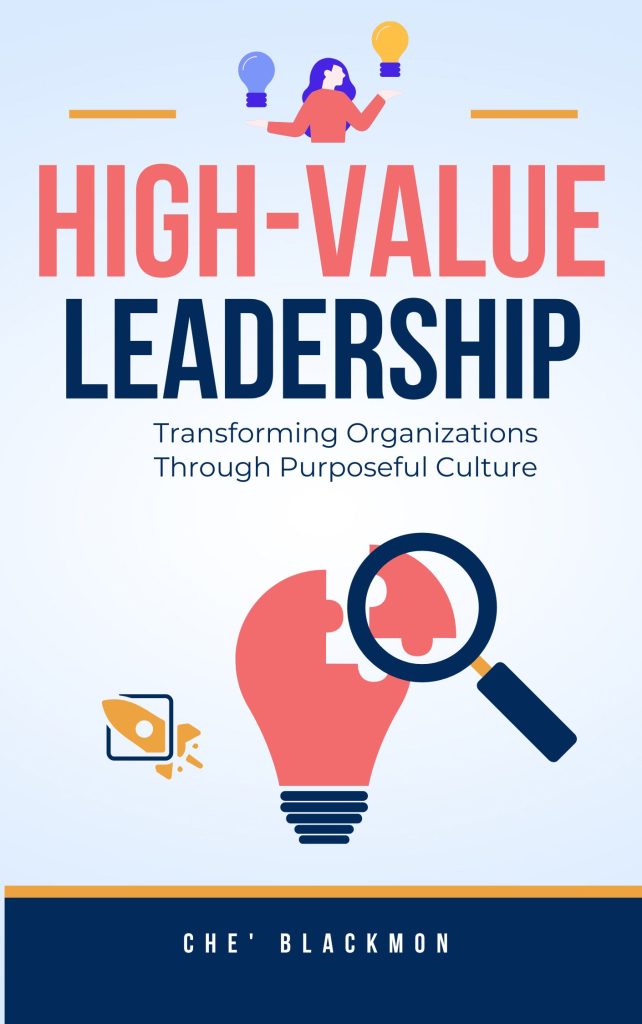
As I outline in High-Value Leadership: Transforming Organizations Through Purposeful Culture, high-value leaders build infrastructure that supports excellence rather than relying on heroic individual effort. The same principle applies to personal development.
3. Align Changes With Identity 💎
Lasting transformation happens when new behaviors become expressions of identity rather than forced obligations.
Identity-Based Change Process:
Step 1: Define Your Leadership Identity
Not who you think you should be, but who you’re becoming at your best.
Example identity statements:
- “I am a leader who creates psychological safety and develops others”
- “I am a strategic thinker who connects today’s work to tomorrow’s vision”
- “I am a culture architect who transforms organizations through intentional practice”
Step 2: Identify Behaviors That Express That Identity
What does someone with that identity do consistently?
If you’re a leader who develops others:
- You provide specific, timely feedback
- You create stretch opportunities for team members
- You invest time in coaching conversations
- You celebrate growth, not just outcomes
Step 3: Start With the Smallest Version
Don’t try to become the complete identity overnight. What’s the smallest behavior that expresses this identity?
If you’re becoming a strategic thinker: Start by asking one strategic question in each meeting you attend. That’s it. Not “completely transform how I think”—just one question that shifts perspective from tactical to strategic.
Small, identity-aligned actions compound over time into transformed identity.
4. Build Environmental and Social Support 🌍
Your environment either enables or undermines change. Design it intentionally.
Environmental Design:
- Physical Environment: If you want to read more, keep books visible and accessible, not buried in closets
- Digital Environment: If you want to reduce distractions, delete apps or use website blockers during focus time
- Calendar Environment: If something matters, it gets a calendar block—non-negotiable time protection
- Workspace Environment: If you want creative thinking, create a space that inspires it
Social Support:
- Accountability Partners: Someone who checks in regularly on your commitments
- Mentors/Coaches: Guides who provide perspective and challenge thinking
- Communities: Groups pursuing similar growth who normalize the change you’re making
- Sponsors: Advocates who create opportunities aligned with your development goals
For Black women leaders specifically, finding community with others navigating similar dynamics is not optional—it’s essential. The isolation of being “the only” or “one of few” in predominantly white spaces creates unique challenges that require shared understanding and collective strategizing.
5. Embrace Iteration Over Perfection 🔄
Revolutionary resolution expects course-correction. It builds feedback loops that enable adjustment rather than demanding flawless execution.
The Iteration Cycle:
Monthly Review:
- What’s working? (Do more of this)
- What’s not working? (Adjust or eliminate)
- What surprised me? (Learn from it)
- What needs to change next month? (Iterate)
Quarterly Assessment:
- Am I making progress toward my purpose?
- Are my systems still serving me or do they need refinement?
- What skills or knowledge gaps have emerged?
- What support do I need that I don’t currently have?
This isn’t about being hard on yourself for imperfection. It’s about treating yourself like the complex, evolving leader you are—someone whose path to excellence involves learning, not just executing a predetermined plan perfectly.

📊 Organizational Resolutions: Leading Change Beyond the Individual
Leaders don’t just navigate personal change—they architect organizational change. And the same principles apply at the organizational level.
Traditional Organizational Resolutions (That Fail):
- “We’re going to improve engagement this year”
- “We’re committing to diversity and inclusion”
- “We’re going to be more innovative”
These are outcome declarations without system design, which is why organizational change initiatives fail at remarkably similar rates to personal resolutions.
Revolutionary Organizational Change:
There was a company whose engagement scores had plateaued at concerning levels, particularly among employees from underrepresented groups. Instead of declaring “we’ll improve engagement,” leadership asked clarity questions:
- What kind of culture do we actually want to create?
- What behaviors would need to be different at every level?
- What systems currently reward the wrong behaviors?
- What support structures would enable the changes we want?
From that clarity, they designed systems:
- Restructured their performance evaluation to include “culture contribution” as 25% of ratings
- Created leadership development programs specifically for high-potential diverse talent
- Implemented “skip-level” meetings where executives met directly with individual contributors quarterly
- Changed meeting norms to prioritize psychological safety and inclusive participation
- Built feedback infrastructure that made developmental conversations continuous, not annual
Within 18 months, engagement scores increased by 19 points overall and 27 points among employees of color. The change stuck because systems changed, not just intentions.
🎯 Special Considerations: Resolutions for Black Women Leaders
In Rise & Thrive, I address the unique dynamics Black women navigate in corporate leadership—dynamics that require specific strategic approaches to change and growth.
Revolutionary Resolutions for Black Women Leaders:
1. Resolve to Advocate for Yourself, Not Just Prove Yourself
Too many Black women spend careers in “proof mode”—working twice as hard to demonstrate competence, accumulating credentials, delivering exceptional results, and waiting to be recognized.
Revolutionary shift: Move from proving to advocating. This means:
- Explicitly articulating your accomplishments and desired next roles
- Requesting specific opportunities, not waiting to be offered them
- Negotiating compensation confidently, armed with market data
- Stating your leadership vision clearly rather than hoping it’s noticed
2. Resolve to Build Your Board of Directors
You need multiple types of support: mentors (who advise), sponsors (who advocate), peers (who relate), and accountability partners (who challenge). Black women often lack access to these relationships because networks are built through informal connections we’re excluded from.
Revolutionary shift: Deliberately construct your personal board of directors:
- Identify who currently fills each role (and where gaps exist)
- Strategically build relationships with potential sponsors
- Join or create communities with other Black women leaders
- Invest in external coaching or consulting when internal support is lacking
3. Resolve to Rest Without Guilt
The “Strong Black Woman” schema makes rest feel like betrayal. Revolutionary shift: Recognize that sustainable excellence requires strategic rest. Your value isn’t determined by productivity. Your worth isn’t proven through exhaustion.
4. Resolve to Define Success on Your Own Terms
Corporate environments often define success narrowly: title, compensation, visibility. But what if your version of success centers impact, legacy, balance, joy, or community contribution?
Revolutionary shift: Get clear on what success actually means to you, then design your path accordingly—even if it doesn’t match conventional career ladders.
5. Resolve to Address Systemic Barriers, Not Just Personal Development
You can develop all the skills in the world, but if organizational systems are biased, you’ll still face barriers. Revolutionary shift: Commit to advocating for systemic change alongside personal growth. Use your voice to challenge inequitable practices. Build coalitions. Refuse to accept “that’s just how it is.”
💡 From Resolution to Revolution: Your Implementation Guide
Ready to move beyond clichéd resolutions to revolutionary change? Here’s your practical implementation path.
Week 1: Clarity and Purpose
- Spend time with the clarity questions—write out answers, don’t just think through them
- Identify your core values and how they align (or don’t) with your current trajectory
- Define your leadership identity—who are you becoming?
- Articulate your purpose for this year in one clear sentence
Week 2: System Design
- Choose 2-3 areas of focus (not 15—focus compounds impact)
- For each area, design the system that would make change inevitable
- Identify environmental changes that support new behaviors
- Build calendar infrastructure that protects what matters
Week 3: Support Structures
- Identify accountability partners and make specific commitments
- Join or create communities aligned with your growth
- Invest in coaching, courses, or consulting if gaps exist
- Build in regular review rhythms (monthly and quarterly)
Week 4: Implementation and Iteration
- Start the smallest version of each new behavior
- Track what’s working (to do more) and what’s not (to adjust)
- Celebrate small wins as evidence of identity shift
- Course-correct without judgment when things don’t go as planned
Ongoing: Lead the Revolution
- Model revolutionary resolution in your leadership
- Help your team design systems that support their growth
- Address organizational barriers that undermine change
- Create cultures where iteration is celebrated, not just perfection
🌟 The Revolution Starts Now
The New Year doesn’t hold magical transformation power. January 1st is just another day on the calendar.
But what you choose to do with the blank space of a new year—how you approach change, what you commit to building, whether you design for sustainability or settle for temporary enthusiasm—that determines whether this year marks real revolution or just another cycle of resolutions that fade by February.
You don’t need a new you. You need systems that support the leader you’re becoming. You need clarity about what actually matters. You need community that normalizes the changes you’re making. You need to stop treating yourself like a problem to fix and start seeing yourself as a leader with capacity to grow, evolve, and transform—both yourself and the organizations you influence.
As I outline in Mastering a High-Value Company Culture, sustainable change happens when we shift from event-based thinking to systems-based practice. Whether you’re transforming your own leadership or your organization’s culture, the principles remain consistent: clarity of purpose, strategic system design, aligned identity, supportive infrastructure, and commitment to iteration over perfection.
The resolution revolution isn’t about doing more. It’s about doing what matters, designing for sustainability, and creating the conditions where excellence becomes inevitable rather than exhausting.
That’s the kind of change that lasts well beyond January.
💭 Discussion Questions for Leaders and Teams
- What “resolutions” have you made repeatedly without lasting change? What does that pattern reveal about the systems (or lack thereof) supporting those goals?
- How might our organizational approach to goal-setting mirror the failures of traditional personal resolutions? What would strategic, systems-based change look like instead?
- In what ways do cultural expectations about professional success conflict with your authentic values and definition of leadership excellence?
- What support structures—environmental, social, and organizational—would enable the changes you want to make this year? Which of those can you control and which require advocacy?
- How can leaders create cultures that celebrate iteration and growth rather than demanding immediate perfection?
🚀 Next Steps: Launch Your Resolution Revolution
For Individual Leaders:
- Complete the clarity questions and define your leadership purpose for the year
- Choose 2-3 focus areas and design specific systems (not just goals) for each
- Identify your accountability structure and schedule first check-in
- Build calendar infrastructure that protects what matters most
For Organizational Leaders:
- Audit current change initiatives—are they outcome-focused or system-focused?
- Design strategic infrastructure that enables rather than just demands change
- Address systemic barriers that undermine individual and team development
- Model revolutionary resolution in your own leadership to normalize iteration
For Black Women Leaders Specifically:
- Define success on your own terms, then design your path accordingly
- Build your personal board of directors with intentional relationship strategy
- Connect with community navigating similar dynamics
- Commit to one act of self-advocacy this quarter
Ready to Revolutionize How Your Organization Approaches Change?
At Che’ Blackmon Consulting, we partner with leaders and organizations to move beyond superficial change initiatives to strategic transformation that sticks. Our culture transformation work builds the systems, infrastructure, and leadership capabilities that enable sustainable excellence—the kind that lasts well beyond January enthusiasm.
Whether you need fractional HR leadership to redesign performance and development systems, strategic consulting to architect high-value culture, or leadership development that equips your team with revolutionary approaches to growth, we bring 24+ years of progressive experience transforming how organizations change.
Let’s build something that lasts.
📧 admin@cheblackmon.com
📞 888.369.7243
🌐 cheblackmon.com
Che’ Blackmon is the Founder & CEO of Che’ Blackmon Consulting, a DBA candidate in Organizational Leadership, and author of “High-Value Leadership: Transforming Organizations Through Purposeful Culture,” “Mastering a High-Value Company Culture,” and “Rise & Thrive: A Black Woman’s Blueprint for Leadership Excellence.” With 24+ years of progressive HR leadership experience, Che’ transforms how leaders and organizations approach sustainable change—moving beyond good intentions to strategic systems that create lasting impact.
#NewYearResolutions #StrategicChange #SystemsThinking #HighValueLeadership #LeadershipDevelopment #OrganizationalChange #SustainableExcellence #BlackWomenInLeadership #ChangeManagement #LeadershipStrategy #CultureTransformation #GoalSetting #ProfessionalDevelopment #StrategicPlanning #LeadershipExcellence #BusinessTransformation #ExecutiveLeadership #HRLeadership #OrganizationalCulture #WomenInBusiness #CareerDevelopment #LeadershipMindset #CorporateCulture #CheBlackmon #RiseAndThrive