


In today’s competitive business landscape, organizations are increasingly recognizing that their most valuable asset isn’t their technology, intellectual property, or market position, it’s their people. As I discuss in “Mastering a High-Value Company Culture,” creating environments where employees feel valued and appreciated isn’t just the right thing to do—it’s a strategic business imperative with measurable financial returns.
Employee recognition programs often face scrutiny when budget constraints arise. Leaders may question whether investments in recognition truly deliver meaningful business results. This skepticism stems from a fundamental misunderstanding: recognition isn’t merely an expense—investment, a high-yield investment in organizational performance.
The Business Case for Recognition
The data supporting recognition’s impact on business outcomes is compelling. Organizations with robust recognition programs consistently outperform their peers across key performance indicators:
Productivity and Performance: Gallup research shows that employees who receive regular recognition are 5 times more likely to feel connected to their organization’s culture, 7 times more likely to stay with their company, and 4 times more likely to be engaged. This engagement translates directly to productivity—teams with highly engaged employees show 21% greater profitability.
Retention and Recruitment: According to a Deloitte study, organizations with recognition programs have 31% lower voluntary turnover. With replacement costs estimated between 50-200% of an employee’s annual salary, the retention benefits alone can justify recognition investments.
Customer Satisfaction: The service-profit chain model demonstrates that engaged employees create satisfied customers. Research from Harvard Business Review reveals that companies with high employee engagement scores have 10% higher customer ratings.
Innovation and Problem-Solving: Recognition programs that celebrate calculated risk-taking and creative problem-solving foster innovative cultures. A study by the O.C. Tanner Institute found that employees who feel appreciated are 33% more likely to proactively innovate.
Recognition Beyond Trophies and Gift Cards
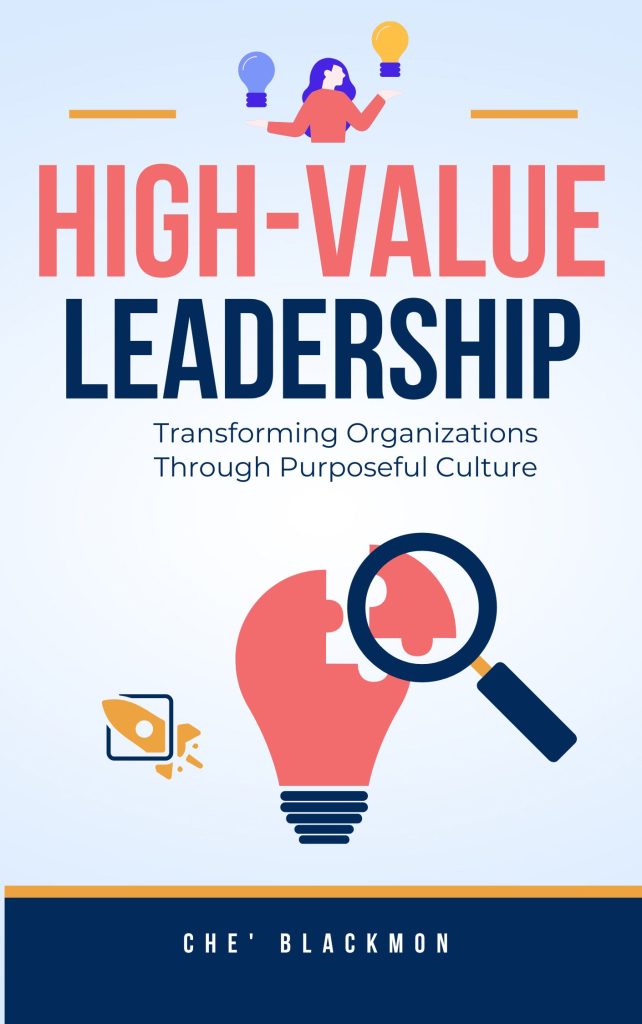
As explored in “High-Value Leadership: Transforming Organizations Through Purposeful Culture,” effective recognition transcends transactional approaches that rely heavily on material rewards. High-impact recognition programs align with the five languages of appreciation in the workplace: words of affirmation, quality time, acts of service, tangible gifts, and appropriate professional gestures.
Case Study: Financial Services Transformation
A financial services client was investing considerable resources in their recognition program but seeing minimal engagement impact. Analysis revealed they had created a one-size-fits-all approach heavily weighted toward public recognition and token gifts.
We implemented a personalized recognition framework based on individual appreciation preferences. Leaders were trained to identify and deliver recognition in ways that resonated with each team member. Some employees received public acknowledgment in team meetings, while others preferred private notes of appreciation or tangible expressions of gratitude.
The results were significant:
- Employee engagement scores increased by 28% within 12 months
- Voluntary turnover decreased by 23%
- Customer satisfaction ratings improved by 17%
- The organization achieved $3.2 million in savings from reduced turnover
- Revenue per employee increased by 14%
The ROI calculation showed that for every dollar invested in the redesigned recognition program, the company realized $5.70 in return through combined cost savings and performance improvements.
Calculating Recognition ROI
While the impact of recognition extends across multiple dimensions, calculating specific ROI helps justify investments and optimize programs. Here’s a framework for quantifying recognition returns:
Step 1: Identify Direct Cost Savings
- Reduced turnover costs (recruitment, onboarding, training)
- Decreased absenteeism
- Lower healthcare costs (engaged employees have fewer health issues)
- Reduced safety incidents and associated costs
Step 2: Calculate Performance Improvements
- Productivity increases
- Enhanced customer metrics (satisfaction, retention, spending)
- Quality improvements (reduced errors, rework, waste)
- Innovation metrics (new ideas implemented, process improvements)
Step 3: Account for Program Costs
- Technology platforms
- Tangible rewards
- Administrative time
- Training costs
Step 4: Calculate ROI
ROI = (Benefits – Costs) / Costs × 100
Example Calculation
For a mid-sized organization of 500 employees:
Benefits:
- Turnover reduction (15% decrease): $675,000
- Productivity improvement (5% increase): $1,250,000
- Absenteeism reduction (10% decrease): $125,000
- Total benefits: $2,050,000
Costs:
- Recognition platform: $36,000
- Rewards budget: $100,000
- Administrative time: $45,000
- Training: $25,000
- Total costs: $206,000
ROI Calculation: ($2,050,000 – $206,000) / $206,000 × 100 = 895% ROI
This means that for every dollar invested in recognition, the organization realizes $8.95 in return.

Recognition Program Best Practices
To maximize ROI from recognition efforts, consider these evidence-based best practices:
1. Align with Purpose and Values
Recognition should reinforce your organization’s core purpose and values. When recognition highlights behaviors that exemplify cultural priorities, it becomes a powerful tool for cultural reinforcement.
Case Study: Healthcare System Values Activation
A healthcare system implemented a values-based recognition program called “Living Our Values.” The program specifically recognized behaviors that demonstrated their core values of compassion, excellence, and integrity. Each recognition required linking the appreciated behavior to a specific value.
This approach increased values comprehension among employees from 62% to 94% within six months and improved patient satisfaction scores by 21% over the same period.
2. Balance Formal and Informal Recognition
Comprehensive recognition strategies include both formal programs (awards, service milestones, achievement celebrations) and informal acknowledgment (spontaneous appreciation, thank-you notes, verbal recognition).
Research by Bersin & Associates found that organizations with recognition programs involving both formal and informal elements are 12 times more likely to generate strong business results.
3. Implement Multi-directional Recognition
The most effective recognition cultures enable appreciation from multiple sources, not just top-down from managers to employees, but peer-to-peer, team-based, and even bottom-up recognition where employees can appreciate leaders.
Implementation Strategy: Create digital platforms where anyone can recognize colleagues across departments and hierarchical levels. Set recognition targets for leadership teams to model the behavior.
4. Personalize Recognition Approaches
As highlighted in “Mastering a High-Value Company Culture,” recognition experiences should be personalized to individual preferences. Some team members thrive on public acknowledgment, while others prefer private appreciation.
Implementation Strategy: Conduct appreciation language assessments during onboarding and store preferences in your HRIS or recognition platform. Train leaders on adapting recognition to individual preferences.
5. Make Recognition Timely and Specific
Recognition’s impact diminishes with delay. The most effective appreciation comes immediately after the observed behavior and specifically describes the action and its impact.
Research Insight: Neurological research shows that immediate recognition strengthens neural pathways associated with the appreciated behavior, making it more likely to be repeated.
The Detroit Lions Example: Recognition Driving Transformation
The remarkable transformation of the Detroit Lions under Dan Campbell’s leadership, as I discussed in “High-Value Leadership,” demonstrates recognition’s power in organizational culture. Campbell implemented consistent, authentic recognition practices that celebrated both effort and achievement.
Players noted that Campbell’s approach to recognition differed significantly from previous leadership, he didn’t just acknowledge star players or game-winning moments. Instead, he publicly recognized critical practice efforts, selfless teammate support, and personal growth. This comprehensive recognition approach built a culture of mutual accountability and continuous improvement that transformed team performance.
Current Trends in Recognition
Recognition programs continue to evolve with changing workplace dynamics. Current trends include:
1. Technology-Enabled Recognition
Digital platforms now enable real-time, social recognition that increases visibility and impact. These systems allow for data collection that helps organizations understand recognition patterns and impact.
2. Purpose-Driven Recognition
Organizations increasingly tie recognition to broader purpose and impact—acknowledging not just what employees achieved but how their contributions advanced organizational mission and benefited customers and communities.
3. Wellbeing Integration
Recognition programs are expanding to celebrate behaviors that support wellbeing, work-life integration, and sustainable performance, not just productivity metrics.
4. Inclusive Recognition Practices
Companies are reviewing recognition programs to ensure they’re accessible and meaningful across diverse employee populations, addressing potential biases in how appreciation is distributed.
Implementation Roadmap
To develop or enhance a recognition program with strong ROI, follow this implementation framework:
Phase 1: Assessment (4-6 weeks)
- Evaluate current recognition practices and their effectiveness
- Gather employee feedback on recognition preferences
- Benchmark against industry practices
- Identify key business metrics that recognition could influence
Phase 2: Design (4-6 weeks)
- Develop recognition strategy aligned with organizational values
- Create multi-faceted program incorporating formal and informal elements
- Design implementation plan with clear roles and responsibilities
- Establish measurement framework for tracking ROI
Phase 3: Implementation (8-12 weeks)
- Train leaders and employees on effective recognition practices
- Launch technology platforms and processes
- Implement communication strategy to build awareness
- Begin data collection for ROI measurement
Phase 4: Optimization (Ongoing)
- Regularly analyze program utilization and impact
- Gather participant feedback
- Calculate ROI using established framework
- Make continuous improvements based on findings
Questions for Reflection
As you consider your organization’s approach to recognition, reflect these questions:
- How well does your current recognition program align with your organizational values and strategic priorities?
- What metrics are you using to measure the impact and ROI of your recognition efforts?
- How personalized is your approach to recognition, accounting for individual preferences and appreciation languages?
- To what extent is recognition embedded in your daily operations versus reserved for special occasions?
- How effectively are you leveraging technology to scale and measure recognition impact?
- What barriers might be preventing recognition from becoming a natural part of your organizational culture?
Partner with Che’ Blackmon Consulting
Developing a recognition program that delivers substantial ROI requires expertise in both cultural dynamics and performance measurement. At Che’ Blackmon Consulting, we specialize in designing high-impact recognition systems that align with organizational values while delivering measurable business results.
Our Recognition ROI program provides:
- Comprehensive assessment of current recognition practices
- Custom design of recognition strategies aligned with your organizational context
- Implementation support and leader training
- ROI measurement frameworks and ongoing optimization
Each engagement is tailored to your organization’s unique challenges and aspirations, guided by the principles of authenticity, inclusion, excellence, innovation, and empowerment that form the foundation of our practice.
To learn how we can help your organization implement a recognition program with substantial ROI, contact us at admin@cheblackmon.com or 888.369.7243.
Recognition isn’t just about making employees feel good—although that’s certainly important. Strategic recognition programs are powerful drivers of business performance, directly impacting the metrics that matter most to organizational success. By implementing a thoughtful, personalized approach to appreciation, you can create a high-value culture where both people and performance thrive.
#EmployeeRecognition #WorkplaceCulture #LeadershipDevelopment #EmployeeEngagement #RetentionStrategy #OrganizationalPerformance #WorkplaceProductivity #ROI