

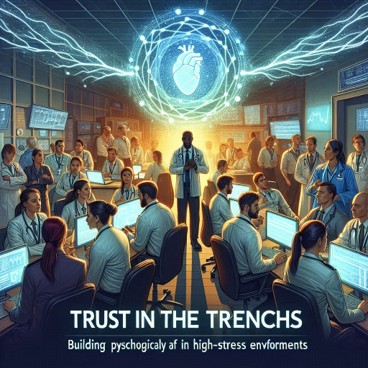
The emergency room was in chaos. A multi-car accident had just brought in seven critical patients. Yet in the midst of this high-stress environment, something remarkable happened. A first-year resident noticed a potential medication error about to occur with a senior attending physician’s order. She spoke up immediately. The attending stopped, checked, and corrected the error. No defensiveness. No hierarchy pulling rank. Just a quick “Good catch, thank you.”
This scene illustrates psychological safety in action—the foundation of high-performance teams, especially in high-stress environments.
Understanding Psychological Safety in the Pressure Cooker
Psychological safety, a term coined by Harvard Business School professor Amy Edmondson, refers to a shared belief that the team is safe for interpersonal risk-taking. It’s the confidence that you won’t be embarrassed, rejected, or punished for speaking up with ideas, questions, concerns, or mistakes.
In high-stress environments—whether emergency rooms, trading floors, production deadlines, or crisis management situations—psychological safety becomes even more critical. Yet paradoxically, stress often erodes the very safety needed to perform effectively under pressure.
Research from Google’s Project Aristotle identified psychological safety as the number one factor distinguishing high-performing teams from others. Teams with high psychological safety show:
- 27% reduction in turnover
- 40% increase in employee engagement
- 12% increase in productivity
- 47% higher likelihood of successful innovation
As I explored in “High-Value Leadership: Transforming Organizations Through Purposeful Culture,” creating environments where people can thrive requires intentional culture-building, and psychological safety forms the bedrock of that culture.
The Higher Stakes for Black Women and Traditionally Overlooked Talent 💪
For Black women and other traditionally overlooked professionals, the absence of psychological safety in high-stress environments creates a devastating double bind. They’re simultaneously navigating the stress of the work itself plus the additional stress of systemic bias and cultural taxation.
Consider these realities:
- Black women are 2.5 times more likely to be perceived as “angry” when expressing the same concerns as white colleagues
- 75% of Black professionals report code-switching at work to fit in
- Women of color receive 34% more questioning about their judgment than white men
- Black women are interrupted in meetings 23% more frequently than white women and 35% more than white men
In “Rise & Thrive: A Black Woman’s Blueprint for Leadership Excellence,” I discussed how Black women must often choose between psychological safety and authenticity. In high-stress environments, this choice becomes even more acute.
Case Study: Dr. Williams’s Dilemma
Dr. Keisha Williams, a Black woman surgeon, worked in a high-pressure cardiac unit. Despite her stellar credentials from Johns Hopkins, she faced constant microaggressions. Nurses questioned her orders more than those of white colleagues. Other surgeons routinely explained basic procedures to her. When she raised concerns about a new protocol’s safety issues, she was labeled “difficult” while a white male colleague who raised similar concerns was praised as “thorough.”
The lack of psychological safety didn’t just impact Dr. Williams personally—it nearly led to a patient crisis when she hesitated to voice an urgent concern, weighing whether it was worth being seen as “aggressive” again. Only her commitment to patient care overrode her learned silence.
The Anatomy of Psychological Safety in High-Stress Environments 🔬
The Four Stages of Psychological Safety (Timothy R. Clark’s Model):
1. Inclusion Safety
- Feeling included in the team
- Basic human need for belonging
- Foundation for all other safety
2. Learner Safety
- Safe to ask questions
- Safe to make mistakes
- Safe to ask for help
3. Contributor Safety
- Safe to contribute ideas
- Safe to challenge status quo
- Safe to offer suggestions
4. Challenger Safety
- Safe to disagree with authority
- Safe to point out problems
- Safe to innovate boldly
In high-stress environments, teams often skip straight to demanding Challenger Safety without establishing the foundation of Inclusion and Learner Safety. This creates a facade of safety that crumbles under pressure.
Building Trust When the Heat Is On 🔥
The TRUST Framework for High-Stress Environments:
T – Transparency in Communication
- Share information openly, even when incomplete
- Admit uncertainties and unknowns
- Explain decision-making processes
- Acknowledge stress and pressure
R – Reliability Through Consistency
- Follow through on commitments, especially small ones
- Establish and maintain routines even in chaos
- Create predictable check-in points
- Respond consistently to both success and failure
U – Understanding Different Perspectives
- Actively seek diverse viewpoints before crisis hits
- Create structured ways to hear all voices
- Acknowledge how stress affects people differently
- Validate experiences without judgment
S – Support Systems That Function Under Pressure
- Build redundancy in support mechanisms
- Create buddy systems for high-stress periods
- Establish clear escalation paths
- Provide stress recovery resources
T – Team Learning from Every Experience
- Conduct blame-free debriefs
- Celebrate learning from near-misses
- Share lessons across teams
- Reward truth-telling over face-saving
Real-World Implementation: The Navy Nuclear Program Model
The U.S. Navy’s nuclear submarine program operates in one of the world’s highest-stress environments—underwater, with nuclear reactors, for months at a time. Yet they maintain an exceptional safety record through deliberate psychological safety practices:
1. “Forceful Backup” Anyone, regardless of rank, is expected to speak up immediately if they see a safety concern.
2. “Critique Culture” Every operation is followed by a critique where the lowest-ranking person speaks first.
3. “No Stupid Questions” Questions are rewarded, even celebrated, regardless of how basic.
4. “Conservative Decision-Making” When in doubt, the safe choice is always right, without career penalty.
Result: Zero reactor accidents in over 5,700 reactor-years of operation.
Creating Safety for Traditionally Overlooked Voices 🌟
Specific Strategies for Inclusive Psychological Safety:
1. Amplification Protocols
- Repeat and credit ideas from overlooked team members
- Use structured techniques like “no interruption” rounds
- Implement written idea submission before verbal discussion
- Track and address participation patterns
2. Bias Interruption Systems
- Create “bias timeout” signals anyone can use
- Rotate meeting leadership and facilitation
- Use anonymous concern reporting systems
- Regular bias training focused on stress responses
3. Cultural Competence in Crisis
- Acknowledge different cultural stress responses
- Avoid tone policing, especially under pressure
- Create multiple communication channels
- Respect different processing styles
4. Sponsorship in the Spotlight
- Senior leaders actively sponsor overlooked talent
- Public recognition of contributions
- Protected spaces for honest feedback
- Career protection for truth-tellers
The Business Case: High-Stress Performance Metrics 📊
Organizations with high psychological safety in high-stress environments show:
Operational Excellence:
- 74% fewer safety incidents
- 67% faster problem resolution
- 45% better crisis recovery times
- 89% higher quality scores
Innovation Under Pressure:
- 3x more process improvements
- 64% better adaptation to change
- 52% more successful rapid pivots
- 41% higher creative problem-solving scores
Talent Retention:
- 49% lower burnout rates
- 62% higher job satisfaction in high-stress roles
- 71% better team cohesion scores
- 38% lower turnover in critical positions
Current Trends and Best Practices 🔮
Emerging Approaches:
1. “Psychological Safety Officers” Organizations are appointing dedicated roles to monitor and improve psychological safety, especially in high-stress departments.
2. Real-Time Safety Metrics Digital tools that measure psychological safety through communication patterns, response times, and participation rates.
3. Stress Inoculation Training Practicing psychological safety behaviors under simulated stress before real crises hit.
4. Inclusive Crisis Protocols Building diverse perspectives into crisis management plans from the start, not as an afterthought.
Leading Organizations’ Practices:
Microsoft: Implemented “Daily Active Questions” where team members rate psychological safety and discuss scores weekly.
Bridgewater Associates: Created “Baseball Cards” showing each person’s strengths and weaknesses, normalizing imperfection.
Amazon Web Services: Uses “Correction of Errors” (COE) documents that celebrate mistake-catching without blame.
Cleveland Clinic: Established “Safety Coaches” in every unit who facilitate speak-up culture during high-stress procedures.
Practical Tools and Techniques 🛠️
The Pre-Stress Safety Check:
Before entering high-stress periods (product launches, busy seasons, crisis response):
1. Team Safety Assessment
- Anonymous survey on current safety levels
- Identify specific stress triggers
- Map individual support needs
- Create stress response plans
2. Communication Protocols
- Establish check-in frequencies
- Create clear escalation paths
- Define emergency communication rules
- Set boundary agreements
3. Support Structure Activation
- Assign stress buddies
- Schedule recovery periods
- Prepare stress relief resources
- Plan celebration moments
The In-Stress Safety Maintenance:
During high-stress periods:
Morning Huddles (5 minutes):
- Quick emotional check-in
- Identify top stressors for the day
- Offer/request specific support
- Affirm team commitment
Midday Resets (2 minutes):
- Pause for collective breathing
- Quick wins celebration
- Adjustment announcements
- Encouragement exchange
End-of-Day Decompress (10 minutes):
- Acknowledge the day’s challenges
- Appreciate specific contributions
- Flag concerns for tomorrow
- Transition ritual to leave work stress
The Post-Stress Learning Lab:
After high-stress periods:
1. Immediate Debrief (Same Day)
- What went well?
- What was harder than expected?
- Who needs immediate support?
- Quick wins to celebrate?
2. Deep Dive Analysis (Within 72 Hours)
- System breakdown examination
- Communication effectiveness review
- Support system evaluation
- Innovation opportunities identified
3. Integration Planning (Within One Week)
- Process improvements codified
- Training needs identified
- Recognition delivered
- Preventive measures implemented
Building Your Psychological Safety Action Plan 🎯
Week 1: Assessment and Awareness
Day 1-2: Self-Assessment
- How safe do you feel speaking up?
- When do you self-censor?
- What triggers your silence?
- Where do you need more safety?
Day 3-4: Team Temperature Check
- Anonymous safety survey
- Stress point identification
- Current state documentation
- Gap analysis
Day 5-7: Leadership Alignment
- Share findings with leadership
- Identify quick wins
- Get commitment for change
- Plan rollout strategy
Month 1: Foundation Building
Week 2: Inclusion Safety
- Implement daily check-ins
- Create belonging rituals
- Address exclusion patterns
- Celebrate diverse contributions
Week 3: Learner Safety
- Normalize questions
- Celebrate mistakes as learning
- Create practice spaces
- Share vulnerability from the top
Week 4: Contributor Safety
- Rotate meeting leadership
- Implement idea protocols
- Create contribution tracking
- Recognize all input
Quarter 1: Culture Embedding
Month 2: Stress Testing
- Practice safety under pressure
- Simulate crisis scenarios
- Test communication systems
- Refine support structures
Month 3: Scaling and Sustaining
- Expand successful practices
- Train safety champions
- Integrate into operations
- Measure and adjust
For Black Women Leaders: Your Unique Role and Opportunity 💫
As a Black woman leader, you have unique insights into what psychological safety truly means. You’ve likely navigated environments where it was absent. This gives you superpowers in creating it for others.
Your Strategic Advantages:
1. Authenticity Modeling When you show up authentically despite the risks, you give others permission to do the same.
2. Inclusive Excellence Your experience navigating exclusion helps you spot and address safety gaps others miss.
3. Resilience Teaching You’ve developed coping strategies that can benefit entire teams under stress.
4. Bridge Building Your code-switching abilities can help create safety across different groups.
Self-Protection Strategies:
1. Document Everything Keep records of your contributions to psychological safety initiatives.
2. Build Your Coalition Don’t carry this alone—create allies across the organization.
3. Set Your Boundaries You can’t be the sole creator of safety for everyone else.
4. Get Your Support Ensure you have your own psychological safety net outside the organization.
Discussion Questions for Reflection 💭
- When have you experienced true psychological safety in a high-stress situation? What made it possible?
- What specific behaviors or systems in your workplace currently undermine psychological safety, especially during stressful periods?
- How might psychological safety look different for various groups in your organization?
- What’s one thing you could do tomorrow to increase psychological safety for someone on your team?
- How do you balance being a truth-teller with protecting your own career advancement?
Your Next Steps: From Survival to Safety 🚀
Psychological safety in high-stress environments isn’t a luxury—it’s a necessity for sustained high performance, innovation, and wellbeing. The choice isn’t whether to build it, but how quickly you can establish it before the next crisis hits.
Ready to transform your high-stress environment into a high-trust culture?
Che’ Blackmon Consulting specializes in building psychological safety in challenging environments, with particular expertise in creating inclusive safety for traditionally overlooked talent.
We offer:
✅ Psychological Safety Assessment – Comprehensive evaluation of current safety levels and specific risk areas
✅ High-Stress Culture Transformation – Systematic approach to building trust under pressure
✅ Inclusive Safety Protocols – Targeted strategies for protecting traditionally overlooked voices
✅ Crisis Leadership Development – Building leaders who create safety when stakes are highest
✅ Team Resilience Training – Practical tools for maintaining safety during challenging periods
Don’t wait for the next crisis to expose the cracks in your culture. Build psychological safety now.
📞 Schedule your consultation: 888.369.7243
📧 Email: admin@cheblackmon.com
🌐 Learn more: www.cheblackmon.com
Because when the pressure rises, psychological safety isn’t just about feelings—it’s about performance, innovation, and survival.
Che’ Blackmon, SPHR, is the founder of Che’ Blackmon Consulting and author of “Mastering a High-Value Company Culture” and “High-Value Leadership: Transforming Organizations Through Purposeful Culture.” With over 20 years of experience transforming organizational cultures, she specializes in creating psychologically safe environments where all talent—especially traditionally overlooked professionals—can thrive under pressure.
#PsychologicalSafety #HighStressLeadership #TeamPerformance #InclusiveLeadership #CrisisManagement #BlackWomenInLeadership #TrustInTeams #HighValueCulture #WorkplaceSafety #LeadershipDevelopment #OrganizationalCulture #TeamDynamics #StressManagement #DiversityAndInclusion #ExecutiveLeadership