


What Exit Interviews Don’t Tell You (But Should)
She was your star performer. The one who always delivered. The one who mentored newer team members, stayed late when projects demanded it, and brought energy to every meeting. Then she handed in her resignation.
You were shocked.
You conducted the exit interview. She smiled, thanked you for the opportunity, said something vague about “career growth” or “new challenges,” and walked out the door. Two weeks later, you learned through the grapevine that she’s thriving at a competitor—doing essentially the same role, for similar pay.
So what really happened? 🤔
Here’s the uncomfortable truth: good employees rarely leave because of what they tell you in exit interviews. They leave because of what they stopped telling you months—sometimes years—before they started job hunting.
And if you’re losing your best people, especially your high-performing Black women and other traditionally overlooked talent, the problem isn’t the job market. It’s not “quiet quitting.” It’s not generational differences.
The problem is leadership. And culture. And the gap between what you think is happening and what’s actually happening.
Let’s talk about what really drives good employees away—and what you can do about it before your next star performer updates their LinkedIn profile.
The Exit Interview Lie 🎭
Exit interviews are corporate theater. Everyone knows their lines.
The employee leaving says: “It’s a great opportunity for growth” or “The timing was right” or “It’s not you, it’s me.”
The employer hears: “We did everything we could. Some people just want more.”
But research from the Work Institute’s Retention Report reveals something different: 77% of turnover is preventable. That’s not a typo. Three out of four employees who leave could have been retained if the real issues had been identified and addressed.
So why don’t people tell the truth on their way out?
Because they’re exhausted from not being heard on their way up.
Because burning bridges in your industry is bad strategy, even when the bridge deserves burning.
Because they’ve already emotionally detached, and spending their final days explaining what leadership should have noticed feels pointless.
Because for Black women in particular, there’s a calculation: “If I tell them the real reason—the microaggressions, the being overlooked for promotions, the double standards—will they believe me? Or will I become ‘that angry Black woman’ in their story?”
The exit interview isn’t where you learn why people leave. It’s where you learn how little trust existed before they left.
What the Research Really Shows 📊
Gallup’s extensive workplace studies consistently show that people don’t leave jobs—they leave managers and cultures. But let’s get more specific about what drives that decision.
The Top Five Real Reasons Good Employees Leave:
1. Lack of Career Development and Growth
Not just “no promotion opportunities”—that’s too simple. It’s watching less qualified people get promoted while your contributions are praised but never rewarded. It’s being told you’re “not ready yet” without clear criteria for what “ready” looks like. It’s investing in your own development because your organization won’t invest in you.
For Black women, this reality cuts deeper. McKinsey’s “Women in the Workplace” research shows that Black women face more barriers to advancement than any other demographic. We’re promoted at significantly lower rates than white women and all men. We’re less likely to have sponsors. We’re more likely to have our leadership potential questioned.
When a high-performing Black woman leaves for “career growth,” what she’s often leaving is a ceiling she could see but you refused to acknowledge.
2. Feeling Undervalued and Unrecognized
Your top performers aren’t asking for daily gold stars. They’re asking for proportional recognition—compensation, opportunities, influence—that matches their contribution.
There was a company who lost three senior Black women within six months. All were top performers. All cited “better opportunities.” The real story? Each had been doing director-level work at manager-level pay. Each had been promised “we’ll get you there” for over a year. Each watched white male peers with less experience get promoted first.
When they left, leadership was genuinely surprised. “We valued them,” executives said. But value is demonstrated, not declared. If your best people are leaving for 20-30% raises elsewhere, they weren’t properly valued here.
3. Poor Leadership and Management
The saying “people don’t leave companies, they leave managers” exists because it’s statistically true. But what does “poor management” actually mean?
It means managers who:
- Micromanage instead of trust
- Take credit for team wins but distance themselves from team struggles
- Play favorites without even realizing it
- Avoid difficult conversations until exit interviews
- Confuse “busy” with “productive” and measure face time over impact
- Ask for input but have already made decisions
- Say they value work-life balance while rewarding overwork
For traditionally overlooked employees, add these layers:
- Managers who claim to “not see color” while never noticing patterns of inequity
- Leaders who are “mentors” but never sponsors
- Supervisors who praise in private but promote others in public
- Managers who interpret confidence as aggression when it comes from Black women
4. Toxic or Misaligned Culture
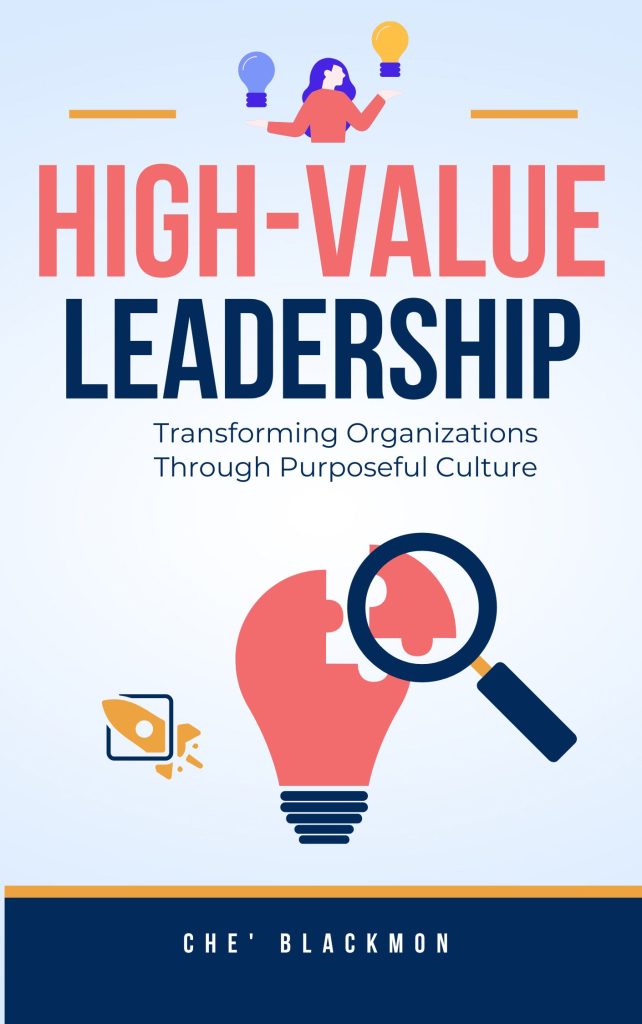
High-Value Leadership: Transforming Organizations Through Purposeful Culture makes this point repeatedly: culture isn’t what you say in your values statement—it’s what you tolerate in your hallways.
Good employees leave when:
- The stated values contradict daily reality
- Politics matter more than performance
- Speaking up leads to being sidelined
- “Diversity” is a recruiting slogan but not a retention commitment
- Work-life balance is preached but presenteeism is rewarded
- Innovation is celebrated in theory but punished in practice
- Mistakes are career-ending rather than learning opportunities
A financial services firm couldn’t understand why they kept losing talented Black women after 18-24 months. Exit interviews mentioned “cultural fit.” The real issue? Their “collaborative culture” meant Black women’s ideas were consistently credited to others. Their “high-performance culture” meant Black women were held to different standards—their wins were minimized, their mistakes magnified. Their “family culture” meant white employees got grace and flexibility while Black women got scrutinized.
The culture wasn’t toxic for everyone. It was toxic for them. And that’s the point.
5. Lack of Flexibility and Autonomy
The pandemic permanently shifted expectations around work. Employees who proved they could deliver results remotely are now being told they must return to offices full-time—often without clear business justification.
But it’s deeper than location. It’s about trust. It’s about being treated like responsible adults who can manage their work. It’s about having input into how work gets done, not just being told to execute someone else’s vision of productivity.
High performers especially resist micromanagement. They’ve proven their competence. Being treated like they need constant supervision feels insulting—and it is.
The Compounding Cost of Turnover 💸
Let’s talk money, because sometimes that’s what makes leaders pay attention.
Losing an employee costs between 50-200% of their annual salary when you factor in:
- Recruitment costs
- Onboarding and training
- Lost productivity during the vacancy
- Institutional knowledge walking out the door
- Decreased morale among remaining team members
- Increased burden on teams covering the work
- Potential client/project disruptions
But there’s a hidden cost that doesn’t show up in spreadsheets: the message it sends.
When your best Black woman leader leaves, what do the other Black women on your team learn? That excellence isn’t enough. That this isn’t where they’ll reach their potential. That they should update their resumes too.
When high performers leave and you replace them with less expensive, less experienced people, what does that tell your remaining top talent? That you don’t actually value excellence—you value cost savings.
Turnover begets turnover. One departure cracks the foundation. Multiple departures, especially among your best people, creates an avalanche.
What Leaders Get Wrong About Retention 🚫
Before we talk about solutions, let’s address the myths:
Myth #1: “It’s About Money”
Sometimes, yes. But research consistently shows compensation ranks 3rd-5th among reasons people leave. If someone leaves for a 10-15% raise, money wasn’t the real reason—it was the validation that somewhere else values them more.
Myth #2: “People Today Just Job Hop”
This conveniently absolves leadership of responsibility. The truth? People stay where they’re valued, developed, and respected. They leave where they’re not. Generational differences don’t explain why your company specifically can’t retain talent.
Myth #3: “We Can’t Compete With Big Tech/Startups/Etc.”
You’re competing on the wrong dimensions. Google can outpay most companies. But can they provide the meaningful work, growth opportunities, inclusive culture, and leadership that retains great people? Sometimes yes, sometimes no. Focus on what you can control.
Myth #4: “Exit Interviews Tell Us What We Need to Know”
If you’re learning about problems in exit interviews, you’ve already failed. Exit interviews are autopsies. You need diagnostics while the patient is alive.
Myth #5: “We Treat Everyone the Same”
This sounds fair. It’s not. “Treating everyone the same” in an unequal system perpetuates inequality. Black women don’t need identical treatment—they need equitable treatment that accounts for different barriers and experiences.
The Rise & Thrive Perspective: What Black Women Know About Leaving 💪🏾
Rise & Thrive: A Black Woman’s Blueprint for Leadership Excellence addresses a reality many leadership books ignore: Black women in corporate America are constantly calculating whether to stay or go.
We’re assessing:
- Is the mental and emotional labor worth the opportunity?
- Am I being developed or just used?
- Is this environment safe enough to bring my full self?
- Are the barriers to advancement surmountable or systemic?
- What’s the cost to my health, my confidence, my career trajectory of staying?
These aren’t dramatic questions. They’re survival questions in spaces that weren’t designed for us.
When Black women leave—especially those who’ve been successful—we’re not giving up. We’re giving ourselves permission to stop fighting for scraps and go where we’re properly valued.
The companies that retain us understand this. They:
- Create clear paths to leadership and actually promote us along them
- Provide sponsors, not just mentors
- Address microaggressions and bias proactively, not reactively
- Measure inclusion as rigorously as they measure productivity
- Value our perspective as strategic insight, not diversity box-checking
- Protect our well-being, not just extract our labor
Building a Culture That Retains Excellence ✨
Mastering a High-Value Company Culture centers on a fundamental truth: retention is a byproduct of culture, not a standalone initiative.
You don’t retain great people by offering ping pong tables and free snacks. You retain them by building a culture where excellence is recognized, development is intentional, equity is practiced, and people feel genuinely valued.
Here’s how:
Create Transparent Career Pathways
Vague promises about “future opportunities” don’t retain top talent. Clear criteria, visible advancement paths, and consistent application of promotion standards do.
Action Steps:
- Document what each level requires (skills, experience, impact)
- Make promotion criteria public and consistent
- Provide regular feedback on progress toward next level
- Set timelines and hold yourself accountable
- Track promotion rates by demographic—if patterns emerge, investigate why
Invest in Meaningful Development
“Professional development” can’t just be a budget line that gets cut when money tightens. It must be strategic, personalized, and tied to career goals.
Action Steps:
- Create individual development plans with each team member
- Provide stretch assignments that build toward their goals
- Fund conferences, courses, and certifications
- Offer mentorship AND sponsorship
- Create leadership development programs with clear outcomes
Practice Recognition That Matters
Recognition isn’t just “Employee of the Month” plaques. It’s compensation equity, promotion fairness, project assignments, speaking opportunities, and public credit for work.
Action Steps:
- Conduct regular compensation audits for equity
- Ensure credit goes to the right people, especially in group work
- Provide recognition in the currency people value (some want visibility, others want flexibility)
- Make gratitude specific, not generic
- Tie recognition to advancement, not just appreciation
Build Psychologically Safe Environments
People stay where they can be honest, make mistakes, disagree respectfully, and voice concerns without fear of retaliation.
Action Steps:
- Model vulnerability as a leader—admit mistakes, ask for help
- Create multiple channels for feedback (anonymous surveys, skip-levels, town halls)
- Respond to feedback with action, not defensiveness
- Address toxic behavior swiftly, regardless of who’s involved
- Measure psychological safety regularly and improve based on data
Address Inequity Proactively
Waiting for complaints about bias or discrimination is too late. High-value cultures identify and address inequity before it drives people away.
Action Steps:
- Analyze metrics by demographic (pay, promotions, performance ratings, retention)
- Conduct listening sessions with underrepresented groups
- Train leaders on bias, not as one-time compliance but as ongoing skill development
- Create accountability for diversity and inclusion at leadership level
- Make equity a performance metric for managers
Provide Flexibility and Autonomy
Trust your people to manage their work. Focus on outcomes, not attendance. Give them input into how goals are achieved.
Action Steps:
- Default to flexibility unless there’s specific need for structure
- Measure results, not hours
- Allow input into work arrangements
- Trust until there’s reason not to, not the reverse
- Support true work-life integration

The Stay Interview: Your Early Warning System 🎯
Don’t wait for exit interviews. Conduct stay interviews.
Ask your best people:
- What makes you excited to come to work?
- What would make you consider leaving?
- What do you want to learn or achieve here?
- Do you feel valued? How do we demonstrate that (or fail to)?
- What would you change about this team or organization?
- Is there something I should know that I’m not asking about?
Then—and this is critical—act on what you learn.
Having conversations without taking action is worse than not having conversations at all. It signals that you’re performing care without actually caring.
Warning Signs Your Culture Is Driving People Away ⚠️
Pay attention to these signals:
- Silence in meetings where there should be discussion (people have disengaged)
- Increased sick days and PTO among high performers (they’re burnt out or interviewing)
- Decreased participation in voluntary activities (they’re doing minimum required)
- Projects take longer with less enthusiasm (motivation has dropped)
- More complaints to HR (informal resolution has failed)
- Your top performers stop advocating for others (they’re focused on their own exit)
- Departures cluster among certain demographics (systemic issues exist)
- People decline opportunities they would have jumped at before (they’re emotionally checking out)
When Someone Resigns: The Last Opportunity 🚪
Even if someone has decided to leave, how you handle their departure matters.
Do This:
- Have an honest conversation about what could have been different
- Express genuine appreciation for their contributions
- Make their transition smooth (don’t punish them for leaving)
- Stay in touch—alumni networks are valuable
- Learn from their departure to prevent the next one
Don’t Do This:
- Take it personally or act betrayed
- Make their final weeks miserable
- Badmouth them after they leave
- Dismiss their feedback as sour grapes
- Assume “nothing could have prevented this”
The way you treat departing employees tells remaining employees everything about your character as a leader.
Creating an Alumni Advantage 🌐
Smart organizations maintain relationships with former employees. Why?
- They might return with new skills and perspective
- They become ambassadors (or critics) of your brand
- They’re potential clients, partners, or referral sources
- They provide honest feedback about what’s changed (or hasn’t)
A technology company created a formal alumni network. They invited former employees to quarterly events, shared company updates, and maintained the relationship. Over three years, 12 high performers returned to the organization—bringing new expertise and costing far less than external recruitment. More importantly, their alumni network generated multiple client relationships and referrals.
Treat departures as relationship transitions, not endings.
Your Retention Action Plan 📋
Here’s what you can implement immediately:
This Week:
- Schedule stay interviews with your top 3 performers
- Review recent exits—what patterns exist?
- Identify one high performer who seems disengaged—have a real conversation
This Month:
- Audit promotion and compensation data by demographic
- Survey your team on culture and engagement (anonymous option available)
- Document career pathways and share them
- Review your management team’s retention rates—who’s losing people and why?
This Quarter:
- Implement regular feedback loops (not just annual reviews)
- Create or refresh your recognition systems
- Address at least one systemic inequity uncovered in your audit
- Invest in leadership development focused on retention
- Build psychological safety metrics into team health assessments
This Year:
- Overhaul your performance management if it’s demotivating top talent
- Create sponsorship programs for high-potential employees, especially those traditionally overlooked
- Build flexibility into your work model based on employee input
- Track retention as rigorously as you track revenue
- Make culture and retention a board-level conversation
The Leadership Mirror 🪞
Here’s the hardest question: Are you the kind of leader you would stay for?
Do you:
- Develop your people or just use them?
- Give credit or take it?
- Create psychological safety or fear?
- Address problems or avoid them?
- Value equity or just equality?
- Listen to understand or to respond?
- See employees as whole humans or just resources?
The leaders who retain great people answer honestly. Then they do the work to become better.
Because here’s what’s true: you can have all the retention strategies in the world. You can offer competitive pay, great benefits, flexible work, and development opportunities. But if your leadership is toxic, your culture is broken, or your equity is performative, good people will still leave.
They’ll just be more polite about it in the exit interview.
Discussion Questions for Leadership Teams 💬
Use these to facilitate honest conversations:
- When was the last time someone on our team gave us critical feedback about culture or leadership? What did we do with it?
- Look at our last 5-10 departures. What patterns exist in who leaves, when they leave, and where they go? What’s the story those patterns tell?
- If we surveyed our team anonymously about whether they feel valued, developed, and respected—what percentage would say yes? What makes us confident in that answer?
- Which employees are likely flight risks right now? What specific actions are we taking to address whatever’s driving that risk?
- How do we know if underrepresented employees have equitable experiences here? What data are we tracking? What stories are we hearing?
- If our best performer resigned tomorrow, would we be surprised? If yes, why don’t we know what’s really happening with our top talent?
- What would our former employees say about us if they felt completely safe being honest? How do we create space to actually hear that?
Next Steps: Stop the Bleeding, Build the Culture 🏗️
Immediate Actions:
- Identify your retention rate by demographic and role—knowledge precedes action
- Have honest stay conversations with your top performers this week
- Review your last three exits with brutal honesty about what you could have done differently
Strategic Actions:
- Build retention into leadership performance metrics
- Create early warning systems (engagement surveys, skip-levels, stay interviews)
- Address compensation and promotion equity gaps with urgency
- Invest in middle management—they’re your retention frontline
Cultural Actions:
- Make psychological safety measurable and improve it systematically
- Create clear career pathways with transparent criteria
- Build sponsorship, not just mentorship, especially for traditionally overlooked talent
- Shift from exit interviews to stay interviews as your primary feedback mechanism
Partner With Che’ Blackmon Consulting 🤝
If good employees are leaving—especially your high-performing Black women and other traditionally overlooked talent—something fundamental is broken. It’s not a retention problem. It’s a culture problem. It’s a leadership problem. And it requires more than surface-level solutions.
Che’ Blackmon Consulting works with leaders and organizations ready to do the real work of building cultures where excellence stays, grows, and thrives. We bring deep expertise in organizational culture, inclusive leadership, and retention strategy grounded in research and real-world results.
We can help you:
- Conduct honest culture assessments that identify what’s really driving turnover
- Develop retention strategies that address root causes, not symptoms
- Build leadership capacity for creating psychologically safe, equitable environments
- Design career pathways and development systems that retain top talent
- Transform from reactive exit management to proactive culture building
- Create accountability systems for retention and equity
The strongest organizations don’t lose their best people. They create cultures where the best people choose to stay, grow, and build their careers.
Ready to stop losing your top talent and start building the culture that retains them?
📧 admin@cheblackmon.com
📞 888.369.7243
🌐 cheblackmon.com
Your best employees aren’t leaving for better jobs. They’re leaving for better leadership and culture. The good news? That’s something you can change—starting today. ✨
#EmployeeRetention #TalentRetention #HighValueLeadership #OrganizationalCulture #EmployeeTurnover #LeadershipDevelopment #CompanyCulture #BlackWomenInLeadership #DiversityAndInclusion #EmployeeEngagement #PeopleFirst #CultureMatters #RetentionStrategy #InclusiveLeadership #WorkplaceCulture