

By Che’ Blackmon | Founder & CEO, Che’ Blackmon Consulting | DBA Candidate, Organizational Leadership
Here’s a question that might sting a little: When was the last time you created a strategic plan for your own leadership development?
Most leaders I encounter can recite their organization’s strategic priorities in their sleep. They know their company’s five-year vision, quarterly OKRs, and department KPIs. But ask them about their personal leadership goals—specific, measurable objectives for their own growth—and you’ll often get a pause, followed by something vague about “wanting to be a better leader” or “hoping to get promoted someday.”
Hope is not a strategy. Neither is waiting for someone else to invest in your development.
In today’s rapidly evolving workplace, the leaders who thrive are those who take radical ownership of their growth. They don’t wait for their organization to create a development plan for them. They build their own.
Why Personal Strategic Planning Matters Now More Than Ever 📊
The landscape of leadership is shifting beneath our feet. According to Vistage research, 72% of CEOs utilize an internally developed approach for strategic planning—yet in today’s volatile economic climate, solely relying on self-built frameworks handed down generationally is no longer sufficient. If this is true for organizational strategy, it’s even more critical for personal leadership development.
SHRM’s 2025 State of the Workplace report reveals that more than a third of workers report heavier workloads from unfilled roles. Leaders are being asked to do more with less, navigate constant change, and somehow find time for their own development. Without a strategic approach, that development simply doesn’t happen.
The Balanced Scorecard Institute puts it plainly: “Organizations thrive when their people thrive. Human capacity—skills, attitudes, and mindset—becomes the driving force behind achieving goals.” A growth mindset, they note, fosters continuous learning, resilience, and adaptability. Leaders with this mindset embrace challenges, learn from failures, and drive innovation.
“Leadership goals are different from individual goals because they focus on fostering a shared vision and direction for a group.” — Richard Nolan, Chief People Officer, Epos Now
This is the heart of what I call High-Value Leadership™—the intentional cultivation of skills, relationships, and influence that transforms not just your career, but the cultures around you.
The Unique Strategic Imperative for Black Women Leaders 💪🏾
If personal strategic planning is important for every leader, it’s absolutely essential for Black women navigating corporate spaces.
Research published in the Journal of Occupational and Organizational Psychology in 2024 found that effective resource acquisition and career goal attainment for Black and Asian women requires “individual proactivity”—defined as taking initiative, challenging the status quo, and being self-starting and future-focused. The researchers note that strategizing, which involves having a plan of action to achieve a major goal, is a prominent part of being proactive.
In other words, waiting for the system to develop you is not a viable strategy when the system wasn’t built with you in mind.
The National Association of Colleges and Employers (NACE) research highlights this reality: “The leadership development models that do exist exclude the perspectives of Black and Brown women and do not account for their unique positioning between multiple, marginalized identities.” Black women must often create their own development frameworks because traditional ones don’t serve their needs.
Consider the barriers: Women of color are promoted to management at significantly lower rates—only 74 for every 100 men. Black women hold just 4% of C-suite positions. And according to data from the Women of Color Retail Alliance, women of color are often concentrated in frontline and administrative roles with the narrowest paths to advancement.
Yet despite these obstacles, Black women demonstrate remarkable resilience and strategic capability. Research on successful Black women executives reveals a common thread: they approach their careers with intentionality, building advocacy skills, relationship networks, and strategic career plans that support their development.
This is why I wrote “Rise & Thrive: A Black Woman’s Blueprint for Leadership Excellence.” When traditional pathways are blocked, you build your own. Your personal strategic plan becomes your compass through terrain that wasn’t designed for your journey.
The SMART Framework: Making Goals That Actually Work 🧠
You’ve probably heard of SMART goals before. But there’s a reason this framework endures: it works. SMART goals transform vague aspirations into actionable targets you can track and achieve.
Let me break down what SMART actually means for leadership development:
S — Specific
Vague goals produce vague results. Instead of “I want to be a better communicator,” try: “I will develop active listening skills by attending a workshop and practicing daily reflection over the next three months.”
M — Measurable
If you can’t measure it, you can’t manage it. Establish clear criteria for success. How will you know you’ve achieved your goal? What metrics will you track?
A — Achievable
Stretch yourself, but stay realistic. Goals should challenge you without setting you up for failure. Consider your current resources, time constraints, and competing priorities.
R — Relevant
Your goals should align with your larger leadership vision and career trajectory. Ask yourself: Does this goal move me toward the leader I want to become? Does it support my professional aspirations?
T — Time-Bound
Goals without deadlines are dreams. Set specific timeframes that create urgency and accountability.
Example of a Weak Goal: “I want to improve my leadership skills.”
Example of a SMART Goal: “I will complete a leadership training course and mentor at least two team members in leadership skills within the next six months, tracking progress through monthly check-ins and 360-degree feedback at the end of the period.”
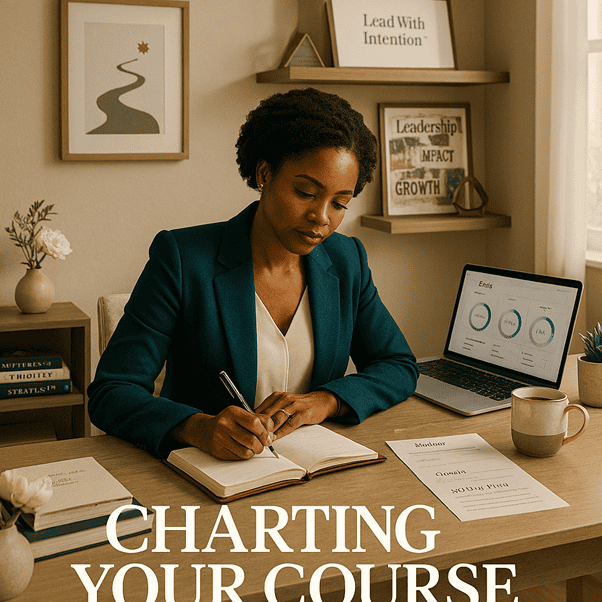
The Four Pillars of Your Personal Strategic Plan 🏛️
Based on my 24+ years in HR leadership and organizational development—combined with research from leading institutions—I’ve identified four essential pillars for building a comprehensive personal strategic plan:
Pillar 1: Self-Awareness & Assessment
You can’t chart a course without knowing your starting point. Effective strategic planning begins with honest self-assessment.
- Conduct a Leadership Audit: What are your current strengths? Where are your blind spots? Consider using 360-degree feedback assessments to gather perspectives beyond your own.
- Clarify Your Values: What principles guide your leadership decisions? What kind of leader do you want to be remembered as?
- Identify Skill Gaps: Where does the gap exist between where you are and where you want to be? Be ruthlessly honest.
Pillar 2: Career Management & Positioning
The Black Career Women’s Network emphasizes that success requires more than credentials—it requires strategic navigation. This pillar is about taking control of your trajectory.
- Map Your Career Path: What position do you want to hold in 3, 5, or 10 years? Work backward from that vision to identify the steps needed to get there.
- Build Strategic Visibility: Are you visible to the decision-makers who influence your advancement? Research shows that Black women often lack access to senior leaders—intentionally create that access.
- Document Your Achievements: Keep a running record of your accomplishments. Update your resume and LinkedIn regularly. Your wins should never be invisible.
Pillar 3: Relationship Building & Network Development
Research consistently shows that social resources—mentors, sponsors, professional networks—become increasingly critical as careers advance. This isn’t optional. It’s essential.
- Distinguish Between Mentors and Sponsors: Mentors provide guidance. Sponsors actively advocate for your advancement. You need both.
- Build Reciprocal Networks: Research on Black women’s career advancement reveals that those who experienced supportive communities were more likely to give back to emerging leaders. Build networks that flow both directions.
- Attend With Intention: Industry conferences, professional associations, and networking events should be strategic choices, not random attendance. Know what you’re seeking before you arrive.
Pillar 4: Continuous Learning & Skill Development
According to Mercer’s 2024 Global Talent Trends Study, 51% of executives say upskilling and reskilling investments would produce the biggest increase in productivity. Leaders who stop learning stop leading.
- Commit to Structured Learning: Set a goal to complete at least one significant learning activity per month—whether workshops, courses, certifications, or reading.
- Develop Both Technical and Leadership Skills: Technical competence got you here. Leadership capability will take you further. Balance both in your development plan.
- Seek Feedback Actively: Don’t wait for annual reviews. Create regular feedback loops with colleagues, mentors, and team members.
A Case Study in Strategic Self-Development 📖
There was a mid-level manager at a manufacturing company who had all the technical skills required for her role but found herself passed over for promotion twice. Her feedback was always the same: “You’re great at your job, but we need to see more leadership visibility.”
Instead of waiting for the organization to develop her, she created her own strategic plan. She identified three specific goals:
- Visibility Goal: Present at one cross-functional meeting per month and volunteer for one high-visibility project within six months.
- Relationship Goal: Schedule monthly coffee conversations with senior leaders in three different departments and secure a formal sponsor within the year.
- Skill Development Goal: Complete a leadership certification program and begin mentoring two junior team members to demonstrate leadership capability.
Within eighteen months, she was promoted. Not because someone else decided to invest in her development, but because she invested in herself strategically.
This is the power of a personal strategic plan. It transforms you from a passive participant in your career to the architect of your advancement.
Building Your Plan: A Step-by-Step Approach 📝
Ready to create your personal strategic plan? Here’s a practical approach:
Step 1: Reflect on the Past Year
Vistage research emphasizes that the most comprehensive strategic planning processes include a deep review of the previous period. Ask yourself: What worked? What didn’t? What challenges did I face? What opportunities did I miss?
Step 2: Define Your Leadership Vision
Who do you want to be as a leader in 3-5 years? This isn’t about titles—it’s about impact, influence, and the kind of leader others will describe you as.
Step 3: Set 3-5 SMART Goals
Don’t overwhelm yourself with dozens of objectives. Choose 3-5 strategic goals that will move you significantly closer to your vision. Make each one specific, measurable, achievable, relevant, and time-bound.
Step 4: Identify Required Resources
What will you need to achieve each goal? Consider time, money, training, relationships, and organizational support. Be realistic about resource constraints.
Step 5: Create Accountability Structures
Goals without accountability rarely get achieved. Schedule quarterly reviews with yourself. Share your goals with a mentor or accountability partner. Track your progress regularly.
Step 6: Build in Flexibility
As the research notes, great strategic plans are flexible by design. When unexpected challenges or opportunities arise, adapt your plan accordingly without abandoning your core vision.
Sample Leadership Goals by Development Area 🌟
Need inspiration? Here are SMART goal examples for common leadership development areas:
Communication: “I will improve my executive presence by attending Toastmasters twice monthly and delivering one presentation to senior leadership each quarter for the next year.”
Emotional Intelligence: “I will enhance my emotional regulation by maintaining a daily reflection journal and completing an emotional intelligence assessment with follow-up coaching within six months.”
Strategic Thinking: “I will develop strategic thinking capabilities by reading one business strategy book monthly and participating in strategic planning sessions with my manager for the next two quarters.”
Team Development: “I will improve my team development skills by implementing monthly one-on-one coaching sessions with each direct report and achieving a 15% improvement in team engagement scores within one year.”
Network Expansion: “I will expand my professional network by attending one industry conference per quarter, connecting with five new professionals each month on LinkedIn, and securing two sponsor relationships within the year.”
Common Pitfalls to Avoid ⚠️
Even well-intentioned strategic plans can fail. Watch for these common mistakes:
- Setting Too Many Goals: Complexity leads to abandonment. Keep your plan focused and manageable.
- Creating “Shelf Plans”: A strategic plan that sits in a drawer is worthless. Build review rhythms that keep it alive.
- Going It Alone: Development happens in community. Share your goals, seek feedback, and build accountability partnerships.
- Ignoring Organizational Context: Your goals should align with your organization’s direction. A promotion strategy that conflicts with company priorities is likely to fail.
- Failing to Celebrate Progress: Acknowledge your wins along the way. Recognition sustains motivation for the longer journey.
The Bottom Line
Your development is too important to leave to chance—or to someone else’s priorities. In today’s dynamic workplace, the leaders who advance are those who take strategic ownership of their growth.
A personal strategic plan doesn’t guarantee success. But it dramatically increases your odds. It provides clarity, creates accountability, and ensures that your daily actions align with your long-term vision.
For Black women and others who have been traditionally overlooked in leadership development systems, this strategic approach isn’t optional—it’s essential. When the traditional pathways don’t serve you, you build your own. Your personal strategic plan becomes your map to destinations that others said you couldn’t reach.
The question isn’t whether you can afford to create a personal strategic plan. The question is whether you can afford not to.
Discussion Questions for Reflection 💭
- What would change in your career if you approached your own development with the same rigor you apply to organizational strategy?
- Which of the four pillars (Self-Awareness, Career Management, Relationship Building, or Continuous Learning) needs the most attention in your current development?
- What’s one SMART goal you could set today that would significantly move you closer to your leadership vision?
- Who in your network could serve as an accountability partner for your development goals?
- What barriers—internal or external—have prevented you from investing strategically in your own growth, and how might you overcome them?
Your Next Steps 📌
- Block One Hour This Week: Schedule dedicated time to reflect on your leadership vision and current development gaps.
- Write Your First SMART Goal: Don’t wait until you have a perfect plan. Start with one meaningful, measurable objective.
- Identify Your Accountability Partner: Reach out to someone who can support your development journey—a mentor, colleague, or coach.
- Schedule Your First Review: Put a 30-day check-in on your calendar to assess early progress and adjust as needed.
Ready to Build Your Personal Strategic Plan? 🤝
Creating a personal strategic plan that drives real results requires more than good intentions—it requires framework, accountability, and often, expert guidance.
At Che’ Blackmon Consulting, we specialize in High-Value Leadership™ development and culture transformation. Whether you’re looking to accelerate your leadership trajectory, develop your executive presence, or build a strategic roadmap for your next career chapter, we’re here to partner with you.
Let’s connect:
📧 Email: admin@cheblackmon.com
📞 Phone: 888.369.7243
🌐 Website: cheblackmon.com
Your leadership matters. Your growth matters. Your strategic plan starts today.
—
Che’ Blackmon is the Founder & CEO of Che’ Blackmon Consulting, a fractional HR and culture transformation consultancy. She is the author of “High-Value Leadership: Transforming Organizations Through Purposeful Culture,” “Mastering a High-Value Company Culture,” and “Rise & Thrive: A Black Woman’s Blueprint for Leadership Excellence.” She is currently pursuing her Doctor of Business Administration in Organizational Leadership at National University.
#LeadershipDevelopment #HighValueLeadership #PersonalStrategicPlan #SMARTGoals #CareerAdvancement #BlackWomenInLeadership #LeadershipGoals #ProfessionalGrowth #WomenInLeadership #ExecutivePresence #CareerStrategy #LeadershipCoaching #GoalSetting #SelfAdvocacy #CultureTransformation #LeadershipMindset #CareerDevelopment #WomenLeaders #StrategicPlanning #LeadWithIntention