

By Che’ Blackmon, DBA Candidate | Founder & CEO, Che’ Blackmon Consulting
Every year, companies spend billions on advertising, influencer partnerships, and marketing campaigns designed to make customers love them. They craft perfect taglines, produce stunning visuals, and purchase premium placements. Yet despite all this investment, many brands remain forgettable. Consumers scroll past their ads, ignore their emails, and feel nothing when they see their logos.
Meanwhile, other organizations spend far less on traditional marketing yet inspire fierce loyalty. Customers become advocates. Employees become ambassadors. Communities form around these brands, defending them during crises and celebrating their wins as personal victories. These are beloved brands.
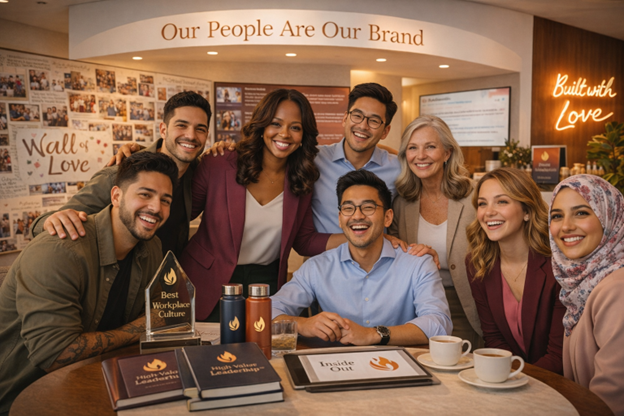
What separates the beloved from the forgettable? It is not a bigger marketing budget or a cleverer campaign. It is culture. The most beloved brands in the world are built from the inside out, with organizational cultures so strong and authentic that they radiate outward, attracting customers, talent, and partners who share their values.
Culture is not just an HR initiative. It is your greatest marketing tool.
🔍 The Inside Out Revolution
Traditional marketing operates outside in. It identifies what customers want to hear, then crafts messages designed to appeal to those desires. The product or service may or may not match the promise. The internal culture may or may not reflect the external image. The gap between what is advertised and what is experienced creates cynicism, and modern consumers have developed finely tuned detectors for inauthenticity.
Beloved brands flip this model. They build cultures around genuine values, treat employees in ways that reflect those values, create products and services that embody those values, and then let that authenticity speak for itself. The marketing is not separate from the culture. The culture IS the marketing.
As I explore in High-Value Leadership: Transforming Organizations Through Purposeful Culture, organizations with purposeful cultures do not need to convince anyone of their values. They demonstrate them daily through thousands of interactions, decisions, and moments of truth. This consistency creates trust, and trust creates love.
📊 The Data Behind Beloved Brands
The business case for culture-driven branding is overwhelming. Research from Deloitte found that mission-driven companies have 30% higher levels of innovation and 40% higher levels of retention compared to their competitors. Glassdoor studies show that companies with strong cultures outperform the S&P 500 by 122%.
Edelman’s Trust Barometer consistently reveals that consumers make purchasing decisions based on trust in an organization’s values, with 81% saying they must be able to trust the brand to do what is right. This trust cannot be manufactured through advertising. It must be earned through consistent, values-aligned behavior.
Perhaps most compelling, research from Harvard Business School found that customers who are emotionally connected to a brand have a 306% higher lifetime value than satisfied customers. They stay longer, spend more, and actively recruit others to the brand. This emotional connection is not created by clever marketing. It is created by genuine experiences that reflect genuine culture.
🏢 Anatomy of a Beloved Brand
What does a culture-driven beloved brand actually look like in practice? Several elements consistently appear:
Clear, Lived Values 🎯
Beloved brands have values that are more than wall decorations. These values guide real decisions, including difficult ones. When there is tension between values and short-term profit, values win. Employees can articulate the values without checking a poster because they see them in action daily.
Employee Experience Mirrors Customer Experience ✨
Organizations cannot sustainably treat customers better than they treat employees. Eventually, the internal reality leaks into external interactions. Beloved brands ensure that the care, respect, and value they want customers to feel is first experienced by the people who serve those customers.
Stories Over Slogans 📖
Beloved brands are rich in authentic stories: the employee who went above and beyond, the customer whose life was changed, the decision that sacrificed profit for principle. These stories circulate organically because they are true and because they resonate with shared values. No advertising agency can create stories as powerful as genuine cultural moments.
Transparency in Imperfection 💎
Beloved brands do not pretend to be perfect. They acknowledge mistakes, share challenges openly, and invite stakeholders into their journey of improvement. This vulnerability creates deeper connection than any polished facade could achieve. Customers and employees alike prefer authentic imperfection to manufactured perfection.
Community Cultivation 🌱
Beloved brands see themselves as hosts of communities rather than vendors of products. They create spaces, whether physical or virtual, where people with shared values can connect. They facilitate relationships between customers, not just between company and customer. This community becomes self-sustaining, generating word of mouth that no marketing spend could purchase.
💫 Culture, Brand, and the Overlooked Leader
For Black women and other traditionally overlooked leaders in corporate spaces, the relationship between culture and brand carries particular significance.
Authenticity, which is the cornerstone of beloved brands, has often been dangerous territory for Black women at work. The pressure to code switch, to present a version of oneself deemed acceptable to majority culture, creates an internal tension between authentic expression and professional survival. When organizations demand inauthenticity from their people, that inauthenticity inevitably seeps into the brand.
Conversely, organizations that create cultures where all employees can show up authentically unlock tremendous brand potential. The unique perspectives, communication styles, and cultural competencies that diverse leaders bring become sources of differentiation and connection with increasingly diverse customer bases.
In Rise & Thrive: A Black Woman’s Blueprint for Leadership Excellence, I explore how Black women leaders can advocate for cultures that allow authentic contribution while strategically positioning themselves as culture shapers. When Black women are empowered to lead authentically, they often create the very cultures that build beloved brands, bringing community orientation, relational intelligence, and values-driven leadership that resonates with modern consumers.
Research from McKinsey consistently shows that companies with diverse leadership teams are more likely to outperform their peers. Part of this advantage comes from the cultural richness that diverse leaders create, cultures that feel welcoming to diverse customers and that generate innovation through varied perspectives.
📱 Culture in the Age of Radical Transparency
Several trends have made culture-driven branding more important than ever:
Social Media Amplification 📣
Every employee is now a potential brand ambassador or brand critic with a platform. A single viral post about workplace culture, positive or negative, can reach millions. Organizations can no longer hide internal realities behind external marketing. The gap between advertised values and lived values is exposed within hours.
Review Culture 🌟
Platforms like Glassdoor, Indeed, and Google Reviews mean that internal culture is visible to anyone with a smartphone. Job candidates research employer brands before applying. Customers read employee reviews before purchasing. Culture is no longer private. It is part of the public brand whether organizations like it or not.
Values-Driven Consumers 💚
Younger generations in particular make purchasing decisions based on perceived company values around sustainability, diversity, equity, community involvement, and ethical practices. They research before buying and share their findings widely. Companies with genuine values-aligned cultures have stories to tell. Companies with manufactured values have only marketing copy.
The Great Resignation’s Legacy 🚪
The workforce disruptions of recent years laid bare the importance of culture for retention and recruitment. Organizations known for toxic cultures struggled to hire even at premium wages, while those with positive cultures maintained stability. The competition for talent has made culture a visible differentiator that directly affects operational capacity.
🛠️ Building Your Beloved Brand from the Inside Out
1. Audit Your Culture-Brand Gap 🔎
Start by honestly assessing the distance between how your organization presents itself externally and how it operates internally. Survey employees about whether marketing messages reflect their experience. Review customer complaints for patterns that suggest systemic cultural issues. Read your Glassdoor reviews as if you were a prospective customer.
Action Step: Gather your leadership team and compare your external brand promises to internal employee experience data. Identify three specific gaps where the external message does not match internal reality.
2. Define Values That Matter 💎
Generic values like “integrity” and “excellence” mean nothing because they differentiate no one. Beloved brands have specific, sometimes even provocative values that reflect genuine beliefs. These values should help you say no to opportunities that do not align, even profitable ones. In Mastering a High-Value Company Culture, I outline processes for identifying values that are authentic, distinctive, and actionable.
Action Step: Test your values by identifying three decisions in the past year that were made specifically because of values, even when other options might have been more profitable or convenient. If you cannot identify such decisions, your values may not be operational.
3. Align Employee Experience First 👥
Before investing in external brand campaigns, ensure employees experience what you want customers to experience. If you want customers to feel valued, employees must feel valued first. If you want customers to trust you, employees must trust leadership first. The internal experience inevitably becomes the external experience.
There was a hospitality company struggling with customer satisfaction despite heavy marketing investment. Analysis revealed that frontline employees felt unsupported and disrespected. They could not create welcoming experiences for guests because they themselves did not feel welcomed. By redirecting resources from marketing to employee experience improvements, including better scheduling, manager training, and recognition programs, the company saw customer satisfaction rise naturally as employees became genuine ambassadors.
Action Step: For each promise you make to customers, assess whether employees experience that same promise internally. Create a plan to close any gaps.
4. Collect and Amplify Authentic Stories 📚
Every organization has stories that reveal its true culture. The question is whether anyone is capturing and sharing them. Create systems for collecting stories from employees, customers, and community members. Look for moments when values were demonstrated in action. These authentic stories become your most powerful marketing content.
Action Step: Implement a monthly ritual where teams share stories of values in action. Celebrate these stories publicly and save them for future use in recruitment, marketing, and culture reinforcement.
5. Turn Employees into Brand Ambassadors 🌟
Employees who genuinely love where they work become powerful, credible advocates for the brand. This cannot be forced or manufactured. It happens naturally when employees feel valued, aligned with organizational purpose, and proud of how the organization operates. The goal is not to train employees to say nice things but to create conditions where nice things are genuinely true.
Action Step: Survey employees about their willingness to recommend the organization to friends and family, both as an employer and as a provider of products or services. Use the results as a leading indicator of brand health.
6. Build Community, Not Just Customer Base 🤝
Beloved brands create opportunities for customers to connect with each other around shared values and interests. This might be through events, online forums, user groups, or collaborative initiatives. When customers form relationships through your brand, their loyalty becomes about community belonging, not just product satisfaction.
Action Step: Identify one initiative that could bring customers together around shared values rather than just shared product use. Pilot this community-building effort and measure engagement beyond traditional marketing metrics.
📈 Measuring Culture-Driven Brand Success
Traditional marketing metrics do not fully capture the value of culture-driven branding. Consider adding these measurements:
Employee Net Promoter Score (eNPS): How likely are employees to recommend your organization as a place to work? This predicts future brand advocacy.
Culture-Brand Alignment Index: Survey both employees and customers about organizational values. Measure the consistency between internal and external perceptions.
Organic Advocacy Rate: Track unprompted positive mentions on social media, review sites, and in customer feedback. This indicates genuine brand love versus manufactured buzz.
Referral Source Analysis: Monitor how many new customers and employees come through referrals versus paid acquisition. High referral rates suggest culture is creating advocacy.
🏆 The Sustainable Advantage
In a world where products can be copied, prices can be undercut, and advertising can be outspent, culture remains the one sustainable competitive advantage. It cannot be purchased, replicated overnight, or faked for long. A genuine culture that creates a beloved brand is built over years through consistent, values-aligned decisions and authentic human connection.
This is both the challenge and the opportunity. Organizations willing to do the hard, slow work of culture building create advantages that compound over time. Every positive employee experience strengthens the culture. Every authentic customer interaction reinforces the brand. Every values-aligned decision adds to the reservoir of trust.
The organizations that will thrive in the coming decades are those that understand this fundamental truth: the best marketing does not happen in the marketing department. It happens everywhere, every day, in every interaction between your people and your stakeholders. Culture is your greatest marketing tool. Is yours working for you or against you?
💬 Discussion Questions
1. How large is the gap between your organization’s external brand message and internal cultural reality? What evidence supports your assessment?
2. Can you identify three authentic stories from your organization that reveal its true values in action? How are these stories currently being shared or not shared?
3. For traditionally overlooked leaders: How does your organization’s culture support or hinder your ability to contribute authentically? How might greater authenticity strengthen the brand?
4. If every employee at your organization posted honestly about their work experience on social media, how would it affect your brand? What does this tell you about culture-brand alignment?
5. What would need to change in your organization for employees to become genuine, enthusiastic brand ambassadors without being asked?
🚀 Your Next Steps
Building a beloved brand is not a project with a finish line. It is an ongoing commitment to culture that radiates outward. Start where you are with what you have. Choose one strategy from this article and implement it this month. Measure both cultural indicators and brand indicators to track progress.
Engage your team in the conversation. Share this article and discuss which elements resonate with your current reality and aspirations. Culture change happens through many small conversations and decisions, not through mandates from above.
Remember that culture-driven branding requires patience. The results compound over time as trust builds, stories accumulate, and reputation solidifies. The organizations that stay committed to this approach create advantages that become increasingly difficult for competitors to overcome.
✨ Ready to Build a Beloved Brand from the Inside Out?
If you are ready to transform your organizational culture into your most powerful marketing asset, Che’ Blackmon Consulting is here to guide the journey. We specialize in culture transformation, leadership development, and helping organizations discover that their greatest competitive advantage lies in how they treat their people.
📧 Email: admin@cheblackmon.com
📞 Phone: 888.369.7243
🌐 Website: cheblackmon.com
Let’s unlock your potential, empower your leadership, and transform your impact together.
📖 About the Author
Che’ Blackmon is the Founder and CEO of Che’ Blackmon Consulting, a Michigan-based fractional HR and culture transformation consultancy. With over 24 years of progressive HR leadership experience across manufacturing, automotive, healthcare, and other sectors, Che’ brings deep expertise in building organizational cultures that become competitive advantages. She is currently pursuing her Doctor of Business Administration (DBA) in Organizational Leadership with research focused on AI-enhanced organizational transformation. Che’ is the author of High-Value Leadership: Transforming Organizations Through Purposeful Culture, Mastering a High-Value Company Culture, and Rise & Thrive: A Black Woman’s Blueprint for Leadership Excellence. She hosts the “Unlock, Empower, Transform” podcast and the “Rise & Thrive” YouTube series.
#Leadership #BrandBuilding #CompanyCulture #HighValueLeadership #EmployerBranding #WorkplaceCulture #BrandStrategy #CultureTransformation #EmployeeExperience #CustomerExperience #MarketingStrategy #BelovedBrands #OrganizationalCulture #LeadershipDevelopment #BrandLoyalty