

“Inclusion is not a matter of political correctness. It is the key to growth.” These words from Jesse Jackson ring especially true when we examine ADA compliance in today’s evolving workplace. The Americans with Disabilities Act isn’t just about meeting legal requirements—it’s about creating environments where every individual can contribute their unique talents and perspectives.
As I’ve explored in “Mastering a High-Value Company Culture,” organizations that embrace diversity in all its forms consistently outperform those that merely comply with minimum standards. ADA compliance, when approached thoughtfully, becomes a powerful catalyst for innovation and cultural transformation.
Understanding ADA in the Modern Context
The Americans with Disabilities Act, enacted in 1990 and amended in 2008, prohibits discrimination against individuals with disabilities in all areas of public life, including jobs, schools, transportation, and all public and private places open to the general public. But today’s workplace presents new challenges and opportunities that the original drafters couldn’t have anticipated.
Key Statistics That Demand Attention
- According to the CDC, 26% of adults in the United States have some type of disability
- The unemployment rate for people with disabilities remains nearly double that of those without disabilities
- Companies that champion disability inclusion report 28% higher revenue and 30% higher profit margins (Accenture, 2018)
- Only 35% of working-age people with disabilities are employed, compared to 78% of those without disabilities
These numbers tell a story of both challenge and opportunity. As leaders committed to high-value cultures, we must ask ourselves: Are we truly tapping into this vast pool of talent?
The Evolution of “Reasonable Accommodation”
Traditional vs. Modern Accommodations
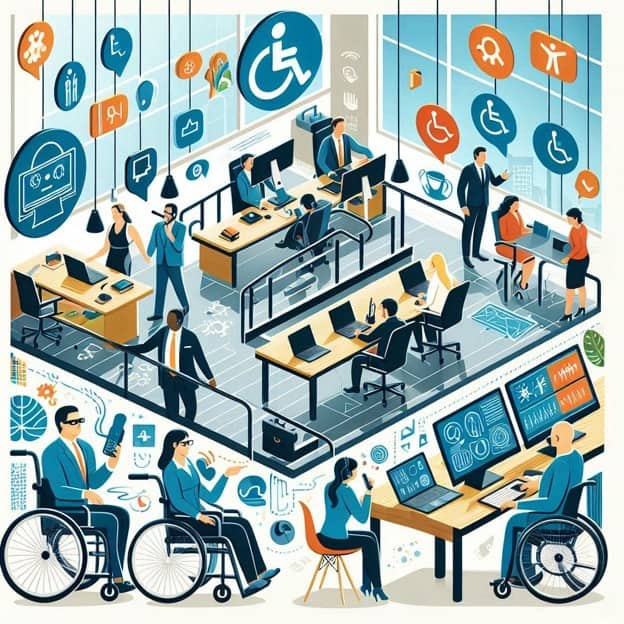
In the past, reasonable accommodations often meant physical modifications: wheelchair ramps, accessible restrooms, or ergonomic workstations. While these remain crucial, today’s workplace demands a broader understanding.
Modern accommodations include:
- Flexible work schedules and remote work options
- Assistive technology and software
- Mental health support and resources
- Sensory-friendly environments
- Neurodiversity considerations
- Digital accessibility for virtual platforms
Case Study: Tech Company Transformation
A mid-sized software company faced ADA compliance challenges when transitioning to hybrid work. An employee with chronic fatigue syndrome struggled with the mandatory in-office days. Instead of viewing this as a burden, leadership saw an opportunity.
They implemented:
- Flexible core hours (10 AM – 3 PM)
- Results-based performance metrics rather than time-based
- Enhanced virtual collaboration tools
- Energy management training for all managers
The result? Not only did the employee thrive, but overall team productivity increased by 15%, and employee satisfaction scores rose across the board. This exemplifies what I discuss in “High-Value Leadership”—when we lead with empathy and innovation, everyone benefits.
Current Trends Shaping ADA Compliance
1. The Remote Work Revolution
The pandemic permanently altered our understanding of workplace accommodation. Remote work, once considered a special accommodation, has become mainstream. This shift has:
- Expanded opportunities for individuals with mobility limitations
- Created new challenges for those requiring in-person support
- Necessitated digital accessibility standards for all platforms
- Highlighted the importance of inclusive virtual meeting practices
2. Mental Health as a Priority
Mental health conditions are now recognized as disabilities under the ADA, requiring employers to:
- Provide accommodations for anxiety, depression, PTSD, and other conditions
- Create psychologically safe environments
- Offer flexible scheduling for therapy appointments
- Implement stress-reduction programs
3. Neurodiversity Inclusion
Organizations are increasingly recognizing neurodivergent individuals (including those with autism, ADHD, dyslexia) as valuable contributors who may need specific accommodations:
- Quiet workspaces or noise-canceling headphones
- Written instructions rather than verbal
- Flexible communication methods
- Structured routines and clear expectations
4. AI and Assistive Technology
Artificial intelligence is revolutionizing accessibility:
- Real-time captioning for virtual meetings
- Screen readers with improved accuracy
- Voice-controlled interfaces
- Predictive text for individuals with motor disabilities
Creating an Inclusive Culture Beyond Compliance
As I emphasize in “Rise & Thrive,” true leadership means going beyond what’s required to create what’s possible. ADA compliance should be the foundation, not the ceiling, of your inclusion efforts.
Best Practices for Inclusive Excellence
- Proactive Accommodation Processes
- Don’t wait for requests—regularly ask employees about their needs
- Create an accommodation suggestion box
- Conduct accessibility audits of all spaces and systems
- Universal Design Principles
- Design workspaces and processes that work for everyone
- Implement flexible policies that benefit all employees
- Create multiple ways to access information and communicate
- Comprehensive Training Programs
- Educate all employees about disability awareness
- Train managers on accommodation conversations
- Include disability etiquette in onboarding
- Inclusive Recruitment Strategies
- Partner with disability advocacy organizations
- Ensure job postings are accessible
- Offer alternative interview formats
- Highlight accommodation availability in recruitment materials
Real-World Example: Retail Revolution
A national retail chain transformed their approach to ADA compliance after realizing they were missing out on talented employees. They implemented:
- Store layouts designed for maximum accessibility
- Technology that allowed employees with various disabilities to perform all job functions
- Mentorship programs pairing employees with and without disabilities
- Customer service training that included disability awareness
Results after 18 months:
- 23% increase in employees with disabilities
- 12% improvement in customer satisfaction scores
- 8% reduction in turnover
- Recognition as a “Best Place to Work for Disability Inclusion”
The Interactive Process: A Framework for Success
The interactive process is the heart of ADA compliance. Here’s a practical framework:
1. Recognition and Request
- Employee identifies need for accommodation
- Employer acknowledges request promptly
- Documentation begins (but avoid over-documentation)
2. Information Gathering
- Discuss specific limitations and needs
- Explore job functions and potential barriers
- Consider medical documentation if necessary
3. Exploration of Options
- Brainstorm potential accommodations
- Research assistive technologies
- Consider temporary vs. permanent solutions
4. Selection and Implementation
- Choose mutually agreeable accommodation
- Set implementation timeline
- Identify resources needed
5. Monitoring and Adjustment
- Regular check-ins on effectiveness
- Adjust as needed
- Document what works
Common Pitfalls to Avoid
- Assuming You Know Best
- Always involve the employee in accommodation decisions
- Their lived experience is invaluable
- One-Size-Fits-All Approaches
- Each person’s needs are unique
- Flexibility is key to success
- Focusing Only on Physical Disabilities
- Remember invisible disabilities
- Mental health matters equally
- Inadequate Documentation
- Keep clear records of accommodations
- Document the interactive process
- Forgetting About Customers
- ADA applies to customer access too
- Train staff on serving customers with disabilities
Measuring Success Beyond Compliance
True ADA success isn’t just about avoiding lawsuits—it’s about creating a culture where everyone thrives. Key metrics include:
- Employee satisfaction scores among workers with disabilities
- Retention rates for employees with disabilities
- Number of accommodations successfully implemented
- Time to implement accommodations
- Innovation metrics (often improve with diverse teams)
- Customer feedback on accessibility
Technology and Digital Accessibility
In our increasingly digital workplace, ADA compliance extends to:
- Website accessibility (WCAG standards)
- Document accessibility (PDFs, presentations)
- Video content (captions, descriptions)
- Communication platforms (screen reader compatibility)
- Virtual meeting accessibility
Digital Accessibility Checklist:
- Alt text for all images
- Captions for videos
- Keyboard navigation functionality
- Color contrast compliance
- Screen reader compatibility
- Mobile accessibility
Building Your ADA Compliance Strategy
- Conduct an Accessibility Audit
- Physical spaces
- Digital platforms
- Policies and procedures
- Employee experiences
- Develop Clear Policies
- Accommodation request process
- Confidentiality procedures
- Appeals process
- Regular review schedule
- Create an Accessibility Team
- Cross-functional representation
- Include employees with disabilities
- Regular meetings and updates
- Clear reporting structure
- Implement Ongoing Training
- All-employee awareness
- Manager-specific training
- Regular refreshers
- New hire orientation
The Business Case for Excellence
Organizations that excel at ADA compliance and disability inclusion see:
- Increased innovation through diverse perspectives
- Expanded customer base (1 billion people worldwide have disabilities)
- Improved employer brand and reputation
- Reduced turnover and associated costs
- Enhanced team problem-solving abilities
- Access to a wider talent pool
Conclusion
ADA compliance in today’s workplace is about more than meeting legal requirements—it’s about creating environments where all individuals can contribute their best work. As I’ve emphasized throughout my books, high-value cultures are built on inclusion, respect, and the recognition that diversity drives innovation.
When we approach ADA compliance as an opportunity rather than an obligation, we unlock potential that benefits everyone. The future of work is inclusive, and organizations that embrace this reality will lead the way.
Discussion Questions
- How does your organization currently approach ADA accommodations? Is it reactive or proactive?
- What invisible disabilities might be present in your workforce that aren’t being adequately addressed?
- How can technology help your organization become more inclusive for employees with disabilities?
- What would it take to shift your organizational mindset from compliance to inclusion?
Next Steps
Ready to transform your approach to ADA compliance and create a truly inclusive workplace? Che’ Blackmon Consulting can help you build strategies that go beyond compliance to create cultures where everyone thrives.
Our services include:
- Comprehensive ADA compliance audits
- Inclusive policy development
- Manager and employee training programs
- Accessibility strategy consulting
- Digital accessibility assessments
- Culture transformation planning
Don’t wait for a compliance issue to arise. Proactively create an inclusive environment that attracts top talent and drives innovation.
Contact us at admin@cheblackmon.com or call 888.369.7243 to schedule a consultation and begin your journey toward inclusive excellence.
#ADACompliance #DisabilityInclusion #WorkplaceInclusion #DiversityAndInclusion #HR #Leadership #AccessibilityMatters #InclusiveLeadership #WorkplaceCulture #HRStrategy #DisabilityAwareness #DiversityEquityInclusion #FutureOfWork #InnovationThroughDiversity #InclusiveWorkplace
3 responses to “ADA Compliance in Today’s Workplace”
https://shorturl.fm/N6nl1
https://shorturl.fm/FIJkD
https://shorturl.fm/YvSxU