Blog

Decision-Making Frameworks for High-Stakes Leadership

In my work with organizations across industries, one truth remains constant: a leader’s ability to make sound decisions under pressure can make or break their success. Through my research for “High-Value Leadership” and “Mastering a High-Value Company Culture,” I’ve found that the most effective leaders don’t just rely on intuition, they employ structured frameworks to navigate complex decisions while staying true to their organizational values.

The Foundation of High-Stakes Decision Making

Consider Sarah Chen’s transformation of Midwest Manufacturing, which I discussed in “High-Value Leadership.” When faced with the decision to completely overhaul their century-old production methods, she didn’t simply go with her gut. Instead, she implemented a systematic approach that balanced data analysis with stakeholder impact. The result? A successful transition to electric vehicle component manufacturing that preserved jobs while positioning the company for future growth.

Key Decision-Making Frameworks

1. The OODA Loop (Observe, Orient, Decide, Act)

This framework, originally developed for military operations, translates remarkably well to business leadership:

  • Observe: Gather relevant data and information
  • Orient: Analyze the data within your context and constraints
  • Decide: Choose the best course of action
  • Act: Implement your decision decisively

For example, when Dan Campbell took over the Detroit Lions, he used this framework to assess team culture, identify key issues, develop a new strategic direction, and implement changes that transformed the organization.

2. The Decision Matrix

For complex decisions with multiple variables, this framework helps leaders evaluate options against weighted criteria:

  1. List of all viable options
  2. Identify key decision criteria
  3. Weight each criterion by importance
  4. Score each option against criteria
  5. Calculate weighted scores
  6. Review and validate results

3. Stakeholder Impact Analysis

This framework ensures decisions align with organizational values and consider all affected parties:

  • Direct stakeholders (employees, customers)
  • Indirect stakeholders (community, industry)
  • Short-term impacts
  • Long-term consequences
  • Cultural alignment

Integrating Values into Decision-Making

High-value leadership requires more than just analytical frameworks. As I emphasize in my books, decisions must align with organizational values and culture. Consider this three-step process:

1. Value Alignment Check

  • Does this decision reflect our stated values?
  • How will it impact our culture?
  • What message does it send to our team?

2. Cultural Impact Assessment

  • Will this strengthen or weaken our desired culture?
    • How might different subcultures within the organization react?
    • What cultural support needs to be in place?

3. Implementation Planning

  • How can we execute this decision while reinforcing our values?
    • What communication strategy will support cultural alignment?
    • How will we measure success beyond financial metrics?

Real-World Application

Let’s examine a real case study from “High-Value Leadership: Transforming Organizations Through Purposeful Culture” When a manufacturing plant faced the decision to automate certain processes, the leadership team used these frameworks to:

  1. Gather comprehensive data on costs, efficiency, and market trends
  2. Analyze impacts on workforce, quality, and competitive position
  3. Consider cultural implications and alignment with values
  4. Develop a hybrid solution that balanced automation with workforce development
  5. Create an implementation plan that preserved jobs through retraining

The result was a 30% increase in productivity while maintaining employee engagement and strengthening the culture of continuous improvement.

Common Pitfalls to Avoid

1. Analysis Paralysis

  • Don’t let perfect be the enemy of good
    • Set clear timelines for decisions
    • Trust the process

2. Ignoring Cultural Impact

  • Remember that every major decision affect culture
    • Consider both intended and unintended consequences
    • Plan for cultural support and reinforcement

3. Insufficient Communication

  • Share the reasoning behind decisions
    • Be transparent about the process
    • Address concerns proactively

Building Your Decision-Making Muscle

Like any leadership skill, effective decision-making improves with practice:

  1. Start with smaller decisions to test frameworks
  2. Document your process and outcomes
  3. Review and reflect on results
  4. Adjust your approach based on learnings
  5. Gradually tackle more complex decisions

Looking Ahead

In today’s rapid-paced business environment, leaders must make increasingly complex decisions under greater pressure and scrutiny. By establishing robust decision-making frameworks that align with organizational values and culture, leaders can navigate these challenges while building stronger, more resilient organizations.

Conclusion

High-stakes decision-making doesn’t have to be overwhelming. By combining structured frameworks with a strong foundation in organizational values and culture, leaders can make better decisions more confidently. Remember, the goal isn’t just to make good decisions, it’s to make decisions that strengthen your organization’s culture and advance its mission.

Need help developing decision-making frameworks that align with your organizational culture? Contact Che’ Blackmon Consulting to learn how we can support your leadership journey.
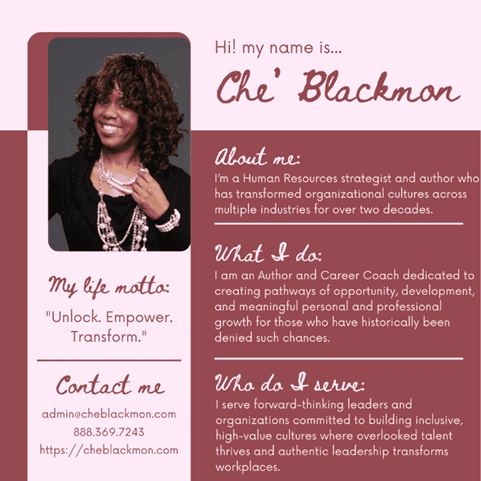
#LeadershipStrategy #DecisionMaking #ExecutiveLeadership #BusinessTransformation #ChangeManagement #OrganizationalCulture #StrategicThinking #BusinessGrowth #LeadershipDevelopment #HighStakesDecisions


Emotional Intelligence: A Leader’s Secret Weapon

In today’s rapidly evolving business landscape, technical skills and industry expertise alone aren’t enough to create transformative leadership. As I’ve observed through years of consulting and research for my books “Mastering a High-Value Company Culture” and “High-Value Leadership,” there’s a critical differentiator that sets exceptional leaders apart: emotional intelligence (EI).

The Foundation of High-Value Leadership

Emotional intelligence isn’t just about being nice or empathetic—it’s about having the awareness and capability to effectively manage both your own emotions and those of others to drive positive outcomes. In “High-Value Leadership,” I emphasize that leaders who master emotional intelligence create environments where both humans and organizations can thrive together.

The Four Pillars of Emotional Intelligence in Leadership

1. Self-Awareness

Leaders with high emotional intelligence have a deep understanding of their own emotional states, triggers, and impacts on others. They recognize how their moods and behaviors affect their teams and can regulate themselves accordingly. This self-awareness forms the bedrock of authentic leadership, allowing leaders to lead from a place of genuine understanding rather than reactive emotion.

2. Self-Management

The ability to control impulsive feelings and behaviors, manage emotions in healthy ways, and maintain composure in challenging situations is crucial. I’ve seen countless examples where a leader’s ability to stay calm during crisis situations has made the difference between team paralysis and productive response.

3. Social Awareness

Understanding others’ emotions, needs, and concerns is vital for building high-value cultures. This includes reading emotional currents, picking up on nonverbal cues, and understanding the political dynamics within an organization. Leaders who excel in social awareness can better navigate complex interpersonal situations and build stronger relationships.

4. Relationship Management

The ability to develop and maintain good relationships, communicate clearly, inspire and influence others, and manage conflict effectively is perhaps the most visible aspect of emotional intelligence. This skill directly impacts team performance, employee engagement, and organizational culture.

The Business Impact of Emotional Intelligence

Research consistently shows that leaders with high emotional intelligence create:

  • Higher employee engagement and retention
  • Stronger team collaboration
  • Increased innovation and creativity
  • Better customer relationships
  • Improved financial performance

Developing Emotional Intelligence

Like any leadership skill, emotional intelligence can be developed and strengthened. Here are key strategies:

1. Practice Self-Reflection

  • Take time daily to reflect on your emotional responses
  • Seek feedback from trusted colleagues
  • Keep an emotion journal to track patterns

2. Enhance Self-Regulation

  • Develop stress management techniques
  • Practice responding rather than reacting
  • Learn to pause before making important decisions

3. Build Empathy

  • Listen actively without jumping to solutions
    • Ask questions to understand others’ perspectives
    • Pay attention to non-verbal communication

4. Strengthen Relationships

  • Invest time in one-on-one connections
    • Practice giving and receiving constructive feedback
    • Create psychological safety for open dialogue

Implementing EI in Your Leadership Practice

To begin strengthening your emotional intelligence:

  1. Start with honest self-assessment
  2. Identify specific areas for improvement
  3. Seek feedback from your team
  4. Practice new behaviors consistently
  5. Measure impact through team engagement and performance

The Future of Emotional Intelligence in Leadership

As organizations continue to navigate complex challenges, from remote work to rapid technological change, emotional intelligence becomes increasingly critical. Leaders who can understand and manage emotions effectively will be better positioned to:

  • Guide their teams through uncertainty
    • Foster inclusive environments
    • Drive innovation and adaptation
    • Build sustainable high-value cultures

Conclusion

Emotional intelligence isn’t just a “nice to have” leadership skill—it’s a crucial capability for building high-value cultures and driving organizational success. As I’ve documented in my books and seen firsthand in my consulting work, leaders who develop and deploy emotional intelligence create more resilient, innovative, and successful organizations.

Remember, the journey to emotional intelligence is ongoing. Start where you are, be patient with yourself, and commit to continuous growth. Your organization’s culture and success depend on it.

Looking to develop emotional intelligence in your leadership team? Contact Che’ Blackmon Consulting at admin@cheblackmon.com  for customized solutions that align with your organizational goals and culture.

#EmotionalIntelligence #LeadershipDevelopment #BusinessGrowth #TeamManagement #ExecutiveLeadership #WorkplaceCulture #ProfessionalDevelopment #LeadershipSkills #BusinessSuccess #ChangeManagement

Creating Accountability Without Micromanaging

In today’s ever-changing business landscape, leaders have a balancing act: high performance and freedom for workers to work in independence. In “High-Value Leadership: Changing Organizations with Purposeful Culture,” I refer to accountability in terms of creating processes for workers to work in independence, not in terms of constant supervision.

What Real Accountability Truly Involves

Real accountability is a contrast to micromanagement. Where micromanagement involves controlling processes, real accountability involves achievement and development. In “Mastering a High-Value Company Culture,” I elaborate on such differentiation producing success in an organization through trust and empowerment.

The Foundation of Effective Accountability

Clear Expectations

Success begins with crystal-clear expectations:

  • Specific, measurable objectives
  • Well-defined roles and responsibilities
  • Transparent performance standards
  • Regular check-ins and milestones

Empowered Decision-Making

Team members need the authority to make decisions within their scope:

  • Clearly defined decision-making boundaries
  • Access to necessary resources
  • Support for calculated risks
  • Learning opportunities from both successes and failures

Building Systems That Support Accountability

Regular Communication Rhythms

Establish predictable patterns for updates and feedback:

  • Weekly team check-ins
  • Monthly progress reviews
  • Quarterly goal assessments
  • Annual performance discussions

Tools and Resources

Provide the right infrastructure:

  • Project management systems
  • Communication platforms
  • Performance tracking tools
  • Development resources

Creating a Culture of Ownership

Personal Responsibility

Foster an environment where team members:

  • Take initiative
  • Own their outcomes
  • Propose solutions
  • Actively seek feedback

Team Accountability

Encourage peer support through:

  • Collaborative goal setting
  • Cross-functional partnerships
  • Shared success metrics
  • Team-based problem-solving

 Avoiding the Micromanagement Trap

Common Pitfalls

Leaders often fall into micromanagement when they:

  • Fear losing control
  • Lack trust in their team
  • Focus too heavily on process over outcomes
  • Have unclear expectations

Better Alternatives

Instead of micromanaging, focus on:

  • Setting clear success criteria
  • Providing necessary resources
  • Offering support when requested
  • Celebrating progress and achievements

Developing Self-Directed Teams

As outlined in “High-Value Leadership,” self-directed teams thrive when leaders:

  • Trust their capabilities
  • Provide clear direction
  • Offer support without interference
  • Recognize and reward initiative

Building Capability

Invest in your team’s growth through:

  • Skill development opportunities
  • Leadership training
  • Mentoring programs
  • Cross-functional experiences

The Role of Feedback

Constructive Conversations

Effective feedback should:

  • Focus on growth
  • Be specific and actionable
  • Occur regularly
  • Include both recognition and development areas

Two-Way Communication

Encourage team members to:

  • Sharing their challenges
  • Propose solutions
  • Request support when needed
  • Provide upward feedback

Measuring Success

Performance Metrics

Track progress through:

  • Goal achievement rates
  • Project completion metrics
  • Quality indicators
  • Team engagement levels

Cultural Indicators

Monitor the health of your accountability culture:

  • Employee satisfaction scores
  • Team autonomy levels
  • Innovation metrics
  • Collaboration effectiveness

Moving Forward

Creating accountability in a non-micromanaging state is a constant work in progress that must have ongoing maintenance and refinement. In “Mastering a High-Value Company Culture,” success arises out of creating a system that empowers, does not control, and trusts, not intimidates.

Ready for an accountability transformation? Contact Che’ Blackmon Consulting at admin@cheblackmon.com and learn how we can collaborate with your organization to build high-performance driving cultures and systems through empowerment, not controlling behavior.

Join me in developing a workplace environment in which accountability inspires success, innovation, and full potential performance out of your groups. Begin your path to effective, empowering leadership with one simple act—take it today!

The path to long-term success isn’t a tightening of controls, but a strengthening of systems, a honing of expectations, and a deepening of trust. Let’s build that platform together.

#LeadershipDevelopment #AccountabilityInBusiness #TeamManagement #EmployeeEmpowerment #OrganizationalCulture #LeadershipSkills #ManagementStyle #WorkplaceCulture #BusinessLeadership #EmployeeEngagement #ProfessionalDevelopment #HighPerformanceTeams

Leadership Transitions: From Peer to Manager Successfully

One of the most profound career transformations is moving into a manager role from a peer position. As I detail in “High-Value Leadership: Changing Organizations through Purposeful Culture,” becoming a manager is not about a role transition but about a thinking transition, a relational transition, and a leadership style transition.

Appreciating the Challenge

The move from peer to manager is such a daunting one, in part, because it redefines long-established relationships and dynamics. That lunch buddy at work yesterday is your direct report today, and lunch conversation no longer entails a level of familiarity but a level of accountability for direction and guidance

Navigating the Mindset Shift

From Individual Contributor to Team Leader

In “Mastering a High-Value Company Culture,” I emphasize how successful leadership transitions begin with embracing a new perspective. Your success is no longer measured solely by your individual contributions but by your ability to:

  • Enable your team’s success
  • Develop others’ capabilities
  • Create an environment where innovation thrives
  • Build sustainable high-performance systems

Establishing New Boundaries

The transition requires careful navigation of existing relationships. This means:

  • Setting clear expectations early
  • Maintaining professional boundaries while preserving rapport
  • Communicating role changes effectively
  • Being consistent in your treatment of all team members

Building Credibility in Your New Role

Lead with Authenticity

Your former peers already know you—trying to suddenly become a different person will undermine trust. Instead:

  • Acknowledge the transition openly
  • Be transparent about your learning journey
  • Maintain your authentic leadership style
  • Show vulnerability when appropriate

Focus on Team Success

Demonstrate your commitment to the team’s collective success by:

  • Advocating for team needs
  • Providing resources and support
  • Removing obstacles
  • Celebrating team achievements
  • Giving credit where due

Common Pitfalls to Avoid

Overcompensating

New managers often fall into the trap of:

  • Being overly authoritative
  • Making unnecessary changes to prove themselves
  • Micromanaging former peers
  • Avoiding difficult conversations

Maintaining Old Dynamics

Equally problematic is failing to establish new boundaries by:

  • Continuing to participate in office gossip
  • Playing favorites with former close colleagues
  • Avoiding necessary performance conversations
  • Being too informal in professional settings

Strategies for Success

Clear Communication

As emphasized in “High-Value Leadership,” effective communication becomes even more critical during transitions:

  • Hold individual meetings with each team member
  • Clearly articulate your vision and expectations
  • Listen to concerns and ideas
  • Establish regular feedback channels

Building Trust Through Actions

Trust must be rebuilt in the context of your new role:

  • Follow through on commitments
  • Be consistent in decision-making
  • Show fairness in opportunities and recognition
  • Support team members’ growth and development

Developing Your Leadership Style

Take time to develop your authentic leadership approach:

  • Seeking feedback from peers and mentors
  • Invest in leadership development
  • Learn from both successes and failures
  • Adapt your style to team needs

Creating a High-Value Culture

In “Mastering a High-Value Company Culture,” I discuss how new managers can contribute to organizational culture:

  • Model desired behaviors
  • Foster psychological safety
  • Encourage innovation and creativity
  • Build inclusive team environments
  • Promote continuous learning

Supporting Your Team’s Growth

Individual Development

Focus on each team member’s growth:

  • Create development opportunities
  • Provide regular feedback
  • Support career advancement
  • Recognize achievements

Team Development

Build team capabilities through:

  • Collaborative goal setting
  • Cross training opportunities
  • Team-building activities
  • Shared learning experiences

Moving Forward

The transition to manager is a critical transition in leadership that, when handled effectively, can become a platform for long-term success. Remember, transition is not a matter of overnight success but takes time. Give yourself time to become your role and maintain trust and relationships gained.

Are you ready to transition into a successful manager? Contact Che’ Blackmon Consulting at admin@cheblackmon.com and discover how our experienced professionals can help with your transition into a manager role. With our guidance, tools, and techniques, your transition can become a success.

The path to becoming a manager doesn’t have to be intimidating. Let’s work together and build your leadership skills and a positive, high-performance work environment that reaps long-term success.

#LeadershipTransition #CareerDevelopment #ManagementSkills #ProfessionalGrowth #LeadershipDevelopment #TeamManagement #CareerAdvancement #NewManager #LeadershipJourney #WorkplaceCulture #ProfessionalDevelopment #OrganizationalLeadership

Building Trust Through Transparent Leadership

In the hectic commercial environment of today, trust is becoming the source of successful ventures. As I explore in “High-Value Leadership: Building Organizations with Purposeful Culture,” leaders practicing transparency build cultures in which innovation takes root, engagement reaches new heights, and long-term success is a reality.

Transparency: Cornerstone

Transparent leadership isn’t merely about information dissemination—but about having a culture in which free and truthful conversation comes naturally in both directions. In “Mastering a High-Value Company Culture,” I detail in full how transparency is at the heart of creating psychological security, allowing groups to make smart bets and voice concerns with no fear of retribution.

Transparent Leadership: What Drives It

Consistent Communication

The leaders have a mechanism for communicating success and failure. That involves transparency regarding organizational change, key decision-making, and even failure. By practicing transparency and vulnerability, leaders build a culture in which genuineness is the norm, not an exception.

Visibility in Decision-Making

Transparent leaders involve everyone in decision-making, with an explanation of key decisions and an open request for feedback at any level. Not only will such a practice produce smarter decisions but buy-in and commitment will increase through the whole entity.

Two-way Responsibility

Based on “High-Value Leadership,” accountability must go both ways. Leaders must not only hold others responsible but must, in return, receive feedback regarding performance and decision-making. Two-way accountability creates trust and puts everyone working towards common objectives out in the open.

Teams that understand direction and challenge will work most effectively towards a resolution. That level of awareness creates a purpose and an “ownership” feeling that energizes engagement and innovation.

Greater Problem Solving

Transparency cultures allow for a variety of views and problem-solving through collaboration, addressed in “Mastering a High-Value Company Culture.” With information out in the open, groups can work through problems and capitalize on improvement opportunity with ease.

Greater Cohesion

Transparency destroys walls and promotes cross-functional collaboration. With an awareness of work in relation to broader organizational objectives, groups naturally coordinate and work together in a supportive manner.

Implementing Transparent Leadership

Begin with Purpose

Clear messaging about purpose and values sets transparent leadership in motion. Leaders must regularly tie actions and decisions to these fundamentals.

Trust Established Over Time

Trust is developed through consistent, truthful communications and follow-through. Leaders must work towards creating small wins that validate a transparency commitment.

Constructing Feedback Cycles

Create ongoing channels for two-way communications through one-on-one sessions, town hall sessions, and anonymity feedback channels. These structures allow transparency to become systemic, not intermittent activity.

Overcoming Challenges

Transparency leadership isn’t a problem less practice. Leaders must work through:

Information Balance

Not all information can, and therefore not all information will, be shared. Capable leaders learn to balance transparency with proper discretion and maintain trust in the bargain.

Timing of Information

Deciding when and with whom information will and will not be shared involves careful consideration of impact and environment. Leaders must develop a sense of when to make information disclosures yet maintain a strong transparency commitment.

Culture Resistance

Some cultures will resist increased transparency initially. Leaders must consistently illustrate their value and work through concerns and fears.

The Long-Term Benefits

Organizations that embrace transparent leadership experience lasting benefits:

  • Increased innovation through greater psychological safety
  • Higher retention of top talent
  • Stronger customer relationships built on trust
  • More agile response to market changes
  • Sustainable competitive advantage

Moving Forward

As I say in “High-Value Leadership” and “Mastering a High-Value Company Culture,” transparent leadership isn’t a nice-to-have but a necessity for successful companies in a complex environment today. Leaders who make a commitment to transparency build a platform for long-term success and actual transformation.

Are you ready to transition your leadership? Let’s work together at Che’ Blackmon Consulting and make your transparent leadership a reality and build a transparent and trustful environment for your workplace and community. Email at admin@cheblackmon.com for a consultation appointment.

Prioritize transparent leadership and secure your future success and a healthy environment for your people and your business to flourish in. Let’s make your vision a reality together.

#TransparentLeadership #OrganizationalCulture #LeadershipDevelopment #BusinessTransformation #EmployeeEngagement #CorporateCulture #ChangeManagement #BusinessStrategy #LeadershipExcellence #WorkplaceCulture #ProfessionalDevelopment #BusinessGrowth

Hidden Costs of Poor Leadership: Beyond the Bottom Line

When organizations evaluate leadership effectiveness, most care only for such apparent factors such as profit margin, revenue, and market share. In “High-Value Leadership: Transforming Organizations Through Purposeful Culture,” I detail how poor leadership bears deeper and long-term repercussions, and its impact triggers a cascade of consequences for years to come.

The Visible Costs

Let’s start with what’s easily measurable:

  • Higher employee turnover and associated recruitment costs
  • Decreased productivity and missed deadlines
  • Increased absenteeism
  • Lower customer satisfaction scores
  • Reduced innovation and market competitiveness

These costs alone can significantly impact an organization’s financial performance. However, they’re just the tip of the iceberg.

The Hidden Cultural Impact

In “Mastering a High-Value Company Culture,” I emphasize how leadership directly shapes organizational culture. Poor leadership creates hidden costs through:

Eroded Trust

  • Decreased psychological safety
  • Reduced willingness to take calculated risks
  • Limited information sharing
  • Defensive decision-making
  • Increased political behavior

Damaged Team Dynamics

  • Reduced collaboration
  • Increased conflict
  • Siloed thinking
  • Decreased knowledge sharing
  • Lower team cohesion

Diminished Engagement

  • Reduced discretionary effort
    • Lower commitment to organizational goals
    • Decreased innovation
    • Minimal process improvement
    • Limited problem-solving initiative

The Talent Drain

Poor leadership doesn’t just drive away current employees – it creates lasting damage to talent acquisition and development:

  • Top performers leave first
    • High-potential employees become disengaged
    • Employer brand suffers
    • Quality of job candidates decreases
    • Development programs become ineffective

The Innovation Impact

When poor leadership creates a culture of fear or apathy:

  • New ideas are suppressed
    • Risk-taking decreases
    • Creative thinking is discouraged
    • Market opportunities are missed
    • Competitive advantage erodes

Customer Experience

Leadership problems inevitably affect customer relationships:

  • Service quality declines
    • Customer loyalty decreases
    • Brand reputation suffers
    • Market share erodes
    • Competitive position weakens

The Long-Term Strategic Cost

Perhaps most damaging are the long-term strategic implications:

  • Missed market opportunities
    • Delayed organizational transformation
    • Weakened competitive position
    • Reduced organizational agility
    • Diminished industry influence

Breaking the Cycle

Addressing poor leadership requires a comprehensive approach:

1. Assessment

  • Evaluate current leadership practices
    • Gather feedback from all levels
    • Measure impact on culture
    • Identify specific problem areas
    • Quantify both visible and hidden costs

 2. Development

  • Invest in leadership training
    • Provide coaching and mentoring
    • Create accountability systems
    • Build feedback mechanisms
    • Support continuous improvement

3. Cultural Transformation

  • Define desired leadership behaviors
    • Align systems and processes
    • Recognize and reward positive changes
    • Address resistance effectively
    • Maintain consistent focus

The Path Forward

As I emphasize in “High-Value Leadership,” creating sustainable organizational success requires leaders who:

  • Build trust through consistent behavior
    • Create psychological safety
    • Foster innovation and creativity
    • Develop people continuously
    • Drive meaningful engagement

Investment vs. Cost

While developing strong leadership requires significant investment, the cost of poor leadership is far greater. Organizations must recognize that leadership development is not an expense – it’s an investment in:

  • Sustainable growth
    • Competitive advantage
    • Employee engagement
    • Innovation capacity
    • Long-term success

Taking Action

If you recognize these hidden costs in your organization, consider:

  1. Assessing your current leadership effectiveness
  2. Measuring both visible and hidden costs
  3. Developing a comprehensive improvement plan
  4. Investing in leadership development
  5. Creating accountability for change

Conclusion

The true cost of poor leadership runs a lot deeper than financial performance, inflicting long-term scars in an organization that can take years to heal. By becoming attuned and tending to these invisible costs, organizations can develop high-value leadership for long-term success.

Are you ready to make a transformation in your organization’s leadership? Let’s chat with Che Blackmon Consulting at admin@cheblackmon.com about partnering with you to develop high-value leadership for long-term success.

Don’t have poor leadership slow your organization down. Schedule a consultation today and let’s explore how we can work with you to develop leaders who drive lasting value and success.

#LeadershipDevelopment #OrganizationalCulture #EmployeeEngagement #BusinessStrategy #ExecutiveLeadership #TeamManagement #CorporateCulture #ProfessionalDevelopment #ChangeManagement #BusinessGrowth