The Lillian & Joan Method: Building Excellence on a Shoestring Budget

“Excellence is never an accident. It is always the result of high intention, sincere effort, and intelligent execution.” — Aristotle

They had no fancy leadership development budget. No corporate training programs. No executive coaches or consulting firms. Just two women—one Polish American, one whose background I never learned but whose impact I’ll never forget—leading a nonprofit human services organization with more heart than resources.

Yet Lillian and Joan created the most transformative leadership experience of my early career. Fresh out of college, working for pennies at a Detroit nonprofit, I learned more about building high-value culture from these two women than from any MBA program or corporate seminar.

Their secret? They proved that excellence isn’t about resources—it’s about resourcefulness. They showed me that the most powerful cultural transformations happen not through big budgets but through intentional actions, authentic relationships, and creative approaches to developing people.

In my twenty-plus years since, leading HR transformations across multiple industries, I’ve never forgotten the Lillian & Joan Method. Today, as organizations face tighter budgets and higher expectations, their approach is more relevant than ever.

The Myth of the Million-Dollar Culture

We’ve been sold a lie. The lie says building great culture requires:

  • Expensive consultants
  • Elaborate training programs
  • Costly perks and benefits
  • Silicon Valley-style offices
  • Massive transformation budgets

But here’s the truth I learned in that cramped nonprofit office: The best cultures aren’t bought—they’re built. One authentic interaction at a time. One creative solution at a time. One developed person at a time.

In “Mastering a High-Value Company Culture,” I wrote that culture is the lifeblood of any organization. Lillian and Joan proved that lifeblood doesn’t require a transfusion of cash—it requires a beating heart of genuine care and strategic creativity.

As Dave Ulrich notes in his updated HR Business Partner model, we’ve evolved from thinking about HR as a cost center to understanding it as a value creator. But Lillian and Joan were decades ahead—they created extraordinary value with minimal financial investment by focusing on human capability over corporate capability.

The Core Principles of Shoestring Excellence

1. Relationships as Infrastructure

Most organizations invest in systems, processes, and technology. Lillian and Joan invested in relationships—and got better ROI than any software could provide.

How They Did It:

  • Personal Investment: They knew every employee’s story, family situation, and dreams
  • Inclusive Leadership: Despite potential friction from overlapping roles, they collaborated seamlessly
  • Community Building: Those potluck dinners at Joan’s house weren’t just social events—they were strategic culture-building sessions

The Genius: By making everyone feel like family, they created loyalty and engagement that money couldn’t buy. When people feel genuinely valued, they give discretionary effort that no incentive program can generate.

Modern Application: You don’t need a big entertainment budget. Host brown-bag lunches. Create “coffee roulette” programs pairing different employees. Use video calls for virtual tea times. The medium doesn’t matter—the intention does.

2. Development Through Experience

Without training budgets, they turned every day into a classroom.

The Lillian & Joan Learning Model:

  • Contextual Education: Lillian taking me to Pewabic Pottery wasn’t tourism—it was teaching me about the community we served
  • Stretch Assignments: They gave responsibilities beyond my experience level, with support to succeed
  • Real-Time Coaching: Feedback happened in the moment, not in annual reviews
  • Peer Learning: They encouraged us to teach each other our strengths

In “High-Value Leadership,” I emphasized that transformation happens through purposeful action. They embodied this daily, turning constraints into creativity.

Budget-Friendly Development Tactics:

  • Job shadowing programs (free)
  • Lunch-and-learn sessions led by team members ($0)
  • Project rotations to build skills (no cost)
  • Mentorship programs leveraging internal expertise (priceless)

**3. Recognition Without Rewards

They mastered the art of making people feel valued without monetary incentives.

Their Recognition Arsenal:

  • Specific Verbal Praise: Not generic “good job” but detailed appreciation
  • Public Acknowledgment: Celebrating wins in team meetings
  • Increased Responsibility: Showing trust through expanded roles
  • Personal Notes: Handwritten thank-you cards that people kept for years

Research by Gallup shows that recognition is a stronger motivator than compensation for most employees. Lillian and Joan instinctively knew this, creating a culture where appreciation was currency.

4. Strategic Frugality as Innovation Catalyst

Limited resources forced creative solutions that often worked better than expensive alternatives.

Case Example: When we needed team-building but couldn’t afford retreats, Joan hosted potlucks where everyone brought dishes representing their heritage. Result? Deeper cultural understanding and connection than any corporate retreat could provide—for the cost of a potluck dish.

This aligns with research showing that constraints actually enhance creativity. As I discussed in “Rise & Thrive,” Black women have long mastered the art of creating excellence despite limited resources. Lillian and Joan, though not Black women, operated with this same resourceful brilliance.

The Modern Lillian & Joan Playbook

Building Culture on a Budget: A Step-by-Step Guide

Phase 1: Foundation (No Budget Required)

Week 1-2: Relationship Mapping

  • List every team member
  • Note one personal detail about each
  • Identify connection opportunities
  • Schedule 15-minute check-ins

Week 3-4: Values Clarification

  • Gather team to define shared values
  • Create visual reminders (handmade posters work)
  • Share stories exemplifying values
  • Recognize values-based behaviors daily

Week 5-6: Communication Rhythms

  • Establish regular team huddles
  • Create feedback loops
  • Start peer recognition practices
  • Document and share wins

Phase 2: Development (Minimal Investment)

Month 2-3: Skill Sharing Initiative

  • Survey team for hidden talents
  • Create skill-sharing calendar
  • Launch “Teach Me Something” sessions
  • Document learnings for future use

Month 4-5: Stretch Assignment Program

  • Identify growth opportunities in current work
  • Match aspirations with needs
  • Provide coaching support
  • Celebrate learning from failures

Month 6: Mentorship Network

  • Pair experienced with emerging talent
  • Provide simple framework
  • Create peer mentorship circles
  • Share success stories

Phase 3: Sustainability (Strategic Investment)

Ongoing: Measurement and Iteration

  • Track engagement through conversations
  • Document culture stories
  • Adjust based on feedback
  • Scale what works

Case Studies in Shoestring Excellence

The Startup That Couldn’t Afford Culture

A 50-person tech startup faced typical challenges: rapid growth, limited funds, disengaged remote workers. Traditional solutions (offsites, consultants, platforms) were financially impossible.
Their Lillian & Joan Approach:

  • Virtual Coffee Roulette: Automated pairings for 15-minute video chats (free using existing tools)
  • Skill Swap Fridays: Employees taught each other everything from Excel tricks to meditation (cost: 2 hours/month)
  • Recognition Radio: Weekly all-hands where peers nominated each other for “plays of the week” (cost: 30 minutes)
  • Open Book Leadership: Monthly financial transparency sessions building trust and ownership (free)

Results After 6 Months:

  • Employee engagement scores increased 40%
  • Voluntary turnover dropped from 35% to 12%
  • Customer satisfaction improved 25%
  • Two successful product launches credited to improved collaboration

Total culture budget: $500 (for quarterly celebration pizzas)

The Manufacturing Plant Transformation

Remember the plant from “Mastering a High-Value Company Culture” with 40% turnover? While we had some resources, the real transformation came from Lillian & Joan principles:

Free Initiatives That Drove Change:

  • Supervisor coffee chats (no agenda, just connection)
  • Peer-nominated spot bonuses (points system, no cash)
  • “Shadow a Leader” program
  • Story-sharing sessions about overcoming challenges

The expensive consultants we’d hired previously failed. The human connection succeeded.

Overcoming the “But We’re Different” Objection

I hear it often: “This won’t work in our industry/company size/culture.” Let me address common concerns:

“We’re Too Large” Scale through multiplication. Train team leaders in Lillian & Joan methods. Create pods of connection. Use technology to enable, not replace, human touch.

“We’re Too Distributed” Digital tools make connection easier, not harder. Virtual recognition costs nothing. Peer mentorship works across time zones. Culture travels through screens when intention is clear.

“Our Industry Is Different” Every industry has humans. Humans respond to appreciation, growth, and connection. The expression may vary; the principles remain constant.

“Leadership Won’t Support It” Start where you are. Transform your team. Document results. Success sells itself. As I learned from Lillian and Joan, sometimes the best revolutions start quietly.

The ROI of Resourcefulness

Let’s talk numbers, because “shoestring” doesn’t mean “no impact”:

Traditional Culture Investment:

  • Average large company spends $1,000-$4,000 per employee annually on culture initiatives
  • ROI is often unclear and delayed
  • High dependency on continued funding

Lillian & Joan Method:

  • Investment: $0-$100 per employee annually
  • ROI includes:
    • Reduced turnover (save $10,000-$50,000 per retained employee)
    • Increased productivity (3-5% improvement typical)
    • Enhanced innovation (priceless)
    • Improved customer satisfaction (2-10% revenue impact)

The Math: Investing time and creativity with minimal budget often yields higher returns than throwing money at culture problems.

Your Lillian & Joan Implementation Toolkit

The Relationship Investment Tracker

Create a simple spreadsheet:

  • Employee name
  • Last meaningful conversation
  • Personal detail to remember
  • Growth aspiration
  • Next connection point

Update weekly. Review monthly. Watch relationships deepen.

The Zero-Budget Recognition Menu

  1. Verbal Vitamins: Specific praise in team meetings
  2. Note Necessities: Handwritten appreciation cards
  3. Responsibility Rewards: New stretch assignments
  4. Peer Power: Colleague-nominated recognition
  5. Story Spotlights: Share success stories widely
  6. Time Treasures: First pick of schedules/projects
  7. Access Advantages: Coffee with leadership
  8. Skill Showcases: Opportunity to teach others
  9. Voice Value: Input on important decisions
  10. Legacy Leaving: Name initiatives after contributors

The Development Without Dollars Framework

Learn:

  • Job shadowing
  • Peer teaching
  • Online free resources
  • Library books
  • Internal documentation

Practice:

  • Stretch assignments
  • Cross-training
  • Project leadership
  • Meeting facilitation
  • Presentation opportunities

Reflect:

  • Peer coaching circles
  • After-action reviews
  • Journaling programs
  • Feedback partnerships
  • Success story sharing

Making It Sustainable

The beauty of the Lillian & Joan Method? It’s inherently sustainable because it’s built on renewable resources: human connection, creativity, and care.

Sustainability Strategies:

  1. Embed in Daily Operations: Don’t add programs—weave practices into existing work
  2. Distribute Leadership: Everyone can recognize, develop, and connect with others
  3. Document and Share: Capture what works to ease replication
  4. Measure Meaningfully: Track stories and relationships, not just statistics
  5. Evolve Continuously: Let practices grow organically with your culture

Discussion Questions for Your Leadership Team

  1. What would Lillian and Joan do with our current culture challenges and budget constraints?
  2. Which expensive programs could we replace with relationship-based alternatives?
  3. How can we turn our resource limitations into creative advantages?
  4. What hidden talents and passions could we unleash through peer teaching?
  5. Where are we throwing money at problems that need human solutions?

Transform Your Constraints into Catalysts

The Lillian & Joan Method proves that the best cultures aren’t purchased—they’re cultivated. With intention, creativity, and genuine care, you can build excellence regardless of budget.

But sometimes you need guidance to see the possibilities within your constraints.

Che’ Blackmon Consulting specializes in helping organizations build high-value cultures without high-dollar investments:

  • Culture Assessment: Identify your hidden assets and opportunities
  • Creative Strategy Development: Design budget-conscious initiatives with maximum impact
  • Leadership Coaching: Develop leaders who can build culture through relationships
  • Implementation Support: Guide your journey from constraint to creativity
  • Sustainability Planning: Ensure your culture thrives without constant cash infusion

With over twenty years of experience transforming cultures across industries—from nonprofits to Fortune 500s—I understand that the best solutions often come from creative constraints, not unlimited budgets.

Ready to discover what Lillian and Joan always knew—that excellence is about resourcefulness, not resources?

Schedule a discovery call to explore how the Lillian & Joan Method can transform your culture. Visit cheblackmon.com or email admin@cheblackmon.com.

Because the best investment you can make in your culture costs nothing but intention.


Che’ Blackmon is the founder of Che’ Blackmon Consulting, a Fractional HR Leadership and Culture Transformation firm. Author of three books on leadership and culture, she learned her most valuable lessons about building excellence from two women with big hearts and small budgets—lessons she now helps organizations apply to create transformative cultures without transformative costs.

#CompanyCulture #BudgetFriendly #LeadershipDevelopment #EmployeeEngagement #CultureTransformation #HRStrategy #ShoeStringExcellence #NonprofitLeadership #CreativeLeadership #ResourcefulLeadership #OrganizationalCulture #TeamBuilding #LowCostHighImpact #CultureOnABudget #AuthenticLeadership

From Crisis to Catalyst: Leading Through Challenge with Grace and Grit

“The ultimate measure of a man is not where he stands in moments of comfort and convenience, but where he stands at times of challenge and controversy.” — Martin Luther King Jr.

The call came at 6 AM. A major client threatening to pull a multi-million dollar contract. Two key executives resigning. A viral social media complaint about workplace discrimination. All before Monday morning coffee.

Sound like your worst nightmare? For one of my clients, this was their reality. Yet six months later, that same organization had not only retained the client but expanded the contract, promoted internal talent to fill leadership gaps more effectively than their predecessors, and transformed their culture to become an industry model for inclusion.

The difference? They discovered how to lead through crisis with both grace and grit—turning potential catastrophe into a catalyst for transformation.

In my twenty-plus years of navigating organizational storms, I’ve learned that crisis doesn’t build character—it reveals it. But more importantly, crisis creates unprecedented opportunities for leaders who know how to harness its transformative power.

The Anatomy of Crisis Leadership: Beyond Fight or Flight

Traditional crisis management focuses on damage control. Stop the bleeding. Minimize fallout. Return to normal. But what if “normal” was the problem?

In “High-Value Leadership: Transforming Organizations Through Purposeful Culture,” I argued that true leadership transforms environments rather than just managing them. Crisis amplifies this principle. When everything is shaking, you have a unique opportunity to rebuild on stronger foundations.

The Crisis Leadership Paradox:

Most leaders approach crisis with either:

  • Pure Grit: Bulldozing through with sheer determination, often leaving casualties
  • Pure Grace: Focusing solely on people’s feelings, potentially missing critical decisions

The magic happens when you combine both—leading with the strength to make tough decisions AND the wisdom to bring people along on the journey.

As Dave Ulrich notes in his evolved HR Business Partner model, modern leaders must be “paradox navigators”—holding seemingly opposing truths in creative tension. Never is this more critical than during crisis.

Grace Under Fire: The Human Side of Crisis Leadership

Grace in crisis isn’t about being soft. It’s about maintaining your humanity—and everyone else’s—when pressure threatens to strip it away.

The Components of Graceful Crisis Leadership:

1. Radical Transparency with Compassion People fill information voids with fear. But brutal honesty without empathy creates different problems.

Case Example: When Airbnb faced massive layoffs during COVID-19, CEO Brian Chesky’s letter to employees became a masterclass in graceful crisis communication. He was direct about the harsh realities while acknowledging the human impact, taking responsibility, and providing extensive support for those affected.

2. Emotional Intelligence in Overdrive Crisis amplifies emotions. Leaders must manage their own while helping others navigate theirs.

In “Rise & Thrive: A Black Woman’s Blueprint for Leadership Excellence,” I discussed the additional emotional labor Black women leaders often carry. During crisis, this burden intensifies as we may face pressure to be the “strong one” while privately processing our own challenges and the weight of representation.

Practical Application: Create “emotional check-in” rituals. Start crisis meetings with a 2-minute round where everyone rates their stress level (1-10) and shares one word describing their state. This acknowledges the human reality before diving into business.

3. Inclusive Decision-Making Under Pressure Crisis often triggers command-and-control instincts. But excluding voices during crisis can lead to blind spots when you can least afford them.

The 70-20-10 Rule for Crisis Decisions:

  • 70% of decisions: Leader decides quickly with available input
  • 20% of decisions: Small team collaboration
  • 10% of decisions: Broader input despite time pressure

This ensures speed while maintaining inclusion for truly critical choices.

Grit in Action: The Strength to Transform

While grace keeps people whole, grit drives transformation. This isn’t about being harsh—it’s about having the courage to make difficult decisions and see them through.

The Elements of Gritty Crisis Leadership:

1. Decisive Action Despite Uncertainty Perfect information is a luxury crisis doesn’t afford. Gritty leaders make the best decisions possible with available data, then adjust as needed.

Real-World Example: When I led HR during a plant closure, we had 72 hours to create a transition plan for 400 employees. No playbook existed. We made decisions hour by hour, communicated constantly, and adjusted based on feedback. Was it perfect? No. Was it effective? The 90% placement rate for displaced workers says yes.

2. Constructive Confrontation Crisis often reveals what’s been broken all along. Gritty leaders address these issues directly rather than hoping to return to a flawed status quo.

From “Mastering a High-Value Company Culture”: During the toxic culture transformation I described, the crisis of 40% turnover forced us to confront longstanding issues—favoritism, inconsistent policies, and retaliatory management. The crisis became our catalyst for change.

3. Resilient Optimism This isn’t fake positivity. It’s the gritty determination to find opportunity within challenge, to believe in eventual triumph while acknowledging current struggle.

Framework for Resilient Optimism:

  • Acknowledge the harsh reality (validates people’s experience)
  • Identify what you can control (empowers action)
  • Find the hidden opportunity (inspires hope)
  • Create early wins (builds momentum)

The Integration: Where Grace Meets Grit

The most powerful crisis leadership happens at the intersection of grace and grit. Here’s how to integrate both:

The FORGE Framework for Crisis Leadership

F – Face Reality with Compassion Don’t sugarcoat the situation, but deliver truth with care. “This is hard AND we will get through it together.”

O – Organize for Action Create structure amid chaos. Clear roles, communication channels, and decision rights—delivered with appreciation for people stepping up.

R – Rally the Troops Connect crisis response to larger purpose. Why does overcoming this challenge matter? How will we be stronger?

G – Generate Quick Wins Find something—anything—you can improve quickly. Momentum matters more than magnitude initially.

E – Evolve Through Learning Build learning into the crisis response. What’s working? What isn’t? How are we growing?

Case Study: The Phoenix Project

Let me share a detailed example of grace-and-grit leadership in action. A mid-sized technology company faced a perfect storm:

The Crisis:

  • Major product failure affecting 30% of customers
  • Lead engineer resigned, taking two key developers
  • Competitor launched aggressive campaign targeting their customers
  • Board threatening leadership changes

Traditional Response Would Include:

  • Panic mode patches
  • Desperate counter-offers to departing staff
  • Reactive price cuts
  • Leadership working 20-hour days

The Grace-and-Grit Approach:

Week 1: Stabilization with Humanity

  • CEO held all-hands meeting acknowledging the severity AND expressing confidence in the team
  • Created war room with rotating shifts (protecting work-life balance even in crisis)
  • Personally called major affected customers with apologies and action plans
  • Celebrated small wins daily (first bug fixed, customer retained, etc.)

Week 2-4: Strategic Response

  • Rather than matching competitor’s price cuts, focused on superior service
  • Promoted internal talent to leadership, providing intensive support
  • Launched “Phoenix Project”—rebuilding the product better than before
  • Created customer advisory board from those most affected

Month 2-3: Transformation

  • Used crisis to accelerate planned architectural improvements
  • Implemented pair programming to reduce single points of failure
  • Established new cultural norms around transparency and shared ownership
  • Turned vocal critics into advocates through engagement

Results:

  • Retained 94% of affected customers
  • Product reliability increased 300%
  • Employee engagement scores rose during crisis
  • Attracted top talent drawn to their crisis response
  • Competitor’s campaign backfired as company’s authentic response built trust

Practical Tools for Your Crisis Leadership Toolkit

1. The Crisis Communication Cascade

Hour 1: Leadership team aligns on facts and initial response Hour 2-4: Communicate to people managers with talking points Hour 4-8: All-hands communication (even if just “here’s what we know”) Day 1-2: Customer/stakeholder communications Week 1: Follow-up with progress update

2. The Decision Documentation Template

During crisis, document decisions quickly:

  • Decision made:
  • Based on what information:
  • Who was consulted:
  • What alternatives were considered:
  • Success metrics:
  • Review date:

This provides clarity and learning opportunities later.

3. The Energy Management Matrix

Crisis is a marathon, not a sprint. Plot activities on:

  • High Energy/High Impact: Do these when fresh
  • Low Energy/High Impact: Delegate or systematize
  • High Energy/Low Impact: Eliminate during crisis
  • Low Energy/Low Impact: Automate or ignore

4. The Stakeholder Check-in Rhythm

  • Daily: Core crisis team
  • Every 2-3 days: Extended leadership
  • Weekly: All employees
  • Bi-weekly: Key customers/stakeholders
  • Monthly: Board/investors

Building Crisis-Ready Culture

The best time to prepare for crisis? Before it hits. Here’s how to build crisis resilience into your culture:

1. Normalize Productive Conflict Teams that can disagree productively during calm times navigate crisis better. Practice healthy debate regularly.

2. Cross-Train Relentlessly Single points of failure become crisis vulnerabilities. Build redundancy through skill sharing.

3. Create Psychological Safety As discussed in my previous article on “Trust in the Trenches,” teams with high psychological safety perform better under pressure.

4. Celebrate Learning from Failure Make it safe to fail fast and learn faster. This builds the resilience muscle needed during crisis.

5. Practice Crisis Scenarios Run tabletop exercises quarterly. Not to predict specific crises but to build crisis decision-making capabilities.

Your Personal Crisis Leadership Development Plan

Self-Assessment Questions:

Grace Indicators:

  • How do I typically respond to others’ emotions during stress?
  • What practices help me maintain composure under pressure?
  • How comfortable am I showing vulnerability while leading?

Grit Indicators:

  • How quickly do I make decisions with incomplete information?
  • What’s my track record of seeing difficult decisions through?
  • How do I maintain optimism during extended challenges?

Development Priorities:

If You’re Naturally Graceful: Build your grit through:

  • Setting tighter decision deadlines
  • Practicing difficult conversations
  • Taking on stretch challenges
  • Building physical resilience

If You’re Naturally Gritty: Develop grace through:

  • Emotional intelligence training
  • Mindfulness practices
  • Seeking feedback on interpersonal impact
  • Building deeper relationships

The Transformation Opportunity

Crisis, by definition, is a turning point. The Chinese character for crisis combines “danger” and “opportunity”—a cliché perhaps, but profoundly true.

In “High-Value Leadership,” I wrote about creating environments where both people and organizations thrive. Crisis tests this commitment but also accelerates it. When you lead through crisis with grace and grit, you don’t just survive—you transform.

The Crisis-to-Catalyst Shift Happens When:

  • Problems become improvement opportunities
  • Departures create promotion possibilities
  • Customer complaints drive innovation
  • Team stress forges stronger bonds
  • Leadership challenges develop new capabilities

Discussion Questions for Your Leadership Team

  1. What crisis are we currently facing (or avoiding) that could become a catalyst for positive change?
  2. Where do we typically lean—toward grace or grit—and what’s the cost of that imbalance?
  3. What organizational vulnerabilities has recent crisis exposed that we need to address?
  4. How can we build crisis leadership capabilities before the next challenge hits?
  5. What would leading with both grace AND grit look like in our specific context?

Transform Your Crisis into Your Catalyst

Leading through crisis with grace and grit isn’t just about survival—it’s about emerging stronger, more unified, and better positioned for future success. But it requires expertise, frameworks, and support that honor both the human and business dimensions of crisis.

Che’ Blackmon Consulting specializes in helping leaders navigate crisis while building stronger cultures:

  • Crisis Leadership Coaching: Develop your personal grace-and-grit leadership style
  • Team Resilience Building: Prepare your organization for productive crisis response
  • Culture Transformation: Use current challenges as catalysts for positive change
  • Leadership Development: Build bench strength for future challenges
  • Post-Crisis Integration: Capture lessons and embed new capabilities

With over twenty years of experience leading through plant closures, cultural transformations, and organizational upheavals, I understand that crisis leadership isn’t just about getting through—it’s about growing through.

Ready to transform your crisis into your catalyst?

Schedule a discovery call to explore how grace-and-grit leadership can turn your current challenges into tomorrow’s strengths. Visit cheblackmon.com or email admin@cheblackmon.com.

Because every crisis contains the seeds of transformation—if you know how to cultivate them.


Che’ Blackmon is the founder of Che’ Blackmon Consulting, a Fractional HR Leadership and Culture Transformation firm. Author of three books on leadership and culture, she believes that the best leaders forge strength from struggle, creating organizations that don’t just survive crisis but are transformed by it.

#CrisisLeadership #LeadershipDevelopment #OrganizationalResilience #ChangeManagement #ExecutiveLeadership #CrisisManagement #BusinessTransformation #LeadershipExcellence #CultureChange #GraceAndGrit #AdaptiveLeadership #HRLeadership #BusinessContinuity #TransformationalLeadership #LeadershipStrategy

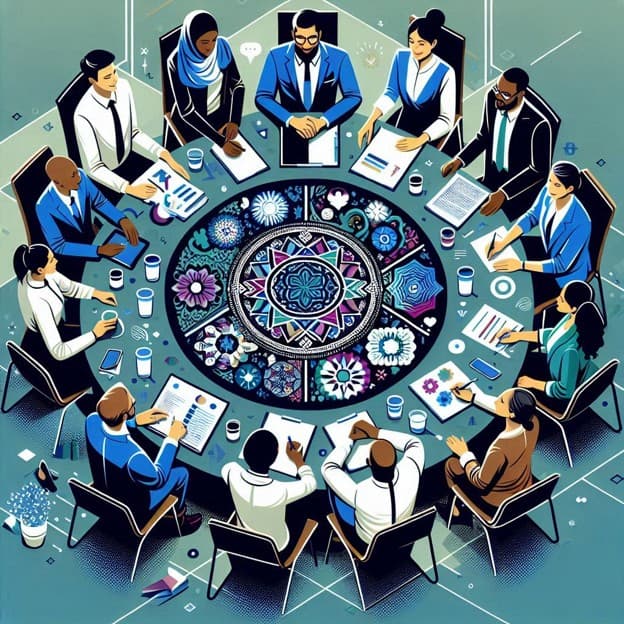
The Round Table Revolution: Transforming Employee Feedback into Cultural Change

“The most powerful conversations happen when hierarchy leaves the room and humanity enters.” — Che’ Blackmon

Picture this: A manufacturing plant struggling with 40% turnover. Morale at rock bottom. Supervisors playing favorites. Union grievances piling up. Traditional suggestion boxes gathering dust. Sound familiar?

Now imagine that same plant eighteen months later—turnover cut in half, employees proposing process improvements that save millions, and supervisors competing to develop the best talent. The difference? A revolutionary approach to employee feedback that I call “Round Table Transformation.”

In my twenty-plus years of HR leadership, I’ve learned that real cultural change doesn’t come from executive mandates or consultant presentations. It comes from creating spaces where every voice matters, where feedback flows in all directions, and where employees become architects of their own workplace culture.

Beyond the Suggestion Box: Why Traditional Feedback Systems Fail

Let’s be honest. Most employee feedback systems are broken. Annual surveys that disappear into HR black holes. Suggestion boxes that might as well be shredders. Town halls where executives talk at employees rather than with them.

In “Mastering a High-Value Company Culture,” I emphasized that culture is created through daily interactions, not annual events. Yet most organizations still treat employee feedback like a compliance checkbox rather than a strategic imperative.

The Fatal Flaws of Traditional Feedback:

  1. One-Way Communication: Information flows up but rarely back down
  2. Lack of Action: Feedback collected but seldom implemented
  3. Fear-Based Silence: Employees worry about retaliation
  4. Homogeneous Voices: Only the loudest or safest opinions get heard
  5. Delayed Response: By the time surveys are analyzed, issues have festered

As Dave Ulrich notes in his evolved HR Business Partner model, we’ve moved from simply collecting employee data to creating “employee experience architectures” that drive continuous improvement. This shift requires reimagining how we gather, process, and act on employee insights.

The Round Table Revolution: A New Paradigm

The Round Table approach transforms employee feedback from a periodic event into a continuous cultural practice. Inspired by the legendary equality of King Arthur’s round table, this methodology eliminates hierarchy and creates genuine dialogue.

Core Principles of Round Table Feedback:

1. Radical Inclusivity

Everyone has a seat at the table—from C-suite executives to frontline workers. Diversity isn’t just welcomed; it’s essential.

2. Action-Oriented Dialogue

Every session produces concrete action items with clear owners and deadlines. Talk without action is just noise.

3. Rotating Leadership

Different employees facilitate different sessions, building leadership skills and ensuring varied perspectives guide discussions.

4. Transparent Follow-Through

Actions taken (or not taken) are communicated back to the group with clear rationale. Accountability is visible.

5. Continuous Evolution

The process itself is subject to feedback and refinement. Nothing is sacred except improvement.

Case Study: From Toxicity to Transformation

Let me share the story that proved this approach works. At a Midwest manufacturing plant, I inherited a toxic culture. The details from Chapter 2 of “Mastering a High-Value Company Culture” paint the picture—favoritism, retaliation, manipulation of metrics, and a 40% turnover rate.

Traditional approaches had failed. Employee surveys showed problems, but nothing changed. Exit interviews revealed patterns, but leaders didn’t listen. We needed revolution, not evolution.

The Implementation Journey:

Month 1-3: Foundation Building

  • Secured genuine buy-in from the Plant Manager (not just lip service)
  • Structured round tables by natural work teams
  • Scheduled meetings well in advance to show respect for employees’ time
  • Created psychological safety through clear non-retaliation policies

Month 4-6: Early Wins

  • Addressed “low-hanging fruit” issues immediately (better break room facilities, consistent policies)
  • Documented every commitment and followed through visibly
  • Celebrated employees whose ideas were implemented
  • Built trust through consistent action

Month 7-12: Momentum Building

  • Supervisors received training on inclusive leadership
  • Cross-functional round tables tackled bigger issues
  • Employee-led process improvement teams formed organically
  • Metrics showed dramatic improvement in engagement and retention

Month 13-18: Cultural Transformation

  • Conversations shifted from complaints to solutions
  • Employees started bringing innovation ideas, not just problems
  • Career development became a central theme
  • The plant became a model for the entire company

The Results:

  • Turnover dropped from 40% to 18%
  • Employee engagement scores increased 35%
  • Process improvements saved $2.3 million annually
  • Union grievances decreased by 75%
  • The plant won the company’s culture transformation award

The Anatomy of Effective Round Tables

Creating transformative round tables requires more than good intentions. Here’s the detailed blueprint:

Pre-Meeting Preparation

Leadership Alignment: Before launching, ensure leadership genuinely commits to acting on feedback. As I learned from the “Larry situation” in my book, when leaders don’t walk the talk, cultural initiatives become jokes.

Diverse Composition: Intentionally structure groups to include:

  • Different departments/functions
  • Various tenure levels
  • Diverse demographics
  • Mix of personalities (not just the vocal ones)

Clear Communication: Set expectations upfront:

  • Purpose and process
  • Time commitments
  • How feedback will be used
  • Protection policies

During the Meeting

Opening Ritual (5 minutes):

  • Rotate who opens the meeting
  • Review previous commitments and progress
  • Set the tone for honest dialogue

Structured Dialogue (40 minutes):

  • Use specific prompts: “What’s working well?” “What needs improvement?” “What ideas do you have?”
  • Ensure everyone speaks (use round-robin if needed)
  • Document everything visibly (whiteboard/flip chart)
  • No immediate judgment or debate—just capture

Priority Setting (10 minutes):

  • Group votes on top 3 issues to address
  • Discuss feasibility and impact
  • Assign owners for action items

Closing Commitment (5 minutes):

  • Summarize decisions and next steps
  • Confirm follow-up communication plan
  • Appreciate participation

Post-Meeting Action

The 48-Hour Rule: Within two days, share meeting notes with all participants and leadership.

The 2-Week Check-In: Owners report progress on action items.

The Monthly Update: Share progress broadly, celebrating wins and explaining delays.

Overcoming Common Obstacles

In “Rise & Thrive: A Black Woman’s Blueprint for Leadership Excellence,” I discussed navigating resistance to change. The Round Table Revolution faces predictable obstacles:

Challenge 1: Leadership Resistance

“We don’t have time for all these meetings.”

Solution: Start with a pilot program. Show ROI through reduced turnover costs and productivity gains. One prevented departure can save $50,000+.

Challenge 2: Employee Skepticism

“We’ve heard this before. Nothing will change.”

Solution: Start small with quick wins. Fix the coffee machine. Update the outdated policy. Show that this time is different through action, not words.

Challenge 3: Middle Management Fears

“They’re complaining about us in there.”

Solution: Include supervisors in the process. Provide coaching on receiving feedback. Frame it as development, not punishment. Share the story of “Mark” from my book—the manager everyone loved because he listened and grew.

Challenge 4: Maintaining Momentum

“It was great at first, but now it’s just another meeting.”

Solution: Continuously evolve the format. Celebrate implementation stories. Rotate leadership. Bring in guest leaders. Keep it fresh and focused on impact.

The Science Behind the Success

Research validates why Round Table feedback drives cultural change:

Psychological Safety: Amy Edmondson’s research at Harvard shows that when people feel safe to speak up, innovation increases by 64%.

Diverse Perspectives: McKinsey’s studies prove that diverse teams make better decisions 87% of the time.

Action Orientation: Implementation science shows that feedback with clear action steps is 3x more likely to drive change.

Distributed Leadership: Gallup research indicates that when employees feel heard, engagement increases by 4.6x.

Technology and the Modern Round Table

While face-to-face round tables are ideal, modern workplaces require flexibility. Here’s how to adapt:

Hybrid Approaches:

  • Video conferencing for remote participants
  • Digital collaboration boards for idea capture
  • Anonymous input options for sensitive topics
  • Pulse surveys between meetings

Digital Tools That Help:

  • Mentimeter for live polling
  • Miro for collaborative brainstorming
  • Slack channels for ongoing dialogue
  • Project management tools for action tracking

Important: Technology should enhance, not replace, human connection. The magic happens in authentic dialogue.

Measuring Impact: Beyond Feel-Good Metrics

In “High-Value Leadership,” I emphasized that transformation requires measurement. Track these indicators:

Quantitative Metrics:

  • Participation rates in round tables
  • Number of ideas generated vs. implemented
  • Time from feedback to action
  • Employee retention rates
  • Productivity improvements
  • Cost savings from employee suggestions

Qualitative Indicators:

  • Shift in conversation tone (complaints to solutions)
  • Increased voluntary participation
  • Cross-functional collaboration
  • Leadership behavior changes
  • Stories of transformation

Cultural Health Markers:

  • Trust survey scores
  • Psychological safety assessments
  • Innovation metrics
  • Employee Net Promoter Scores

Your Round Table Revolution Roadmap

Ready to transform your organization? Here’s your step-by-step guide:

Phase 1: Foundation (Month 1)

  1. Secure authentic leadership commitment
  2. Identify pilot groups
  3. Develop communication strategy
  4. Train facilitators
  5. Set measurement baseline

Phase 2: Launch (Month 2-3)

  1. Conduct first round tables
  2. Implement quick wins
  3. Communicate progress widely
  4. Gather feedback on process
  5. Refine approach

Phase 3: Expansion (Month 4-6)

  1. Add more groups
  2. Cross-functional sessions
  3. Leadership participation
  4. Celebrate successes
  5. Address challenges

Phase 4: Integration (Month 7-12)

  1. Embed in organizational rhythm
  2. Link to performance management
  3. Create innovation challenges
  4. Develop internal facilitators
  5. Share best practices

Phase 5: Evolution (Ongoing)

  1. Continuously improve process
  2. Expand to customers/stakeholders
  3. Create center of excellence
  4. Measure long-term impact
  5. Cultivate culture champions

Discussion Questions for Your Leadership Team

  1. What employee feedback have we been ignoring that could transform our culture?
  2. Which voices are missing from our current feedback processes? Why?
  3. What quick wins could we implement to build trust in a new approach?
  4. How might round tables challenge existing power structures in our organization?
  5. What would need to change for every employee to feel their voice truly matters?

Transform Your Feedback Culture with Expert Guidance

Creating a Round Table Revolution requires more than a new meeting format—it demands cultural transformation expertise, change management skills, and the courage to challenge traditional hierarchies.

Che’ Blackmon Consulting partners with organizations ready to revolutionize their employee feedback culture:

  • Cultural Assessment: Evaluate your current feedback systems and identify transformation opportunities
  • Round Table Design: Create customized approaches that fit your unique culture and challenges
  • Leadership Alignment: Ensure authentic commitment and capability at all levels
  • Implementation Support: Guide your journey from pilot to full transformation
  • Sustainability Planning: Build internal capacity for long-term success

With over twenty years of experience transforming workplace cultures, I’ve seen firsthand how employee voice can become your greatest strategic asset—when you create the right conditions for it to flourish.

Ready to start your Round Table Revolution?

Schedule a discovery call to explore how transforming employee feedback can revolutionize your culture. Visit cheblackmon.com or email admin@cheblackmon.com.

Because when every voice matters, extraordinary transformation happens.


Che’ Blackmon is the founder of Che’ Blackmon Consulting, a Fractional HR Leadership and Culture Transformation firm. Author of three books on leadership and culture, she believes that the wisdom to transform any organization already exists within its people—we just need to create the right tables for that wisdom to emerge.

#EmployeeEngagement #CulturalTransformation #LeadershipDevelopment #EmployeeFeedback #OrganizationalCulture #HRInnovation #WorkplaceCulture #EmployeeVoice #ChangeManagement #InclusiveLeadership #HRStrategy #BusinessTransformation #PeopleFirst #CultureChange #LeadershipExcellence

Trust in the Trenches: Building Psychological Safety in High-Stress Environments

“In the midst of chaos, there is also opportunity.” — Sun Tzu

The emergency room erupted in controlled chaos. A trauma patient arrived just as two other critical cases demanded attention. Yet the medical team moved with synchronized precision, each member confidently voicing concerns, asking questions, and making split-second decisions. No one feared judgment for speaking up. No one hesitated to admit uncertainty. This wasn’t luck—it was psychological safety in action.

In my twenty-plus years transforming organizational cultures, I’ve witnessed how psychological safety becomes the invisible foundation that determines whether teams crumble or excel under pressure. When I wrote “High-Value Leadership: Transforming Organizations Through Purposeful Culture,” I emphasized that trust isn’t a nice-to-have—it’s the cornerstone of high performance, especially when stakes are highest.

The High-Stress Reality: Why Psychological Safety Matters More Than Ever

Today’s workplace is a pressure cooker. Economic uncertainty, rapid technological change, and global disruptions have created environments where stress isn’t occasional—it’s constant. Research by Dr. Amy Edmondson at Harvard Business School shows that teams with high psychological safety are 76% more likely to engage in creative problem-solving during crises.

Yet paradoxically, stress often erodes the very trust needed to navigate challenges successfully. When pressure mounts, leaders may become more controlling. Team members may withdraw to protect themselves. Innovation freezes as people focus on survival rather than solutions.

This creates what I call the “stress spiral”—where fear reduces psychological safety, which increases mistakes, which heightens stress, which further erodes trust. Breaking this cycle requires intentional, strategic leadership.

As Dave Ulrich notes in his updated HR Business Partner model, creating environments where people can perform under pressure isn’t just about individual resilience—it’s about building organizational capabilities that transform stress into strength. This shift from managing stress to leveraging it represents a fundamental evolution in how we think about workplace psychology.

Anatomy of Psychological Safety: Understanding the Foundation

Psychological safety isn’t about being “soft” or avoiding accountability. As I discussed in “Mastering a High-Value Company Culture,” it’s about creating an environment where people feel safe to take risks, make mistakes, ask questions, and challenge the status quo—all while maintaining high performance standards.

The Four Pillars of Psychological Safety in High-Stress Environments:

1. Permission to Be Human

People must feel they can show vulnerability without being penalized. This doesn’t mean accepting poor performance—it means recognizing that humans under stress need support, not judgment.

Real-World Example: When Microsoft CEO Satya Nadella took the helm in 2014, the company culture was notorious for internal competition and fear-based management. Nadella introduced a “growth mindset” philosophy that explicitly gave permission to fail, learn, and grow. The result? Microsoft’s market value increased by over 600%, and employee satisfaction soared.

2. Clarity in Chaos

High-stress environments often breed confusion. Psychological safety requires clear expectations, roles, and communication channels—especially when everything else feels uncertain.

3. Collective Accountability

Rather than finger-pointing when things go wrong, psychologically safe teams focus on collective problem-solving. Everyone owns both successes and failures.

4. Continuous Learning Loops

Mistakes become teachable moments rather than career-limiting moves. This transforms pressure from a threat into an opportunity for growth.

The Trust Equation: Building Safety When Stakes Are High

Creating psychological safety in high-stress environments requires a different approach than in stable conditions. Here’s the framework I’ve developed through years of working with organizations in crisis:

The TRUST Framework

T – Transparent Communication In high-stress situations, information vacuums breed fear. Leaders must communicate frequently, honestly, and clearly—even when they don’t have all the answers.

Practical Application: Institute daily “huddles” during high-stress periods. Keep them brief (10-15 minutes) but consistent. Share what you know, what you don’t know, and what you’re doing to find out. This prevents rumor mills and builds confidence through transparency.

R – Responsive Leadership Leaders must be visibly present and emotionally available during stressful times. This doesn’t mean having all the answers—it means being there to listen, support, and guide.

Case Study: During the 2008 financial crisis, TD Bank’s CEO Ed Clark held weekly video calls with all employees, answering unscripted questions and admitting when he didn’t have answers. This radical transparency helped TD Bank maintain employee trust and emerge stronger while competitors crumbled.

U – Unified Purpose Stress can fragment teams. Psychological safety requires constantly reconnecting people to shared purpose and values. This creates cohesion when external forces threaten to pull teams apart.

S – Systematic Support Build formal support systems before you need them. This includes peer mentoring, stress management resources, and clear escalation paths for concerns.

T – Time for Recovery High-stress environments can’t be sustained indefinitely. Build in recovery periods and celebrate small wins to prevent burnout and maintain trust.

Breaking the Silence: Overcoming Barriers to Speaking Up

In “Rise & Thrive: A Black Woman’s Blueprint for Leadership Excellence,” I addressed how psychological safety becomes even more complex for those navigating additional barriers. For Black women and other underrepresented groups, speaking up in high-stress environments carries additional risks.

Common Barriers to Psychological Safety:

  1. Fear of Confirming Stereotypes: Underrepresented employees may fear that mistakes will reflect on their entire group.
  2. Power Dynamics: Hierarchical structures can silence lower-level employees, especially under stress.
  3. Cultural Differences: Different cultural backgrounds may have varying comfort levels with direct communication or challenging authority.
  4. Historical Mistrust: Past negative experiences can make employees hesitant to be vulnerable.

Strategies for Inclusive Psychological Safety:

  • Amplify Diverse Voices: Actively invite input from quieter team members
  • Rotate Leadership: Give different people opportunities to lead meetings or projects
  • Address Microaggressions Immediately: Don’t let small incidents erode trust
  • Create Multiple Feedback Channels: Not everyone feels safe speaking up in groups

The Leader’s Playbook: Practical Strategies for Building Trust Under Fire

1. Model Vulnerability First

Leaders set the tone. When you admit mistakes, ask for help, or express uncertainty, you give others permission to do the same.

Action Step: In your next team meeting, share a specific mistake you made and what you learned. Then ask, “What mistakes have taught you something valuable recently?”

2. Establish “Learning Rituals”

Create structured opportunities for reflection that become part of your team’s DNA.

Practice Example: The U.S. Army’s “After Action Reviews” (AARs) provide a model for high-stress learning. After every mission, teams gather to discuss:

  • What was supposed to happen?
  • What actually happened?
  • Why were there differences?
  • What can we learn?

No blame, no rank—just learning.

3. Create Psychological Safety Metrics

What gets measured gets managed. Track indicators of psychological safety:

  • How often do team members challenge ideas in meetings?
  • How quickly do people report problems or mistakes?
  • What percentage of team members contribute ideas?
  • How do engagement scores change during high-stress periods?

4. Build Stress Inoculation

Like vaccines, small doses of managed stress can build immunity. Create controlled challenges that let teams practice trust under pressure.

Implementation Idea: Run quarterly “pressure tests”—simulated crises where teams must collaborate under time constraints. Debrief focusing on communication, trust, and support rather than just outcomes.

The Ripple Effect: How Psychological Safety Transforms Performance

When psychological safety takes root in high-stress environments, the transformation is remarkable:

Enhanced Innovation: Google’s Project Aristotle found that psychological safety was the #1 factor in team effectiveness—more important than talent, resources, or seniority.

Improved Decision-Making: Teams make better decisions when all perspectives are heard, especially under pressure when diverse viewpoints matter most.

Increased Resilience: Trust becomes a shock absorber, helping teams bounce back from setbacks faster.

Accelerated Learning: Mistakes become data points for improvement rather than sources of shame.

Stronger Retention: Employees stay with organizations where they feel safe, valued, and supported—especially after weathering storms together.

Your Action Plan: Building Trust in Your Trenches

Creating psychological safety in high-stress environments isn’t a one-time initiative—it’s an ongoing practice. Here’s your roadmap:

Week 1-2: Assess Current State

  • Survey your team anonymously about psychological safety
  • Identify specific stressors in your environment
  • Recognize existing trust gaps

Week 3-4: Set Foundation

  • Share psychological safety concepts with your team
  • Establish team norms for high-stress situations
  • Create initial support structures

Month 2: Implement Practices

  • Begin daily huddles or check-ins
  • Institute learning rituals
  • Model vulnerability as a leader
  • Address barriers to speaking up

Month 3: Measure and Adjust

  • Track psychological safety metrics
  • Gather feedback on new practices
  • Celebrate early wins
  • Refine approaches based on results

Ongoing: Sustain and Scale

  • Make psychological safety practices habitual
  • Share successes across the organization
  • Build these principles into hiring and onboarding
  • Create a culture where trust thrives under pressure

Discussion Questions for Leadership Teams

  1. What specific stressors does our team face that might erode psychological safety?
  2. How do we currently respond when someone makes a mistake under pressure?
  3. Which voices might be missing from our high-stress decision-making? Why?
  4. What would need to change for every team member to feel safe speaking up during a crisis?
  5. How can we build psychological safety practices into our daily operations before stress hits?

Transform Your High-Stress Environment into High-Trust Culture

Building psychological safety in challenging environments requires more than good intentions—it demands strategic expertise, proven frameworks, and consistent execution. When pressure threatens to fracture your team, you need approaches that transform stress into strength.

Che’ Blackmon Consulting specializes in helping organizations build trust where it matters most:

  • Crisis Culture Assessment: Evaluate your current psychological safety levels and identify critical gaps
  • Leadership Coaching: Develop leaders who can maintain trust under extreme pressure
  • Team Transformation Workshops: Build collective capabilities for high-stress performance
  • Systemic Culture Change: Embed psychological safety into your organizational DNA
  • Measurement and Sustainment: Track progress and ensure lasting transformation

With over twenty years of experience transforming cultures in high-pressure industries, I understand that building trust in the trenches requires both tactical excellence and strategic vision.

Ready to transform your high-stress environment into a high-trust culture?

Schedule a discovery call to explore how psychological safety can become your competitive advantage. Visit cheblackmon.com or email admin@cheblackmon.com to begin building unshakeable trust in your organization.

Because when the pressure rises, trust isn’t just important—it’s everything.


Che’ Blackmon is the founder of Che’ Blackmon Consulting, a Fractional HR Leadership and Culture Transformation firm. Author of three books on leadership and culture, including “High-Value Leadership: Transforming Organizations Through Purposeful Culture,” she helps organizations build psychological safety that transforms high-stress environments into high-performance cultures.

#PsychologicalSafety #LeadershipDevelopment #CrisisManagement #OrganizationalCulture #HighPerformanceTeams #TrustInLeadership #WorkplaceCulture #StressManagement #TeamDynamics #ExecutiveLeadership #HRStrategy #CultureTransformation #InclusiveLeadership #BusinessResilience #LeadershipCoaching

The Championship Classroom: Applying Sports Leadership Principles to Business Transformation

“Champions aren’t made in the gyms. Champions are made from something they have deep inside them – a desire, a dream, a vision.” — Muhammad Ali

When I wrote “High-Value Leadership: Transforming Organizations Through Purposeful Culture,” I drew inspiration from many sources. But perhaps none resonated as deeply as the transformative power of championship sports teams. The parallels between building a winning team and creating a high-value company culture are striking—and the lessons are invaluable for any leader seeking to drive meaningful organizational transformation.

The Game Plan: Where Sports and Business Leadership Intersect

In both sports and business, success isn’t just about individual talent. It’s about creating an environment where that talent can flourish collectively. The Detroit Lions’ remarkable transformation under Coach Dan Campbell offers a masterclass in this principle. After decades of disappointment, Campbell didn’t just change plays—he transformed the entire culture, turning perennial underachievers into serious contenders.

This transformation mirrors what I’ve witnessed in my twenty-plus years of HR leadership across multiple industries. Whether you’re coaching a football team or leading a corporate division, the fundamentals remain the same: build trust, establish clear values, develop talent strategically, and create a culture where everyone contributes to collective success.

As Dave Ulrich notes in his recent update on the HR Business Partner model, the evolution from personnel management to human capability development parallels how sports coaching has evolved from simply calling plays to developing whole-person athletes. Today’s business leaders, like elite coaches, must be architects of capability, not just managers of tasks.

The Starting Lineup: Core Principles That Drive Championship Performance

1. Vision That Inspires Action

Every championship team starts with a compelling vision. Coach Campbell’s “GRIT” culture gave the Lions more than a slogan—it provided a north star that guided every decision, from draft picks to daily practices.

In “Mastering a High-Value Company Culture,” I emphasized that culture is the lifeblood of any organization. Just as Campbell’s vision transformed individual players into a cohesive unit, your organizational vision must transform individual employees into a championship team.

Practical Application: Create a vision that’s both aspirational and actionable. Don’t just say “We want to be the best.” Define what “best” looks like in concrete terms. What behaviors will you see? What results will you measure? How will your culture feel different?

2. The Power of Inclusive Excellence

Championship teams understand that diversity isn’t just about fairness—it’s about winning. The most successful sports franchises actively seek players with different strengths, backgrounds, and perspectives. They know that homogeneous teams have blind spots that opponents can exploit.

This principle is central to “Rise & Thrive: A Black Woman’s Blueprint for Leadership Excellence.” Just as smart coaches leverage diverse playing styles to create unpredictable, dynamic teams, smart business leaders leverage diverse perspectives to drive innovation and capture new markets.

Case Study: When the Golden State Warriors revolutionized basketball with their “small ball” approach, they didn’t just change their roster—they challenged conventional wisdom about what a championship team should look like. Similarly, companies like Microsoft have revolutionized their cultures by challenging conventional wisdom about leadership, resulting in a 640% increase in stock price under Satya Nadella’s inclusive leadership approach.

3. Development as a Continuous Journey

Elite athletes never stop training. They understand that maintaining excellence requires constant growth. The same applies to organizational talent development. As Ulrich’s updated HR framework shows, we’ve evolved from viewing employees as fixed assets to understanding them as continuously developing human capabilities.

In high-value cultures, learning isn’t an event—it’s embedded in daily operations. Just as athletes review game film to improve performance, high-performing teams regularly reflect on their work to identify improvement opportunities.

Actionable Takeaway: Implement “game film review” sessions for your team. After major projects or quarters, gather to analyze what worked, what didn’t, and what you’ll do differently next time. Make this reflection a celebrated part of your culture, not a blame session.

The Playbook: Strategies for Building Your Championship Culture

1. Recruit for Cultural Fit AND Diversity

The best coaches don’t just recruit talent—they recruit character. They look for players who will elevate the entire team, not just their individual statistics. But they also understand that a team of identical players, no matter how talented, will be predictable and beatable.

Implementation Strategy:

  • Define your cultural non-negotiables (like the Lions’ GRIT values)
  • Actively seek candidates who bring different perspectives
  • Use behavioral interviewing to assess both cultural alignment and unique contributions
  • Create diverse interview panels to minimize bias

2. Create Psychological Safety While Maintaining High Standards

Championship teams create environments where players can take risks, make mistakes, and push boundaries—all while maintaining incredibly high performance standards. This isn’t a contradiction; it’s a necessity.

As I discussed in “High-Value Leadership,” the most innovative cultures combine psychological safety with accountability. People need to feel safe to experiment and fail, but they also need clear expectations and honest feedback.

Practice Drill: Institute “Innovation Innings”—regular sessions where teams can present new ideas without fear of criticism. Set the ground rule: every idea gets built upon before it gets evaluated. This creates the same dynamic as a practice field where players can try new moves without game-time pressure.

3. Measure What Matters (Not Everything)

Great coaches know which statistics predict winning and which are just noise. They don’t track everything—they track what drives championship performance. The same principle applies to organizational metrics.

Key Performance Indicators for Championship Cultures:

  • Employee engagement and retention
  • Innovation metrics (ideas generated and implemented)
  • Cross-functional collaboration scores
  • Customer satisfaction linked to team performance
  • Leadership development pipeline strength

4. Build Bench Strength Through Succession Planning

Championship teams don’t just develop starters—they build deep benches. When injuries or transitions occur, they’re prepared. Your organization needs the same depth.

This connects directly to the “lifting while climbing” philosophy I outlined in “Rise & Thrive.” As you advance, you must actively develop others to step into expanded roles. This isn’t just ethical leadership—it’s strategic necessity.

Development Framework:

  • Identify high-potential talent at all levels
  • Create stretch assignments that build new capabilities
  • Establish mentorship programs that transfer knowledge
  • Celebrate when team members advance (even if they leave for other opportunities)

The Game-Changing Moment: When Culture Transforms Performance

The Detroit Lions’ transformation wasn’t immediate. In their first season under Campbell, they won only three games. Critics questioned everything. But Campbell and his aligned leadership team—including owner Sheila Ford Hamp and GM Brad Holmes—maintained their commitment to cultural transformation.

By year three, the Lions weren’t just winning—they were dominating. More importantly, they were doing it with joy, unity, and a sense of purpose that resonated throughout Detroit. This is the power of patient, persistent cultural transformation.

Your Transformation Timeline:

  • Months 1-6: Establish vision and values, begin behavioral changes
  • Months 7-12: See early adopters modeling new culture, initial resistance fades
  • Year 2: Culture gains momentum, results become visible
  • Year 3+: Culture becomes self-reinforcing, attracts top talent

The Final Score: Measuring Your Cultural Championship

Success in cultural transformation, like success in sports, must be measured holistically. Yes, wins matter (revenue, profit, market share), but so do the intangibles that predict sustainable success:

  1. Team Cohesion: Are your people working together more effectively?
  2. Talent Development: Are individuals growing beyond their initial capabilities?
  3. Innovation Velocity: Are new ideas emerging and being implemented faster?
  4. Resilience: Does your team bounce back stronger from setbacks?
  5. Joy Factor: Do people want to be part of your team?

Your Next Play: Taking Action

The principles that create championship sports teams can transform your organization. But knowing the playbook isn’t enough—you must execute with consistency, patience, and unwavering commitment to your cultural vision.

Discussion Questions for Your Leadership Team:

  1. What’s our compelling vision that would make people want to “suit up” for our team every day?
  2. How diverse is our leadership “roster”? Where do we need different perspectives?
  3. What are we measuring that doesn’t actually predict “winning” in our industry?
  4. How strong is our bench? Who’s ready to step up when opportunities arise?
  5. What aspects of championship sports culture could we adapt for our organization?

Ready to Build Your Championship Culture?

Transforming organizational culture requires more than good intentions—it requires strategic expertise, proven frameworks, and consistent execution. If you’re ready to apply championship principles to your organization’s transformation, Che’ Blackmon Consulting can help.

As a Fractional HR Executive with over twenty years of experience transforming cultures across multiple industries, I partner with CEOs and business leaders to:

  • Develop compelling cultural visions that inspire championship performance
  • Create inclusive excellence that leverages diverse talents
  • Build leadership development programs that create deep bench strength
  • Implement measurement systems that track what truly matters
  • Guide your transformation journey with proven frameworks and strategic support

Just as championship teams invest in the best coaching, your organization deserves expert guidance in cultural transformation. When you’re ready to move from good to great—from competing to championing—let’s connect.

Take Your First Step: Schedule a discovery call to explore how championship culture principles can transform your organization. Visit cheblackmon.com or email admin@cheblackmon.com to begin your journey to cultural excellence.

Remember: Champions aren’t built overnight, but every championship begins with the decision to transform. What’s your next play?


Che’ Blackmon is the founder of Che’ Blackmon Consulting, a Fractional HR Leadership and Culture Transformation firm. Author of three books on leadership and culture, she specializes in helping organizations build championship cultures that attract, develop, and retain top talent while driving breakthrough performance.

#LeadershipDevelopment #OrganizationalCulture #HRTransformation #BusinessStrategy #CultureChange #ExecutiveLeadership #TalentDevelopment #HighValueLeadership #ChampionshipMindset #InclusiveLeadership #FractionalHR #WorkplaceCulture #LeadershipCoaching #BusinessTransformation #HRConsulting

The Three Pillars of High-Value Leadership: Purpose, Trust, and Cultural Alignment

By Che’ Blackmon

“Why should anyone follow you?”

This question stopped a room full of executives cold during a leadership summit I facilitated last month. After an uncomfortable silence, hands slowly raised. Their answers revealed a fundamental misunderstanding of what creates lasting leadership influence in today’s world.

“Because I have 20 years of experience.” “Because I deliver results.” “Because I’m the boss.”

These responses might have sufficed in the command-and-control era. But in today’s purpose-driven, trust-scarce, culturally complex environment? They’re woefully inadequate.

True high-value leadership—the kind that transforms organizations and unlocks human potential—rests on three interconnected pillars: Purpose, Trust, and Cultural Alignment. Remove any one, and the entire structure collapses. Master all three, and you create environments where both people and organizations don’t just function—they flourish.

In “High-Value Leadership: Transforming Organizations Through Purposeful Culture,” I argue that leadership is fundamentally about creating environments where others can thrive. After two decades of transforming organizations across industries, I’ve witnessed how these three pillars separate exceptional leaders from those who merely occupy leadership positions.

Pillar I: Purpose-Driven Direction

Purpose is your North Star. Without it, organizations drift aimlessly, and employees disengage rapidly. Yet many leaders confuse purpose with profit, mission statements with meaningful direction.

The Power of Authentic Purpose

Simon Sinek’s “Start with Why” revolutionized how we think about purpose. But knowing you need a “why” and actually living it are vastly different things. Authentic purpose must be:

  • Bigger than profit: While profit enables mission, it can’t be the mission
  • Personally meaningful: Leaders must genuinely connect with the purpose
  • Actionable daily: Purpose must translate into everyday decisions
  • Inclusive by design: Everyone must see themselves in the purpose

Research from Deloitte shows that purpose-driven companies experience:

  • 40% higher retention rates
  • 30% greater innovation levels
  • 4x better stock performance
  • 72% higher employee engagement

Case Study: Patagonia’s Purpose in Action

When Patagonia declared its purpose as “We’re in business to save our home planet,” skeptics scoffed. How could an apparel company save the planet?

But founder Yvon Chouinard didn’t just state a purpose—he structured the entire organization around it:

  • Donated $140 million to environmental causes
  • Gave employees time off to protest
  • Sued the government to protect public lands
  • Recently transferred $3 billion company ownership to fight climate change

Result? Patagonia generates over $1 billion annually, attracts top talent willing to accept lower salaries, and maintains customer loyalty that borders on devotion.

The lesson? Purpose without action is just PR. Purpose with commitment transforms everything.

Making Purpose Personal

In “Rise & Thrive: A Black Woman’s Blueprint for Leadership Excellence,” I discuss how purpose becomes especially critical for leaders from underrepresented backgrounds. When you’re breaking barriers and challenging stereotypes, purpose provides the resilience to persevere.

I learned this personally while leading HR at a manufacturing plant. Despite facing a toxic culture where command-and-control leadership created daily conflicts, my purpose—creating environments where overlooked talent could thrive—kept me focused. That purpose now drives everything at Che’ Blackmon Consulting.

Practical Purpose Implementation

  1. Define Your Purpose Clearly
    • What problem do you solve?
    • Whose lives do you improve?
    • What would be lost if you disappeared?
    • How does this connect to larger societal needs?
  2. Connect Individual and Organizational Purpose
    • Help employees find their personal “why”
    • Show how individual purposes align with organizational mission
    • Create roles that leverage personal purpose
    • Celebrate purpose-aligned achievements
  3. Operationalize Purpose
    • Build purpose into hiring criteria
    • Include purpose metrics in performance reviews
    • Allocate resources to purpose-driven initiatives
    • Make decisions through a purpose filter

Pillar II: Trust-Based Empowerment

Trust is the currency of high-value leadership. Without it, purpose becomes propaganda and culture becomes coercion. Yet trust in leadership is at historic lows—only 21% of employees strongly trust their leaders.

The Anatomy of Leadership Trust

Stephen M.R. Covey identifies trust as a function of character and competence. But I’ve found that trust in diverse organizations requires a third element: cultural intelligence. Leaders must demonstrate:

Character Trust

  • Integrity: Alignment between words and actions
  • Intent: Genuine care for others’ success
  • Humility: Admitting mistakes and limitations
  • Courage: Standing for principles under pressure

Competence Trust

  • Technical skills: Knowing your domain
  • Results: Delivering on commitments
  • Continuous learning: Staying relevant
  • Decision quality: Making sound judgments

Cultural Trust

  • Inclusive behaviors: Valuing diverse perspectives
  • Contextual awareness: Understanding different lived experiences
  • Adaptive communication: Connecting across differences
  • Systemic thinking: Recognizing and addressing bias

The Trust Multiplier Effect

Patrick Lencioni’s “Five Dysfunctions of a Team” places absence of trust as the foundational dysfunction. When trust exists, everything accelerates:

  • Speed: Decisions happen faster without elaborate CYA processes
  • Innovation: People share radical ideas without fear
  • Collaboration: Silos dissolve as people assume positive intent
  • Performance: Energy goes to work, not self-protection

Case Study: Microsoft’s Trust Transformation

When Satya Nadella became CEO, Microsoft suffered from toxic internal competition. The performance review system pitted employees against each other. Trust was nearly non-existent.

Nadella’s trust-building approach:

  1. Modeled vulnerability: Publicly discussed his mistakes and learnings
  2. Changed systems: Eliminated stack ranking that destroyed collaboration
  3. Encouraged learning: Replaced “know-it-all” with “learn-it-all” culture
  4. Demonstrated care: Prioritized employee wellbeing and inclusion

Results:

  • Employee trust scores increased from 38% to 87%
  • Collaboration across divisions increased 210%
  • Stock price increased 600%
  • Became most valuable company globally

Building Trust as a Diverse Leader

In “Mastering a High-Value Company Culture,” I share how my trusted managers Lillian and Joan built extraordinary trust despite limited resources. Their secret? Consistent authentic care combined with high expectations.

For leaders from underrepresented backgrounds, trust-building carries additional complexity. We must overcome historical skepticism while avoiding the trap of overcompensating. The key is what I call “confident authenticity”—being genuinely yourself while demonstrating exceptional competence.

Trust-Building Tactics

  1. Start with Self-Trust
    • Know your values and live them
    • Set boundaries and maintain them
    • Keep commitments to yourself
    • Practice self-compassion
  2. Create Psychological Safety
    • Admit your own mistakes openly
    • Ask for help when needed
    • Celebrate intelligent failures
    • Address violations swiftly
  3. Demonstrate Consistent Care
    • Remember personal details
    • Follow up on concerns
    • Invest in development
    • Share credit generously
  4. Deliver Results Reliably
    • Under-promise, over-deliver
    • Communicate progress transparently
    • Take accountability fully
    • Celebrate team achievements

Pillar III: Cultural Alignment

Culture eats strategy for breakfast, but misaligned culture devours everything—purpose, trust, performance, and people. Cultural alignment ensures that stated values match lived experiences throughout the organization.

The Cultural Alignment Challenge

Dave Ulrich’s evolved HR Business Partner model emphasizes moving from “knowing the business” to creating “stakeholder value.” This requires deep cultural alignment where:

  • Systems reinforce values: Policies and practices match stated principles
  • Behaviors reflect beliefs: Leaders model desired culture daily
  • Stories celebrate standards: Recognition reinforces cultural norms
  • Structures support success: Organization design enables culture

The Cost of Misalignment

I once worked with a company that proclaimed “innovation” as a core value while:

  • Punishing any failure
  • Requiring 12 approvals for new ideas
  • Promoting only those who never challenged status quo
  • Measuring success by adherence to outdated processes

Result? Their most innovative employees left for competitors. Market share plummeted. The company eventually sold for a fraction of its former value.

Cultural misalignment creates:

  • 50% higher turnover
  • 73% lower engagement
  • 66% reduced innovation
  • 41% more ethical violations

Case Study: The Detroit Lions’ Cultural Revolution

The Detroit Lions’ transformation under Dan Campbell provides a masterclass in cultural alignment. Campbell didn’t just talk about GRIT—he embedded it everywhere:

Hiring Alignment

  • Selected players for character over just talent
  • Recruited coaches who embodied GRIT values
  • Released talented players who disrupted culture

Systems Alignment

  • Changed practice structures to build resilience
  • Modified play-calling to reward intelligent risk-taking
  • Created accountability systems based on effort and improvement

Recognition Alignment

  • Celebrated displays of GRIT regardless of outcome
  • Shared stories of perseverance publicly
  • Rewarded team-first behaviors over individual statistics

Leadership Alignment

  • Campbell cried publicly, showing emotional authenticity
  • Coaches admitted mistakes and learned openly
  • Management supported long-term vision despite early losses

Result? From 3-13-1 to NFC Championship contention in three years, with a completely transformed culture that attracts top talent.

Creating Cultural Alignment

  1. Audit Current State
    • What do policies actually reward?
    • How do leaders really spend time?
    • What stories get told and retold?
    • Where do stated and lived values diverge?
  2. Design Aligned Systems
    • Hiring: Screen for cultural contribution
    • Performance: Measure value-aligned behaviors
    • Promotion: Advance culture champions
    • Recognition: Celebrate cultural wins
  3. Model Relentlessly
    • Live values especially under pressure
    • Share stories of value-based decisions
    • Admit when you fall short
    • Course-correct publicly
  4. Measure and Adjust
    • Track cultural health metrics
    • Listen to employee experiences
    • Address misalignments quickly
    • Evolve practices as needed

The Integration Imperative: When Three Pillars Become One

High-value leadership emerges when purpose, trust, and cultural alignment integrate seamlessly. You can’t have authentic purpose without trust. Trust can’t flourish in misaligned cultures. Cultural alignment without purpose becomes empty conformity.

Consider how they reinforce each other:

  • Purpose + Trust: People believe in and commit to meaningful direction
  • Trust + Cultural Alignment: Employees feel safe being authentic
  • Purpose + Cultural Alignment: Organizations attract purpose-aligned talent
  • All Three: Sustainable transformation becomes possible

Current Trends Reinforcing the Three Pillars

Several trends make mastering these pillars more critical than ever:

The Great Reflection

Post-pandemic, employees demand:

  • Work with meaning (Purpose)
  • Leaders who care (Trust)
  • Authentic environments (Cultural Alignment)

Stakeholder Capitalism

Investors increasingly evaluate:

  • Long-term purpose beyond profit
  • Leadership trustworthiness
  • Cultural sustainability

AI and Automation

As machines handle routine tasks, human leadership must provide:

  • Meaningful direction
  • Interpersonal connection
  • Cultural cohesion

Generational Shifts

Millennials and Gen Z prioritize:

  • Purpose-driven employers (92%)
  • Trustworthy leadership (87%)
  • Values-aligned cultures (94%)

Your Three Pillars Assessment

Rate your organization (1-10) on each pillar:

Purpose-Driven Direction

  • Clear, compelling purpose: ___
  • Individual-organizational alignment: ___
  • Daily purpose activation: ___
  • Inclusive purpose design: ___

Trust-Based Empowerment

  • Leadership character trust: ___
  • Competence demonstration: ___
  • Cultural intelligence: ___
  • Psychological safety: ___

Cultural Alignment

  • Values-behavior match: ___
  • Systems-culture fit: ___
  • Leadership modeling: ___
  • Story-standard alignment: ___

Total Score: ___/120

  • 90-120: High-value leadership foundation strong
  • 60-89: Significant opportunity for improvement
  • Below 60: Urgent transformation needed

Discussion Questions for Leadership Teams

  1. Which pillar is strongest in your organization? Which needs most attention?
  2. How does your purpose inspire both performance and fulfillment?
  3. Where do trust gaps exist between leadership and employees?
  4. What cultural misalignments create the most friction?
  5. How can you better integrate all three pillars?

Your Path to High-Value Leadership

The executives who couldn’t answer “Why should anyone follow you?” left that session transformed. They realized that experience, results, and position mean nothing without purpose, trust, and cultural alignment.

One participant emailed six months later: “I finally understand. People don’t follow my title. They follow what I stand for, whether they trust me, and if I create an environment where they can succeed. Everything changed when I focused on the three pillars.”

Ready to build your high-value leadership foundation?

At Che’ Blackmon Consulting, we help leaders and organizations master the three pillars through:

  • Purpose discovery and activation workshops
  • Trust assessment and building strategies
  • Cultural alignment audits and transformation
  • Integrated leadership development programs

Don’t let another day pass leading from position instead of purpose, power instead of trust, or policy instead of culture.

Transform your leadership. Transform your organization. Transform lives.

Contact us today:

  • Email: admin@cheblackmon.com
  • Phone: 888.369.7243
  • Website: https://cheblackmon.com

Because when leaders master purpose, trust, and cultural alignment, everyone rises.


Che’ Blackmon is a Human Resources strategist and author who has transformed organizational cultures across multiple industries for over two decades. Her books “Mastering a High-Value Company Culture,” “High-Value Leadership,” and “Rise & Thrive” provide frameworks for creating purposeful, trust-based, culturally aligned organizations where all talent thrives.

#Leadership #PurposeDrivenLeadership #TrustInLeadership #OrganizationalCulture #LeadershipDevelopment #HighValueLeadership #ExecutiveLeadership #CultureTransformation #LeadershipCoaching #AuthenticLeadership #CheBlackmon #BusinessLeadership #LeadershipSkills #ManagementTips #CorporateLeadership