The GenX Superpower: How a Generation of Resilient Leaders Built Cultures That Last

By Che’ Blackmon, DBA Candidate | Founder & CEO, Che’ Blackmon Consulting

📚 Book Tie-In: Mastering a High-Value Company Culture | High-Value Leadership™ | Rise & Thrive

“Generation X did not have helicopter parents, participation trophies, or onboarding programs that held their hands. They had responsibility. Ambiguity. And the uncommon ability to figure it out anyway. That is not a liability. That is a superpower.”

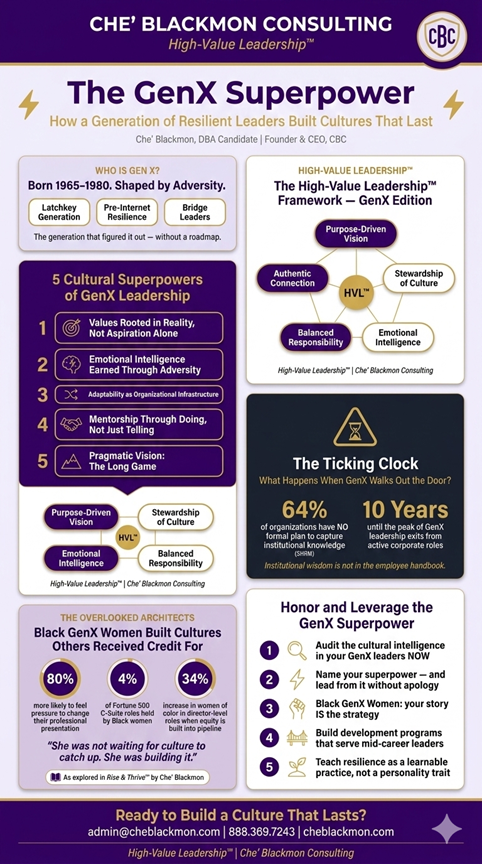
There is a generation quietly holding corporate America together right now. They are not trending on social media. They do not have an entire marketing ecosystem built around their preferences. They are not the subject of the latest workplace study on how to attract and retain them. But they are absolutely essential. They are Generation X, born roughly between 1965 and 1980, and the organizational cultures that have lasted through recessions, technology revolutions, global disruptions, and generational upheaval were very often built on their watch.

This is not a think piece about generational conflict. It is not a comparison exercise designed to elevate one generation at the expense of another. It is a recognition, long overdue, of what the GenX leadership experience actually produced: a cohort of deeply resilient, operationally grounded, emotionally intelligent, and culturally fluent leaders who built organizations designed to endure. It is time to study that superpower, name it explicitly, and learn from it before it walks out the door.

🗺️ Who Is Generation X, Really?

Generation X grew up between two massive cultural forces. On one side were the Baby Boomers, a generation shaped by post-war optimism and institutional loyalty, who built their careers on the expectation that hard work and company allegiance would be rewarded with stability and upward mobility. On the other side came the Millennials, a generation raised with affirmation, technological fluency from birth, and organizational expectations centered around purpose and flexibility.

Gen X landed in the middle. And that middle position produced something remarkable. They came of age during a period of significant social and economic disruption. Divorce rates were climbing. Both parents were increasingly in the workforce. The term “latchkey kid” was coined largely to describe their experience of coming home to an empty house, managing their own time, and making their own decisions long before adulthood officially arrived. They watched institutions fail. Corporate downsizing in the late 1980s and early 1990s taught them early that company loyalty was not always reciprocal. They adapted. They became self-sufficient. They learned to lead without a roadmap.

“Gen X did not wait for someone to create the path. They made one. And in doing so, they built organizational cultures designed to survive uncertainty.”

By the time Gen X entered the workforce in meaningful numbers, they had already developed a set of leadership capabilities that took others decades to build. They were adaptable because change had been their constant. They were pragmatic because idealism had been tested in their formative years. They were skeptical of authority not out of disrespect but out of experience with institutions that had not always earned the trust placed in them. And they were intensely results-focused because they learned early that outcomes mattered more than appearances.

Today, many Gen X professionals are in or approaching the peak of their organizational influence. They hold senior leadership, executive, and C-suite roles across industries. They are the generation bridging retiring Boomer leaders and emerging Millennial and Gen Z talent. Their institutional knowledge, cultural intelligence, and hard-earned resilience make them uniquely positioned to shape what organizational culture looks like for the next generation. But only if organizations recognize and leverage what they bring to the table.

💪 The Resilience Framework: What Gen X Actually Built

Resilience is a word that gets used a lot in leadership circles. It gets applied broadly, defined loosely, and celebrated without much examination of where it actually comes from. For Gen X leaders, resilience was not a workshop they attended. It was a lived curriculum. And the organizational cultures they built reflect that curriculum in deeply practical ways.

In Mastering a High-Value Company Culture, the foundation is clear: culture is not an accident. It is built through intentional design, consistent reinforcement, and continuous evolution. Gen X leaders understood this intuitively because they lived the consequences of cultures that were left unmanaged. They watched organizations collapse under poor leadership. They navigated environments where values were stated but never practiced. And when they were finally in positions to build something themselves, they built differently.

🔧 The Five Cultural Contributions of GenX Leadership

1. 🎯 Values Rooted in Reality, Not Aspiration Alone

Gen X leaders tend to build cultures where values are tested under pressure rather than simply declared in a strategic planning session. There was a company that went through a significant financial contraction and watched its entire executive team hold firm to its stated commitment to transparency, communicating openly with employees about what was happening and why, and making decisions that reflected the company’s stated people-first value even when the financial pressure to do otherwise was immense. That leadership team was almost entirely composed of Gen X leaders who had personally experienced what it felt like to be on the receiving end of corporate dishonesty during workforce restructurings in their early careers. They built the culture they had wished existed.

This is a defining characteristic of Gen X culture architecture: the values they instill are informed by what they experienced when values failed. The result is organizational cultures where accountability is not performative and where stated values are actually tested against real decisions.

2. 🧠 Emotional Intelligence Earned Through Adversity

Before emotional intelligence became a leadership competency that appeared on every 360-degree feedback form, Gen X leaders were developing it the old-fashioned way. Growing up in environments that often required them to read rooms, manage conflict independently, and navigate complicated family and social dynamics gave them an emotional vocabulary that showed up powerfully in their professional lives.

Research by Daniel Goleman, cited throughout the High-Value Leadership™ framework, consistently identifies emotional intelligence as a primary differentiator between average and exceptional leaders. Gen X leaders frequently demonstrate high levels of self-awareness, empathy, and relational management not because they were trained in those skills early in their careers but because those skills were survival tools long before they entered a boardroom. The organizations they lead tend to have lower rates of toxic leadership behaviors and higher rates of psychological safety precisely because their leaders understand, from personal experience, what it costs people when those things are absent.

3. 🔄 Adaptability as Organizational Infrastructure

Gen X entered the workforce before email was universal. They mastered email, then mastered the internet, then mastered mobile technology, then mastered social media platforms, then began mastering artificial intelligence tools, all within a single career. They did not grow up with technology; they grew alongside it, which means they developed the capacity to adapt to technological change rather than simply assuming fluency from birth.

This adaptability translated directly into how they build organizational cultures. There was a manufacturing organization whose leadership team, predominantly Gen X, navigated four major operational technology transitions over a 12-year period without significant talent attrition or cultural fracture. The reason, according to those inside the organization, was that leadership modeled adaptability rather than mandating it. They communicated openly about what was changing and why. They acknowledged the discomfort of transition rather than dismissing it. And they remained focused on the outcomes that mattered to the organization while being flexible about the processes used to achieve them. That is not a coincidence. That is Gen X culture in action.

4. 🤝 Mentorship Through Doing, Not Just Telling

Gen X leaders are frequently described by those who work for them as leaders who teach by example. This reflects a cultural orientation shaped by their own developmental experience. Many Gen X professionals did not have robust mentorship structures available to them early in their careers. They figured things out by watching, by doing, by failing, and by iterating. When they became leaders with the opportunity to invest in others, they tended to create mentorship relationships that were substantive and skills-based rather than ceremonial.

In High-Value Leadership: Transforming Organizations Through Purposeful Culture, authentic connection is identified as one of the five pillars of High-Value Leadership™. For Gen X leaders, that authentic connection frequently manifests as a genuine investment in the development of the people around them, not because a company policy requires it but because they understand from their own experience what a difference a real advocate makes in someone’s trajectory.

5. 📈 Pragmatic Vision: The Long Game

Gen X leaders are often unfairly characterized as cynical. The more accurate description is pragmatic. They have watched enough organizational cycles to understand that vision without execution is simply a well-written document. They build cultures oriented around sustainable performance rather than short-term optics. They are skeptical of trends that prioritize appearance over impact. And they have a long enough career horizon behind them to recognize the difference between initiatives that produce lasting change and programs that produce a quarterly report footnote.

This pragmatic orientation produces cultures built for endurance. The organizations shaped by Gen X leaders tend to have strong operational foundations, clear decision-making frameworks, and a resistance to the kind of reactive culture pivots that destabilize organizations every time a new workplace study makes headlines. That is not rigidity. That is the institutional memory of a generation that has seen what happens when organizations abandon substance for style.

✊🏽 The Overlooked Architects: Black GenX Women in Corporate America

Any honest examination of Generation X leadership must include a direct and specific conversation about Black Gen X women in corporate spaces. Because if the GenX experience was defined by navigating institutional structures without adequate support, the Black GenX woman’s experience was that same journey with an additional set of barriers that her white counterparts, and frequently her Black male counterparts, did not face in the same way.

As explored in Rise & Thrive: A Black Woman’s Blueprint for Leadership Excellence, Black women in professional environments navigate what researchers describe as double jeopardy, facing compounding barriers related to both race and gender simultaneously. For Black Gen X women, this played out in workplaces that were not yet having consistent public conversations about diversity, equity, or inclusion. DEI as an organizational practice did not have its current institutional visibility in the early and mid-career years of most Black Gen X professionals. They were navigating environments shaped by implicit bias and structural inequity long before those terms were part of the mainstream corporate vocabulary.

“Black Gen X women did not wait for the organization to make space for them. Many of them built the space themselves, and then held the door open for everyone who came after.”

And yet, Black Gen X women produced an extraordinary generation of organizational leaders. They built careers in industries that were not designed with their advancement in mind. They developed cultural fluency that spanned race, gender, class, and institutional dynamics simultaneously. They became adept at leading across difference precisely because they had to lead through it every single day. The skills they developed navigating predominantly white corporate environments while maintaining their identity, their integrity, and their professional effectiveness represent some of the most sophisticated leadership capabilities in the modern workforce.

📊 The Numbers Behind the Narrative

Research from the Center for Talent Innovation found that Black women in the United States are 80 percent more likely than white women to report needing to change how they present themselves in order to be viewed as leadership material. This statistic describes the experience of an entire generation of Black Gen X women who spent decades in organizations that required them to code-switch, minimize their cultural identity, and perform a version of professionalism defined entirely by people who looked nothing like them.

Despite these barriers, Black Gen X women have climbed. Many are now in the senior leadership positions they were told, directly or indirectly, were not meant for them. And the organizational cultures they are now in positions to shape carry the imprint of everything they learned navigating systems that were not built for their success. They build cultures with equity as infrastructure rather than initiative because they lived the cost of inequitable systems firsthand. They build cultures that prioritize psychological safety because they spent years in environments where speaking up as a Black woman carried real professional risk. They build cultures that develop talent intentionally because they know what it means to be talented and overlooked.

There was a company that promoted a Black woman into its Chief Human Resources Officer role after she had spent nearly two decades in mid-level HR positions where her contributions consistently shaped organizational outcomes without producing corresponding advancement. When she finally had the organizational authority to build culture at scale, she redesigned the company’s leadership pipeline from the ground up, creating structured equity reviews at every promotion checkpoint and instituting executive sponsorship programs specifically designed for high-potential employees from underrepresented backgrounds. Within two years, the representation of women of color in director-level roles and above increased by 34 percent. The culture she built was informed by everything she had experienced as someone who had been systematically underestimated.

That is what Black Gen X women bring to organizational leadership. Not just competence. Not just resilience. A comprehensive, experientially earned understanding of how organizations either include or exclude their people, and the vision and determination to build something better.

⏰ The Ticking Clock: What Happens When GenX Walks Out the Door

Here is the reality that organizations need to confront with urgency. The eldest Gen X professionals are now in their late 50s. The youngest are in their mid-40s. Within the next decade, this generation will begin a significant transition out of active organizational leadership. And when they go, they will take with them something that cannot be replicated by a technology platform, a consulting engagement, or a succession planning document.

They will take the institutional memory of what it actually took to build the organizational cultures that have lasted.

This is not a sentimental observation. It is a strategic risk. Research from Deloitte’s Global Human Capital Trends report consistently identifies knowledge transfer and leadership succession as top organizational vulnerabilities. Many organizations are excellent at documenting operational processes. They are far less effective at capturing and transferring the cultural knowledge that lives inside their most experienced leaders. The judgment calls. The relational intelligence. The hard-won understanding of how an organization’s values play out under pressure. These things are not in the employee handbook.

“Organizations that fail to capture Gen X institutional wisdom before it exits are not just losing leaders. They are losing the cultural architecture those leaders spent decades building.”

There was a professional services organization that lost three senior Gen X partners within an 18-month period to retirement. Each of them had been with the firm for more than 20 years. Each of them had relationships, institutional knowledge, and cultural credibility that had taken decades to develop. The organization had robust technical knowledge transfer protocols. What it did not have was a system for capturing the cultural and relational intelligence those leaders carried. Within three years of their departure, the firm’s scores on belonging, trust in leadership, and employee engagement had declined measurably. The leaders who replaced them were technically capable. They simply had not yet earned the kind of cultural authority that only comes from time, consistency, and demonstrated commitment to the people around you.

The lesson is not that Gen X leaders are irreplaceable. Every generation produces capable leaders. The lesson is that the cultural wisdom they carry is not automatically transmitted through promotion. It must be intentionally captured, shared, and institutionalized before it walks out the door.

🏛️ The High-Value Leadership™ Framework Through a GenX Lens

The High-Value Leadership™ framework, developed through decades of organizational leadership experience and grounded in both research and practice, identifies five core pillars that define transformational cultural leadership: Purpose-Driven Vision, Stewardship of Culture, Emotional Intelligence, Balanced Responsibility, and Authentic Connection. When examined through the lens of GenX leadership experience, each pillar maps directly onto the capabilities this generation developed through lived experience.

Purpose-Driven Vision 🎯

Gen X leaders did not always enter the workforce with the luxury of asking whether their work was meaningful. They entered because work was necessary. But the experience of building careers in environments that were sometimes deeply misaligned with their personal values gave many of them a clarity about purpose that they now bring with unusual force to their organizations. They know what it costs an organization to operate without a genuine ‘why’ because they worked inside organizations that had none. The purpose-driven cultures they build are not aspirational exercises. They are intentional corrections.

Stewardship of Culture 🌱

Stewardship implies responsibility for something that does not belong to you alone but has been entrusted to your care. Gen X leaders understand this intuitively. They inherited organizational cultures they did not design, navigated them with varying degrees of success, and emerged with a clear sense of what they would preserve, what they would change, and what they would never allow on their watch. Their stewardship of culture is active, not passive. They do not let culture drift because they know from experience how quickly drift becomes dysfunction.

Emotional Intelligence 🤝

As noted earlier, emotional intelligence for many Gen X leaders was not a professional development curriculum. It was a life skill developed out of necessity. Their capacity for self-regulation, empathy, and relational management tends to be high because it was tested early and often. The organizations they lead benefit from this in measurable ways: lower rates of interpersonal conflict escalation, higher rates of team psychological safety, and leaders who are more likely to address performance issues constructively rather than punitively.

Balanced Responsibility ⚖️

Gen X leaders are frequently the leaders who refuse to accept the premise that high standards and human-centered culture are mutually exclusive. They hold people accountable. They expect results. And they do so within cultures they have intentionally designed to be fair, transparent, and supportive of genuine growth. This balance reflects their experience in organizations where accountability was often applied inequitably and where high standards were sometimes wielded as instruments of control rather than tools for development.

Authentic Connection 🗣️

Authentic connection for Gen X leaders tends to be relational rather than performative. They are not always the loudest voices in the room. They are not always the most polished communicators on a stage. But they build the kind of trust with their teams that produces real loyalty and real discretionary effort because they show up consistently and genuinely. Their connections are earned over time and held with care. In a professional landscape increasingly dominated by digital communication and surface-level engagement, the depth of relational trust that Gen X leaders build is a significant competitive and cultural advantage.

📈 Current Trends: Where GenX Leadership Is Most Needed Right Now

🤖 AI and the Human Element

Artificial intelligence is transforming organizational operations at a pace that is creating genuine cultural disruption. Gen X leaders, who have navigated multiple waves of technological transformation, are uniquely positioned to help organizations integrate AI capabilities without losing the human elements that define a high-value culture. They understand that technology is a tool, not a culture strategy, and they have the credibility and experience to hold that line even when the pressure to automate everything is intense.

🏠 The Multigenerational Workforce

Organizations today are managing five generations in the workforce simultaneously: Traditionalists, Baby Boomers, Generation X, Millennials, and Generation Z. Gen X leaders are the generation best positioned to bridge these groups because they understand each of them from direct experience. They worked for Boomer leaders. They now lead Millennial and Gen Z employees. They speak multiple generational languages and can translate organizational culture across generational expectations in ways that no other cohort can replicate.

🌎 The Purpose Economy

Increasingly, employees at every level are demanding that organizations articulate a genuine purpose and demonstrate alignment between that purpose and actual organizational decisions and behaviors. Gen X leaders, who built their most durable cultural contributions around exactly that alignment, are already ahead of this trend. They have been building purpose-driven cultures since before the term became a conference keynote staple. Organizations that tap into that experience rather than sidelining it will have a significant advantage in building cultures that attract and retain purpose-oriented talent.

🔄 Leadership Succession and Knowledge Transfer

As noted in the previous section, the organizational knowledge transition risk associated with Gen X leadership exits is real and pressing. Organizations that are investing now in structured knowledge transfer, mentorship architectures, and cultural documentation are positioning themselves to preserve the cultural investments Gen X leaders have made. Those that are not are building on a foundation they may not fully understand until it begins to erode.

✅ Actionable Takeaways: Honoring and Leveraging the GenX Superpower

🔎 For Organizations: See What You Have Before You Lose It

The most urgent action most organizations can take right now is a genuine audit of the cultural intelligence currently living inside their Gen X leadership cohort. Conduct stay interviews with senior Gen X leaders specifically focused on what cultural knowledge they carry and how it can be institutionalized. Build formal knowledge transfer protocols that go beyond operational documentation to include cultural practices, relational frameworks, and leadership judgment developed over decades.

🎯 For Gen X Leaders: Name Your Superpower

Many Gen X leaders have spent their careers building remarkable things while being told to be less cynical, more enthusiastic, or better at self-promotion in the Millennial style. The invitation here is to name, explicitly, what your generational experience has produced and to lead from that strength without apology. Your pragmatism is strategic intelligence. Your resilience is institutional wisdom. Your relational depth is a competitive advantage. Lead accordingly.

✊🏽 For Black GenX Women: Your Story Is the Strategy

If you are a Black Gen X woman who has spent decades navigating corporate spaces that were not designed for your success and building organizational cultures that were more equitable, more inclusive, and more human than what you inherited, that experience is not background context. It is your most powerful leadership credential. The organizational cultures you have built from that experience, and the ones you are still in positions to build, carry wisdom that no consulting framework or leadership model can fully replicate. Name it. Teach it. Build from it without reservation.

📊 For HR and People Leaders: Build Bridges, Not Boundaries

Gen X is often the generation least served by organizational development programs designed either for early-career professionals or for those approaching retirement. There is a significant gap in targeted development, recognition, and engagement strategies for mid-career and senior Gen X professionals. Closing that gap is not just an equity issue. It is a retention and cultural continuity issue. Organizations that invest in the ongoing development and recognition of their Gen X leaders will retain the cultural architecture those leaders represent.

🌱 For All Leaders: Resilience Is Teachable

One of the most valuable contributions Gen X leaders can make to the next generation of professionals is the explicit teaching of resilience not as a personality trait but as a learnable practice. The capacity to adapt to ambiguity, maintain values under pressure, lead through change without losing sight of what matters, and build something durable through adversity can all be developed and modeled. Gen X leaders who are intentional about teaching those skills are building a cultural legacy that will outlast their tenure.

🔬 Research Corner: What the Data Tells Us About GenX Leadership

  • A 2023 Gallup study found that Gen X workers report the highest levels of engagement among all generational cohorts when placed in roles with genuine autonomy and clear purpose alignment. This finding is consistent with the generational orientation toward independence and outcomes that defined their formative years.
  • Research from the Harvard Business Review found that leaders with high levels of “adversity quotient”, the capacity to navigate and grow through significant challenges, produced organizations with significantly stronger cultural resilience scores. Gen X leaders score disproportionately high on adversity quotient measures.
  • McKinsey & Company’s research on organizational culture transformation consistently identifies middle management as the single most important layer for cultural change. Gen X leaders, who disproportionately occupy this layer, are therefore the pivot point for most large-scale cultural transformations currently underway in corporate America.
  • The Center for Creative Leadership found that leaders who experienced significant career adversity in their formative professional years demonstrated stronger empathy, higher psychological safety scores in their teams, and greater willingness to advocate for underrepresented talent than leaders who experienced linear career progression.
  • According to SHRM research, 64 percent of organizations report having no formal plan for capturing institutional knowledge from senior leaders approaching retirement or transition. This gap represents one of the most significant and underaddressed cultural risks in the modern workforce.

💬 Discussion Questions for Leaders and Teams

Use these questions to spark meaningful conversations in your organization about the GenX leadership legacy and what it means for your culture going forward.

  • Who are the Gen X leaders in your organization whose cultural contributions are most significant? Have you explicitly named and recognized those contributions?
  • What institutional knowledge currently lives inside your most experienced leaders that does not exist anywhere in your documented processes or cultural frameworks? What would it take to capture and transfer it?
  • How does your organization’s leadership development program account for the mid-career professional experience? Are Gen X leaders being developed and invested in, or primarily deployed?
  • In what ways has the resilience built by adversity, whether generational or identity-based, shaped the cultures in your organization? What would it look like to study and intentionally replicate those cultural contributions?
  • For Black Gen X women in your organization: are their organizational contributions visible, recognized, and being built upon? Or have they been building cultures others receive credit for?
  • What would your organizational culture lose if your three most experienced Gen X leaders departed tomorrow? What are you doing today to ensure that loss does not happen by surprise?

🚀 Next Steps for Readers

Insight without action is just a good read. Here is how to move from this article into meaningful work:

  • Identify one Gen X leader in your organization or network whose cultural contributions have gone unrecognized and create a deliberate opportunity to name and honor that work publicly.
  • Schedule a knowledge transfer conversation with a senior Gen X leader in your organization this month. Ask them specifically: what do you know about how this culture works that is not written down anywhere?
  • If you are a Gen X leader yourself, take one hour this week to document three organizational lessons you have learned that you have never formally shared with your team or organization.
  • Explore the frameworks and tools in Mastering a High-Value Company Culture and High-Value Leadership: Transforming Organizations Through Purposeful Culture for the deeper methodology behind every principle in this article.
  • If you are a Black woman navigating or leading in corporate spaces, Rise & Thrive: A Black Woman’s Blueprint for Leadership Excellence was written to honor your journey and give you the framework and language to build from everything you have already earned. It is available now.
  • Assess your organization’s succession and cultural transfer readiness with the same rigor you apply to financial succession planning. The cultural balance sheet matters as much as the financial one.

🤝 Ready to Build a Culture That Lasts?

Che’ Blackmon Consulting partners with organizations and leaders who are serious about building cultures that outlast any single leader’s tenure. Through fractional HR strategy, culture diagnostics, leadership development, and the High-Value Leadership™ System, CBC delivers the frameworks and implementation support that transform organizations from the inside out. 📧  admin@cheblackmon.com 📞  888.369.7243 🌐  cheblackmon.com

© Che’ Blackmon Consulting | High-Value Leadership™ | All Rights Reserved

#GenXLeadership #HighValueLeadership #CultureTransformation #OrganizationalResilience #HRLeadership

#WorkplaceCulture #LeadershipDevelopment #BlackWomenLead #InclusiveLeadership #GenerationalLeadership

#CompanyCulture #KnowledgeTransfer #PurposeDrivenLeadership #ExecutiveLeadership #CheBlackmon

#FractionalHR #CultureFirst #ResilienceInLeadership #WorkplaceEquity #HighValueCulture

Culture Is Not a Perks List: The High-Value Leader’s Manifesto for Organizational DNA

By Che’ Blackmon, DBA Candidate | Founder & CEO, Che’ Blackmon Consulting

📚 Book Tie-In: Mastering a High-Value Company Culture — Culture Architecture Foundations

“Culture is not a perk. It is not a foosball table, a catered lunch, or a wellness stipend. Culture is the operating system of your organization. And just like any operating system, if it is not intentionally designed, it will default to something you never chose.”

Let’s call it what it is. Too many organizations have confused the aesthetics of culture with its architecture. They stack benefits on top of dysfunction and call it engagement. They print values on a lobby wall and wonder why trust is eroding from the inside out. They recruit for diversity and then suffocate it with conformity. Sound familiar?

This is not a criticism of good intentions. It is a call to action for higher standards. Because the organizations that will lead the next decade of business are not the ones with the flashiest perks packages. They are the ones that have done the deep, intentional, sometimes uncomfortable work of building culture from the inside out. That is what High-Value Leadership™ demands. That is what this manifesto is about.

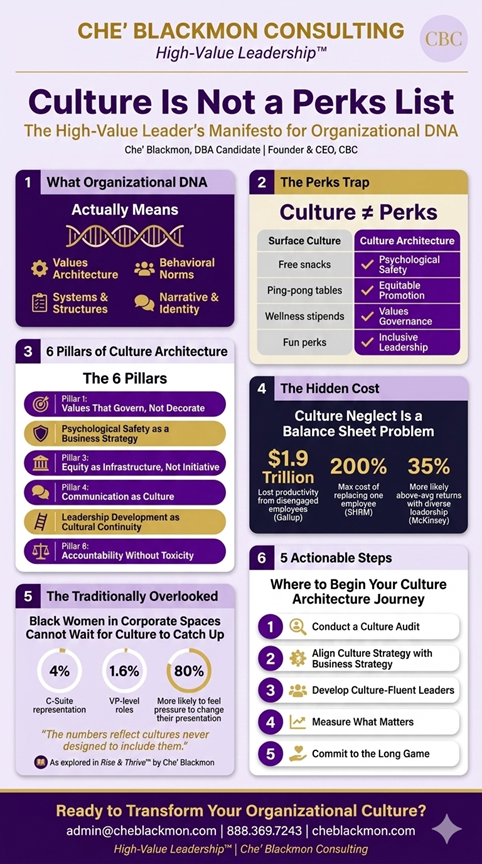
🏛️ What Organizational DNA Actually Means

When biologists talk about DNA, they are describing the fundamental code that determines how an organism grows, functions, and responds to its environment. Organizational DNA works the same way. It is the deep-coded blueprint of how your company makes decisions, treats people, handles adversity, and defines success. And here is the critical truth: every organization already has a culture. The only question is whether leaders built it on purpose or by accident.

In Mastering a High-Value Company Culture, the foundation is clear: culture is the lifeblood of any organization. It encompasses the values, beliefs, attitudes, and behaviors that define the environment where people work. It can be the distinguishing feature that makes a company not just survive but truly thrive. Free snacks and ping-pong tables are great, but that is not what high-value culture really means.

“At the heart of every great company culture is its people. Your employees are not resources; they form the lifeblood of your organization.” — Mastering a High-Value Company Culture

Organizational DNA has four core strands that every High-Value Leader™ must understand and intentionally shape:

  • 🧬 Values Architecture: The non-negotiable principles that govern decision-making at every level, not just in the boardroom.
  • 🧬 Behavioral Norms: The unwritten rules about how people actually interact, communicate, and treat one another daily.
  • 🧬 Systems and Structures: The processes, policies, and organizational design that either reinforce or contradict stated values.
  • 🧬 Narrative and Identity: The stories an organization tells about itself, its history, and its people.

When these four strands are aligned and intentional, an organization develops what can only be described as cultural immunity. It becomes resilient in crisis. It attracts and retains top talent. It produces results that outlast any single leader’s tenure. When they are misaligned, the organization bleeds from the inside, regardless of how impressive the benefits package looks on the surface.

🚨 The Perks Trap: How Good Intentions Create a Cultural Illusion

There was a company that invested heavily in its employee experience. State-of-the-art break rooms. Generous PTO. Flexible schedules. Wellness reimbursements. On the surface, this organization looked like a cultural gold standard. But beneath the surface, senior leadership consistently dismissed employee feedback. High-performing women, and particularly women of color, were routinely passed over for advancement. Decisions were made in closed rooms, and the people closest to the work had no voice in shaping it.

Turnover climbed. Engagement scores dropped. The most talented people left. And leadership was genuinely confused. “We give them everything,” was a phrase heard often in those boardrooms. But that is precisely the problem. Culture is not something you give people. It is something you build with them.

⚠️ Perks can attract talent. Only culture can keep it.

Dr. Edgar Schein, one of the foremost organizational culture researchers of the modern era, distinguished between the artifacts of culture (what we can see and touch), the espoused values (what we say we believe), and the underlying assumptions (what we actually believe and act on). The perks trap occurs when organizations invest heavily in artifacts while neglecting the deeper layers. You can refresh the break room and replace the coffee machine all you want. If your underlying assumptions about who belongs, who leads, and whose ideas matter remain unchanged, the culture will reflect those assumptions regardless of the surface upgrades.

🔍 The Five Warning Signs Your Organization Is in the Perks Trap

  • Your engagement survey results improve but voluntary turnover remains high.
  • Diversity numbers are growing in entry-level roles but stagnant at the leadership level.
  • Your stated values are visible everywhere but rarely referenced in actual decisions.
  • Managers are promoted based on technical performance rather than cultural leadership.
  • Employees describe the culture differently depending on their identity or department.

If any of these resonate, your organization may be investing in the aesthetics of culture while the architecture remains unaddressed. This is not a failure of effort. It is a failure of strategy.

💼 The High-Value Leader’s Manifesto: Six Pillars of Culture Architecture

High-Value Leadership™ is not a title. It is a commitment. It is the decision, made daily, to build organizations where people are not just employed but genuinely empowered. In High-Value Leadership: Transforming Organizations Through Purposeful Culture, this framework is defined through purpose-driven vision, stewardship of culture, emotional intelligence, balanced responsibility, and authentic connection. These are not soft skills. They are strategic competencies that directly impact the bottom line.

Here are the six pillars that form the foundation of intentional culture architecture:

Pillar 1: 🎯 Values That Govern, Not Decorate

Values are only as powerful as the decisions they drive. A High-Value Leader™ ensures that organizational values show up in performance reviews, in how conflict is handled, in who gets promoted, and in how mistakes are addressed. There was a company that embedded its core value of integrity so deeply into its talent management processes that every manager’s annual review included a behavioral assessment scored against that value. When a senior leader was found to have violated it, the consequence was swift and public. The message was unmistakable: the values were real.

This is what values-as-governance looks like in practice. It requires courage and consistency from leadership. Most importantly, it requires alignment between what is written and what is done.

Pillar 2: 🤝 Psychological Safety as a Business Strategy

Google’s landmark Project Aristotle identified psychological safety as the single most important factor in high-performing teams. Not talent density. Not technical skill. Safety. The ability to speak up, take risks, share ideas, and admit mistakes without fear of humiliation or retaliation. Yet psychological safety remains one of the most underdeveloped organizational competencies in corporate America today.

There was a manufacturing organization that implemented what it called “courageous conversation circles” at the team level. Every quarter, teams gathered without their direct manager present to surface what was working, what was not working, and what felt unsafe. The insights gathered transformed not just morale but operational efficiency. Problems that had gone unaddressed for years were solved in weeks because people finally felt safe enough to name them.

  • Audit your meeting culture: Who speaks most often? Who never speaks? Why?
  • Examine how mistakes are handled at the leadership level. Is there modeling of accountability without shame?
  • Create structured channels for candid feedback that do not require bravery to access.

Pillar 3: 📈 Equity as Infrastructure, Not Initiative

Equity is not a program. It is not a training module rolled out in February during Black History Month and then shelved until the following year. Equity is infrastructure. It is built into how roles are scoped, how compensation is set, how performance is evaluated, and how leadership pipelines are developed. When equity is treated as an initiative, it remains optional. When it is treated as infrastructure, it becomes structural.

Research from McKinsey & Company consistently demonstrates that organizations in the top quartile for racial and ethnic diversity are 35 percent more likely to experience above-average financial returns. This is not a moral argument alone, though the moral case is compelling. This is a performance argument.

Pillar 4: 🗣️ Communication as Culture

The way an organization communicates is its culture made audible. Are employees informed or left to guess? Are feedback loops bidirectional or one-way? Are difficult conversations had directly or gossiped around? Every communication pattern either reinforces or erodes the cultural DNA you are trying to build.

One of the most immediate interventions a leader can make is to audit the organization’s communication architecture. This includes not just what is communicated but how, by whom, at what frequency, and through which channels. Transparency builds trust. Consistency builds credibility. Both are foundational to a high-value culture.

Pillar 5: 🌱 Leadership Development as Cultural Continuity

Culture does not sustain itself. It is transmitted, modeled, and reinforced by the leaders an organization grows and promotes. This means that leadership development is not an HR function. It is a cultural strategy. Who you develop for leadership tells your organization everything about what you actually value.

There was a company that invested in a two-year leadership pipeline program specifically designed to develop mid-level managers from underrepresented backgrounds. The program included executive sponsorship, cross-functional project leadership, and coaching. Within three years, the organization saw measurable improvements in engagement scores in departments led by program graduates and a significant reduction in attrition among their direct reports. The investment in people translated directly into cultural strength and business results.

Pillar 6: 🔄 Accountability Without Toxicity

High standards and psychological safety are not opposites. They are partners. A high-value culture holds people accountable not through fear and public humiliation but through clear expectations, consistent feedback, and genuine investment in people’s growth. When accountability is delivered with dignity, it elevates performance. When it is weaponized, it destroys trust and drives away talent.

The goal is what can be described as a “courage culture”, one where leaders have the courage to set high standards and the humility to support people in meeting them. This requires emotional intelligence, relational trust, and a deep belief that people are fundamentally capable of growth.

💑 The Hidden Cost: What Culture Neglect Costs Organizations

Let’s talk numbers. Because culture is not just a human issue. It is a financial one.

According to Gallup’s State of the Global Workplace report, actively disengaged employees cost the U.S. economy an estimated $1.9 trillion in lost productivity annually. The Society for Human Resource Management estimates that replacing an employee costs between 50 percent and 200 percent of that employee’s annual salary. Add to this the hidden costs of absenteeism, presenteeism, poor customer experience, innovation stagnation, and reputational damage, and the business case for intentional culture investment becomes undeniable.

Culture neglect is not a soft problem. It is a balance sheet problem.

“A high-value culture routinely creates value for employees, customers, shareholders, and the community at large. That kind of culture does not happen by accident.” — Mastering a High-Value Company Culture

There was a mid-size company in the professional services sector that experienced a 43 percent annual turnover rate for three consecutive years. Leadership attributed the problem to compensation. When a deeper culture audit was conducted, the real drivers emerged: managers who were promoted without regard for their people leadership capabilities, a communication style from senior leadership that was inconsistent and often dismissive, and a complete absence of psychological safety at the individual contributor level. When the culture work began in earnest, turnover dropped to 18 percent within 18 months. The financial impact was significant. The human impact was even greater.

✊🏽 The Traditionally Overlooked: Why Black Women in Corporate Spaces Cannot Wait for Culture to Catch Up

Any honest conversation about organizational culture must include an honest conversation about who that culture was built for and who it has historically excluded. The data does not lie, and neither does lived experience.

As explored in Rise & Thrive: A Black Woman’s Blueprint for Leadership Excellence, Black women in corporate America navigate what researchers call “double jeopardy,” facing bias and barriers related to both race and gender simultaneously. Despite making up approximately 7.4 percent of the U.S. population, Black women hold just 4 percent of C-suite positions, 1.6 percent of VP roles, and 1.4 percent of executive and senior-level positions in Fortune 500 companies.

These numbers are not a reflection of ambition, capability, or effort. Research consistently shows that Black women are more likely than white women to aspire to leadership roles and to take proactive steps toward promotion. The numbers reflect something else entirely. They reflect organizational cultures that were never intentionally designed to include, develop, or advance Black women at every level.

“You encounter microaggressions that your white female or Black male colleagues might not experience. The cognitive and emotional labor required to navigate these contradictions creates an additional workload that remains largely invisible to others.” — Rise & Thrive

📉 The Cultural Tax Black Women Pay

In cultures that were not designed with inclusion as infrastructure, Black women often pay what can be described as a cultural tax. This tax takes many forms. It is the energy spent code-switching in order to be taken seriously in professional environments. It is the emotional labor of managing microaggressions while simultaneously delivering excellent work. It is the invisible weight of being the only one in the room and feeling responsible for representing an entire community while also being made to feel that your presence is conditional.

This tax is real. It is measurable. And it is a direct product of cultural neglect at the organizational level.

There was a company whose engagement survey revealed high satisfaction scores organization-wide but significant disparities when data was segmented by race and gender. Black women scored notably lower on questions related to belonging, advancement opportunity, and psychological safety. When leadership chose to look at the disaggregated data and respond to what it revealed, the culture work that followed was transformative. Affinity groups were given real resources and executive sponsorship. Promotional processes were redesigned with structured equity reviews. Managers received training on sponsorship versus mentorship. The results were measurable and lasting.

The lesson is clear. Inclusive culture is not a separate agenda from organizational culture. It is organizational culture. A culture that works only for some of the people, some of the time, is not a high-value culture. It is a high-cost culture that is subsidized by the people it excludes.

💡 What High-Value Leaders Do Differently for Underrepresented Talent

  • They sponsor, not just mentor. Mentors give advice. Sponsors use their political capital to advocate.
  • They disaggregate engagement data. They refuse to hide disparities behind average scores.
  • They examine promotion processes for structural bias, not just individual bias.
  • They create visibility opportunities for high-potential employees who may not self-promote due to cultural norms around humility.
  • They listen to the stories behind the data, then act on what they hear.

📊 Current Trends Shaping Culture Architecture in 2024 and Beyond

The conversation around organizational culture is evolving rapidly. High-Value Leaders™ who want to remain ahead of the curve must understand the forces reshaping the cultural landscape.

🤖 AI and the Human Element of Culture

Artificial intelligence is transforming how organizations operate. Predictive analytics are being used to identify flight risks, engagement trends, and skills gaps before they become crises. But the most forward-thinking organizations understand that AI is a tool for culture intelligence, not a replacement for culture leadership. The data can tell you what is happening. Only humans can address why and lead the change.

🏠 The Hybrid Workplace Culture Challenge

Hybrid and remote work arrangements have fundamentally disrupted many of the informal mechanisms through which culture is transmitted. Hallway conversations, spontaneous collaboration, and visible modeling of values are harder to replicate in virtual environments. Organizations that are thriving in this landscape are those that have deliberately redesigned their culture touchpoints for distributed teams, creating intentional rituals, rhythms, and structures that reinforce connection and belonging regardless of physical location.

🌎 The Rise of the Purpose-Driven Workforce

Increasingly, workers at every level are making employment decisions based on organizational purpose and values alignment. Deloitte’s research consistently shows that purpose-driven companies report higher levels of innovation, customer satisfaction, and employee engagement. For Gen Z and Millennial employees in particular, a company’s public commitments around equity, sustainability, and community impact are becoming as important as compensation in talent decisions.

This trend makes culture architecture even more urgent. Because the workforce that will power the next decade of business development is watching not just what organizations say they value, but what those organizations actually do.

✅ Actionable Takeaways: Where to Begin Your Culture Architecture Journey

Culture transformation does not require a complete organizational overhaul overnight. It requires intentional, consistent action over time. Here is where to start:

🔎 Step 1: Conduct a Culture Audit

Before you build anything, you must understand what already exists. A meaningful culture audit examines not just survey scores but the stories employees tell, the decisions leadership makes under pressure, the patterns in who advances and who does not, and the gap between stated values and experienced reality. Disaggregate your data by race, gender, tenure, and level. The gaps in that disaggregated data will tell you everything.

🎯 Step 2: Align Culture Strategy with Business Strategy

Culture is not separate from business strategy. It is the enabler of business strategy. Identify the two or three cultural capabilities your organization needs most to execute on its strategic goals, and build your culture initiatives around those specific capabilities. This creates alignment between leadership, HR, and the rest of the organization.

🤝 Step 3: Develop Culture-Fluent Leaders

The single greatest leverage point in culture transformation is the quality of people managers throughout the organization. Invest in developing managers who understand their role as culture carriers, not just task supervisors. This means equipping them with skills in coaching, feedback delivery, inclusive leadership, and psychological safety practices.

📊 Step 4: Measure What Matters

What gets measured gets managed. Build a culture scorecard that tracks leading indicators of cultural health: inclusion index scores, internal mobility rates, disaggregated engagement and belonging scores, leadership development pipeline diversity, and voluntary turnover by demographic segment. Review these metrics with the same rigor you apply to financial dashboards.

🔄 Step 5: Commit to the Long Game

Culture transformation is not a quarter-long initiative. It is a multi-year commitment that requires sustained leadership attention, consistent resource investment, and the organizational humility to revisit and recalibrate as you learn. The organizations that get this right are the ones that never stop building.

🔬 Research Corner: What the Data Says

The research supporting intentional culture investment is robust and growing. Here are a few data points that every leader should know:

  • Harvard Business Review research found that organizations with strong cultures saw a 4x increase in revenue growth compared to organizations with weak cultures over an 11-year period.
  • Gallup reports that managers account for at least 70 percent of the variance in employee engagement scores. The individual manager is the culture architect at the team level.
  • McKinsey & Company found that companies in the top quartile for gender diversity are 25 percent more likely to achieve above-average profitability.
  • The Center for Talent Innovation reported that Black women in the United States are 80 percent more likely than white women to agree that they need to change how they present themselves in order to be viewed as leadership material. This statistic is a cultural indictment, not a talent deficit.
  • Deloitte’s Global Human Capital Trends report found that 94 percent of executives and 88 percent of employees believe a distinct workplace culture is important to business success. Yet less than 20 percent report their culture as “highly effective.”

The gap between knowing and doing is where culture strategy lives. High-Value Leaders™ close that gap with intention, consistency, and courage.

💬 Discussion Questions for Leaders and Teams

Use these questions to spark honest conversations in your organization:

  • If you removed all of the visible perks and benefits from your organization, what would remain? How would employees describe the culture they experience?
  • When you look at your last 10 promotion decisions, what patterns emerge? Who advances in your organization, and what does that signal about your cultural values?
  • How would underrepresented employees in your organization describe their experience of belonging, advancement opportunity, and psychological safety? Do you actually know?
  • What story does your organization tell about itself? Does that story match the story your employees tell about it?
  • What would it cost your organization, in real financial terms, if your culture remains unchanged for the next three years?
  • Who in your organization is paying the cultural tax described in this article? What would it take to eliminate that tax?

🚀 Next Steps for Readers

Reading is the beginning. Application is the transformation. Here is how to move from insight to action:

  • Share this article with at least one leader in your organization and commit to a conversation about one idea it surfaces.
  • Pick one of the five actionable steps above and identify a specific action you will take in the next 30 days.
  • Order your copies of Mastering a High-Value Company Culture and High-Value Leadership: Transforming Organizations Through Purposeful Culture for the deeper framework and tools behind every principle discussed here.
  • If you are a Black woman navigating or leading in corporate spaces, Rise & Thrive: A Black Woman’s Blueprint for Leadership Excellence was written specifically for your journey. It is available now.
  • Assess your organization’s current culture honestly. Not the culture you aspire to have. The one you actually have. That honest assessment is the only place transformation can begin.

🤝 Ready to Transform Your Organizational Culture?

Che’ Blackmon Consulting partners with organizations and leaders who are ready to move beyond perks and into purposeful culture architecture. Through fractional HR strategy, culture diagnostics, leadership development, and the High-Value Leadership System™, CBC delivers the insight, infrastructure, and implementation support that transforms organizations from the inside out.

Whether you are a C-suite executive, an HR leader, a people manager, or an entrepreneur building a company with culture at its core, Che’ Blackmon Consulting has the frameworks, the research, and the real-world expertise to meet you where you are and take your organization where it needs to go.

📧 admin@cheblackmon.com

📞 888.369.7243

🌐 cheblackmon.com

© Che’ Blackmon Consulting | High-Value Leadership™ | All Rights Reserved

#HighValueLeadership #CultureTransformation #OrganizationalDNA #HRLeadership #WorkplaceCulture

#LeadershipDevelopment #BlackWomenLead #InclusiveLeadership #DEI #EmployeeEngagement

#CompanyCulture #HRStrategy #PurposeDrivenLeadership #ExecutiveLeadership #CheBlackmon

#FractionalHR #CultureFirst #LeadershipMatters #WorkplaceEquity #HighValueCulture

From Firefighting to Forecasting: The AI Tools Changing HR Forever

By Che’ Blackmon, DBA Candidate  |  Founder & CEO, Che’ Blackmon Consulting

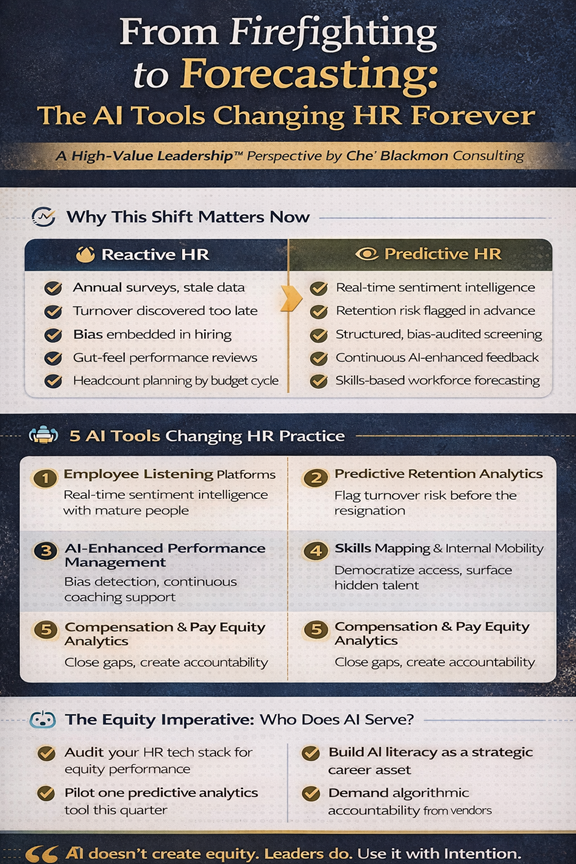
For decades, HR professionals have operated in a perpetual state of reaction. A grievance lands on the desk and they respond. Turnover spikes unexpectedly and they scramble. A culture crisis erupts and they are called to fix what no one bothered to prevent. The work has always been urgent, always important, and chronically under-resourced. That is the firefighting mode that most HR teams know all too well.

But the landscape is shifting. Dramatically. Artificial intelligence is not a distant future concept sitting in a tech industry brochure. It is already inside the tools, platforms, and systems that forward-thinking HR departments are using today to move from reactive crisis management to proactive, predictive strategy. The transformation is not just technological. It is philosophical.

This article is for every HR leader, organizational executive, and people-first practitioner who knows that great culture does not happen by accident. It is built with intention, informed by data, and sustained by leadership that refuses to accept the status quo. It is also for the Black women in HR and executive spaces who have always carried the weight of both the work and the invisible labor of navigating that work in environments not designed with them in mind. Because when AI is deployed with equity at its center, it has the power to level a field that has been tilted for far too long.

The shift from firefighting to forecasting is not just possible. It is happening now. And the organizations that embrace it will not simply survive the next wave of workplace disruption. They will lead it.

🔥 The State of HR: Still Fighting Fires in a Digital Age

Let us be honest about where most HR functions still live. Despite the proliferation of HR technology platforms, many teams remain buried in transactional work. Benefits administration. Compliance tracking. Employee relations firefighting. Performance documentation that happens after the fact rather than shaping what comes next. The irony is painful: the function most responsible for human potential is often the one with the least capacity to think strategically about it.

According to Gartner, HR leaders consistently rank talent acquisition, employee experience, and leadership development as their top priorities. Yet the same research shows that HR teams spend the majority of their time on administrative and compliance tasks rather than strategic work. The gap between where HR needs to be and where it actually operates is widest in organizations that have not invested in intelligent automation and predictive analytics.

There was a mid-size manufacturing company that spent an entire fiscal year reacting to elevated voluntary turnover in its production workforce. Exit interviews revealed patterns that had been present for more than eighteen months before leadership took notice. The data existed. The signals were there. But without a system designed to surface and analyze that information proactively, the pattern went unseen until the damage was already done. That story is not unique. It is the rule rather than the exception across industries.

💡 Key Insight: “Culture is the lifeblood of any organization.” But culture cannot be managed by instinct alone. When HR operates reactively, the organization’s most important asset, its people, is perpetually at risk. — Mastering a High-Value Company Culture by Che’ Blackmon

The shift to AI-powered forecasting does not eliminate the human element of HR. It amplifies it. It frees practitioners to focus on what only humans can do: build trust, hold culture, develop leaders, and design environments where people genuinely thrive. That is the promise of this technology. And it is a promise worth understanding deeply.

🤖 What AI in HR Actually Means: Cutting Through the Noise

The term artificial intelligence gets thrown around so broadly that it has started to lose meaning in many professional conversations. For HR leaders, it is worth establishing a clear and practical understanding of what AI actually is in this context, because the tools available today range widely in sophistication, purpose, and impact.

🔍 Natural Language Processing and People Analytics

Natural language processing allows AI systems to read, interpret, and analyze written or spoken human communication. In HR, this technology powers tools that can analyze open-ended survey responses, exit interview transcripts, and employee feedback at scale, surfacing themes, sentiment, and risk factors that would take a human analyst weeks to identify. What once required a consultant and a conference room now happens automatically and continuously.

People analytics platforms go a step further, combining structured HR data with unstructured input to generate predictive insights. Which employees are most likely to leave in the next six months? Which teams are showing early signs of disengagement? Which managers have the highest retention rates and what behaviors predict that outcome? These are questions that AI-powered analytics can now answer with reasonable accuracy, enabling HR to intervene before a problem becomes a crisis.

📊 Predictive Workforce Planning

Workforce planning has historically been an annual exercise driven by budget cycles and headcount projections. AI changes the timeline and the depth. Machine learning models can now analyze historical hiring data, skills inventories, industry trends, and internal mobility patterns to forecast future talent needs with far greater precision. Organizations that deploy these tools can begin building pipelines for roles that do not yet exist in their org charts, positioning themselves to respond to market changes with agility rather than urgency.

There was an organization in the logistics sector that integrated predictive workforce planning into its operations after experiencing repeated gaps in its skilled technician pipeline. Within two years, the average time to fill critical roles dropped significantly because recruitment was happening twelve to eighteen months before the vacancy appeared rather than thirty days after it opened. The shift did not require a bigger HR team. It required a smarter one.

🧠 AI-Powered Recruitment and Bias Detection

Hiring is one of the highest stakes decisions an organization makes repeatedly, and it is also one of the most susceptible to bias. AI-powered applicant tracking systems and assessment tools can help standardize evaluation criteria, reduce inconsistency in screening decisions, and flag patterns in hiring data that suggest inequitable outcomes. When used responsibly, these tools can create more objective entry points into organizations for candidates who have historically been screened out by systems that rewarded familiarity over merit.

This is an area where intentionality is non-negotiable. AI tools in recruitment can just as easily amplify bias as reduce it if they are trained on historical data that reflects past inequities. The technology is not inherently equitable. The responsibility for equitable application rests entirely with the humans who design, select, and govern these systems. That is a critical distinction for every HR leader and organizational executive to understand.

📋 Learning, Development, and Skills Intelligence

AI is also reshaping how organizations approach learning and development. Intelligent platforms can now assess individual skill gaps in real time, recommend personalized learning pathways, and track development progress in ways that traditional annual training programs never could. For organizations committed to growing talent from within, these tools create more visible and accessible pathways to advancement, particularly for employees who have historically been overlooked for development opportunities.

🖤 The Equity Question: Who Does AI Serve in the Workplace?

Any honest conversation about AI in HR must include a direct examination of equity. Because AI does not enter organizations as a neutral force. It arrives loaded with the assumptions, data, and design choices of the humans and institutions who built it. And historically, those assumptions have not centered the experiences or interests of Black women, women of color, or other marginalized groups in the workplace.

The research is clear on this point. A landmark study by researchers at MIT and Stanford found that commercial facial recognition systems performed significantly worse on darker-skinned women than on lighter-skinned men. While facial recognition in hiring is a narrow application, the finding points to a broader pattern: AI systems that are built without diverse data and diverse design teams reproduce and often amplify existing inequities.

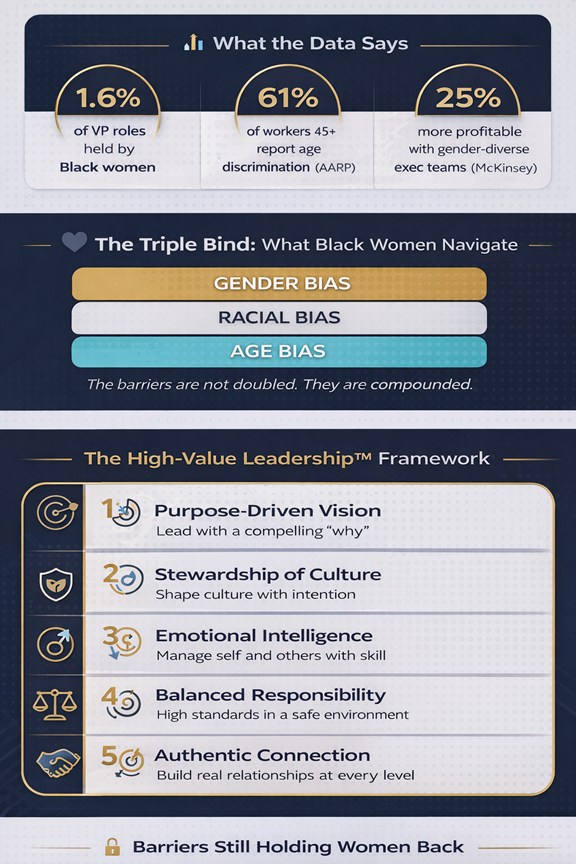
For Black women in corporate spaces, this is not an abstract concern. It is a daily professional reality. Black women are already navigating what researchers call the triple bind of gender, racial, and often age bias in organizational settings. When AI tools are added to that environment without an equity audit, without inclusive design, and without accountability structures, they become another layer of systemic disadvantage rather than a pathway to opportunity.

🏼 The Flip Side: When AI Gets Equity Right

Here is the counterpoint, and it is a powerful one. When AI is deployed with intentionality, transparency, and equity at the center of its design and governance, it has the potential to do something that purely human systems have struggled to do: remove the discretionary moments where bias most easily enters the process.

Structured, AI-assisted interview scorecards that evaluate all candidates on identical criteria reduce the influence of affinity bias in early screening. Blind resume review tools that strip identifying information from applications before they reach a hiring manager have been shown to increase the diversity of candidate pools. Pay equity analytics tools that surface unexplained compensation disparities by race and gender create an accountability structure that subjective manager reviews could never provide.

As explored in Rise and Thrive: A Black Woman’s Blueprint for Leadership Excellence, the barriers facing Black women in leadership are structural, not personal. They are embedded in the systems organizations use to hire, evaluate, develop, and promote their people. AI, when designed and governed well, can interrupt those systems at their most consequential moments. That is not a small thing. It is transformational.

📌 “The path to leadership excellence as a Black woman isn’t about fitting into existing structures. It’s about bringing your unique perspective, experiences, and talents to transform those structures.” — Rise & Thrive: A Black Woman’s Blueprint for Leadership Excellence

🔍 What Responsible AI Governance Looks Like in HR

Every organization that deploys AI tools in people-related decisions has an obligation to govern those tools responsibly. This is not a technology question. It is a leadership question. Responsible AI governance in HR includes the following practices.

  • Regular algorithmic audits to assess whether AI tools are producing equitable outcomes across race, gender, age, and other protected categories.
  • Transparent communication with employees about what data is being collected, how it is being used, and what decisions it informs.
  • Human override protocols that ensure no consequential employment decision, hiring, promotion, termination, or compensation, is made solely by an algorithm without human review.
  • Diverse AI governance teams that include HR professionals, legal counsel, data scientists, and employee representatives from across the organization.
  • Ongoing vendor accountability that holds technology providers responsible for the equity performance of their tools, not just their technical functionality.

🔬 AI Tools That Are Actually Changing HR Practice

Let us move from concept to concrete. There are specific categories of AI tools that are already demonstrating measurable impact in HR functions across industries. Each of these represents an opportunity for organizations to shift from reactive people management to proactive people strategy.

📡 1. Employee Listening and Sentiment Intelligence Platforms

Traditional employee engagement surveys are conducted annually, analyzed slowly, and acted upon even more slowly. By the time an organization receives its results and develops a response plan, the employees who gave the feedback have often already disengaged or departed. AI-powered listening tools change this cycle fundamentally.

Platforms in this category use natural language processing to analyze ongoing feedback from pulse surveys, communication channels, and open-ended responses. They surface trending themes, flag sentiment shifts in real time, and identify at-risk groups before disengagement becomes departure. When integrated into a broader HR strategy, they allow leaders to respond to what their people are actually experiencing, not what an annual survey captured six months ago.

There was a professional services firm that implemented a continuous listening platform across its regional offices and within the first quarter identified a clear pattern of disengagement among its mid-level project managers, a group that had not surfaced as a concern in the previous year’s engagement survey. The platform’s ability to detect emerging trends before they became crises gave leadership the time to respond with targeted interventions rather than expensive replacement hiring.

🎯 2. Predictive Retention Analytics

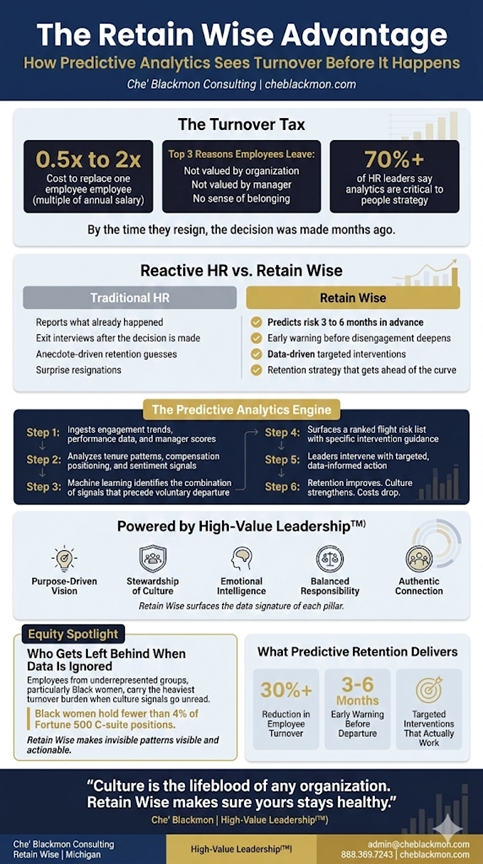
Turnover is one of the most expensive and preventable problems in organizational life. The Society for Human Resource Management estimates that the cost of replacing an employee can range from fifty percent to more than two hundred percent of that employee’s annual salary, depending on role complexity and organizational level. For organizations losing high-performing talent consistently, the financial and cultural toll is enormous.

Predictive retention analytics platforms use machine learning to identify the combination of factors that historically precede voluntary departure in a specific organization: tenure, performance trajectory, manager relationship quality, compensation competitiveness, promotion velocity, and more. When these signals converge in a particular pattern, the system generates an alert that allows HR and managers to intervene before the resignation letter is written.

The power of this tool is not just in the prediction. It is in what organizations do with it. The prediction is only valuable if there is a culture that supports meaningful retention conversations, equitable development opportunities, and manager accountability for employee experience. That is where the High-Value Leadership™ framework becomes essential. Data can surface the problem. Only great leadership can solve it.

💡 From High-Value Leadership: Transforming Organizations Through Purposeful Culture: “High-value leadership is about creating environments in which both humans and organizations can thrive together.” Predictive analytics identifies where that environment is failing. Leadership creates the conditions for it to succeed.

💼 3. AI-Enhanced Performance Management

Annual performance reviews are widely recognized as one of the least effective people management practices still in common use. They are backward-looking, susceptible to recency bias, and often disconnected from the ongoing coaching and development conversations that actually drive performance improvement. AI is helping organizations redesign this process fundamentally.

AI-enhanced performance tools support continuous feedback loops, flag when performance conversations are not happening at the expected frequency, analyze language in written reviews to identify bias patterns, and connect individual performance data to broader team and organizational outcomes. For managers who need support developing their coaching skills, these platforms can also recommend specific conversation frameworks based on an employee’s developmental stage and performance history.

The equity dimension here is significant. Research from McKinsey has documented that Black employees and employees of color receive less specific and less actionable performance feedback than their white peers, a disparity that has direct consequences for promotion rates and career trajectory. AI tools that flag vague, unsubstantiated, or inconsistent performance narratives can help HR leaders identify and correct these patterns before they compound into systemic inequity.

🧩 4. Workforce Skills Mapping and Internal Mobility

One of the most underutilized opportunities in organizational life is internal talent mobility. Most organizations have employees with skills, potential, and ambition that their current roles do not fully activate. They fill external roles at significant cost while the talent they need is already sitting in their workforce, unseen and underdeveloped.

AI-powered skills mapping platforms create dynamic, real-time inventories of the capabilities that exist within an organization. They match employee skill profiles to open roles, development programs, and project opportunities in ways that surface connections a human recruiter or HR generalist might never make. They also identify skills gaps at the workforce level, informing learning and development strategy with precision rather than assumption.

For organizations committed to equity, internal mobility tools represent an opportunity to democratize access to advancement. Historically, internal promotion has depended heavily on visibility, sponsorship, and informal networks, all systems that tend to advantage people who are already well connected within the organization. When internal opportunities are surfaced through objective skills matching rather than who someone knows, the field becomes measurably more level.

💰 5. Compensation Analytics and Pay Equity Tools

Pay equity is one of the most consequential and least consistently addressed issues in organizational life. Black women earn approximately sixty-seven cents for every dollar earned by white non-Hispanic men according to data from the National Women’s Law Center. This gap persists even when controlling for education, experience, and industry, pointing to systemic rather than circumstantial causes.

AI-powered compensation analytics tools give HR leaders the ability to conduct ongoing pay equity analyses rather than waiting for a lawsuit or an annual audit to surface disparities. These platforms can identify unexplained pay gaps by race, gender, and other demographic categories, trace the organizational decisions that contributed to those gaps over time, and recommend specific remediation pathways. For organizations serious about closing the equity gap, these tools are not optional. They are essential.

📊 The High-Value Leadership™ Framework and AI: A Natural Partnership

The five pillars of the High-Value Leadership™ framework are Purpose-Driven Vision, Stewardship of Culture, Emotional Intelligence, Balanced Responsibility, and Authentic Connection. Each of these pillars is strengthened, not replaced, by the intelligent application of AI in organizational practice.

🎯 Purpose-Driven Vision

When leaders have access to predictive workforce data, real-time culture insights, and skills intelligence, they can articulate and pursue an organizational vision with far greater clarity and confidence. Purpose becomes actionable because strategy is no longer built on instinct alone. It is built on insight.

🏛️ Stewardship of Culture

Culture cannot be stewarded if it is not measured. AI-powered listening tools give leaders continuous visibility into the health of their organizational culture, the alignment between espoused values and lived experience, and the early warning signs of cultural erosion. Stewardship of culture in the AI era means using those tools with consistency and acting on what they reveal with integrity.

🧠 Emotional Intelligence

Some leaders worry that AI will replace the human dimension of people leadership. The opposite is true. When AI handles the transactional and analytical work that used to consume HR professionals, it creates more space for the high-touch, emotionally intelligent leadership that no algorithm can replicate. Coaching conversations. Trust building. Authentic connection across difference. These become the primary currency of great leadership in an AI-enhanced environment.

⚖️ Balanced Responsibility

Balanced Responsibility in the High-Value Leadership™ framework means holding people accountable while creating environments of psychological safety. AI tools that make performance expectations transparent, feedback more consistent, and development opportunities more accessible contribute directly to this balance. They remove ambiguity from the accountability equation while freeing leaders to focus on the relational elements that sustain a high-performing culture.

🤝 Authentic Connection

There is a concern worth naming directly: that AI makes the workplace more transactional and less human. This concern is legitimate if AI is deployed without intentionality. When leaders use AI insights as a starting point for genuine connection rather than a substitute for it, the technology deepens rather than dilutes the relational fabric of the organization. The data tells you who is struggling. The leader decides to pick up the phone.

🚀 Current Trends and What They Mean for HR Leaders

🌍 Trend 1: Generative AI Is Entering the HR Workflow

Generative AI tools are now being used to draft job descriptions, create personalized onboarding content, generate learning materials, and summarize employee feedback at scale. For HR teams that are chronically understaffed and under-resourced, these applications represent a meaningful productivity gain. They also raise important questions about accuracy, bias, and the appropriate level of human review for AI-generated content in people-critical processes.

📱 Trend 2: The Rise of Real-Time Culture Intelligence

Organizations are moving away from point-in-time culture assessments and toward continuous, real-time culture intelligence. This shift reflects a growing recognition that culture is not a static artifact that can be measured annually. It is a living system that changes with every hiring decision, every leadership behavior, and every organizational policy. AI makes continuous measurement possible at a scale and depth that human analysis alone cannot match.

🤝 Trend 3: Skills-Based Organizations Are Growing

One of the most significant structural shifts in workforce strategy is the move toward skills-based organizations, companies that organize work, hiring, and development around skills rather than traditional job titles and credentials. AI is the enabling technology for this shift. Without the ability to assess, map, and match skills dynamically and at scale, a skills-based organization model is not operationally feasible. For professionals who have been historically disadvantaged by credential-based hiring, this shift represents a meaningful opportunity.

🔒 Trend 4: AI Ethics and Governance Are Becoming Board-Level Issues

The governance of AI in organizational settings is no longer a conversation confined to HR and IT departments. Boards of directors, investors, and regulators are increasingly scrutinizing how organizations deploy AI in decisions that affect people’s livelihoods. For HR leaders, this means that the function now has a strategic stake in enterprise AI governance discussions, not just an operational one. It is a seat at the table that has been earned by the very nature of what HR does.

📋 Actionable Takeaways: Your Path from Firefighting to Forecasting

For HR Leaders and Practitioners:

  • 🔥 Audit your current HR technology stack. Identify where you are spending time on work that AI-powered automation could handle, and where strategic, human-centered work is being crowded out by transactional demands.
  • 📊 Start with one predictive analytics use case. Retention analytics or employee sentiment intelligence are strong starting points. Pilot a tool, measure its equity performance, and build organizational confidence before expanding.
  • 🔍 Build your AI literacy. You do not need to be a data scientist to govern AI responsibly. But you do need to understand what questions to ask about the tools you are evaluating and deploying. Seek out training, certification, and peer learning in this area.
  • ⚖️ Advocate for equity-centered AI governance. Push for algorithmic audits, diverse governance teams, and transparent communication about AI use in your organization. This is not just good ethics. It is good risk management.
  • 📞 Use data to earn the strategic seat you deserve. When HR can forecast workforce needs, predict cultural risk, and demonstrate the financial impact of people strategy decisions, it becomes impossible to relegate to a purely administrative function.

For Black Women in HR and Executive Leadership:

  • 💥 Name AI equity as a professional priority. You bring lived expertise in navigating inequitable systems that most of your peers simply do not have. That expertise is invaluable in AI governance conversations. Claim your seat at that table.
  • 📚 Invest in AI literacy as a career accelerator. The intersection of HR expertise and AI fluency is one of the most valuable professional skill combinations in today’s market. Developing both positions you for leadership opportunities that most of your peers are not yet equipped to pursue.
  • 🤟 Advocate for the communities behind the data. When pay equity analyses surface disparities, when retention analytics reveal that certain demographic groups are leaving at higher rates, be the leader who not only names the finding but drives the structural response.

For Organizational Leaders and Executives:

  • 🎯 Invest in HR technology as a strategic capability. HR technology investment is not an administrative budget line item. It is a strategic investment in your organization’s ability to forecast, plan, and compete for talent in an increasingly complex market.
  • 🔍 Demand equity performance metrics from your AI vendors. Ask vendors to demonstrate how their tools perform across demographic groups. If they cannot answer that question, that is your answer.
  • 🧩 Fund internal AI governance infrastructure. Responsible AI deployment requires dedicated resources: diverse governance teams, regular audits, and clear escalation protocols for when AI outputs are questioned or challenged.

🗣️ Expert Insights: The Research Behind the Revolution

The evidence supporting AI-enhanced HR practice is both compelling and growing across disciplines.

  • Deloitte Insights reports that organizations with mature people analytics capabilities are twice as likely to improve their recruitment efforts, eight times more likely to recognize their employees, and three times more likely to realize cost reductions compared to organizations with limited analytics maturity.
  • The IBM Institute for Business Value found that companies using AI for HR functions report a fifty percent reduction in time-to-hire and a thirty percent reduction in employee turnover when predictive analytics are integrated into talent strategy.
  • McKinsey Global Institute research indicates that AI and automation could displace between four hundred million and eight hundred million jobs globally by 2030. The organizations best positioned to navigate this disruption are those that are already investing in workforce intelligence, skills mapping, and reskilling infrastructure.
  • Harvard Business Review research on algorithmic hiring found that structured, AI-assisted screening processes can reduce the influence of implicit bias in hiring by up to fifty percent when properly designed and governed, making them a meaningful equity intervention when used intentionally.

The research does not suggest that AI is a silver bullet for the systemic challenges organizations face in managing their people. It suggests that organizations which pair AI capabilities with strong leadership, intentional culture work, and genuine equity commitment will outperform those that treat people strategy as either a purely human or purely technological exercise. The most powerful approach is integrative. It always has been.

🤔 Discussion Questions for Reflection and Action

Whether you are an HR practitioner, a C-suite leader, or a professional navigating these shifts as an individual contributor, these questions are designed to move your thinking from awareness to action.

  1. How would you honestly characterize your organization’s current HR function: primarily reactive, beginning to shift toward proactive, or genuinely predictive? What evidence leads you to that assessment?
  2. What is one area of your people strategy where data has historically been absent or underused? What would change in your decision-making if you had predictive intelligence in that area?
  3. If your organization were to conduct an equity audit of its current HR technology tools today, what do you think it would find? Would you be comfortable publishing those results publicly?
  4. How is your organization ensuring that Black employees, women, and other historically marginalized groups are represented in AI governance decisions that affect their employment outcomes?
  5. What is your personal AI literacy level as an HR or executive leader? What one step could you take in the next ninety days to strengthen it?
  6. The High-Value Leadership™ framework centers culture as a living system that leaders must actively steward. How does or should AI change the way your organization measures and manages its culture in real time?
  7. If you could eliminate one reactive HR process from your organization tomorrow and replace it with a predictive one, what would it be? What would it take to make that shift?

📈 Next Steps: Moving from Awareness to Action

If You Are an Individual HR Leader or Practitioner:

  • Begin with a personal AI literacy audit. Identify your current knowledge level and one course, certification, or community of practice that will advance it.
  • Read Mastering a High-Value Company Culture as a foundational framework for understanding how culture intelligence and people strategy connect.
  • Identify one predictive analytics tool in your current technology stack that you are not using to its full capability, and commit to learning and deploying it within the next quarter.
  • Join the conversation about AI equity in HR by participating in professional community discussions, writing about your perspective, or raising the topic in your own organization.

If You Lead an Organization:

  • Commission an AI equity audit of your current HR technology ecosystem within the next two quarters.
  • Invest in your HR team’s analytics capability through structured training, external expertise, or fractional HR leadership that brings immediate strategic capacity.
  • Establish a cross-functional AI governance team that includes HR, legal, data science, and employee representation before expanding AI use in people-related decisions.
  • Read High-Value Leadership: Transforming Organizations Through Purposeful Culture to ground your AI strategy in the leadership principles that make technology investments deliver on their human potential.
📚 Books by Che’ Blackmon • Mastering a High-Value Company Culture • High-Value Leadership: Transforming Organizations Through Purposeful Culture • Rise & Thrive: A Black Woman’s Blueprint for Leadership Excellence (e-book) Available at: https://books.by/blackmons-bookshelf

🤝 Ready to Move Your Organization from Reactive to Predictive?

Che’ Blackmon Consulting works with organizations that are serious about building high-value cultures, developing high-impact leaders, and deploying strategy with both precision and purpose. Whether your organization is navigating the early stages of AI adoption, working to close systemic equity gaps in your people systems, or building the HR infrastructure needed to compete for talent in a rapidly shifting landscape, we bring the experience, the framework, and the conviction to do that work with you.

This is not generic consulting. It is fractional HR leadership and culture transformation partnership rooted in more than two decades of real-world organizational experience, a published body of work, and a doctoral research focus on AI-enhanced predictive analytics for culture transformation. The work is rigorous. The results are measurable. The mission is clear.

Let’s Work Together 📧 admin@cheblackmon.com 📞 888.369.7243 🌐 cheblackmon.com Fractional HR Leadership  |  Culture Transformation  |  Executive Development

“The organizations that will lead the next era of work are not the ones with the most advanced technology. They are the ones with leaders intentional enough to use it wisely.”

— Che’ Blackmon

© Che’ Blackmon Consulting  |  High-Value Leadership™  |  cheblackmon.com

#AIinHR #FutureOfWork #PredictiveAnalytics #HRTransformation #HighValueLeadership

#PeopleAnalytics #WorkforcePlanning #HRLeadership #CultureTransformation #FractionalHR

#BlackWomenInBusiness #DEI #InclusiveLeadership #EquityAtWork #HRTechnology

#CheBlackmonConsulting #LeadershipDevelopment #OrganizationalCulture #ThoughtLeadership #StrategicHR

Women Over 45 in the C-Suite: Rewriting the Playbook on Executive Leadership

By Che’ Blackmon, DBA Candidate | Founder & CEO, Che’ Blackmon Consulting

There is a revolution happening in boardrooms and C-suites across America. It is quiet. It is powerful. And it is long overdue. Women over 45 are stepping into executive leadership roles with a level of mastery, depth, and strategic clarity that only comes from decades of experience. Yet despite their qualifications and track records, these women continue to face systemic resistance, invisible ceilings, and a corporate culture that was never fully designed with them in mind.

This article is for them. It is for the woman who has navigated layoffs, organizational restructuring, leadership transitions, and every workplace dynamic imaginable. It is for the woman who has mentored dozens of rising stars, contributed to multi-million dollar decisions, and still found herself passed over at the table. It is for Black women especially, who face not one but two layers of bias in corporate spaces and continue to lead anyway.

Leadership at its highest level is not about tenure alone. It is about vision, culture, emotional intelligence, and impact. That is the foundation of High-Value Leadership™, and it is precisely what women over 45 embody.

📊 The Landscape: What the Data Actually Says

The numbers are sobering. According to McKinsey & Company’s Women in the Workplace report, women remain dramatically underrepresented at the senior leadership level. And when race is factored in, the gap widens significantly. Black women hold only about 1.6% of VP-level roles and approximately 1.4% of executive or senior-level positions in Fortune 500 companies. These are not figures that reflect a pipeline problem. They reflect a systemic structural barrier.

Women over 45 are also disproportionately impacted by ageism, a bias that intersects with gender and race to create compounded disadvantage. Research from AARP found that approximately 61% of workers over the age of 45 have either witnessed or personally experienced age discrimination in the workplace. For women, especially women of color, that figure is even more acute.

Yet here is the compelling counterpoint: women over 45 bring something irreplaceable to executive leadership. They bring institutional knowledge, refined judgment, and an emotional intelligence forged through real-world experience. Deloitte’s research on inclusive leadership consistently finds that organizations with diverse and experienced leadership teams outperform their peers in innovation, decision-making, and long-term profitability.

💡 Key Insight: “Culture is the lifeblood of any organization.” When the leaders shaping that culture are diverse, experienced, and intentional, organizations don’t just survive, they thrive. — Mastering a High-Value Company Culture by Che’ Blackmon

🏛️ The Unique Barriers Women Over 45 Face

⚔️ The Double Bias of Age and Gender

Women in leadership have long battled the perception that assertiveness is aggression, confidence is arrogance, and ambition is selfishness. Add age to that equation, and the bias becomes even more layered. Women over 45 are frequently labeled as “set in their ways,” “overly experienced for the role,” or “close to retirement,” all subtle forms of exclusion designed to justify overlooking qualified talent.

There was a company in the manufacturing sector that had a well-documented pattern of promoting younger male leaders over highly tenured women who consistently outperformed them in measurable outcomes. The organization’s leadership team had internalized a mental model of what a “leader looked like” and unconsciously filtered out candidates who did not match that image. When the culture was examined and the implicit bias was surfaced, the results were undeniable. Talented, experienced women had been systematically sidelined.

This is not an isolated story. It is a pattern.

🖤 The Triple Bind for Black Women

For Black women, the barriers are not simply doubled. They are compounded in ways that cannot be overstated. The concept of “double jeopardy” in organizational research refers to facing simultaneous bias rooted in both race and gender. For Black women over 45, there is a third layer added: age. This creates what some researchers refer to as a “triple bind.

Black women in corporate spaces often navigate contradictory expectations. They are expected to be assertive but not intimidating. Visible but not disruptive. Qualified but not threatening. The emotional and cognitive labor required to manage these contradictions creates an invisible tax on their energy and potential.

In Rise & Thrive: A Black Woman’s Blueprint for Leadership Excellence, this reality is addressed directly: “You encounter microaggressions that your white female or Black male colleagues might not experience.” Naming this reality is not a complaint. It is a call to build more intentional organizations.

Despite this, Black women are among the most ambitious professionals in the workforce. According to McKinsey, Black women are more likely than white women to aspire to senior leadership and to take proactive steps toward advancement. The problem has never been their drive. It has always been the structural resistance they face.

🕹️ The Glass Cliff Phenomenon

Another barrier that disproportionately affects women, and especially women of color, is the glass cliff. This is the documented tendency for organizations to promote women into leadership roles during times of crisis, when the risk of failure is highest. When the company is struggling, suddenly there is interest in diverse leadership. When things stabilize, the credit is rarely shared equally.

There was an organization in the healthcare space that brought in a senior Black female leader to stabilize operations during a significant period of regulatory scrutiny. She succeeded. She turned the division around, built the culture, and delivered results. When the crisis ended, she was repositioned into a role with less visibility and influence. Her story reflects a broader pattern that organizations must consciously disrupt.

🔑 What Women Over 45 Actually Bring to the Table

Let us be clear: the experience of women over 45 is not a liability. It is an organizational asset. The High-Value Leadership™ framework identifies five pillars that define exceptional leadership. Women over 45 embody each of them in ways that are hard-won and deeply earned.

🎯 Pillar 1: Purpose-Driven Vision

Women who have navigated decades of professional growth have been forced to examine their “why” repeatedly. They know the difference between a job and a calling. They have seen mission statements come and go, and they understand what it actually takes to align people behind a compelling vision. Their leadership is not reactive. It is intentional.

🏛️ Pillar 2: Stewardship of Culture

Culture is shaped by what leaders tolerate, what they celebrate, and what they model. Women over 45 have developed a sophisticated understanding of how culture is built and how quickly it can erode. They bring the perspective of having lived through organizational cultures that worked and those that did not. That experience translates directly into stronger, more intentional culture leadership.

🧠 Pillar 3: Emotional Intelligence

Research from the Harvard Business Review consistently identifies emotional intelligence as a key differentiator in executive leadership effectiveness. Women generally, and experienced women in particular, score higher on emotional intelligence assessments. They are more adept at reading interpersonal dynamics, managing conflict, and building the trust necessary to move organizations forward.

⚖️ Pillar 4: Balanced Responsibility

High-value leaders hold people accountable while creating environments of psychological safety. Women over 45 have typically had to master this balance out of necessity. They understand how to set high standards without creating fear, and how to challenge performance without undermining dignity. That balance is exactly what modern organizations need.

🤝 Pillar 5: Authentic Connection

As detailed in High-Value Leadership: Transforming Organizations Through Purposeful Culture, authentic connection is about building real relationships at every level of the organization. Women over 45 have cultivated the self-awareness to lead authentically, to acknowledge their own blind spots, and to create genuine relationships that drive organizational loyalty and engagement.

📌 “When you lead authentically as a Black woman, you not only enhance your own effectiveness but potentially transform the environment for others.” — Rise & Thrive: A Black Woman’s Blueprint for Leadership Excellence

🚀 Rewriting the Playbook: Current Trends and Best Practices

🌍 Trend 1: The Rise of the Fractional C-Suite

One of the most empowering shifts in today’s leadership landscape is the rise of fractional executive roles. Companies are increasingly turning to experienced leaders on a contract or advisory basis to fill critical gaps. For women over 45, this represents a significant opportunity to leverage decades of expertise without the barriers of traditional hiring pipelines. It also offers the flexibility to align work with personal and professional values.

Organizations that engage fractional HR and culture leaders, for example, gain access to deep institutional knowledge without the long-term overhead of a full-time executive hire. This trend is growing, and women with decades of experience are uniquely positioned to lead in this space.

🧩 Trend 2: Culture as Competitive Strategy

In a post-pandemic workplace reshaped by The Great Resignation and the ongoing talent wars, culture has moved from a “nice to have” to a core business imperative. Organizations that fail to invest in their culture lose talent, innovation, and market share. Women over 45 who have spent careers building and transforming cultures are precisely the leaders organizations need right now.

As explored in Mastering a High-Value Company Culture, culture is the lifeblood of every organization. The leaders best equipped to shape that culture are those who understand it from the inside out, which is exactly what experienced women bring.

📊 Trend 3: Data-Driven Diversity and Inclusion Accountability

More organizations are publicly committing to diversity, equity, and inclusion goals with measurable outcomes. Boards and investors are increasingly scrutinizing representation at the leadership level. This creates both opportunity and urgency for companies to identify and elevate women over 45, particularly Black women, into executive roles.

Best practice organizations are moving beyond representation optics and building systemic structures that ensure equitable access to leadership development, sponsorship, and executive positioning. Companies that do this well see measurable improvements in retention, engagement, and financial performance.

📱 Trend 4: Leadership Development Redefined

The traditional model of leadership development, which typically favored younger high-potential employees, is being reimagined. Forward-thinking organizations now recognize that leadership at the senior level requires life experience, not just technical training. Coaching, peer advisory groups, and executive development programs designed specifically for mid-career and senior professionals are growing in both demand and effectiveness.

📋 Actionable Takeaways for Women Over 45

For Women in the C-Suite or Ascending Toward It:

  • 🔥 Own your expertise unapologetically. Your years of experience are not a liability. They are your greatest competitive advantage. Stop minimizing your tenure and start positioning it as the strategic asset it is.
  • 🤝 Invest in your network intentionally. Leadership at the executive level is largely relational. Build relationships across industries, invest in peer advisory communities, and stay visibly engaged in your professional community.
  • 📚 Document your impact. Numbers tell the story that emotions cannot. Quantify your contributions wherever possible. Whether it is engagement improvements, cost reductions, turnover decreases, or cultural transformation outcomes, your results deserve to be visible.
  • 📣 Elevate your brand. Thought leadership is a leadership tool. Write articles. Speak on panels. Share insights on LinkedIn. Your voice and perspective add value beyond your organizational walls.
  • 🧘🏿‍♀️ Protect your energy. Sustainable leadership requires sustainable habits. Rest, recovery, and personal renewal are not luxuries. They are leadership disciplines.

For Black Women Specifically:

  • 💥 Name it to navigate it. When you can name the bias or barrier you are facing, you can address it strategically rather than absorbing it personally.
  • 🔗 Find your sponsorship, not just mentorship. Mentors give advice. Sponsors advocate for you in rooms you have not entered yet. Both are important, but sponsorship is what creates access at the executive level.
  • 🏆 Claim your seat at the table. You were not given that seat by accident. You earned it. Lead from that truth.
  • 🤟 Build community with other Black women leaders. Collective wisdom is power. Peer relationships with other Black women in leadership provide both support and strategic intelligence that no formal program can replicate.

For Organizations Seeking to Do Better:

  • 🔍 Audit your leadership pipeline with an equity lens. Who is being developed? Who is being sponsored? Who is being promoted? The answers will tell you whether your DEI commitments are real or performative.
  • 📅 Create structured sponsorship programs. Organic networking favors those who already have access. Intentional sponsorship structures level the field for women who have been systematically excluded from informal power networks.
  • 🎯 Redefine what leadership potential looks like. If your organization’s mental model of a high-potential leader skews young, white, and male, your selection processes will reflect that bias. Expanding the definition of potential is both a justice issue and a business imperative.

🗣️ Expert Insights: The Research Behind the Revolution

The research supporting the value of experienced, diverse women in executive leadership is both compelling and growing.

  • McKinsey & Company reports that companies in the top quartile for gender diversity on executive teams are 25% more likely to achieve above-average profitability.
  • Harvard Business Review found that women rate higher than men on 17 of 19 capabilities that distinguish excellent leaders from average ones, particularly in areas of initiative, resilience, and developing others.
  • Catalyst research consistently documents that organizations with the highest representation of women in senior leadership demonstrate significantly stronger return on equity, return on sales, and return on invested capital.
  • The Center for Creative Leadership notes that leaders who have navigated adversity, particularly identity-based adversity, develop stronger adaptive leadership capabilities over time.

These are not soft findings. They are business outcomes. Organizations that invest in elevating experienced women, and Black women in particular, do not just create more equitable workplaces. They build more profitable ones.

🤔 Discussion Questions for Reflection and Growth

Whether you are an executive, an emerging leader, a DEI practitioner, or an organizational leader, these questions are designed to push your thinking further.

  1. When you think about the most effective leaders you have known personally or professionally, what characteristics come to mind? How many of those leaders were women over 45?
  2. If your organization were to audit its leadership pipeline today, where would women over 45 and Black women specifically appear? What would that data reveal about your culture?
  3. What invisible barriers exist in your workplace that prevent experienced women from advancing? Are those barriers documented? Are they being actively addressed?
  4. As a woman leader, where do you feel most confident in your leadership identity? Where do you still find yourself minimizing your contributions or second-guessing your authority?
  5. How does your organization currently define high-potential leadership? Does that definition create access for diverse, experienced women, or does it inadvertently narrow the field?
  6. What would it look like for your organization to fully leverage the leadership capital of women over 45, including those who have historically been overlooked or underutilized?

📈 Next Steps: From Reading to Leading

Inspiration without action is just information. Here is how to move forward with intention.

If You Are an Individual Leader:

  • Grab a copy of Rise & Thrive: A Black Woman’s Blueprint for Leadership Excellence and use it as a personal leadership development guide.
  • Schedule a personal leadership audit. Identify your top three strengths, the two areas that need development, and the one barrier that is most holding you back right now.
  • Identify one sponsor and one peer community that can elevate your visibility and access in the next 90 days.
  • Begin documenting your leadership impact in measurable terms. Create a running record of wins, outcomes, and contributions.

If You Lead an Organization:

  • Conduct a leadership pipeline equity audit within the next quarter.
  • Invest in Mastering a High-Value Company Culture as a foundation for strategic culture transformation.
  • Establish a formal sponsorship program specifically designed to elevate women of color at the senior leadership level.
  • Revisit your leadership competency model and expand your definition of executive potential to include the lived experience and institutional knowledge that experienced women bring.
📚 Available Now: Books by Che’ Blackmon • Mastering a High-Value Company Culture • High-Value Leadership: Transforming Organizations Through Purposeful Culture • Rise & Thrive: A Black Woman’s Blueprint for Leadership Excellence (e-book) Available at: https://books.by/blackmons-bookshelf

🤝 Ready to Transform Your Leadership and Your Organization?

Che’ Blackmon Consulting specializes in fractional HR leadership, culture transformation, and executive development for organizations that are serious about building high-value cultures and developing high-impact leaders. Whether you are a senior leader navigating your next chapter, an organization committed to building a more inclusive and effective leadership pipeline, or a team ready to close the gap between your current culture and the one your people deserve, we are here for that work.

This is not generic consulting. This is high-value partnership rooted in 24-plus years of real-world HR leadership experience, a published body of work, and a proven framework for sustainable organizational transformation. The work is personal. The results are measurable.

Let’s Connect 📧 admin@cheblackmon.com 📞 888.369.7243 🌐 cheblackmon.com Fractional HR Leadership | Culture Transformation | Executive Development

“Leadership is not about the title. It is about impact, culture, and the courage to show up fully every single day.”

— Che’ Blackmon

© Che’ Blackmon Consulting | High-Value Leadership™ | cheblackmon.com

#WomenInLeadership #BlackWomenLead #ExecutiveLeadership #WomenOver45 #HighValueLeadership

#CultureTransformation #DEI #InclusiveLeadership #LeadershipDevelopment #FractionalHR

#WomenInBusiness #BlackExcellence #CSuite #OrganizationalCulture #HRLeadership

#CheBlackmonConsulting #LeadershipCoaching #ThoughtLeadership #CareerGrowth #ExecutiveDevelopment

The Retain Wise Advantage: How Predictive Analytics Sees Turnover Before It Happens

By Che’ Blackmon, DBA Candidate | Founder & CEO, Che’ Blackmon Consulting

📚 Book Tie-In: Mastering a High-Value Company Culture — Data-Driven Culture Sections

By the time an employee submits their resignation, the decision was usually made months earlier. The signs were there. The disengagement was building. The warning indicators were accumulating in plain sight. And yet, for most organizations, the first official notice of a departure comes as a surprise.

That surprise is expensive. The cost of replacing a single employee ranges from one-half to two times their annual salary, according to research from Gallup. For a mid-sized company experiencing ongoing turnover, those costs compound silently into millions of dollars annually in recruitment expenses, productivity loss, institutional knowledge gaps, and cultural disruption.

But what if you could see it coming? Not after the fact. Not during the exit interview. Three to six months before the resignation ever lands on anyone’s desk.

That is precisely the promise of Retain Wise, the AI-powered predictive analytics platform developed by Che’ Blackmon Consulting specifically for small and mid-sized organizations. Retain Wise does not simply report what has already happened inside your organization. It reads the patterns, analyzes the culture signals, and identifies flight risk before talent walks out the door. It is not reactive HR. It is strategic, data-driven people leadership at its most proactive.

This article explains how predictive analytics is transforming the way forward-thinking organizations understand and respond to employee turnover, what the data reveals about who bears the heaviest burden when turnover goes unaddressed, and why the integration of AI and culture strategy is no longer a future conversation. It is the present competitive advantage.

📉 The Turnover Crisis: What the Numbers Are Really Saying

Turnover has always been a business challenge. What is different now is the scale, the speed, and the compounding nature of the problem in a post-pandemic, multigenerational workforce.

According to the U.S. Bureau of Labor Statistics, millions of American workers voluntarily left their jobs every single month throughout 2022 and 2023, a sustained wave of departures that researchers began calling the Great Resignation. While the most extreme phase of that wave has passed, the underlying conditions that drove it have not.

Employee expectations have permanently shifted. Workers across every industry and generation now prioritize culture, leadership quality, flexibility, and sense of purpose alongside compensation. Research from McKinsey found that the top reasons employees left their jobs were not primarily about pay. They were about not feeling valued by their organization, not feeling valued by their manager, and not belonging to a community at work.

Read that again. The top drivers of voluntary turnover are cultural. They are relational. They are, at their core, a function of how people experience leadership on a daily basis.

“Culture is the lifeblood of any organization. It is not a feel-good concept. It is the secret sauce that makes or breaks the success of an organization.” — Mastering a High-Value Company Culture

This is the gap that no traditional HR metric can fully close. Annual engagement surveys capture sentiment at a single point in time. Exit interviews gather data from people who have already decided to leave. Performance reviews measure output but rarely measure belonging, psychological safety, or leadership trust.

The result is that most organizations are managing their talent retention strategy on a significant time delay. They are looking in the rearview mirror while their people are already halfway out the door.

🧠 What Is Predictive Analytics, and Why Does It Change Everything?

Predictive analytics is the use of data, statistical modeling, and machine learning algorithms to identify the likelihood of future outcomes based on historical and current patterns. In the context of employee turnover, predictive analytics ingests data from multiple organizational touchpoints and surfaces risk indicators that human observation alone would miss or interpret too late.

This is not a science fiction concept. It is a mature and rapidly expanding application of artificial intelligence that is already in use across healthcare, financial services, retail, and increasingly, human resources.

Retain Wise applies this capability specifically to the culture and people dynamics of small and mid-sized organizations, filling a critical gap in the market. Enterprise-scale corporations have had access to sophisticated HR analytics tools for years. The companies with 20 to 200 employees have largely been left without affordable, accessible, and actionable predictive intelligence about their own people.

🔍 How Predictive Analytics Identifies Flight Risk

Traditional HR data tells you what happened. Predictive analytics tells you what is about to happen if nothing changes. The distinction is fundamental.

An effective predictive model for employee turnover draws on a wide range of data inputs. These inputs can include engagement survey trends over time, performance review patterns and trajectory, absenteeism and attendance fluctuations, compensation positioning relative to internal peers and external market benchmarks, promotion history and velocity, manager effectiveness scores, team-level sentiment data, onboarding satisfaction and early tenure indicators, and organizational tenure benchmarks by role and department.

Individually, any one of these data points tells a limited story. But when a machine learning model analyzes them together, looking for the combination of signals that historically precede voluntary departures, it begins to surface something that no individual manager or HR generalist could reliably identify: the early pattern of disengagement that predicts turnover three to six months before it materializes.

“A strong, intentional culture propels tangible results. Such a culture does not come easy to create and maintain. It requires vision, strategy, and relentless commitment.” — Mastering a High-Value Company Culture

📊 The Difference Between Reporting and Predicting

Consider two organizations facing similar turnover challenges. The first organization has invested in a solid HR dashboard. Every month, leadership reviews a report showing last month’s turnover rate, the number of open positions, and the average time to fill each role. They see the problem clearly in the data.

But the data is describing what already happened. The employees who left are already gone. The knowledge they carried walked out with them. The team that depended on them is now stretched thin or operating without the coverage it needs.

The second organization uses Retain Wise. Six months before that same wave of departures, the platform flagged a cluster of risk indicators in a specific department: declining engagement trends among tenured employees, a manager effectiveness score that had been trending downward for two consecutive quarters, compensation data showing three employees at or below the 25th percentile for their roles relative to the external market, and an uptick in absenteeism patterns that the platform had learned to associate with pre-departure disengagement.

Leadership in the second organization had the information they needed to intervene. Not to apply a blanket fix to a vague culture problem. To have specific, targeted conversations with specific employees. To address the compensation gaps before the competition made a better offer. To invest in the manager’s development before the team reached a breaking point.

The resignation letters that arrived in the first organization never arrived in the second. That is the Retain Wise advantage.

🏭 Case Studies: Predictive Analytics in the Real World

🔧 The Automotive Supplier That Stopped the Bleed

There was a regional automotive supply company with approximately 120 employees that had been experiencing turnover rates exceeding 35% annually for three consecutive years. Leadership had responded each time the way most organizations respond: posting the open positions, interviewing candidates, extending offers, and repeating the cycle. Each year, the problem returned.

When the organization implemented predictive analytics monitoring, the data revealed a pattern that had been invisible to management. The highest-risk employees were not the newest hires, as leadership had assumed. They were the employees between two and four years of tenure who had been promoted once but were now stagnating. The predictive model identified a combination of signals: flat compensation relative to their increased responsibilities, infrequent recognition from their direct managers, and engagement scores that had dipped subtly across three consecutive quarterly pulse surveys.

With this intelligence, the company targeted specific interventions: a compensation review for mid-tenure employees in the flagged roles, a manager development series focused on recognition and career development conversations, and a structured stay interview process for employees who the model identified as at risk.

Turnover in the following 12 months dropped by more than half. The cost savings were measurable. The cultural impact was profound.

🏥 The Healthcare Organization That Found the Signal in the Noise

A regional healthcare organization was facing a staffing crisis that leadership attributed to the industry-wide nursing shortage. What the predictive data revealed was more specific and more actionable than a market-level problem.

The analytics platform identified that the turnover risk was concentrated not across the organization broadly, but within three specific units where a combination of leadership ineffectiveness indicators, high overtime load, and declining psychological safety scores created a predictable departure pattern. The market shortage was real. But it was being amplified by controllable internal conditions that the organization had the power to address.

Once the data identified the specific units and the specific risk factors, the organization was able to reallocate leadership development resources, address scheduling practices in the flagged units, and implement targeted retention conversations with employees the model identified as highest risk.

The data did not solve the problem automatically. Leaders still had to make the decisions and do the work. But the data told them exactly where to look, which meant that every intervention dollar spent was strategically targeted rather than broadly cast.

This is the core value proposition of data-driven culture leadership as articulated in Mastering a High-Value Company Culture: not simply identifying that a problem exists, but having the specific, actionable intelligence to address it where it is actually happening.

❤️ The Equity Dimension: What Predictive Analytics Reveals About Who Gets Left Behind

Any honest conversation about employee turnover and predictive people analytics must confront a difficult truth: the employees who are most likely to leave are often the employees whose departure signals have been most consistently ignored.

Black women in corporate America leave their organizations at disproportionately high rates not because of a lack of ambition or commitment. They leave because the conditions that predict departure, undervaluation, stagnant career advancement, exclusion from informal networks, inadequate recognition, and leadership relationships that do not see or support their full capability, are often present and unaddressed for years before the resignation arrives.

“The data instead points to systemic barriers including hiring bias, limited access to influential networks, lack of sponsorship, and inhospitable workplace cultures.” — Rise & Thrive: A Black Woman’s Blueprint for Leadership Excellence

A predictive analytics approach that is properly designed and equitably applied has the potential to disrupt this pattern in a meaningful way. When data surfaces that the employees with the highest flight risk in a given organization share a demographic pattern, that information creates an undeniable accountability signal for leadership that anecdote and individual performance reviews cannot produce.

Consider what this means in practice. When a predictive platform reveals that a disproportionate share of mid-tenure Black women employees are clustered in the highest-risk segments of the departure model, that is not merely a data point. It is an organizational diagnostic. It raises questions that demand answers. Are these employees being promoted at rates comparable to their peers? Are their compensation trajectories aligned with performance? Do their engagement scores reflect a sense of belonging, recognition, and leadership support?

Data does not carry bias in the same way human intuition does. When the pattern emerges in the numbers, it is harder to dismiss, explain away, or attribute to individual circumstances. It creates a basis for institutional accountability.

💡 From Data to Equity: The Leadership Responsibility

In Rise and Thrive: A Black Woman’s Blueprint for Leadership Excellence, the concept of purposeful navigation is explored in depth. It describes the exhausting labor of operating in environments that require extraordinary skill and resilience to advance, not because of a lack of capability but because of systems that were not designed with Black women’s success in mind.

Predictive analytics, used with intention and equity as an explicit design criterion, can become a tool that finally makes those invisible patterns visible at the organizational level. It is not a substitute for the deeper cultural work of building inclusive, high-value environments. But it can be the instrument that makes the systemic patterns undeniable and therefore actionable.

Organizations that use Retain Wise have the ability to segment their turnover risk data in ways that surface equity patterns. That capability is not a threat to leadership. It is a gift. It replaces the organizational blind spots that allow inequity to persist with specific, targeted information that empowers leaders to intervene.

🌟 The High-Value Leadership™ Connection: Data Meets Culture

Predictive analytics is not a replacement for the human dimensions of leadership. It is the instrument that makes those human dimensions more precise and more accountable.

The High-Value Leadership™ framework built into the core of Che’ Blackmon Consulting’s approach is grounded in five interconnected pillars: Purpose-Driven Vision, Stewardship of Culture, Emotional Intelligence, Balanced Responsibility, and Authentic Connection. Each of these pillars has a data signature.

When Purpose-Driven Vision is present, employees can articulate how their work connects to the organizational mission. Engagement data reflects that clarity. When it is absent, data shows a particular pattern of disengagement that begins to emerge in the two to three year tenure window.

When Stewardship of Culture is operating effectively, organizational norms reinforce the stated values and leaders model the behaviors they expect. When misalignment exists between espoused values and lived experience, that gap surfaces in sentiment data, manager effectiveness scores, and the cultural trust measures that predict pre-departure disengagement.

Emotional Intelligence as a leadership competency shapes the quality of manager-employee relationships, which are consistently among the top predictors of voluntary turnover across every research study on the topic. Employees do not leave companies. They leave managers. And the data shows exactly which manager relationships carry the highest departure risk.

Balanced Responsibility and Authentic Connection show up in psychological safety scores, in the patterns of who speaks up in team meetings and who does not, in the recognition data and in the career development conversation frequency metrics. Every dimension of the High-Value Leadership™ framework has measurable data that a predictive model can track.

“High-value leadership is characterized through purpose-driven vision, stewardship of culture, emotional intelligence, balanced responsibility, and authentic connection.” — High-Value Leadership: Transforming Organizations Through Purposeful Culture

Retain Wise does not exist in isolation from culture strategy. It was built as the data layer that makes culture strategy specific, targeted, and accountable. The platform surfaces the signals. The High-Value Leadership™ framework provides the response architecture. Together, they represent an approach to people management that is both rigorous and deeply human.

🚀 Current Trends: Why This Moment Demands Predictive People Intelligence

🤖 The AI Transformation of HR

The integration of artificial intelligence into human resources is not a distant trend. According to Deloitte’s Global Human Capital Trends Report, more than 70% of HR leaders reported that analytics capabilities were important or very important to their organizations’ people strategy. The adoption rate among small and mid-sized businesses, however, has lagged significantly behind enterprise-scale organizations, creating both a challenge and an opportunity.

Retain Wise was specifically designed to close that gap. The predictive capability that Fortune 500 companies have deployed in their talent retention strategies for years is now accessible to the companies that arguably need it most: the growing organizations that cannot afford the catastrophic cost of unmanaged turnover but have also not had access to the analytical tools to address it proactively.

💼 The Multigenerational Workforce Complexity

Today’s workforce spans five generations, each with distinct expectations, motivations, and engagement patterns. Gen Z employees who entered the workforce during and after the pandemic have markedly different expectations around flexibility, purpose alignment, and manager transparency than Baby Boomer colleagues who may be in their final years before retirement. Gen X professionals in mid-career bring a particular set of advancement expectations that, when unmet, translate to departure risk in a predictable pattern.

Managing across this complexity requires more than generational stereotypes and one-size-fits-all engagement initiatives. It requires the kind of granular, individualized risk intelligence that predictive analytics provides. A well-designed model accounts for generational patterns in the data while remaining specific enough to flag individual-level risk without generalizing.

🌍 The Values-Led Business Imperative

Organizations that lead with explicit values and demonstrate measurable commitment to those values through culture, policy, and people practices attract better talent, retain that talent longer, and outperform their competitors on engagement metrics. This is not opinion. Research from Glassdoor, Harvard Business Review, and multiple independent workforce studies consistently confirms the business case for high-value culture as a retention strategy.

But values without accountability measures are aspirational statements. Retain Wise provides the accountability infrastructure that turns cultural commitments into trackable, improvable outcomes. It answers the question that too many organizations avoid: are the values we say we have actually producing the culture we claim to be building?

✅ Actionable Takeaways

For Business Leaders and CEOs:

  1. Calculate the true cost of your current turnover. Take your average annual salary for departing roles, multiply it by 1.5, and multiply that by the number of employees who left in the past 12 months. That number is the financial case for investing in predictive retention strategy.
  2. Stop relying solely on exit interviews. By the time an employee is sitting in an exit interview, the decision has been made and the knowledge transfer opportunity has passed. Shift your investment upstream to early warning systems and proactive retention intervention.
  3. Ask whether your culture data is predictive or retrospective. If your current HR analytics only describe what happened last quarter, you are operating without the forward visibility your business needs.
  4. Invest in manager effectiveness as a retention lever. The single most predictable driver of voluntary turnover is the quality of the manager relationship. Identify which manager relationships in your organization carry the highest risk and invest in development with urgency.
  5. Make equity an explicit dimension of your retention strategy. Analyze your turnover data by demographic patterns. If certain groups are departing at disproportionate rates, that is an organizational signal that demands a targeted organizational response.

For HR and People Operations Professionals:

  • Position your function as predictive, not reactive. The organizations that see HR as a strategic partner are the ones where people professionals have shifted from reporting what happened to anticipating what is coming. Build your case for predictive analytics investment with cost data and competitive benchmarking.
  • Integrate culture signals into your data infrastructure. Engagement scores, manager effectiveness data, and sentiment trends are not soft inputs. They are predictive variables. Ensure your data architecture captures them consistently and uses them in your risk assessments.
  • Build stay interview processes now. Stay interviews with high-performing, at-risk employees are one of the highest-return investments in retention strategy. They generate both intelligence and goodwill. Implement them before the predictive model flags the risk, not after.
  • Use data to surface equity patterns. Predictive analytics that does not include an equity lens is an incomplete tool. Ensure that your turnover risk analysis disaggregates data in ways that reveal whether certain groups are disproportionately represented in high-risk segments.
  • Connect retention outcomes to organizational performance metrics. Make the business case visible. Turnover reduction translates directly to cost savings, productivity gains, and customer satisfaction improvements. Quantify those relationships and communicate them to leadership regularly.

🗣️ Discussion Questions for Readers

Whether you are reading this as an organizational leader, an HR professional, or someone navigating the impact of turnover in your own team, these questions are worth sitting with carefully.

  1. How much of your current HR data describes what already happened, versus helping you anticipate what is about to happen? What would change in your organization if you had six months of early warning before your highest-risk departures?
  2. When you think about the employees who left your organization in the past two years, what patterns do you notice? Were there demographic patterns? Tenure patterns? Manager relationship patterns? What did those patterns tell you, and what did the organization do in response?
  3. How does your organization’s lived culture compare to its stated culture? Where is the gap largest? And do you have the data to know, or are you operating on assumption and anecdote?
  4. If you analyzed your turnover data by demographic segment today, what do you think you would find? And if you found a disproportionate departure rate among Black women or other historically underrepresented professionals, what would your organization be prepared to do differently?
  5. What would it mean for your organization to move from reactive people management to predictive people strategy? What investment would that require, and what would the return on that investment look like over 12 to 24 months?

👟 Next Steps for Readers

Recognition is the first step. The organizations that close the gap between knowing and acting are the ones that will outperform their competition in talent retention and culture health for the decade ahead.

Here are three concrete steps to begin your journey from reactive to predictive people strategy.

  1. Read the foundational work. Mastering a High-Value Company Culture provides the complete strategic framework for building organizational environments where the data-driven culture practices described in this article can take root. High-Value Leadership: Transforming Organizations Through Purposeful Culture gives you the leadership philosophy and behavioral architecture that translates predictive intelligence into purposeful action. Rise and Thrive: A Black Woman’s Blueprint for Leadership Excellence speaks directly to the equity dimensions of culture leadership that this article addresses. All three are available through Che’ Blackmon Consulting.
  2. Conduct a retention risk audit. Before investing in predictive technology, conduct a structured review of your last 24 months of turnover data. Identify the patterns: by tenure, by role, by department, by demographic group, and by manager. That manual analysis will both surface immediate insights and make the case for a more sophisticated predictive infrastructure.
  3. Start the conversation. If you are ready to explore how Retain Wise can bring predictive people analytics to your organization, the conversation begins with understanding your specific context, your current data infrastructure, and your most pressing people challenges. Retain Wise was built for organizations exactly like yours.

🤝 Ready to See Turnover Before It Happens?

Che’ Blackmon Consulting is the home of Retain Wise, Michigan’s first AI-powered culture transformation platform designed specifically for small and mid-sized organizations. Built on more than 24 years of progressive HR and organizational leadership experience, doctoral-level research in AI-enhanced predictive analytics for culture transformation, and the High-Value Leadership™ methodology, Retain Wise gives your organization the forward visibility it needs to retain your best people before the exit interview ever happens.

The cost of doing nothing is already showing up in your financials, your team dynamics, and your organizational culture. The cost of acting now is a fraction of that. The question is not whether predictive analytics is the right investment. The question is how many more departure surprises your organization can afford.

Let’s see what the data can do for your people strategy.

📧 admin@cheblackmon.com   📞 888.369.7243   🌐 cheblackmon.com

Che’ Blackmon Consulting | Retain Wise | Fractional HR & Culture Transformation | Michigan

#RetainWise #PredictiveAnalytics #EmployeeRetention #HRStrategy #HighValueLeadership #CultureTransformation #PeopleAnalytics #TurnoverPrevention #FractionalHR #BlackWomenLead #WorkforcePlanning #HRLeadership #AIinHR #OrganizationalCulture #CheBlackmonConsulting

GenX Leaders: Stop Waiting to Be Discovered The CEO’s Guide to Taking Your Seat at the Table

By Che’ Blackmon, DBA Candidate | Founder & CEO, Che’ Blackmon Consulting

📚 Book Tie-In: High-Value Leadership: Transforming Organizations Through Purposeful Culture — Chapters on Purpose-Driven Direction and Trust-Based Empowerment

You have built the career. You have the experience, the institutional knowledge, the battle scars, and the results to prove it. You have watched younger colleagues get promoted around you, sat through meetings where your ideas were credited to someone else, and told yourself to be patient because your time was coming.

It is time to stop waiting.

Generation X, the 65 million Americans born roughly between 1965 and 1980, represents one of the most seasoned, resilient, and capable leadership cohorts in the modern workforce. Yet GenX professionals are also among the most chronically underestimated. Sandwiched between the massive cultural footprint of Baby Boomers and the loud market presence of Millennials, GenX leaders have spent decades doing the work without always receiving the recognition, promotion, or platform their contributions deserve.

This article is a direct conversation with GenX professionals who are done waiting to be discovered. It is a guide for stepping into your full leadership authority, building the visibility that executive presence requires, and creating the kind of organizational impact that makes you impossible to overlook. It also speaks to those within the GenX generation who carry an additional weight: Black women leaders who have navigated not just the generation gap but also the compounding barriers of race and gender in corporate spaces.

The seat at the table you have been waiting for? It is time to pull it up yourself.

🗺️ The GenX Paradox: Maximum Experience, Minimum Visibility

Here is a remarkable data point. According to research from the nonprofit Visier, Generation X makes up more than 50% of leadership roles at the Director level and above in most U.S. organizations. And yet GenX accounts for only about 35% of the C-suite. That gap is not accidental. It reflects a structural visibility problem that has followed this generation throughout its career.

GenX professionals entered the workforce in an era that rewarded competence, loyalty, and heads-down execution. They were trained to let the work speak for itself. They absorbed a professional culture that viewed self-promotion as unseemly and believed that doing an exceptional job would naturally lead to recognition and advancement. For many, it worked through the early stages of their careers.

But the rules changed. The executive suite increasingly rewards visibility, narrative, and strategic self-positioning alongside performance. Those who mastered the art of making their work known, building upward relationships, and being seen as strategic thinkers moved faster. Those who continued to lead with quiet competence found themselves consistently passed over.

“High-value leadership is not about commanding a room. It is about being so intentional, so purposeful, and so aligned in your values and your actions that people cannot help but follow.” — High-Value Leadership: Transforming Organizations Through Purposeful Culture

The paradox for GenX is real. The generation most experienced in navigating organizational complexity, managing multigenerational teams, and delivering sustained results is also the generation most likely to underinvest in the strategic visibility that executive advancement now requires.

Understanding that paradox is the first step. Dismantling it is the work.

🔍 Why GenX Gets Overlooked: The Structural Truth

Before we talk strategy, it is important to name the structural realities that have shaped the GenX leadership experience. This is not about assigning blame. It is about understanding the terrain so you can navigate it more effectively.

📌 The Middle Child Syndrome of the Workforce

Baby Boomers built the corporate infrastructure and held senior leadership positions well into the 2010s, often longer than previous generations due to improved health and financial uncertainty. When they finally began transitioning out, many organizations made a strategic leap directly to Millennials, investing heavily in the recruitment, development, and promotion of younger talent in response to market pressures around innovation and digital transformation.

GenX, once again, got lost in the middle. Too young to be the Boomer heir apparent, too experienced to be positioned as the fresh new talent, this generation has spent years watching leadership pipelines flow around them rather than through them.

📊 The Quiet Achiever Trap

Research consistently shows that visibility is one of the strongest predictors of promotion decisions, often outweighing performance scores when candidates are otherwise equally qualified. A study from the Center for Talent Innovation found that executive presence, defined broadly as the ability to project confidence, credibility, and command attention, accounts for as much as 26% of what it takes to get promoted to senior leadership.

GenX professionals, culturally conditioned to value substance over style, frequently underinvest in executive presence. They do the work. They solve the problems. They manage the teams. But they often fail to architect the narrative around that work in ways that register at the executive level.

🧠 The Loyalty Penalty

GenX is the generation that stayed. While Millennials became known for job hopping and Boomers for building empire-like tenure at single organizations, GenX professionals demonstrated a particular brand of organizational loyalty that often translated into being taken for granted.

In many cases, long tenure without explicit visibility and positioning strategies results in being perceived as part of the furniture rather than as a candidate for the next level. Organizations sometimes overlook their most tenured performers precisely because those performers have not actively signaled readiness for advancement.

❤️ The Double Burden: GenX Black Women in Corporate Spaces

No examination of GenX leadership and the visibility gap would be complete without explicitly addressing the experience of Black women within this generation. For Black GenX women in corporate America, the challenges described above are compounded in ways that cannot be ignored.

Black women who came of age professionally in the 1990s and early 2000s entered organizations that were largely unprepared to see them as future executives. They were often the first, the only, or one of very few in the rooms where decisions were made. They did everything right. They earned the degrees, built the competencies, delivered the results, and mentored others along the way. And they were still passed over.

“The data instead points to systemic barriers including hiring bias, limited access to influential networks, lack of sponsorship, and inhospitable workplace cultures.” — Rise & Thrive: A Black Woman’s Blueprint for Leadership Excellence

According to McKinsey’s Women in the Workplace report, Black women are promoted at lower rates than all other groups of women at nearly every stage of the corporate pipeline. The gap is most pronounced at the transition from individual contributor to manager and again at the transition into the C-suite. These are not soft data points. They represent the cumulative lived experience of an entire cohort of extraordinary professionals whose contributions have been systemically undervalued.

GenX Black women also face a phenomenon that researchers call the double bind. When they display the confidence, assertiveness, and strategic authority that are universally rewarded in male leaders, those same behaviors are frequently coded as aggressive, difficult, or threatening in Black women. When they lead with warmth, collaboration, and humility, those qualities are often interpreted as a lack of executive readiness.

There is no perfect performance that eliminates the bias. But there is a strategy. And that strategy begins with claiming your authority rather than waiting for it to be granted.

💡 Reclaiming the Narrative

In Rise and Thrive: A Black Woman’s Blueprint for Leadership Excellence, the concept of purposeful navigation is explored in depth. It is the practice of making strategic choices about visibility, advocacy, and positioning while remaining anchored in authenticity and integrity. For GenX Black women, purposeful navigation is not optional. It is the leadership competency that the moment demands.

This is not about playing a game whose rules were written by and for someone else. It is about understanding the terrain clearly enough to change it.

💼 Case Studies: GenX Leaders Who Stopped Waiting

🏭 The Operations Leader Who Rewrote Her Story

There was a mid-sized manufacturing organization where a veteran operations director had spent 14 years building one of the company’s most consistently high-performing departments. Her teams routinely outperformed their quarterly targets. Her attrition numbers were the envy of peers across the organization. She was respected, well-liked, and completely invisible to the senior leadership team when VP-level openings arose.

What changed was not her performance. What changed was her strategy. She began requesting time on the quarterly leadership agenda to present her department’s results directly to the executive team rather than allowing those results to be filtered through her direct supervisor. She started writing a brief monthly internal newsletter that connected her team’s operational wins to the company’s stated strategic priorities. She requested a meeting with the CEO to share her perspective on a company-wide challenge she had identified. Within 18 months, she was promoted to VP of Operations.

The work was always there. What changed was the visibility of the work, and the intentionality of the positioning.

🏥 The HR Director Who Claimed Her Expertise Publicly

There was a regional healthcare organization where a long-tenured HR director had developed a sophisticated understanding of how culture directly impacted patient outcomes, staff retention, and organizational performance. She had the data. She had the analysis. She had a framework. But she kept it largely internal, presenting her insights in department-level meetings without ever positioning herself as a thought leader beyond the organization.

A mentor challenged her to take her expertise public. She began writing brief LinkedIn articles on the intersection of HR strategy and healthcare outcomes. She submitted a proposal to speak at a regional industry conference. She connected her internal frameworks to published research and started citing those connections explicitly in executive presentations.

The result was twofold. Externally, she began building a reputation as a subject matter expert in healthcare culture and HR strategy. Internally, the executive team’s perception of her shifted from competent director to strategic thought leader. Both pathways mattered.

🌟 The High-Value Leadership™ Framework for GenX Advancement

In High-Value Leadership: Transforming Organizations Through Purposeful Culture, a distinction is drawn between leaders who manage organizations and leaders who transform them. GenX professionals, with their depth of experience and their cross-functional perspective, are uniquely positioned to be the latter. But transformation requires more than competence. It requires the three pillars of High-Value Leadership™ operating simultaneously.

1️⃣ Purpose-Driven Direction

High-value leaders do not simply manage the work. They articulate a vision that gives the work meaning. For GenX professionals looking to claim their executive seat, this means developing and communicating a point of view about where the organization needs to go and why. Not just at the department level. At the enterprise level.

This is the shift from being a manager of a function to being a strategic voice in the room. It requires asking bigger questions, connecting operational realities to organizational strategy, and being willing to put a stake in the ground with a perspective.

2️⃣ Trust-Based Empowerment

GenX leaders are exceptionally skilled at this pillar, often without realizing it. Their experience managing through multiple organizational cycles, their capacity for empathy built from years of navigating complexity, and their natural tendency toward collaborative problem-solving are all expressions of trust-based empowerment.

The advancement opportunity here is to make this strength visible. Document how your leadership approach has driven team performance. Quantify engagement, retention, and productivity outcomes. Tell the story of how you lead, not just what your teams produce.

3️⃣ Cultural Alignment

Mastering a High-Value Company Culture makes the case that culture is the lifeblood of any organization. GenX leaders who have lived through multiple culture cycles within their organizations carry rare institutional wisdom about what builds culture, what destroys it, and what it takes to sustain it through leadership transitions, market disruptions, and generational shifts.

This wisdom is extraordinarily valuable. It is also frequently underarticulated. Claim it. Make your perspective on culture a consistent part of your leadership narrative, both internally and externally.

🚀 The Strategic Visibility Blueprint: 7 Moves GenX Leaders Must Make Now

The following strategies are not theoretical. They are practical, evidence-based moves that GenX professionals can begin implementing immediately, regardless of their current title or organizational context.

📈 Move 1: Audit Your Visibility, Not Just Your Performance

Most GenX professionals can recite their performance metrics. Fewer can articulate exactly how visible they are to the people who make promotion decisions. Conduct a visibility audit. Identify the top five decision-makers whose perception of you most directly influences your advancement. Assess honestly how much direct interaction you have with each of them, whether they can specifically describe your contributions and strategic perspective, and whether they think of you when executive opportunities arise.

If the answer to any of these is no or rarely, that is your starting point.

📝 Move 2: Build a Strategic Narrative

Your experience is not self-explanatory. In a world saturated with information and competing priorities, even the most impressive career history requires a clear, compelling narrative to land with impact. Develop a three-sentence leadership positioning statement that communicates who you are, what you uniquely bring, and what organizational problem you are specifically positioned to solve at the next level.

Use this narrative consistently: in executive conversations, in your professional profiles, in how you introduce yourself in new relationships, and in how you frame your contributions in leadership meetings.

🤝 Move 3: Sponsor, Not Just Mentor

Research from Catalyst and Harvard Business Review consistently shows that sponsorship, having someone with organizational power who actively advocates for your advancement in rooms you are not in, is one of the most significant predictors of promotion for historically underrepresented professionals.

GenX leaders often become excellent mentors. The next level is identifying and cultivating sponsors. This requires building upward relationships intentionally, demonstrating your executive readiness directly to senior leaders, and being specific with your advocates about what opportunities you are seeking.

🌎 Move 4: Expand Your Footprint Beyond Your Function

One of the most common visibility limitations for GenX professionals is organizational siloing. You are brilliant within your function, but unknown across the enterprise. Seek cross-functional projects, enterprise-level committees, or organizational initiatives that place you in proximity to senior leaders and peers outside your direct domain.

Every cross-functional project is also a visibility opportunity. Treat it as one.

📊 Move 5: Quantify Everything

GenX leaders often describe their contributions in qualitative terms: built a great team, improved culture, strengthened relationships. Quantification is the language of executive leadership. Translate your impact into numbers wherever possible. Turnover reduction percentages. Engagement score increases. Revenue protected or generated. Cost reductions. Time to productivity improvements.

Numbers are not a substitute for the full story of your leadership. But they are the credibility anchors that make the story land with decision-makers.

🎙️ Move 6: Claim a Public Platform

Thought leadership is no longer the exclusive domain of published academics and keynote speakers. LinkedIn, industry associations, local business organizations, and professional conferences all offer GenX leaders platforms to demonstrate their expertise beyond the walls of their current organization.

Start where you are. A short LinkedIn article. A panel discussion at an industry event. A guest post in a trade publication. Each public expression of your expertise builds external credibility that reinforces your internal positioning.

🗣️ Move 7: Stop Performing Humility at Your Own Expense

This one is particularly important for Black women and other professionals from underrepresented groups. Humility is a leadership virtue. Self-erasure is not. There is a meaningful difference between leading with humility, which means remaining open, collaborative, and grounded, and performing humility as a strategy to avoid the discomfort of being seen.

When you minimize your contributions in meetings, deflect credit for results your leadership produced, or frame your ideas as tentative suggestions rather than informed perspectives, you are not being humble. You are training the people around you to underestimate you.

Own your expertise. Speak with the authority you have earned. Lead from your full self.

“Authentic leadership — bringing your whole self to your role — correlates with higher engagement, innovation, and organizational performance. When you lead authentically, you not only enhance your own effectiveness but potentially transform the environment for others.” — Rise & Thrive: A Black Woman’s Blueprint for Leadership Excellence

💡 Current Trends GenX Leaders Must Leverage

The organizational landscape of 2025 and beyond is presenting a set of conditions that are uniquely favorable for GenX advancement. Those who understand these trends and position themselves accordingly will find the most significant opportunities of their careers opening now.

🤖 The AI Integration Moment

Artificial intelligence is reshaping every sector of the economy, and organizations are urgently seeking leaders who can bridge the gap between technological capability and human organizational dynamics. GenX leaders, who came of age professionally during the personal computing revolution and the early internet era, have an underappreciated advantage here. They understand technology adoption cycles. They have lived through organizational transformations driven by technological disruption. They know what it looks like when technology is implemented without the change management infrastructure to support it.

The leader who can position AI adoption within a robust culture and people strategy framework is extraordinarily valuable in this moment. That leader is often GenX.

💼 The Multigenerational Leadership Demand

Today’s workforce spans five generations simultaneously, from the youngest Gen Z entrants to the most senior Baby Boomer holdovers. Managing across that spectrum requires a level of interpersonal sophistication, contextual intelligence, and organizational patience that is genuinely rare.

GenX leaders, by virtue of their position in the generational middle, often possess an intuitive capacity for this kind of bridging leadership. They can communicate credibly with Boomers and with Gen Z. They understand both analog and digital organizational cultures. They have managed up and managed down across generational divides for decades. This is a specific and valuable leadership competency. Name it. Claim it.

🌍 The Values-Led Business Imperative

Organizations across every sector are under increasing pressure from employees, customers, investors, and communities to lead with explicit values and to demonstrate measurable commitment to those values through their culture, policies, and people practices. This is precisely the terrain on which the High-Value Leadership™ methodology was built.

GenX leaders who have invested in their understanding of culture as a strategic driver and who can articulate how their leadership approach creates environments where values are lived rather than stated are exceptionally well-positioned for this moment.

✅ Actionable Takeaways

For GenX Leaders Ready to Advance:

  1. Complete a visibility audit this week. Identify your top five organizational decision-makers and honestly assess your current level of strategic visibility with each one.
  2. Write your leadership positioning statement. Three sentences. What you bring, what you have built, and what organizational challenge you are built to solve at the next level.
  3. Identify one cross-functional opportunity in the next 30 days. A committee, a project, a working group. Somewhere that places you in proximity to leaders outside your immediate reporting structure.
  4. Quantify your most significant contribution from the past 12 months. Express it in numbers. Practice stating it out loud in one sentence.
  5. Begin building your public platform. One article, one conference proposal, one speaking opportunity. Start with what is closest and most achievable.

For GenX Black Women Navigating Additional Barriers:

  • Name what is happening. Distinguishing bias from performance feedback is not always simple, but it is essential. Build relationships with mentors and sponsors who can help you see your situation clearly and advocate for you strategically.
  • Document your contributions in real time. Keep a running record of your results, your ideas, and the moments when your contributions were credited to others. This record protects you and positions you.
  • Invest in your external brand. Your visibility outside your organization insulates you from internal political dynamics and creates alternative pathways when organizational structures prove resistant to your advancement.
  • Find your people. Community is not a luxury. It is a strategic resource. Connect with other GenX Black women leaders who understand the terrain and can offer support, insight, and solidarity.
  • Lead from the front, not the back. Resist the pull toward invisible leadership. Your visibility is not vanity. It is infrastructure for the change you are here to create.

🗣️ Discussion Questions for Readers

Whether you are reading this as a GenX leader mapping your next career chapter or as an organizational decision-maker thinking about your leadership pipeline, the following questions are worth sitting with.

  1. Where in your career have you been waiting to be discovered rather than actively positioning yourself for advancement? What would shift if you stopped waiting?
  2. How would you describe your current visibility with the people who make the decisions that matter most to your career trajectory? What specific actions would change that picture?
  3. In what ways does your organization’s culture reward or penalize visible leadership, particularly for women and professionals of color? What is your responsibility in that dynamic?
  4. If you were to define your leadership legacy at this stage of your career, what would it say? And does the way you currently show up in your organization reflect that legacy?
  5. What is one strategic move from this article that you could realistically begin in the next two weeks? Who would you need to involve, and what would success look like?

👟 Next Steps for Readers

Awareness is the beginning. Commitment is what follows.

If this article has named something you have been feeling for a while, that recognition is important information. It means you are ready for the next chapter. Here are three concrete steps to move from recognition to action.

  1. Read the foundational work. High-Value Leadership: Transforming Organizations Through Purposeful Culture provides the complete framework for the leadership approach described in this article. Mastering a High-Value Company Culture offers the strategic blueprint for building and sustaining the organizational environments where GenX leaders can thrive. Rise and Thrive: A Black Woman’s Blueprint for Leadership Excellence speaks directly to the unique navigation required of Black women leaders at every stage of the advancement journey. All three are available through Che’ Blackmon Consulting.
  2. Conduct your visibility audit this week. Not next month. This week. Use the framework from Move 1 in this article and be rigorously honest with yourself about what you find.
  3. Start the conversation. If you are ready to think strategically about your leadership trajectory, your organizational culture, or your advancement as a GenX professional, bring that conversation to someone who understands the terrain.

🤝 Ready to Stop Waiting and Start Leading?

Che’ Blackmon Consulting partners with professionals and organizations who are ready for real transformation. With more than 24 years of progressive HR and organizational leadership experience, doctoral-level research in AI-enhanced culture transformation, and a practice grounded in the High-Value Leadership™ methodology, Che’ Blackmon brings both the strategic depth and the human insight that today’s GenX leaders need.

Whether you are an individual leader ready to claim your next chapter, an organization looking to develop and advance your experienced talent pipeline, or an executive team ready to invest in the culture that retains your best people, the work begins with a conversation.

Your seat at the table is waiting. Take it.

📧 admin@cheblackmon.com   📞 888.369.7243   🌐 cheblackmon.com

Che’ Blackmon Consulting | Fractional HR & Culture Transformation | Michigan

#GenXLeaders #ExecutiveLeadership #HighValueLeadership #LeadershipDevelopment #CareerAdvancement #BlackWomenLead #CultureTransformation #PeopleStrategy #VisibilityStrategy #WomenInLeadership #GenXProfessionals #HRLeadership #OrganizationalCulture #TakeYourSeat #CheBlackmonConsulting