

In today’s hyperconnected world, social media can either enhance your organization’s reputation or damage it in real time. Just ask any leader who’s had to manage a viral scandal or watched helplessly as an employee’s controversial post spiraled into a public relations nightmare. The difference between these outcomes often comes down to one critical factor: having well-crafted social media policies that protect your organization while empowering your people.
As I’ve explored in “Mastering a High-Value Company Culture,” authentic leadership requires creating environments where teams can thrive while maintaining necessary boundaries. Social media policies embody this balance, serving as guardrails that protect both the organization and individual employees.
Why Social Media Policies Matter More Than Ever
The statistics are sobering. According to recent research by the Society for Human Resource Management (SHRM), 70% of employers have taken disciplinary action against employees for social media misconduct. Meanwhile, 36% of organizations report they’ve lost customers due to employee social media behavior.
Yet despite these risks, many organizations still operate without formal social media policies – or worse, with policies so restrictive they stifle authentic expression and employee advocacy.
The Foundation: Understanding Your Social Media Landscape
Before crafting policies, consider your organization’s unique social media environment:
- Industry Context: Healthcare organizations face HIPAA considerations, while financial services must navigate SEC regulations. A tech startup’s approach will differ vastly from a government agency’s.
- Employee Demographics: Gen Z employees may need different guidance than Baby Boomers regarding social media professional standards.
- Brand Voice: Your policies should reflect whether your organization maintains a formal, conservative presence or embraces a more casual, innovative persona.
- Risk Tolerance: Some organizations can weather minor social media controversies; others operate in highly sensitive environments where one misstep could prove catastrophic.
As I discuss in “High-Value Leadership,” transformational leaders must understand their organization’s ecosystem before implementing change. Social media policies are no exception.
Essential Components of Effective Social Media Policies
1. Clear Scope and Definitions
Start by defining what constitutes “social media” for your organization. Include:
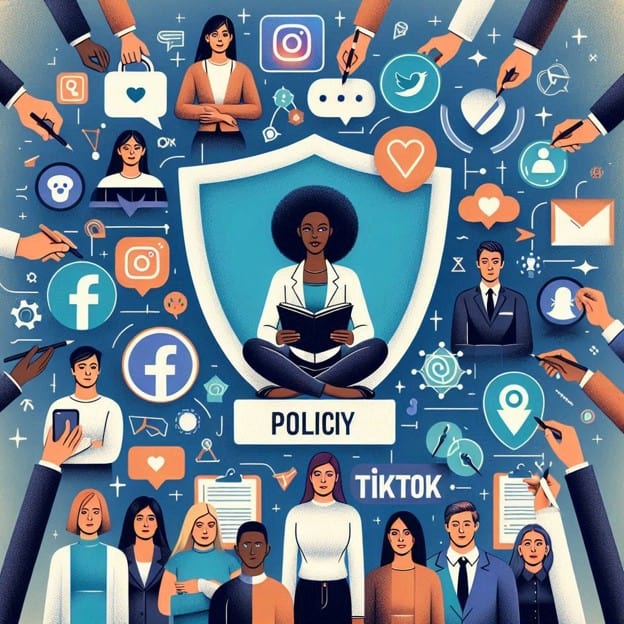
- Traditional platforms (Facebook, Twitter/X, LinkedIn, Instagram)
- Emerging platforms (TikTok, Threads, BeReal)
- Professional networks and forums
- Blogs and personal websites
- Comments on news sites or other digital properties
Example: “This policy applies to all forms of online communication where employees might be identified as associated with [Organization], whether posting from corporate or personal accounts.”
2. Personal vs. Professional Account Guidelines
Many employees struggle with where to draw the line between personal expression and professional representation. Your policy should address:
- When disclaimers are required (“Views are my own”)
- Whether employees can identify their employer in personal profiles
- Guidelines for mixing personal and professional content
- Rules about connecting with clients, vendors, or colleagues
Case Study: A marketing professional at a healthcare company posted personal political views on Twitter, where her bio listed her employer. When patients complained, the organization realized its policy didn’t adequately address personal accounts that mentioned employment.
3. Confidentiality and Privacy Protection
This section must be crystal clear and comprehensive:
- Prohibit sharing of proprietary information, trade secrets, or internal communications
- Address client/customer privacy (especially critical in healthcare, legal, and financial services)
- Include guidelines about photographing or recording in the workplace
- Specify what constitutes “material non-public information” for publicly traded companies
Real-World Example: An excited employee at a tech company tweeted about a “big client win” before the official announcement, inadvertently violating both confidentiality agreements and SEC regulations about material information disclosure.
4. Respectful Communication Standards
As emphasized in “Rise & Thrive,” professional excellence includes maintaining respect across all platforms:
- Prohibit discriminatory, harassing, or threatening content
- Address political and social commentary boundaries
- Include guidelines about discussing competitors
- Specify consequences for violations
These standards should align with your organization’s values while recognizing employees’ rights to personal expression within legal bounds.
5. Crisis Management and Escalation Procedures
When social media crises emerge, quick response is crucial:
- Designate who can speak officially for the organization
- Create escalation paths for urgent issues
- Establish protocols for negative comments or reviews
- Define when legal or PR teams should be involved
Case Study: When a restaurant employee posted an inappropriate video that went viral, the organization’s rapid response—guided by clear escalation procedures—helped contain potential damage. The employee was addressed according to policy, and management issued a statement reaffirming company values within hours.
6. Intellectual Property and Copyright Considerations
Protect your organization’s assets while respecting others’:
- Clarify ownership of social media accounts created for work
- Address use of company logos, images, or branded content
- Include guidelines about sharing others’ content
- Specify attribution requirements
7. Monitoring and Enforcement
Be transparent about your approach:
- Explain what monitoring occurs (if any)
- Clarify the difference between public posts and private communications
- Define progressive discipline procedures
- Address how violations will be investigated
As discussed in “Mastering a High-Value Company Culture,” trust forms the foundation of healthy workplaces. Your monitoring policies should reflect this principle.
Best Practices for Policy Implementation
1. Collaborative Development
Involve stakeholders across your organization:
- HR for employment law considerations
- Legal for regulatory compliance
- Marketing for brand consistency
- IT for technical feasibility
- Employee representatives for practical feedback
2. Regular Training and Updates
Social media evolves rapidly. Your training should:
- Occur during onboarding
- Include annual refreshers
- Address new platforms and features
- Use real examples (anonymized) from your industry
3. Cultural Integration
The most effective policies become part of your organizational culture:
- Connect policies to core values
- Celebrate positive social media advocacy
- Share success stories of appropriate use
- Make guidance accessible and user-friendly
Current Trends Shaping Social Media Policies
1. Remote Work Considerations
With distributed teams, social media often becomes a primary communication channel. Policies must address:
- Virtual background requirements for video content
- Home office privacy considerations
- Time zone sensitivity for global teams
- Digital nomad disclosure requirements
2. Employee Advocacy Programs
Many organizations now encourage employees to become brand ambassadors:
- Provide shareable content
- Offer incentives for positive engagement
- Create guidelines for advocacy posts
- Track and reward participation
3. Artificial Intelligence and Deepfakes
Emerging technologies create new challenges:
- Address AI-generated content
- Include policies about deepfakes
- Consider automated posting tools
- Define acceptable use of AI assistants
4. Platform-Specific Considerations
Different platforms require different approaches:
- LinkedIn: Professional networking etiquette
- TikTok: Short-form video guidelines
- Instagram: Image rights and lifestyle content
- Twitter/X: Real-time engagement protocols
Common Pitfalls to Avoid
- Overly Restrictive Policies: Banning all social media activity can damage morale and limit positive brand advocacy.
- Vague Language: Terms like “appropriate” or “professional” need specific definitions and examples.
- Ignoring Legal Protections: Employees have certain rights regarding political speech and organizing activities.
- One-Size-Fits-All Approaches: Different roles may require different social media guidelines.
- Set-and-Forget Mentality: Social media policies require regular updates to remain relevant and effective.
Measuring Policy Effectiveness
Track these metrics to assess your social media policy’s impact:
- Reduction in policy violations
- Increase in positive brand mentions by employees
- Decreased time spent managing social media crises
- Employee engagement with advocacy programs
- Compliance training completion rates
As explored in “High-Value Leadership,” measurement drives improvement. Regular assessment ensures your policies evolve with your organization’s needs.
Conclusion
Effective social media policies protect organizations while empowering employees to engage authentically online. They reflect your values, support your brand, and create clarity in an often ambiguous digital landscape.
The goal isn’t to restrict but to enable—providing the framework within which creativity and professionalism can flourish. When implemented thoughtfully, these policies become tools for building the high-value cultures that drive organizational success.
Discussion Questions
- How does your current social media policy reflect your organizational values?
- What challenges have you faced balancing employee freedom with organizational protection?
- How might your policies need to evolve to address emerging platforms and technologies?
- What role should employees play in developing and updating social media guidelines?
Next Steps
Ready to develop social media policies that protect your organization while fostering a high-value culture? Che’ Blackmon Consulting specializes in creating customized policies that align with your unique organizational needs and values.
We offer:
- Social media policy development workshops
- Policy audit and optimization services
- Crisis management planning
- Employee training programs
- Ongoing policy maintenance support
Contact us today to create social media guidelines that empower your team while protecting your organization’s interests. Let’s build policies that reflect the high-value culture you’re working to create. Contact us at admin@cheblackmon.com or call 888.369.7243 to schedule a consultation.
#SocialMediaPolicy #HR #Leadership #CorporateCulture #EmployeeEngagement #RiskManagement #BrandProtection #WorkplacePolicies #HRTech #FutureOfWork #EmployeeAdvocacy #CrisisManagement #DigitalTransformation #BusinessStrategy
6 responses to “Social Media Policies That Protect Your Organization”
Top https://shorturl.fm/YvSxU
Good partner program https://shorturl.fm/m8ueY
Very good https://shorturl.fm/TbTre
https://shorturl.fm/XIZGD
https://shorturl.fm/YvSxU
https://shorturl.fm/TbTre